Morocco
Yoga Retreats in Morocco
Morocco stops you in your tracks. The medina chaos gives way to courtyard silence. The mountain cold gives way to desert warmth. The sensory intensity of the souks gives way to the absolute quiet of the Sahara at night.
It is a country of radical contrast — and that contrast, for the yoga practitioner, is precisely the point. A yoga retreat in Morocco is not a retreat from the world. It is a retreat into a more vivid version of it.
Yoga Retreats in Morocco: A Complete Guide
Morocco is one of the most consistently rewarding of the international yoga retreat destinations — compact enough to combine multiple landscapes in a single week, culturally rich enough to provide the context that deepens the practice, and sufficiently developed in its retreat infrastructure to offer everything from budget riad programmes to luxury desert camps.
The retreats collected here have been selected for the quality of their teaching, the authenticity of their setting, and their ability to use Morocco’s specific character as an asset rather than a backdrop.
10 Day Atam Sukha Wellness Retreat in Uttarakhand, India with Ayurveda, Meditation, and Yoga
DATE
PRICE
LOCATION
Nights
Marrakech: The Red City’s Hidden Gardens
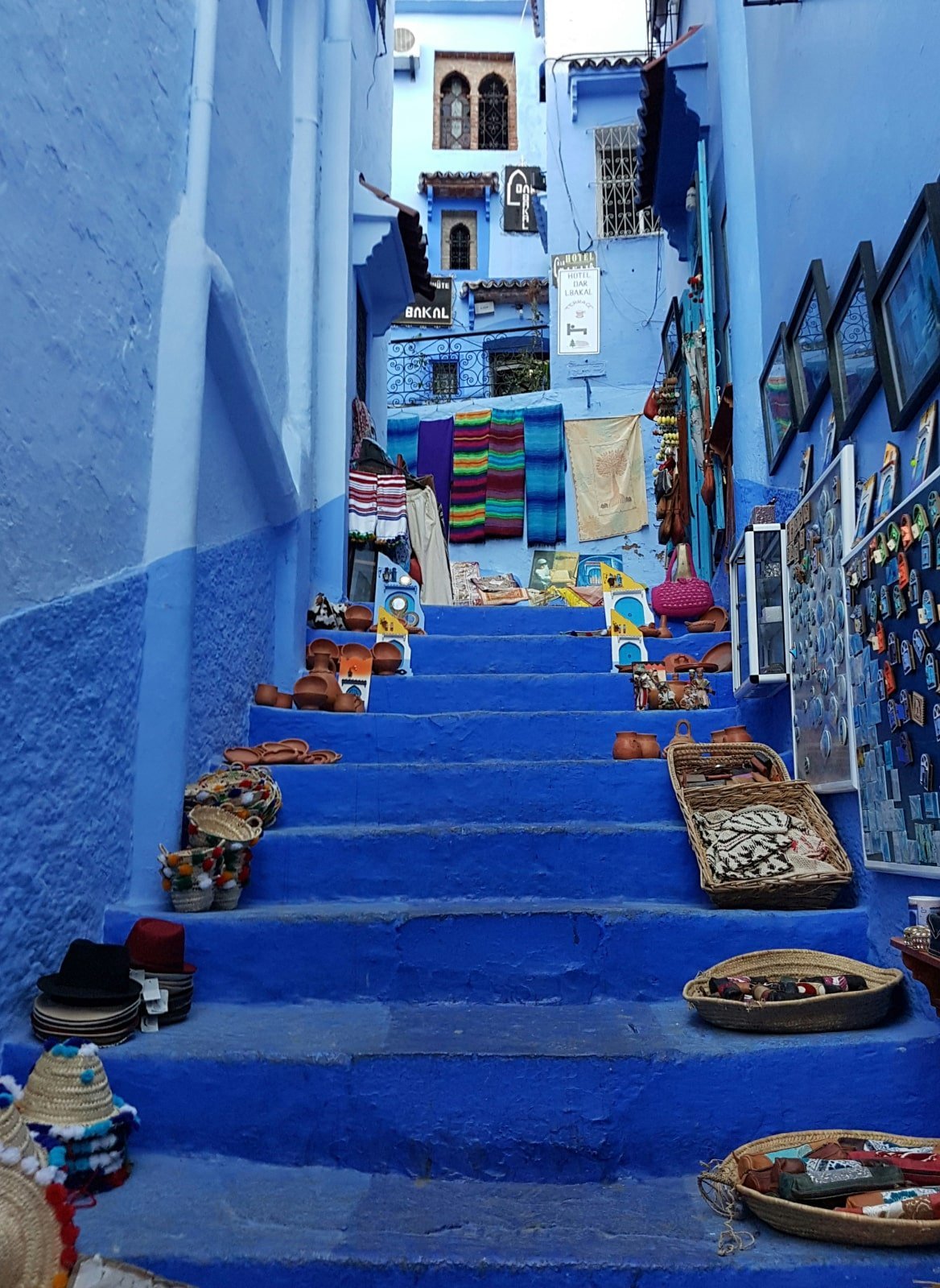
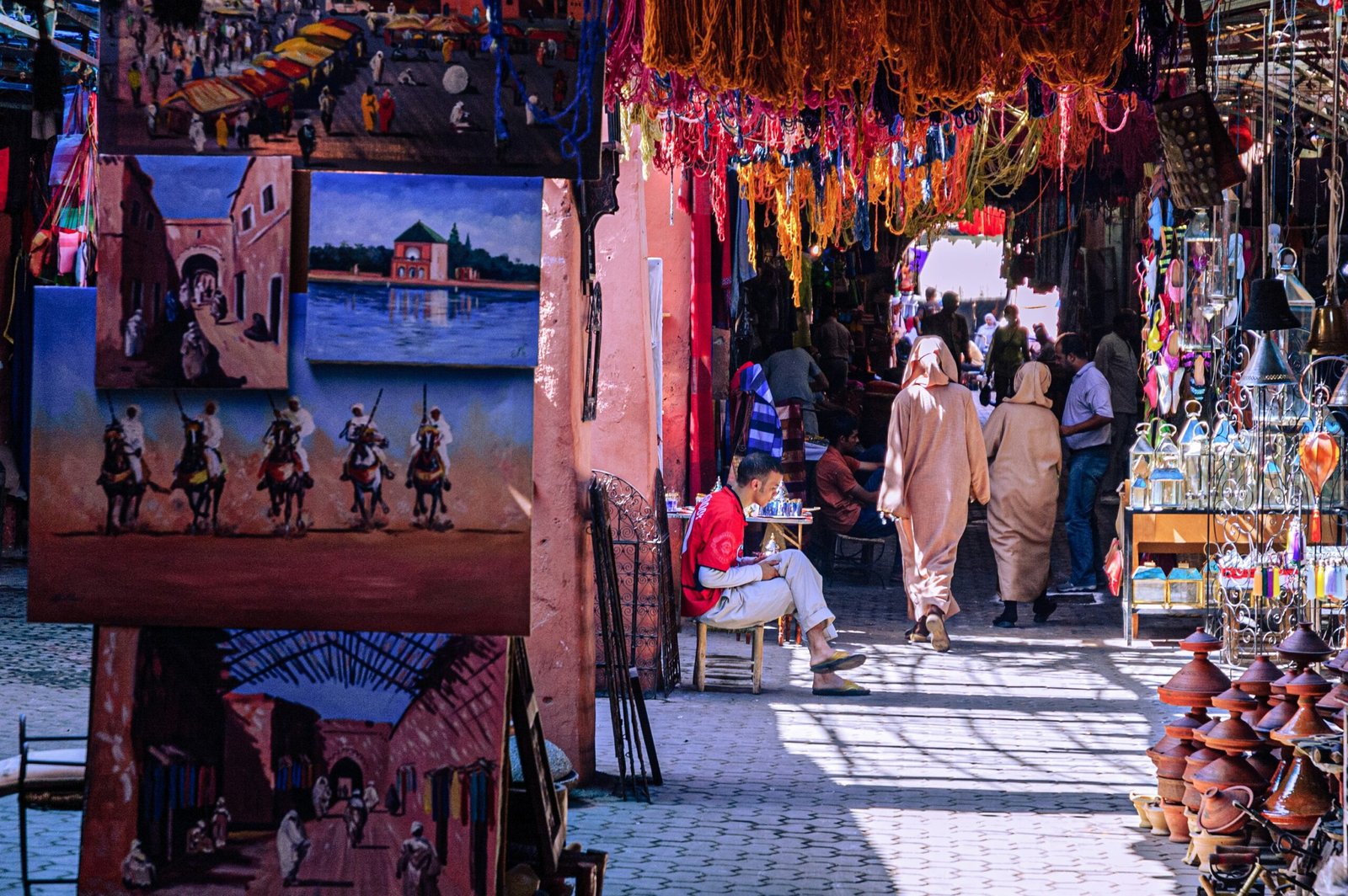
Marrakech is Morocco’s most accessible retreat city — direct flights from across Europe, North America, and the Gulf, a medina that rewards the curious, and a riad culture that produces the most specifically Moroccan of the retreat environments. The traditional courtyard house, built around the fountain and the orange trees, with the medina lanes outside and the silence inside, is the architecture of retreat without requiring any infrastructure beyond the building itself.
The retreat centres of Jemaa el-Fnaa and the Marrakech medina occupy renovated riads where the yoga shala occupies the rooftop or the ground-floor salon, the courtyard fountain provides the ambient sound, and the medina’s specific sensory intensity — the call to prayer, the scent of cumin and rose water, the sound of the weavers’ looms — is always audible and always present. The retreat in Marrakech is not a retreat from Morocco; it is an immersion in its most concentrated form.
→ See our full yoga retreats in Marrakech guide.
Essaouira: Where Wind Meets Water
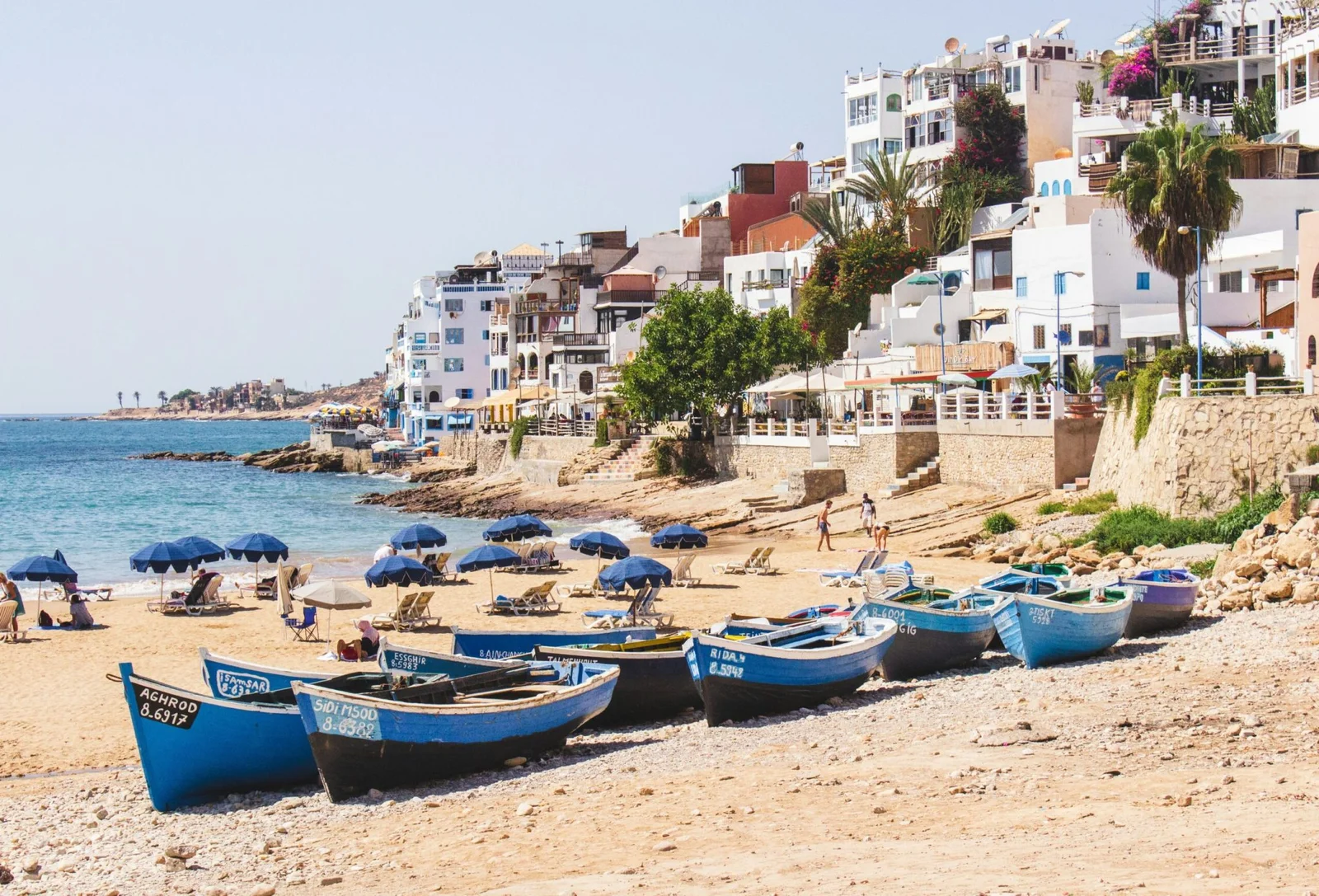
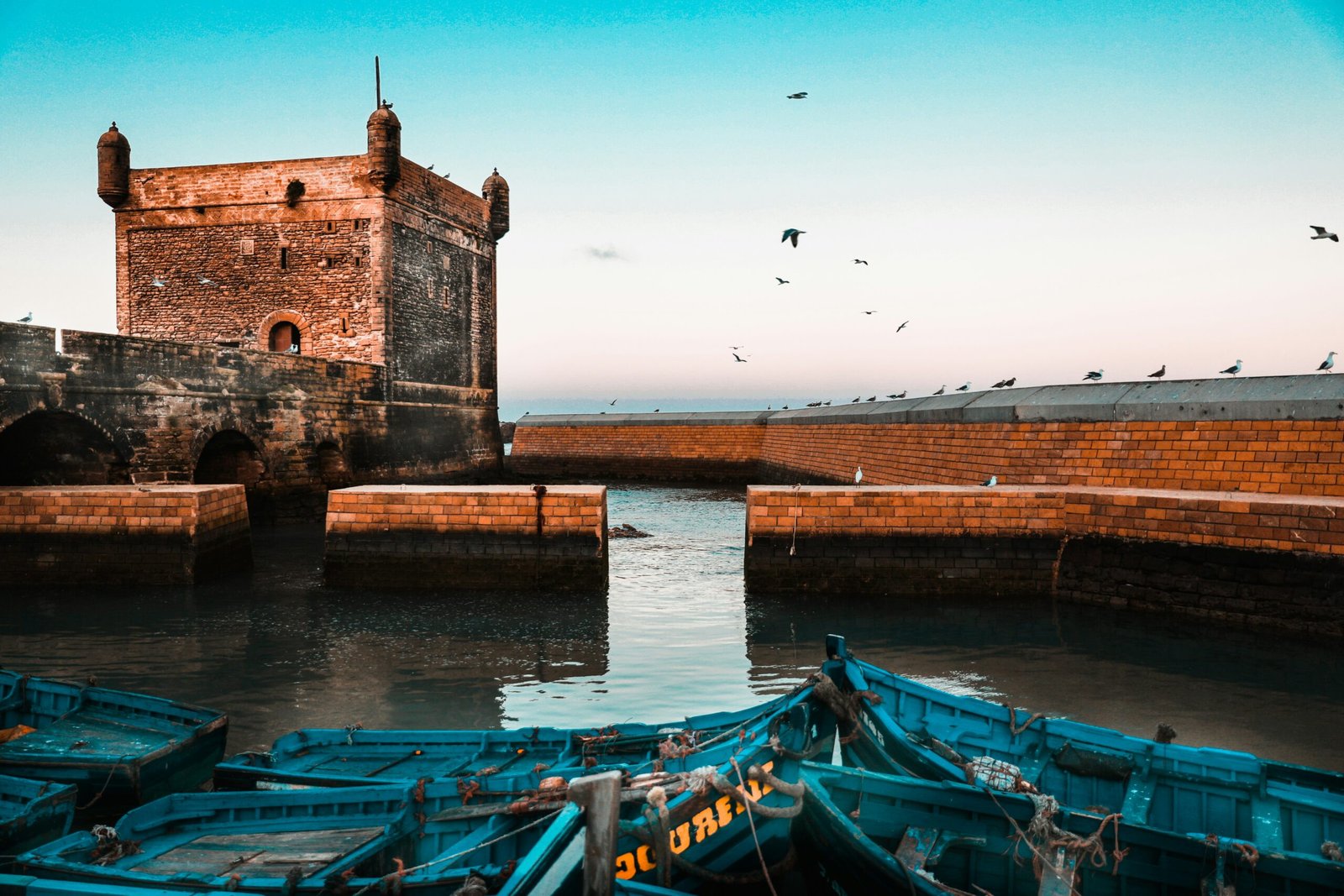
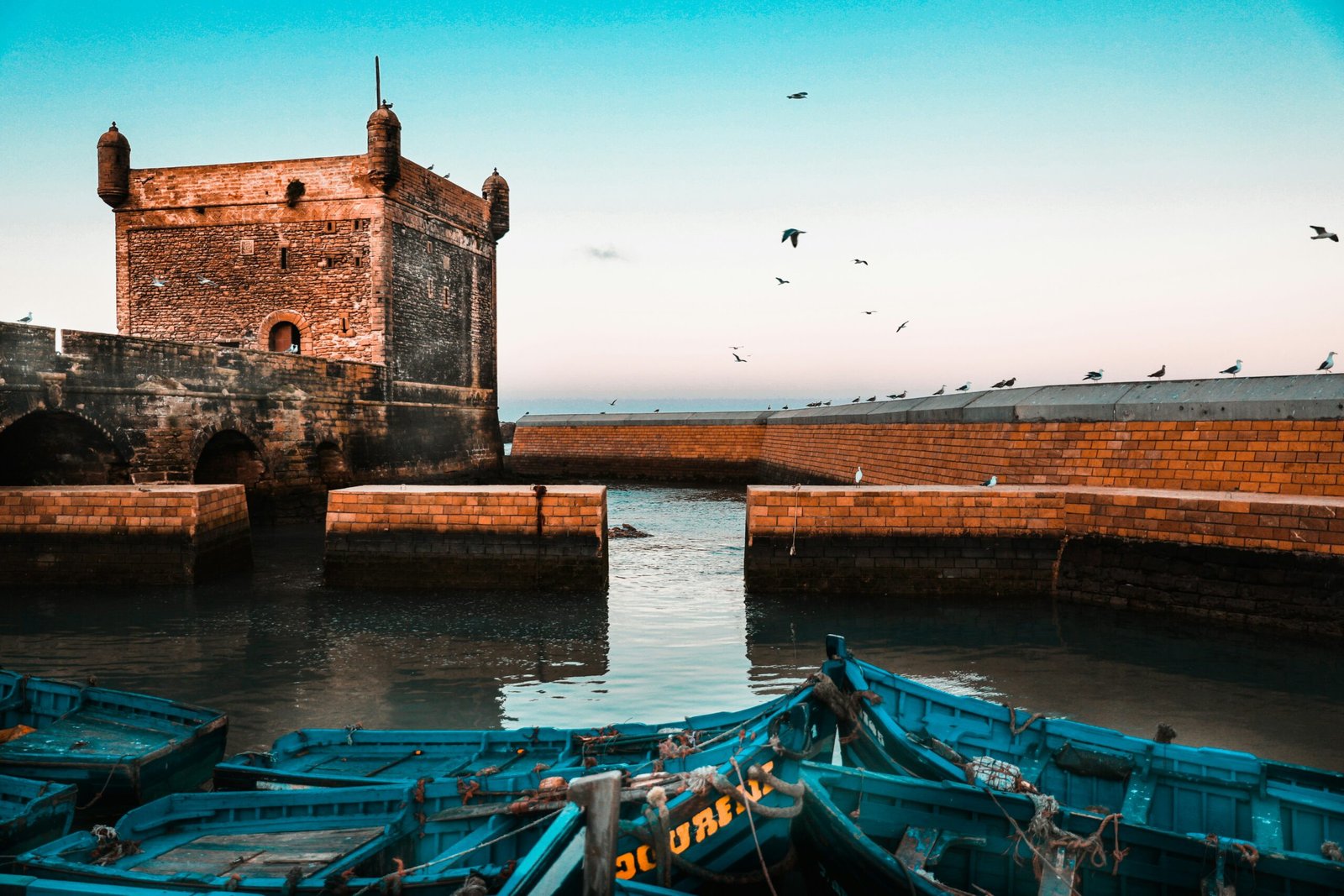
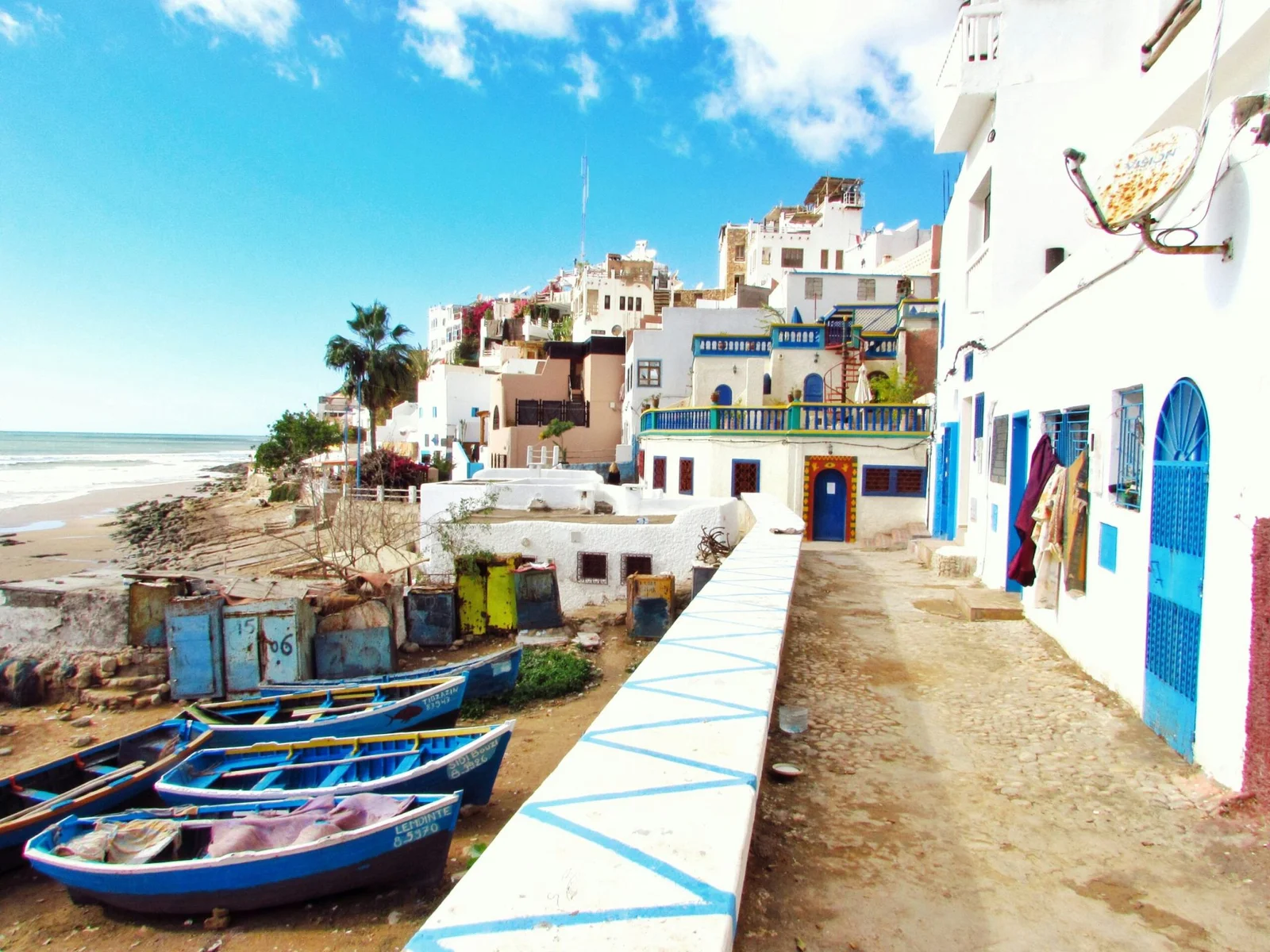
Essaouira — the Atlantic coastal town 175 kilometres west of Marrakech — is Morocco’s most specifically bohemian yoga destination. The medina here is manageable rather than overwhelming, the blue and white architecture producing a Mediterranean calm that Marrakech never quite achieves, and the constant Alizé trade winds from the Atlantic providing the cooling that makes the town comfortable year-round.
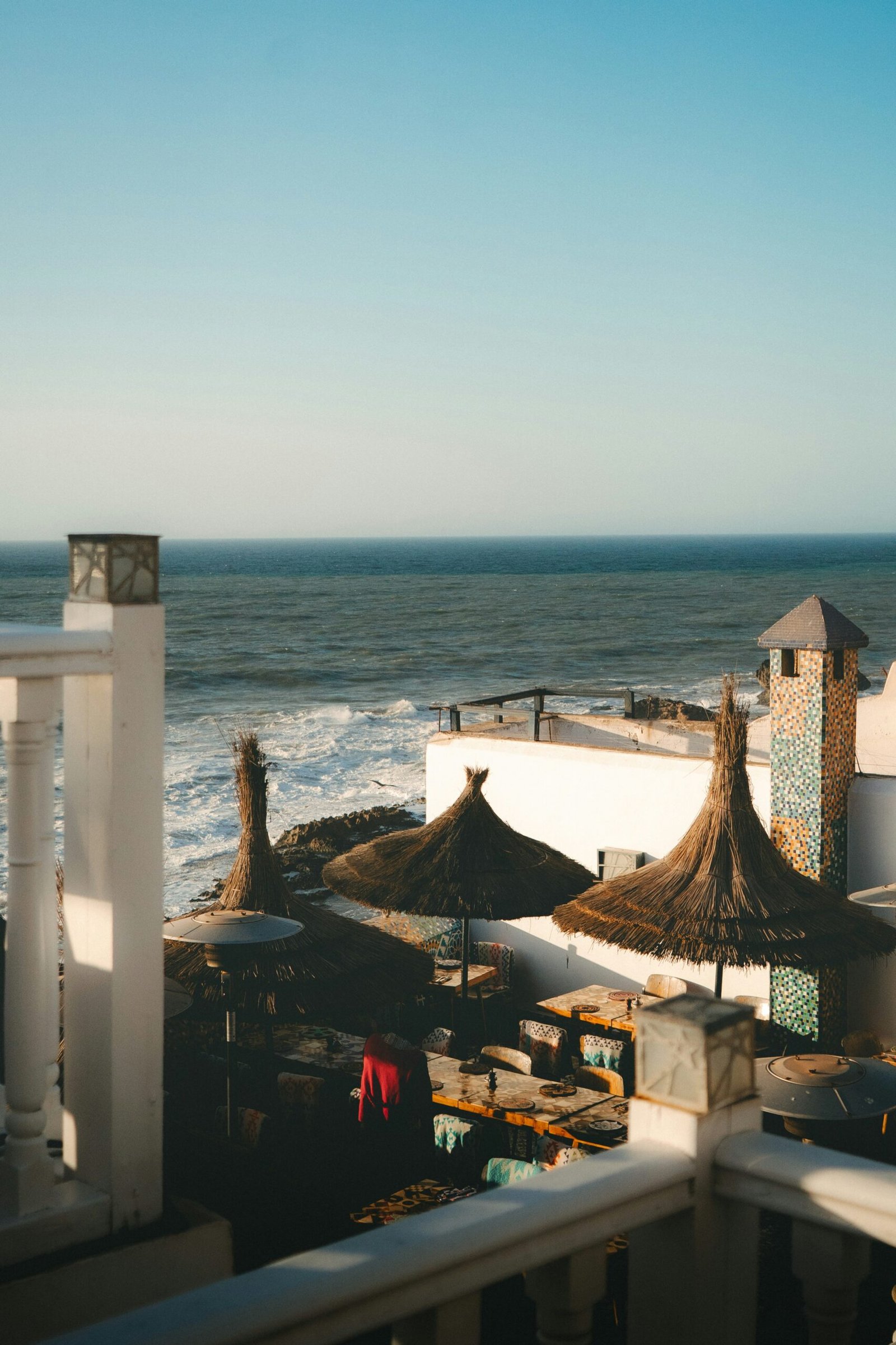
The wind is Essaouira’s defining characteristic — and its most direct teaching. The Alizé demands that you find your centre on the mat as you would in the world: leaning into the force rather than resisting it, finding the stillness within the movement. The retreat centres of Essaouira use the beach and the ramparts as the outdoor practice spaces, the medina riads as the indoor base, and the specific Atlantic coastal light — different from the Marrakech desert light in its quality and its direction — as the daily visual anchor.
→ See our full yoga retreats in Essaouira guide.
Atlas Mountains: High Altitude Sanctuary
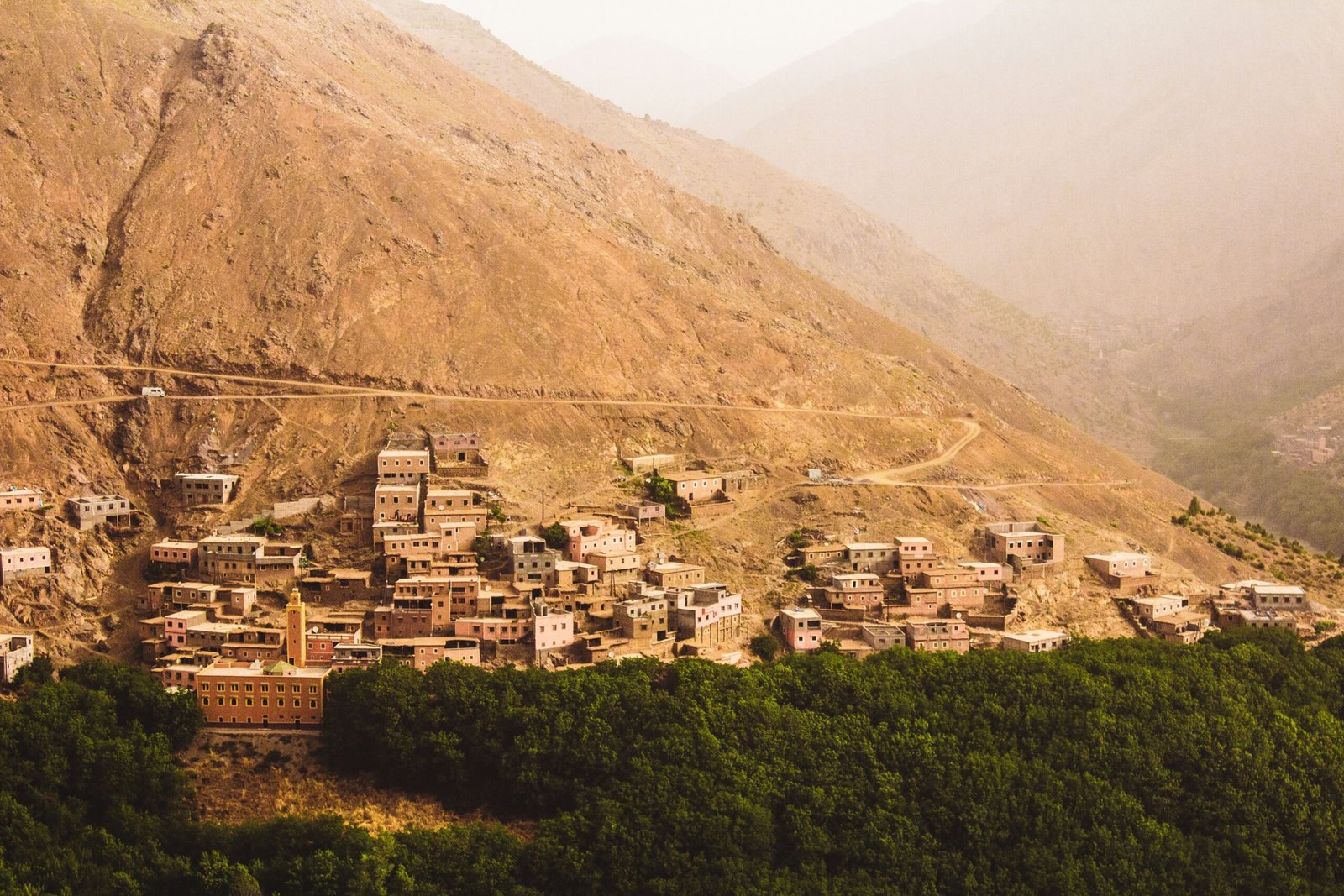
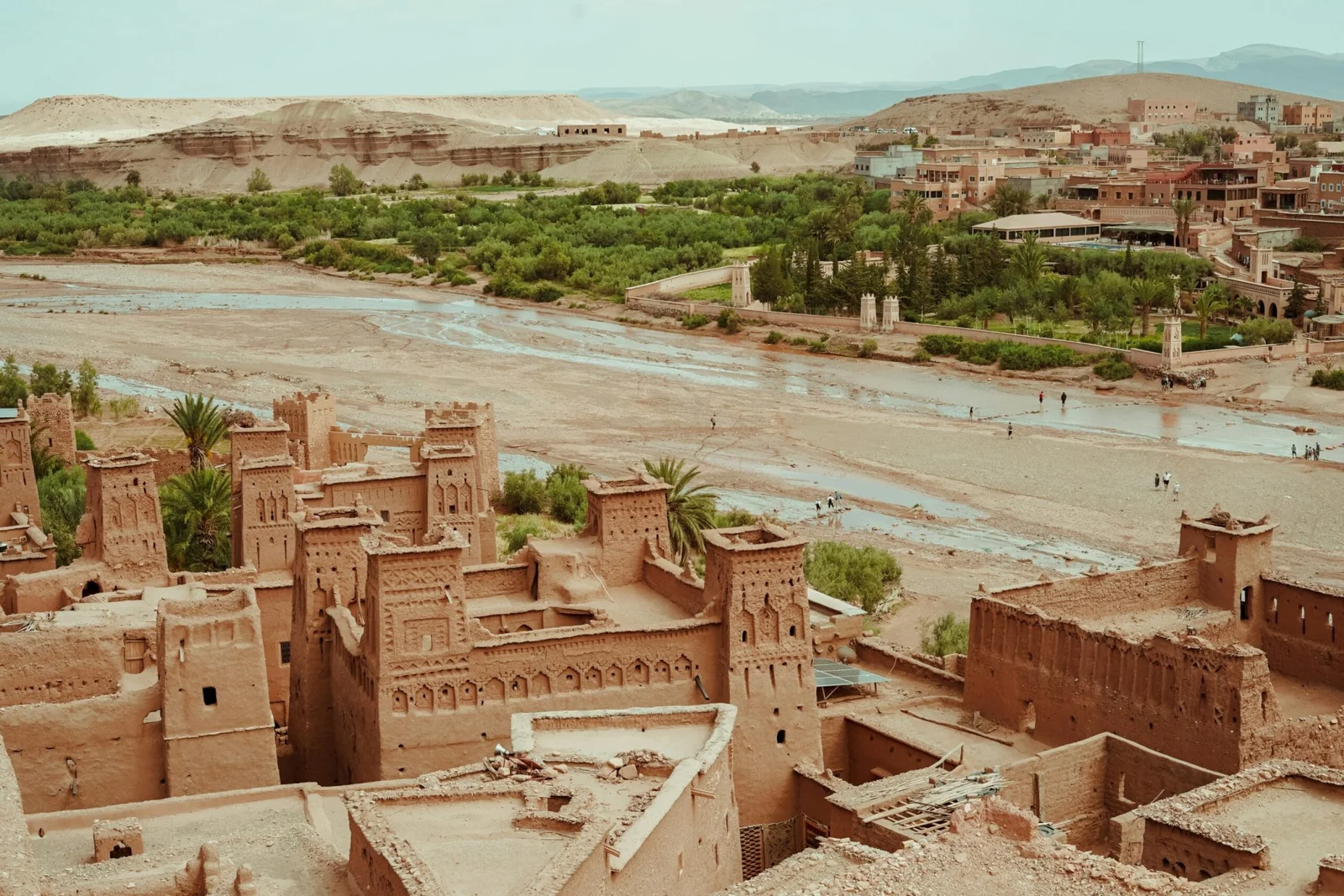
The High Atlas Mountains — accessible from Marrakech in 1-2 hours depending on the destination — provide the most dramatically different of the Moroccan retreat landscapes. The Berber villages of the Ourika and Ouirgane valleys, the highland kasbahs above the tree line, and the trekking routes through terrain that the modern world has barely touched produce the most specifically remote of the Morocco retreat experiences.
Mountain retreats occupy converted kasbahs and eco-lodges at elevations between 1,200 and 2,500 metres — high enough to escape the lowland heat but accessible without acclimatisation. The views across the Atlas valleys to the snow-covered peaks of Jbel Toubkal (the highest mountain in North Africa at 4,167 metres), the silence of the highland night, and the Berber hospitality of the communities that host the retreat centres produce the Morocco that the medina cities cannot. Many retreats combine morning yoga with afternoon trekking, the physical challenge of the mountain trails producing the specific fatigue that makes the evening restorative practice most rewarding.
→ See our full yoga retreats in the Atlas Mountains guide.
Agadir: Modern Comfort Meets Ocean Energy
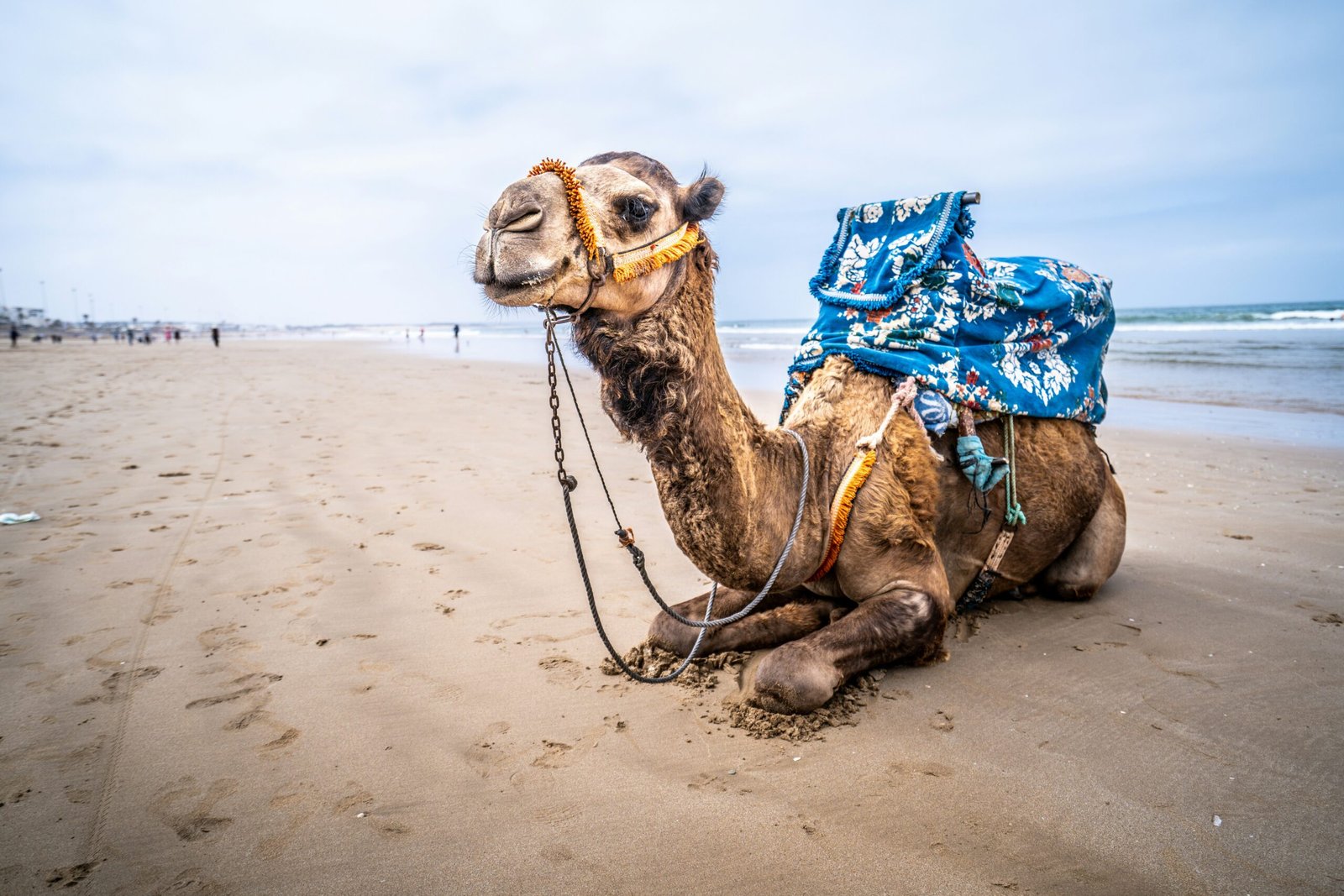
Agadir — the southern Atlantic resort city, rebuilt after the 1960 earthquake — offers the most practically accessible of the Moroccan retreat bases: direct international flights, modern resort infrastructure, a long sandy beach, and the year-round sunshine that makes it the most climatically reliable of the Moroccan coastal destinations. The retreat centres here range from resort-integrated wellness programmes to standalone yoga studios adjacent to the beach.
Agadir is specifically good for the first-time Morocco visitor who wants the retreat environment without the cultural intensity of the medina cities, and for the retreat that combines yoga with the surf culture of Taghazout (20 kilometres north, the most developed surf and yoga destination in Morocco) or with the natural swimming pools of the Paradise Valley gorge above Agadir.
→ See our full yoga retreats in Agadir guide.
Sahara Desert: Silence and Stars
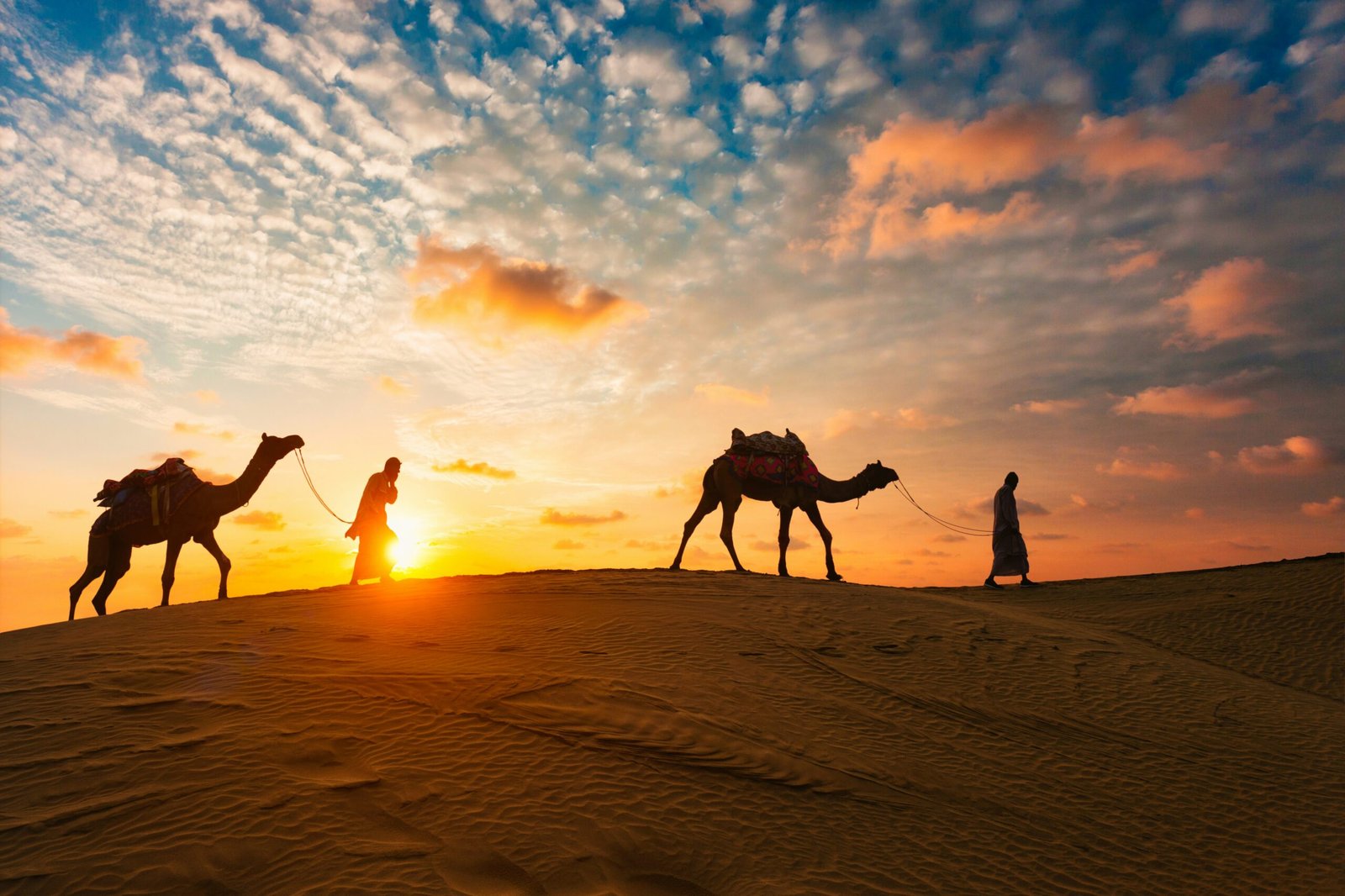
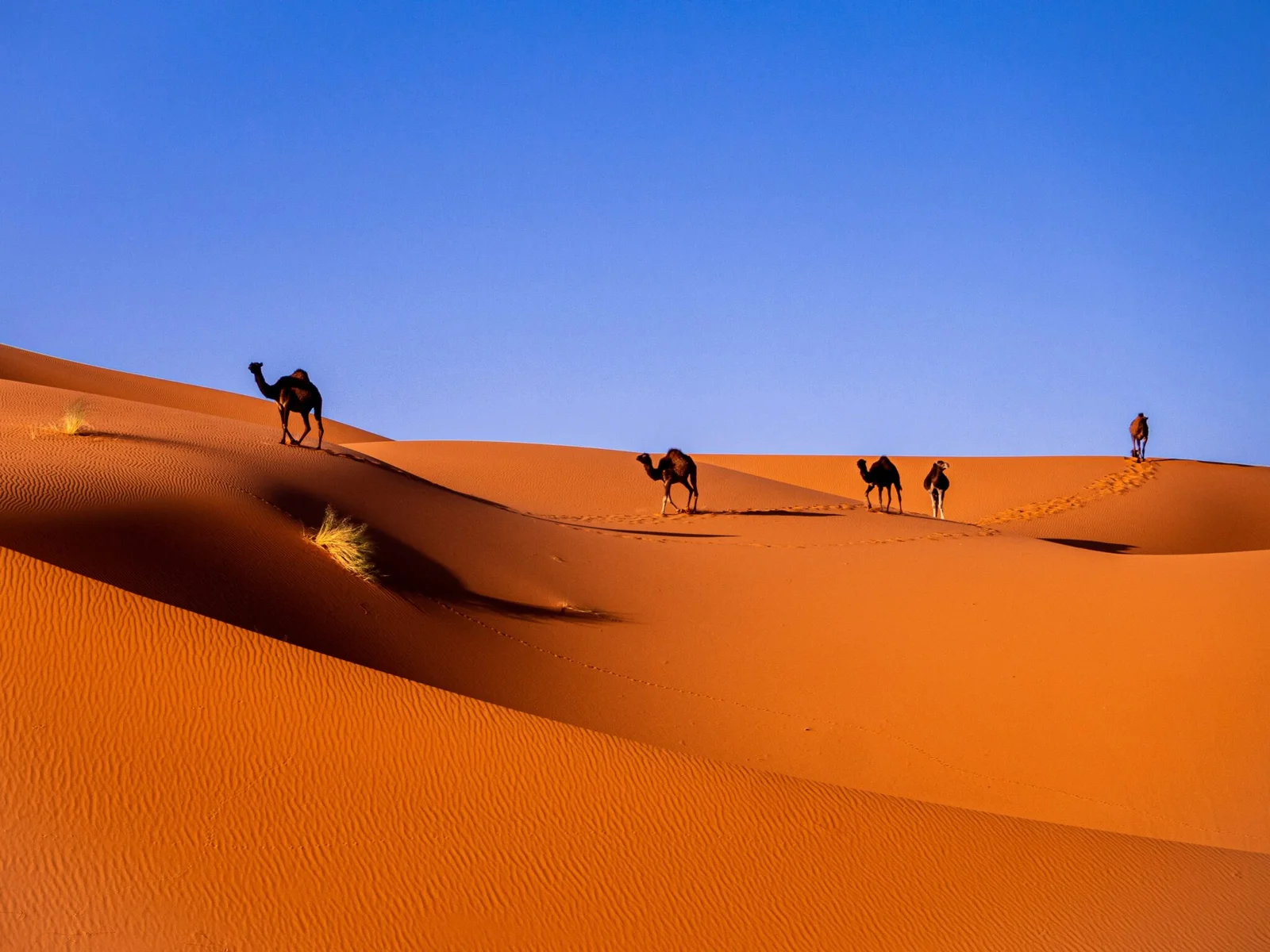
The Moroccan Sahara — accessible from Marrakech via Ouarzazate and the Draa Valley, or via the southern desert route to Merzouga and the Erg Chebbi dunes — offers the most extreme and the most specifically extraordinary of the Morocco retreat experiences. The desert’s silence is the most complete available on earth at an accessible distance from a major city; the night sky over the Sahara, unpolluted by any artificial light, produces the most concentrated starfield visible to the naked eye in the northern hemisphere.
Desert retreat camps use the Berber nomad camp format — the traditional goat-hair and canvas tents of the desert tradition, with the yoga practice on the dune ridge at sunrise and the evening meditation as the temperature drops and the stars emerge. The physical experience of the desert — the heat, the sand, the silence, the scale — produces the conditions for contemplative practice that no built environment can replicate.
→ See our full yoga and wellness in the Sahara Desert guide.
Taghazout: Surf Village Turned Yoga Haven
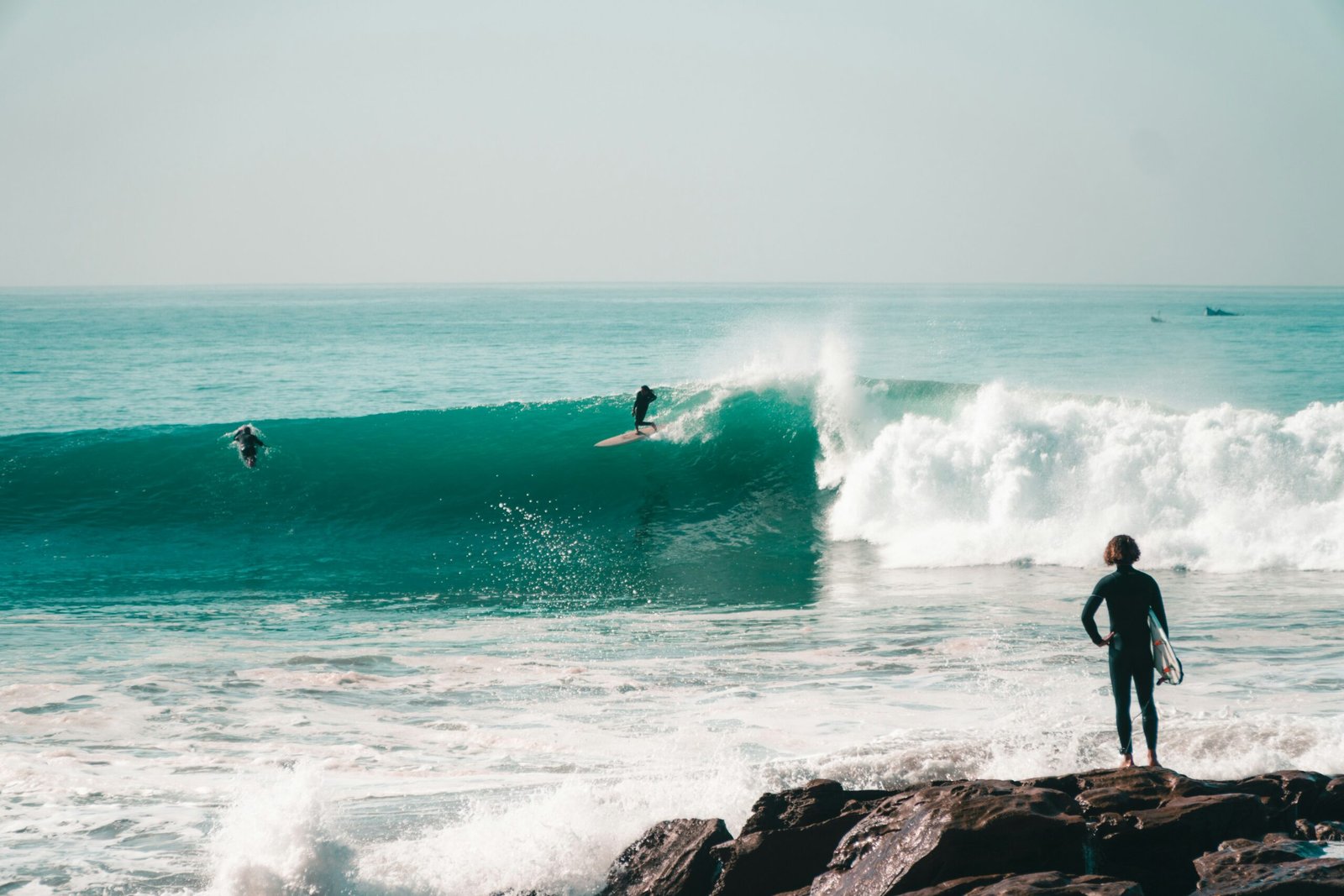
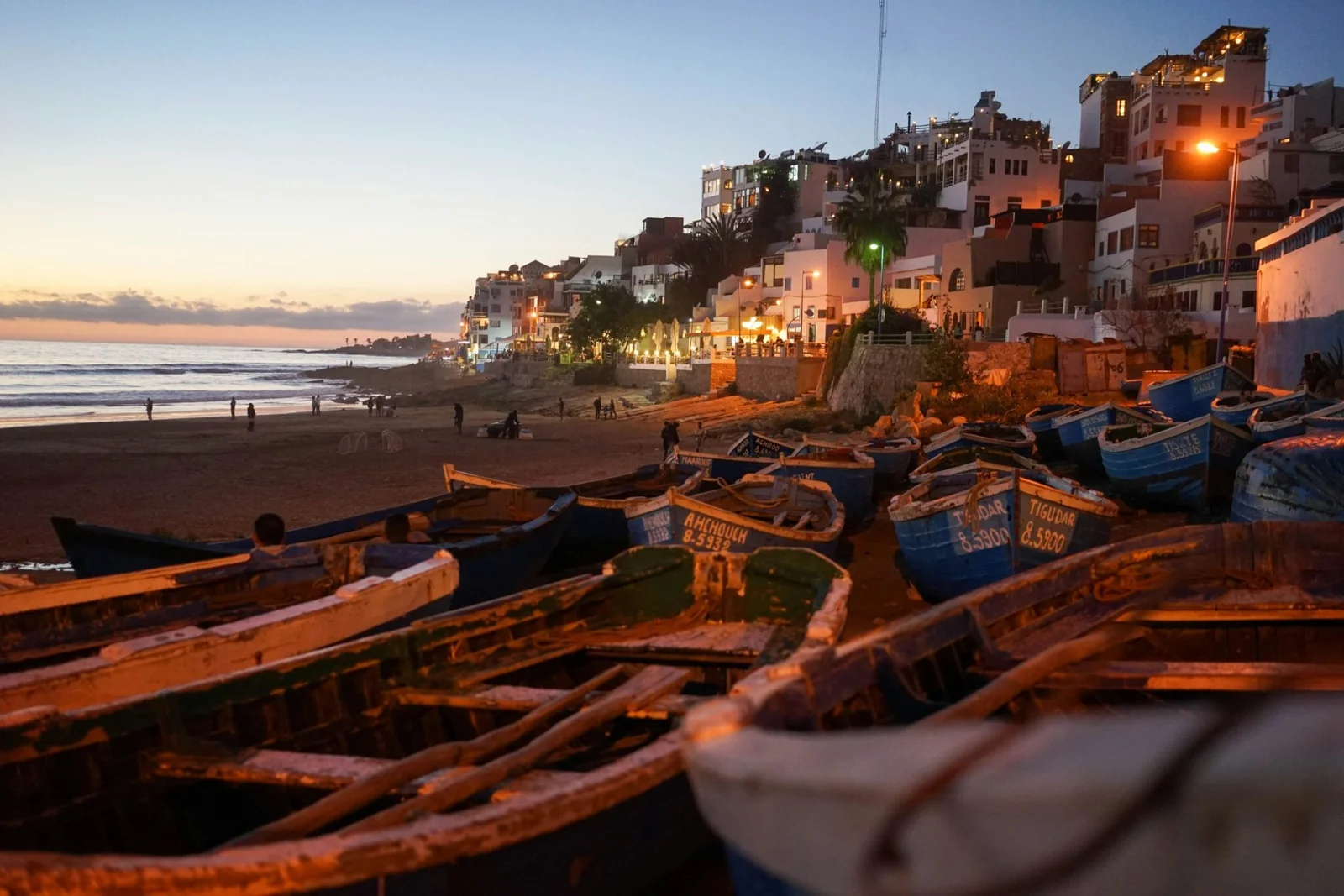
North of Agadir, the small fishing village of Taghazout has evolved into Morocco’s surf capital and, increasingly, a destination for yoga retreats that combine Atlantic waves with mountain backdrops. The village retains its relaxed character despite growing popularity, with a bohemian international community, consistent surf, and a pace of life that feels like permanent vacation.
Yoga and surf retreats dominate Taghazout’s wellness scene, attracting younger, more active practitioners who want their downtime adventurous rather than purely restful. The village has excellent surf schools, numerous yoga studios and retreat centers, healthy restaurants, and the kind of traveler infrastructure that makes extended stays comfortable. Many people come for a week and end up staying months.
The landscape—dramatic coastline, nearby Paradise Valley for hiking, the Anti-Atlas mountains visible inland—provides endless opportunities for outdoor activities alongside practice. The water is cool but swimmable year-round, the surf is consistent, and the light has that particular quality of places where desert meets ocean. For active practitioners wanting community and adventure alongside yoga, Taghazout offers ideal conditions.
Yoga and Hammam: Traditional Purification
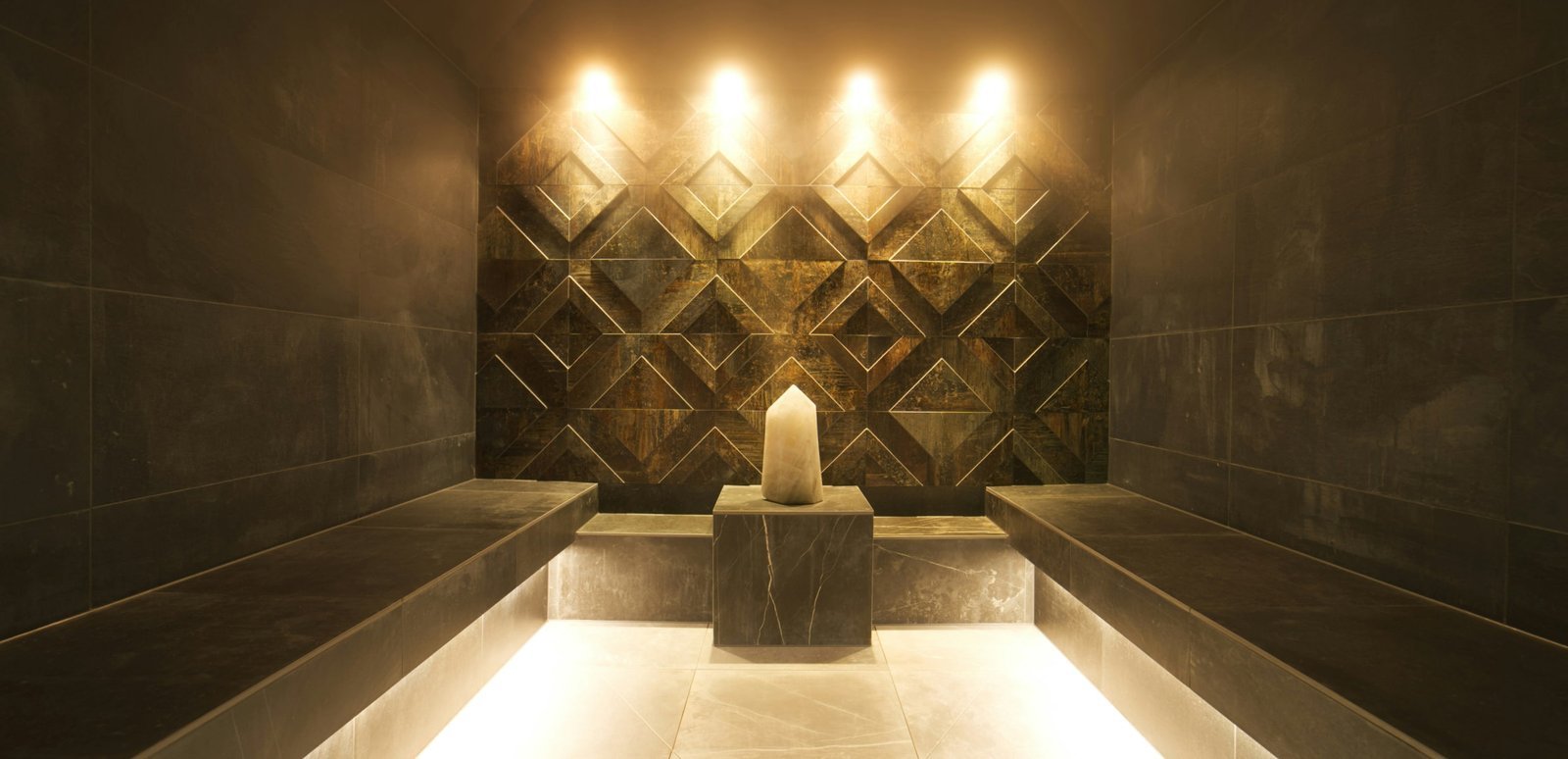
The hammam—Morocco’s traditional bathhouse—parallels yoga’s cleansing practices beautifully. The ritual involves hours of heat, scrubbing with rough mitts that remove dead skin, ghassoul clay masks, argan oil massage, and the profound relaxation that follows deep purification. Combining daily yoga with regular hammam treatments creates a program of detoxification that works on physical, energetic, and even emotional levels.
Many Moroccan yoga retreats incorporate hammam as essential rather than optional, recognizing that the two practices support each other. Yoga opens the body and prepares it for deep cleansing; hammam releases what practice has loosened. Together they create a rhythm of purification and renewal that participants often describe as more effective than either practice alone.
Yoga and Surf: Atlantic Waves
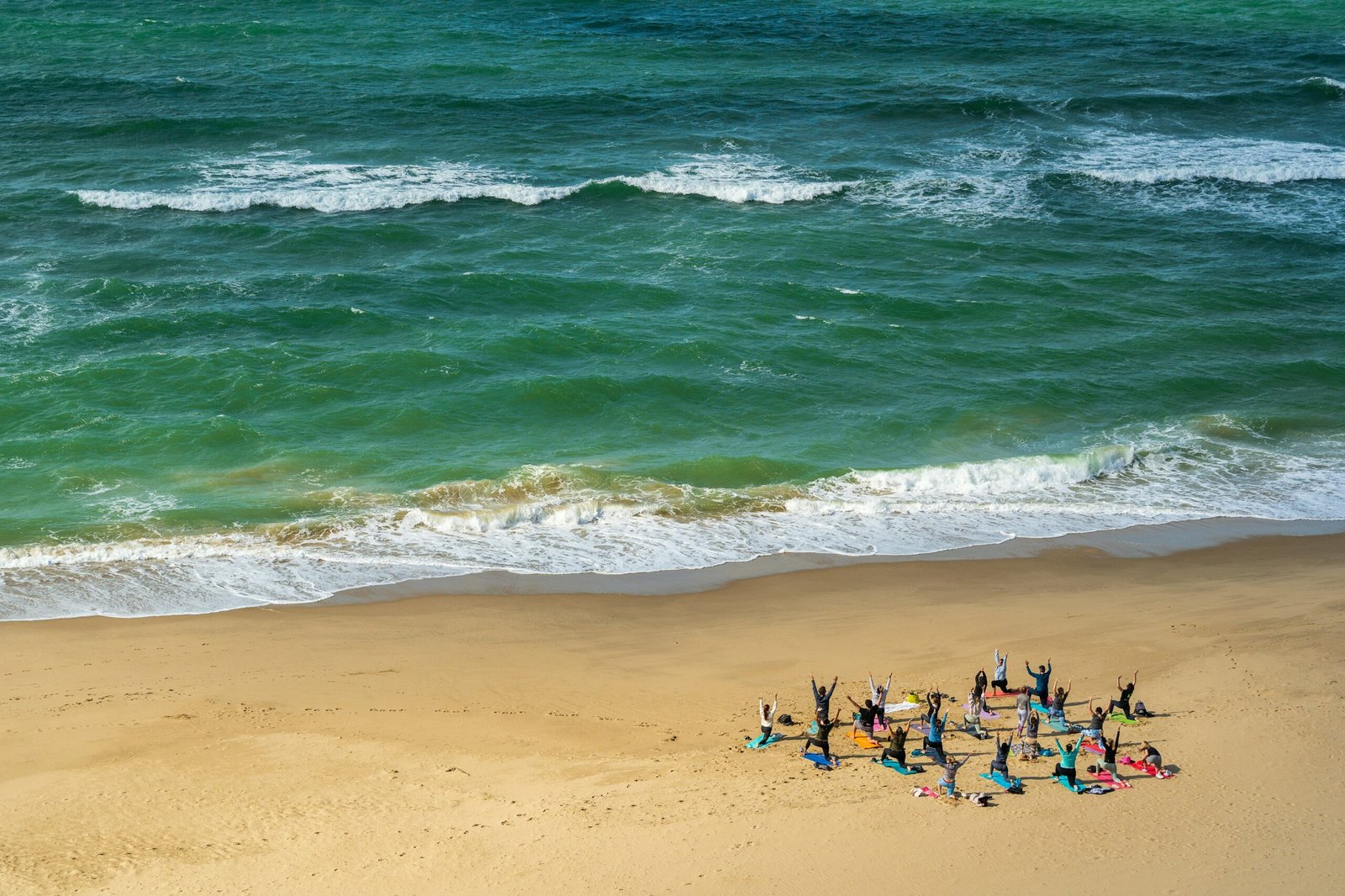
Morocco’s Atlantic coast—particularly around Taghazout, Essaouira, and Imsouane—offers world-class surf conditions alongside yoga retreat infrastructure. The combination attracts practitioners seeking active wellness, who find meditation in riding waves as much as in seated practice. The water is cool (wetsuits required much of the year) but clean, the breaks are numerous and varied, and surf schools cater to all levels.
Surf and yoga retreats follow natural rhythms—morning yoga before the wind builds, midday surf sessions, afternoon rest or exploration, evening restorative practice. The physical demands of surfing complement yoga’s flexibility work, while the mental focus required for wave-riding mirrors meditation’s concentration practices. Many participants discover that the combination produces deeper presence than either activity alone.
Desert Meditation: Silence and Solitude
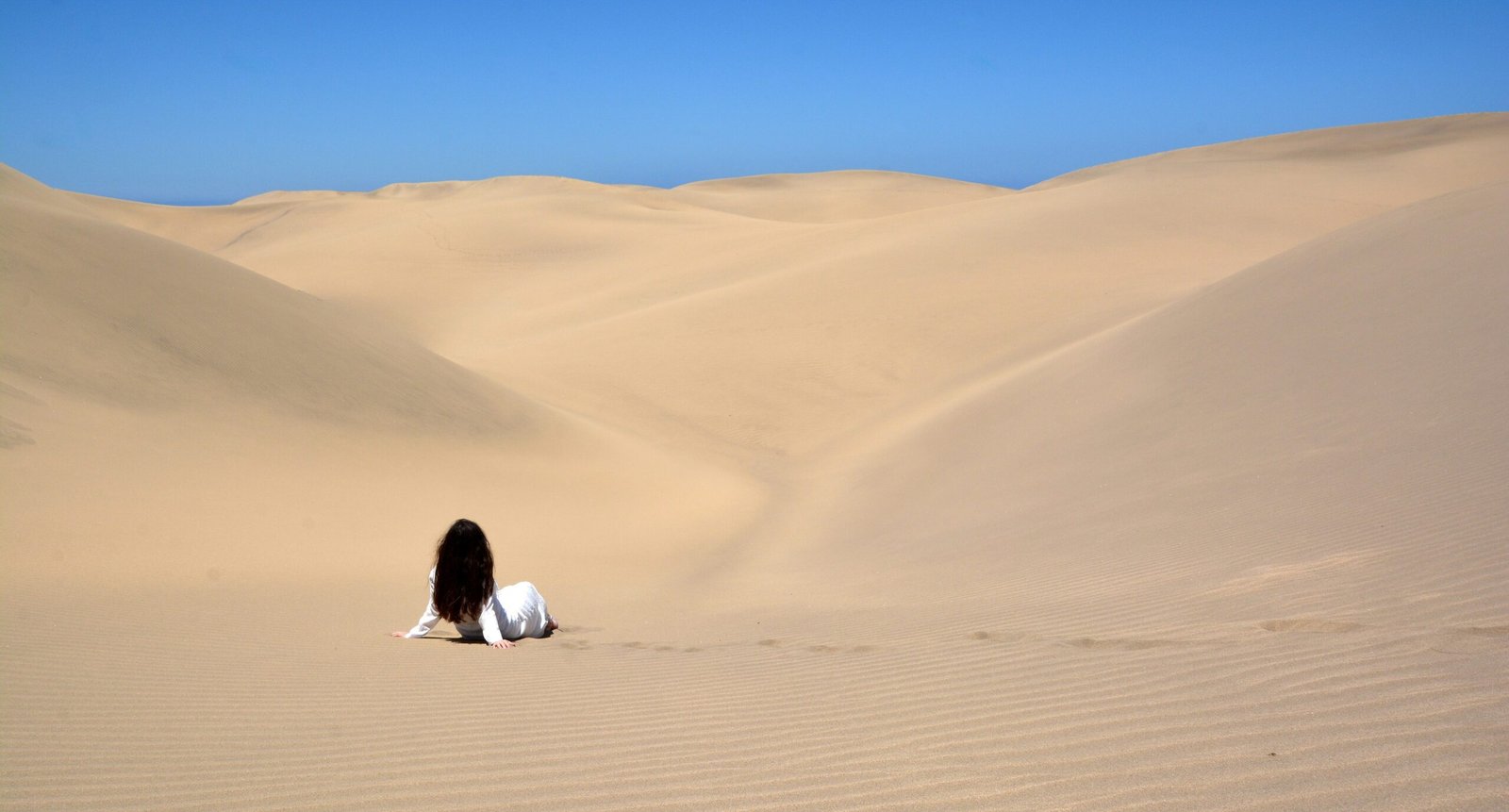
Specialized desert retreats focus on meditation and silence, using the Sahara’s natural conditions to support intensive practice. These programs typically involve minimal yoga asana—the desert’s heat and sand make vigorous physical practice impractical—and maximum meditation, pranayama, and contemplation. Days might include walking meditation across dunes, sitting meditation facing infinite horizons, star meditation at night.
The desert strips away everything unnecessary, creating natural conditions for examining what remains. Without distraction, entertainment, or the usual ways of filling time and attention, you’re left with yourself more directly than most environments allow. For those drawn to contemplative practice over physical yoga, desert meditation retreats offer unmatched conditions.
Culinary and Cultural Immersion
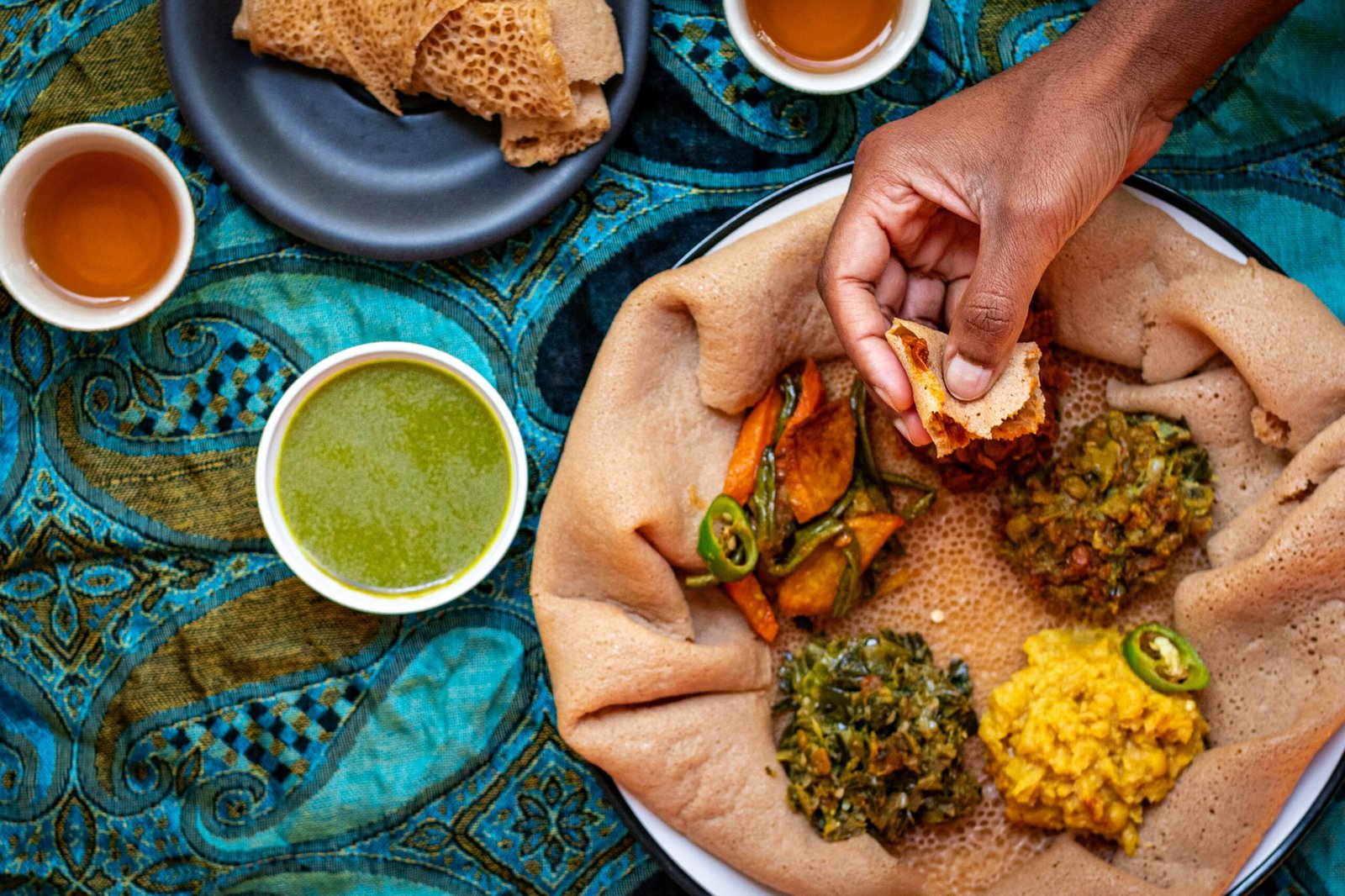
Moroccan cuisine—with its emphasis on fresh ingredients, complex spicing, slow cooking, and communal eating—provides perfect foundation for food-focused retreats. Programs might include shopping in souks, cooking classes with local women, visits to argan cooperatives, bread-making workshops, and explorations of how Moroccan food culture embodies mindfulness, hospitality, and joy.
These retreats recognize that nourishment extends beyond the mat, that learning to cook and eat mindfully is yoga practice translated into daily life. The tagines simmering for hours, the mint tea ceremony with its ritual pouring, the sharing of food from communal platters—these teach patience, presence, and connection in ways that complement formal practice beautifully.
When to Go for a Yoga Retreat in Morocco
Morocco’s climate varies dramatically by region and season, making timing crucial for optimal retreat experience.
Morocco’s retreat season is effectively year-round, but the optimal timing depends strongly on the region.
October through April is the best window for Marrakech, Essaouira, and Agadir — the temperatures comfortable for outdoor practice (18-26°C in the day), the light at its most dramatic, and the medina cities operating without the summer tourist compression. The specific months within this window each offer their own character: see our guides for January, February, March, October, November, and December for the full seasonal picture.
April through June is the best window for the Atlas Mountains — the snow on the high passes melted, the valley vegetation at its spring green, and the trekking trails accessible without the July heat. See our April, May, and June guides.
July and August are the hottest months in the interior — Marrakech reaches 38-42°C and outdoor practice moves entirely to the early morning. The Atlantic coast (Essaouira, Agadir) remains comfortable due to the trade winds. The Atlas Mountains and the Sahara are at their summer extremes — cold at altitude, very hot in the desert. See our July and August guides.
September is the transitional month — the summer heat easing, the medina cities becoming comfortable again, and the retreat season returning to full operation. See our September guide.
How to Get to Morocco
Morocco’s climate varies dramatically by region and season, making timing crucial for optimal retreat experience.
By air — Morocco is exceptionally well-connected from Europe. Marrakech Menara Airport receives direct flights from London, Paris, Amsterdam, Madrid, Rome, and most major European cities on Royal Air Maroc, EasyJet, Ryanair, and Transavia. Agadir Al Massira Airport has direct European connections and is the most convenient entry point for the southern Atlantic coast and Taghazout. Casablanca Mohammed V Airport is the main hub for transatlantic connections and for onward domestic flights to Marrakech, Fez, and Agadir. Fez-Saïss Airport serves the north, with connections to Tangier and the Atlantic coast.
From Marrakech to the retreat bases — the Atlas Mountain valleys are 45-90 minutes by taxi or transfer from Marrakech. Essaouira is 2.5-3 hours by CTM bus or shared taxi (grand taxi). The Sahara (Merzouga via Ouarzazate) is 8-10 hours by road — best done as an overnight journey or with an overnight stop in Ouarzazate. Most retreat centres arrange airport transfers; book these in advance as the unlicensed taxi system at Marrakech airport requires navigation.
Internal transport — the CTM and Supratours intercity bus network connects all major Moroccan cities reliably and affordably. The grand taxi (shared long-distance taxi) covers routes the bus doesn’t. For the Atlas Mountain and desert destinations, a private transfer or rental car is the most practical option.
What to Expect on a Yoga Retreat in Morocco
Programme formats — Morocco retreat programmes range from the traditional ashram-style intensive (twice-daily practice, sattvic meals, early bed) to the contemporary wellness-and-culture format (once-daily practice, medina excursions, hammam visits, cooking classes). The most specifically Moroccan of the formats integrates the cultural experience — the souk visit, the hammam, the traditional meal with a local family — as part of the programme rather than an optional add-on.
Accommodation — the riad (the traditional courtyard house) is the most specifically Moroccan of the retreat accommodation formats. The interior courtyard with the fountain and the orange trees, the tiled floors, and the rooftop terrace are the physical context that distinguishes the Morocco retreat from its European or Southeast Asian equivalent. Riad-based retreats in the medina typically have 6-12 rooms, producing the most intimate of the retreat group sizes. Resort and kasbah-based retreats outside the medina have larger facilities but less specifically Moroccan character.
Yoga styles — Hatha, Vinyasa, Yin, and Restorative are the most common styles offered at Morocco retreat centres. Ashtanga-specific programmes exist but are less common than in India or Bali. Teacher training (200-hour and 300-hour Yoga Alliance programmes) is available at a small number of established Morocco retreat centres, typically in the Marrakech area.
Hammam — the traditional Moroccan hammam (the steam bath and body scrub) is the most universally offered of the Morocco wellness activities and the one most directly embedded in the local culture. The hammam is not a luxury spa treatment in the Moroccan tradition — it is a weekly hygiene practice that every Moroccan observes. The retreat that incorporates the neighbourhood hammam rather than the hotel spa version is giving participants access to the genuine tradition.
FAQs: Yoga Retreats in Morocco
- Is Morocco safe for solo retreat travellers? Yes — Morocco is one of the safest of the non-European yoga retreat destinations, with a well-established tourism infrastructure and a culture of hospitality toward international visitors. Solo women practitioners specifically report Marrakech and Essaouira as comfortable bases. The medina cities require the normal urban awareness; the resort areas and the mountain retreat bases require none.
- Do I need to speak French or Arabic? No — the Morocco retreat sector operates in English, and most retreat centre staff speak English alongside French and Darija (Moroccan Arabic). Outside the retreat centre, basic French is useful in the cities; in the medina souks, negotiation requires no language at all.
- Is Morocco vegetarian and vegan friendly? Yes — Moroccan cuisine is naturally accommodating to plant-based diets. The tagine tradition produces abundant vegetable-based preparations (the vegetable tagine with preserved lemon and olives, the harira soup, the zaalouk aubergine salad) that are specifically Moroccan without requiring modification. Most retreat centres serve plant-based menus; the traditional Moroccan kitchen rarely requires significant adaptation.
- What is the currency and payment situation? The Moroccan dirham (MAD) is the local currency — not convertible outside Morocco, so exchange on arrival. Credit cards are accepted at the larger hotels and retreat centres; cash is required at the medina restaurants, hammams, and souks. ATMs are widely available in the cities.
- How far in advance should I book? For the peak months (October-March), 2-3 months in advance for the most sought-after riad retreat centres. For the summer months (July-August) on the Atlantic coast, 4-6 weeks is usually sufficient. The Sahara desert camps fill quickly for the November-February window — book these 3-4 months ahead.
Learn More
Best Yoga Retreats in Morocco in June 2026
Best Yoga Retreats in Morocco in July 2026
Best Yoga Retreats in Morocco in August 2026
Best Yoga Retreats in Morocco in September 2026
Best Yoga Retreats in Morocco in October 2026