Agadir and Taghazout
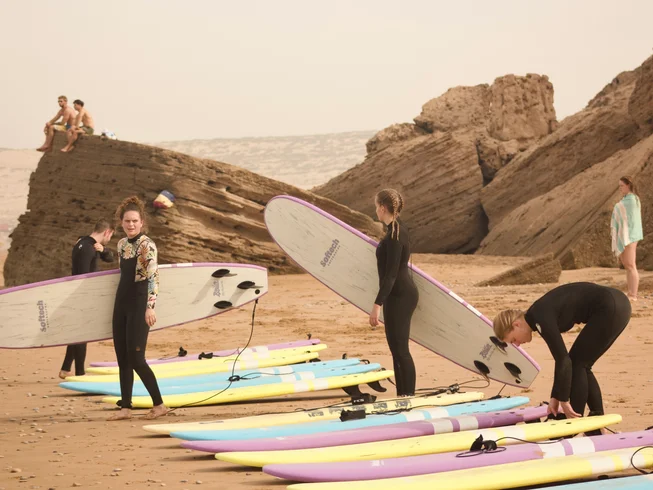
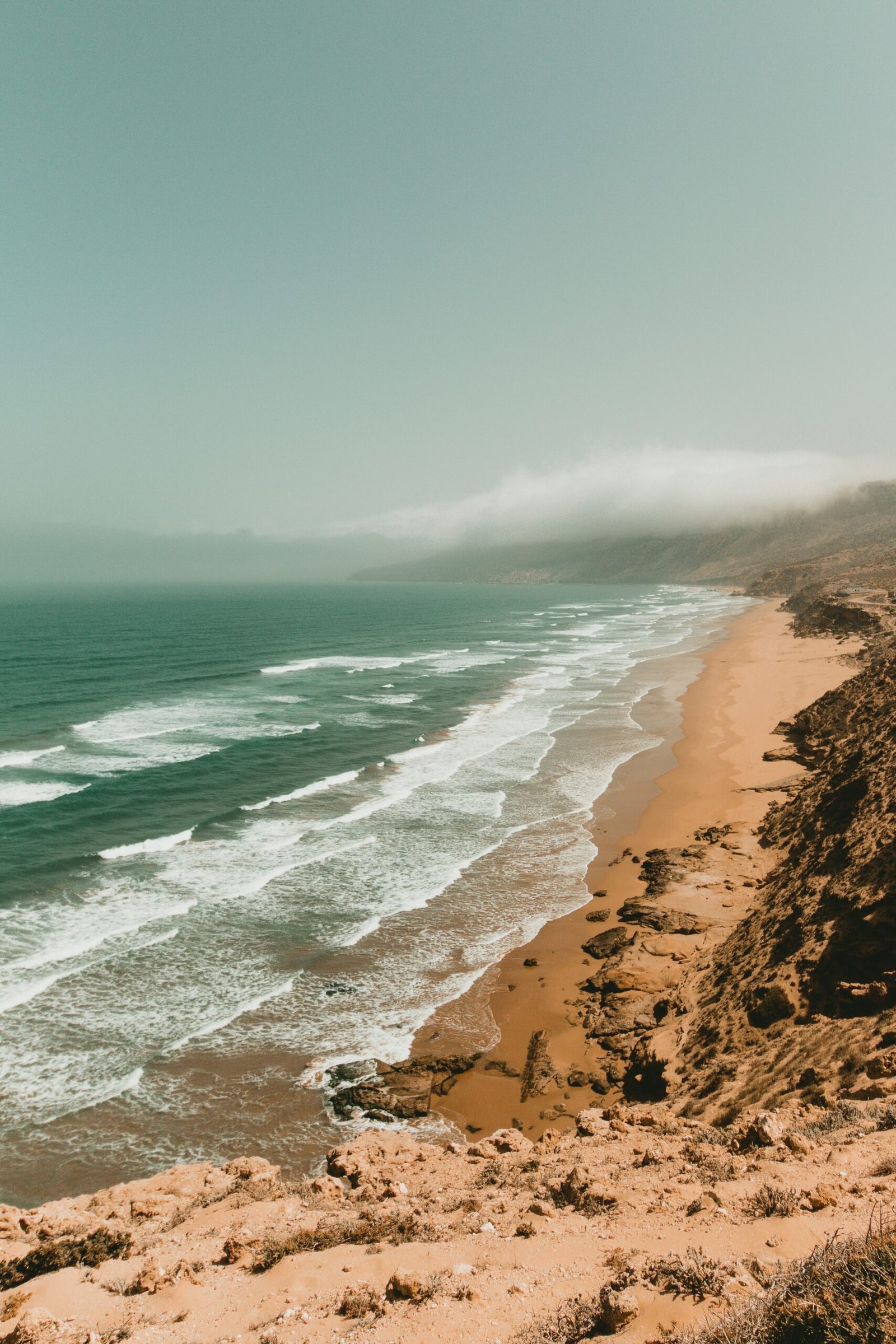
May is the Atlantic coast’s transition month and it suits the coast very well. The big winter swells have largely passed, which means the surf is more accessible for beginners and intermediates while still interesting for experienced surfers on the right days. The water temperature at 19-20°C is the warmest it has been since October. The beach at Agadir in May is warm, uncrowded by summer standards, and functioning as a genuine beach rather than a winter surf coast.
Taghazout in May has a specific energy: the hard-core surf community that winters there is thinning as summer approaches, replaced by a more varied crowd of first-time retreat guests. Retreat centres are full but not at summer maximum, and the social atmosphere has a freshness that the established August community lacks. The coastal landscape is also at its most lush: the winter rains still evident in the green argan forest between Agadir and Essaouira, the Souss plain producing its spring crops of citrus and avocado.
For the full Agadir and Taghazout retreat picture, our yoga retreats in Agadir guide covers the coast in detail.
The Dadès Valley
The Rose Festival in Kelaat M’Gouna usually falls in the first weekend of May. The valley in the days around the festival is as worth visiting as anything else Morocco offers in the month: rose fields producing the last of the harvest, the festival market with its extraordinary concentration of rose products, and the particular atmosphere of a rural Moroccan celebration that has been happening for decades. The drive from Marrakech through the Draa palmeries and up into the Dadès takes about four hours and is spectacularly beautiful in May light.
Even outside the festival, the Dadès Valley in May is an excellent retreat base. The kasbahs along the valley floor, the gorge north of Boumalne Dadès with its dramatic sculpted rock formations, and the rose-scented air in the early morning make it one of Morocco’s most complete sensory environments. It is almost never mentioned in the same breath as Marrakech or the coast for yoga retreats, which is precisely why it is worth considering.
Fez
Fez in May is the city at its most accessible: warm but not yet the 40°C July days that make the tightly packed medina genuinely brutal. The Fès el-Bali medina, the largest car-free urban area in the world, is at its best when the weather is warm enough to sit in a fondouk courtyard with mint tea but not hot enough to make walking the narrow lanes uncomfortable. May sits exactly in that window.
Retreat programming in Fez is less developed than Marrakech but growing. The city’s tanneries, its thirteen centuries of scholarship and craft tradition, its Sufi music scene, and its medina architecture that makes Marrakech look recent and simple — all of these provide a cultural depth that is qualitatively different from anything available in Morocco’s more visited destinations. A yoga retreat based in a Fez riad in May, with the muezzin calls echoing off the medina walls at dawn before practice and the tanneries visited in the morning light before the smell peaks, is a genuinely different Morocco from anything the coast or Marrakech offers.
The Atlas Mountains
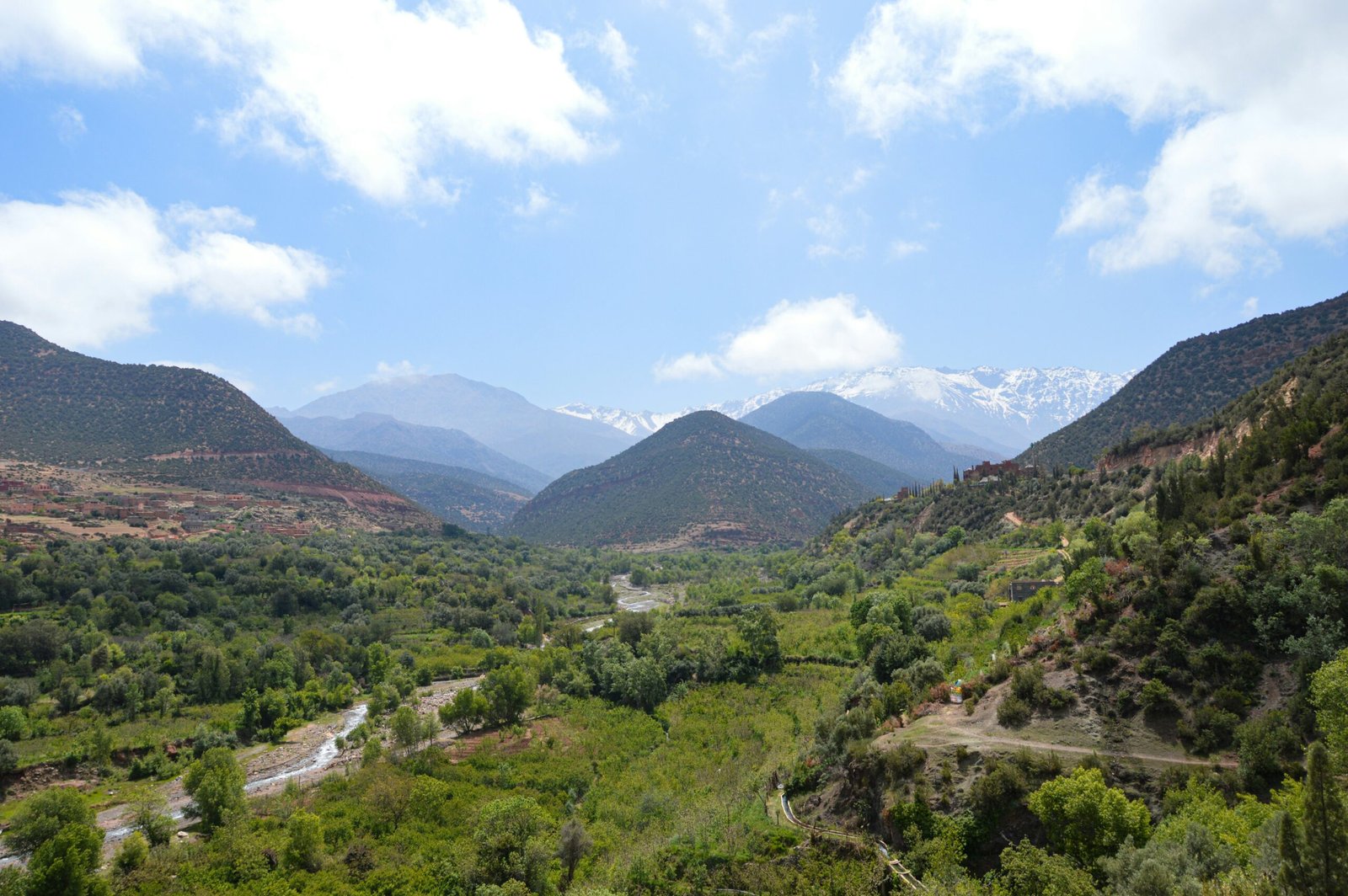
The Atlas in May is warm, fully accessible, and entering its most physically ambitious season. The high pastures above 2,500 metres open in May as the Berber herders move their flocks upward for summer grazing. Walking the high trails means encountering this transhumance: families with their herds, the sound of sheep bells in valleys that were silent in winter, and the specific energy of communities doing this migration as they have for centuries.
The Toubkal summit attempt is best in May and early June, when the summit snow is hard and stable enough for crampons to grip reliably but the summer heat has not yet made the approach exhausting. Retreat centres near Imlil that include a Toubkal attempt in their May programming offer the best window of the year for it.
Chefchaouen
The Blue City of the Rif Mountains is at its best in May: temperatures of 20-25°C, the mountains surrounding the town still green from spring rains, and the blue-painted medina lanes at their most photogenic in the clear spring light. Chefchaouen receives fewer yoga retreat programmes than its beauty warrants, partly because the infrastructure is less developed than Marrakech, but the handful of retreat centres operating here in May offer something genuinely distinctive.
The combination of the blue medina (painted in shades of blue and white by the town’s Jewish community in the 1930s, a tradition maintained ever since), the Rif mountain hiking above the town, and the particular quiet of a city that is beautiful but has not been turned into a theme park, makes Chefchaouen a May retreat destination that rewards those willing to look beyond the obvious choices. The drive from Marrakech takes about five hours via Fez, or three hours from Casablanca.