best yoga retreats

best yoga retreats in 2026

A yoga retreat is one of those experiences that is genuinely difficult to explain to someone who hasn’t had one, and almost impossible to forget for someone who has. It is not a holiday, though it may happen somewhere beautiful. It is not a course, though you will almost certainly learn something. It is not therapy, though it may produce effects that therapy has been working toward for years.


A yoga retreat is, at its simplest, an extended immersion in practice — away from the noise, the obligations, and the accumulated momentum of ordinary life — and at its most significant, it is the experience of finding out who you are when all of that has been temporarily removed. What remains tends to be more interesting, and more workable, than most people expect.


AUTHOR

Om Away

DATE PUBLISHED

January 17, 2026

CATEGORY

Share This Article

Transform Your Mind, Body, and Spirit

In our hyperconnected world, the need to disconnect and recenter has never been more pressing. As we move through 2026, wellness tourism continues its remarkable evolution, with yoga and wellness retreats emerging as sanctuaries for those seeking authentic transformation. Whether you’re a seasoned practitioner or someone taking their first steps toward holistic wellbeing, this year’s retreats offer experiences that go far beyond the yoga mat.

The retreats featured here represent more than just vacation destinations. They’re carefully curated environments where ancient wisdom meets modern wellness science, where the rhythm of your breath becomes more important than the ping of notifications, and where personal growth isn’t just encouraged—it’s inevitable.

under the tuscan sun_3

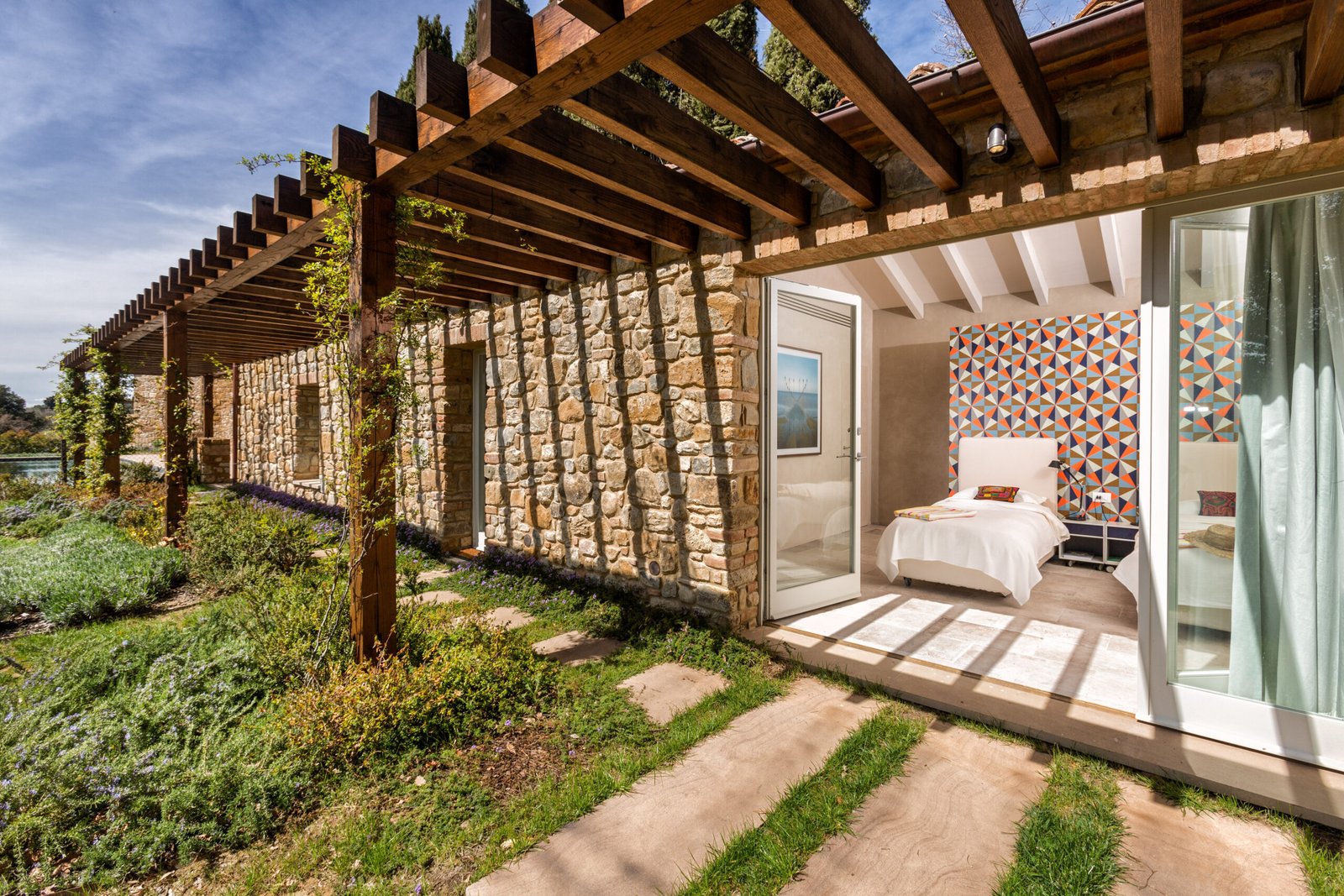
The Sanctuary for the Soul – the VIP Experience – Italy, Tuscany

the sweet earth retreat_4

The Sweet Earth Retreat – Italy, Tuscany

under the tuscan sun_1

Under the Tuscan Sun: A Transformative Experience of Yoga, Photography and Taste. Italy, Tuscany

7 Day Yoga, Relaxation, Wine Tasting and Olive Oil Tasting in the Heart of Tuscany, Italy

Bicycle

5 Day Private Couples Retreat The Art of Connection in Sardinia, Italy

7 Day Italian Cooking, Tour and Yoga Holiday in Puglia, Italy

What a Retreat Actually Is: Beyond the Brochure

The word retreat carries connotations that don’t always serve it well. Images of photogenic wellness, of impossibly flexible people in white linen against a backdrop of mountains or sea, have attached themselves to the concept in ways that obscure what a retreat actually involves and what it is actually for. The reality is both more ordinary and more profound than the aesthetic suggests. A retreat is, at its core, a deliberate removal from the conditions that make genuine practice difficult — the interrupted mornings, the competing priorities, the low-grade exhaustion of managing a full life — and a replacement of those conditions with something more spacious. 


What happens in that space depends entirely on what the practitioner brings to it and what they are willing to meet there.

The structure of a retreat matters more than most people realise before they attend one. The rhythm of early rising, consistent daily practice, shared meals, and the deliberate absence of the digital and social stimulation that ordinarily fills every available moment creates a container that does much of the work before a single pose has been attempted.


Within a few days of this structure, most people notice something shifting — not dramatically, not as a result of any particular session or insight, but quietly and cumulatively, as the nervous system begins to trust the rhythm and the mind begins to release its grip on the management of everything outside the retreat’s boundaries.

This is the retreat’s first and most fundamental gift, and it arrives independently of the quality of the teaching, the beauty of the location, or the specific style of yoga being practiced.

beautiful yoga retreat by the beach

Preparing for Your Retreat Experience

Physical Preparation

If you’re not currently practicing yoga, starting even a simple home practice a few weeks before your retreat can help. This doesn’t need to be elaborate—even 15 minutes of gentle stretching and breathing daily helps prepare your body and establishes familiarity with the practice.

Mental and Emotional Preparation

Set clear intentions for your retreat. What do you hope to learn, release, or cultivate? Writing these intentions down and bringing them with you provides an anchor point when the experience becomes challenging or confusing.

What to Pack

Most retreats provide detailed packing lists, but general essentials include comfortable yoga clothes in layers (temperatures can vary greatly between early morning and midday), a reusable water bottle, sunscreen and insect repellent, any personal medications, and a journal.

What to Expect at a Yoga and Wellness Retreat

The Typical Daily Schedule

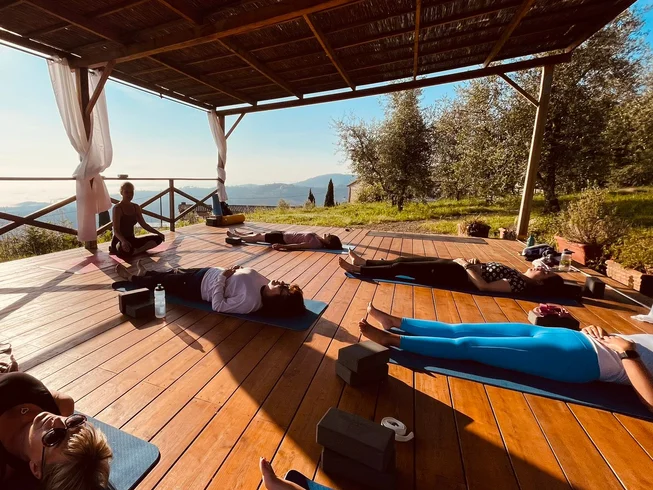
While each retreat has its own rhythm, most follow a general structure. Mornings typically begin early, often with meditation or pranayama before sunrise, followed by a morning yoga practice. Breakfast comes after practice, designed to nourish and energize.

Midday might include workshops, spa treatments, or free time for reading, journaling, or exploring. Some retreats encourage napping during the hottest part of the day—a practice that honors the body’s natural circadian rhythms and can be surprisingly restorative.

Afternoons often include another yoga class, perhaps a more restorative or yin practice than the morning session, followed by dinner and evening activities like meditation, sound healing, or group sharing. Many retreats maintain technology-free zones or specific times, encouraging presence and connection.


woman doing a yoga pose during a yoga retreat
warrior 2 yoga position

Maximizing Your Retreat Investment

Arriving with an Open Mind

Perhaps the most important thing you can bring is openness. Retreats often include practices or experiences outside your comfort zone—whether that’s sitting in silence, trying unfamiliar foods, or engaging in emotional work. The magic happens when you allow yourself to be a beginner, to not know, to be uncomfortable.

Honoring Your Boundaries

While staying open is important, so is honoring your limits. Good retreats respect that participants need different things. If you need to skip a class to rest, that’s okay. If a particular practice doesn’t serve you, you can modify or opt out. Wellness isn’t one-size-fits-all, and part of the journey is learning to discern what truly nourishes you.

Building Community

One of the unexpected gifts of retreat life is the community that forms. There’s something about sharing this vulnerable journey with others—practicing yoga together, eating nourishing meals, having real conversations without the usual social masks—that creates surprisingly deep bonds.

The Emotional Journey

It’s worth noting that wellness retreats can bring unexpected emotional releases. When we slow down and turn inward, emotions we’ve been suppressing often surface. This is normal and actually a sign the retreat is working—you’re creating space for things that need to be felt and processed.


After the Retreat: Integration and What Comes Next

The question of what happens after a retreat is as important as the retreat itself, and it is the one that most retreat marketing conspicuously avoids. The experience of returning to ordinary life after a week of immersive practice is not always straightforward — the contrast between the clarity, spaciousness, and intentionality of retreat life and the noise, speed, and fragmentation of daily routine can be disorienting in ways that range from mildly uncomfortable to genuinely destabilising. This is not a sign that the retreat failed or that the insights it produced were illusory. It is a sign that the retreat worked, and that the work is not finished.


Integration — the process of bringing what the retreat produced into the texture of ordinary life — is where the real value of the experience is either realised or lost. The practitioners who benefit most durably from retreat experiences are not necessarily those who had the most dramatic insights or the most emotional sessions, but those who returned home with a realistic plan for maintaining some version of the retreat’s rhythm: a consistent morning practice, however brief; a degree of intentionality around sleep and nourishment; a relationship with stillness that doesn’t require a week away to access. A retreat that includes explicit integration guidance — practical tools for sustaining what the week produced — is worth significantly more than one that sends participants home full of inspiration and entirely without structure. Inspiration fades. Practice, maintained, compounds.

tree pose, woman doing yoga by the beach in a yoga retreat context

faqs: yoga retreats in 2026

1. Do I need to have a regular yoga practice before attending a retreat? Not necessarily, but it depends on the retreat. Many retreats are explicitly designed for beginners and build their programs around foundational practice, clear instruction, and adequate support for people who are new to yoga or returning after a long absence. Others assume a level of existing practice and move accordingly. The most important thing is honest self-assessment when choosing a retreat — attending a physically demanding program without the relevant foundation is neither safe nor enjoyable, while attending a beginner’s retreat as an experienced practitioner tends to be simply unsatisfying. Read the retreat description carefully, and if in doubt, contact the organiser directly before booking.


2. How long should a first retreat be? Three to five days is a sensible starting point for most people. Long enough to genuinely settle into the rhythm and move past the first day or two of adjustment, but short enough that the commitment feels manageable rather than daunting. A week-long retreat produces deeper results but requires a greater initial investment of time, money, and trust — all of which are easier to extend once you have some experience of what retreats actually involve. The most common feedback from first-time retreat participants is that they wished it had been longer, which is a useful argument for starting shorter and returning, rather than attempting the longest possible option before knowing whether the format suits you.


3. What is the difference between a yoga retreat and a yoga holiday? The distinction is real and worth understanding before booking. A yoga holiday typically offers yoga as one activity among many — a morning class followed by sightseeing, beach time, or other leisure activities, with the yoga functioning as an enhancement to a holiday rather than its primary purpose. A retreat, by contrast, structures the entire experience around the practice — the schedule, the meals, the social life, and the environment all serve the work rather than competing with it. Neither is inherently better, but they produce very different experiences and suit very different needs. If what you want is genuine immersion and the possibility of real change, a retreat is the appropriate choice. If what you want is a relaxing trip that includes some yoga, a holiday is more honest about what it is.


4. How do I choose the right retreat for me? Start with the style of yoga being taught and verify that it matches your experience level and physical capacity. Then look at the teacher — their background, their training lineage, and ideally some account of what it is actually like to practice with them, whether through reviews, videos, or personal recommendation. Consider the group size: smaller retreats offer more individual attention and tend to produce more genuine community; larger ones offer more anonymity and sometimes more variety of programming. Location and season matter more than they initially seem — a beautiful setting that is wildly hot or cold in ways the retreat doesn’t address can significantly undermine the experience. Finally, trust your instincts about the overall tone of the retreat’s communication: the language a retreat uses to describe itself tells you a great deal about what it will actually feel like to be there.


5. What should I do if I find the retreat emotionally difficult? Tell someone — ideally the retreat teacher or a member of the facilitation team, and ideally sooner rather than later. Emotional difficulty is a normal and not uncommon part of retreat experience: the combination of reduced stimulation, consistent practice, and the removal of the ordinary coping mechanisms that busy life provides can surface feelings and material that haven’t had space to move for months or years. This is not a malfunction. It is often the retreat doing its most important work. What matters is that it happens within a container that can hold it — which means a teacher who is competent to respond, a program that includes adequate integration time, and a participant who has communicated their experience rather than trying to manage it alone. A retreat that has never seen anyone become emotional mid-week is probably not going deep enough.


6. Is a solo retreat or a group retreat better? They are different experiences serving different needs, and the choice depends entirely on what you are looking for. A group retreat provides structure, community, and the particular kind of mirroring that comes from practicing alongside others who are doing genuine work — you learn things about yourself from watching other people practice that solitary practice never produces. A solo retreat — whether at a dedicated centre or self-organised — offers a depth of silence and self-direction that group settings inevitably compromise. Many experienced practitioners alternate between the two, using group retreats for the relational and communal dimensions of practice and solo retreats for the most demanding personal inquiry. For most people, a group retreat is the more appropriate starting point and the solo retreat is something to grow into.


7. What should I pack for a yoga retreat? Less than you think. The instinct to overpack for a retreat is almost universal and almost universally unnecessary — the simplicity that makes retreats effective extends to the material dimension, and arriving with too much creates a subtle psychological noise that works against the experience. Comfortable clothing suitable for practice and for the climate, a mat if you have one you prefer, any personal supplements or medications, a journal, and one good book cover most retreats adequately. Leave the laptop, minimise the phone’s role to navigation and genuine emergency, and resist the impulse to bring anything that signals a failure to fully commit to being away. The thing most people forget to pack — and most need — is the willingness to arrive without an agenda. Everything else can be managed.


Share Your Thoughts

Your email address will not be published. Required fields are marked *

Leave a Reply

Your email address will not be published. Required fields are marked *

Leave a Reply

Your email address will not be published. Required fields are marked *