
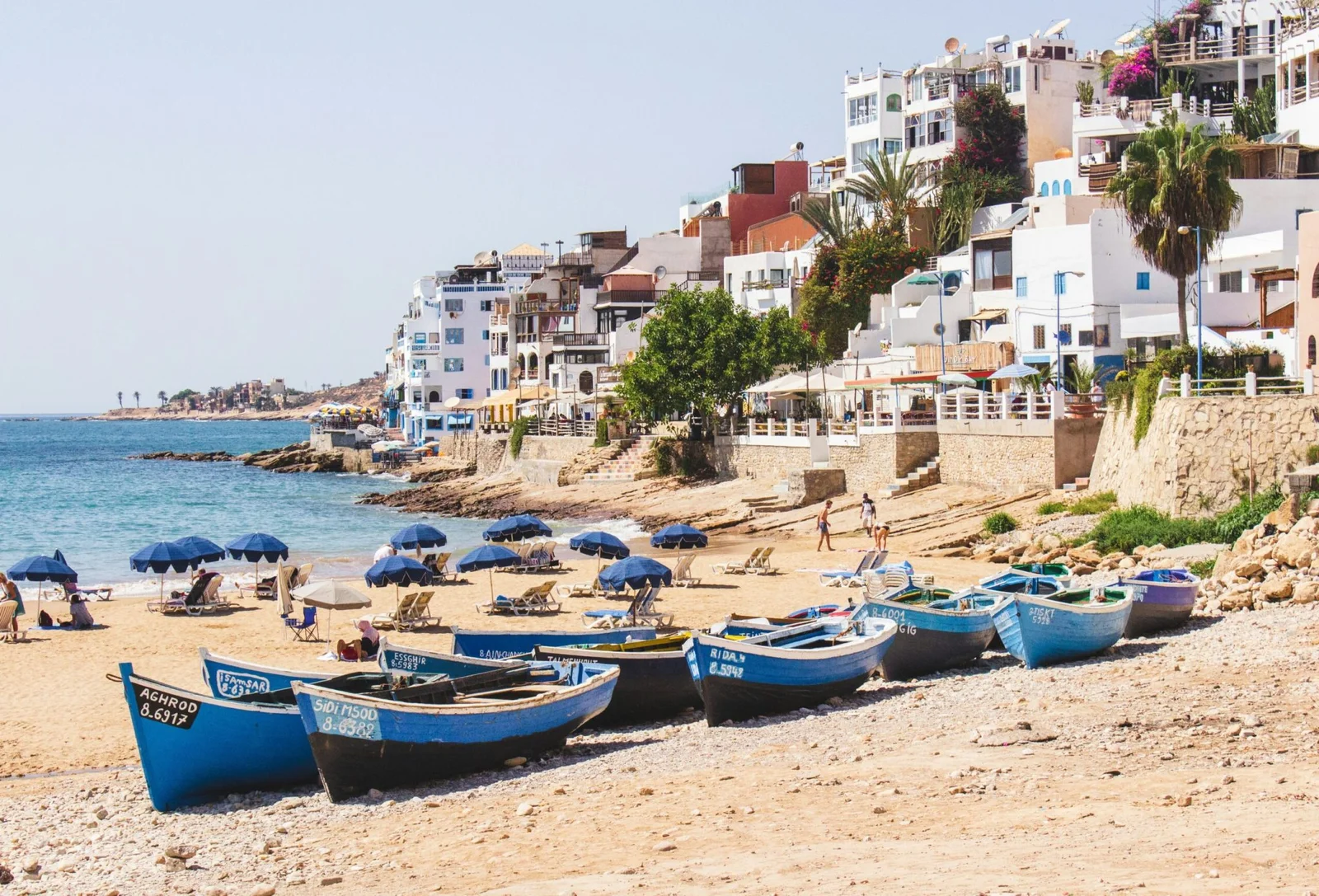
November in Morocco is a reward for patience. The October visitors have gone home. The Christmas crowd has not yet arrived. Prices are at their autumn low, retreat centres have genuine availability, and the country is in its most honest and unhurried state. The surf on the Atlantic is at full power. The Marrakech Film Festival brings a creative international crowd to the medina. And the medinas return to something close to their everyday selves.


November is quieter than any month except February and shares February’s advantages: low prices, genuine availability, and a Morocco that functions for Moroccans rather than for visitors. The weather is mild and reliable in Marrakech (18-24°C), the coast warm and surf-active, and the Sahara entering its beautiful cool-season window.
The Atlas olive harvest that began in October continues through November, the first rains of winter green the Haouz plain, and the country takes on an early-winter quality that suits introspective retreat practice in a way that the spring and autumn peak seasons cannot always match. Our full Morocco retreat guide covers every region for those still deciding.
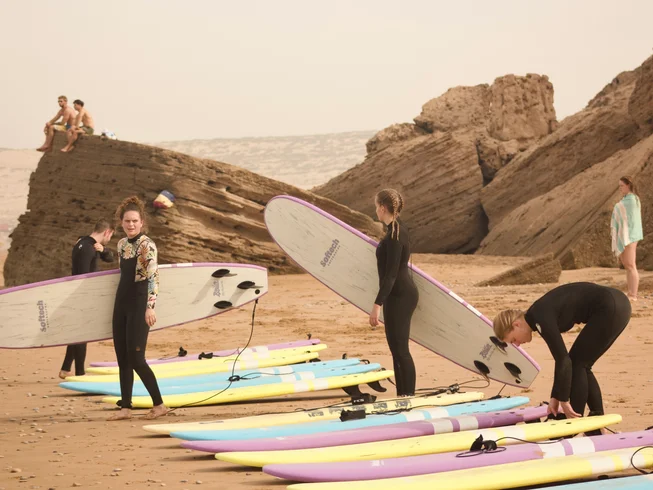
November is peak surf season on the Morocco coast and the reason serious surfers from across Europe are here specifically in this month. The North Atlantic storm systems that build through October reach their November power: Anchor Point north of Taghazout is producing the long, powerful right-handers that make this break one of the most celebrated point breaks in Africa, with wave faces of 2-4 metres on the best days. The surf community that winters on this coast — the people who come for six months and stay — is fully assembled by November.
For yoga retreat guests who surf, November is the peak experience: the most consistent and powerful waves of the season, water still at a manageable 18-19°C with a 4-3mm wetsuit, and the retreat community at its most intentional. Those who came specifically for winter surf are not casual visitors; the quality of attention in November Taghazout retreats reflects this. Our surf and yoga Morocco guide covers the full coast and what the winter season looks like. For those who don’t surf, the coast in November has its own reward: the dramatic winter Atlantic, long beach walks, and the quality of community that forms when people share a serious seasonal experience.
Marrakech in November has the particular quality of a city returning to itself after a busy season. The temperature is perfect for outdoor practice: 10-22°C, warm enough for rooftop yoga at any hour of the day, cool enough in the evenings that the medina walk after dinner requires a light jacket. The riad gardens in November are starting to show the end of their autumn production: the last pomegranates on the trees, the orange trees green and promising fruit still weeks away, and the first narcissus beginning to push through in sheltered corners.
The Marrakech International Film Festival (FIFM), usually held in late November or early December, brings an international creative community to the medina — filmmakers, actors, critics, and the Moroccan film industry in one of its most concentrated annual moments. Screenings in converted medina spaces, red carpet events at the Palais du Congrès, and the general animation of a city hosting an event it takes seriously: for retreat guests who want cultural dimension alongside practice, FIFM week in Marrakech is unlike any other week of the year.
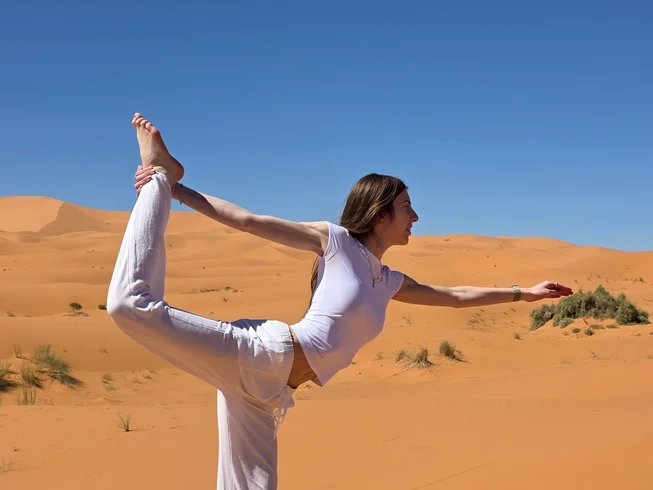
November is the Sahara’s sweet spot. The summer heat is entirely gone, the desert nights are properly cold (8-12°C), and the days are warm and dry at 22-28°C — the ideal combination for the full desert retreat experience. The Sahara in November has almost no visitors outside of specific holiday weekends, which means the silence at Erg Chebbi is more complete than in any other month that offers good daytime conditions.
Practice at sunrise on the dunes in November requires a warm layer before the sun is fully up, which means the experience of the light changing over the erg — from darkness to the first blue, through purple and orange to full gold — is accompanied by visible breath in the cold air and the particular alertness that genuine cold produces in the body. It is the most viscerally awakening version of desert practice, and participants who have done it in multiple months consistently say November produces the most powerful quality of presence.
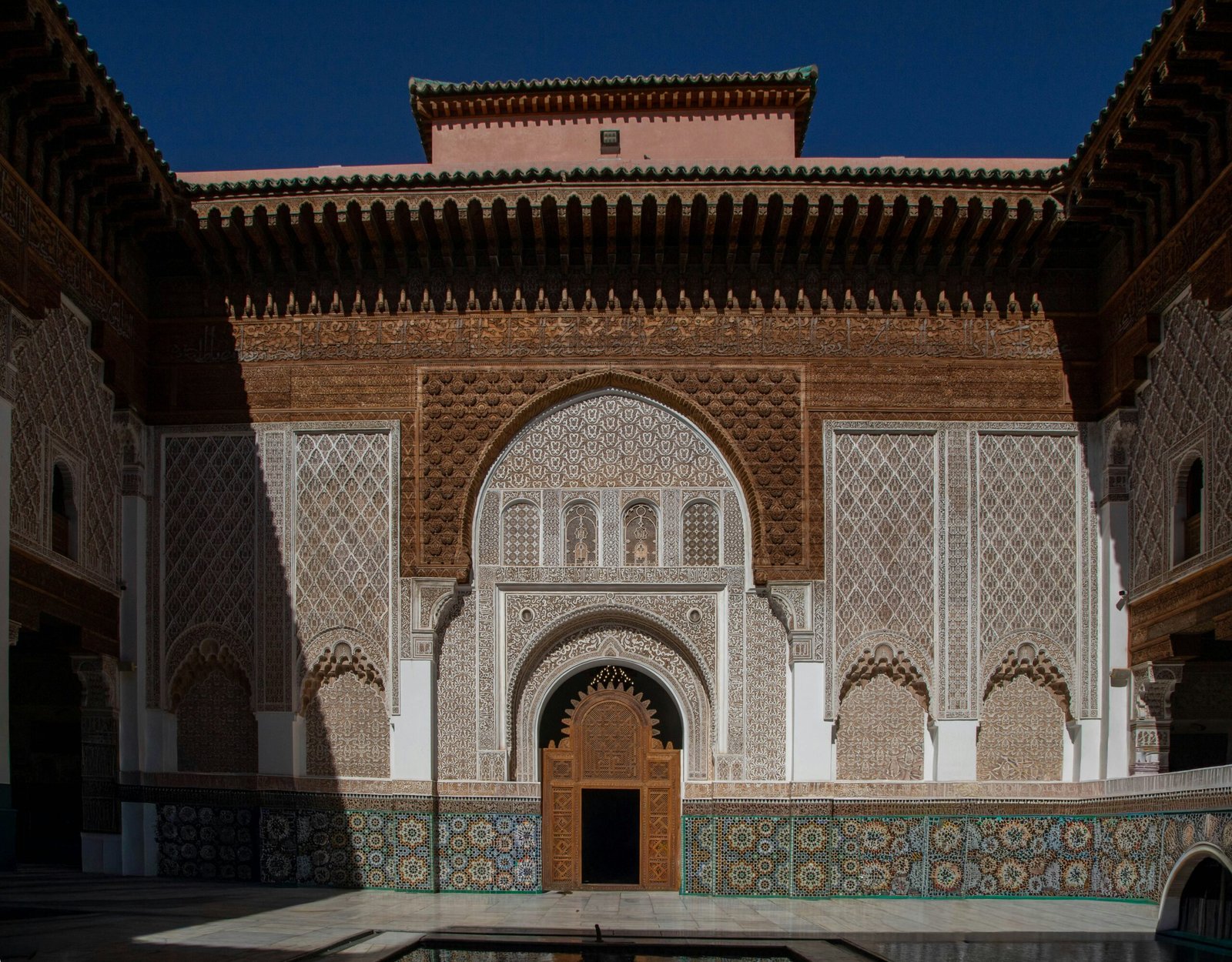
Fez in November has a specific cultural atmosphere: the Festival of World Sacred Music (sometimes November, sometimes April — check current-year dates) brings Sufi musicians, sacred choral groups, and spiritual music traditions from across the world to performances in the medina’s most beautiful spaces. The Bou Inania Madrasa, the Batha Museum gardens, and the open squares of the old city become concert venues for music that takes the spiritual seriously rather than staging it for entertainment.
Beyond the festival, Fez in November has the same advantages it had in September: comfortably cool, the medina fully navigable, the tanneries operating at full production preparing leather for the pre-Christmas market. The souks in November are full of craftspeople working at serious pace — the months before the December holiday shopping season are when Moroccan artisans do their most intensive production, and visiting the workshops during this period means seeing the craft at its most active rather than its most performative.
Tiznit, 90 kilometres south of Agadir, is Morocco’s silver jewellery capital — a walled medina town built around a tradition of Amazigh silver craftsmanship that dates back centuries. In November, the silver souk at the centre of the medina is at full production: artisans working with the fine filigree, geometric inlay, and hand-chased techniques that distinguish Tiznit silver from the mass-produced imitations sold in Marrakech tourist shops. The surrounding Anti-Atlas landscape — lower and more arid than the High Atlas, with pink granite boulders, argan forests, and almond orchards — is at its most accessible in November, warm enough for hiking without the summer heat.
Retreat centres in the Tiznit area are rare, but the town works excellently as a base for excursions into the Anti-Atlas: the fortress-granaries (agadirs) of the surrounding villages, the rock art sites near Tafraout with ancient Amazigh inscriptions, and the painted blue boulders of the Valley of the Rocks near Tafraout. A November retreat based in Agadir with a two-day excursion to Tiznit and the Anti-Atlas delivers a Morocco that very few visitors reach.
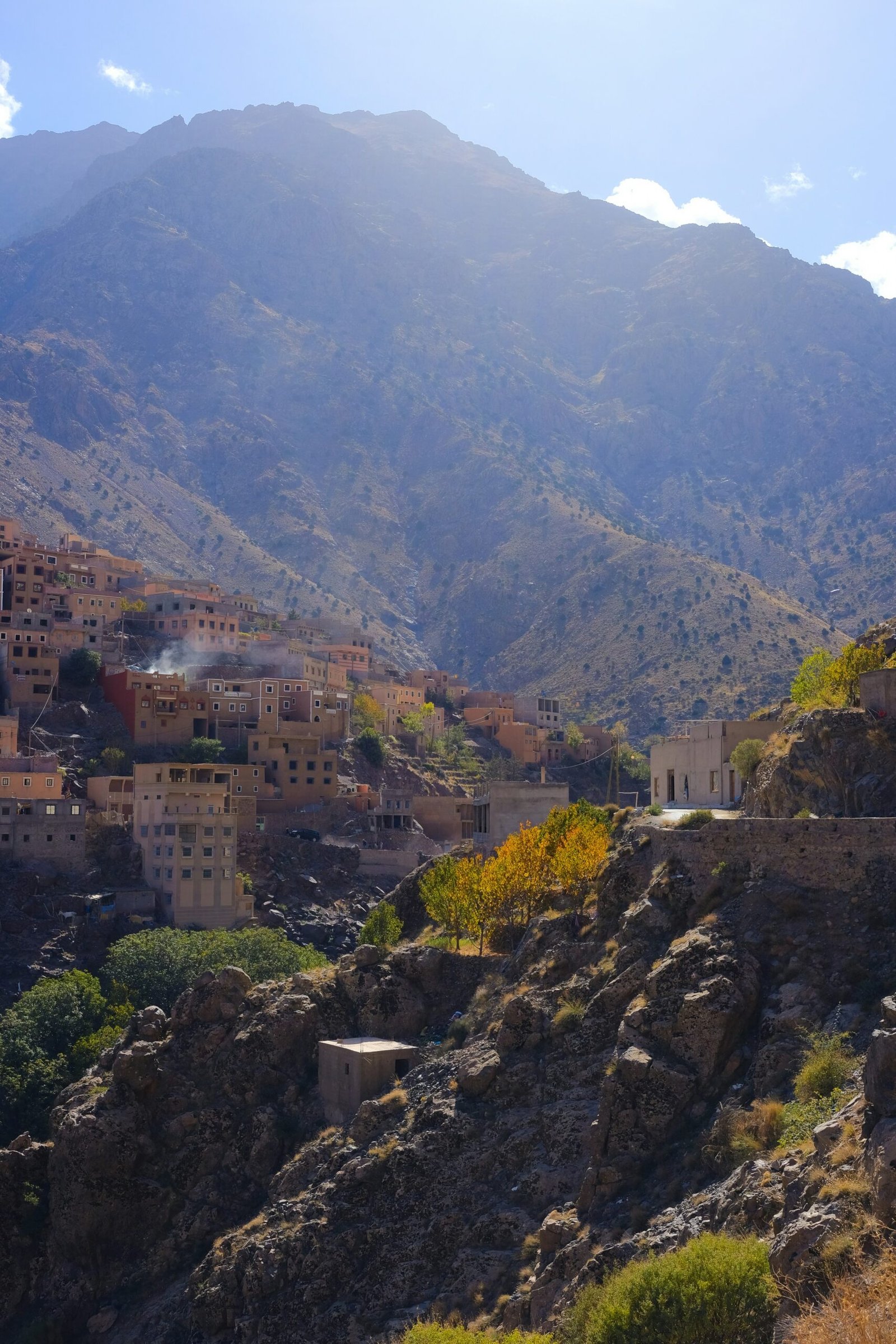
The olive harvest is finishing its main run in November, and the freshly pressed oil is still available at village mills and farm-gate sellers in the Atlas foothills. By November the oil has settled slightly from the bright green of October’s first pressing — it is now a deeper gold, the initial grassiness giving way to a more rounded fruitiness while retaining the peppery finish that marks new-season oil. Drizzled over harira at a mountain guesthouse, it is the correct finishing touch for Morocco’s national soup in its winter form.
Moroccan tangerines from the Berkane and Nador regions in the northeast arrive in November: small, intensely sweet, and sold in net bags at every market. The Berkane tangerine — grown in the Mediterranean climate of the far northeast, near the Algerian border — is considered by Moroccan fruit sellers to be superior to the Souss varieties that dominate later in the season. Buy a bag, eat them over two days, and understand why the commercially produced tangerine is such a poor imitation of the original.
Harira in November shifts into its most nourishing winter form. Thicker, more generously spiced, served with a wedge of fresh-baked khobz (the round Moroccan bread baked in communal ovens) and a drizzle of the new-season olive oil. At the street carts in Marrakech in November, a bowl of harira at breakfast costs almost nothing and sets up the body for a cool morning of practice better than anything else available.
November pomegranates are the last of the year — by December the season is over. The fruit is at its most deeply red, the seeds almost wine-dark, and the juice pressed at market stalls has the tartness and complexity of a fruit that has had the full growing season to develop. A glass of fresh pomegranate juice in the Marrakech medina in November, standing at the cart, is one of those seasonal pleasures worth seeking specifically rather than treating as incidental.
Rfissa — the Moroccan celebration dish of chicken slow-cooked with lentils, fenugreek, and msemen flatbread — is a November staple in traditional riad kitchens. Rich, warming, complex, and associated with birth celebrations and significant occasions, it appears on the menus of better traditional restaurants in winter months when the cold makes its generosity appropriate. Ask for it specifically — it is rarely on printed menus but almost always available if requested at a riad restaurant in November.
Late November or early December, dates vary annually. One of Africa’s most prestigious film festivals, bringing international and Moroccan cinema to screenings across the city. Free and ticketed screenings in medina spaces, industry events at the Palais du Congrès, and the particular energy of a cultural capital taking itself seriously for a week. Check current-year dates — it sometimes falls in the first week of December rather than November.
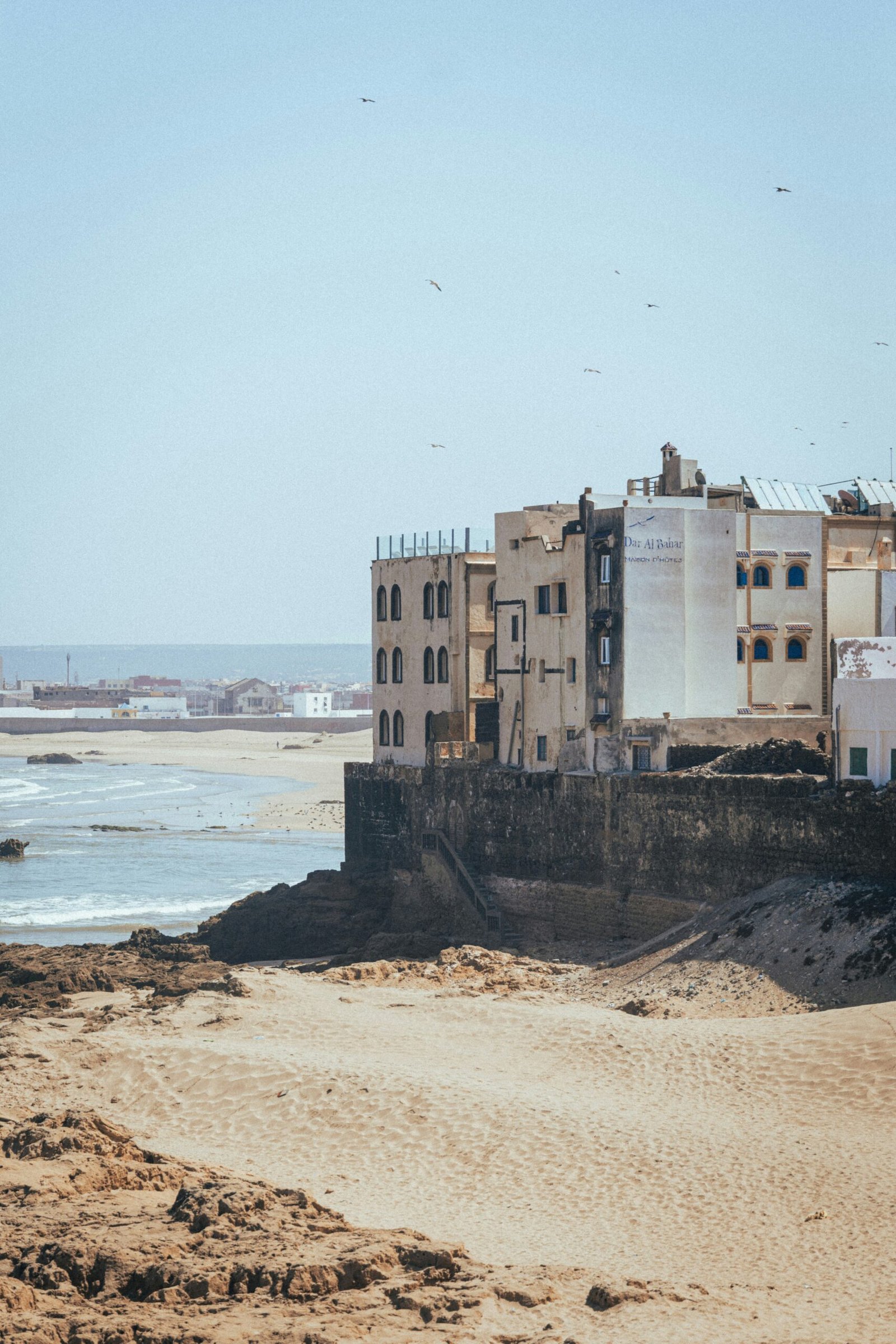
Throughout November. The Atlantic surf season peaks in November through January. Anchor Point, Mysteries, Killers, and Panoramas around Taghazout are all producing at full capacity. The best month of the year for experienced surfers on the Morocco coast.
Check current-year dates — the festival alternates between spring and autumn editions. When it falls in November, it is one of the most spiritually serious events in the Moroccan cultural calendar: sacred music from Sufi, Christian, Buddhist, and indigenous traditions performed in the medina’s most beautiful spaces.
November programming is winter mode with autumn warmth — the outdoor practice that October offered still available, but with the day’s structure shifting toward the indoor-outdoor balance that cold evenings and occasional rain require. The best November retreat centres have indoor studios as good as their outdoor spaces, understanding that the month’s rain risk requires a programme that works fully in either condition.
The surf-yoga programme in November is the most complete version of what the Atlantic coast offers. Morning yoga designed to prepare the body for the surf — shoulder opening, hip mobility, core activation — followed by three hours in waves that are genuinely delivering rather than merely present. Afternoon yin after the surf, working into the areas the ocean demanded, followed by communal dinner and the particular tiredness of a body fully and honestly used. This rhythm, sustained over a week, produces the physical and mental shift that retreat guests come for.
Marrakech November retreats work best when they embrace the city’s winter character: 6:30am rooftop practice as the city wakes in cool air, the Atlas visible to the south in the low winter light, breakfast in a warming courtyard, and the afternoon for the medina at the pace November allows. The FIFM, if it falls during your retreat week, adds a cultural dimension that no other week of the year provides — an evening screening in a converted medina space, followed by the walk back through the lamp-lit souks, is the kind of retreat evening that people describe for years.
Is November worth choosing for the surf specifically? Yes — November is the peak month for experienced surfers on the Morocco coast. Anchor Point and the Taghazout breaks are at full power, the surf community is at its most concentrated, and the retreat programming around surf and yoga is at its most sophisticated. If surfing is the primary reason for the trip, November is the month to come.
What happens if it rains during a November retreat? Brief rain is possible but usually short-lived. Good retreat centres have indoor studios, hammam facilities, and cooking class programming that fill rain days without loss. Ask specifically about indoor options when booking. A November retreat that has no indoor plan is a risk; one that treats rain days as hammam days is delivering something genuinely pleasant.
Is the Sahara too cold for a desert retreat in November? Not if you pack correctly. Nights drop to 8-12°C, which requires a serious sleeping bag or the heavy blankets that good camps provide. Days are warm and dry. The cold is part of the November desert’s appeal — the contrast between the cold pre-dawn on the dunes and the warm sun that rises over the erg is at its most dramatic in November. Pack a proper warm layer and embrace it.
How does November compare to December for a Morocco retreat? November is quieter and cheaper. December splits into two distinct experiences: early December shares November’s quiet quality, while the Christmas week brings the year’s second-busiest period with prices to match. If flexibility allows, early December is almost as good as November and slightly warmer. See our yoga retreats in Morocco in December guide for the full picture.
Your email address will not be published. Required fields are marked *