
Essaouira occupies a narrow peninsula on Morocco’s Atlantic coast, fortified over centuries by Portuguese, then Moroccan, then French hands, and shaped throughout by the Alizé trade winds that blow almost every day of the year. The wind is not incidental to Essaouira — it’s the defining fact of the place. It keeps temperatures moderate when the rest of Morocco bakes in summer heat, creates the conditions that have made this one of the world’s great windsurfing destinations, and gives the town its particular character: slightly wild, always in motion, nothing quite static.
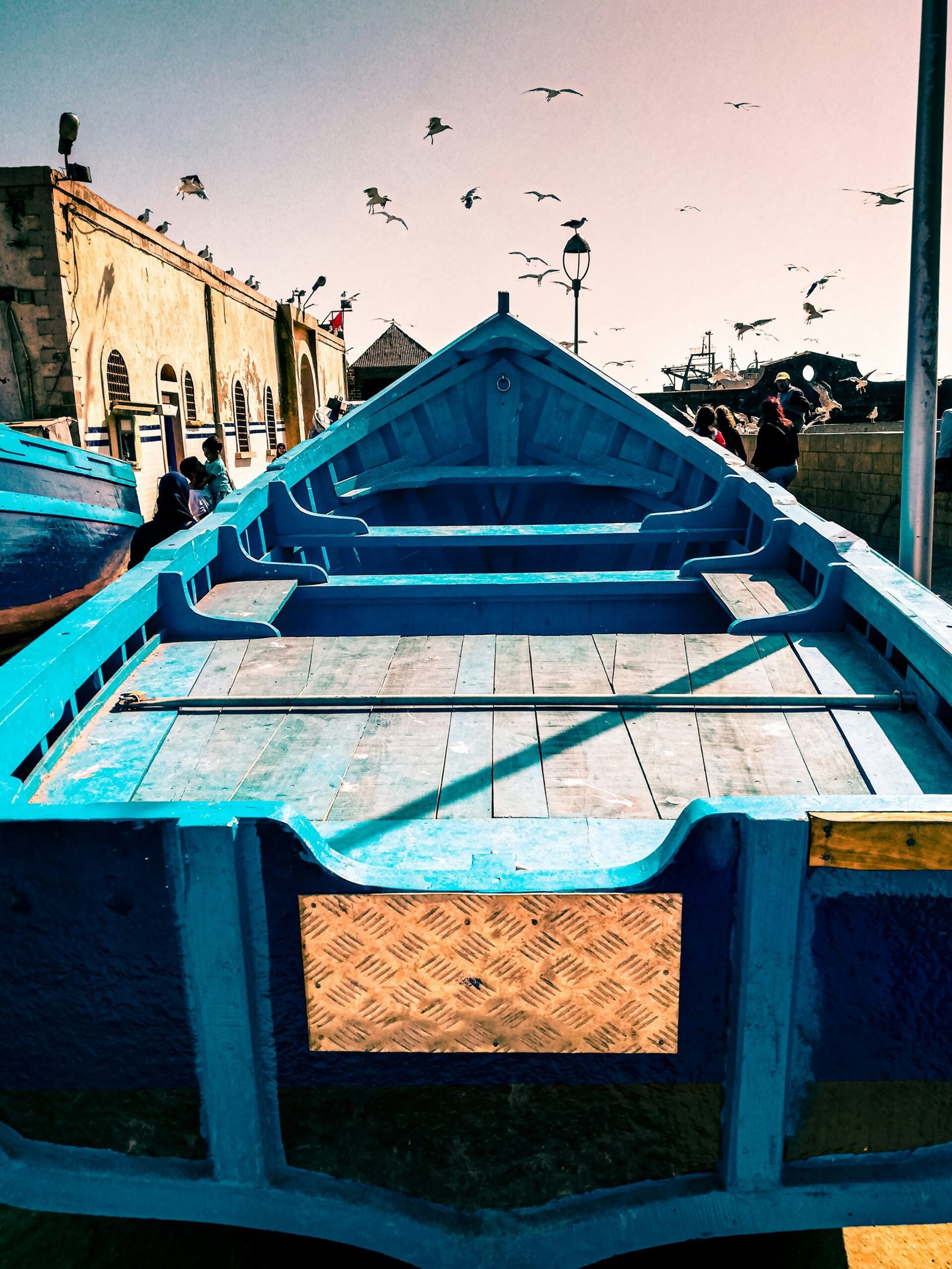
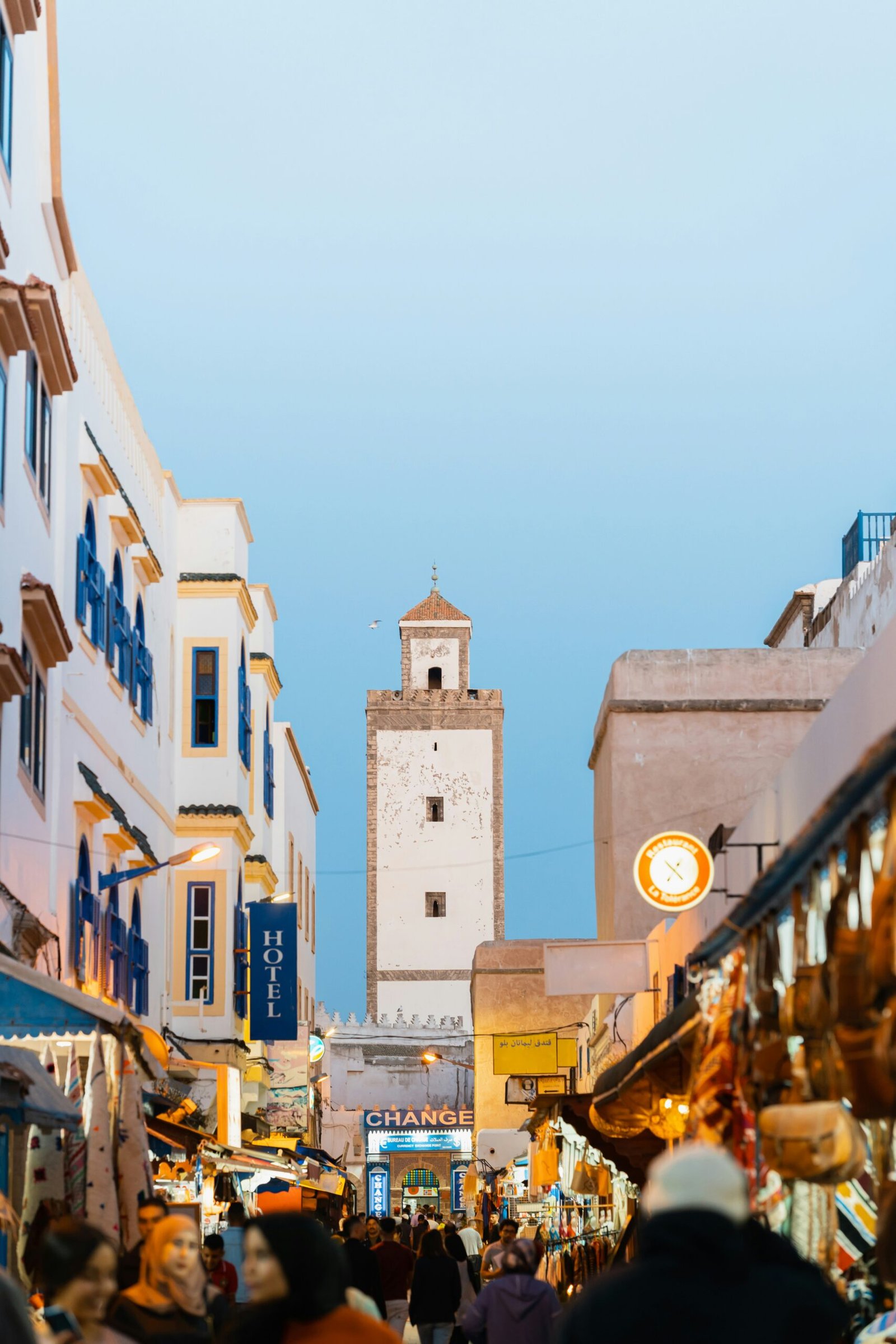
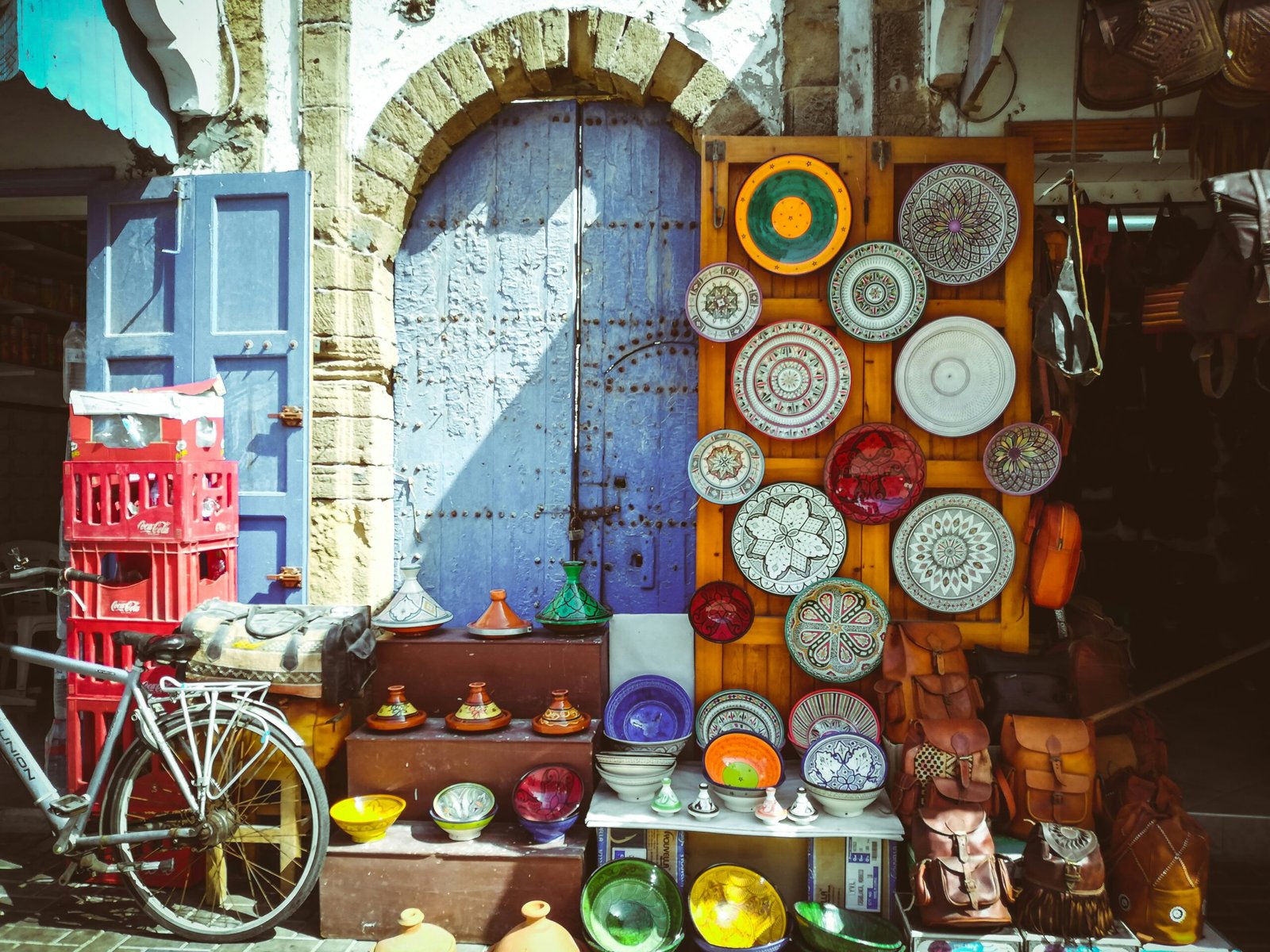
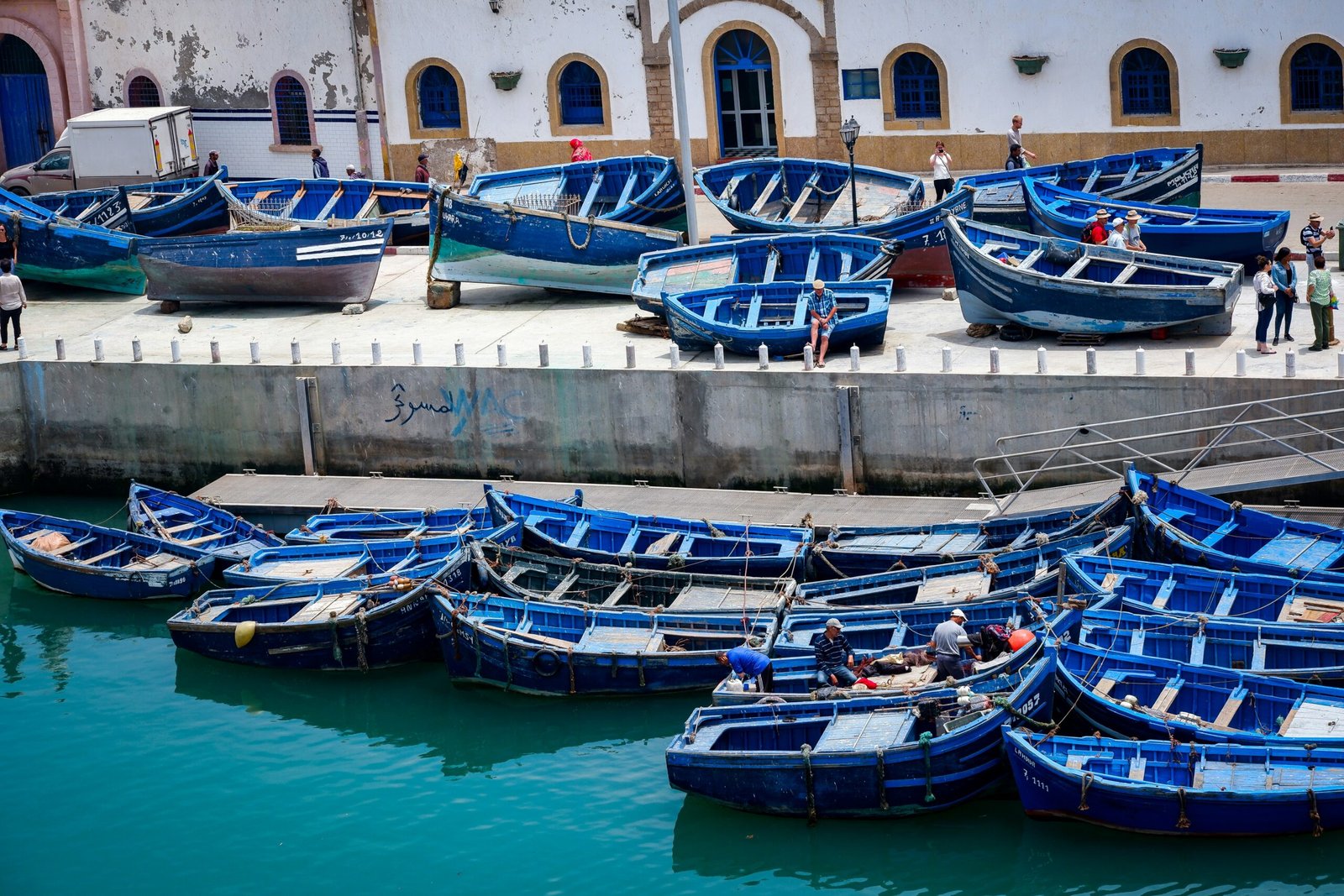
The medina is a UNESCO World Heritage site, and unlike Marrakech’s labyrinth, it’s laid out in a comprehensible grid — the work of a French engineer named Théodore Cornut, commissioned in the eighteenth century by Sultan Mohammed III who wanted a modern Atlantic trading port. The result is a medina you can actually navigate, with wide enough streets to breathe, blue-painted doors and whitewashed walls that glow in the afternoon light, and a commercial atmosphere that’s curious rather than aggressive. Artisan workshops selling thuya wood, textiles, and pottery line the lanes. The fishing harbour smells like the sea and sounds like gulls. The ramparts face the ocean, and people walk them at sunset.
For a complete picture of what Morocco offers across different regions, our yoga retreats in Morocco guide covers the full range — from the desert to the mountains to the coast.
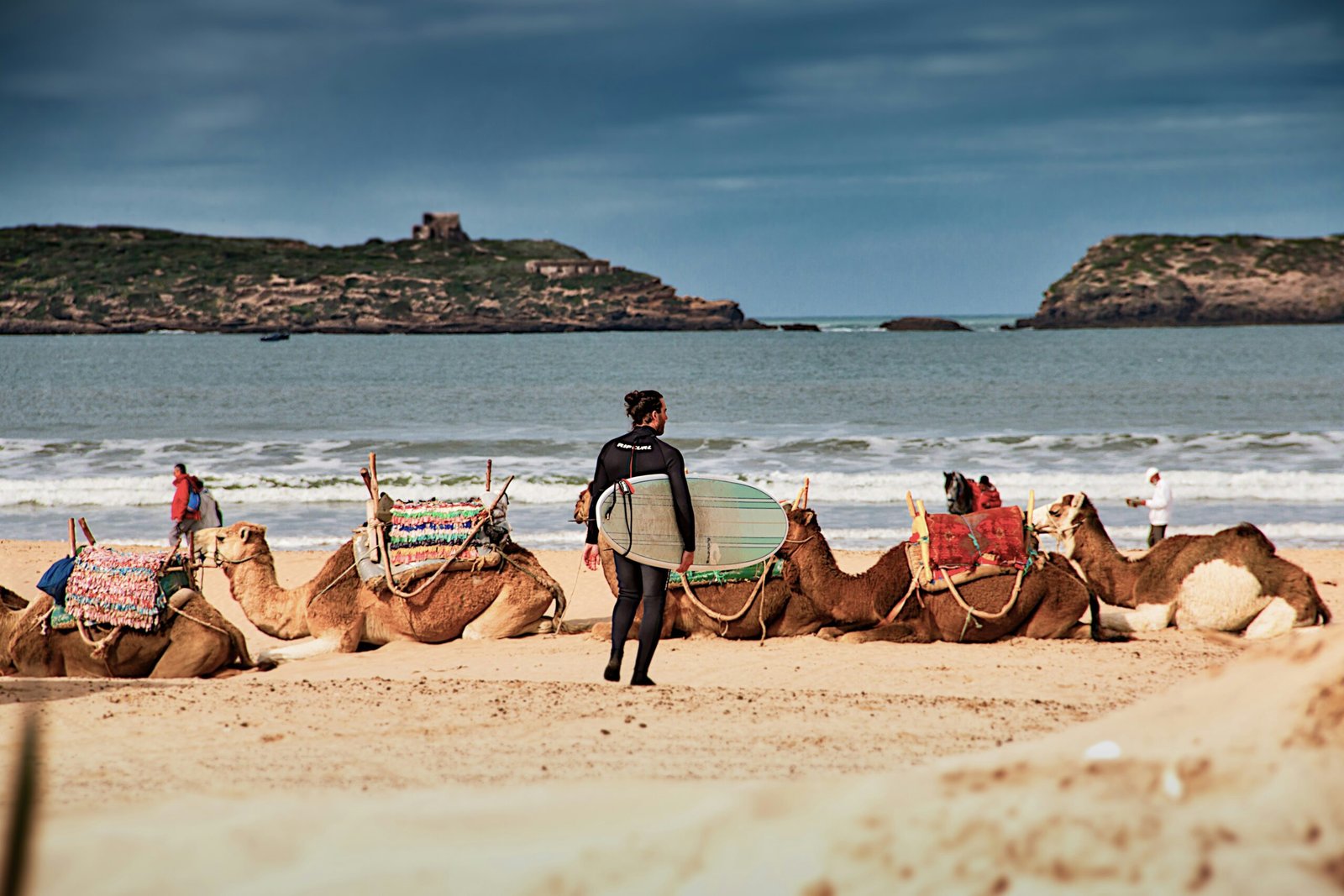
Essaouira’s beach stretches for kilometers, wide and sandy, perfect for walking meditation, jogging, or simply sitting watching the endless parade of windsurfers and kites. The water is cool year-round—Atlantic currents keep temperatures at fifteen to twenty degrees even in summer—requiring wetsuits for extended swimming but creating the kind of invigorating cold water immersion that feels therapeutic rather than merely uncomfortable.
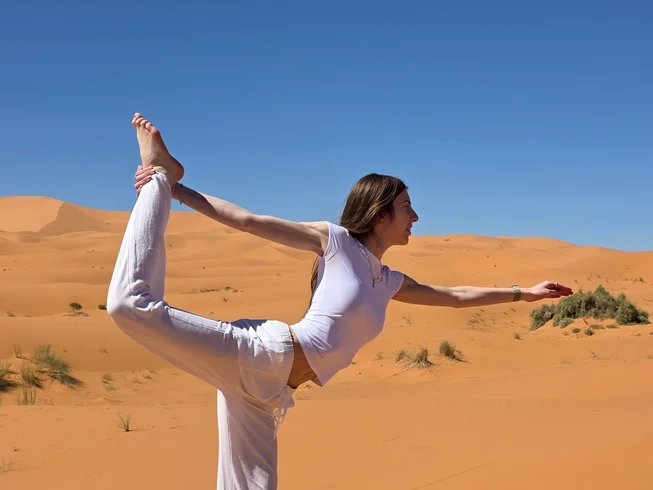
Beach-based yoga becomes daily practice at many Essaouira retreats, either on the sand itself when wind allows or on protected terraces overlooking the ocean. The sound of waves provides natural pranayama rhythm, the vastness of the sea horizon creates natural meditation object, and the negative ions in sea air contribute to the particular mental clarity that coastal practice produces.
Unlike Marrakech’s overwhelming maze, Essaouira’s medina is comprehensible—small enough to navigate in an hour, laid out in a grid that makes orientation possible, with fewer aggressive vendors and a generally more relaxed commercial atmosphere. The blue and white color scheme, the Portuguese fortifications, the fishing harbor where boats unload their catch each afternoon—these create a town that feels authentic without feeling hostile to outsiders.
Retreat centers occupy riads within the medina or guesthouses along the coast, many with rooftop terraces offering views of both ocean and medina. The town’s scale means you can walk everywhere, eliminating the need for taxis or guides, creating the independence that allows you to explore at your own pace. The souks here specialize in thuya wood products, textiles, and art rather than aggressive tourist targeting, making shopping feel more like discovery than combat.
Essaouira’s bohemian character attracts artists and musicians, resulting in galleries, live music venues, and creative workshops that provide cultural enrichment beyond typical tourist activities. The town hosts an annual Gnaoua music festival drawing international performers, and smaller performances happen regularly in riads and cafes.
Day trips from Essaouira reach remarkable destinations—Paradise Valley for swimming in natural pools, argan cooperatives to see traditional oil production, coastal villages where time seems suspended, and the dramatic cliffs and beaches north of town. Many retreats incorporate these excursions, recognizing that varied experience supports retreat work as much as intensive practice.
Food and the Fishing Culture
As a fishing port, Essaouira offers exceptional seafood. The daily catch appears at market stalls and on restaurant menus within hours of being landed. Grilled fish, shellfish tagines, and fish pastilla showcase Moroccan culinary traditions while taking advantage of Atlantic abundance. For pescatarians, this is paradise; vegetarians and vegans will find the options more limited than in larger cities, though retreat centers typically accommodate dietary preferences.
The food culture here emphasizes freshness and simplicity over elaborate preparation—grilled fish with chermoula sauce, simple salads, good bread. This unpretentious approach aligns well with wellness retreat principles, and the omega-rich seafood supports the anti-inflammatory benefits that yoga practice provides.
April to June is the sweet spot — wind present but manageable, temperatures comfortable (20–25°C), and the town animated without being crowded. The light in late spring is extraordinary.
September to November rivals spring — post-summer calm, warm days, fewer tourists. October is particularly good.
July and August bring the strongest winds and most visitors — peak season for wind sports. If you are coming to surf or kitesurf, this is your window. If you are coming for quiet practice and reflection, it is the wrong month.
December to March is the quietest and most affordable period. Winds and occasional rain make beach activities less comfortable, but the medina is yours and the riads are significantly cheaper. Off-season Morocco has its own authenticity.
Essaouira is Marrakech’s coastal cousin — just 2.5 hours west by car or bus. Unlike Marrakech’s heat and intensity, Essaouira offers year-round mild temperatures (18–26°C / 64–79°F) thanks to constant trade winds. This makes it one of Morocco’s best destinations for summer yoga retreats — no extreme heat, no suffocating humidity. The vibe is bohemian, relaxed, and artistic. Jimi Hendrix, Orson Welles, and generations of surfers have loved this port city. Yoga retreats here often combine morning practice on rooftop terraces overlooking the Atlantic, afternoon surfing or windsurfing, and evening strolls through the medina (a UNESCO World Heritage site). The beach stretches for kilometers — empty enough for solo sunrise practice. Best seasons: spring (March–May), summer (June–August), and autumn (September–November). Winter (December–February) is cooler (12–18°C / 54–64°F) but still sunny — indoor yoga or sheltered terraces work well.
Essaouira is small enough that location matters less here than in Marrakech — you can walk across the entire medina in twenty minutes. But there are distinct zones worth knowing.
The Medina — Character and immersion Most yoga retreat centres and the best riads are inside the medina walls. Rooms open onto central courtyards or rooftop terraces, and the proximity to the souks, the harbour, and the ramparts means you can explore on foot at any moment. The medina sleeps earlier than Marrakech — by ten at night, the lanes are quiet. Noise is occasional rather than relentless. This is the right base for most retreaters.
The Ramparts and Ocean-Facing Terraces Several properties sit directly on or near the Skala de la Ville — the sea-facing battlements — with unobstructed Atlantic views, constant sea breeze, and the drama of waves breaking against ancient stone below. Worth paying more for if you want the quintessential Essaouira experience.
South of the Medina toward the Beach The beach stretches south from the medina for kilometres. Properties in this direction offer direct beach access and more open space, but feel slightly removed from the city’s cultural core. Better for surf-and-yoga retreats that are genuinely beach-focused than for those wanting medina immersion.
Diabat — The village across the river Three kilometres south of the town, across the Oued Ksob river, sits the small village of Diabat — made famous partly by Jimi Hendrix, who reportedly spent time here in the early 1970s. A handful of retreat centres operate in this area, offering complete quiet, dune landscapes, and a sense of being outside the city without being far from it. Suited for retreats that want maximum isolation.
Essaouira is a fishing port, and the food reflects that fact in the best possible way.
Fresh grilled fish is the defining meal — sardines, sea bream, sole, whatever came off the boats that morning, grilled over charcoal with chermoula (a marinade of coriander, parsley, garlic, cumin, paprika, and lemon) and served with bread and olives. The fish stalls at the port entrance are the most honest version: point at what you want, agree a price, and eat it at a plastic table while watching the harbour. It costs almost nothing and tastes extraordinary.
Fish tagine — white fish or shellfish slow-cooked with preserved lemon, olives, capers, and tomatoes — has a different quality here than the meat tagines of the interior. Lighter, brighter, distinctly coastal. Most riads and restaurants serve a version; the best use fish landed that morning.
Seafood pastilla takes the classic Marrakech dish (normally made with pigeon) and replaces the meat with shrimp, fish, and sometimes crab — a more delicate result, wrapped in the same flaky warqa pastry and dusted with cinnamon. Worth seeking out at better restaurants.
Argan oil is produced in the countryside surrounding Essaouira — the argan trees that produce it grow almost nowhere else on earth. The oil has a distinctive toasty, nutty flavour quite unlike olive oil. It appears drizzled over amlou (a paste of argan oil, almonds, and honey served for breakfast with bread), in salad dressings, and as a finishing oil on fish. Buying it from a women’s cooperative outside the city — many retreats organise visits — is both ethically sound and an education in how food production actually works.
Mint tea and cafe culture deserve mention because Essaouira’s cafe scene is its own institution. The Café de France on the main square, tiny espresso bars in the medina where old men play cards for hours, rooftop cafes where you sit with a glass of tea and watch the wind work on the palms below — this is where the town’s social life really happens.
Markets and souks are more pleasant for food shopping here than almost anywhere else in Morocco. The covered market near Bab Doukkala sells spices, olives, preserved lemons, and local cheeses without tourist pressure. A bag of ras el hanout bought here will improve your cooking for months.
For restaurant meals, Vagues Bleues (on the ramparts, with ocean views) is the most dramatically situated restaurant in town. Table du Sud serves refined Moroccan-French cooking in a beautiful riad setting. La Fromagerie is an anomaly — a cheese shop and bistro that makes sense only in a town with French colonial heritage and an artistic community that expects such things.
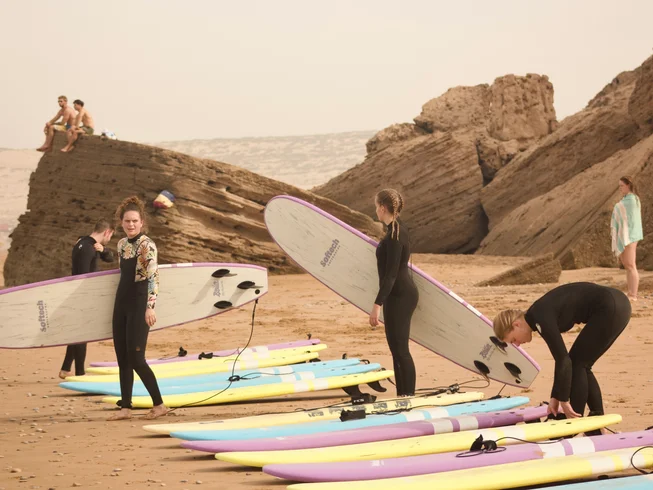
Windsurfing and Kitesurfing The Alizé winds have made Essaouira one of the world’s most celebrated windsurfing destinations. The beach south of the medina is lined with equipment rental and instruction operations. Even if you have never stood on a board, a two-hour beginner windsurfing lesson is one of the more exhilarating things you can do here — and the body awareness developed through yoga translates directly to board sports. Many retreat programmes incorporate surf or wind sessions; if yours does not, book independently.
The Ramparts and Skala The Skala de la Ville — the sea-facing battlements — is the best walk in town. Old Portuguese cannons still point out to sea. The views extend along the coast in both directions. At sunset the light on the walls turns extraordinary colours, and half the town comes out to watch it. The Skala du Port (the harbour fortifications) offers a different perspective — looking back at the city rather than out to sea.
The Medina and Artisan Quarter Essaouira’s craftspeople are worth seeking out. The thuya wood workshops produce boxes, chess sets, frames, and furniture with a quality of grain that is locally specific and beautiful. Watch craftsmen work, buy directly from workshops rather than tourist shops, and you pay less and take home something made by someone you met. The Galerie Damgaard has represented Essaouira’s naive art painters for decades and is worth a visit.
Gnawa Music Gnawa is a form of ceremonial music rooted in the traditions of West African slaves brought to Morocco centuries ago — built on the low-register guembri bass lute, metal qraqeb castanets, and call-and-response vocals. In its ceremonial form it is used for healing; in its contemporary form it has influenced jazz, blues, and electronic music worldwide. Essaouira hosts the Gnawa World Music Festival each June, but smaller performances happen year-round. Ask your retreat host where to find them.
Diabat and the Ruins of Dar Soltane The walk to Diabat through the dunes (three kilometres, forty minutes) passes the ruins of a nineteenth-century palace slowly being reclaimed by sand. The village is tiny and quiet, with a river estuary attracting birds and a handful of cafes. Jimi Hendrix is said to have written “Castles Made of Sand” after visiting this landscape — whether or not that is true, it feels plausible.
Day Trips Marrakech is 2.5 hours east — easily done as a day trip for the contrast of city intensity. If you are drawn to the surf scene further south, our surf and yoga Morocco guide covers Taghazout and the Atlantic coast in detail.
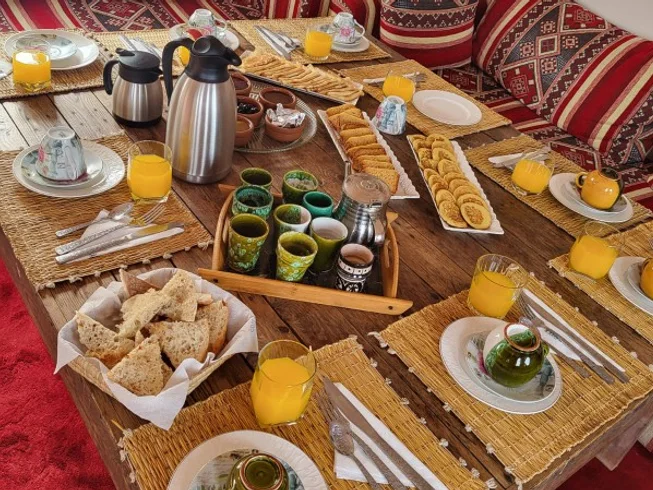
Most retreats are located in three areas: the medina (authentic riads with rooftop terraces — windy but charming, walkable to everything), the beachfront (hotels and guesthouses directly on the sand — best for sunrise yoga and sea views), or just outside the city (quiet countryside, more space, total silence). Programs typically include daily yoga (morning flow, evening restorative), vegetarian or pescatarian meals (fresh Atlantic fish, local vegetables, argan oil, mint tea), and free time for surfing, exploring, or simply reading in a hammock. Prices are similar to Marrakech — budget: €300–500 for 4 nights, mid-range: €600–1,200 per week, luxury: €1,500–2,500 per week. The constant wind is a defining feature — it keeps temperatures comfortable but can make outdoor yoga challenging. Many retreats have sheltered terraces, glassed-in rooftop spaces, or indoor studios for windy days. Essaouira is also famous for its Gnaoua music festival (June) — book early if your retreat coincides.
How is Essaouira different from Marrakech for a yoga retreat? The contrast is significant. Marrakech is intense, loud, hot, and culturally overwhelming — transformative, but also exhausting. Essaouira is small, manageable, cool, and genuinely relaxed. The medina does not overwhelm, vendors do not pressure, and the ocean presence creates a different energy entirely. Many people who find Marrakech too much discover Essaouira is exactly right.
Is the wind a problem for yoga practice? The Alizé winds blow almost every day, particularly in the afternoons. Outdoor beach yoga is challenging when the wind is strong. Good retreat centres work around this by scheduling beach practice in the mornings (when winds are calmer) and afternoon sessions in protected courtyards or indoor studios. Ask any retreat you are considering how they handle it.
Can I combine Essaouira with Marrakech in one trip? Easily — and it is a common and highly recommended combination. Fly into Marrakech, spend two or three days exploring the city, travel to Essaouira for a week-long retreat, then fly home from Marrakech. The two cities offer completely different experiences of Morocco and complement each other well.
What level of yoga experience do I need? Most Essaouira retreats welcome all levels. The town attracts a younger, more adventurous crowd than some wellness destinations, and programming tends toward accessible mixed-level classes. Beginners should feel comfortable at the majority of programmes on offer.
What should I know about swimming in the ocean? The Atlantic at Essaouira is cold — 17–20°C year-round — and has strong currents. Swimming is safe in designated areas but not recommended everywhere on the beach. Most people wade or swim briefly rather than spending long periods in the water. Wetsuits make longer sessions comfortable. The ocean is best experienced by walking alongside it, on a board, or watching it from the ramparts.
Your email address will not be published. Required fields are marked *


