Yoga retreats in Morocco - April 2027

April is when Morocco peaks. The roses bloom in the Dadès Valley, the Atlas is green from snowmelt, Marrakech is warm without being hot, and the Sahara sits at exactly the right temperature for outdoor practice at sunrise. It is the month everyone recommends, and for good reason.

AUTHOR

Om Away

DATE PUBLISHED

January 18, 2026

CATEGORY

Share This Article

Morocco in April: The Sweet Spot

Conditions in April are close to perfect across all regions simultaneously, which is not true of any other month. Marrakech sits at 24-28°C with reliably clear skies. The Atlas Mountains are fully accessible, trails open, snowmelt filling rivers and waterfalls. The Sahara is warm by day and cool at night, in the window between winter cold and summer heat. And the rose harvest in the Dadès Valley — one of the most visually spectacular events in Morocco’s agricultural calendar — happens in the last two weeks of April and the first week of May. Our full Morocco retreat guide covers every region if you are comparing April options.

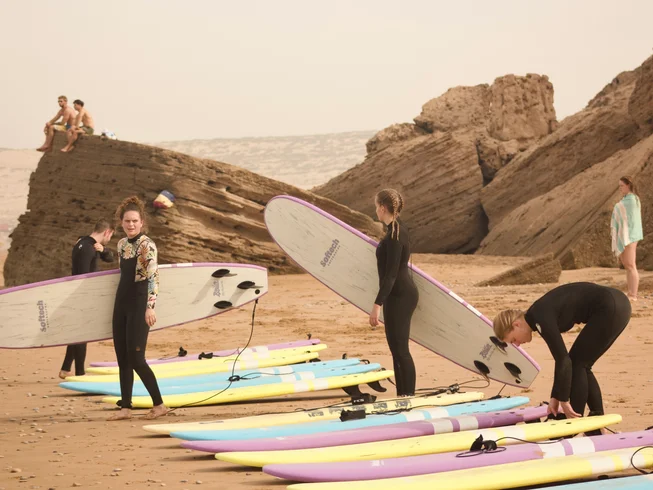
7 Day Surf and Yoga Package with Personalized Beginner Surf Coaching in Taghazout, Morocco

mindfulness nature

6 Day ‘Body & Mind Awareness’ Yoga Holiday in the Atlas Mountains, Morocco

mindfulness nature

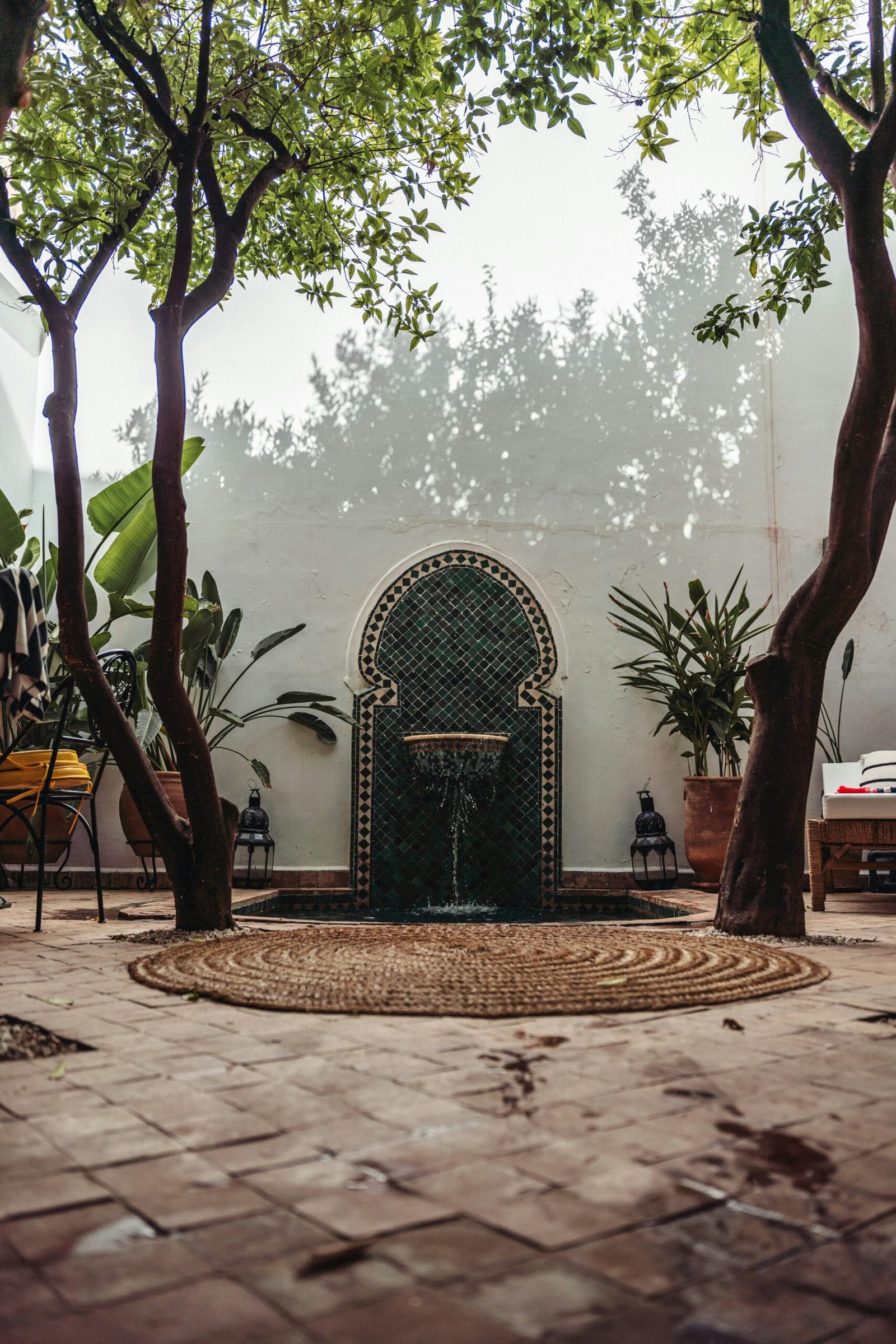
4 Day Yoga Retreat in Marrakech Oasis, Morocco

8-Day All-Inclusive Horse Riding Holiday With Yoga and Stretching in Oceanfront Riad, Agadir Morocco

mindfulness nature

10 Day Unforgettable Luxury Yoga Trip, Culture and Nature Adventure in South of Morocco

9 Day Sahara Soul Journey Luxury Yoga Retreat with Cultural Tours in Morocco

Where to Go for a Yoga Retreat in Morocco in April

The Dadès Valley and the Rose Route

The rose harvest is the April event and it has no equivalent in any other month. The Dadès Valley, particularly around the town of Kelaat M’Gouna (also called Roses City), grows the Damask rose commercially for the perfume and cosmetics industry. The flowers are picked at dawn before the heat opens them fully and diminishes the essential oil content — which means the harvest happens in the most extraordinary light, with families moving through the rose fields in the first hour after sunrise, the air so heavy with fragrance that it becomes physical.

The harvest window runs roughly from April 20 through the first week of May. The Rose Festival in Kelaat M’Gouna, held in early May (sometimes the last weekend of April), is a three-day celebration with music, processions, a locally elected rose queen, and stalls selling every rose product imaginable: rose water by the litre, rose oil in tiny amber vials, rose jam, rose-scented soap, dried petals by the kilo. It is a genuinely local event rather than a tourist production — the crowd is predominantly Moroccan families from the surrounding valleys who have been attending for decades.

Getting to the Dadès Valley from Marrakech takes about four hours via the Tizi n’Tichka pass or slightly longer via the Draa Valley. Many retreat centres in the region arrange the trip as a two-night extension from Marrakech, or operate specifically in the valley for the harvest season. It is worth building a separate itinerary around rather than fitting into a day trip.

Marrakech

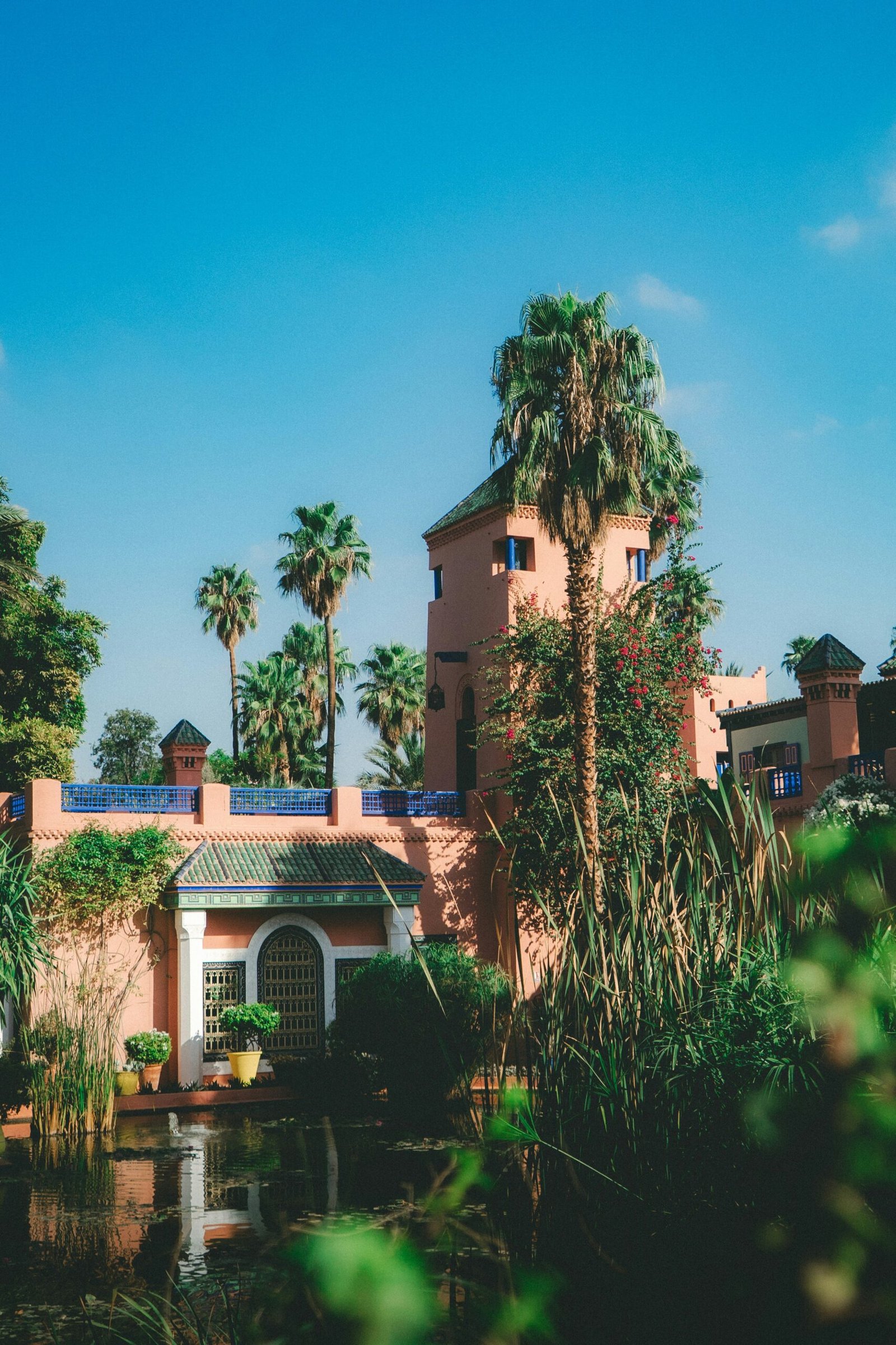
April Marrakech is the city at full spring capacity: warm, fragrant, busy, and beautiful simultaneously. The wisteria on medina walls is in full bloom in early April, the orange blossom season ending but the riad gardens still full of its residual fragrance. The Menara Gardens olive grove is green and the reservoir reflects the Atlas. Jardin Majorelle is at its most lush.

The visitor numbers in April are the highest of the year outside of Christmas week. This means the souks are busier, restaurants require advance booking, and retreat centres that were available in February and March are now fully committed. Book April Marrakech retreats two to three months in advance. The best riad-based programmes fill from both ends of the calendar — the experienced visitors who booked in January knowing April fills fast, and the last-minute arrivals who find only the less desirable slots remaining.

The Jemaa el-Fnaa square in April evenings has the energy the square is famous for: warm nights, every food stall operating, the acrobats, storytellers, and musicians all present simultaneously, and a crowd that is roughly half Moroccan and half international in proportions that feel balanced rather than tourist-dominated. Walking through the square at 9pm in April is the version of this experience that the Instagram photographs are actually taken in.

Easter week, which falls in April most years, brings the largest single influx of European visitors to Marrakech. The week before Easter is the busiest. The week after Easter is quieter and still warm. If you have flexibility, the week after Easter is the better choice: the same excellent conditions, noticeably fewer crowds, and slightly lower prices.

The Atlas Mountains

The Atlas in April is at its most accessible and most rewarding: all trails below 3,000 metres fully open, the snowmelt still running in the rivers (Toubkal Base Camp trail has the sound of running water from the snowmelt cascades), wildflowers in the lower valleys still present in the first two weeks of the month before they fade in the warming temperatures, and the mountain light in April — clearer than summer and warmer than winter — at its annual best.

Hiking from Imlil to the Azzaden Valley in April, with the high peaks still carrying snow above and green meadows below, is one of the more complete mountain landscapes available within an hour and a half of a major international airport. Retreat centres in the Ourika Valley and around Imlil are fully operational and often running their best programming of the year in April.

The Ourika Valley in April also has the Setti Fatma waterfalls at their most powerful: the seven waterfalls fed by snowmelt run at full volume in April and early May, and the 45-minute climb from the village to the upper falls through juniper scrub and past small pools is at its most worthwhile when the water is high.

The Sahara

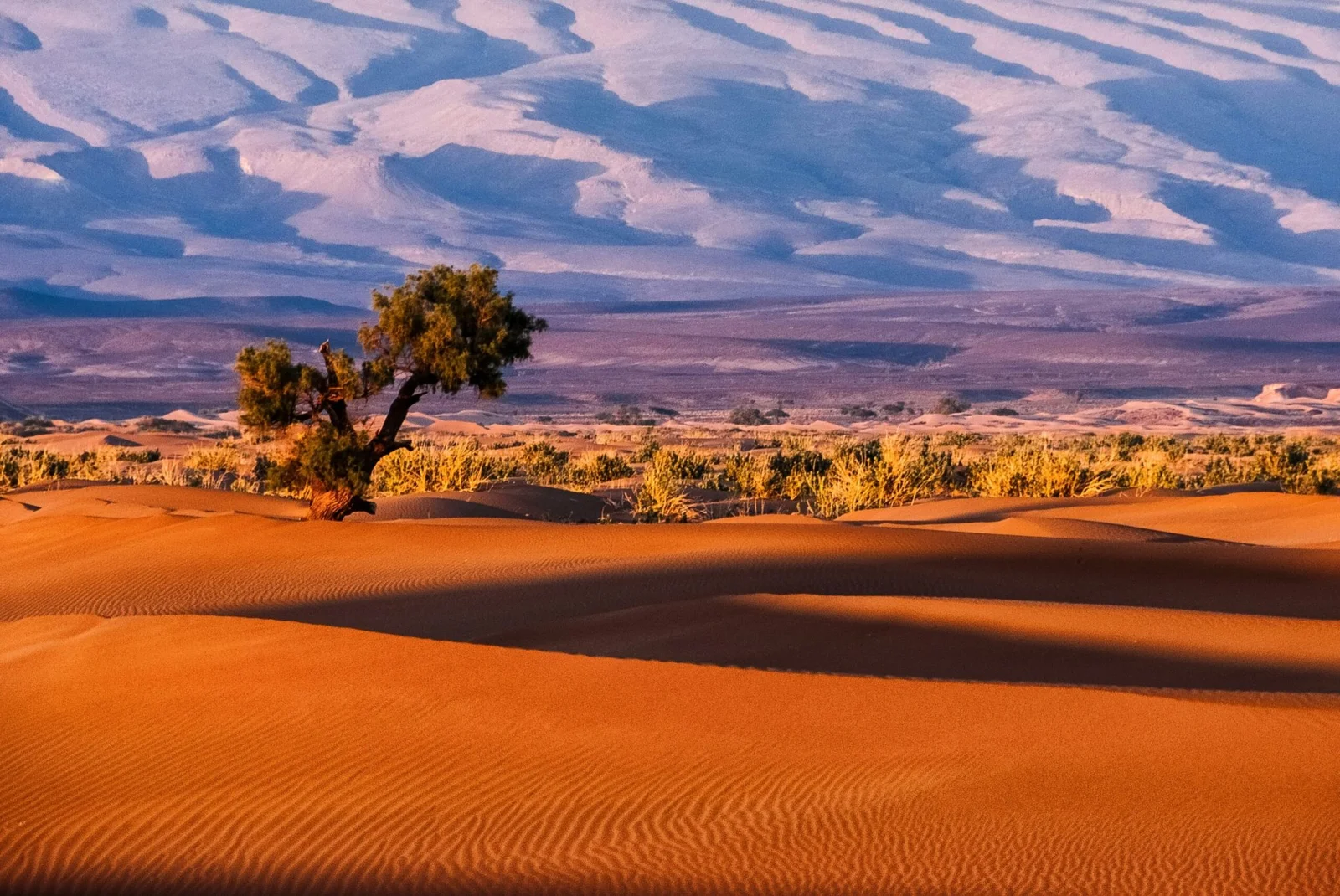
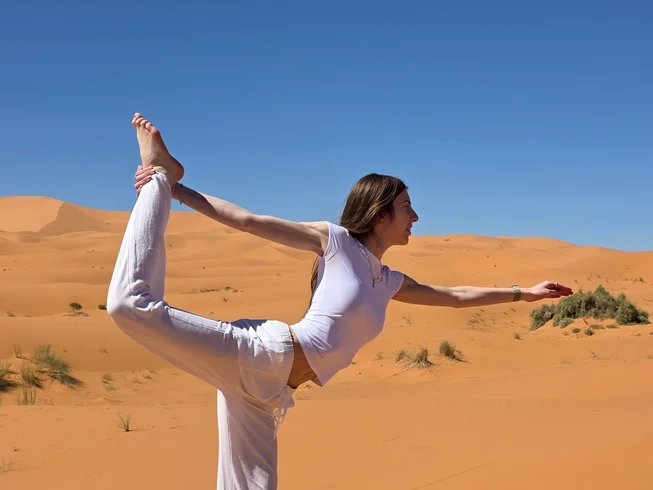
The Sahara in April is one of the two best months for desert retreats alongside October. Days reach 28-32°C, warm enough for morning practice on the dunes without layers, cool enough in the evenings for a fire and the full desert camp experience without heat management. The desert light in April has a specific golden quality that the overhead summer sun cannot produce: long morning shadows, warm colours on the dunes, and the particular drama of a sky that is simultaneously blue and vast.

Erg Chebbi in April is busy by Sahara standards — not overwhelmingly so, but busier than November and February. If the desert retreat experience matters more than the desert photography, October provides the same conditions with fewer other visitors. If the spring light and the rose harvest in the same trip are the goal, April is the month to combine both: Marrakech and Dadès Valley on the way south to Merzouga, a few nights in a desert camp, and the return through the Draa Valley palmeries in full spring green.

For everything the Sahara offers as a retreat environment, our yoga retreats in the Sahara guide covers both Erg Chebbi and Erg Chigaga with the detail the choice requires.

The Atlantic Coast

April on the Atlantic coast is the transition from serious surf season to beginner-friendly conditions. The big North Atlantic swells of November through March are easing, and April offers a mixed picture: some weeks still deliver swell large enough for experienced surfers, others are calmer and more suited to those learning. For a surf-and-yoga retreat, April is a reasonable entry point for beginners and a still-rewarding month for intermediates, though the peak surf window has largely passed.

The coast in April is warm and beautiful: Agadir at 22-26°C, Essaouira cooler at 18-22°C with the characteristic Alizé wind. The beach south of Agadir in April, with the Atlantic warm enough for short swims and the surf breaks running consistently, is one of the more pleasant environments in Morocco at this time of year. Retreat centres on the coast in April are full but not overwhelmed.
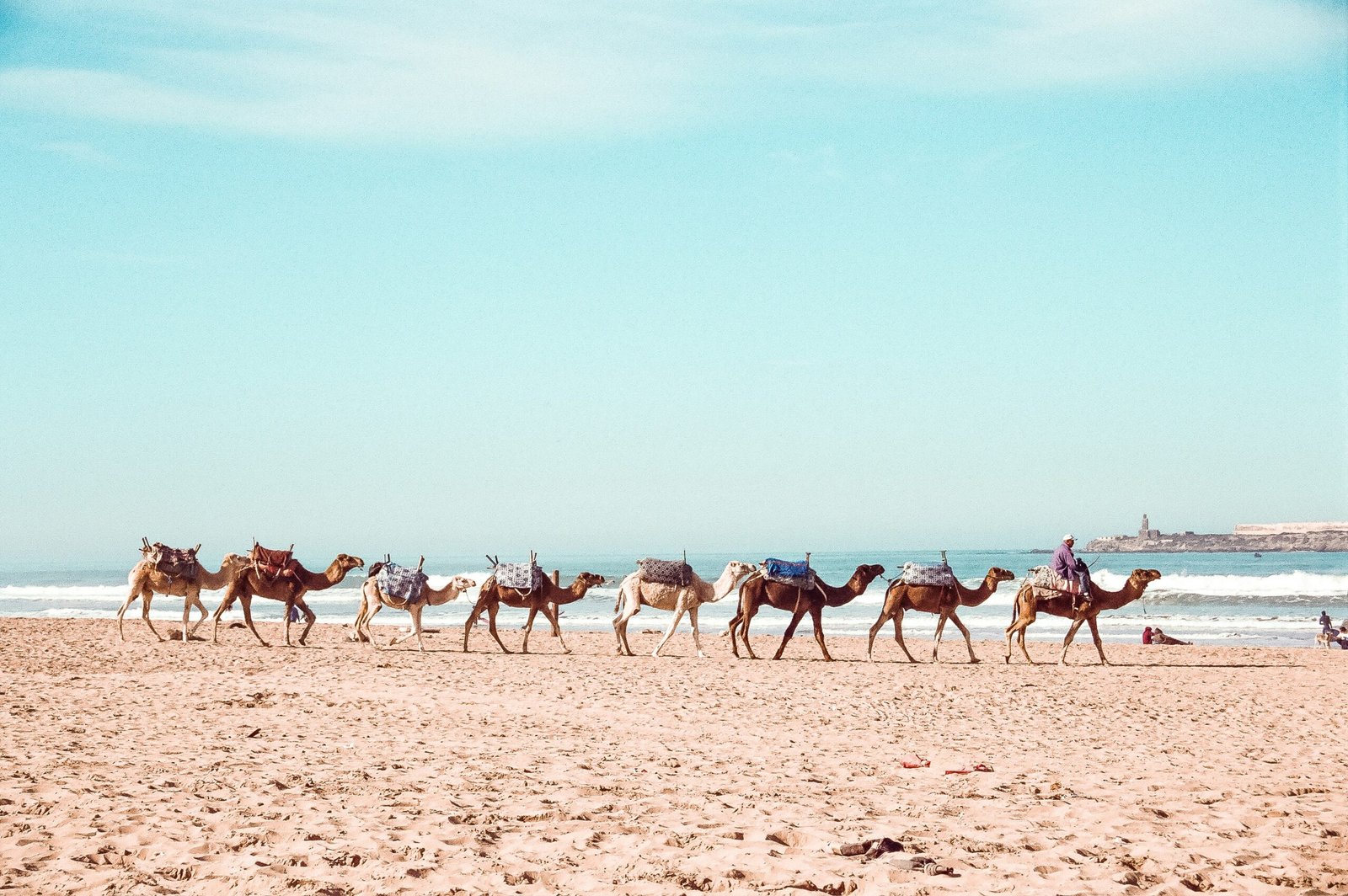
essaouira beach in morocco with long shoreline walks in early spring

Outdoor Living Returns

April is when Morocco’s traditional outdoor living fully resumes. Rooftop terraces become evening gathering spaces. Courtyards function as outdoor rooms. Cafes fill sidewalks. The social life that makes Morocco vibrant happens outdoors again.

For retreats, this means practices naturally flow outside. Morning yoga on rooftops or in gardens, meditation under pergolas, meals on terraces, evening discussions around courtyards. The indoor-outdoor integration that defines Moroccan architecture finally makes sense in practice.

The light in April is extraordinary—that golden North African quality at its most consistent. Every time of day offers beautiful illumination. Your practice happens in genuinely stunning light conditions.

What to Eat in Morocco in April

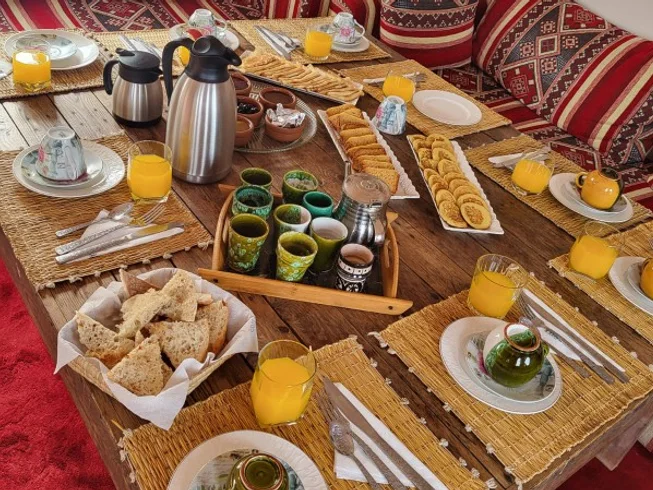
Rose products define April food in the Dadès region. Fresh rose petals appear in salads at the better valley restaurants, the combination of floral fragrance and slight bitterness working surprisingly well against olive oil and lemon. Rose jam, made from Damask rose petals cooked with sugar until they collapse into a deep pink preserve, is served at breakfast in the guesthouses of Kelaat M’Gouna and the surrounding villages throughout the harvest season. Rose water freshly distilled in April has a clarity and intensity that commercially bottled versions rarely achieve.

Artichoke tagine is April’s signature dish. The artichokes from the Souss plain are at their peak, large and dense, and the Moroccan preparation — artichoke hearts slow-cooked with preserved lemon, saffron, fresh herbs, and chicken or lamb until everything has given what it has to give to the sauce — is one of the better arguments for Moroccan cuisine being genuinely serious about vegetables. Order it wherever it appears on a menu; it is specifically of this season.

Spring lamb from the Atlas pastures, where the flocks have spent winter in the lower valleys and are moving to the high summer pastures, appears on April menus in the mountain regions. The lamb in April, young and grass-fed on the first spring growth, has a flavour and texture that has nothing to do with the year-round lamb available in restaurants that source without seasonal consideration.

Fresh peas arrive at Marrakech markets in April from the coastal plains: the small, sweet early varieties that are eaten raw from the pod as a snack in the fields are also sold at market stalls. A handful of fresh Moroccan peas in April, eaten standing at the market, is one of those simple seasonal experiences that cannot be replicated any other time of year.

Méchoui, the whole slow-roasted lamb that is Morocco’s great celebratory dish, appears frequently in April because the month coincides with several important occasions in the Moroccan social calendar, particularly if Easter or late Ramadan fall in April. Eating méchoui at a traditional restaurant in Marrakech — Chez Lamine in the medina serves what many consider the city’s best version — involves sitting on a low banquette, tearing meat from the bone with bread, and accepting that a Moroccan restaurant’s idea of a serving of lamb is significantly more generous than a European restaurant’s.

Strawberries from the Loukkos region are at peak season in April: small, intensely sweet, and sold in cones of paper at every Marrakech market. The combination of fresh Moroccan strawberries, argan oil yoghurt, and local honey at a riad breakfast in April is a specifically April combination worth seeking.

lush marrakech garden with fountain and palms in full spring bloom
marrakesh garden with fountain and palms at the start of spring in morocco

Events and What is Happening in Morocco in April

The Rose Festival, Kelaat M’Gouna is the April event. Usually held the first weekend of May but sometimes the last weekend of April depending on the year, it is worth checking current dates when planning. The festival runs for three days and is anchored by a Saturday procession through the town with floats, traditional Berber music, and the rose queen elected by local vote. The surrounding week, when the harvest is at its peak, is as rewarding as the festival itself.

Easter brings Morocco’s single largest influx of European visitors. The week before Easter is the busiest period; the week after is quieter with the same excellent conditions. If you have schedule flexibility, building around Easter week rather than into it is the smarter approach for retreat availability.

The Marrakech Art Week (dates vary, usually April or May) concentrates gallery openings, artist talks, and temporary installations across medina spaces. The contemporary art scene in Marrakech is increasingly serious and the April programming is when it is most active.

Local moussems: April is peak moussem season across Morocco, the saint’s day festivals that combine religious observance with music and food. Ask your retreat host what is happening locally — a moussem within driving distance provides a half-day cultural experience that no guided tour can replicate.

Practical Notes for April

Weather: Marrakech 14-28°C, reliably warm and clear. Atlas Mountains: all trails below 3,000m open, 15-25°C in the valleys. Agadir: 17-26°C, warm and sunny. Sahara: 18-32°C days, cool evenings, excellent conditions.

Booking: April is the busiest month for Morocco retreat bookings. The best programmes fill two to three months in advance. Do not leave April bookings later than February.

Easter timing: check dates for the year in question. Easter in April means the week before is Morocco’s single busiest week of the year. The week after is significantly calmer.

What to pack: light layers for evenings, summer-weight clothing for warm days, sunscreen essential from mid-month. The Atlas still requires a warm layer for morning practice at altitude.

FAQs: Best Yoga and Wellness Retreats in Morocco in April 2027

1. Is April a good time for a yoga retreat in Morocco?

  • Yes, April is one of the strongest months because the weather is reliably pleasant, spring landscapes are still lush, and most regions of Morocco work well for retreat travel.

2. What is the weather like in Morocco in April?

  • Marrakech and inland cities are usually around 18–28°C, the Atlas Mountains are cooler at roughly 12–24°C, the coast stays mild at about 18–22°C, and the desert is warm but still manageable at around 24–32°C.

3. Which parts of Morocco are best for an April retreat?

  • April is one of the rare months when almost every region works well, especially Marrakech, the Atlas Mountains, the Sahara, and the Atlantic coast.

4. Is April good for outdoor yoga and hiking in Morocco?

  • Yes, April is ideal for outdoor practice because rooftop yoga, garden sessions, trekking, terrace meals, and cultural exploration all become easy to combine without extreme heat or cold.

5. Is April a busy month for retreats in Morocco?

  • Yes, April is peak season, so the guide recommends booking around 8–10 weeks ahead, and prices are usually higher because demand is strong.

6. What should I pack for a yoga retreat in Morocco in April?

  • Bring layers for cooler mornings and evenings, but also pack lighter spring clothes for warm afternoons, plus sun protection for the stronger April light.

Share Your Thoughts

Your email address will not be published. Required fields are marked *

Leave a Reply

Your email address will not be published. Required fields are marked *