
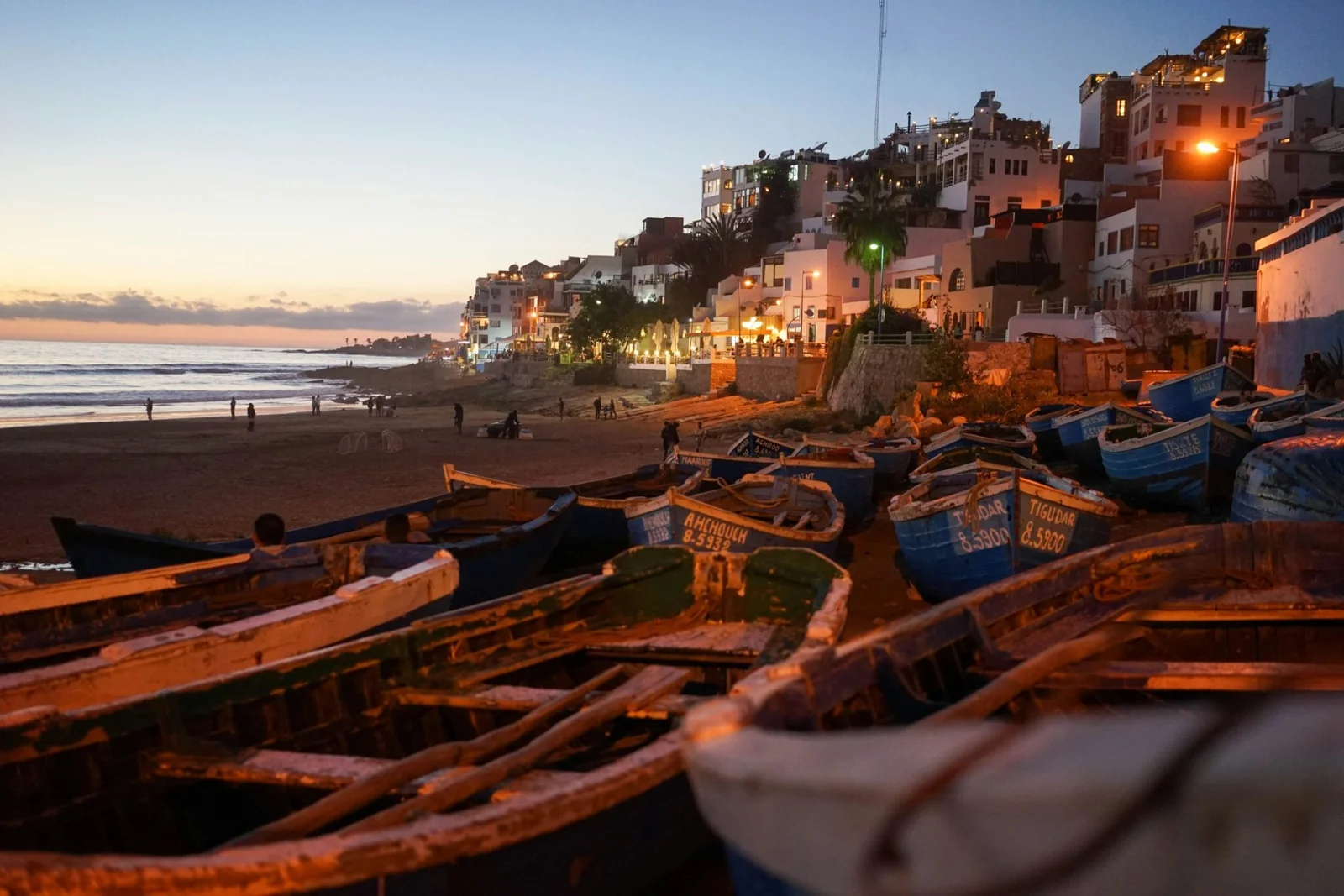
July is when Morocco sorts itself into those who know and those who don’t. Those who don’t go to Marrakech in 42°C and wonder what happened. Those who know go to Essaouira, where the Alizé wind keeps it at 22°C all day, the medina is full of interesting people, and the Timitar Festival in Agadir is one of the best music events in Africa. Geography is everything in July.


Marrakech in July is genuinely hot: 38-42°C by early afternoon, stone walls radiating heat into the evening, and riad pools doing the work that swimming pools were invented for. The interior is not the place for a yoga retreat in July unless you specifically want to explore what heat does to practice — there are retreat centres that programme around this with pre-dawn sessions and afternoon hammam, and it has its own intensity.
But for most people, July means the coast or the mountains. Our full Morocco retreat guide covers every region and helps you understand the geography before you commit.
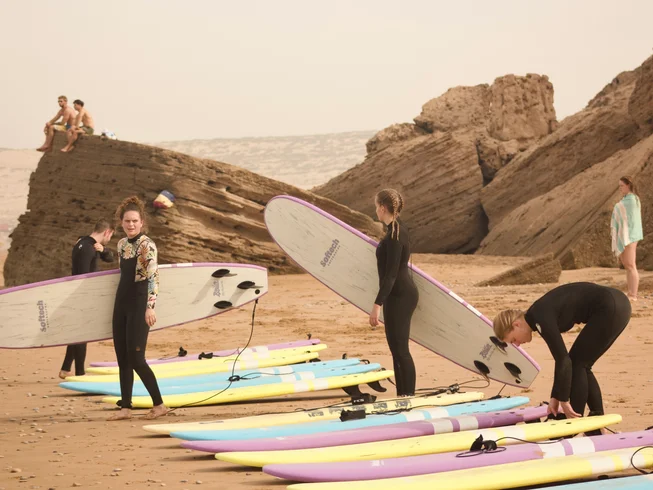
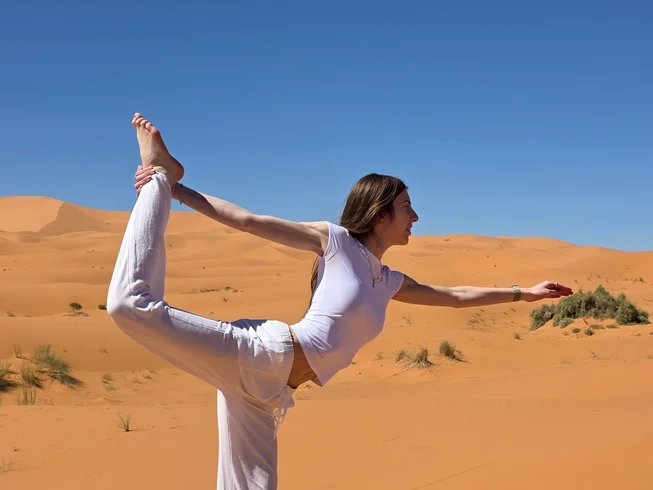
Essaouira in July is Morocco’s most reliable summer wellness destination and one of its best-kept seasonal secrets. While the interior bakes, the Alizé trade winds that blow almost every day keep the coastal temperature at 20-24°C — cooler than most of northern Europe in July. The town fills with Moroccan families from Marrakech and Casablanca escaping inland heat, French and Spanish visitors who discovered it years ago and return annually, and the international yoga and surf community that uses it as a summer base.
The beach south of the medina in July is a working beach in the best sense: surfers (the Atlantic in July is good for beginners with consistent small waves), kitesurfers (the Alizé wind makes Essaouira one of the world’s great kite destinations), swimmers braver than average (the Atlantic is cold but swimmable), and people walking slowly with argan oil ice cream from one of the small artisan producers in the medina. Evening practice on a riad rooftop with the Atlantic visible and the temperature finally dropping to a comfortable 18°C is the July Essaouira experience that retreat guests describe for years. Our Essaouira retreat guide covers the town across all seasons.
Agadir in July is peak summer: 28-32°C on the beach, the Atlantic warm enough for sustained swimming, and the Timitar Festival in early July bringing one of Africa’s most important Amazigh cultural events to the city. Timitar (Amazigh for “signs” or “signals”) is a four-day festival of Amazigh music alongside African and international artists, with free outdoor concerts drawing hundreds of thousands of people. It is the largest celebration of Berber cultural identity in the world and worth building a retreat week around if the dates align.
Beyond the festival, the Agadir beach in July is at its most animated: the ten-kilometre seafront fully active, the surf breaks running consistent beginner-friendly waves, and the retreat centres in Taghazout doing their summer programming with energy. The social atmosphere on the coast in July has a fullness that the quieter winter months cannot offer — if community is part of what you want from a retreat, July on this coast delivers it.
At 1,800 metres and above, the Atlas in July is 15-20°C cooler than Marrakech. Imlil, the gateway to Toubkal, sits at 1,740 metres and reaches a maximum of 30°C on the hottest July days — warm enough for outdoor practice in the morning, cool enough for hiking all day. The high pastures above 2,500 metres are at their summer peak: green, alive with the sound of sheep bells from the Berber herds, and with the specific clarity that altitude air has in midsummer.
The Azzaden Valley walk from Imlil, the descent to the Tizi n’Mzik pass, and the approach to Toubkal Base Camp at 3,207 metres are all at their most physically accessible in July. No snow, long days, warm enough for light clothing at lower elevations and a mid-layer at altitude. Retreat centres in the area programme their most ambitious hiking weeks in July and August, when the mountain infrastructure is at full operation and the days long enough for complete ascents.
Oukaïmeden, Morocco’s ski resort at 2,650 metres, transforms entirely in summer: the ski runs become mountain bike trails, the ski lifts carry hikers to ridges with panoramic views of the Atlas, and the plateau above the resort produces wildflowers that the snow buried through winter and spring. A July retreat based at this elevation is genuinely cool — evening temperatures drop to 12-15°C — and the landscape is extraordinary.
Chefchaouen in July is at the peak of its summer popularity: Moroccan families from the northern cities use it as a summer escape, the blue medina is at its most photogenic in the long July light, and the hiking in the Rif forests above town provides genuine relief from the coastal and lowland heat. At 600 metres, temperatures are 25-30°C in July — hotter than Essaouira but significantly cooler than Fez or Marrakech and with genuine mountain air.
The Rif cedar forests above Chefchaouen are worth a half-day hiking excursion in July: tall cedars providing shade, the smell of wild thyme and rosemary underfoot, and the views south toward the Rif ridgeline that define the northern horizon of Morocco. The town itself in July evenings — the blue lanes lit softly, the cafes full, the call to prayer echoing between the medina walls — is one of the more photogenic moments Morocco offers in summer.
Ifrane, sometimes called “Morocco’s Switzerland” for its incongruous Alpine architecture built during the French Protectorate, sits at 1,665 metres in the Middle Atlas and offers the cleanest air and coolest temperatures of any Moroccan town in July. The surrounding landscape of cedar forests, mountain lakes, and high plateau makes it unlike any other part of Morocco: green, cool, and with a quality of summer stillness that the better-known destinations lack.
The Dayet Aoua and Dayet Ifrah lakes near Ifrane are freshwater lakes in cedar forest, excellent for swimming and early morning practice on the shore. The cedar forest itself, home to wild Barbary macaque monkeys who have become habituated to visitors, is worth a half-day walk. Retreat infrastructure here is limited but growing — and the absence of tourist infrastructure is partly the point.
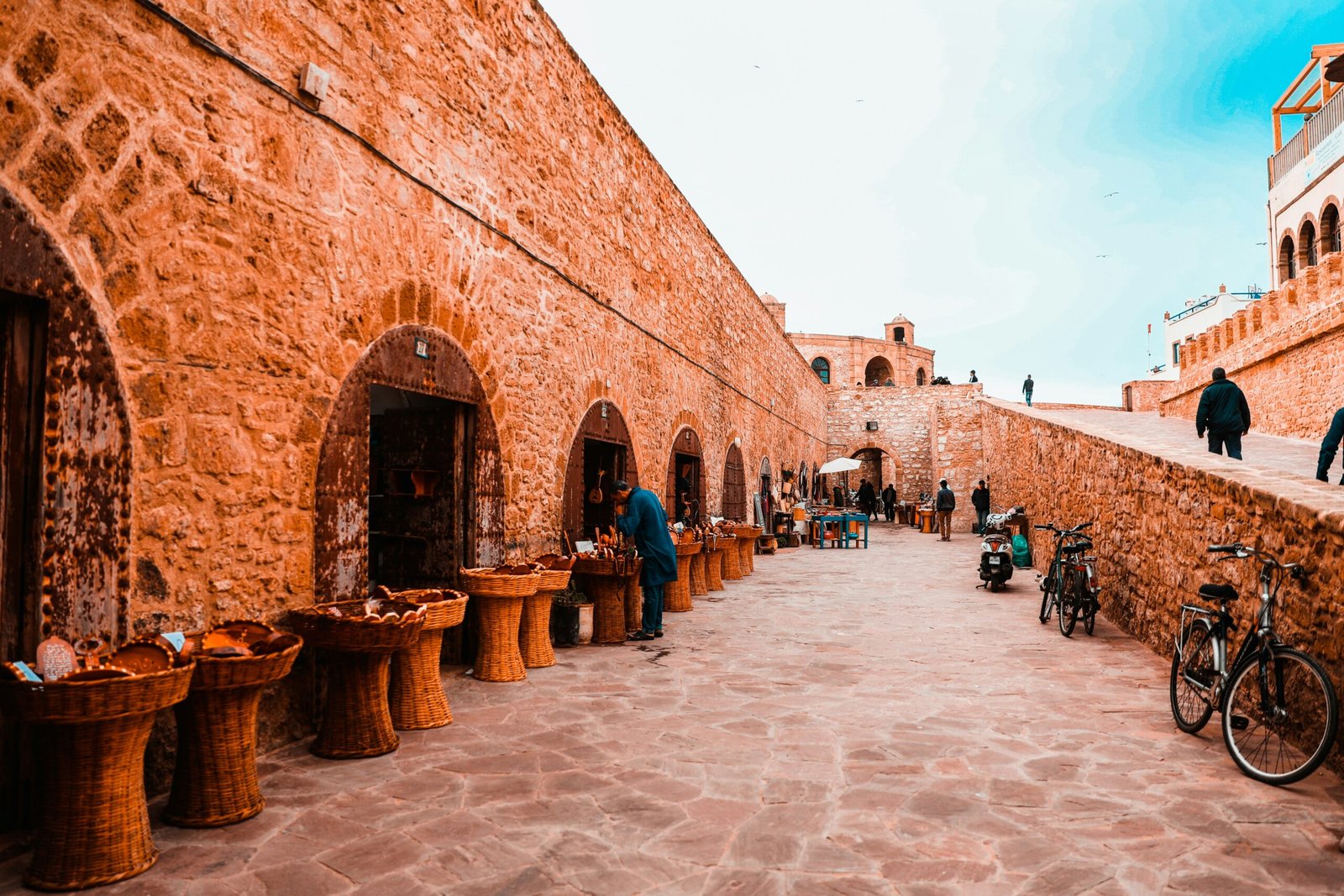
Evening finally brings relief. As the sun sets and temperature drops (relatively), energy returns. Evening practice sessions, rooftop meditation, late dinners that extend for hours as no one wants to leave the cooling air. The long daylight—sunset after 8 PM—means extended conscious time even with adjusted schedules.
Watermelon is the July food and it is everywhere. Grown in the Souss plain and the Tadla region, sold from carts at every street corner, the Moroccan watermelon in July is cold, dark pink, and sweet enough to make the European supermarket version seem like a different fruit. A wedge bought from a street cart for a few dirhams after a morning practice session in the heat is the correct July response. Figs arrive from mid-July: the first green figs from the coastal farms, delicate and sweet, eaten fresh or split and drizzled with honey and argan oil on a breakfast table. Peaches from the Middle Atlas valleys appear at Marrakech markets in July: white-fleshed, fragrant, and grown for taste rather than the durability required by long-distance transport.
The Atlantic in July produces excellent sardines, sea bass, and the first octopus of the summer season. Grilled sardines at the Essaouira port stalls — point at what you want, agree a price, watch them grilled over charcoal with chermoula, eat at a plastic table watching the harbour — cost almost nothing and taste extraordinary in the sea air. Octopus tagine with preserved lemon and olives appears on coastal menus in July; the octopus caught in the Atlantic off Essaouira and Agadir has a firm texture and clean flavour that the Mediterranean version rarely matches.
A small number of artisan producers in Essaouira make argan oil ice cream in July — toasted and nutty, genuinely unlike any European ice cream flavour, and specific to this coast and this season. It is sold in two or three medina shops and a handful of coastal cafes. Finding it requires asking rather than following signs, which is generally the correct approach to the best things in Essaouira.
In the mountain retreats, July tagines shift toward lighter preparations: chicken tagine with preserved lemon and fresh herbs rather than the dried fruit and almond versions of winter, lamb tagine with courgettes and tomatoes using the summer vegetables from valley gardens, and fresh herb-based sauces replacing the slow-cooked spice reductions of the cold months. Mountain retreat kitchens in July source from the same valley gardens that the surrounding Berber families maintain, and the food in July reflects that proximity to the source.
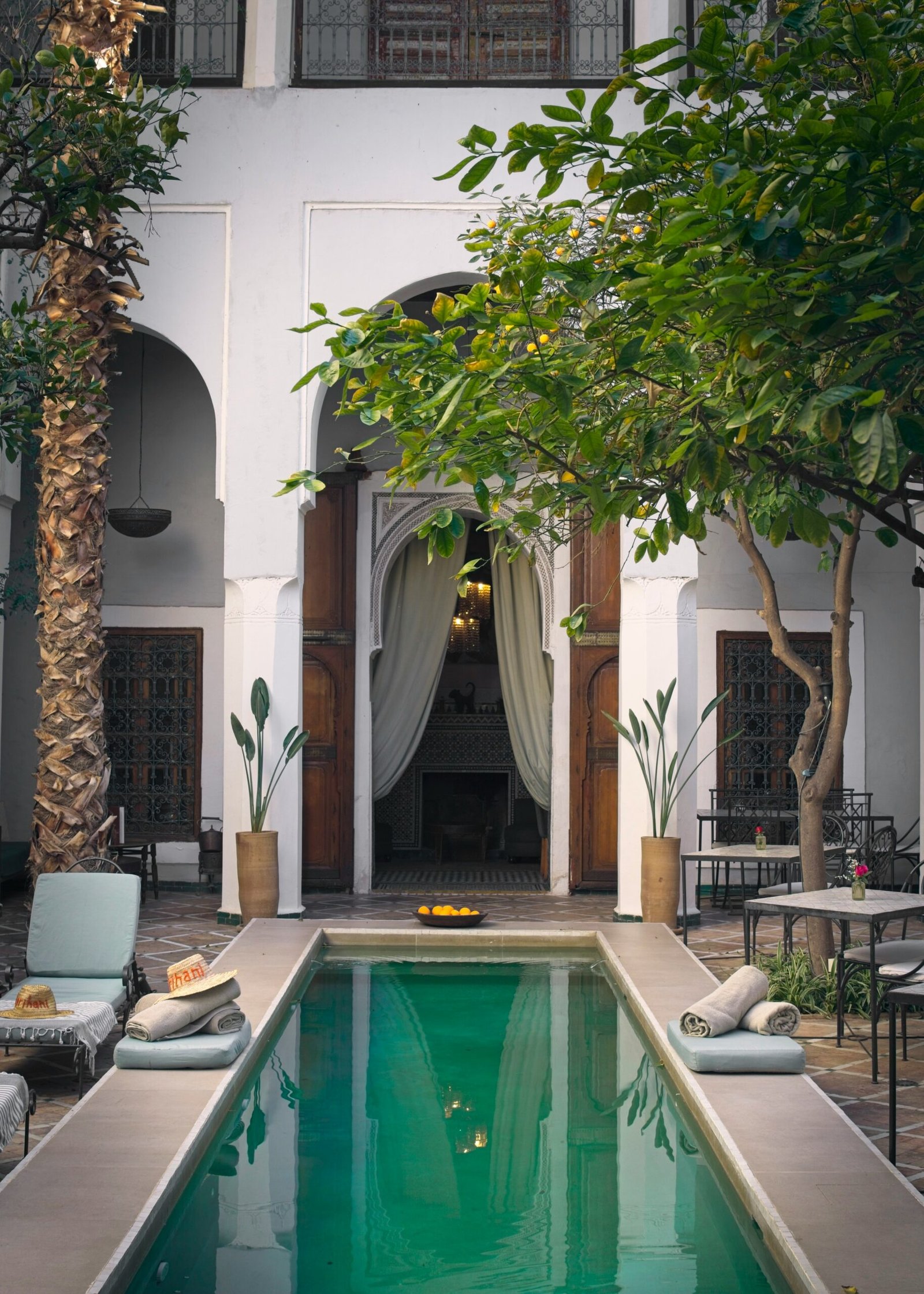
Early July, four days, free. One of Africa’s most important music festivals, celebrating Amazigh cultural identity with masters of Tifinagh-language music alongside African and international artists. The scale is significant — hundreds of thousands of attendees — but the programming is genuinely rooted in cultural celebration rather than commercial spectacle. The outdoor concerts in Agadir’s main squares and beach areas are free; only some reserved sections have ticket prices.
Mid-July, dates vary. The annual gathering at the shrine of Sidi Ahmed ou Moussa, the patron saint of Moroccan acrobats, brings together acrobatic troupes, musicians, and pilgrims from across the Souss and Anti-Atlas region for several days of performance and ceremony. One of the more unusual and genuinely local Moroccan festivals, accessible from Agadir (80 kilometres south) for retreat guests who want to go beyond the obvious cultural experiences.
Check current-year dates. The Festival of Sacrifice sometimes falls in July depending on the Islamic calendar. The country takes on a specific atmosphere: families gathering, the smell of roasting meat from every neighbourhood, and a social energy that is entirely domestic rather than tourist-facing. Restaurants operate on reduced schedules; the experience of being in Morocco during Aïd is genuinely worth having if approached with curiosity rather than inconvenience.
July forces retreat centres into their most creative scheduling and rewards those that embrace the season rather than fighting it. On the Atlantic coast, the full outdoor programme runs without heat modification: beach yoga at dawn, rooftop practice at any hour, medina exploration in the evening breeze. In the Atlas, the long summer days create a different rhythm: early departure for long mountain days, afternoon rest at altitude, evening practice as the temperature drops.
In Marrakech, the most thoughtful July programmes build around the city’s actual summer logic. Practice begins at 6am before the sun rises above the medina walls. Breakfast is slow and communal in the riad courtyard before the heat builds. The hours from noon to 4pm belong to the hammam, the pool, the cool interior room — not fighting the heat but inhabiting it as Moroccans do. Late afternoon practice at 5:30pm, when the air begins to move again, is often the best session of the day: the body fully warmed and open from the heat, the light golden and low, the medina starting to come alive again below.
The Timitar Festival, for retreat guests based in Agadir, transforms the week’s programming for four days. Evening concerts become the anchor event; morning practice becomes preparation rather than the main event. The combination of yoga attentiveness developed over the first days of the retreat and the collective experience of a major music festival creates a particular quality of presence that is worth seeking rather than avoiding.
Your email address will not be published. Required fields are marked *