
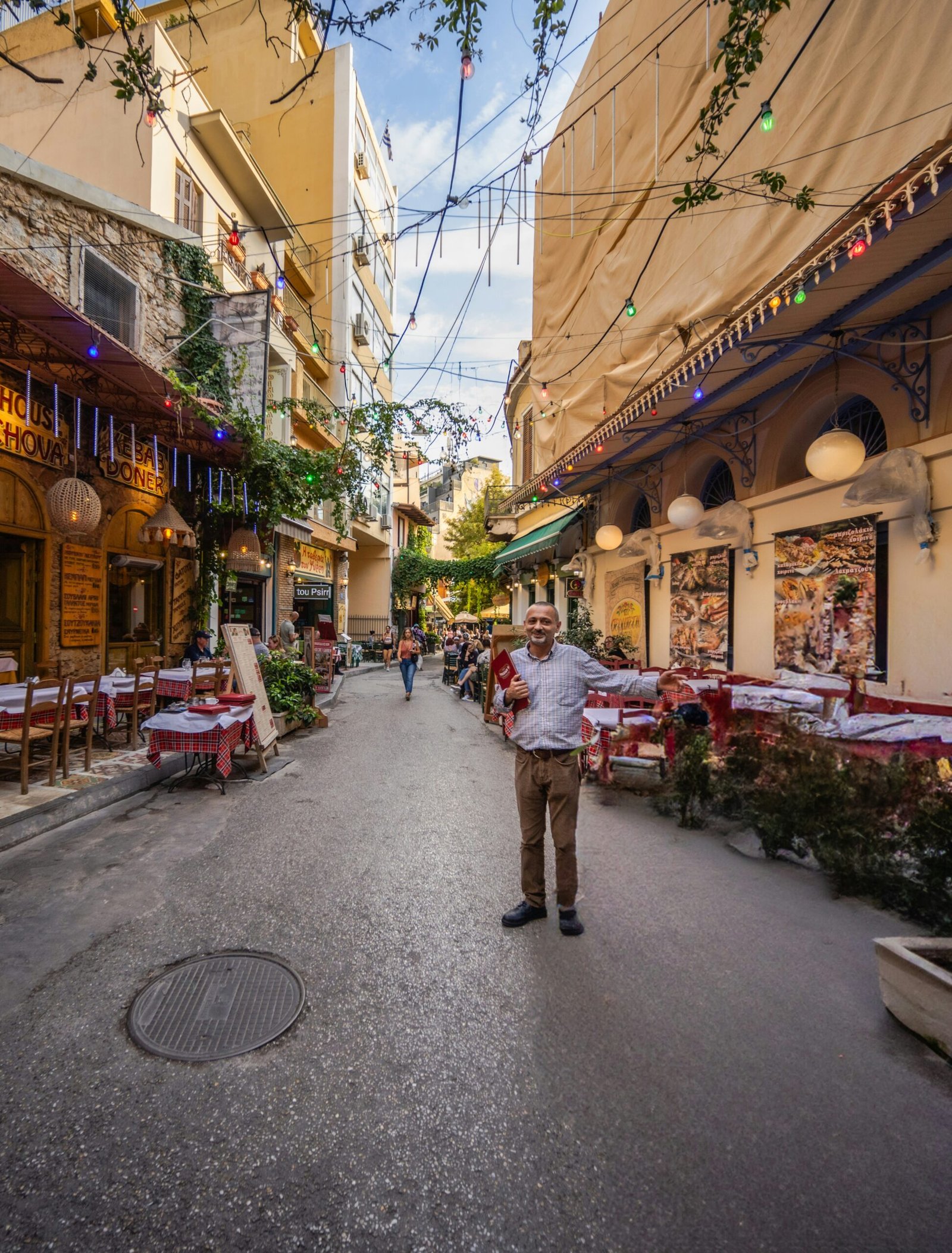
Athens is not the obvious choice for a yoga retreat, and that is precisely what makes it an interesting one. The city that gave the Western world its foundational vocabulary for philosophy, democracy, and the examined life is also a city of noise, density, and the particular energy of a Mediterranean capital that has never quite decided whether it belongs to the ancient world or the modern one — and has resolved the tension, characteristically, by insisting on being both simultaneously.
A retreat in or around Athens doesn’t offer the Aegean light of the islands or the silence of the mountains. It offers something more complex and, for certain practitioners at certain moments, more valuable: the experience of going inward inside a place that is relentlessly outward-facing, of finding stillness within reach of the Parthenon, and of practicing in a city whose entire intellectual tradition is, at its root, an extended meditation on the question of how to live well. That question has been asked here for two and a half thousand years. A retreat is one more way of joining the conversation.


Athens doesn’t immediately conjure images of wellness retreats. The Greek capital is known for its ancient monuments, sprawling urban density, Mediterranean chaos, and the particular energy of a city where three million people navigate daily life against a backdrop of ruins that predate most civilisations. Yet within an hour of the Acropolis, accessible by highway or coastal road, stretches a coastline that offers something unexpected — sophisticated yoga and wellness retreats that combine proximity to cultural treasures with genuine seaside calm.
The Athens Riviera, as this coastline has come to be known, extends from the southern suburbs of Athens through Glyfada, Voula, Vouliagmeni, and down to Cape Sounion, where the Temple of Poseidon has watched over the sea for 2,500 years. This stretch of coast has long been the playground of wealthy Athenians — beach clubs, marinas, upscale restaurants — but in recent years it has also developed into a legitimate wellness destination. Modern yoga hotels, boutique retreat centres, and established spas have created an infrastructure that serves both locals seeking weekend escapes and international travellers wanting to combine ancient Athens exploration with restorative retreat time. Our yoga retreats in Greece guide covers the full range of Greek destinations for those comparing options.
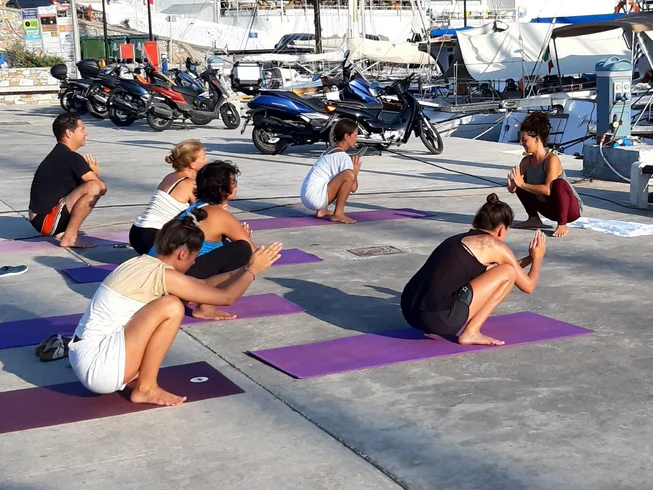
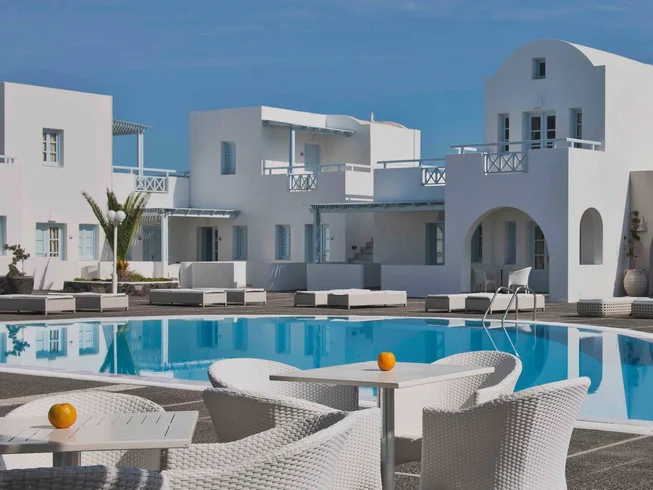
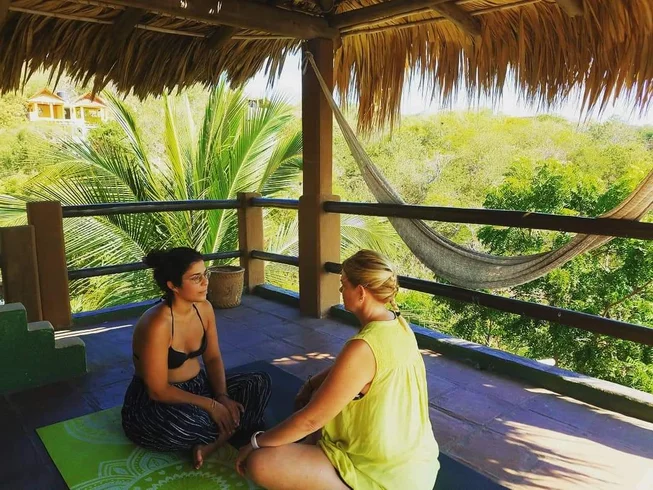
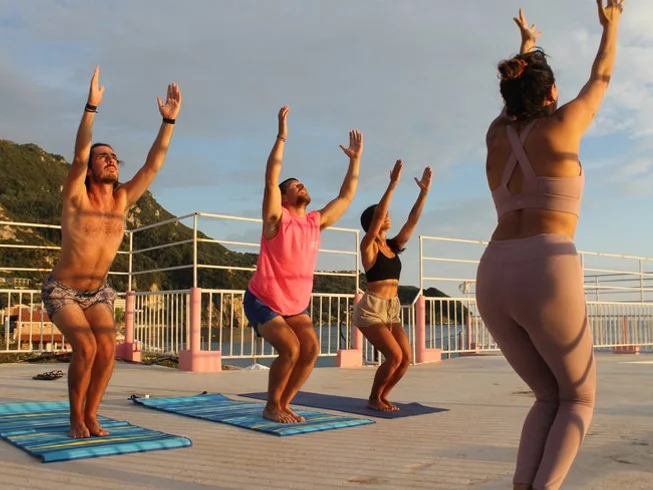
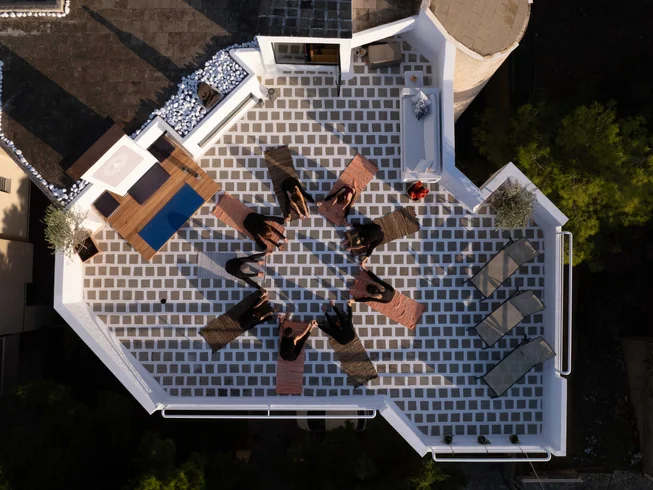
Athens Riviera retreats occupy a different niche than island offerings. They tend toward contemporary, boutique hotels rather than traditional houses or rustic farms. Think clean-lined architecture, curated interiors, spa facilities that include everything from traditional Greek therapies to cutting-edge wellness technologies, and service that’s professional and polished rather than familial.
Several established properties have become known for yoga and wellness programming. These aren’t exclusively retreat centers but rather hotels that incorporate wellness offerings alongside more conventional hospitality. You might find regular yoga classes, meditation sessions, wellness-focused meal options, and spa services all available à la carte, allowing guests to create customized experiences rather than following prescribed retreat schedules.
This flexibility appeals to a specific demographic—business travelers adding wellness components to work trips, couples where one person is deeply into yoga while the other is moderately interested, families with older children who want some wellness time but also want to explore Athens, and locals who book weekend retreats without the logistics of island ferries. The programs acknowledge that not everyone wants or needs complete immersion, that wellness can be integrated with other activities rather than requiring total dedication.

The Athens Riviera’s proximity to the capital creates unique opportunities for combining cultural exploration with retreat time. This matters especially for first-time visitors to Greece who want to experience Athens’ unparalleled archaeological sites and museums but also crave beach time and wellness practices.
A typical itinerary might include morning yoga at your coastal retreat, breakfast overlooking the sea, mid-morning drive or taxi into Athens (30-45 minutes depending on traffic), several hours exploring the Acropolis, Ancient Agora, Acropolis Museum, or National Archaeological Museum, lunch in Plaka or another central neighborhood, return to the coast for late afternoon swimming and spa time, evening yoga session, and dinner watching sunset over the water.
Unlike island retreats that largely close in winter, the Athens Riviera operates year-round. This makes it valuable for travelers whose schedules don’t align with traditional April-October Greek tourism season, for Athenians seeking regular weekend wellness escapes, and for anyone drawn to experiencing Greece beyond its summer face.
Winter along this coast is mild by northern European standards—daytime temperatures typically range from 10-16°C, with many sunny days between periods of rain. The sea is too cold for most swimming (14-16°C), but the beaches are empty, the light is extraordinary, and there’s something powerful about practicing yoga facing winter sea, wind whipping around you, reminded of nature’s indifference to human comfort. Winter retreats appeal to those seeking solitude, dramatic conditions, and the Greece that exists when tourists aren’t present.
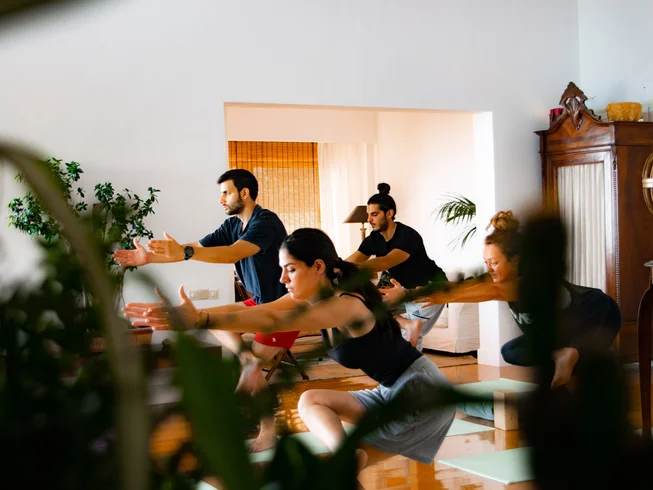
Athens Riviera retreats tend toward contemporary, Western-influenced yoga styles that reflect international wellness trends. Vinyasa flow, power yoga for those wanting athletic challenges, restorative and yin practices for stress relief, and various meditation techniques from mindfulness to guided visualization are commonly offered. The instruction often comes from teachers trained in multiple lineages who can adapt to diverse student needs and preferences.
Class scheduling reflects the urban context—multiple sessions daily at various times, allowing guests to attend what fits their schedule rather than following a single prescribed program. Morning classes might run at 7am, 8:30am, and 10am, giving options for early risers, moderate risers, and those who want to sleep in. Evening sessions might include both vigorous practices for those wanting to release work-day tension and gentle restorative options for winding down.
Athens Riviera properties typically offer extensive wellness facilities beyond yoga studios. Full-service spas with treatments ranging from traditional Greek therapies (olive oil massages, honey wraps) to contemporary techniques (cryotherapy, infrared saunas, floatation tanks), fitness centers with modern equipment, infinity pools overlooking the sea, and sometimes additional movement offerings like Pilates, barre, or dance classes.
Water activities are easily accessible—swimming obviously, but also stand-up paddleboarding, kayaking, snorkeling, and in some areas, diving. Several beach clubs along the Riviera offer upscale beach experiences—comfortable loungers, attentive service, good food and drinks—for those who want the Mediterranean beach club experience alongside retreat time.
Cycling has become increasingly popular along the coastal road, with rental options available and relatively safe bike paths in some sections. Running paths follow the coastline, providing stunning views for morning or evening jogs. For those wanting more challenge, hiking trails in nearby mountains offer escape into nature within short driving distance.

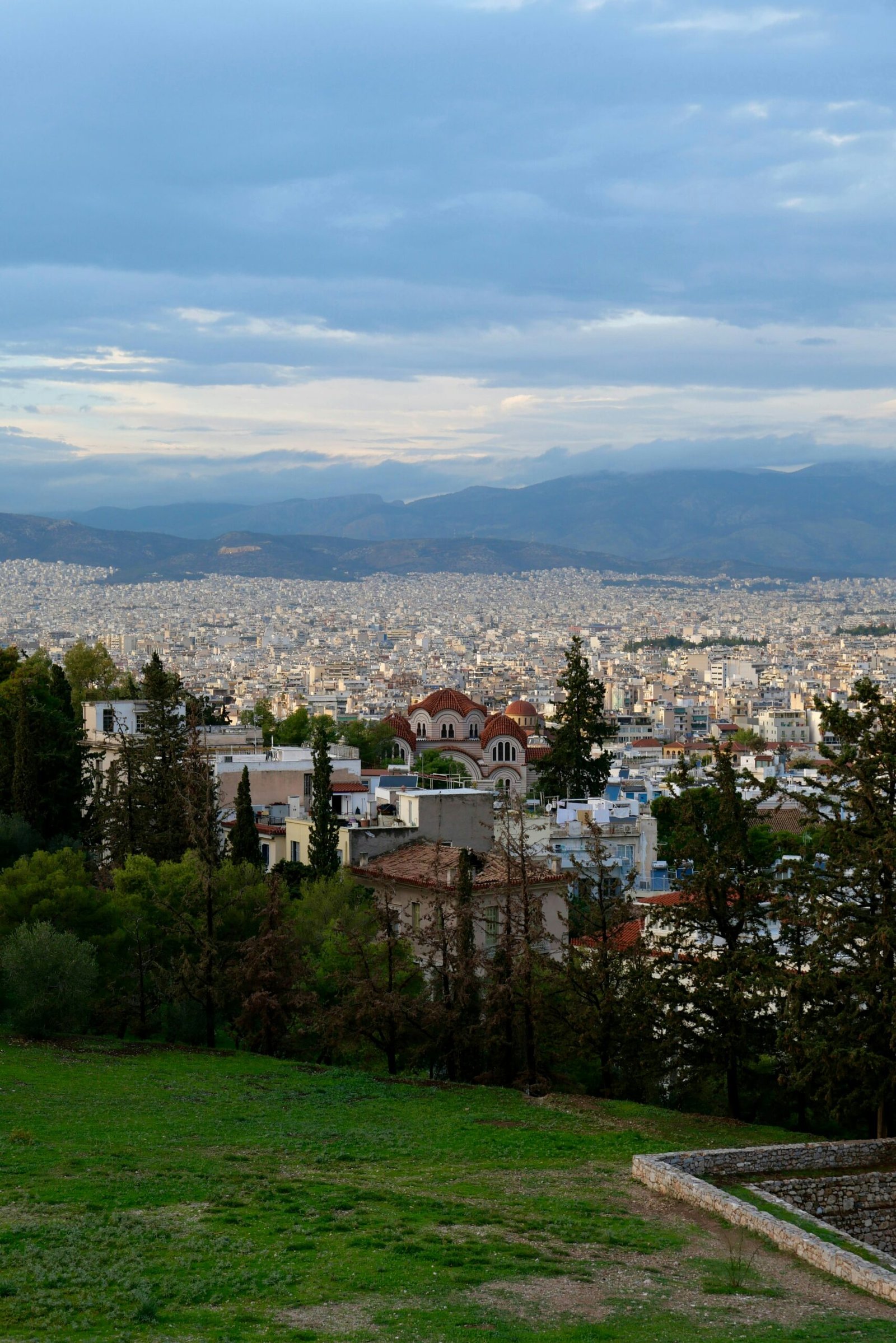
The Athens Riviera works beautifully for travelers with limited time who want to experience both ancient Athens and wellness retreat, for those who prefer urban convenience alongside nature access, for people who like flexibility in their retreat structure, and for anyone who finds complete isolation uncomfortable or unnecessary. It’s ideal for business travelers adding wellness components to work trips, for couples or friends with diverse interests who want options beyond yoga, and for those seeking sophisticated, contemporary wellness environments.
This area particularly suits experienced practitioners who don’t need intensive instruction or hand-holding, who can self-direct their practice and wellness time, and who appreciate professional rather than familial service. It works well for shorter retreat durations—long weekends or 4-5 days rather than full weeks—given the proximity to urban energy and activities.
Food: Mediterranean Sophistication
Dining at Athens Riviera retreats reflects the cosmopolitan context. While traditional Greek cuisine certainly appears on menus, you’re likely to encounter more contemporary interpretations—deconstructed Greek salads, fish prepared with international techniques, vegetarian and vegan options that go beyond simply removing meat from traditional dishes, and desserts that are both beautiful and relatively healthy.
Many properties employ talented chefs who’ve trained internationally but returned to Greece, bringing technical skills and global perspectives while sourcing local ingredients. The result is food that’s nourishing and wellness-oriented without being ascetic or boring. Breakfast spreads might include Greek yogurt parfaits with local honey and nuts, smoothie bowls with acai and seasonal fruits, whole grain breads, fresh juices, and excellent coffee. Lunches and dinners feature grilled fish from nearby waters, salads with produce from nearby farms, creative vegetable preparations, and wines from quality Greek vineyards.
What makes an Athens-centred retreat genuinely distinctive is not just the city itself but the extraordinary variety of landscape that sits within a few hours of it — landscape that most visitors, focused on the urban experience, never reach and that the retreat practitioner, with more time and more intention, is ideally positioned to use. Cape Sounion, forty-five minutes south of the city along a coastal road that is itself worth the journey, sits at the southernmost tip of the Attica peninsula with the Temple of Poseidon on its cliff above the Aegean and a quality of elemental exposure — wind, sea, ancient stone, and open horizon — that produces an experience of the Greek landscape entirely different from anything the city offers. Practising at dawn below the temple, with the sun rising over the Aegean and the ruins above catching the first light, is one of those experiences that reframes everything that follows.
The Attica peninsula more broadly — often overlooked in favour of the islands it faces — contains landscapes that reward retreat exploration with a generosity that its proximity to Athens makes easy to underestimate.
The pine forests of Mount Hymettus, rising directly behind the city and offering walking trails that leave the urban noise behind within twenty minutes of departure, provide a grounding, oxygen-rich counterpoint to the city’s density. The Marathon plain to the northeast, where one of history’s most consequential battles was fought in 490 BCE, carries a quality of historical weight that sits quietly in the landscape rather than announcing itself. The Saronic Gulf islands — Aegina, Hydra, Poros, Spetses — are accessible by ferry within an hour or two from Piraeus and offer the full island retreat experience as a day trip or overnight extension for practitioners based in the city. A retreat structured to use all of this — the city, the cape, the mountain, the islands — produces an experience of Attica’s remarkable geographic and historical density that neither a purely urban nor a purely island retreat could approach.
Practicing yoga in Athens requires a quality of intentionality that more obviously retreat-friendly destinations don’t demand, and that requirement turns out to be one of the experience’s most instructive features. The city doesn’t cooperate with the practitioner the way Santorini or the Peloponnese does — it doesn’t quiet down at dawn or offer the nervous system a landscape of uncomplicated beauty to rest in. It simply continues being itself: layered, contradictory, occasionally overwhelming, and possessed of a depth that reveals itself slowly and only to those who are paying genuine attention. The practice of maintaining stillness and presence inside that environment is not a compromise version of retreat practice. It is a more demanding version of it, and the skills it builds — the capacity to find the breath in a noisy room, to locate groundedness in an urban context, to practice non-attachment when the world outside is actively competing for attention — are more directly transferable to ordinary life than anything learned in the silence of an island morning.
The neighbourhoods that surround the Acropolis — Monastiraki, Psiri, Koukaki, Anafiotika — each offer a different version of Athenian life, and moving through them between practice sessions produces a quality of sensory and intellectual engagement that is itself a form of practice. Anafiotika in particular, the tiny neighbourhood built into the northern slope of the Acropolis rock by workers from the island of Anafi in the nineteenth century, carries a quality of unexpected stillness and island intimacy within walking distance of the city centre that feels almost impossible until you are standing in it. The rooftop terraces of Koukaki, the agora ruins visible from street level in Monastiraki, the neighbourhood squares of Exarcheia where the city’s intellectual and artistic life has always concentrated — these are not distractions from retreat life but extensions of it, offering the practitioner a living urban landscape that engages the same capacities of attention, presence, and curiosity that the mat develops in more concentrated form.
April, May, and October are the best months for an Athens-area retreat. Spring and autumn temperatures of 18-24°C make the city walkable at any hour, the archaeological sites manageable without the summer density, and the Riviera coast warm enough for swimming without the August crowds. The light in April and October on the Attica coast is specifically beautiful — lower in the sky than summer and warmer in tone, making the Cape Sounion drive and the coastal walks specifically rewarding.
June through September brings the heat — Athens reaches 32-36°C in July and August, making urban exploration uncomfortable between roughly 11am and 5pm. The Riviera coast is cooler and the sea is warmest (26-27°C in August), so summer retreats work best for those spending the majority of the day at the coast rather than in the city. Our yoga retreats in Greece in September guide covers what September looks like across Greece for those comparing the options.
November through March is the year-round advantage of the Athens area over the islands — the Riviera operates, the city is fully functional, and prices are at their lowest. The winter retreat experience here is specifically different from summer: smaller groups, dramatic coastal light, and a city operating at its own pace without the tourist overlay.
By air: Athens International Airport (Eleftherios Venizelos, ATH) is one of Europe’s best-connected hubs, with direct flights from virtually every major European city and year-round service. Flight time from London is 3.5 hours, from Paris 3 hours, from Amsterdam 3.5 hours. The airport sits 30 kilometres east of the city centre and 45 minutes from the southern Riviera retreats.
Airport to the Riviera: The coastal retreat areas of Vouliagmeni and Glyfada are 30-45 minutes from the airport by taxi. Most retreat centres arrange airport pickups — confirm when booking. The metro connects the airport to central Athens (45 minutes) but not directly to the Riviera.
Within the Riviera: The coastal road between Glyfada and Cape Sounion is well-served by taxis and Uber. A car rental for part of the retreat week allows Cape Sounion, the Attica peninsula walks, and Piraeus ferry access to the Saronic islands to be incorporated easily.
Your email address will not be published. Required fields are marked *