
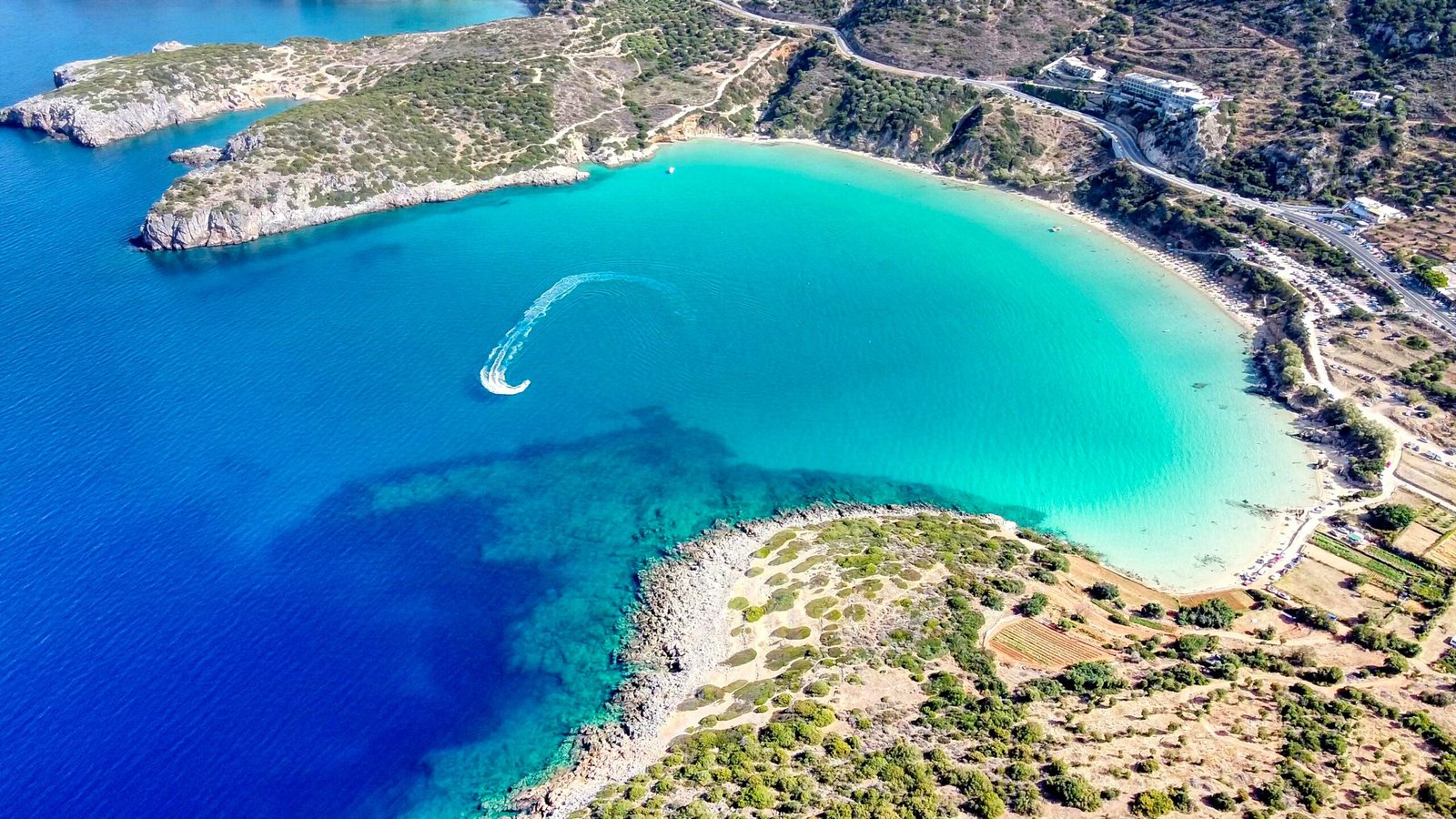
Crete is not an island so much as a world unto itself. The largest of the Greek islands and the fifth largest in the Mediterranean, it sits far enough south to feel like a different proposition entirely from the Cyclades — warmer, wilder, more internally complex, and possessed of a history so layered and so ancient that the Minoan civilisation, which peaked here over three thousand years ago, feels less like archaeology and more like a living presence in the landscape.
This is an island that has absorbed Minoans, Mycenaeans, Romans, Byzantines, Venetians, and Ottomans, and has emerged from each encounter with its identity not just intact but deepened — a quality of resilience and rootedness that the landscape reflects and that the practitioner, arriving here with the intention to go inward, absorbs almost without noticing. A yoga retreat in Crete is not a retreat into beauty, though beauty is everywhere. It is a retreat into substance — into an island that has more to offer than any single visit can exhaust, and that rewards the practitioner who arrives ready to be surprised by the depth of what it contains.


Crete doesn’t whisper — it speaks in the clear, direct voice of a place that has been inhabited for thousands of years and knows exactly what it is. Greece’s largest island stretches 260 kilometres from east to west, long enough to contain multiple climates, landscapes, and distinct regional cultures. Mountains rise to snow-capped peaks even in late spring. Gorges carved by millennia of water slice through limestone formations. Olive groves silver the hillsides, some trees so ancient they were already old when Venice ruled the island. And everywhere, the sea — sometimes turquoise and gentle, sometimes deep blue and wild, but always present, defining the rhythm of life.
If Santorini is about elevation and air, about the drama of volcanic geology and clifftop views, then Crete is fundamentally about earth. About roots that go deep, traditions that persist, and a way of life that prioritises substance over spectacle. This is the island where Minoan civilisation — Europe’s first advanced society — flourished four thousand years ago. It is where resistance fighters hid in mountain caves during World War II. It is where elderly women still dress in black, where shepherds tend flocks in highlands that feel unchanged since antiquity, where the concept of hospitality is not a business strategy but a moral obligation. Our yoga retreats in Greece guide covers the full range of Greek destinations for those comparing options.
Understanding Crete’s geography helps explain why the island produces such distinctive retreat experiences. The island is essentially a mountain range that happens to have sea on both sides—the northern coast facing the Aegean, the southern coast meeting the Libyan Sea. The central spine reaches over 2,400 meters at Mount Psiloritis, creating dramatic elevation changes and microclimates that allow for remarkable diversity.
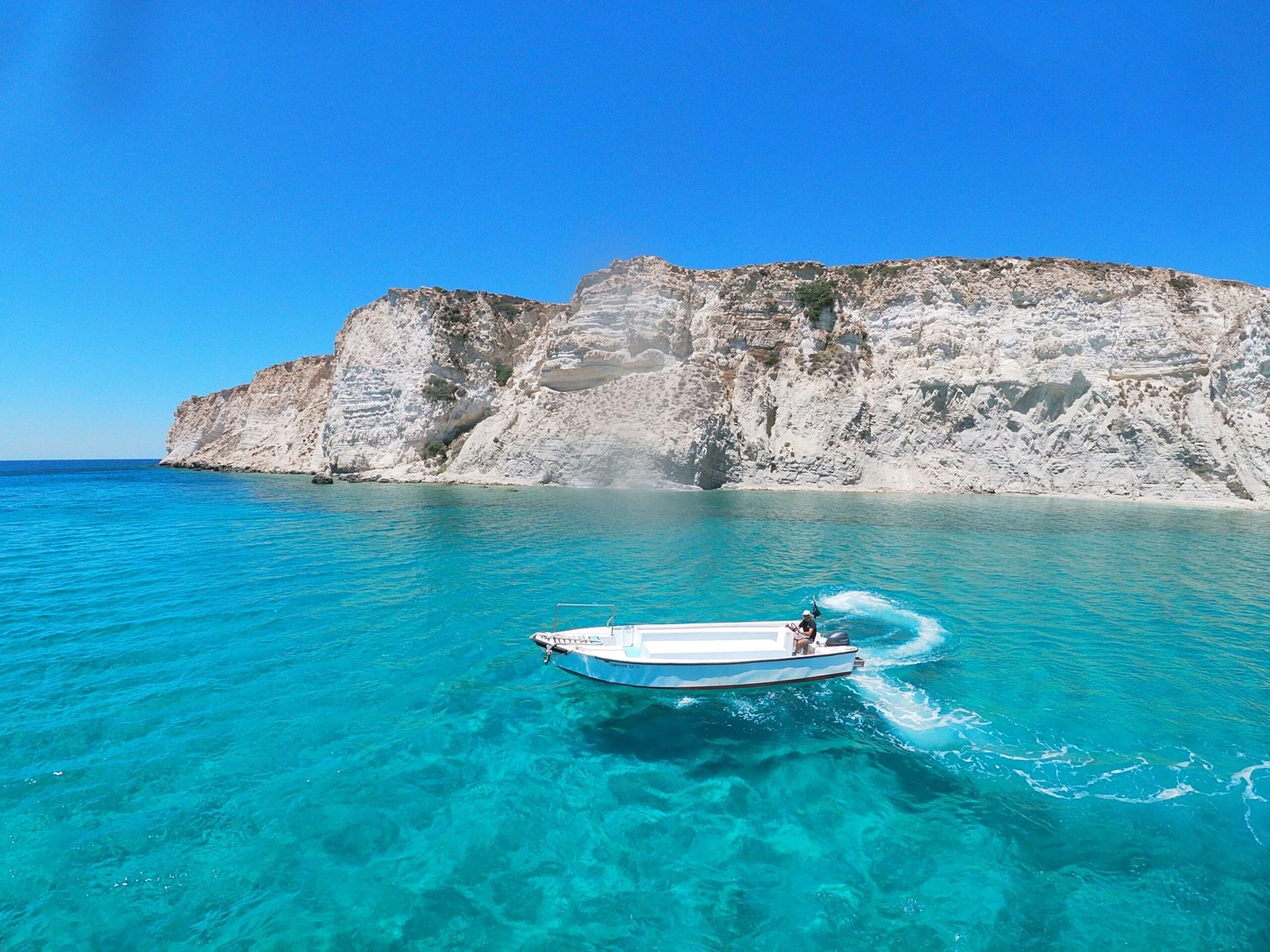
The northern coast is where you’ll find the main cities—Heraklion, Chania, Rethymno—along with gentler beaches and more developed tourism infrastructure. The southern coast is wilder, with steep cliffs plunging into deeper waters and villages that retain a frontier feel. Between north and south, the interior offers villages where time seems negotiable, where agriculture still drives the economy, where every family produces its own olive oil and wine.
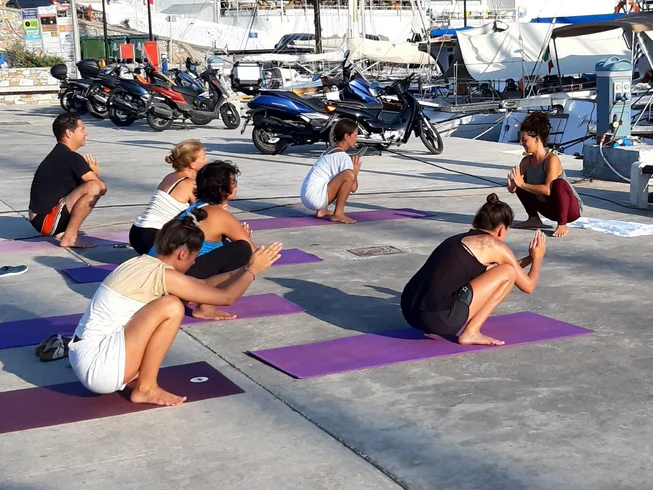
Most yoga retreats in Crete position themselves to take advantage of this variety. You might stay in a renovated stone house in a mountain village with morning practice overlooking olive groves, afternoon hikes to Byzantine churches hidden in valleys, and evening swims at beaches a twenty-minute drive away. Or you could base yourself on the coast with daily yoga by the sea and optional excursions into the mountains. The point is that Crete offers both—earth and water, mountain and sea, wild nature and cultivated land—all accessible within the span of a single day.
Authentic Retreat Centers: Family-Run and Farm-Based
Crete’s yoga retreat scene differs markedly from other Greek islands in its emphasis on authenticity and local ownership. Rather than international yoga brands or luxury boutique hotels, you’re more likely to encounter retreat centers run by Cretan families, sometimes for generations, who’ve adapted their properties for wellness tourism while maintaining traditional agricultural practices.
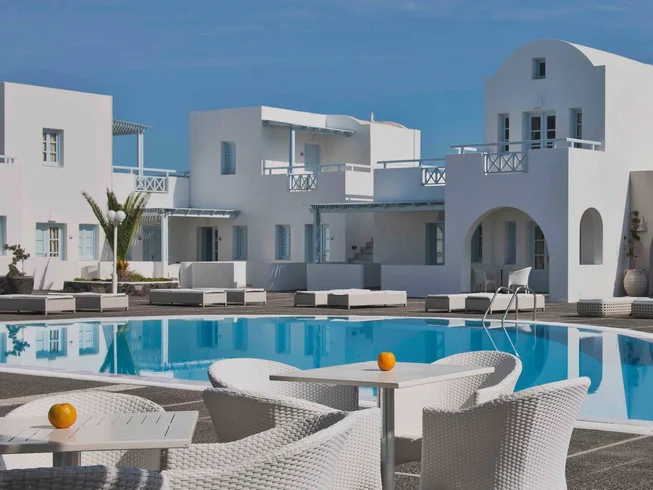
Typical accommodations include renovated stone farmhouses with thick walls that keep interiors cool even in summer heat, courtyards shaded by grapevines or mulberry trees, and gardens that supply much of what appears on your plate. Rooms tend toward simple comfort rather than luxury—whitewashed walls, wooden furniture, cotton linens, and details that reflect local craft traditions. The focus is on what’s essential rather than what impresses on Instagram.
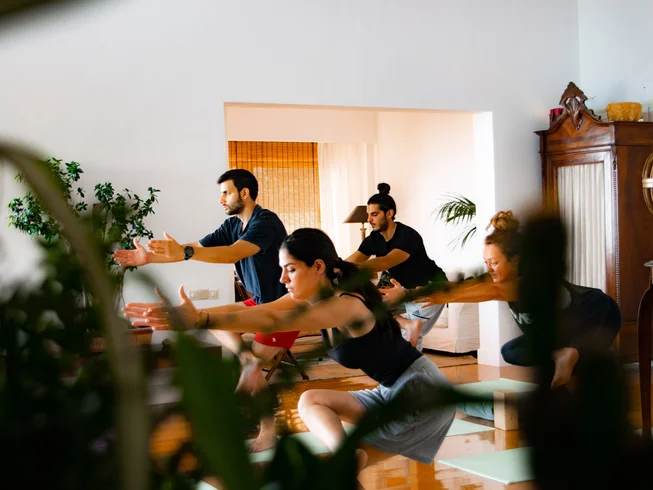
The Cretan approach to yoga retreat tends toward the holistic and integrative. Rather than intensive asana practice separated from the rest of daily life, you’re more likely to find retreats that treat yoga as one element in a larger practice of mindful living. Morning sessions might be followed by working in the garden, which becomes meditation in action. Afternoon hikes through olive groves become walking meditation. Preparing and sharing meals becomes a practice of presence and gratitude.
Hatha yoga, gentle Vinyasa flow, Yin yoga, and restorative practices are most common, often taught by instructors who’ve lived on Crete for years and whose teaching has been influenced by the island’s pace and philosophy. The heat during summer months naturally encourages slower, more mindful movement, and many retreat centers adapt their schedules to honor the traditional Mediterranean rhythm—early morning practice, midday rest, late afternoon or evening session.
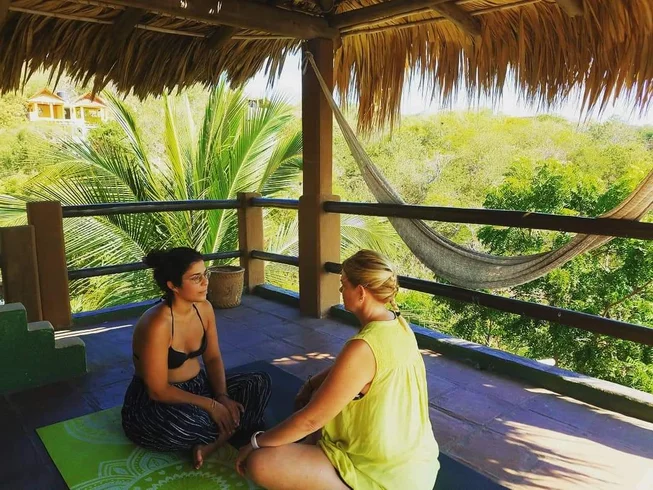
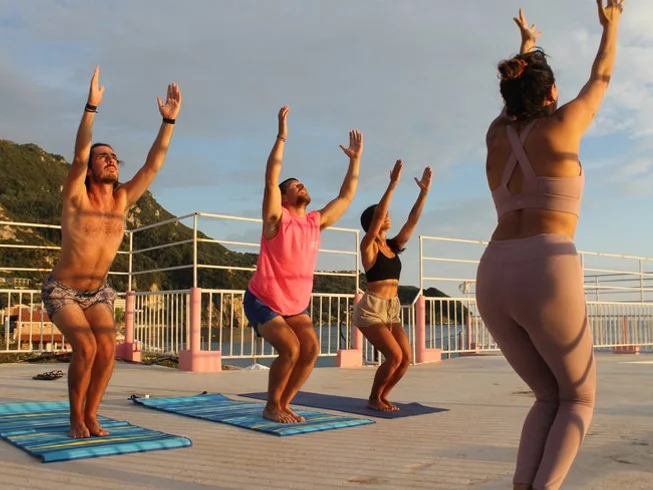
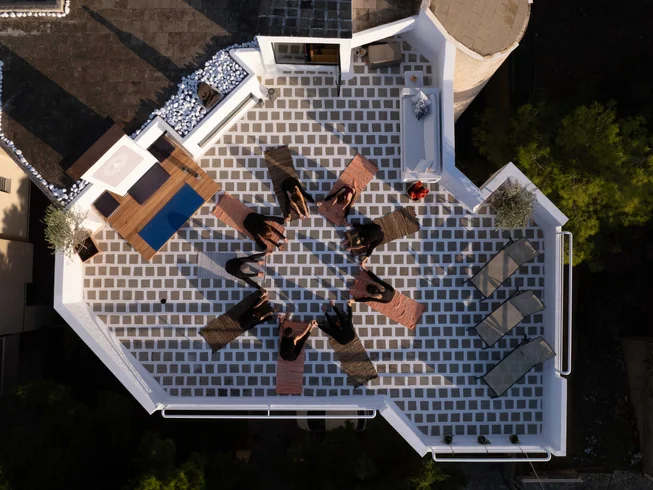
A typical day at a Cretan yoga retreat might unfold like this: You wake to roosters announcing dawn and the scent of herbs warming in early sun. Morning practice happens outdoors—perhaps on a terrace overlooking the sea, or in a garden surrounded by olive trees, or on a rooftop with views of mountains. The session runs 90 minutes to two hours, ending with extended savasana while goat bells chime in the distance.
profound by the excellence of its components.

Cretan food is the strongest single argument for choosing the island over any other Greek retreat destination. The island maintains a genuine agricultural economy — olive oil, wine, cheese, honey, vegetables, and herbs produced locally and consumed locally — and retreat kitchens source from this system rather than importing.
Dakos is the signature Cretan dish and the one that best demonstrates the food philosophy: a barley or wholegrain rusk soaked in olive oil and topped with grated ripe tomato, crumbled mizithra or feta cheese, olives, and dried oregano. It is peasant food elevated by the quality of its components — the tomato sun-ripened rather than greenhouse-grown, the olive oil green and peppery from the current year’s pressing, the cheese sharp and specific. At a retreat kitchen that takes its sourcing seriously, a dakos plate at lunch communicates more about Crete than any guided tour.
Cretan olive oil from the Koroneiki olive is among the most prized in Greece — intensely fruity, low in acidity, and with a peppery finish that the mainland varieties rarely achieve. The harvest runs October through December and the new-season oil arriving at retreat kitchens in the autumn months is the version worth seeking. Drizzled over almost everything, it is less a condiment than a foundation ingredient.
Graviera Kritis — the island’s Protected Designation of Origin hard cheese, produced from sheep’s milk and aged for a minimum of five months — is sweet and nutty with a firm texture that allows it to be fried or grilled (saganaki) as well as served sliced. It appears at every Cretan meal in some form.
Mizithra is the fresh whey cheese that Cretan shepherds have been making since the Minoan period — soft, slightly sweet, and eaten fresh at breakfast with thyme honey, or dried into the hard anthotyros that grates over pasta. The version made at the small dairies of the interior, bought directly or at the weekly market, is different from anything available outside the island.
Wild greens (horta) gathered from the hillsides — amaranth, purslane, chicory, mustard greens — are blanched and dressed with olive oil and lemon and appear as a side dish at every traditional Cretan meal. The variety and freshness of the horta changes with the season, and retreat kitchens that forage locally are serving something that has no precise supermarket equivalent.
Cretan wine from indigenous grape varieties — Vidiano for whites, Kotsifali and Mandilaria for reds — is produced in small quantities and rarely exported in significant volume. The wines of the Peza and Archanes appellations near Heraklion, and the smaller producers of the Sitia region in the east, are worth drinking specifically on the island.

Crete is ideal for travelers who value substance over style, who want their yoga practice integrated with nature and traditional culture, who appreciate good food and aren’t counting calories, and who can embrace simplicity and authenticity over luxury amenities. It’s perfect for those who like to hike, who enjoy being in rural areas, who want to learn about agricultural traditions and local ways of life, and who prefer retreats where the host family knows your name and story.
This is not the island for those seeking glamorous Instagram settings, spa-heavy wellness programs, nightlife, or resort-style service. It requires more flexibility and adaptability than polished tourism destinations—things may not run on precise schedules, facilities may be basic, and you might need to navigate language barriers and cultural differences.
But if you’re drawn to places with depth and character, if you want a retreat that feels like stepping into a different way of life rather than a temporary wellness vacation, if you’re ready to be fed in every sense of the word—body, mind, and spirit—then Crete offers something increasingly rare in our curated, commercialized world. It offers the real thing. And once you’ve experienced that authenticity, that groundedness, that sense of being welcomed not as a customer but as a guest in the truest sense, you may find yourself planning your return before you’ve even left.
What to Expect: Costs and Practical Considerations
Cretan yoga retreats are generally more affordable than those on Santorini or Mykonos, with week-long packages typically ranging from €800 to €1,800. This usually includes shared or private accommodation, all meals, daily yoga classes, and some activities like guided hikes or cooking classes. Excluded are usually airfare, wine or spirits, spa treatments (if available), and optional excursions.
The value proposition is strong—you’re getting authentic experiences, excellent food, and genuine hospitality rather than paying for luxury brand names or prime real estate. The trade-off is that accommodations won’t have the design magazine polish of boutique hotels, facilities may be simpler (shared bathrooms aren’t uncommon in budget-friendly options), and you’ll need to embrace a more rustic aesthetic.
Getting to Crete and Getting Around
Crete has two main international airports—Heraklion (HER) in the north-central region and Chania (CHQ) in the west. Both receive direct flights from many European cities from April through October, with year-round service through Athens. Flight time from Athens is approximately 50 minutes. Which airport you choose depends on where your retreat is located—the island is long enough that this matters.
No other Greek island offers the geographical and atmospheric range that Crete does, and for retreat purposes that variety is not a distraction but a resource. The northern coast — more developed, more accessible, historically the face the island presents to the world — contains Heraklion with its Minoan palace of Knossos, the Venetian harbour of Chania with its lighthouse and its covered market, and the kind of urban energy that makes the transition into retreat life feel meaningful rather than simply logistical. The southern coast is a different country: steeper, more remote, accessible in places only by boat or on foot, and facing the Libyan Sea with a directness and a silence that the more visited northern shores rarely achieve. The interior — the White Mountains of the Lefka Ori, the Lasithi plateau sitting at over a thousand metres above sea level, the gorges that cut through the island’s spine with a geological drama that makes the famous Samaria Gorge only the best-known example of a widespread phenomenon — belongs to a third version of Crete entirely, one that most visitors never encounter and that the retreat practitioner, moving more slowly and with more intention than the average tourist, is unusually well positioned to find.
What this variety means for practice is that the retreat experience in Crete can be genuinely shaped by the specific landscape chosen for it in ways that few other destinations allow. A retreat on the southern coast, in a village that the road system has not fully reached, produces a quality of isolation and elemental directness that amplifies inner work with unusual efficiency. A retreat in the Cretan interior, in a mountain village where the pace of life operates according to agricultural rather than tourist logic, grounds the practice in something older and more stable than sea views and Aegean light. A retreat on the more accessible northern coast, within reach of the island’s archaeological and cultural offerings, can incorporate the particular kind of reflection that standing inside three-thousand-year-old human achievement generates. Crete doesn’t offer one retreat experience. It offers many, and the practitioner who chooses carefully will find one that fits with a precision that more uniform destinations cannot match.
April through June is the best window overall. Spring in Crete means wildflowers on the mountain slopes, the Samaria Gorge open for walking (it opens in May), temperatures of 18-25°C that make outdoor practice at any hour comfortable, and the tourist infrastructure fully operational without the August density. May specifically is the month that most experienced Crete retreat guests return to.
September and October are the other strong months. September has the warmest sea of the year (25-26°C on the southern coast) and the harvest beginning — wild herbs drying on village balconies, the first of the olive harvest in the warmest spots, and the fig and grape season at its peak. October sees the olive harvest begin in earnest and the island returning fully to its own rhythm. Our yoga retreats in Greece in May guide covers the spring season across the Greek islands for those comparing options.
July and August are hot — Heraklion reaches 30-34°C in peak summer — but the southern coast and the mountain interior stay several degrees cooler. The retreat centres that operate in August adapt their schedules to the heat: early morning practice before the temperature builds, midday rest, late afternoon session. The island is busy with European summer visitors in these months; the more remote southern villages and mountain retreats remain quieter.
November through March: Crete is one of the few Greek islands with year-round retreat activity. The winters are mild on the coast (14-18°C), occasionally stormy, and the island in winter has a quality of quiet and authenticity that summer cannot replicate. Some retreat centres operate specifically through winter for those who want Crete without the season.
By air: Crete has two international airports. Heraklion (HER) in the north-central region is the larger, with direct flights from Athens (50 minutes, multiple daily), from major European cities from April through October, and year-round via Athens connections. Chania (CHQ) in the west is smaller but increasingly well-connected in summer. Which airport you fly into depends on where your retreat is located — the island is long enough (260 km) that this matters significantly.
By ferry: Overnight ferries from Piraeus (Athens) reach Heraklion in 8-9 hours and Chania in 8 hours — departing in the evening and arriving in the morning, a practical and atmospheric option. High-speed ferries are also available on some routes. The ferry crossing is worth considering if you have time: arriving in Crete by sea, watching the White Mountains emerge from the morning haze, starts the retreat in a different register from a budget flight.
Getting around the island: A car is essential for most retreat bases outside the main cities. Public buses connect the main towns but not the mountain villages and remote coastal areas where the best retreat properties are located. Most retreat centres arrange airport or ferry port pickups — confirm when booking. Crete’s roads range from excellent northern motorways to challenging mountain tracks in the interior; a standard car handles the former, a 4WD the latter.
Your email address will not be published. Required fields are marked *