
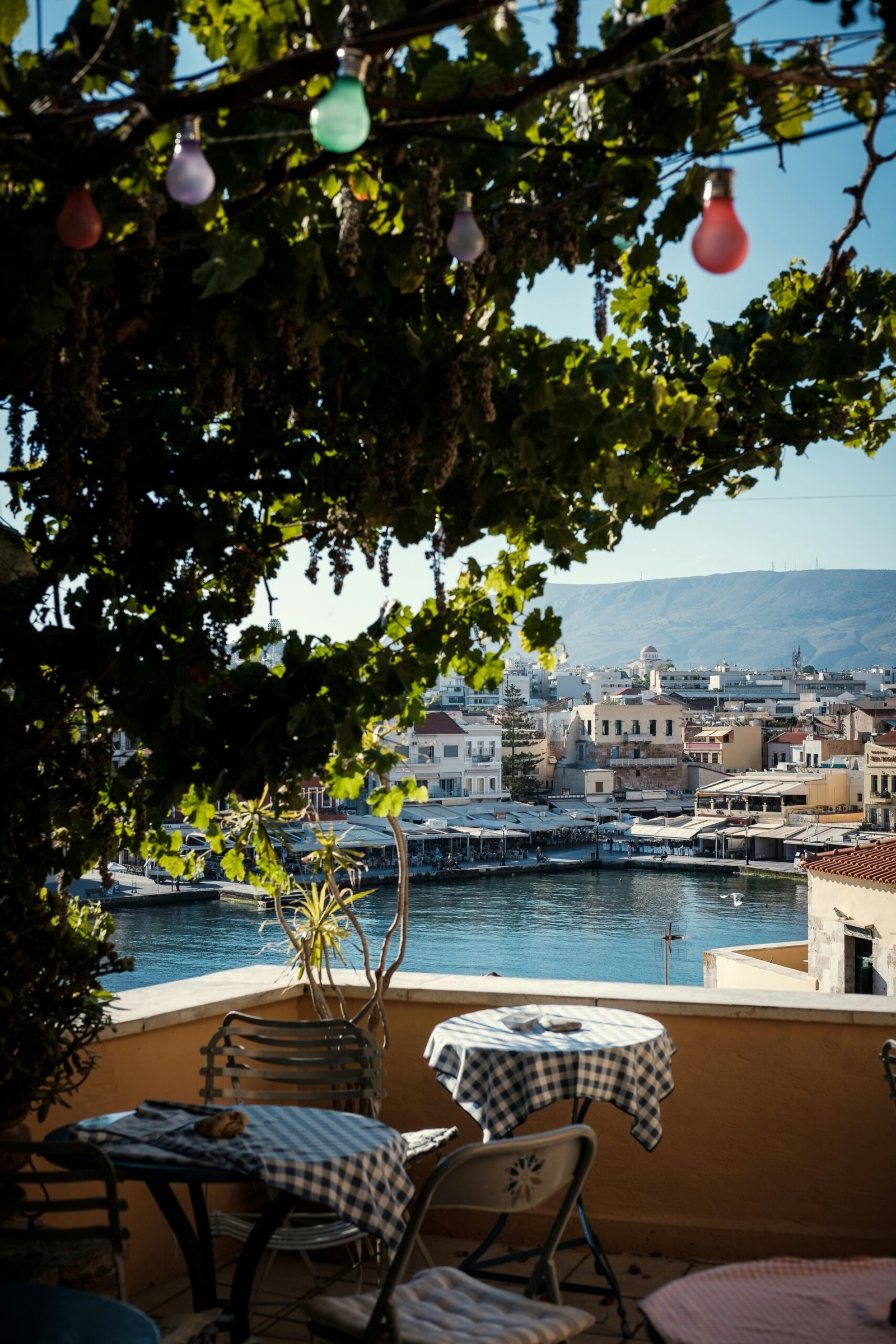
September is the month that experienced Greece travellers plan their year around. The August visitors leave almost overnight after the first weekend of the month. The sea — carrying the accumulated warmth of July and August — is at its annual peak temperature.
The retreat centres have availability and staff who are not exhausted from peak season. And the country settles into the unhurried autumn rhythm that makes it specifically rewarding for practice. The conditions are close to perfect. The prices are noticeably lower than August. Go in September.


September is consistently the month most experienced Greece retreat travellers choose when they have flexibility. Warm sea, warm days, cooler evenings, minimal crowds, lower prices, and the harvest beginning in the wine-producing regions simultaneously. Our yoga retreats across the Greek islands and mainland covers every destination and format.
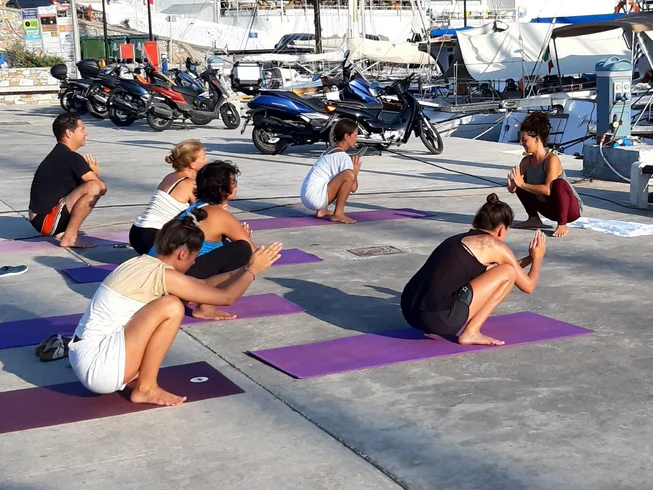
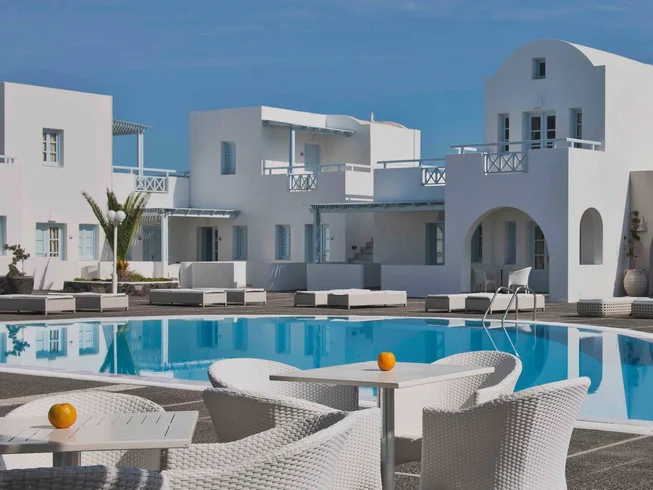
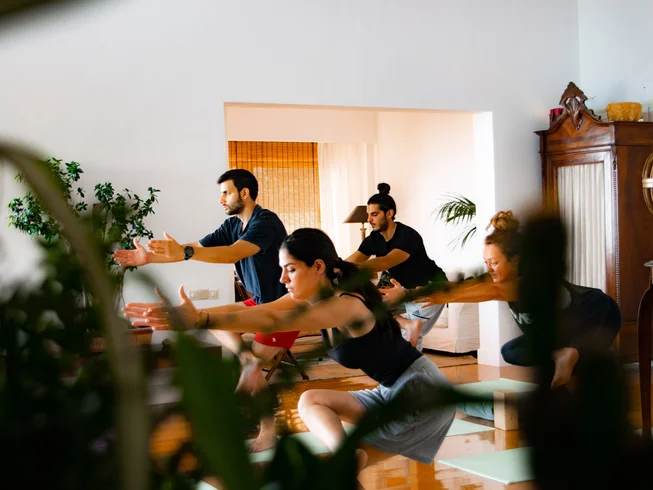
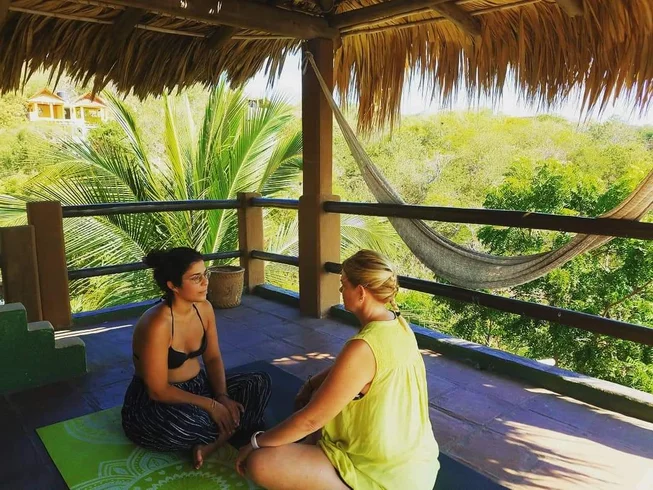
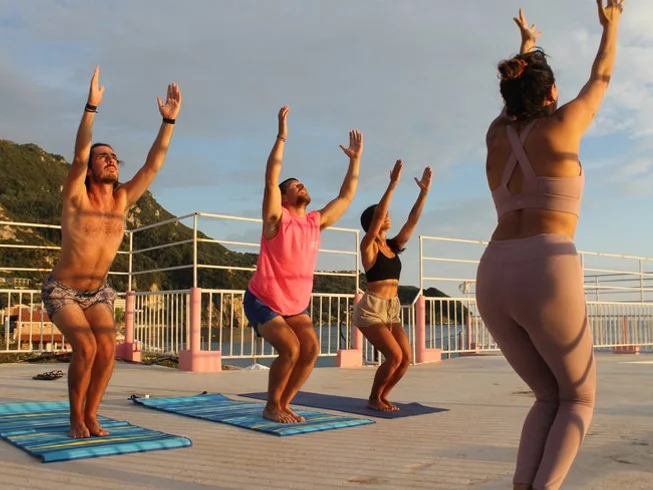
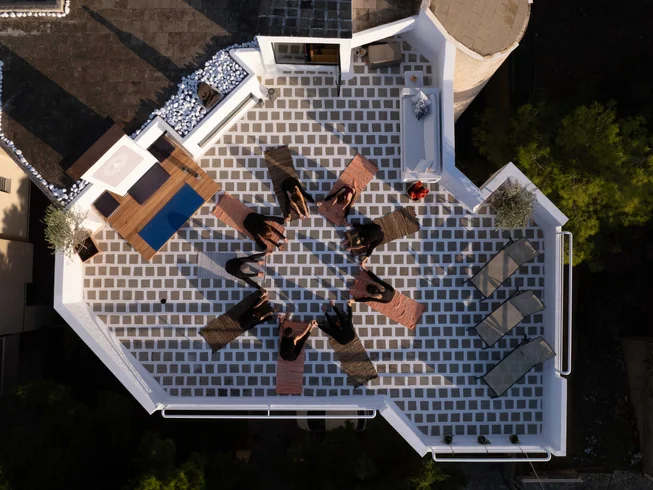
Mykonos in September is the island that July visitors were trying to find in July. The August compression — every ferry full, the streets of Chora difficult to move through, the beach clubs at maximum capacity — eases from the first weekend of September with a speed that is almost startling. What remains is the island with all its infrastructure operational but with space in it again: the caldera-facing restaurants available without a reservation weeks in advance, the northern coast beaches accessible without the August competition, and the morning streets of the old town walkable at any hour in the September light.
The sea at Mykonos in September reaches 24-25°C — the warmest of the year, carrying the heat of summer into conditions that the August crowds made difficult to fully enjoy. Morning practice on a clifftop terrace, afternoon swimming at an eastern coast beach before the day-trippers arrive from the port, and evening Yin as the temperature drops to a comfortable 22°C: the September Mykonos retreat day at its most complete. For the full Mykonos picture, our yoga retreats in Mykonos guide covers the island across all seasons.
Paros in September has a similar quality: the summer animation present but not overwhelming, the sea at its warmest (24-25°C), and the island’s windsurfing culture — the Pounta bay on the southwest coast is one of Europe’s premier windsurfing locations — transitioning from the summer beginner season to the autumn conditions that experienced windsurfers specifically seek out. The combination of morning yoga and afternoon windsurfing in September on Paros is specifically good: the Meltemi still present but moderating, producing consistent wind without the July intensity.
Crete in September is the island at its harvest energy. The grape harvest begins in the warmer lowland vineyards in the last week of August and continues through September, the cooperatives in the wine-producing villages of Heraklion and Sitia receiving the fruit from the surrounding estates. The fig harvest is at full production. The first almonds of the year are being cracked in the orchards above the coastal towns. And the olive groves — the same trees that have been producing the island’s defining product for millennia — are beginning to show the pre-harvest heaviness that October will turn into the year’s oil.
The south coast in September has the Libyan Sea at 26-27°C — the warmest accessible water in Greece — and the south coast ferry running to the car-free villages that in September have their best ratio of visitors to landscape: enough people to animate the tavernas and the port, few enough that the coastal walks and the village squares retain the quality of quiet that their remoteness exists to provide. For the full Crete picture, our yoga retreats in Crete guide covers the island in detail.
The Peloponnese in September combines two things that no other Greek region offers simultaneously: the wine harvest and the most significant concentration of archaeological sites in Greece. The vineyards of the Nemea region — producing the Agiorgitiko grape that makes some of the finest red wine in Greece — are in full harvest in September, the estates open for visits and tastings of the current and previous vintages. The Nemea Archaeological Museum and the ancient sanctuary of Nemea, where the Nemean Games were held in antiquity, are accessible from the same base.
The archaeological sites of the Argolid — Mycenae, Epidaurus, Tiryns, the Heraion of Argos — are in September accessible without the summer queues and in the September light that the harsh overhead summer sun obscures. Epidaurus specifically in September, approached across the pine-forested hillside in the early morning with the dew still on the grass of the orchestra, is the ancient theatre at its most specific and most affecting.
Santorini in September is one of the strongest arguments for choosing this month over any other for the island. The caldera views are identical to August. The cave houses and the white architecture are identical. The sea — at 23-24°C — is at its warmest. But the island has space in it again: the Oia sunset viewpoint accessible without the August queue, the caldera rim path walkable without negotiating crowds, and the restaurants of Firostefani and Imerovigli taking reservations for the same evening rather than requiring weeks of advance notice. For the full Santorini picture, our yoga retreats in Santorini guide covers the island in detail.
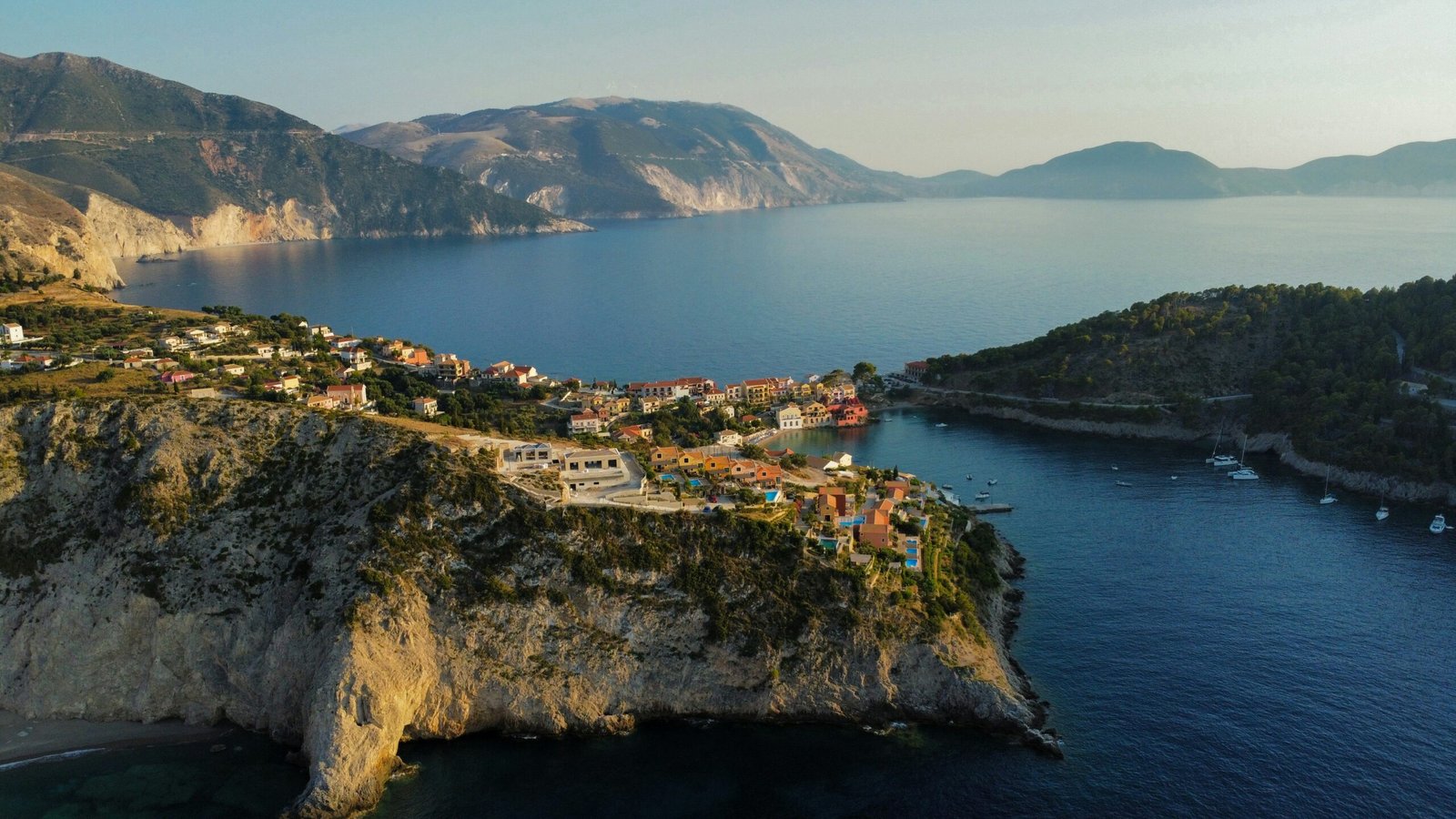
Fresh harvest grapes appear at markets throughout September — the wine varieties from Nemea, Naoussa, and the Cretan estates alongside the table varieties from the Argolid and the Attica plain. The Muscat grapes from Samos and the Lemnos PDO Muscat from the northern Aegean are eaten fresh from the bunch in September with a sweetness and fragrance that the same grapes pressed and bottled cannot preserve. At a market in Nafplio or Heraklion in September, buying a bunch of fresh harvest grapes directly from the producer and eating them walking back through the market is one of those specifically seasonal pleasures that requires no restaurant.
September figs are the finest of the year — the large black varieties (sykia mavri) from Crete and the Peloponnese at their maximum ripeness before the autumn rains arrive. The traditional Cretan preparation of fresh figs halved and baked with honey, walnuts, and a splash of raki, served warm at a retreat breakfast, is one of those dishes that requires the ingredient at this specific moment to taste as it should. The fig’s nutritional profile — fibre, potassium, polyphenols, and prebiotic compounds that support gut microbiome diversity — has been documented in nutritional research as specifically beneficial, with studies published in Food Chemistry demonstrating the antioxidant activity of Greek fig varieties specifically.
September octopus from the Aegean has been caught in the post-summer conditions when the water is warmest and the octopus most active. The traditional preparation — beaten against the rocks at the harbour to tenderise, hung on lines to dry in the September sun for several days, then grilled over charcoal — produces the version that the Athens restaurant replication is attempting and the harbour taverna is delivering. At any port in the Cyclades, the Dodecanese, or the Ionian in September, the grilled octopus eaten with a glass of ouzo and a view of the harbour is the Greek September meal that requires no other argument.
September is the primary Greek honey harvest month. The thyme honey of Crete and the Hymettus honey from the Attica hills — both produced primarily from late-summer thyme and wildflower foraging — are collected and processed in September. The new-season honey arriving at Cretan markets and mountain village producers in September has a freshness and a floral intensity that stored honey loses within weeks. Research on Greek thyme honey has identified its specific antibacterial and antioxidant properties, associated with the high polyphenol content of thyme nectar — which is why it has been used medicinally in the region since antiquity.
Throughout September across Nemea, Naoussa, the Aegean wine islands, and Crete. The vendimia is not a festival but an agricultural event of genuine scale and specific beauty. The estates and cooperatives that welcome retreat guests during harvest week — walking the vineyards as the picking is underway, watching the grapes processed at the winery, and tasting the previous year’s vintage in the cellar — are offering an experience that is specifically of this season and this country.
The Thessaloniki International Film Festival runs in November, but the programming announcements and advance screenings begin in September, and the city’s cultural energy in the weeks before the festival has a specific animation. For retreat guests based in northern Greece or Halkidiki in September, a day in Thessaloniki — the second city of Greece, with the most varied Byzantine monument collection in the country and a food culture considered the finest on the mainland — adds a cultural dimension that Athens-centric itineraries miss.
By mid-September the Meltemi wind that dominated the Aegean through July and August has largely stopped. The transition is felt physically on the exposed Cycladic islands: the air becomes still, the sea calms, and the outdoor practice conditions that the July wind made challenging become available without qualification. The September Aegean without the Meltemi produces a quality of stillness and clarity — the water flat, the horizon sharp, the early morning silence total — that the summer months cannot offer.
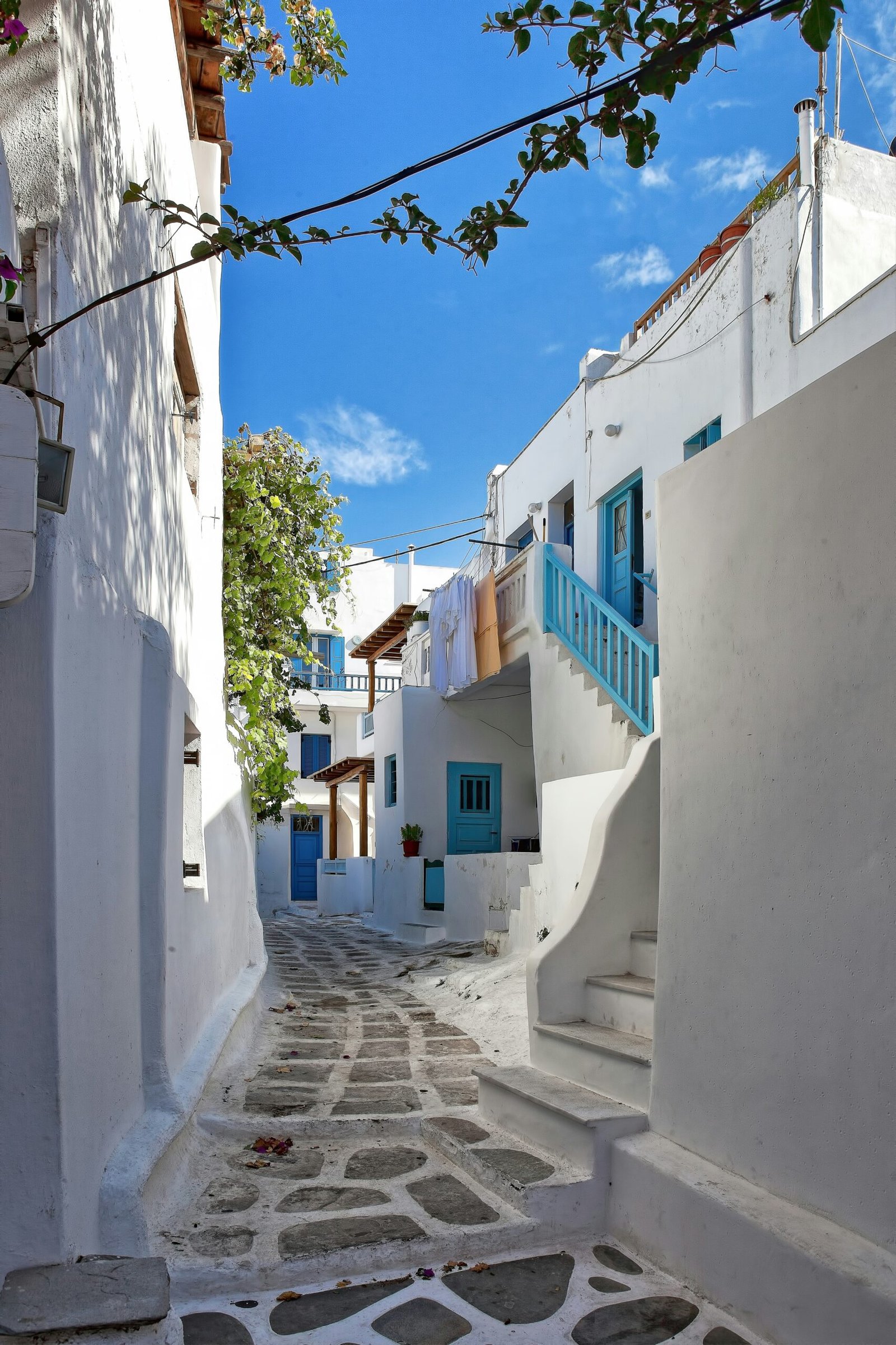
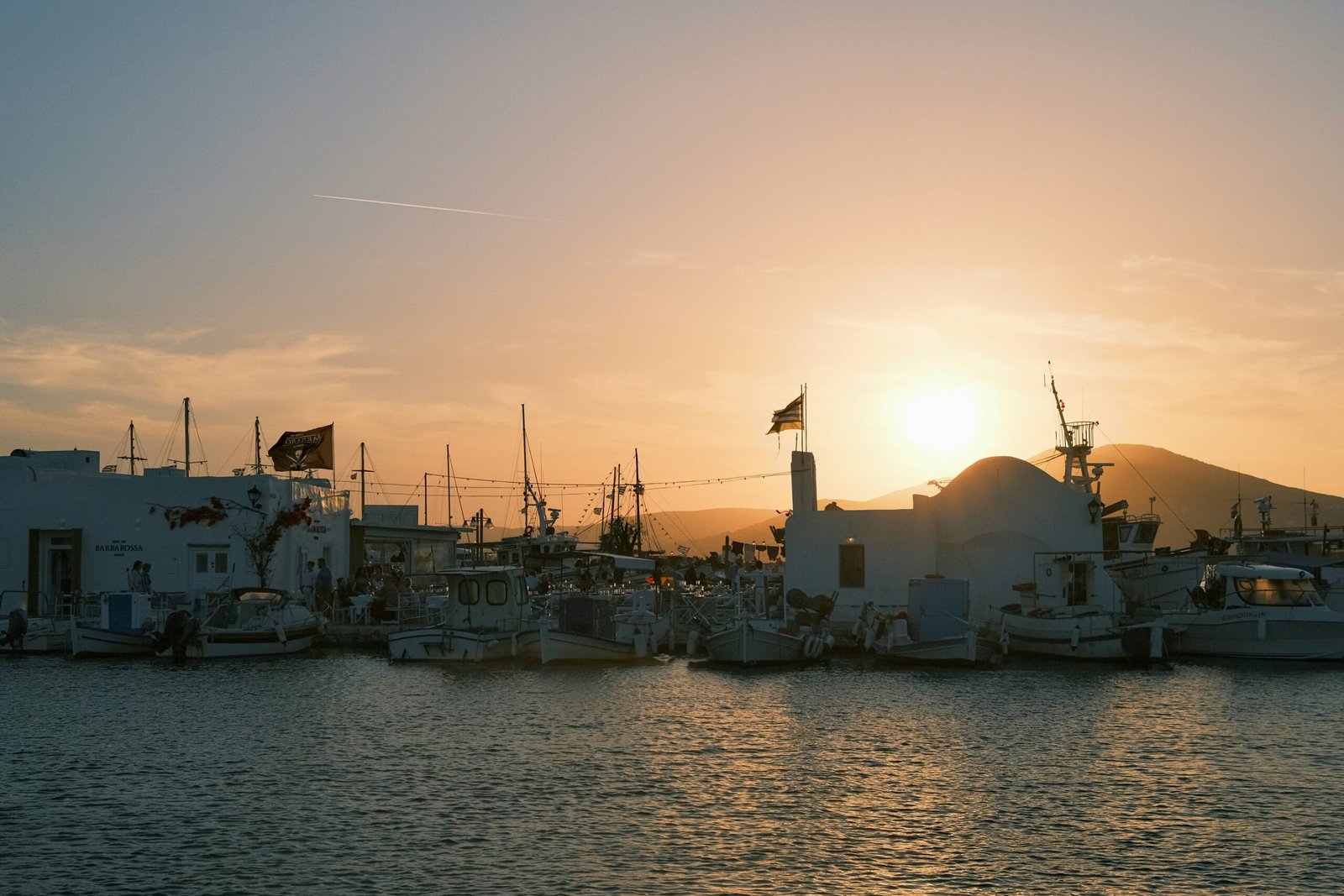
September is the month retreat programming in Greece finds its easiest form. The heat management that July and August required is largely gone by mid-September. The outdoor schedule runs fully from early in the month. Morning practice at 7am on a Cycladic terrace or a Cretan farmhouse terrace is warm and comfortable in the September light. Evening sessions extend naturally later — the days still long enough for 6:30pm outdoor practice in full light until mid-month.
The harvest excursion — whether Cretan vineyard, Nemea wine estate, or fig orchard — is the September programming event that distinguishes the month from any other. Retreat centres that build a harvest visit into the week are giving participants an experience that is specifically of this place and this moment in the agricultural calendar.
The Meltemi’s departure from the Cyclades in mid-September changes the outdoor practice quality significantly. The stillness that returns to the islands after three months of wind is something that practitioners who have been on the Aegean through summer specifically appreciate: the first windless morning on Mykonos or Paros in September, the silence total, the sea flat, and the practice space completely calm, has the quality of a landscape that has been holding its breath and is finally exhaling.
September retreat groups tend toward the most intentional of the autumn. Those who chose September specifically, rather than defaulting to August availability, have generally made a deliberate choice — and the retreat centres that serve this audience run their most focused programmes of the year in September as a result.
Your email address will not be published. Required fields are marked *