
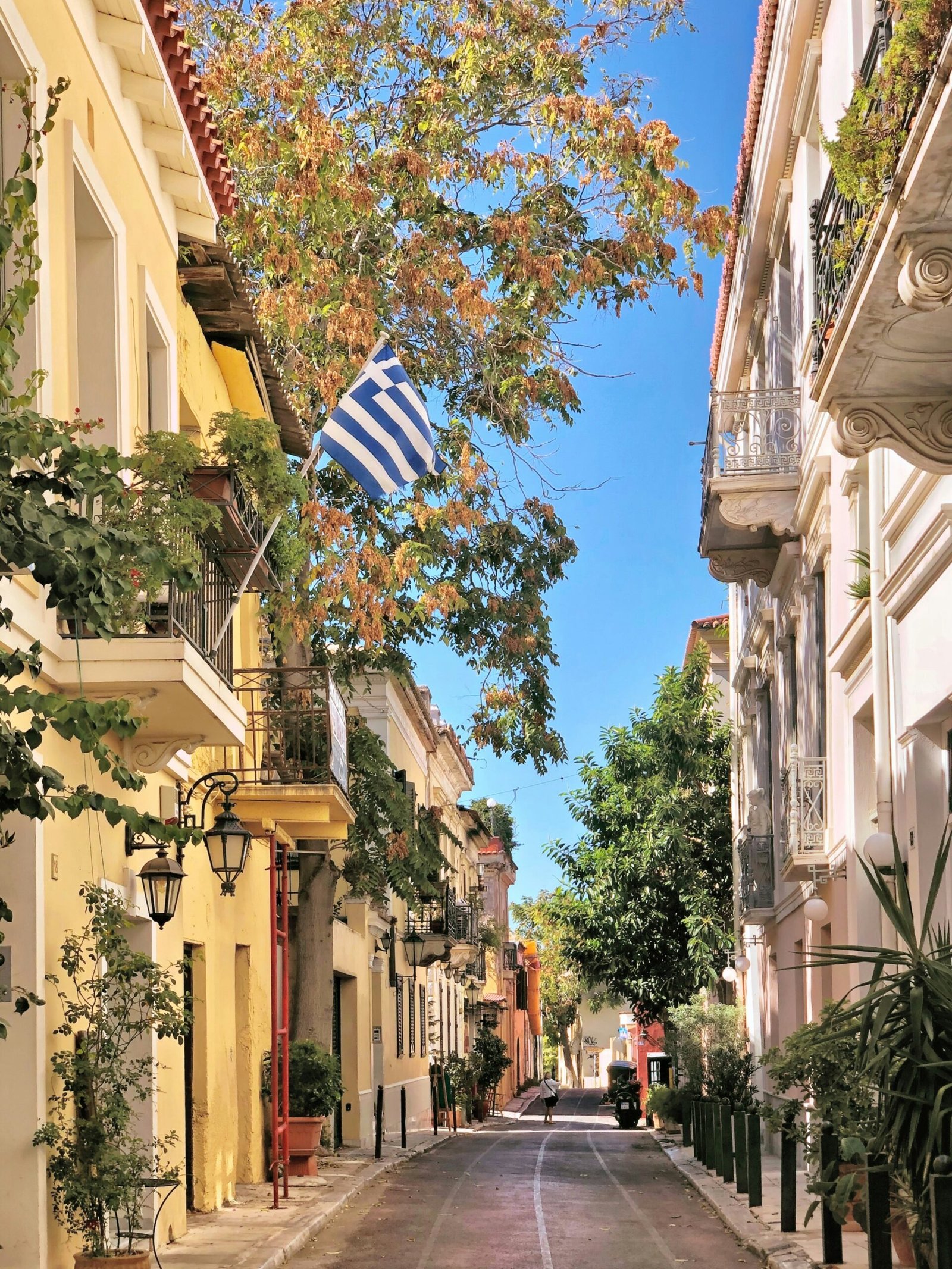
March is when Greece accelerates. The almond blossom of February gives way to wildflowers across the Peloponnese mountains and the Cretan hillsides. The Cycladic islands begin opening their retreat centres after the winter closure.
The sea is still cold but the landscape is at its most varied and colourful. And the country has a spring energy that the colder months lack — a sense of the year beginning in earnest that makes March one of the more rewarding months to be here.


March is the transition month — winter not quite over, spring already visible in the wildflower fields and the almond orchards finishing their run. Crete and the Peloponnese are fully operational. The Cyclades are beginning to open. Athens is warming noticeably. And the retreat infrastructure is moving into its spring mode, with more outdoor programming and more of the outside-facing retreat experience that winter keeps mostly indoors. Our full Greece yoga retreats guide covers every region.
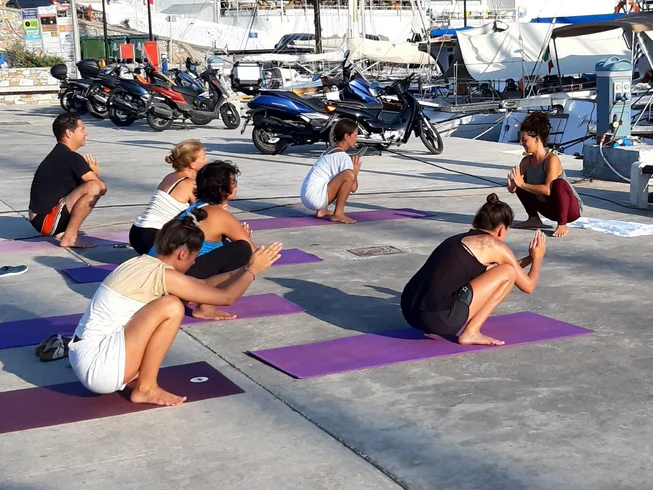
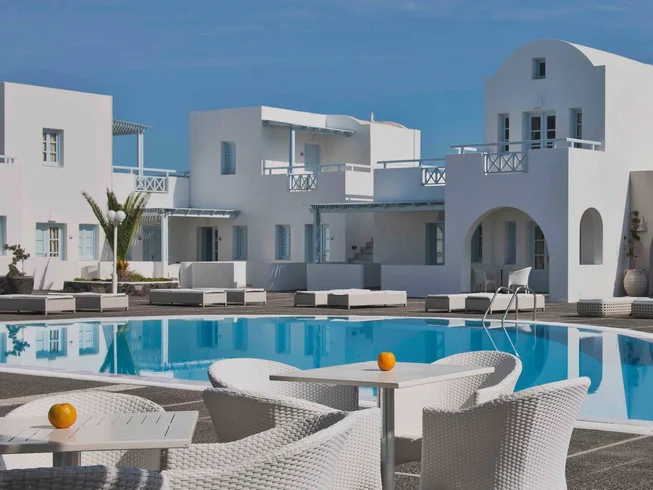
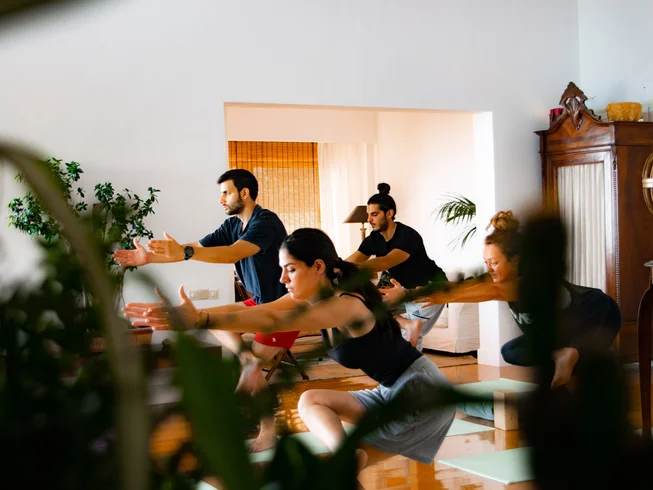
March is Crete at its greenest. The winter rains that have been accumulating since November have saturated the island, and the wildflowers that begin in February reach their full March expression: poppies in the valley floors, wild orchids on the limestone hillsides of the Akrotiri peninsula, anemones and asphodels on the Mani-facing southern slopes, and the specific combination of pink and white of the last almond and the first cherry blossom in the mountain villages of the interior.
The Samaria Gorge — the 16-kilometre ravine through the White Mountains that is one of the great walks in Europe — opens in May, but the approaches from the south coast (the Agia Roumeli end) are accessible in March and offer a version of the gorge landscape without the summer crowds. The walk from Agia Roumeli along the coast path to the abandoned village of Loutro, accessible only on foot or by boat, is a March walk of specific beauty: the Libyan Sea below, the White Mountains above, and no other people.
Heraklion and the archaeological sites of central Crete — Knossos, Phaistos, Gortyna — are in March accessible without the summer queue. Knossos specifically, which in July requires arriving at 8am to avoid the tour groups, is in March a place where you can actually stand in the Minoan palace courtyards and think, which is the correct way to experience it. For the full Crete retreat picture, our yoga retreats in Crete guide covers the island in detail.
The Peloponnese in March is the wildflower season at full intensity. The plains around Nafplio and the Argolid, the valleys of the Laconian coast, and the hillsides above the Mani villages are covered in March with the most varied wildflower display in Greece: red poppies, white asphodels, purple orchids, yellow crown daisies, and the pink-white of the almond orchards finishing alongside the first cherry blossom beginning.
The archaeological sites of the Argolid — Mycenae, Epidaurus, Tiryns — are in March accessible in a way that July makes impossible. The theatre at Epidaurus specifically, built in the fourth century BCE with the acoustic precision that allows a whisper on the stage to be heard in the back row, is in March a place of genuine stillness: no guided tours talking over each other, no coach parties blocking the paths, just the theatre and the hillside and the sound of wind in the pine trees above.
The Taygetos trails from the Mani villages above Stoupa and Kardamyli — the coastal walking paths that Patrick Leigh Fermor walked for decades from his house above the sea — are in March at their wildflower and accessibility peak. The combination of morning yoga at a Mani retreat centre and an afternoon walk on these paths produces a March Peloponnese retreat day of specific quality. For the full Peloponnese picture, our yoga retreats in the Peloponnese guide covers the region.
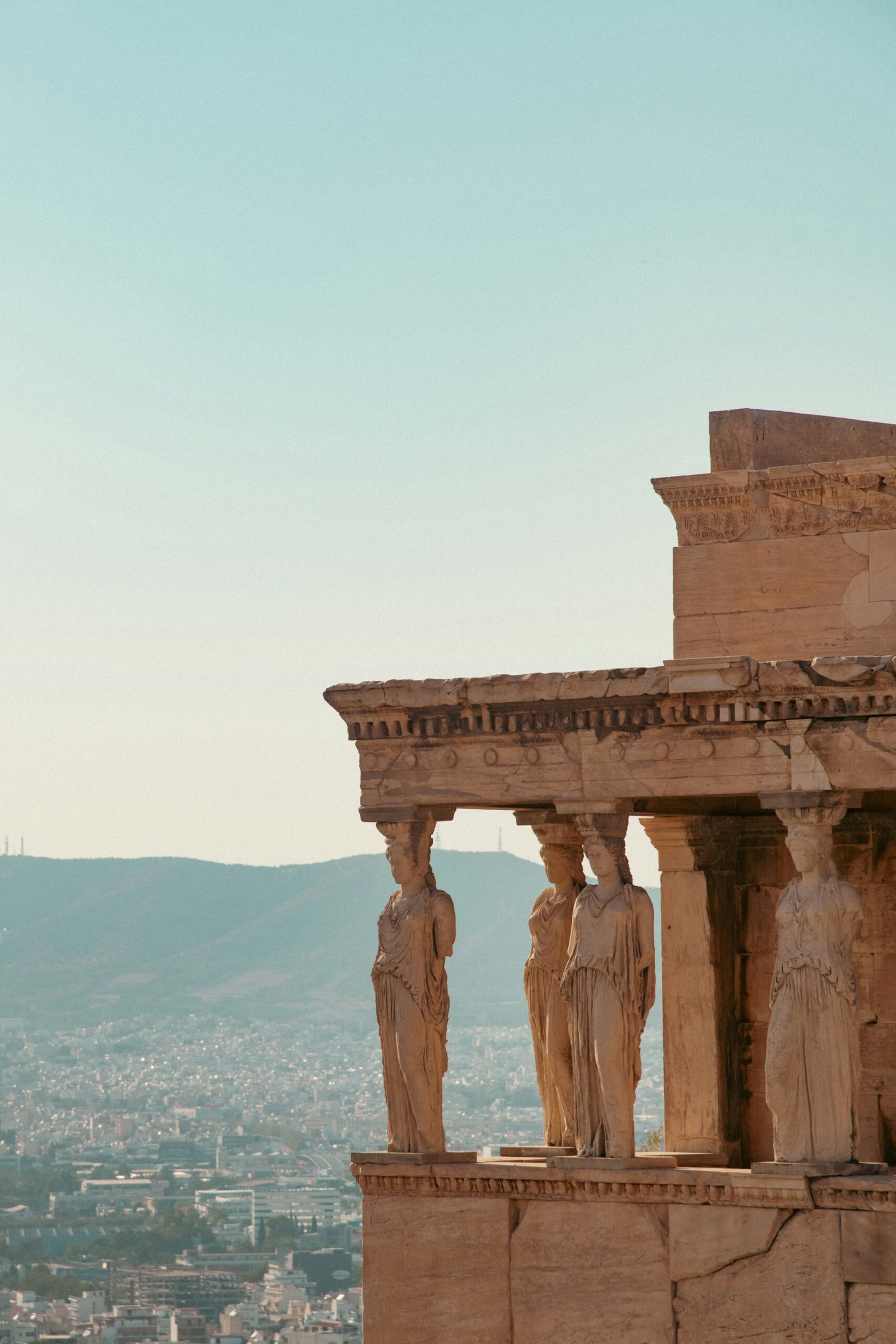
Athens in March is the city emerging from winter with a noticeable energy. The temperature of 14-18°C makes the city walkable at any hour. The Acropolis and the Acropolis Museum are accessible with shorter lead times than the summer. The neighbourhood markets — the Monastiraki flea market on Sunday mornings, the Varvakios Central Market — are operating for the Athenian population rather than for tourists, which produces a quality of authenticity that the summer version of the same places cannot offer.
Cape Sounion in March has the wildflowers beginning on the Attica peninsula headland — the clifftop path to the Temple of Poseidon lined with early spring flowers, the sea below still winter-blue and rough, and the combination of ancient stone and March landscape producing the elemental experience that summer’s blue-sky postcard version can sometimes obscure. The drive down the coastal road from the Athens Riviera to Sounion in March, with the sea visible the entire way and the Attica hills beginning to green after winter, is itself worth the retreat base.
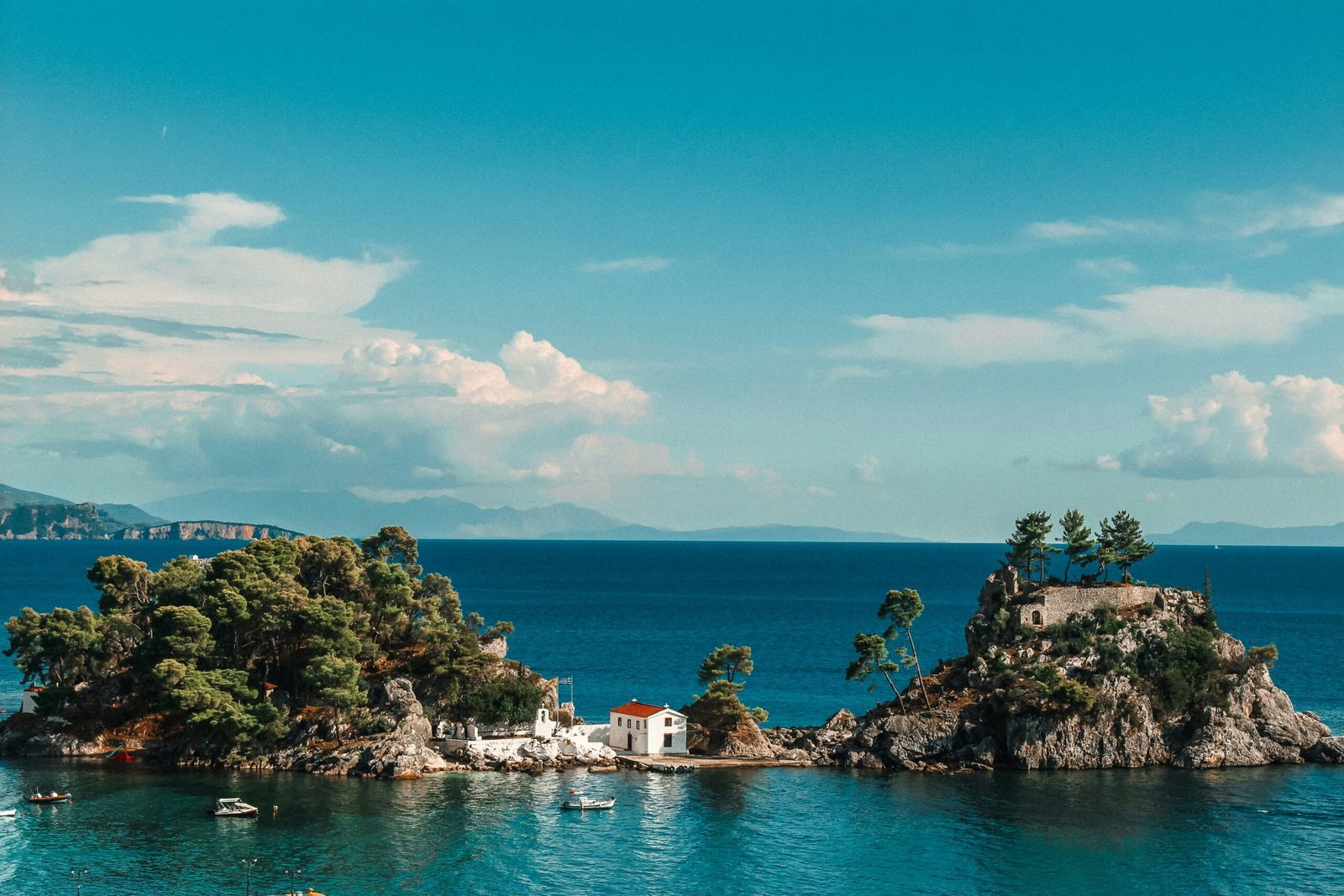
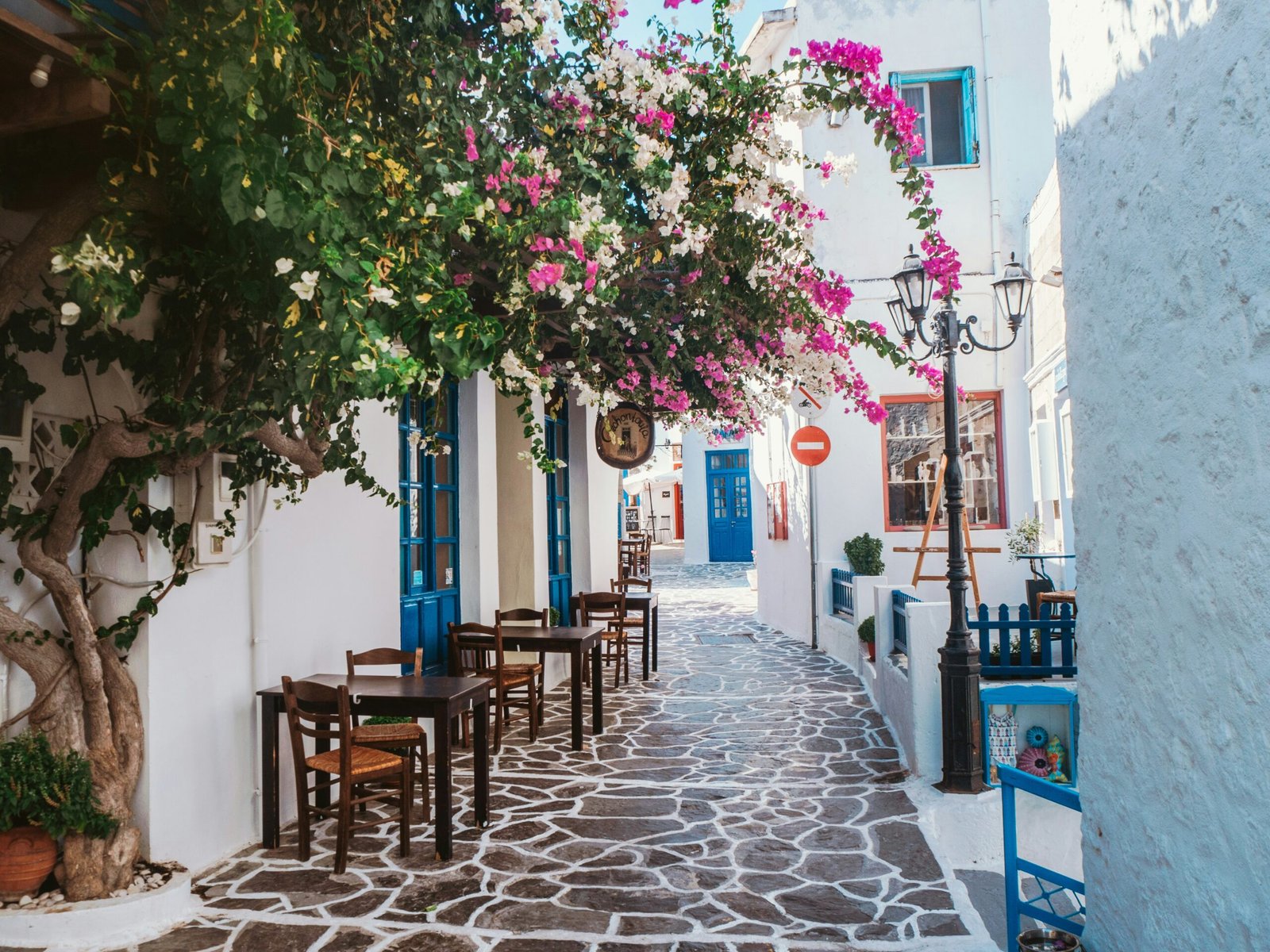
March is when the Cyclades begin to wake up. Paros, Naxos, and Syros are the first islands to open their retreat centres after the winter closure — typically from late March for the more established operations. The islands in March have a specific quality: the tourist infrastructure operational but not yet populated, the ferries running but not full, and the Cycladic landscape in its spring clarity without the August haze.
Syros — the administrative capital of the Cyclades, home to the neoclassical city of Ermoupoli, and one of the least internationally known of the accessible islands — is in March a working Cycladic city of 20,000 people going about its business. The combination of the neoclassical architecture (Ermoupoli has more listed buildings than any other Greek city), the Catholic and Orthodox communities living alongside each other in the old town, and the specific quality of a March Cycladic island without the summer economy makes Syros in March one of those specifically rewarding destinations that requires knowing it exists.
Seasonal Climate Advantages
– Balanced Temperatures – 12-18°C range ideal for both vigorous and gentle practice styles
– Increasing Daylight – Longer days support extended practice and energy maintenance
– Natural Beauty Emergence – Blooming landscapes create inspiring practice environments
– Peaceful Atmosphere – Pre-season tranquility allows for focused personal work
Practice Development Opportunities
– Energy Building Sequences – Gradual introduction of more dynamic practice elements
– Seasonal Transition Skills – Learning to adapt practice with changing conditions
– Outdoor Practice Integration – Comfortable temperatures for garden and nature sessions
– Detox Support Practices – Sequences supporting spring cleansing processes
Clean Monday (Kathari Deftera) falls in March in most years (check current-year dates). The traditional foods of this day are some of the most specifically Greek in the annual food calendar. Lagana — a large, sesame-seeded flatbread baked specifically for Clean Monday and available only on this day — appears at bakeries across Greece from the previous evening. Taramosalata (fish roe spread), dolmades (rice-stuffed vine leaves), olives, octopus, and seafood, and the various halva varieties (sesame-based sweets permitted during Lent) form the Clean Monday mezze spread that Greek families eat outdoors — traditionally on hilltops or in parks, with kite-flying as the accompaniment.
Wild asparagus (agria sparangia) is collected from the scrubland and olive groves of Crete and the Peloponnese from March through May. Thin, intensely flavoured, and found by those who know where to look along the south-facing hillsides, wild asparagus is the March forage ingredient that retreat kitchens sourcing locally will incorporate directly. Scrambled with eggs in the traditional preparation, or simply blanched with olive oil and lemon, it is a specifically seasonal ingredient that the cultivated variety cannot replicate.
Artichokes (anginares) from the Argolid and the Cretan coastal gardens are at their March peak — the large, purple-tipped Greek varieties harvested before they flower and eaten in preparations that showcase the vegetable’s natural sweetness. Anginares a la polita (artichoke hearts braised with potatoes, carrots, and dill in olive oil and lemon) is the classic Greek preparation and it appears on restaurant menus across the Peloponnese and Crete specifically in March and April when the ingredient is available fresh.
Bakaliaros me skordalia — salt cod fried in batter, served with garlic and potato purée (skordalia) — is the traditional Clean Monday dish and appears at tavernas across Greece specifically in the days surrounding the beginning of Lent. The combination of fried salt cod and the intensely garlicky skordalia is one of those specifically Greek food pairings that requires the seasonal context to fully appreciate.
The first day of Orthodox Lent — a national public holiday in Greece. Greeks fly kites on hillsides and in parks across the country, eat the traditional Lenten mezze outdoors, and mark the transition from the Carnival season to the forty days before Easter. In Crete, the Clean Monday celebrations in the villages have a specifically communal character: the tables set outside, the entire village gathered, and the kite-flying on the hillside above. Check current-year dates — Clean Monday falls in late February or early March depending on Easter.
March 25th is Greece’s national day, celebrating the beginning of the Greek War of Independence in 1821. Military parades take place in Athens and in the regional capitals, the most elaborate in Athens with the march past the Tomb of the Unknown Soldier at the Syntagma Square. In villages across Crete and the Peloponnese, smaller local celebrations have the character of a community marking its history rather than performing for visitors. The traditional dish of the day is bakaliaros me skordalia — salt cod with garlic purée — eaten after the parade.
Easter in Greece is the most important celebration of the Orthodox year, and its approach is felt from March onward in the preparations: the epitaphios (the flower-covered bier of Christ) being constructed in the churches, the Holy Week liturgical calendar beginning, and the specific food preparations of the Lenten period intensifying. If Easter falls in April (check current-year dates), the March retreat week that precedes it has a particular liturgical energy in the villages that suits contemplative retreat programming.
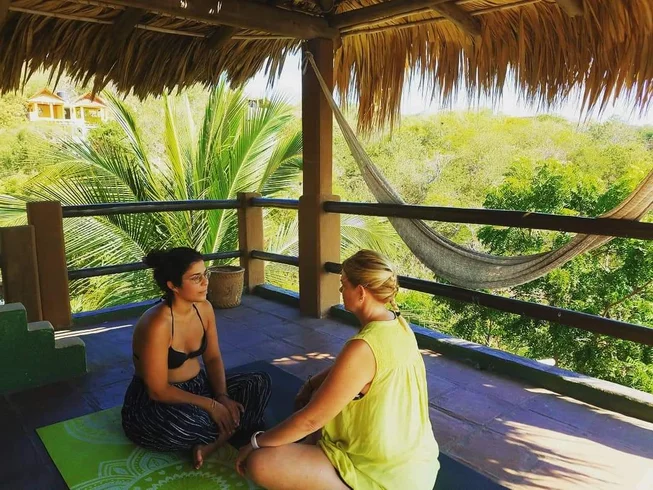
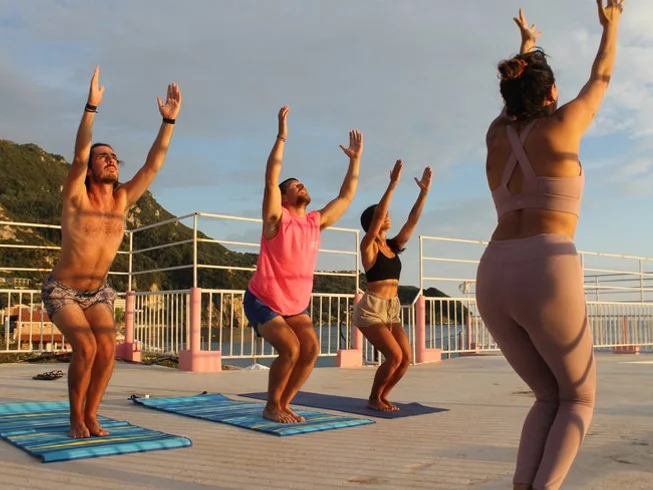
March programming is the transition from winter to spring mode, and the shift is significant. The indoor-prioritised schedule of January and February gives way from mid-month to a programme that goes fully outside for the first time since October. Morning practice on a terrace in the Mani at 9am with the wildflowers visible on the hillside below is the March retreat moment that participants describe as the first real spring morning of the year.
The wildflower walk is the March programming event with no equivalent in any other month. Retreat centres in the Peloponnese and Crete that build a guided wildflower walk into their March week — a half-day on the hillsides with someone who knows the orchid species and the wild herb varieties — are offering an experience that is specifically of this place and this moment in the calendar.
The Clean Monday celebration, if the retreat week overlaps with it, is the March cultural programming event with the most specifically Greek character. The communal outdoor table, the Lenten mezze, the kite-flying on the hillside above the retreat: these are not activities appended to the yoga programme but expressions of the same seasonal awareness that the practice is also trying to cultivate.
Is March a good month for a yoga retreat in Greece? Yes, particularly for those who want the wildflower season, good value, and the beginning of the spring outdoor programme. The Peloponnese and Crete are at their most varied and colourful. The archaeological sites are accessible without summer crowds. And the retreat centres are beginning their spring programming with the energy of a season restarting.
Are the Cycladic islands open in March? Some are, from late March. Paros, Naxos, and Syros typically open their year-round properties in late March. Santorini and Mykonos open later, usually April. Check specific retreat availability — the islands opening in late March have the specific quality of the tourist infrastructure coming alive without yet being populated.
Is Easter a factor in March retreat planning? If Easter falls in late April (check current-year dates), the March retreat week is largely unaffected. If Easter falls in early April, then Holy Week falls in late March and accommodation in popular areas fills early. Check current-year dates and book accordingly.
What comes after March if I want to extend into April? April brings warmer temperatures, the Cyclades fully open, and Easter celebrations across the country. See our yoga retreats in Greece in April guide for what the following month offers.
Your email address will not be published. Required fields are marked *