
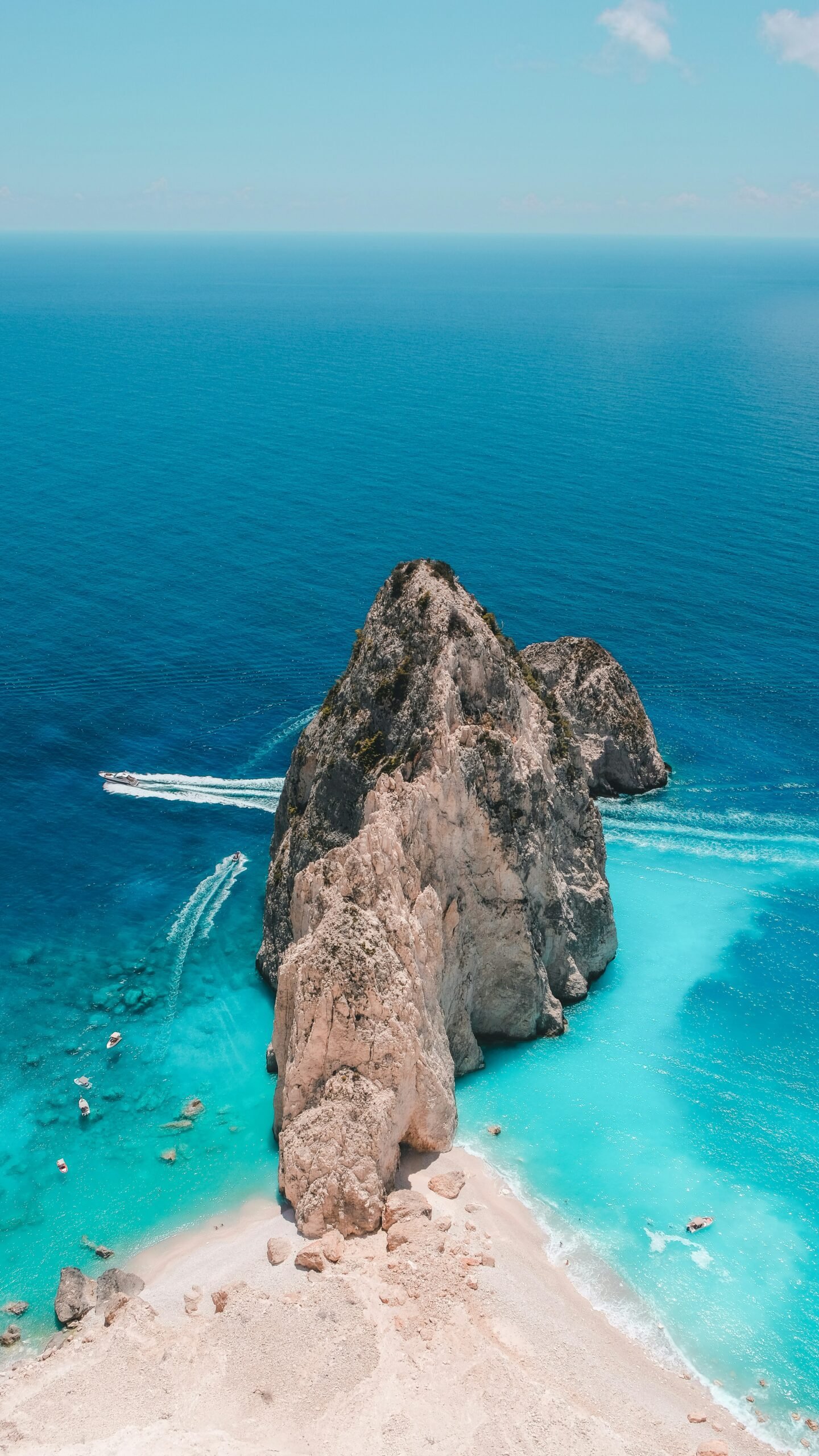
April is when Greece opens properly. The Cycladic islands that were closed through winter are operational again. Easter, the most important celebration in the Orthodox calendar, turns the country’s villages and cities into something genuinely extraordinary for one week.
The temperatures across the south are perfect — warm enough for outdoor practice at any hour, cool enough that you never need to manage the heat. And the wildflowers that started in March are still present in the first two weeks, making April the month that combines the best of spring with the first real possibility of swimming.


April is the most competitive month for retreat availability in Greece — the conditions are excellent across all regions simultaneously, Easter brings the country to life in ways that no other event does, and the retreat centres know it. Book early. Our guide to yoga retreats across Greece covers every destination and format.
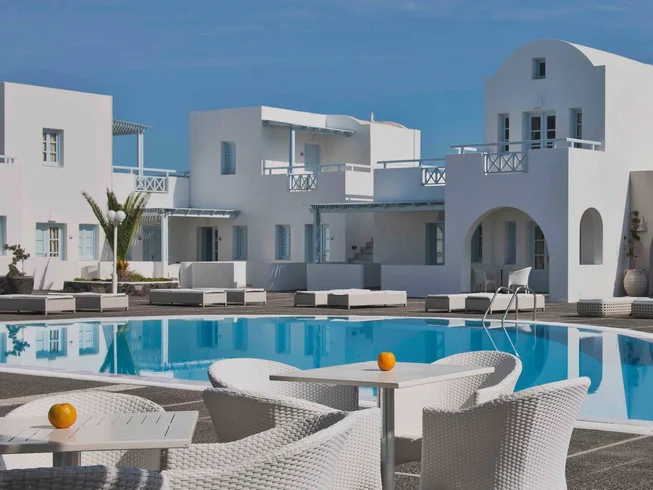
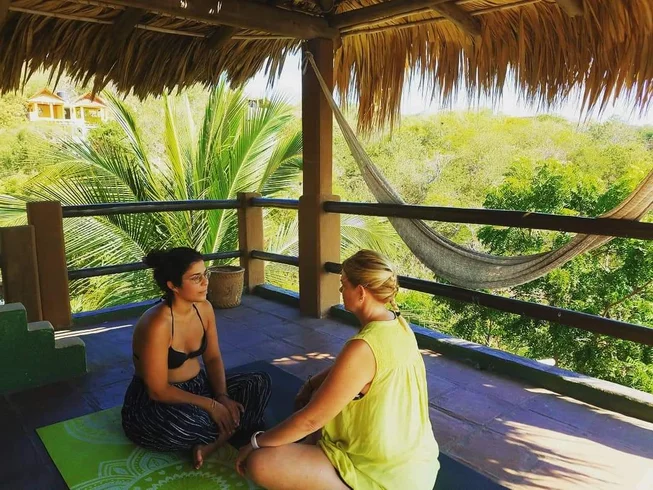
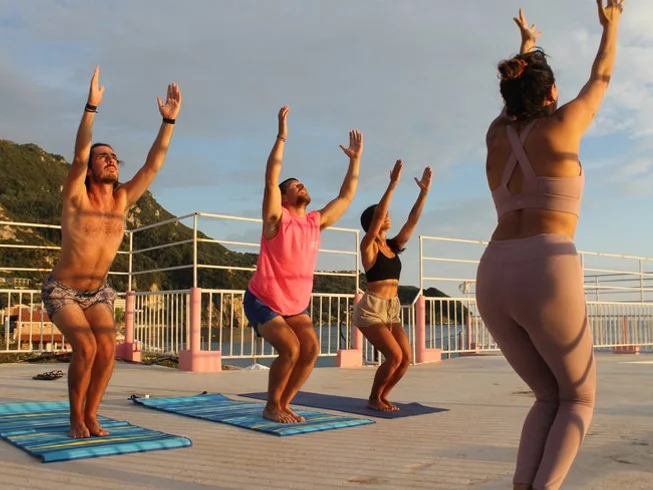
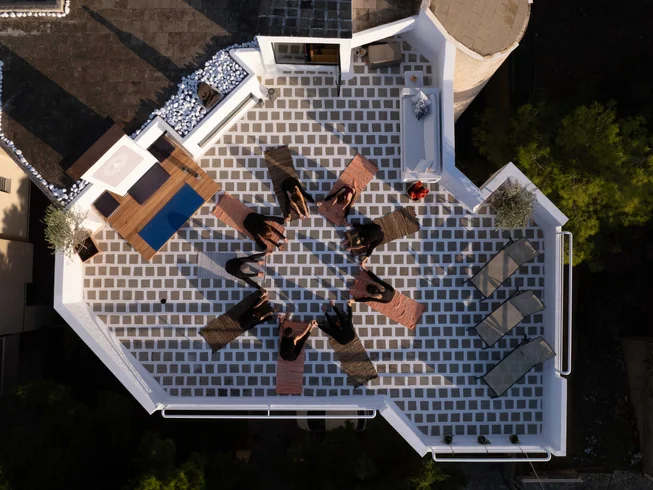
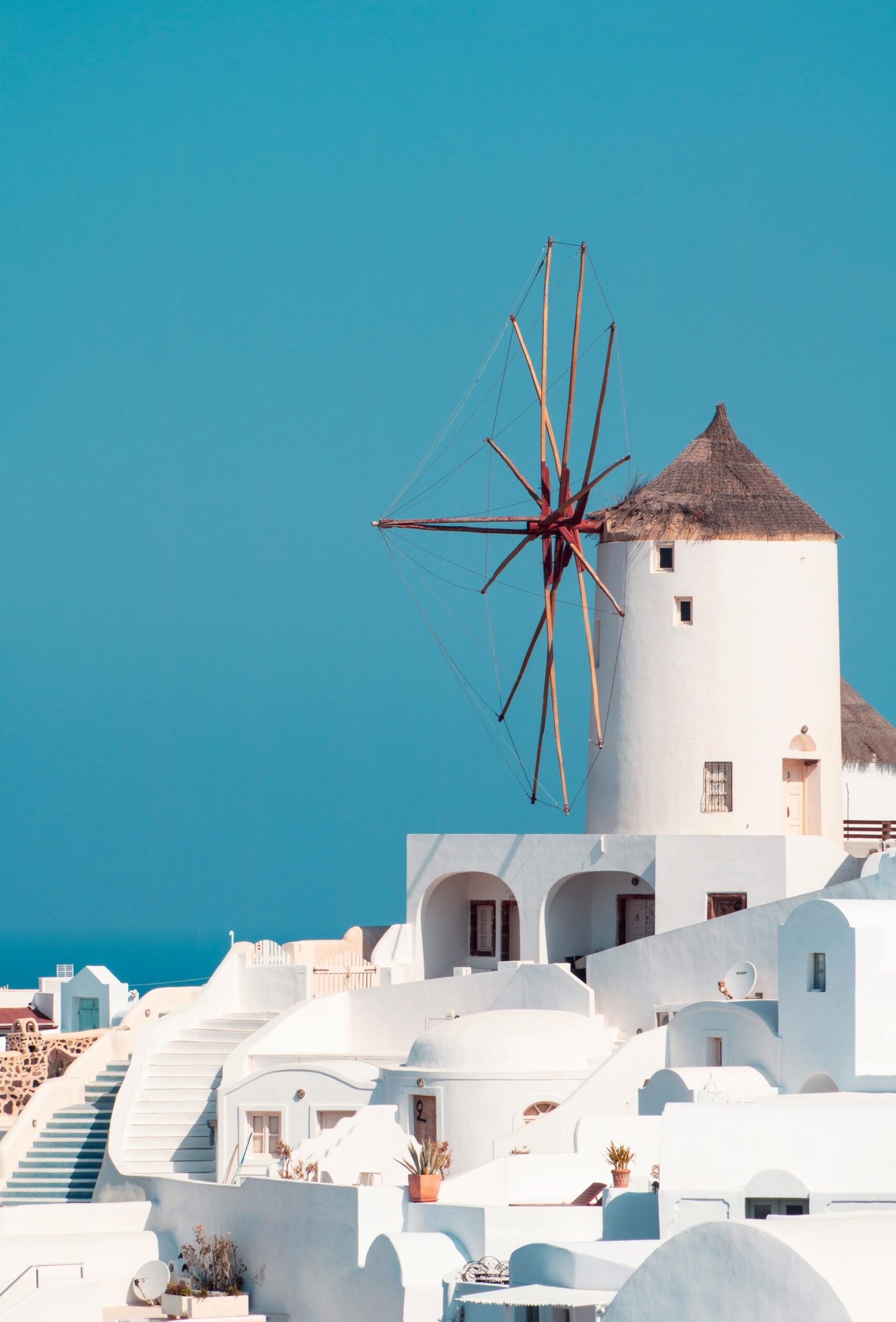
Santorini in April is the island before the season. The caldera views, the cave houses, and the volcanic cliffs that in July require navigating through thousands of cruise ship day-trippers are in April genuinely accessible — you can stand at the Oia castle at sunset without the crowd that makes the same experience in August a logistical exercise. Temperatures of 16-20°C, the sea still cool (17-18°C) but the island fully warm for outdoor practice at any hour.
The wildflowers on Santorini in April are one of those specifically seasonal pleasures that the island’s summer reputation obscures: the caldera rim path from Fira to Oia, lined with wild capers, sea squill, and the small yellow flowers that grow in the volcanic soil, is in April a walk of genuine beauty rather than a queue management exercise. Retreat programmes on the island in April specifically build this walk into their week because it produces a quality of engagement with the landscape that the July version of the same walk cannot.
For everything Santorini offers as a retreat destination, our yoga retreats in Santorini guide covers the island in detail.
Easter in Crete is a different experience from Easter in Athens or on the tourist islands. The village celebrations — the midnight Resurrection service on Holy Saturday with the candles passing through the darkness, the Easter Sunday lamb on the spit in the village square, and the communal tables that extend through the afternoon — are among the most genuinely community-rooted celebrations in Greece. For retreat guests based in the Cretan interior or on the south coast in Holy Week, attending the Saturday midnight service at a village church produces one of those specifically Greek experiences that requires being in the right place at the right time.
April Crete beyond Easter is the island at full spring capacity: the wildflowers finishing their run in the first two weeks, the Samaria Gorge opening in early May with the approaches accessible from the south, and the retreat centres running their most varied spring programming. For the full Crete picture, our yoga retreats in Crete guide covers the island across all seasons.
Nafplio in Holy Week is one of the most atmospheric places in Greece to experience the Easter celebrations. The neoclassical streets of the old town, the Venetian fortress above the harbour, and the Orthodox liturgical tradition of a city that served as Greece’s first capital combine in Holy Week to produce a version of the Easter celebrations that is simultaneously grand and intimate. The Good Friday epitaphios procession through the old town streets — the flower-covered bier of Christ carried by the congregation with candles — is one of those specifically Greek Orthodox moments that is genuinely moving regardless of religious affiliation.
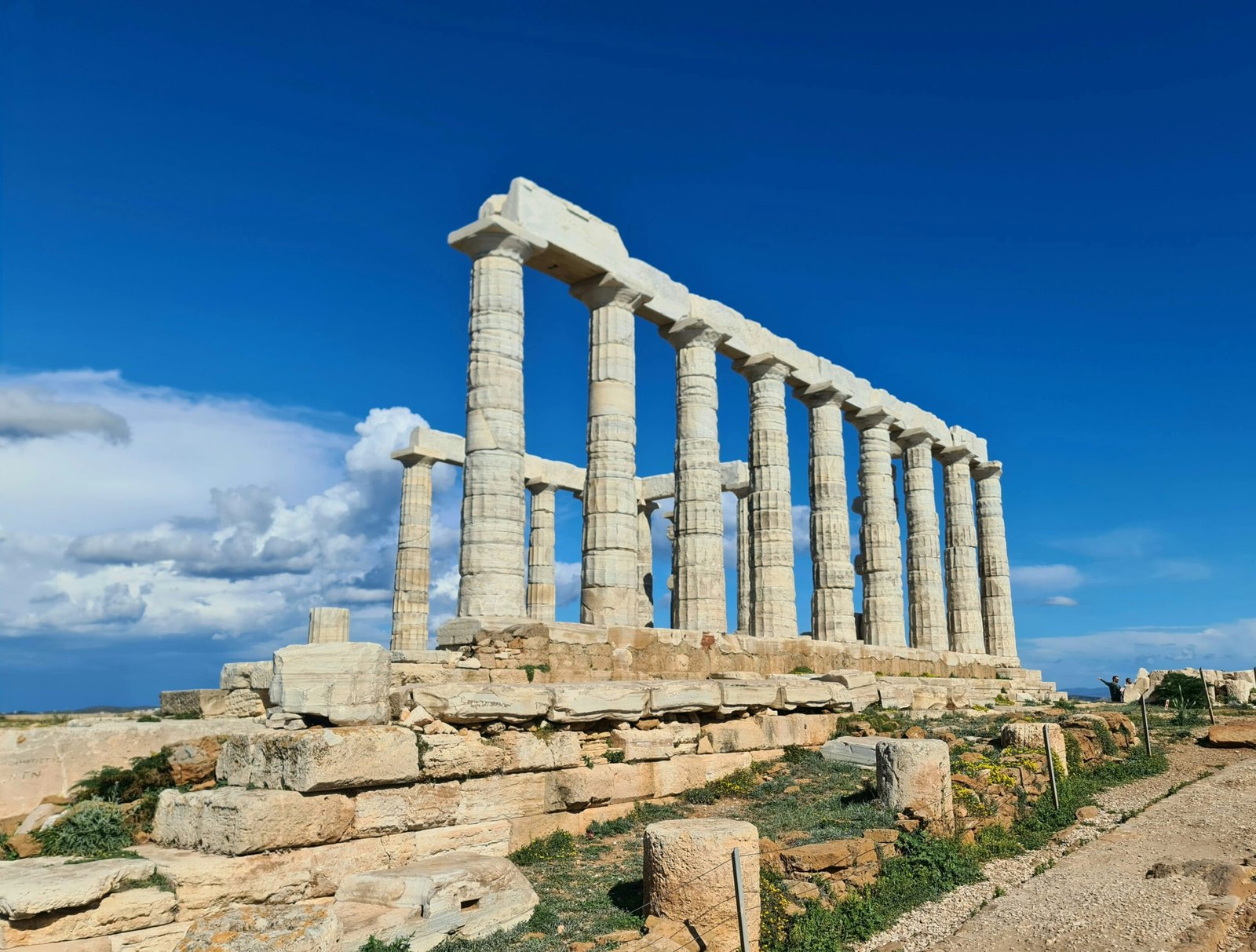
The Peloponnese in April beyond the Easter week has the archaeological sites in their spring clarity — Mycenae and Epidaurus with the wildflowers still present on the hillsides surrounding the ruins, and the Taygetos coastal paths in their most walkable condition of the year. Our yoga retreats in the Peloponnese guide covers the region in full.
Paros and Naxos in April are the Cyclades at their spring best. The retreat infrastructure is fully operational, the sea is reaching 17-18°C (cold but swimmable for the determined), and the islands have the specific quality of places that have woken up from winter with genuine enthusiasm. The marble-paved streets of Parikia on Paros, the mountain villages of Apiranthos and Halki on Naxos, and the coastal paths between the coves of both islands are in April at their most accessible and most rewarding.
The Naxian food culture in April is specifically worth engaging with: the Graviera cheese cooperatives in the mountain villages producing their spring milk batches, the Naxian potatoes appearing at the Naxos Town market, and the fresh fish from the Aegean at the port tavernas. For the full Paros and Naxos picture, our yoga retreats in Paros and Naxos guide covers both islands.
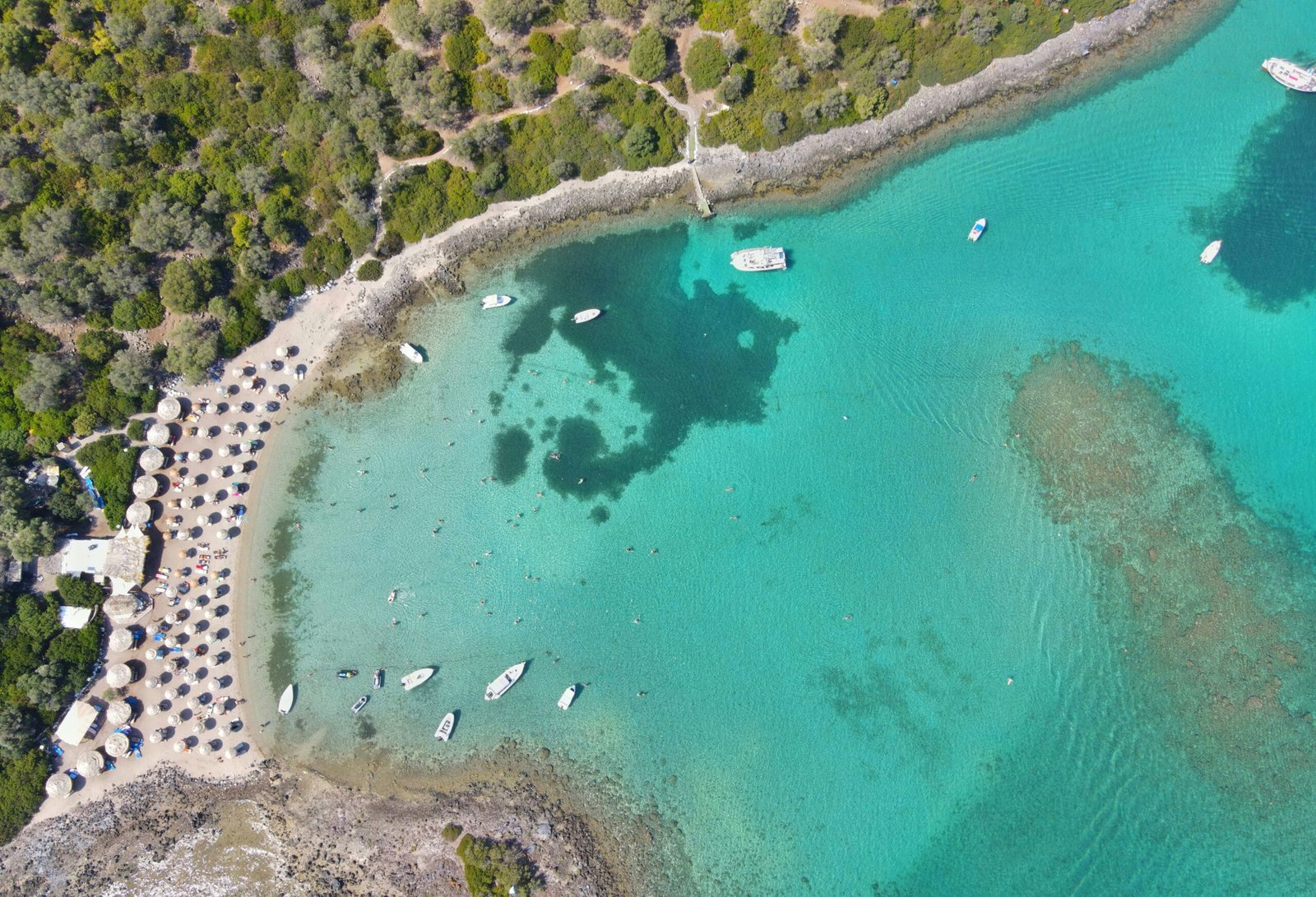
Optimal Climate Conditions
– Perfect Practice Temperatures – 15-22°C range ideal for all styles and durations
– Extended Daylight Hours – Longer days support varied scheduling and outdoor sessions
– Natural Beauty Peak – Landscape at its most vibrant before summer dryness
– Comfortable Outdoor Conditions – Ideal for garden, beach, and nature practice settings
Advanced Practice Development
– Vitality Building Sequences – Dynamic flows harnessing spring energy sustainably
– Outdoor Practice Mastery – Learning to practice effectively in natural environments
– Creative Expression Development – Exploring personal style within traditional forms
– Energy Management Skills – Building sustainable practice power and endurance
Easter in Greece is as much a food event as a religious one. The Easter table has dishes that appear specifically and only at this time of year.
Magiritsa is the soup eaten at midnight after the Resurrection service on Holy Saturday — a rich broth of lamb offal, spring onions, dill, and egg-lemon sauce, eaten in the small hours after the candles and before sleep. It is an acquired taste and a specifically Orthodox tradition: the breaking of the Lenten fast at the moment of the Resurrection with a dish that uses the parts of the Easter lamb that won’t be eaten on Sunday.
Kokoretsi — lamb offal wrapped in intestines and roasted on a spit over charcoal — is the Easter Sunday street food that appears outside Greek homes and restaurants on Easter morning. It is eaten in the hours before the main lamb lunch, carved from the spit in slices, intensely flavoured, and specifically of this day.
Easter lamb (arni tis souvlas) roasted whole on a spit over charcoal from early Sunday morning is the centrepiece of the Greek Easter table. In the villages of Crete and the Peloponnese, the spit is turning from 6am, the lamb basted with olive oil, lemon, and oregano, and the Easter Sunday communal meal is the most important of the Greek culinary year.
Tsoureki — the sweet Easter bread, braided and flavoured with mahlab (a spice from cherry pits) and mastic — is eaten through Holy Week and the weeks following Easter. A red-dyed hard-boiled egg is baked into the top, symbolising the blood of Christ. At Greek bakeries from the Thursday before Easter through the following Sunday, tsoureki is available in all sizes, from individual rolls to elaborate braided loaves.
April vegetables from the Cretan and Peloponnese markets: fresh broad beans (fava), wild asparagus on its last weeks, artichokes at their peak, and the first strawberries appearing at Argolid market stalls. The combination of fresh broad beans with olive oil and lemon — eaten raw or barely blanched — is one of those specifically Greek spring tastes that the season provides for a few weeks and then removes.
The most important event in the Greek calendar, falling in April in most years (check current-year dates). The key moments:
Good Friday (Megali Paraskevi): The epitaphios procession in the evening — the flower-covered bier carried through the streets with candles, the congregation following in silence. In every village and city in Greece simultaneously.
Holy Saturday midnight: The Resurrection service — the lights extinguished, the priest emerging with the Holy Light, the flame passing from candle to candle through the darkness, the congregation spilling into the street calling “Christos Anesti” (Christ is Risen). The most atmospheric moment of the Greek liturgical year.
Easter Sunday: The lamb on the spit, the red eggs, the tsoureki, the communal table that continues through the afternoon.
Agios Georgios — the patron saint of shepherds — is celebrated on April 23rd (or the Monday after Easter if it falls during Holy Week). In the mountain villages of Crete, the Peloponnese, and the Cyclades, St George’s Day has the character of an agricultural community celebrating the spring pastoral season: the sheep moved to the summer pastures, the cheese-making beginning, and the village gathered for a communal celebration.
The Athens Classic Marathon runs in November, but the spring training season that produces it is in full operation in April. The ancient Marathon plain northeast of Athens — where the 490 BCE battle was fought and from which Pheidippides ran to Athens with the news of victory — is in April a specifically historic landscape to run or walk through, and some Athens-area retreat programmes incorporate a visit to the Marathon plain and the archaeological museum as a specifically Athenian cultural experience.
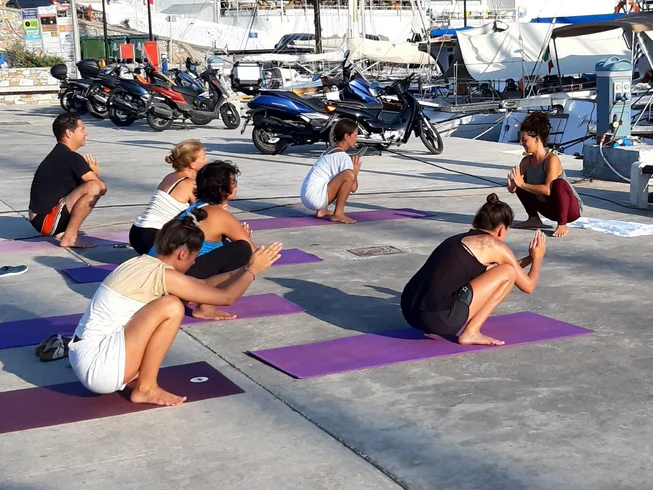
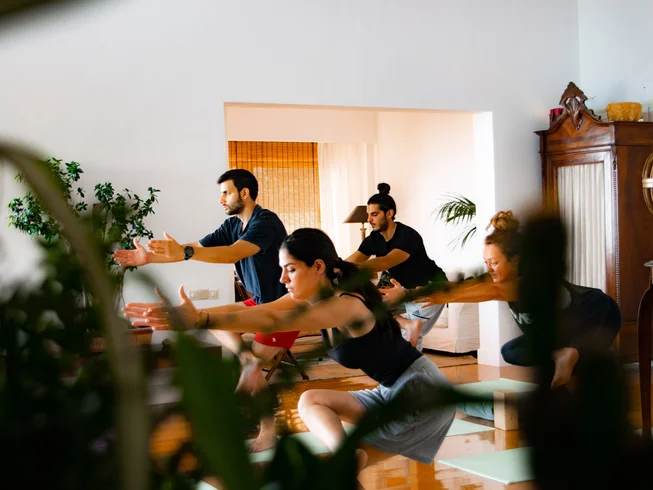
April is when Greek retreat programming reaches its most complete outdoor form. Morning practice on open terraces is available everywhere from early in the month. The afternoon excursions that winter kept indoors — the Argolid archaeological sites, the caldera rim walk on Santorini, the Naxian mountain villages — are all possible without heat management or rain planning.
The Easter week dimension transforms the retreat for those whose programme coincides with Holy Week. The best retreat centres in Crete and the Peloponnese build one Easter evening into their programme — the Good Friday procession or the Saturday midnight Resurrection service — not as a disruption to practice but as a specifically Greek cultural experience that the retreat context makes more absorbing than attending as a tourist. Arriving at a village church for the midnight Resurrection service after five days of yoga practice, with the nervous system settled and the sensory attention sharpened, produces a quality of presence that the experience rewards.
April retreat groups have a wider range of intentions than winter groups — people who chose April are not all looking for the same thing, and the social dynamic is more varied and more energetic than the more self-selected winter groups. For those who want the most intentional and quiet experience, May is the better choice. April is when Greek retreat life returns to its full social form.
Is Easter a good time for a yoga retreat in Greece? Yes, if you approach it as part of the experience rather than an inconvenience to work around. The Easter celebrations in Greek villages — particularly the Good Friday procession and the Saturday midnight Resurrection service — are among the most genuinely community-rooted cultural events in Europe. A retreat week that incorporates one Easter evening produces a specifically Greek experience that no other month can replicate.
Which Greek islands are open in April? Most Cycladic islands are open from April: Santorini, Mykonos, Paros, Naxos, and Syros are all operational by the first week. Some smaller island retreat centres open in late April. Crete, the Peloponnese, Athens, and Rhodes have been open through winter.
Is April or May better for a first Greece yoga retreat? April has Easter and the wildflowers still present, with slightly fewer visitors than May. May is warmer, the sea is more swimmable, and the social energy of the islands is at its spring peak. For the Easter experience specifically, April is the only option. For the best overall conditions without a specific event driving the choice, May is marginally more consistent.
What comes after April if I want to extend into May? May brings warmer sea temperatures, the Ionian islands at their spring best, and the full spring season across the country. See our yoga retreats in Greece in May guide for what changes.
Your email address will not be published. Required fields are marked *