
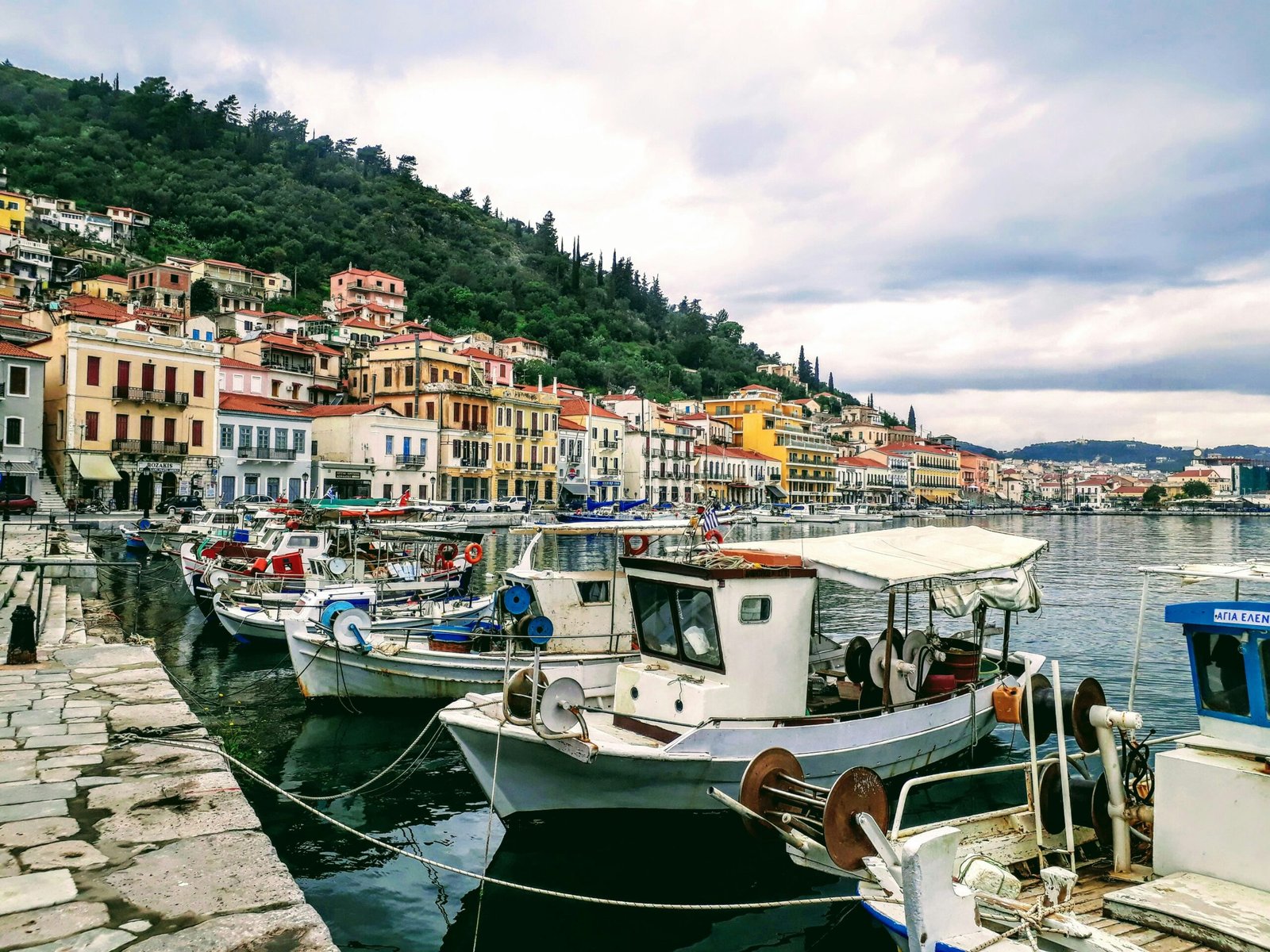
The Peloponnese is not an island, and that distinction matters more than it might initially seem. Connected to the Greek mainland by the narrow thread of the Corinth isthmus — and, since 1893, by the canal that severed even that — it occupies a geographic and psychological position that is neither fully continental nor fully insular, and that in-between quality permeates everything about it.
This is ancient Greece in a way that the more touristed islands rarely are: the landscape where Sparta and Mycenae rose and fell, where the first Olympic Games were held at Olympia, where Byzantine churches sit in mountain villages that the modern world has largely chosen not to disturb. A yoga retreat in the Peloponnese is not a retreat into beauty alone — it is a retreat into depth, into a version of Greece that has been accumulating history and silence for longer than most destinations have existed, and that offers both to the practitioner willing to slow down enough to receive them.


The Peloponnese occupies a curious position in Greek tourism — technically a peninsula, connected to mainland Greece by the narrow Isthmus of Corinth, yet feeling spiritually like an island. It is a land of contradictions and convergences: mountains that reach nearly 2,500 metres drop precipitously to coastlines of startling beauty. Ancient ruins that tourists flock to see sit adjacent to medieval castles that few know exist. Olive groves thousands of years old frame villages where elderly residents still speak regional dialects and maintain traditions that predate the modern Greek state.
This is the heartland of ancient Greek civilisation — Sparta, Olympia, Mycenae, Epidaurus all lie within its boundaries. Yet it remains remarkably untouristed compared to the islands, largely overlooked by international travellers who associate Greece exclusively with island-hopping. That oversight creates opportunity for those seeking yoga retreats grounded in authenticity, surrounded by dramatic natural beauty, and immersed in layers of history so deep you quite literally cannot dig a foundation without hitting archaeological remains.
For the full picture of what Greece offers as a retreat destination, our yoga retreats in Greece guide covers every region.
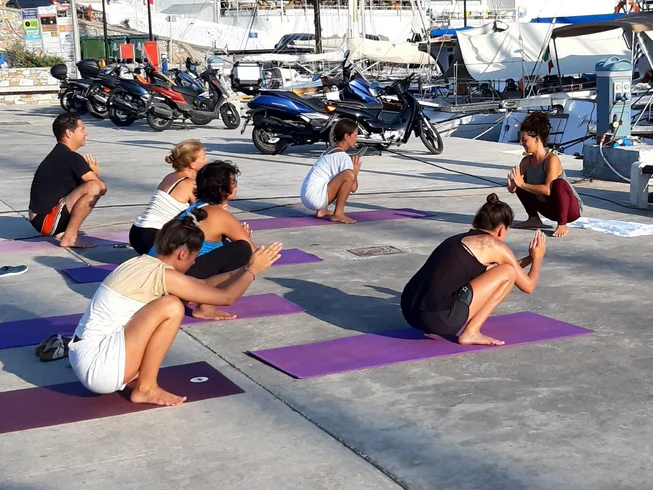
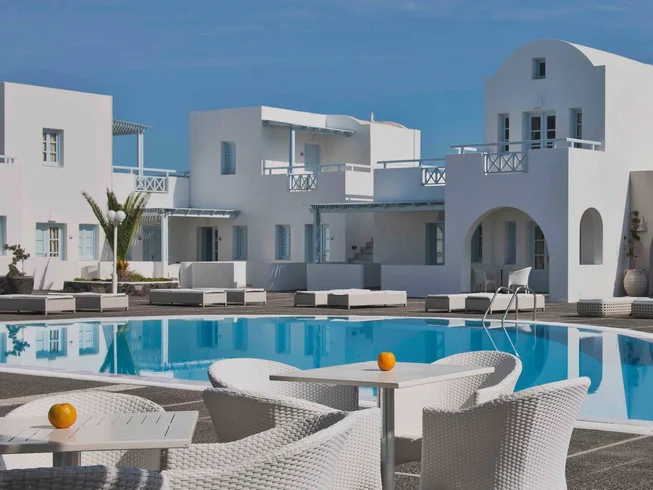
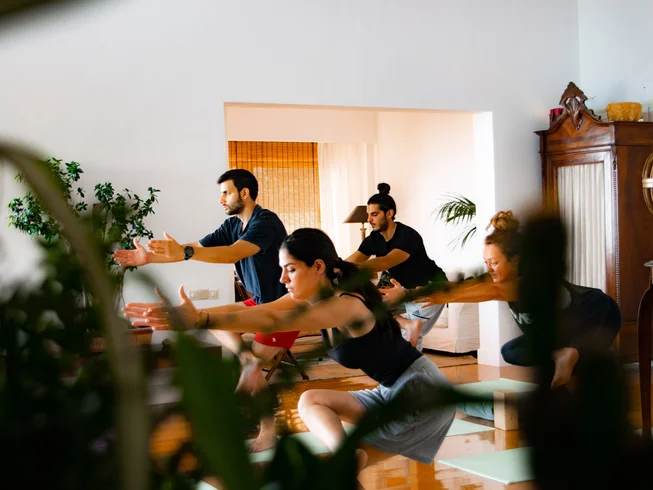
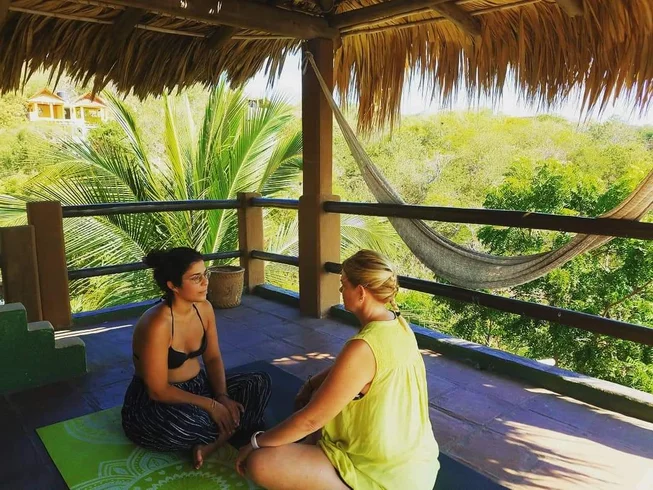
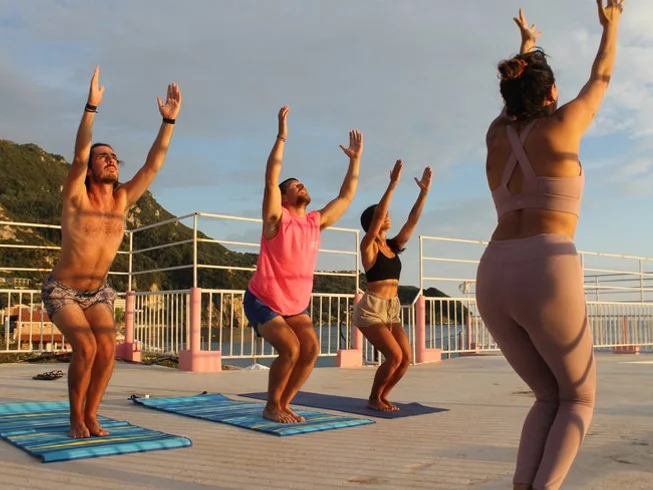
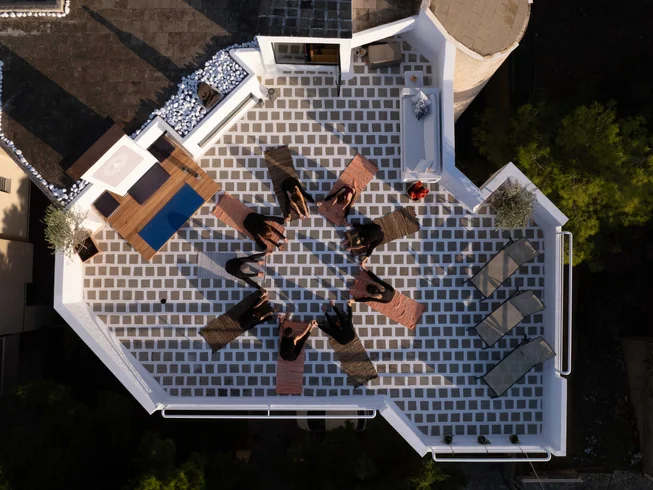
Peloponnese yoga retreats occupy a distinct niche in the Greek wellness landscape — neither as luxurious as Santorini and Mykonos, nor as rustic as the most basic Cretan farmhouses, but rather finding a middle path that emphasises character, authenticity, and thoughtful simplicity.
Typical retreat spaces include renovated traditional stone houses in mountain villages, converted olive mills, small boutique hotels in coastal towns, and purpose-built eco-retreats designed to sit lightly on the land. What they share is attention to preserving authentic architectural elements — stone walls sometimes a metre thick, wooden beam ceilings, arched doorways, and details that reflect regional building traditions — while providing modern comfort levels.
Peloponnese retreats tend toward integration rather than separation — yoga practice is not something cordoned off from the rest of daily life but woven into it seamlessly. The pace here is slow, honouring both the traditional Mediterranean rhythm and the needs of deep practice.
Mornings typically begin early, not because schedules demand it but because summer sunrise happens early and it is the most beautiful time of day. You might wake naturally to light and birdsong, make your way to the practice space — perhaps a terrace overlooking olive groves, or a room with doors opening to mountain views — and begin with meditation or pranayama as the world wakes around you. Morning yoga sessions run 90 minutes to two hours, generally Hatha or gentle Vinyasa, with emphasis on alignment, breath, and building heat gradually rather than forcing intensity.
There are places in the world where the land itself seems to carry memory, where the accumulated weight of human presence over millennia creates a quality of atmosphere that enters the body before the mind has had time to process it. The Peloponnese is one of those places, and practising yoga within it produces an experience that is qualitatively different from retreats held in locations with shallower histories. The ruins of Mycenae, visible from the hills above the Argolid plain, were already ancient when Homer wrote about them.
The theatre at Epidaurus, carved into a hillside with an acoustic precision that modern engineers still study, was built for experiences of catharsis and transformation that the yoga tradition would recognise immediately. Olympia, where athletes gathered from across the Greek world to compete and to honour the gods, understood the relationship between physical practice and spiritual purpose in ways that feel less like historical curiosity and more like direct precedent. Practising in this landscape does not require any particular relationship with ancient history — the place communicates its depth through the body rather than the intellect, and the practice absorbs it accordingly.
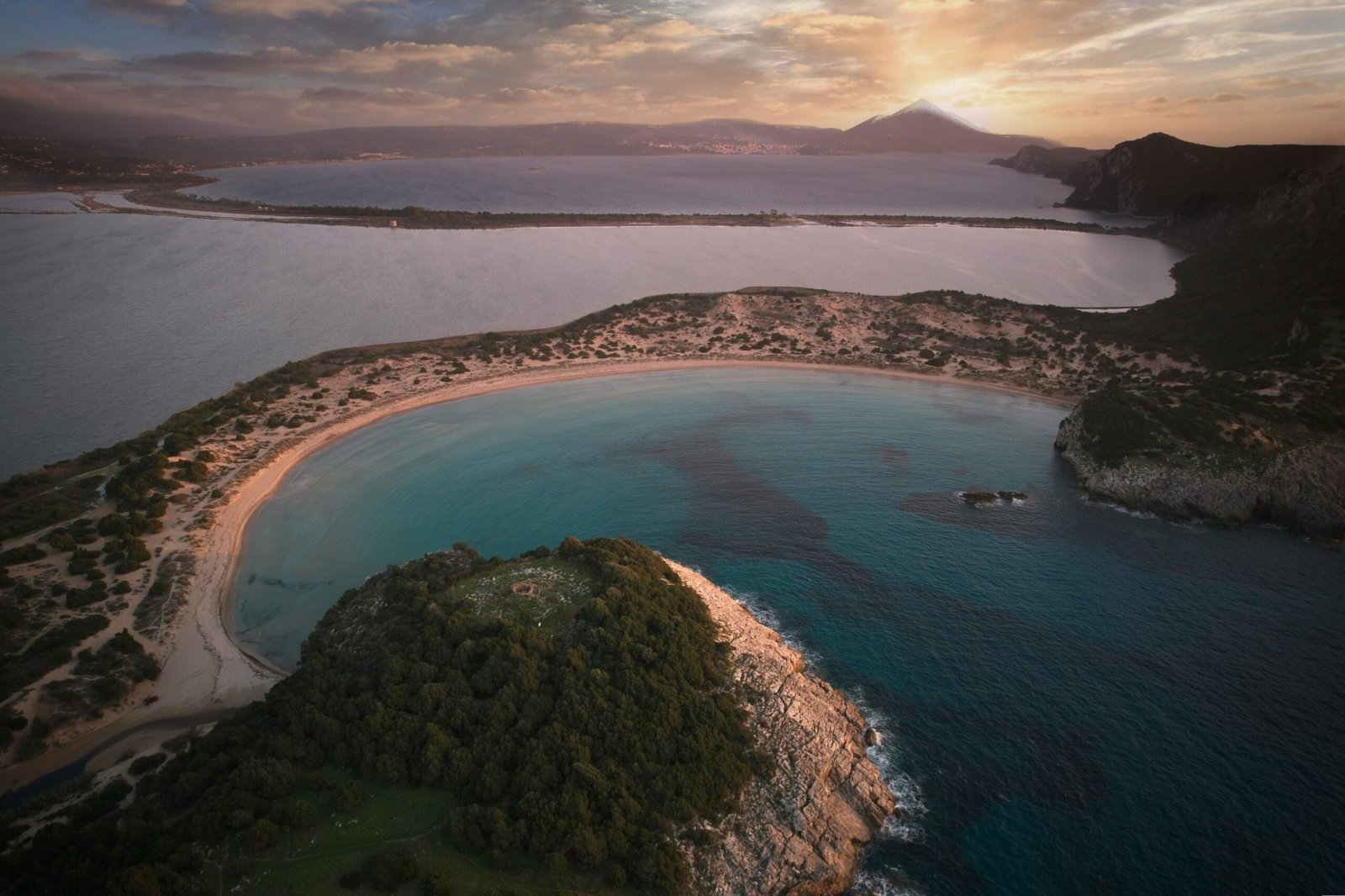
The physical landscape of the Peloponnese amplifies this effect rather than softening it. The Taygetos mountain range running down the spine of the Mani peninsula reaches peaks of over 2,400 metres and drops directly into the sea with a drama that rivals anything the Aegean islands offer, while the gentler landscapes of the Argolid and the olive groves of Messenia provide a counterpoint of pastoral calm that makes the region unusually varied for its size. A retreat that moves through this landscape — or simply sits within it, allowing the views to do what they do to the nervous system — finds that the Peloponnese is not a passive backdrop but an active participant in whatever the practice is trying to produce. The silence here is not the absence of sound. It is the presence of something older.

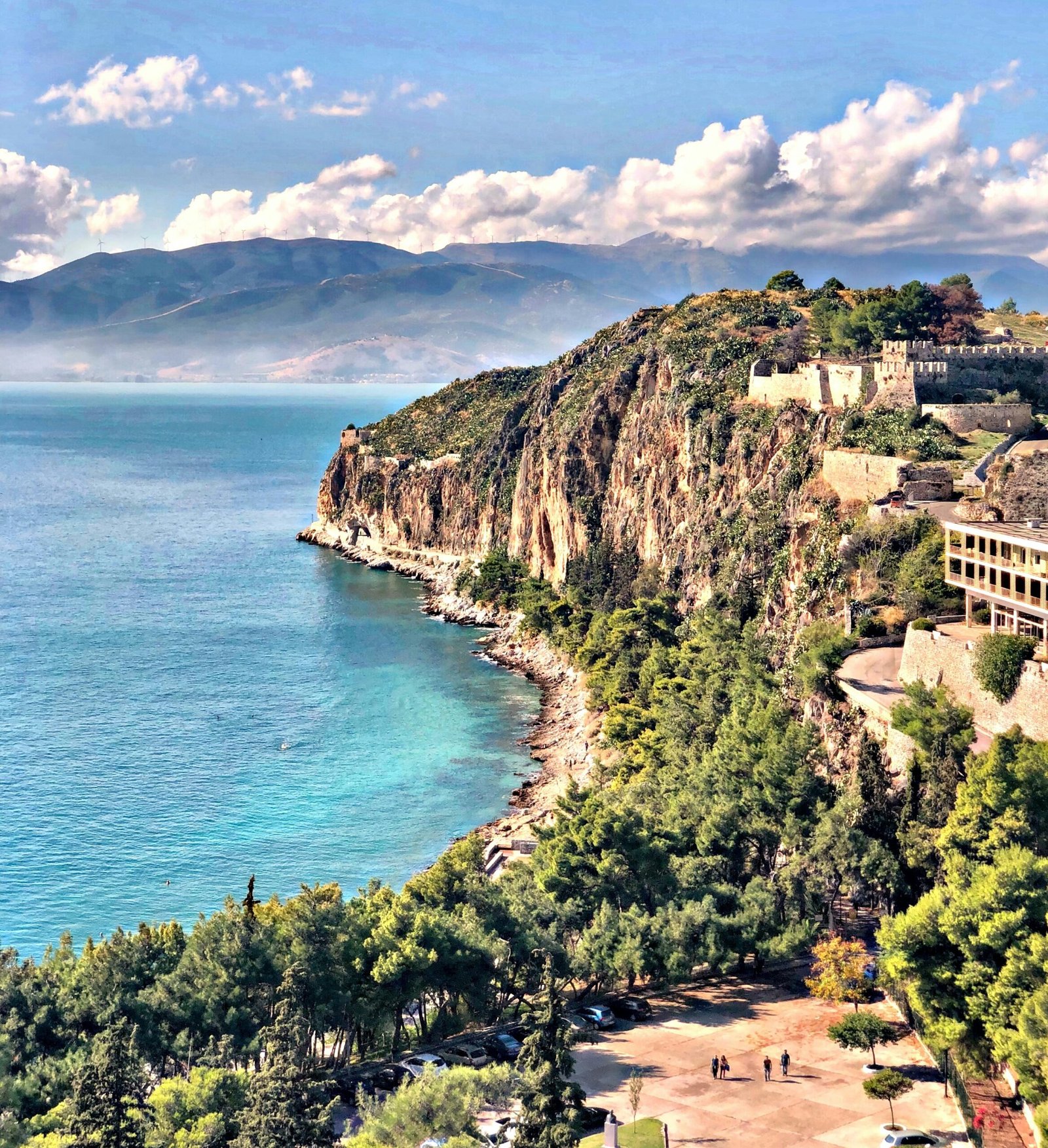
What distinguishes Peloponnese retreats is emphasis on connecting with the region itself — its nature, history, culture, and people. Yoga practice provides the foundation, but the real transformation often comes through engagement with everything surrounding you.
Many retreats incorporate hiking as regular practice. The Peloponnese offers extraordinary trails ranging from coastal paths to mountain ascents, through gorges and forests, past Byzantine churches and shepherd huts. These are not forced marches but contemplative walks at conversational pace, with frequent stops to notice plants, discuss philosophy, or simply breathe in views. Local guides often accompany hikes, sharing knowledge about medicinal herbs, pointing out archaeological remains, and telling stories about the land’s history and mythology.
Meals in Peloponnese retreats embody the principle that nourishment comes from quality rather than quantity or complexity. The regional cuisine is based on what grows well in local soil and climate.
Kalamata olives from the Messenia region are among the most prized in the world — plump, dark purple, and cured in brine with a richness that the supermarket version cannot approximate. Eating them at the table of the farm where they were pressed is one of those experiences that resets expectations permanently. The olive oil of the Peloponnese, particularly from the Mani and Laconia regions, is produced from Koroneiki olives and has a peppery, grassy intensity that makes it worth buying in quantity to take home.
Trahanas — a traditional fermented grain and milk soup, dried and stored for winter — is the Peloponnesian comfort food that appears at retreat breakfasts in its sweet (with milk) or sour (with yogurt) versions. It is one of those ancient foods that predates the concept of cuisine and is worth encountering specifically in the region that maintains the tradition of making it.
Freshly caught fish from the Laconian Gulf and the Messenian Bay — bream, sea bass, red mullet — arrive at the coastal village tavernas that supply the better retreat kitchens. Grilled with olive oil and lemon, eaten at a table above the harbour, they are the version of this dish that the same dish at a London restaurant is approximating.
Sfela cheese from the Mani is a hard, salty sheep and goat’s milk cheese that is matured in brine — similar to feta but more concentrated in flavour and with a firmer texture. It appears at every traditional meal in the region and is worth seeking at the weekly markets in Kalamata and Sparti.
Thyme honey from the Mani is harvested from bees working the wild thyme that covers the Taygetos hillsides — intensely aromatic, amber-coloured, and with a flavour that makes it worth buying directly from a producer rather than at an airport shop. Eaten with the local cheese at breakfast, it is one of those simple seasonal combinations that requires no improvement.
April and May are the best months overall. Temperatures of 18-24°C, wildflowers across the mountain slopes, the archaeological sites uncrowded, and the olive groves in their spring green. The sea is still cool (17-19°C) but the landscape is at its most varied and colourful.
June and September are the shoulder season alternatives — warmer (24-28°C), the sea swimmable at 22-25°C, and the tourist numbers still manageable. September has the additional dimension of the harvest beginning in some areas, with the first olives picked in late September in the warmest spots.
July and August are hot inland (32-38°C in some areas) and require early morning practice before the heat builds. The coastal areas are more manageable. The Mani in summer has a specific austere beauty — the stone towers of the traditional warrior villages, the sparse landscape, the intense Aegean light — that rewards those willing to engage with the heat rather than fight it.
October is an underrated month — the sea still warm from summer (22-23°C), the crowds largely departed, and the olive harvest beginning across the region. The light in October in the Peloponnese has a golden quality that photographers specifically seek out. For everything October offers across Greece, our yoga retreats in Greece in October guide covers the full autumn picture.
November through March: most retreat centres reduce programming significantly. The Peloponnese in winter is quiet, occasionally rainy, and has a stripped-back quality that suits inward-facing retreat formats for those willing to seek them out.
Peloponnese retreats generally offer excellent value — week-long packages typically range from €700 to €1,500, depending on accommodation quality, season, and inclusions. This usually covers lodging, all meals, daily yoga classes, and some activities like guided hikes or workshops. The value proposition is strong: authentic experiences, quality instruction, good food, and genuine hospitality at prices significantly below the famous island destinations.
The Peloponnese’s accessibility is a major advantage. You can drive from Athens in 90 minutes to 3 hours depending on your destination, avoiding the logistics and costs of island ferries or internal flights. Most international visitors fly into Athens International Airport (Eleftherios Venizelos), then either rent a car or arrange a retreat centre pickup. The drive itself is often scenic — the modern highway skirts the Saronic Gulf coast before crossing the Corinthian Canal.
By car is the most practical option for exploring the region — public transport between villages is limited and a car gives you access to the archaeological sites, markets, and coastal areas that make the retreat week richer. Most retreat centres can advise on car hire from Athens.
By train and bus: KTEL buses from Athens connect to the main Peloponnesian cities (Kalamata, Nafplio, Sparti, Tripoli). The Proastiakos suburban rail connects Athens to Kiato, from where buses continue further. Journey times are longer than driving but the infrastructure is reliable.
By ferry: Some coastal areas of the eastern Peloponnese are accessible by ferry from Piraeus — the crossing to Porto Heli and Ermioni takes 2-3 hours. These shorter sea crossings are worth considering if you want the experience of arriving by sea without the extended journey to the more distant islands.
The Peloponnese is ideal for travellers who value authenticity over polish, who want to experience Greece beyond the tourism economy, who enjoy exploring and do not need constant luxury amenities. It suits history enthusiasts, nature lovers, hikers, and those who appreciate slow travel and immersion in local culture. Solo travellers seeking community in small group settings, couples wanting a genuine escape, and experienced practitioners who have been to many retreats and are seeking something more grounded than typical wellness tourism all find what they are looking for here.
The Peloponnese is not ideal for those wanting luxury spa facilities or highly structured programmes with every hour scheduled. It requires more self-sufficiency than resort-style retreats and tolerance for occasional inconvenience. If you are drawn to Mykonos-style luxury or Santorini’s dramatic visual intensity, those are different retreats for different intentions. But if you want the version of Greece that has not been entirely shaped by what visitors want it to be, the Peloponnese is where to find it.
When is the best time for a yoga retreat in the Peloponnese? April through June and September through October represent the region’s most hospitable window. Temperatures are manageable, the landscape is varied, and the tourist pressure is low. April and May are the most consistently recommended months — spring wildflowers, mild temperatures, and the archaeological sites without summer queues. October offers the olive harvest, warm sea, and the golden autumn light that makes the Peloponnese specifically beautiful.
How does the Peloponnese compare to the Greek islands for a retreat? The Peloponnese offers more historical and landscape depth than most islands, significantly lower prices, and a more authentic encounter with Greek life. The trade-off is less luxury infrastructure and less of the specific island atmosphere that many people associate with a Greek holiday. It suits those for whom authenticity and value matter more than glamour. For the island experience alongside a retreat, yoga retreats in Crete cover the island that most closely resembles the Peloponnese in depth and character.
Is a car necessary for a Peloponnese retreat? For most retreat bases, yes. Public transport connects the main cities but not the mountain villages and coastal areas where the best retreat properties are located. Most retreat centres can arrange airport pickup and advise on car rental from Athens. The drive from Athens to the most popular retreat areas (the Mani, Nafplio, the Argolid) takes 2-3 hours and is worth doing in daylight for the scenery.
What yoga styles are available in the Peloponnese? The region tends toward grounded, nature-integrated styles — Hatha, Vinyasa, and Yin are most common, often combined with meditation and pranayama. High-intensity athletic programmes are less common here than on the islands; the landscape and the pace of life support a more contemplative approach. Many programmes incorporate hiking and outdoor movement as part of the retreat rather than separating yoga practice entirely from engagement with the landscape.
Your email address will not be published. Required fields are marked *