
January in Greece is the month that most visitors never see, and that is precisely what makes it worth considering. The islands that were at capacity in August are quiet to the point of silence. The retreat centres that stayed open through winter are running their smallest and most focused groups of the year. Prices are at their annual low. And the country, stripped of its tourist overlay, has a quality of honesty and stillness that the summer months cannot offer.
Most of Greece closes for winter. But Crete stays open, the Peloponnese is accessible year-round, the Athens Riviera operates without interruption, and Rhodes in the south has a mild enough January to make outdoor practice realistic. For those who know where to go, January in Greece is one of the better-kept secrets in European retreat travel.


January is not a month for the Cyclades. Santorini, Mykonos, Paros, and most of the smaller island retreat centres close from November through March. The options that remain open are the ones worth knowing about — and they are good ones. Our full Greece yoga retreats guide covers the year-round options in full.
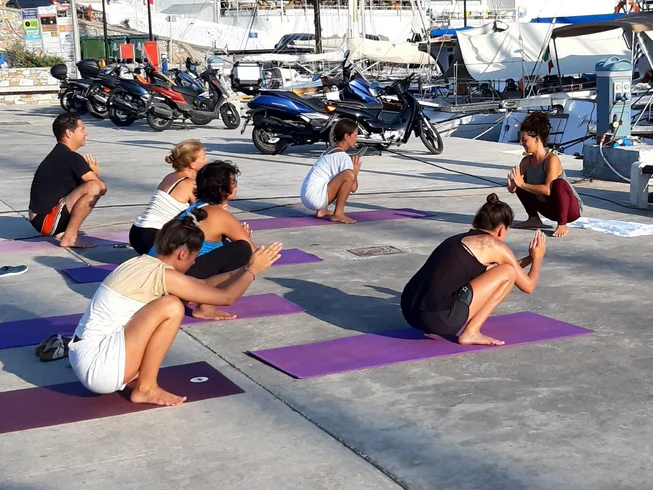
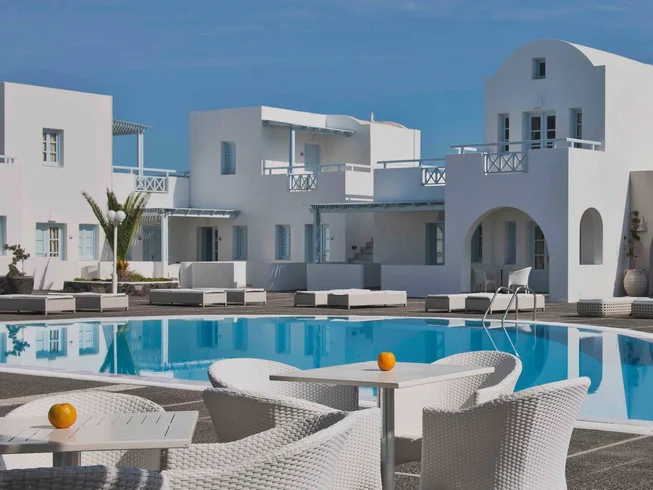
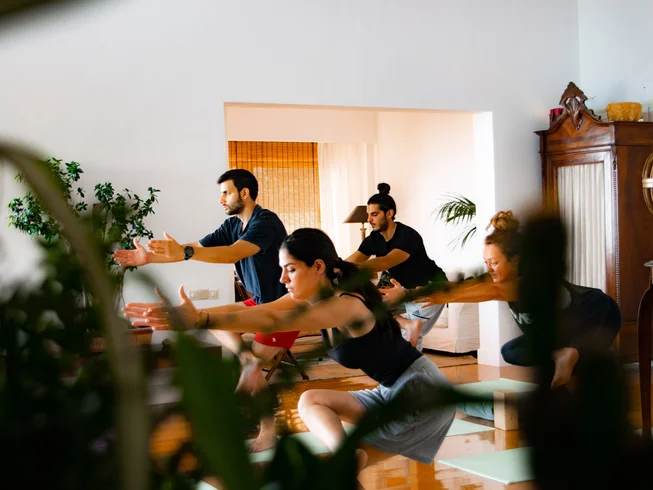
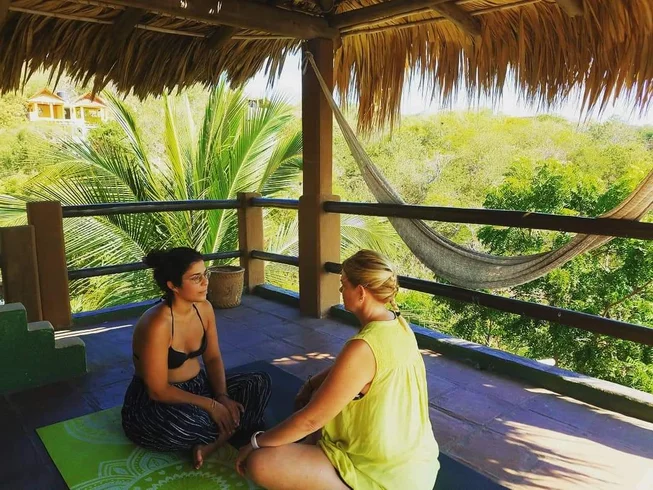
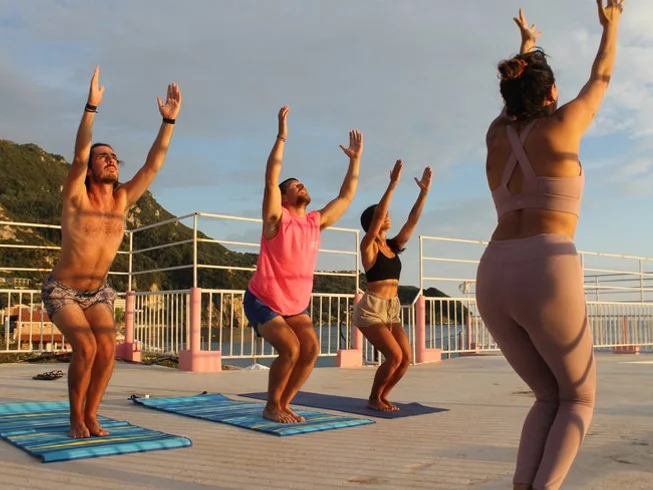
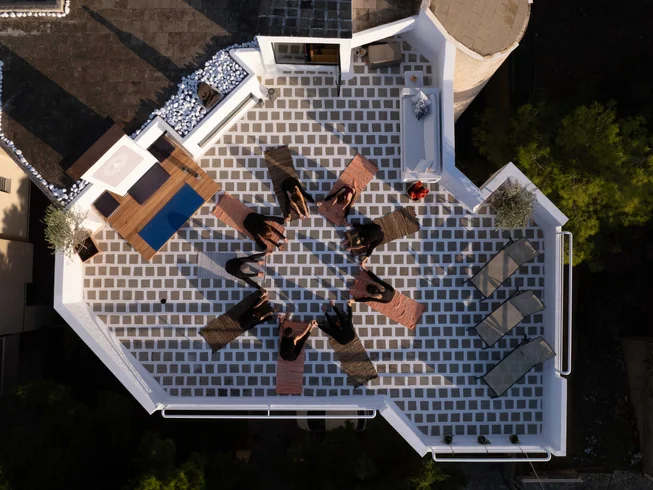
Crete in January is the most reliable yoga retreat destination in Greece in winter. The island’s size, its year-round agricultural economy, and the mild temperatures of its southern coast — 14-18°C in January, warmer than most of mainland Europe — make it the natural base for winter practice in Greece. The retreat centres that operate through January in Crete are not making the best of a difficult situation; they are running specifically because January suits their format: small groups, focused programming, and the particular authenticity of an island operating entirely for itself rather than for visitors.
The south coast of Crete — the area around Plakias, Agia Galini, and the Sfakian villages accessible by road or by boat — is the warmest part of the island in January and the most remote. The Libyan Sea here faces directly south toward North Africa, which keeps temperatures 2-3°C warmer than the north coast, and the landscape of steep gorges dropping to narrow beaches produces a quality of visual drama that the more accessible north coast cannot match. Retreat centres in this area in January run their most inward-facing programmes of the year: long Yin sessions, extended meditation, morning walks through the Samaria Gorge approaches, and the particular silence of a landscape that the summer never quite reaches in peace.
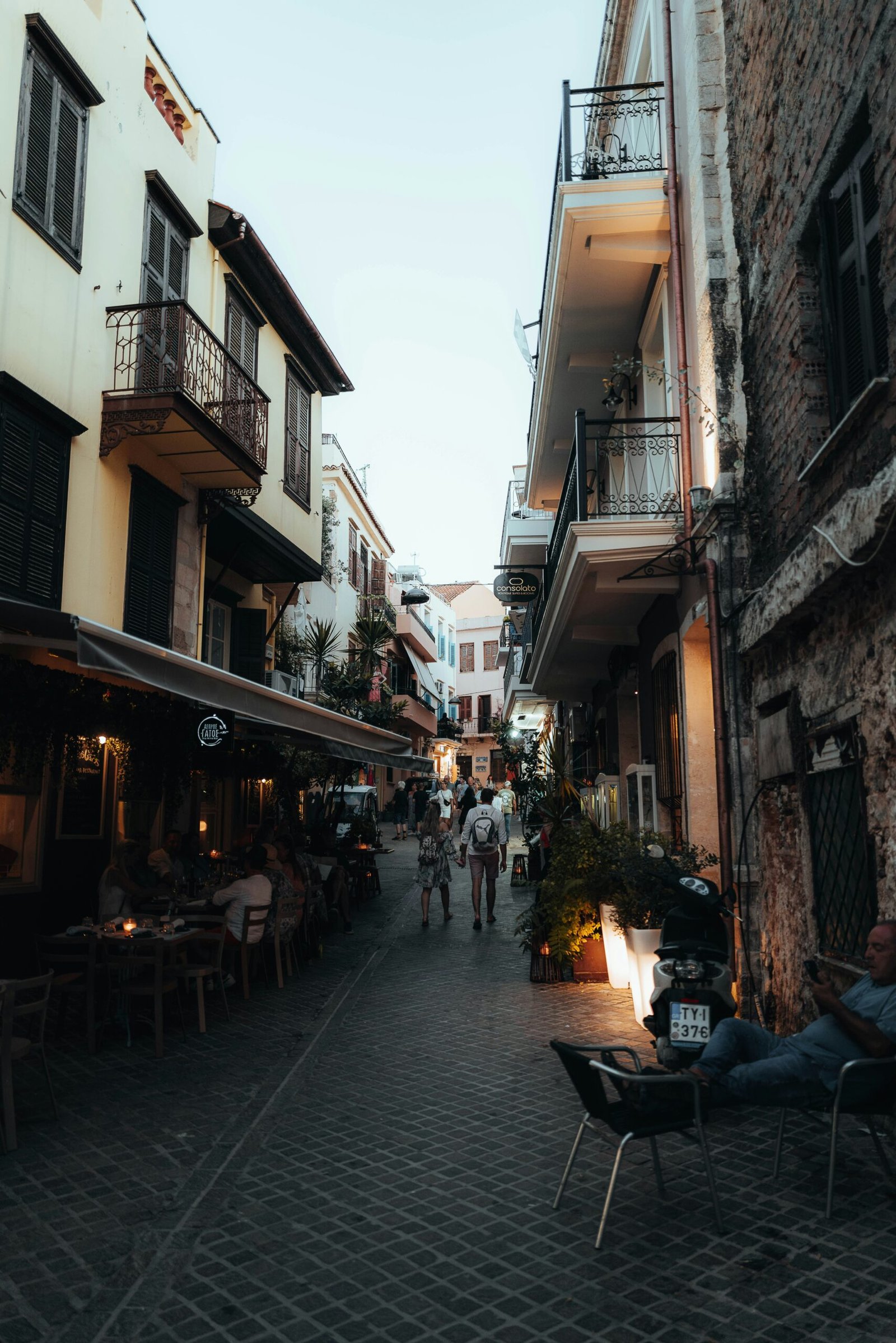
The Chania region in the northwest, with its Venetian harbour and the White Mountains visible above the town, is the most developed retreat area of Crete year-round. January in Chania has the old town operating for its own residents — the covered market selling the seasonal produce of the Cretan interior, the kafeneions full of the local population rather than tourists, and the quality of a city that knows how to be itself in winter.
For everything Crete offers as a retreat destination, our yoga retreats in Crete guide covers the island in full.
The Peloponnese in January has the advantage of mainland accessibility — no ferries, direct road from Athens, and a landscape that in January produces something the summer cannot: the olive harvest in its final weeks, the citrus orchards heavy with fruit, and the mountain villages of the Taygetos and Parnon ranges with the particular stillness of an agricultural community between seasons.
The Mani peninsula — the central finger of the Peloponnese, a landscape of stone towers and austere villages running down to the Mediterranean — is in January at its most elemental. The tourist infrastructure that exists here is minimal even in summer; in January it is essentially absent. The retreat centres that operate in the Mani in January are specifically suited to those who want complete quiet, long coastal walks on empty paths, and the kind of landscape that does not accommodate distraction.
The Laconian coast around Gytheio and the southern Peloponnese has January temperatures of 12-16°C — cool for outdoor practice in the early morning, warm in the afternoon sun. The sea is too cold for swimming (15-16°C) but the coastal paths and the olive groves in their harvest mode provide the outdoor dimension that winter Peloponnese retreats are specifically built around.
The Athens Riviera in January is the year-round option that combines retreat practice with access to one of Europe’s great cities. The coastal retreat centres between Glyfada and Cape Sounion operate without interruption through winter, the sea temperature drops to 14-15°C (cold but bracing for the committed), and the city itself in January has a quality of concentrated cultural life that summer disperses: the museums without queues, the neighbourhood tavernas full of Athenians rather than visitors, and the particular energy of a city operating at its own pace.
Cape Sounion — 45 minutes south of the Athens Riviera retreat bases — is in January at its most atmospheric: the Temple of Poseidon on its cliff above the winter Aegean, the wind from the open sea, and the landscape stripped to its geological essentials. A morning excursion to Sounion from an Athens Riviera retreat base, arriving at dawn before the tourist coaches, produces one of the more elemental Greece experiences available in any month.
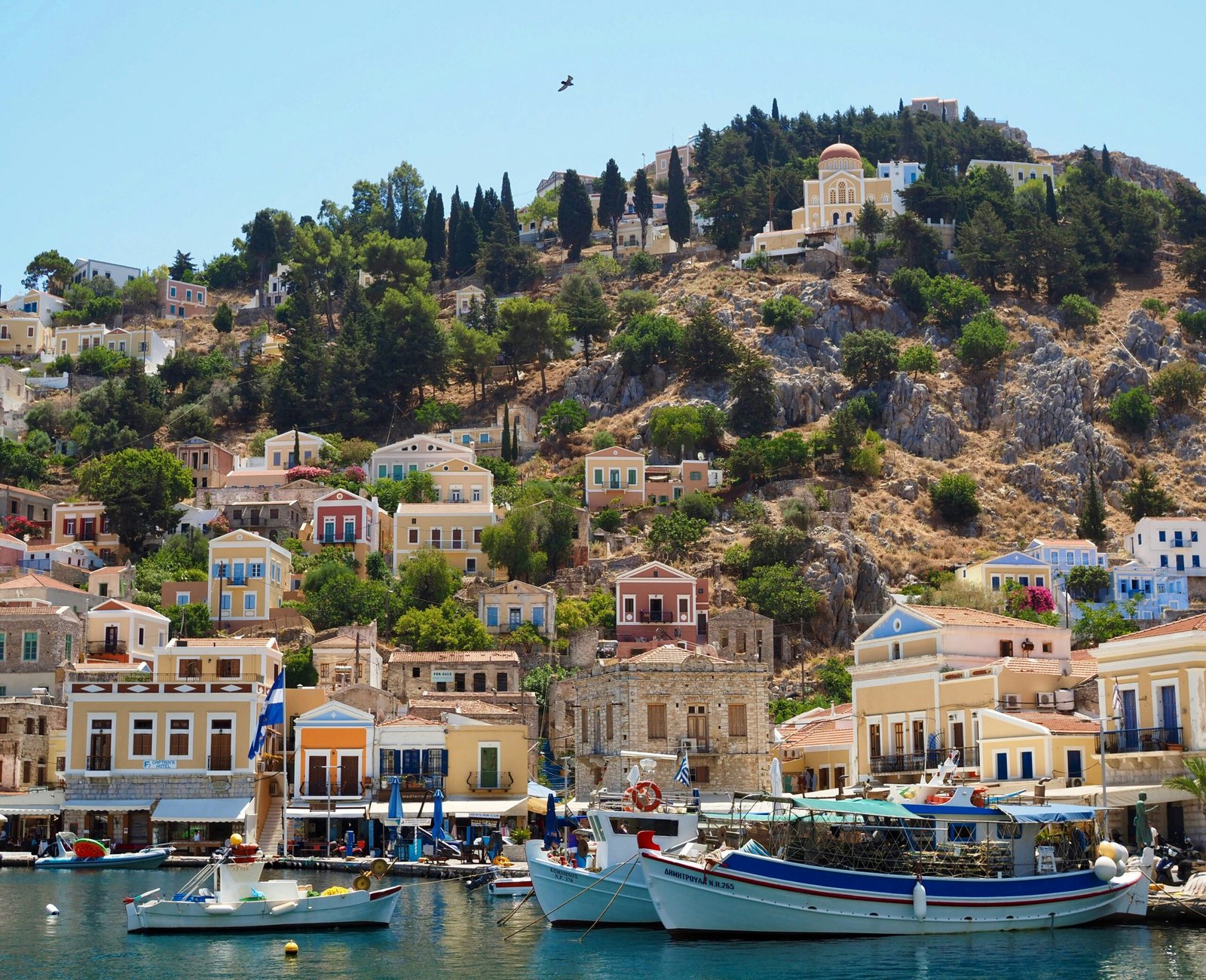
Rhodes in January is the warmest of the Greek island options that remain accessible in winter, sitting at 13-16°C with the southern orientation of the island keeping it milder than Crete’s north coast. The old town of Rhodes, a UNESCO World Heritage medieval city, is in January entirely free of the summer cruise ship traffic that can make it difficult to move through: the cobblestone streets of the old town, the Palace of the Grand Masters, and the Street of the Knights are in January simply a medieval city going about its winter life.
A small number of retreat centres on Rhodes operate through winter, specifically in the quieter southern and western parts of the island away from the resort areas of Faliraki and Lindos. The winter retreat experience on Rhodes is specifically suited to those who want warmth, cultural access to one of Greece’s best-preserved medieval cities, and the particular emptiness of a major tourist destination in its off-season.
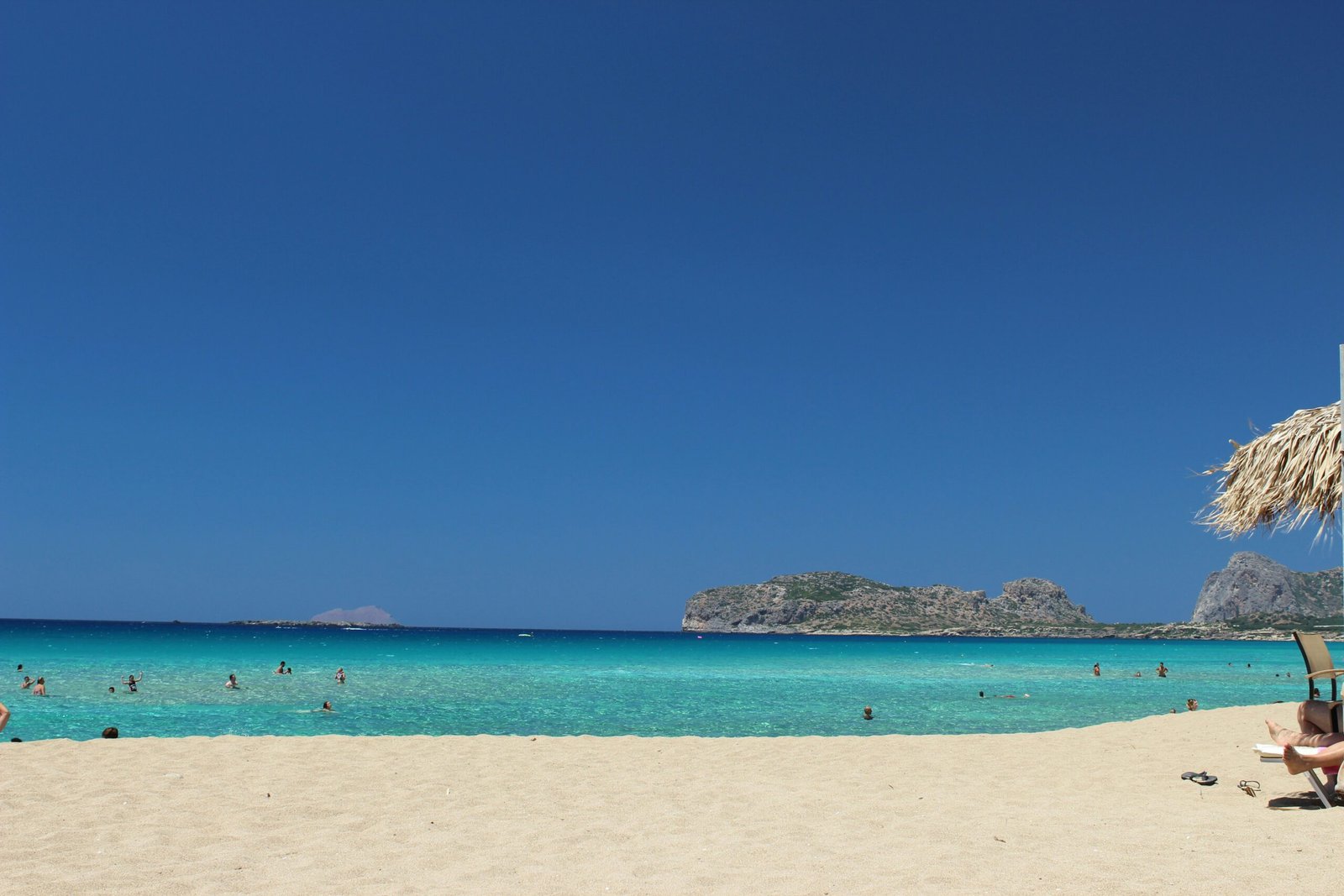
January is the citrus peak across the southern Greek islands and the Peloponnese. The navel oranges of the Argolid plain, the mandarins of Crete, and the lemons from the Ionian islands are at their maximum sweetness and availability. Fresh-squeezed orange juice at a Cretan breakfast table in January is one of those seasonal arguments for being in the right place. Blood oranges appear from mid-January, darker and more complex, and the Greek varieties grown in the Cretan interior and the Laconian coast are among the finest produced anywhere in Europe.
Vasilopita — the New Year’s cake of Greece — is eaten from January 1st through the first weeks of the month. A brioche-style cake with a coin hidden inside, it is cut at midnight on New Year’s Eve and the person who finds the coin receives good luck for the year. In January retreat centres in Crete and the Peloponnese, a vasilopita ceremony at the communal table on New Year’s Day is one of those specifically Greek seasonal hospitality gestures worth experiencing.
Fasolada — the white bean soup that Greeks call their national dish — is the January food that the climate requires and the tradition provides. Dried white beans slow-cooked with tomatoes, celery, carrot, and olive oil, served with olives and crusty bread: simple, deeply nourishing, and specifically of the Greek winter. At a traditional restaurant in the Mani or a Cretan mountain village in January, ordering fasolada rather than the tourist menu is the correct decision.
January is game season across the Greek mountains. Lagoto — hare stew braised with onions, garlic, red wine, and allspice — is the Peloponnese winter dish that appears on traditional restaurant menus specifically in the hunting months of November through February. The version made by a family that hunted the hare from the surrounding hills, eaten at a village table with rough red wine and bread, is the kind of food experience that requires both the right season and the right location to find.
Epiphany on January 6th is the most important winter religious celebration in Greece. The blessing of the waters ceremony — performed at harbours, rivers, and lakes across the country — involves a priest throwing a cross into the water, with young men diving to retrieve it. The person who recovers the cross receives a blessing for the year. In coastal towns across Crete, the Peloponnese, and Rhodes, the January 6th ceremony is a genuine community event rather than a tourist spectacle, and being present for it is one of those specifically Greek January experiences.
Clean Monday (Kathari Deftera) — the first day of Lent in the Orthodox calendar — falls in late February or early March. The preparations begin in January with the production of the traditional Lenten foods: taramosalata, lagana (the flatbread eaten specifically on Clean Monday), and the halva and other sesame-based sweets that Lent permits. In January, the pastry shops and bakeries of Crete and Athens begin producing these specifically in small quantities before the full Lenten season arrives.
The first two weeks of January in Greece have a specific quality: the Christmas and New Year visitors have departed, the country has returned to its own rhythm, and the domestic tourists who fill the islands in summer are at home and at work. This fortnight is the quietest period of the year and one of the most rewarding for retreat travel. The retreat centres that are open specifically for these weeks are curating a particular experience, and the guests who arrive for it have made a deliberate choice.
January retreat programming in Greece is the most inward-facing of the year. The short days, the cooler temperatures, and the absence of external stimulation naturally support contemplative practice, and the best retreat centres work with this rather than fighting it.
Morning practice typically starts at 8am rather than the 7am of summer, allowing for natural light and a slightly warmer start. Sessions lean toward grounding styles: Hatha, slow Vinyasa, or Yin, with a pranayama or meditation component that summer programmes sometimes sacrifice. The physical settings that January makes available, a wood-heated studio in a Cretan farmhouse, a south-facing terrace in the Mani afternoon sun, shape the practice in ways that are specifically of this month.
Afternoon excursions take advantage of the warmest hours: coastal walks on the empty beaches of the southern Peloponnese, olive grove walks in the Cretan interior with the harvest machines still visible in the fields, visits to the quiet medieval towns of Rhodes and the Mani that summer crowds make difficult to absorb. These are not activities competing with the practice but extensions of it into the landscape.
Evening practice is restorative and often candlelit: Yin yoga, yoga nidra, or guided meditation that closes the day without stimulating it. Dinner is communal and unhurried, earlier than summer, because the darkness and the cool make early evenings feel right.
Is January a good month for a yoga retreat in Greece? Yes, for those who value quiet, low prices, and small groups over warm weather and beach culture. Crete and the Peloponnese are mild enough for outdoor practice and their retreat infrastructure stays fully active. The experience is different from summer, more inward-facing, more intimate, less social, and for many practitioners that is precisely the point.
Which part of Greece is best for a January retreat? A retreat in the southern coast of Crete for warmth and year-round retreat infrastructure. Yoga retreats in the Peloponnese for the olive harvest landscape and mainland accessibility. A retreat in the Athens Riviera for those who want city access alongside practice. Rhodes for the warmest island option with a medieval city centre.
Is outdoor yoga possible in Greece in January? In Crete’s south coast, yes from mid-morning when the temperature climbs to 16-18°C. Early morning practice requires a warm layer everywhere. In the Peloponnese and Athens area, outdoor practice is weather-dependent but possible on clear afternoons. Most January programmes have heated indoor studios as standard.
What comes next if I want to extend into February? February brings almond blossom across Crete and the Peloponnese, one of Greece’s most specific seasonal pleasures, and the Carnival season. See our yoga retreats in Greece in February guide for what the following month offers.
Your email address will not be published. Required fields are marked *