
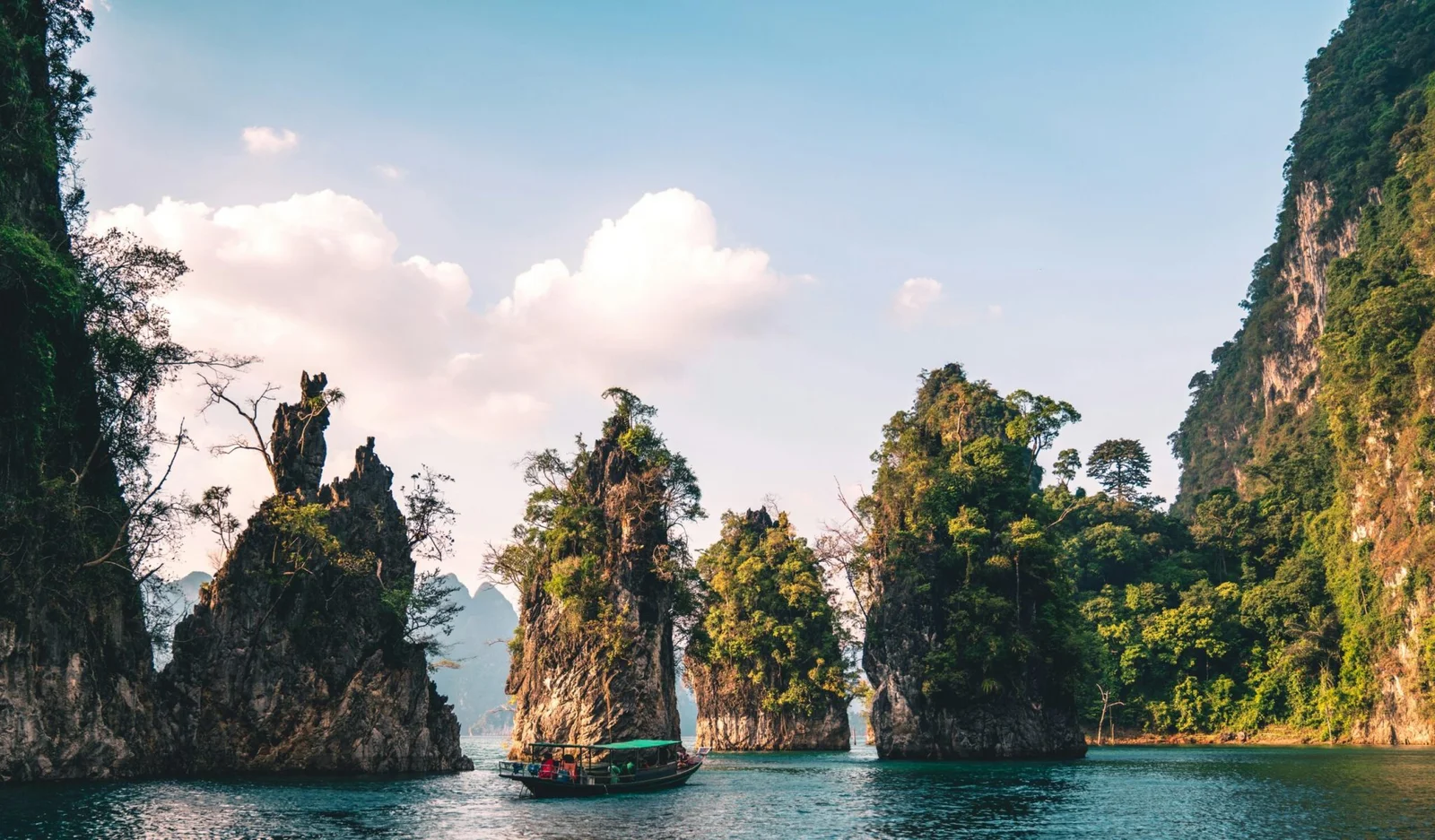
July is the deep green season in Thailand — the wettest month across most of the country, the jungle at its most intense, and the retreat calendar at its most selective. The destinations that work in July are good specifically because of the rain, not despite it. A yoga retreat in Thailand in July requires knowing which half of the country to choose, and why the wet season version of that place is worth the journey.


July is the wettest month of the year across the Andaman coast and the north. It is also the month when the Gulf coast — Koh Samui, the eastern islands — is at its driest and most reliable. The inland jungle destinations are at their most alive. And the retreat centres that stay open in July have typically designed their programmes specifically for the conditions rather than continuing their dry season format unchanged.
Browse our full yoga retreats in Thailand guide for the complete picture of what the country offers year-round. For the global context of July retreat travel, our yoga retreats in July guide covers every destination worth considering this month.
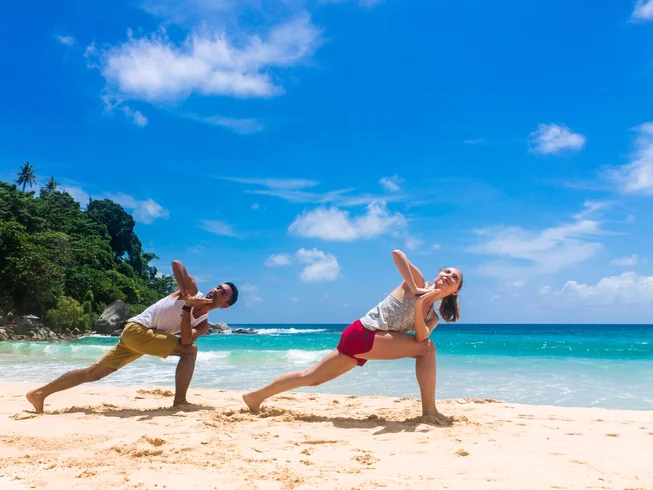
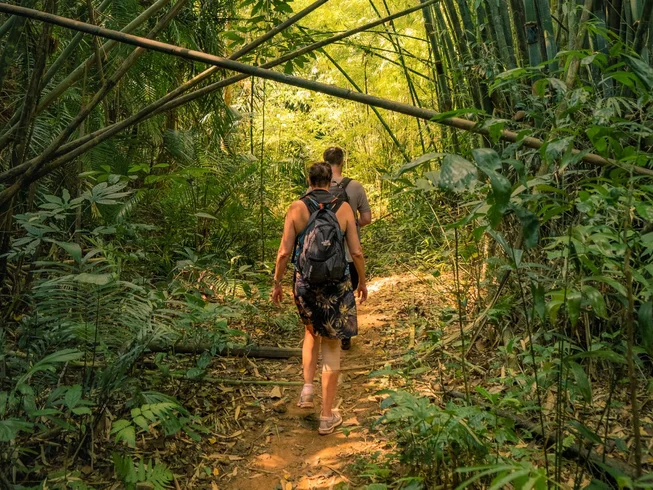
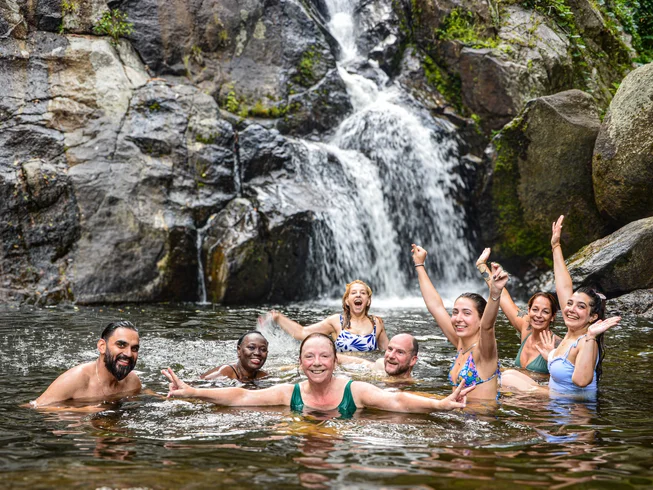
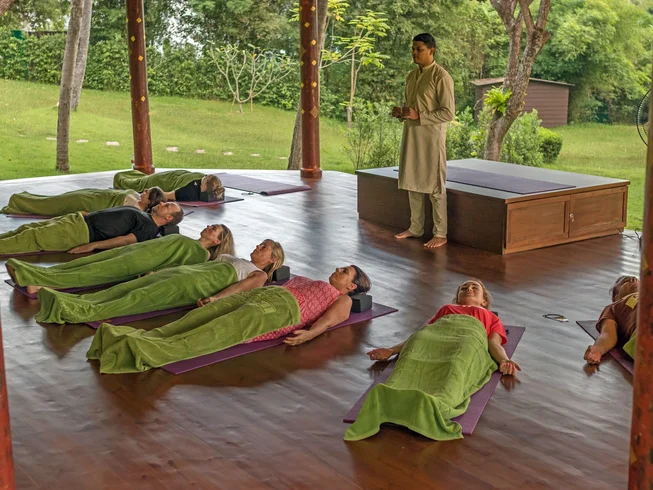
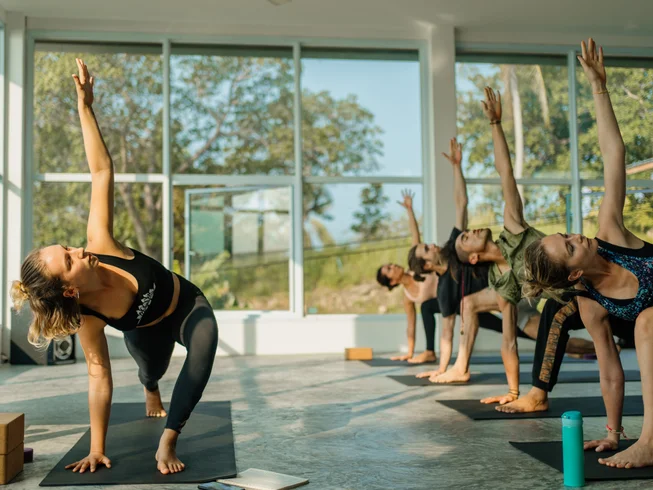
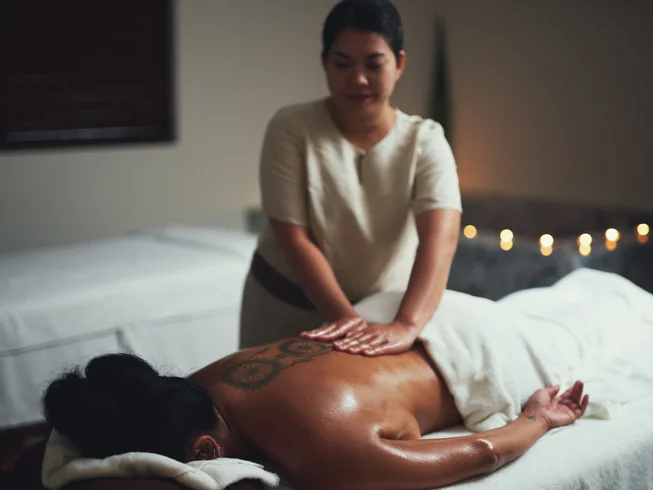
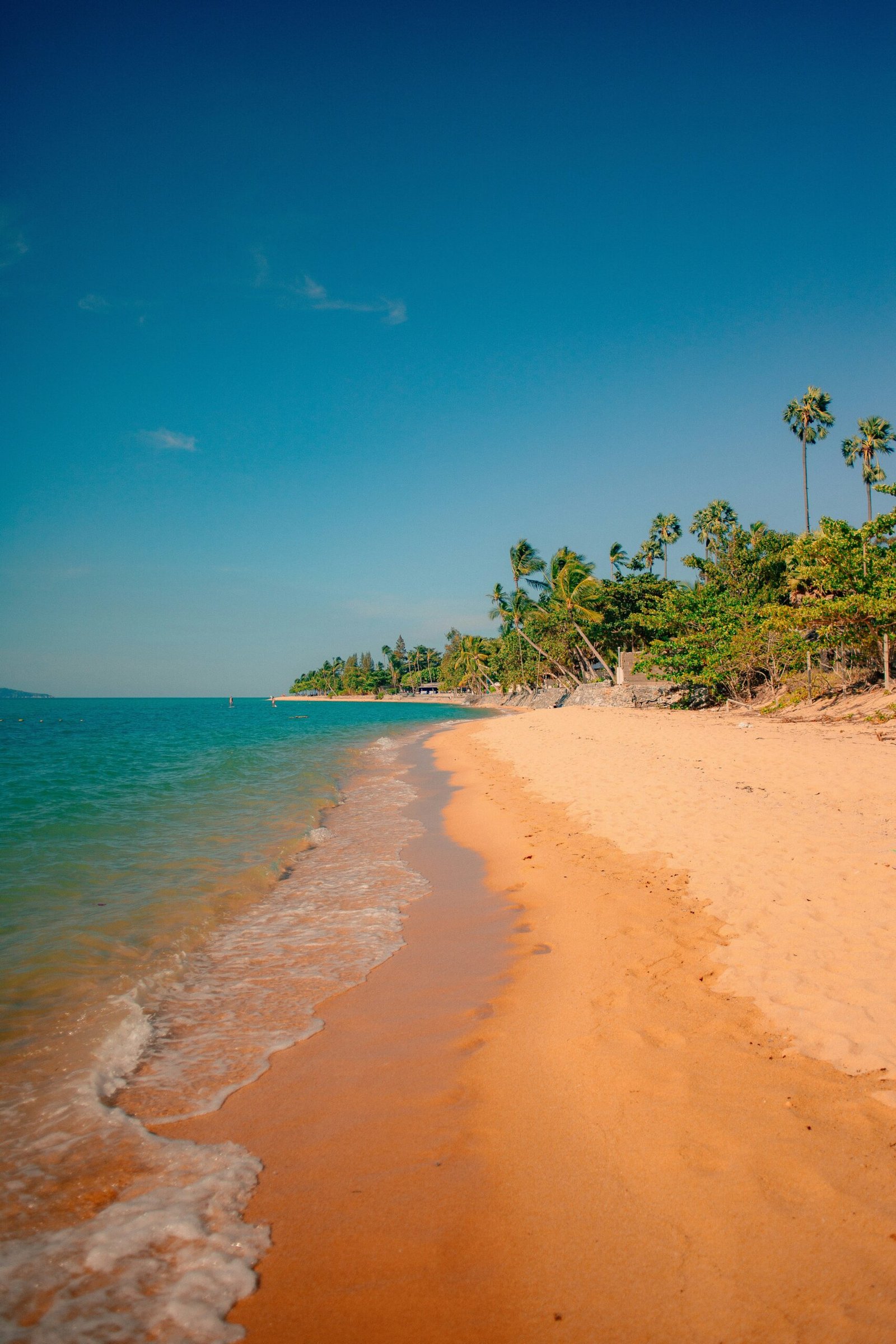
Koh Phangan in July is in the best conditions of its year — the island follows the Gulf of Thailand weather pattern that puts its dry season in June through September rather than November through April. July on Koh Phangan has clear mornings, occasional afternoon showers, and a sea temperature of 29-30°C. The Srithanu retreat community is in July at its summer international peak — the European summer holiday period bringing practitioners specifically to the island, and the retreat centres running their most varied programme calendar of the year.
The Agama Yoga school in the northwest of the island runs its July intensive teacher training programmes — a 28-day format that attracts participants from Europe, North America, and Australia who specifically choose July for the combination of the Gulf dry conditions and the school’s training calendar. The Yoga Retreat on Koh Phangan and the smaller independent shalas of the Srithanu area are in July at full capacity, with the morning practice on the open-sided wood platforms above the coconut palms in the full July humidity producing the specific practice environment that the cool season cannot replicate.
The Full Moon Party on Had Rin beach in July is at its summer international peak — the largest of the year in terms of attendance. For retreat guests on the northwestern side of the island, this is geographically remote and practically irrelevant to the retreat week.
Koh Tao in July is at its annual diving peak — the Gulf dry season producing the best visibility and the calmest seas of the year for the island’s dive sites. The whale shark season that began in February is still active in July, with sightings at Sail Rock and the Southwest Pinnacle more frequent in the Gulf dry season than at any other time of year. The dive schools on Koh Tao are in July running their highest volume of certification courses — Open Water, Advanced, Rescue Diver — with the international summer visitors providing the demand and the established dive instructors providing the instruction.
The yoga and diving combination retreat that Koh Tao specifically enables — the morning practice on the bungalow terrace above the bay, the afternoon dive to 20-30 metres, and the evening meditation as the sun drops behind Koh Phangan visible to the west — is in July at its most complete form. The island is busy in July but not overwhelmed — the lack of an airport caps the arrival volumes in a way that Koh Samui and Phuket cannot enforce.
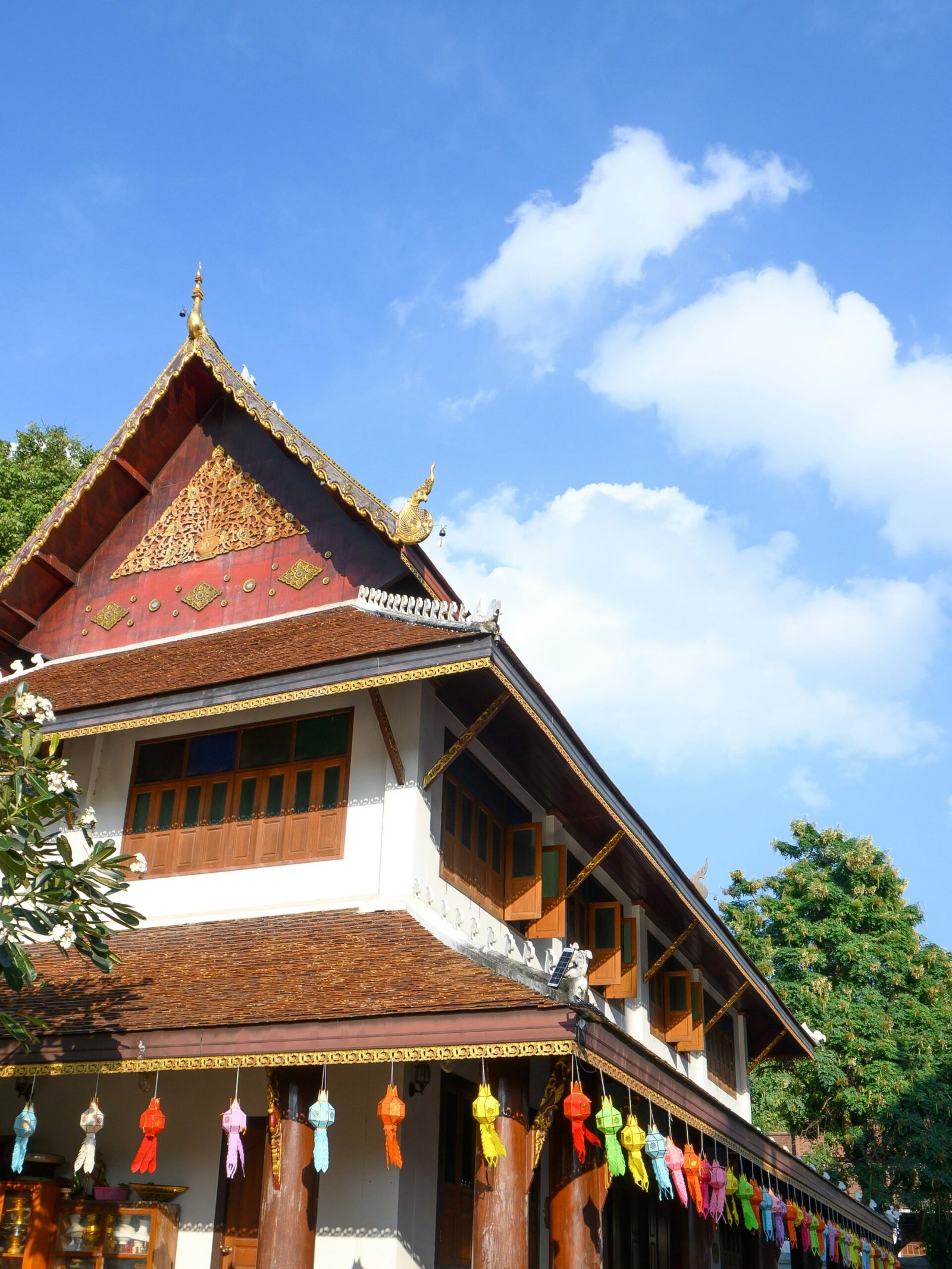
Chiang Mai in July is in the middle of its rainy season — the rains typically arriving in the afternoon or evening, with mornings often clear. The city in July has the specific quality of the Thai summer: the moat full of water, the temple courtyards fresh and green from the daily rains, and the mountain above the city visible only intermittently through the cloud. The outdoor morning practice that the January retreat offered is in July viable on the clear mornings, replaced on the rainy mornings by the indoor programme that the studio retreat centres are specifically designed for.
The meditation retreat culture of Chiang Mai is in July at its most focused. The Suan Dok temple meditation programme — the free Monday evening meditation and dharma talk open to all visitors, run by the monks of Wat Suan Dok — is in July running within the Khao Phansa Buddhist lent period, when the monks are in residence rather than travelling and the teaching programme is at its most consistent. The vipassana centres in the hills above the city are in July offering their retreats to the most committed participants — those who chose Chiang Mai in the rainy season specifically rather than waiting for the cool season.
The Night Bazaar and the Sunday Walking Street of Chiang Mai’s old city are in July operating in the rain — the canvas awnings extended, the vendors present regardless of the weather, and the evening atmosphere of the covered markets in the rain producing a specifically July Chiang Mai quality that the cool season’s clear evenings do not.
Khao Yai National Park — the UNESCO World Heritage Site two hours northeast of Bangkok, the third-largest national park in Thailand at 2,168 km² — is in July at its most dramatically alive. The wet season rains produce the waterfall conditions that the park is famous for: the Haew Narok falls (80 metres, the tallest in the park) and the Haew Wang waterfall are in July running at full volume, audible from a kilometre away and producing the mist that makes the surrounding forest glow in the July light.
The wildlife of Khao Yai in July is responding to the rain with maximum activity: the Asian elephants (a population of approximately 200-300 in the park) moving through the forest on the trails that the wet season makes visible in the mud, the gibbons calling from the canopy in the morning, and the hornbills nesting in the hollow trees of the old-growth forest. The night safari through the park’s grasslands — the open jeep tour after dark — is in July producing the wildlife encounters with the barking deer, civets, and porcupines that the dry season’s less active animals rarely provide.
Retreat centres at the park boundary use Khao Yai as the outdoor programme for a Bangkok-escape retreat format — close enough to the capital for a convenient journey, wild enough to produce genuine disconnection. The July conditions — the rains transforming the park into the most alive version of itself — make the July Khao Yai retreat specifically more rewarding than the same retreat in February.
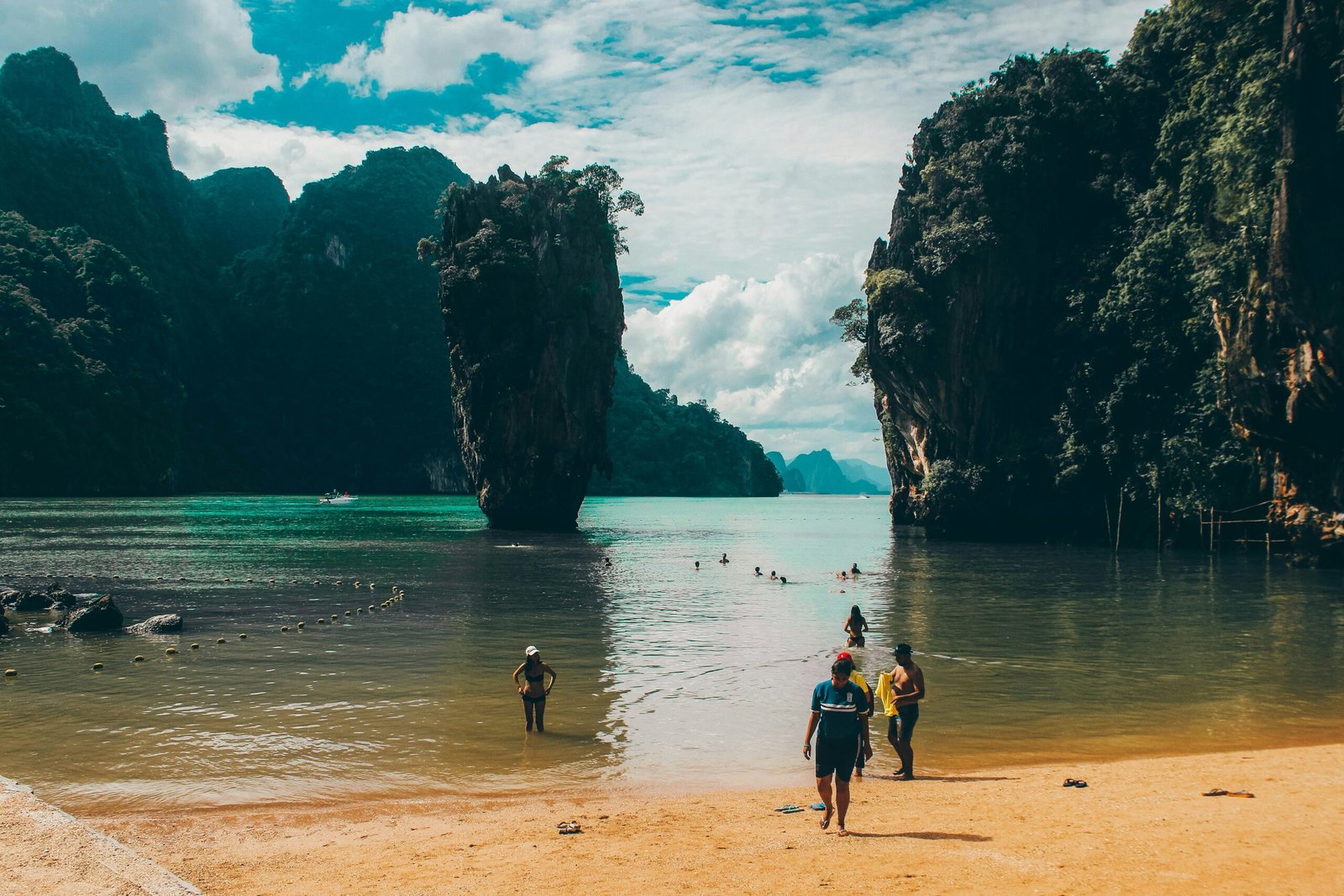
Khao Phansa — the Buddhist Lent, beginning the day after Asalha Bucha — runs through July, August, and into October. During this three-month period, monks traditionally remain in their home monasteries rather than travelling, the teaching programmes are most consistent, and the lay Buddhist community intensifies its merit-making practice. The candle processions at the beginning of Khao Phansa, and the robe-offering ceremonies (Tak Bat Thewo) that mark specific moments during the lent period, are among the most genuinely Thai religious events accessible to retreat guests.
The Ubon Ratchathani Candle Festival — held at the beginning of Khao Phansa, typically in late July — is one of the most visually extraordinary events in Thailand. The Isaan city of Ubon Ratchathani produces elaborate beeswax sculptures (the largest weighing several tonnes) that are paraded through the city before being donated to temples for the Lent candle. The scale and the craftsmanship of the sculptures — entire Buddhist cosmological scenes carved from beeswax — make the Ubon Candle Festival one of those specifically Thai events that the international retreat calendar consistently overlooks.
Asalha Bucha — if the full moon falls in July rather than June depending on the lunar calendar — is the national holiday commemorating the Buddha’s first teaching. The candle processions at temples across the country mark the beginning of the Khao Phansa retreat period. Check the current year lunar calendar.
Phi Ta Khon — the ghost festival of Dan Sai in Loei province — may fall in July depending on the spirit medium’s calendar. See June article for full description.
Durian — the large, spiky fruit with the famously intense smell and the custard-like flesh that divides Thailand’s visitors into devoted fans and firm avoiders — is in July at its peak in the southern orchards of Chanthaburi, Rayong, and the Surat Thani province. The Monthong variety (golden pillow) and the Chanee variety (gibbon) from the Chanthaburi orchards are in July at the ripeness that the durian devotees travel to Thailand specifically for. The smell that hotel lobbies and public transport operators ban is, at the source, the signal of the fruit at the precise moment of its readiness.
For retreat guests encountering durian for the first time: the correct approach is to eat it fresh from the tree rather than from the pre-cut packages at the tourist market stalls. The durian farms in Chanthaburi and the market stalls at the Surat Thani night market in July sell the fruit cut open to order at prices that make the Bangkok hotel minibar version look implausible.
Rambutan is in July at its peak across the southern orchards. Langsat — the small yellow fruit in clusters, with a slightly resinous skin and a sweet-sour translucent flesh — begins its July season in the southern provinces. Less internationally known than the rambutan or the mangosteen, the langsat is among the most refreshing of the Thai wet season fruits — the slight bitterness of the skin giving way to the sweet-sour flesh that the Surat Thani and Nakhon Si Thammarat orchards produce in July at their annual best.
The wet season mushrooms of the northern Thai forests are in July at their most varied and most available. The het thon (oyster mushrooms), the het khon (straw mushrooms), and the het rachi (wild mushrooms from the Chiang Mai highland forests) appear at the northern markets in July at the prices that the seasonal abundance produces — far below the Bangkok restaurant versions of the same ingredients. The Chiang Mai cooking class that incorporates a July mushroom market visit and uses the seasonal fungi in the lesson is providing a specifically July ingredient that January’s dry season market cannot offer.
The green curry (kaeng khiao wan) of the Thai kitchen uses ingredients that are at their most fragrant in the wet season: the fresh green chillies, the lemongrass, the galangal, the kaffir lime leaves, and the Thai basil that the July rain produces in their most essential-oil-rich form. At a retreat kitchen in Chiang Mai or on Koh Phangan in July that sources its curry paste ingredients from the wet season garden rather than the dry season market, the green curry has a freshness and a fragrance that the same dish in January approaches but does not fully replicate.
The night safari at Khao Yai National Park in July — the open jeep tour through the park’s grasslands after dark — is the most productive wildlife observation available in the Thai retreat calendar. The July wet season makes the barking deer, jungle cats, civets, and porcupines that the nocturnal safari seeks more active and more visible than in the dry season. The fireflies along the forest road at the beginning of the July night safari, visible in the first dark hour before the moon rises, produce a light display in the wet season rainforest that has no dry season equivalent.
The durian orchards of Chanthaburi province — three hours east of Bangkok — are in July open for farm visits during the peak harvest. The durian farm experience — walking through the orchard with the owner who explains the differences between varieties, watching the pickers with their long poles harvesting the fruit from the canopy, and eating the freshly opened fruit at the farm table — is a specifically July experience that requires both the season and the source simultaneously.
The Ubon Candle Festival at the beginning of Khao Phansa is worth the journey from Bangkok or Chiang Mai for those with a specific interest in Thai Buddhist culture and craft. The beeswax sculptures — some reaching 5-6 metres and depicting entire scenes from the Jataka tales (the Buddha’s previous lives) — are created by craftsmen who spend months carving the wax. The parade through Ubon city and the installation at the temples combine the visual spectacle with the religious ceremony in a way that makes the event simultaneously a cultural performance and a genuine act of faith.
Your email address will not be published. Required fields are marked *