
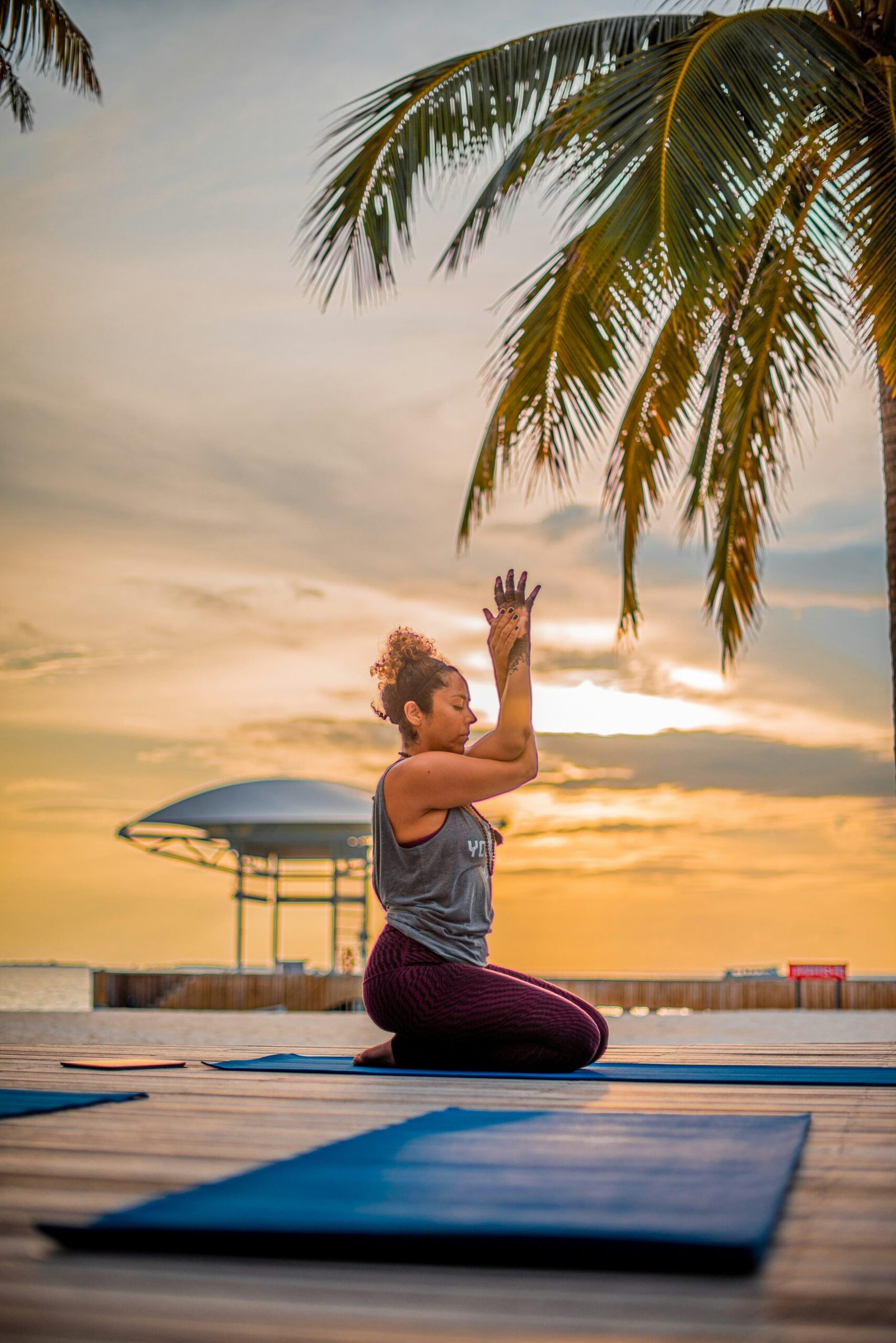
July is the month that requires a decision before you book. The wrong destination in July means heat management and crowd navigation for a week. The right one means the warmest sea of the year, long evenings, and a yoga retreat in July that uses the season rather than apologising for it. The difference is almost entirely destination choice.


Three strategies work in July. Go to altitude — the Dolomites, the Swiss Alps, the Atlas highlands — where the temperature drops enough that outdoor practice is viable at any hour. Go to the sea on a coast where the water does the cooling work — the Aegean at 25°C, Bali’s Indian Ocean, the Alentejo surf coast.
Or go west — Essaouira on the Moroccan Atlantic, where the alizé wind keeps temperatures a full ten degrees below what Marrakech is doing inland. The retreats that know what July is and build their programme around it produce genuinely good weeks. The ones that simply continue their spring schedule into summer are harder than they need to be.
Not sure where to go? Our full yoga retreat guide covers every destination. The ones below are specifically good in July.
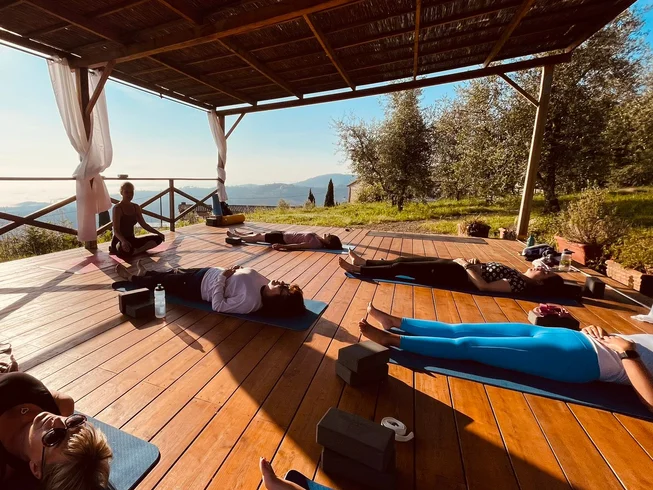
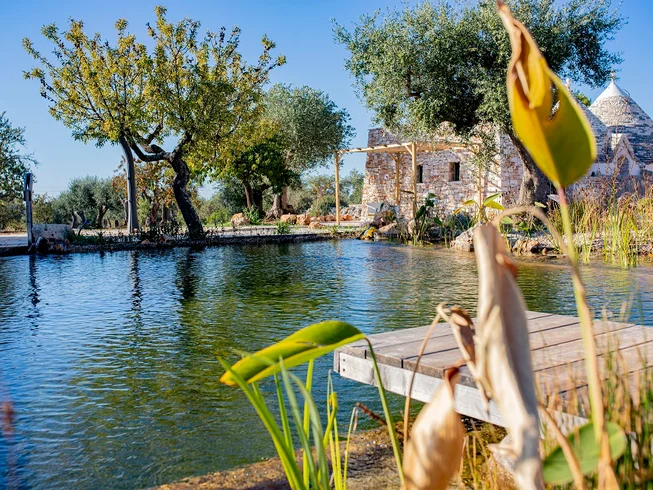
July is Bali’s peak month and for good reason — the dry season is fully established, the humidity that characterises the wet season has dropped, and the island’s specific combination of Hindu ceremony culture, rice terrace landscape, and accumulated retreat infrastructure is at full operation. Ubud in July is busy, but the busyness has a different quality from the Mediterranean resort crowds: it is a community of practitioners and teachers from around the world who have specifically chosen Bali for this month, and the retreat centres here draw from that pool rather than from general tourism.
The temperature in Ubud in July is 26-28°C in the day and 20-22°C at night — warm enough for outdoor practice at dawn but with enough overnight cool to make sleep possible. The rice terraces of Tegallalang and the Campuhan ridge walk above the town are in July at their deep green, the dry season having not yet turned the landscape golden. Morning practice at an Ubud retreat in July, with the sound of the gamelan from the temple below and the mist on the valley before the sun burns it off, is one of those specifically Balinese morning experiences that the retreat context makes available in a way that a hotel room does not.
The Balinese ceremony calendar is in July at one of its most active periods — Galungan and Kuningan, the ten-day celebration marking the victory of dharma over adharma, occurs approximately every 210 days and falls in July in some years. When it does, the island is transformed: every temple entrance lined with decorated bamboo poles (penjor), offerings at every crossroads, and the community in ceremonial dress. Being on retreat in Bali during Galungan is the kind of cultural immersion that cannot be scheduled and cannot be approximated elsewhere. Our yoga retreats in Bali in July guide covers the island’s July options — note that the dedicated July page is coming; in the meantime the March guide covers the island’s retreat landscape in full.
The case for Essaouira in July is simple: it is 22-24°C when the rest of Morocco is 38°C. The alizé trade winds that blow almost continuously from the North Atlantic keep the temperature on the coast at a level that makes outdoor practice viable at any hour of the day — something that Marrakech, which peaks at 40°C in July, structurally cannot offer. This is why the Moroccan families who can afford to leave the cities come here in summer, and why the retreat centres that operate on the Atlantic coast specifically target July as one of their best months.
The wind that does the cooling also creates the conditions that make Essaouira one of the premier kite and windsurfing spots on the Atlantic. The beach south of the medina in July is one of the most animated surf beach scenes in Africa, with the kite schools, the surf instructors, and the wind sports community that descends specifically for these conditions. For retreat guests who want to combine morning yoga with afternoon time on the water, July Essaouira is the combination at its most complete.
The medina itself in July has the quality of a city that is busy with Moroccan visitors rather than international tourists — the families from Casablanca and Rabat who rent the riads for the summer, the fish market at full operation for a population that is actually eating its catch rather than performing authenticity for visitors, and the Gnawa musicians in the squares playing for an audience that includes people who grew up hearing this music. Our yoga retreats in Morocco in July guide covers Essaouira and the Atlantic coast options.
Mykonos in July is genuinely complicated for retreat purposes, and the honest answer is that most of the island is not in retreat mode in this month. The party infrastructure that defines the island’s international identity is at maximum in July, and the retreat centres that operate here either find ways to create separation from it — through remote locations, structured schedules, and deliberate community — or they are operating in a compromised environment.
The retreat centres that work in July Mykonos are the ones on the northern and eastern coasts, away from the clubs and the beach bars of the south, with morning practice starting early enough that the island’s nocturnal culture is still asleep. The sea in July — 24-25°C and the clearest of the year — is the specific reason to be here: the morning swim after practice in the Aegean clarity, the afternoon at a beach that the boat services from the port have not yet reached, and the evening session as the Cycladic sunset does what it does in July.
The Meltemi wind that defines the Aegean in summer is at its July intensity — 25-35 knots on exposed coasts, making afternoon outdoor practice genuinely challenging. The retreat centres that acknowledge this build their afternoon schedule indoors or on sheltered terraces. The wind also keeps temperatures manageable — Mykonos in July is 28-30°C rather than the 35°C that the same sun would produce without it. Our yoga retreats in Greece in July guide covers Mykonos and the other Greek options for the month.
The smartest July retreat decision for anyone based in central or northern Europe is to go vertical rather than horizontal — to the mountains rather than the coast. The Dolomites in July are at 20-24°C in the valleys and 14-18°C at altitude, the wildflower meadows at their peak, and the alpine wellness infrastructure — the outdoor thermal pools, the sauna circuits, the hay bath treatments — fully operational alongside the summer hiking programme.
The specific July advantage of the Dolomites over the coastal resorts is the temperature differential between morning practice at 2,000 metres and the Italian peninsula baking below. Sunrise yoga on the Alpe di Siusi — the largest high-altitude meadow in Europe, accessible by cable car from Ortisei — at 6am, with the Sassolungo and Sciliar peaks catching the first light above the still-cool meadow, is the July retreat morning that the Amalfi Coast cannot offer. The afternoon via ferrata on the dolomite rock faces, the Aufguss sauna ceremony in the early evening, and the Tyrolean dinner at a mountain refuge: this is July done correctly from a wellness perspective, and it requires going to altitude to get it. Our wellness retreats in Italy in July guide covers the Dolomites and the other Italian options.
July in Costa Rica is the rainy season on the Pacific coast, which the tourism industry has started calling the “green season” with some justification — the landscape is extraordinary, the waterfalls are running at full volume, and the prices are 30-40% below the dry season peak. The rains in July typically follow a pattern: clear mornings, afternoon showers, clear evenings. For retreat purposes, this means morning practice and beach time are fully available, with the rain arriving in the afternoon and providing a natural structure for indoor sessions.
The Nicoya Peninsula in July — Santa Teresa, Nosara, Montezuma — has the specific quality of the community that stays through the rainy season: the teachers and practitioners who live here year-round rather than the high-season visitors, the surf that the swell produces in the wet season, and the absolute green of the jungle and the clifftop paths above the Pacific. Howler monkeys, scarlet macaws, sea turtle nesting season on the Ostional beach near Nosara (one of the world’s most important olive ridley sea turtle nesting beaches, with mass arrivals in July) — the wet season Costa Rica has natural events that the dry season, for all its convenience, cannot offer. Our yoga retreats in Costa Rica in July guide covers the rainy season options and what to expect.
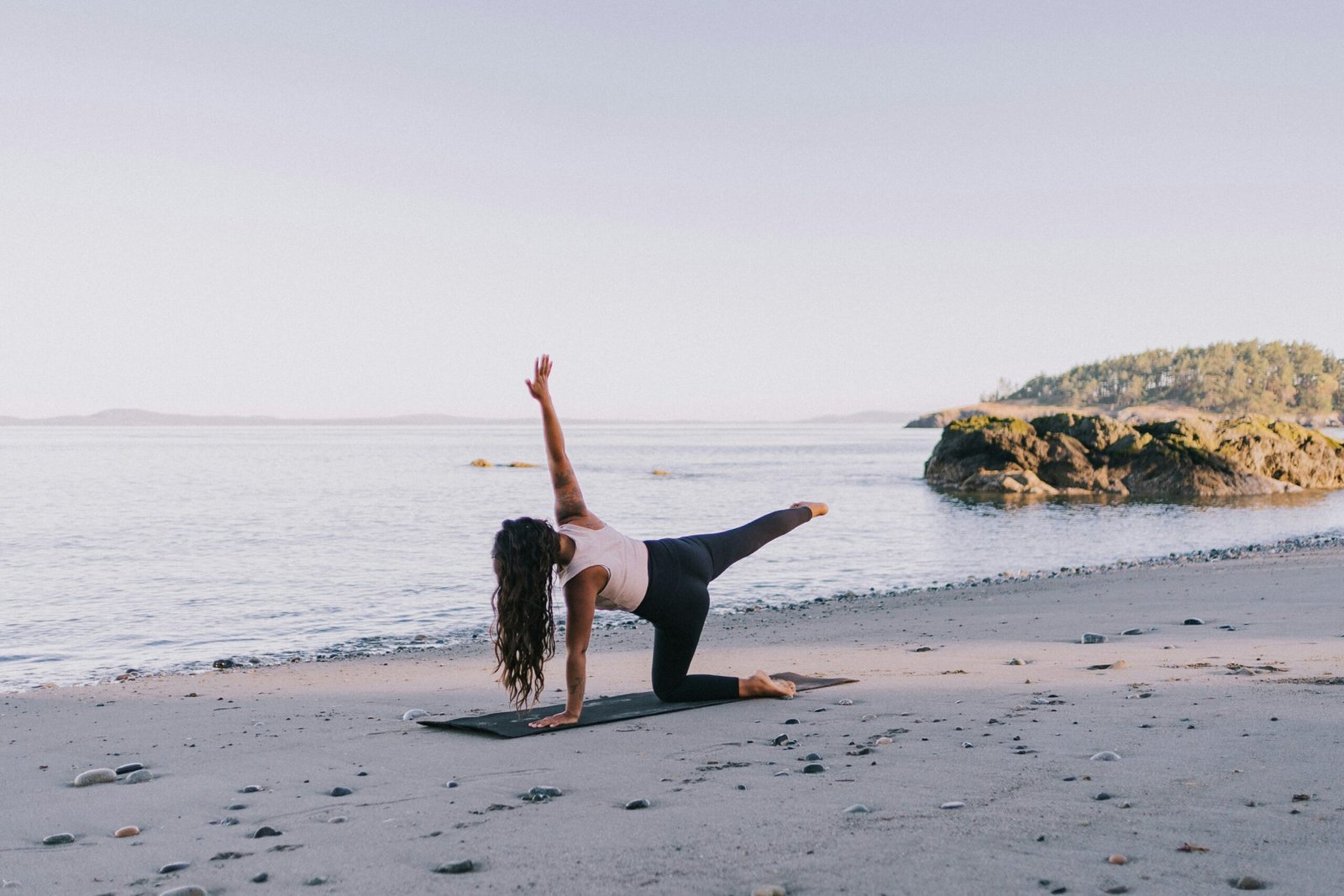
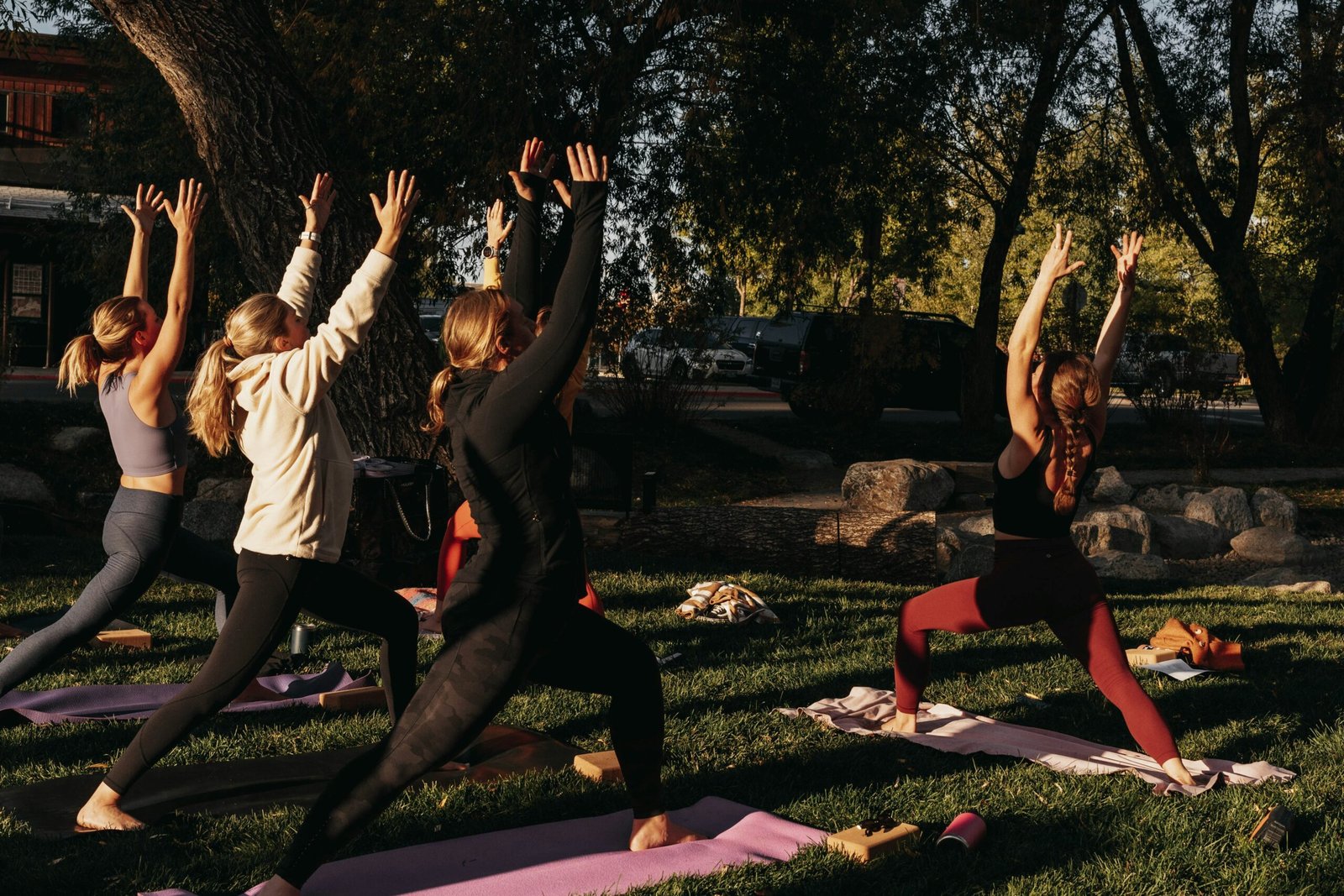
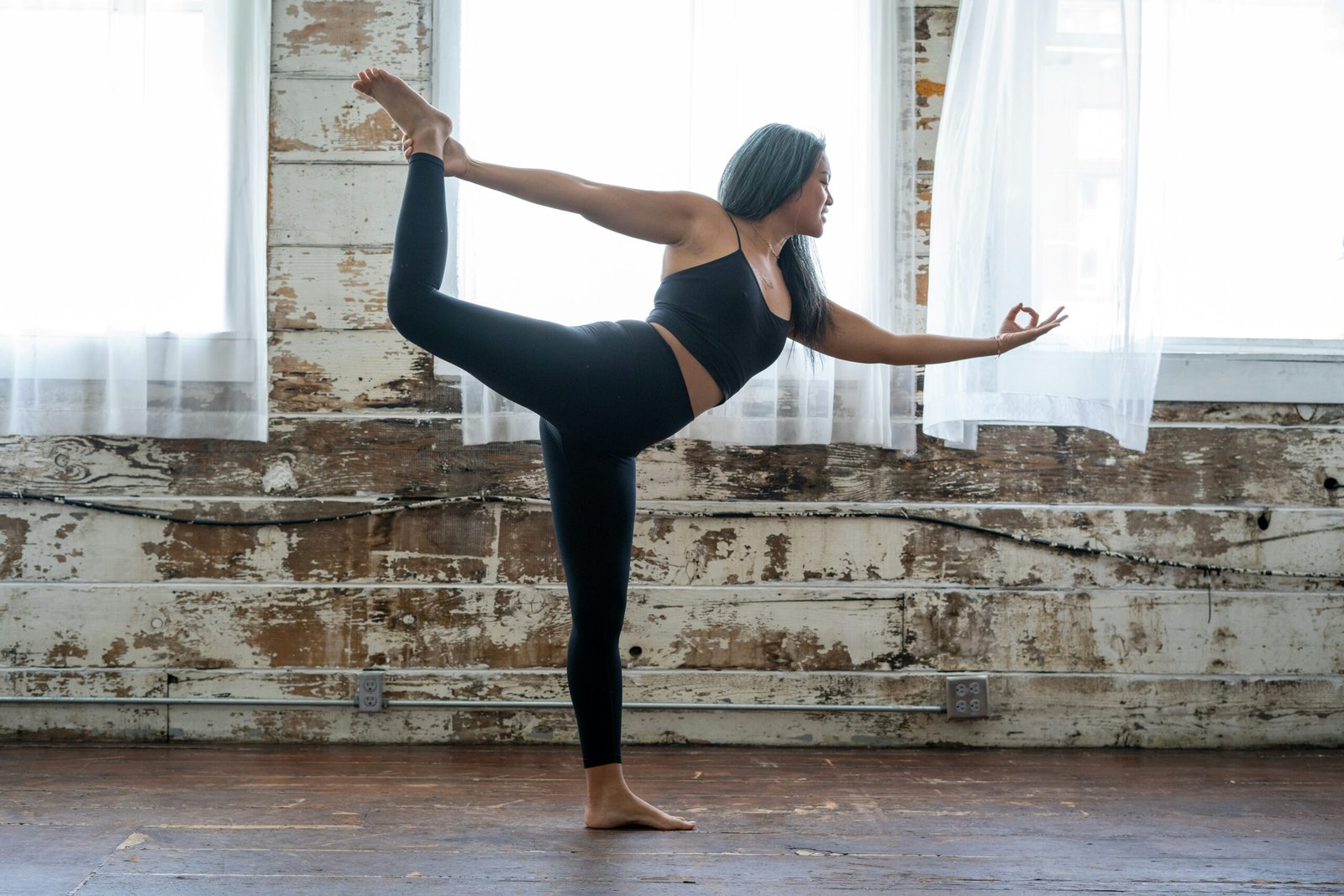
July heat does something to the body that no studio, no heated class, and no other season can precisely replicate. It is not the targeted warmth of a Bikram room or the gentle loosening of a spring morning — it is total, ambient, and inescapable, and the body’s response to it is equally total. Muscles release to a depth that other seasons only approximate. The fascia — the connective tissue web that holds the body’s shape and stores its patterns — becomes genuinely pliable in sustained summer heat, responding to long-held poses with a quality of release that practitioners often describe as transformative rather than simply physical. A week of consistent practice in July heat can produce changes in range of motion and body awareness that months of temperate-season work cannot.
But July also demands a complete recalibration of how practice is approached, and retreats that simply transplant a year-round programme into midsummer conditions miss the point. The body in July is already working — regulating temperature, managing fluid balance, processing the metabolic load of heat exposure — before a single pose has been attempted. This background effort changes what is appropriate on the mat. Strong dynamic sequences at midday are not ambitious; they are physiologically unintelligent. The art of July practice is learning to achieve depth through surrender rather than effort, through long slow openings rather than forceful progression, and through a quality of breath awareness that the heat makes simultaneously more challenging and more immediately necessary than at any other time of year.
July offers one of the most demanding and most rewarding meditation environments of the year. The heat itself becomes the object of practice — something to be observed, accepted, and ultimately moved through rather than resisted.
Practitioners who struggle with winter’s heaviness often find that July’s particular challenge, the impulse to escape or resist discomfort, reveals something equally important about their relationship with difficulty. Sitting still in genuine heat, without air conditioning, without the option of adding another layer, and without the relief of a cool breeze, is a masterclass in the foundational yoga practice of Tapas — disciplined effort, the willingness to stay present in the fire.
The quality of awareness available in July meditation is sharp and immediate in a way that cooler seasons don’t produce as readily. Heat strips away the insulating layers of mental habit and leaves the mind unusually exposed — thoughts arise more vividly, emotions surface more quickly, and the gap between stimulus and reaction feels shorter and more transparent.
For experienced practitioners, this is an extraordinary opportunity to observe the mind’s patterns with unusual clarity. For beginners, it can feel overwhelming without adequate guidance and support. A July retreat that frames the heat as a teacher rather than an obstacle, and that builds the container carefully enough to make that teaching safe, produces insights that participants carry with them long after the summer has ended.
In July, hydration is not a supporting element of retreat life — it is a central practice in its own right, as demanding of attention and consistency as the asana or meditation schedule. The body loses fluid at a rate in midsummer heat that most people chronically underestimate, and the consequences of falling behind — reduced concentration, impaired physical performance, emotional volatility, and the kind of low-grade malaise that is often misread as laziness or low motivation — accumulate faster than they are noticed. Three to four litres of fluid daily is a realistic baseline for active retreat participants in July, and on days of more intensive practice or higher ambient temperature, more is appropriate.
The food itself should be as cooling and hydrating as possible. July is peak Pitta season, and the Ayurvedic guidance is both ancient and immediately practical: favour sweet, bitter, and astringent tastes over sour, salty, and pungent ones; eat cooling fruits in abundance — watermelon, pear, melon, fresh figs, ripe mango; build meals around lightly cooked or raw vegetables, cooling grains like basmati rice and barley, and fresh herbs like mint, coriander, and fennel that actively reduce internal heat. Avoid the instinct to eat very lightly simply because the weather suppresses appetite — the body needs nourishment to manage heat exposure, and skipping meals in July creates an energy deficit that shows up directly and unpleasantly on the mat.
Your email address will not be published. Required fields are marked *