
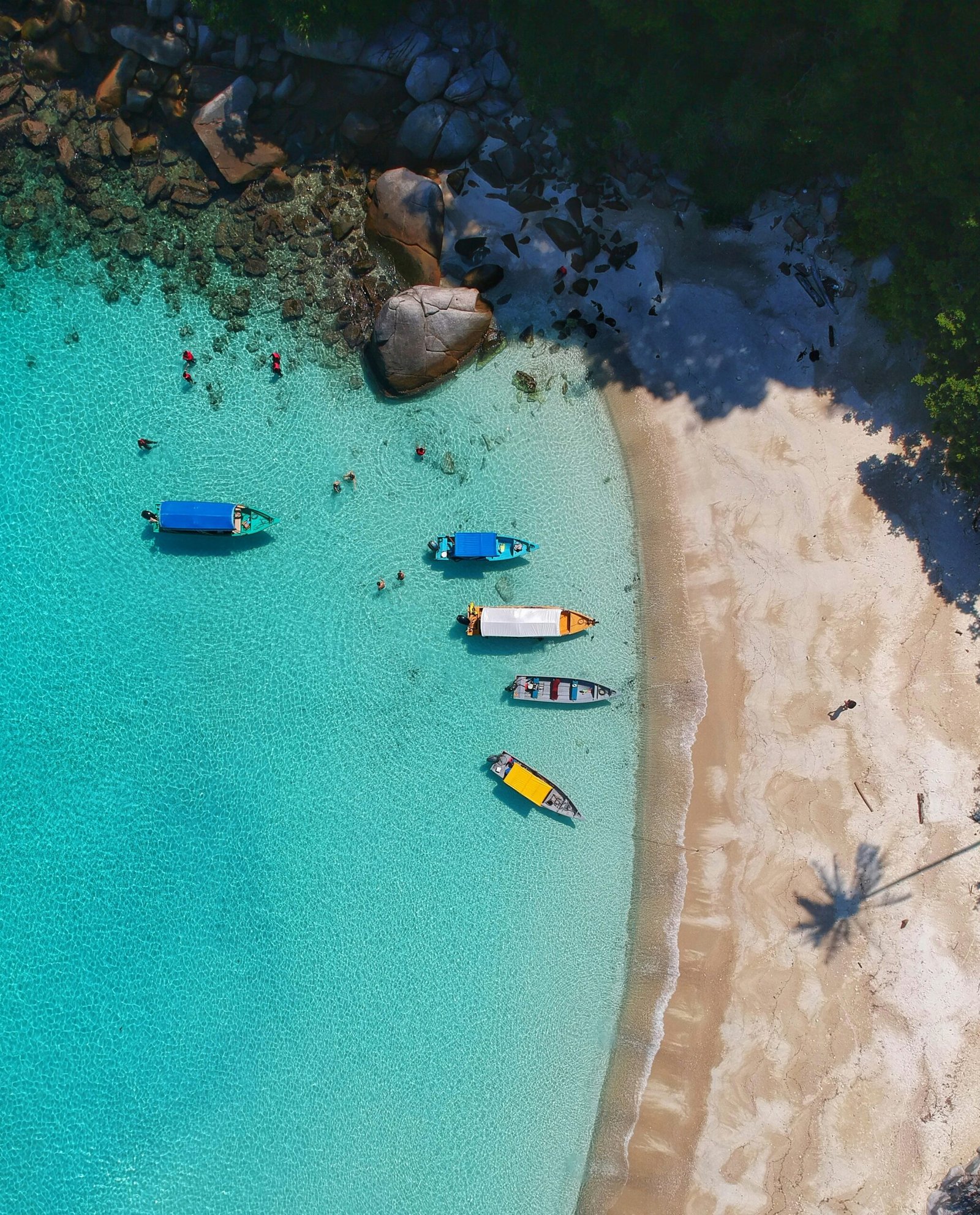
August in Greece is peak everything — peak heat, peak crowds, peak prices, and peak sea temperature. The famous Cycladic islands are at their most overwhelmed. But the warmest sea of the year makes swimming genuinely extraordinary.
The Dormition of the Virgin on August 15th is the most important summer religious celebration in the Orthodox calendar, and the villages across the country celebrating it produce one of the most specifically Greek experiences of any month. And the islands that the main tourist circuit ignores are in August some of the most rewarding retreat destinations in the country.


August requires the most deliberate destination choice of the year. The wrong island means heat management, crowd navigation, and retreat centres that are technically operational but practically overwhelmed. The right destination — the Sporades, the southern Ionian, the Cretan south coast, the less-visited Dodecanese — means the warmest sea Greece produces, long evenings, and a retreat experience that uses August rather than apologises for it. Our Greece yoga retreat guide covers every destination and format.
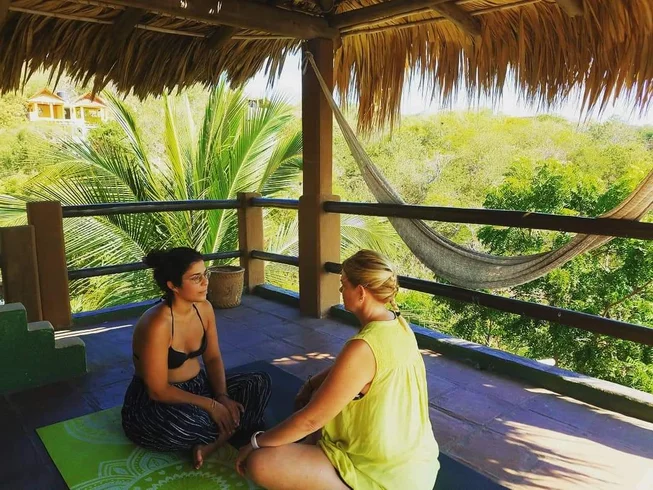
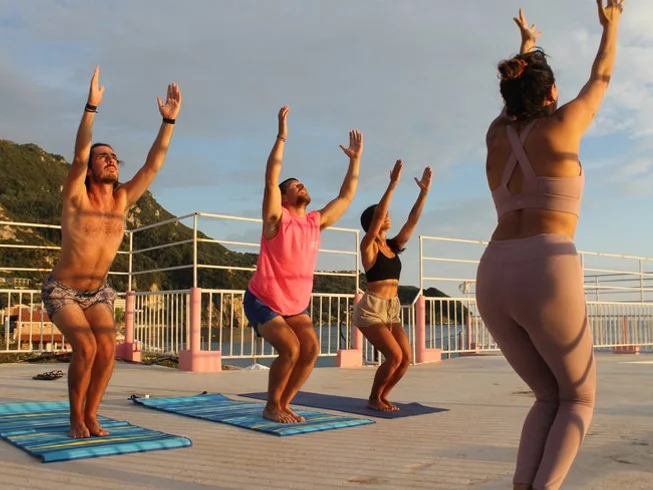
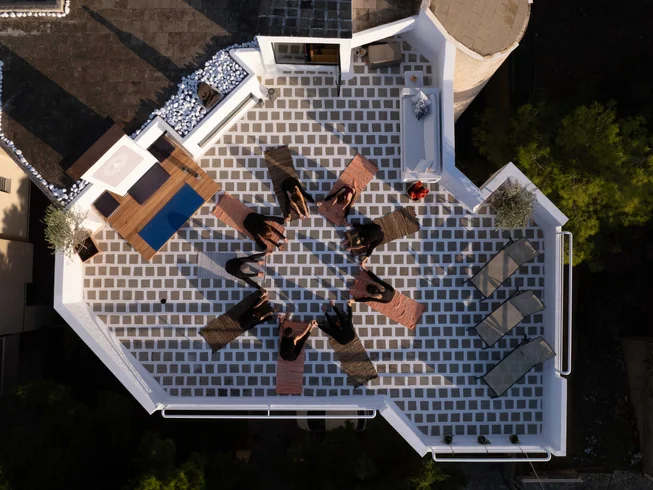
The Sporades islands — the cluster of green islands in the northwest Aegean between the Pelion peninsula and the northern Cyclades — are in August one of the best-kept secrets in Greek island travel. Skopelos and Alonnisos specifically have the combination of pine forests running directly to the sea, calm waters on the eastern coast sheltered from the Meltemi, and a quality of green lushness completely unlike the bare volcanic Cyclades.
Skopelos in August has the sea at 25-26°C on the sheltered eastern bays, the pine forest providing shade for the midday hours, and the specific quality of an island that has become internationally known (the Mamma Mia filming location) while retaining a genuinely Greek character in its chora and its agricultural hinterland. Retreat programmes here in August use the forest trails for morning walks before the heat builds, the shaded terraces for afternoon practice, and the eastern coast beaches for the morning and evening sea sessions.
Alonnisos is the most ecologically significant of the Sporades — the surrounding waters form the largest marine protected area in the Mediterranean, the National Marine Park of Alonnisos Northern Sporades, established specifically to protect the Mediterranean monk seal population. A retreat on Alonnisos in August with a boat excursion to the marine park — snorkelling in waters where the monk seal is occasionally sighted, the sea floor visible at 15 metres — is combining practice with genuine ecological engagement. The IUCN Red List classifies the Mediterranean monk seal as endangered, with fewer than 700 individuals remaining — being in their protected habitat in August is a specific privilege worth acknowledging.
The south coast of Crete in August is a different island from the tourist-facing north. The villages of Hora Sfakion, Loutro, Agia Roumeli, and Paleochora are accessible primarily by boat or on foot from the road above — their inaccessibility functioning as the same natural cap on visitor numbers that limits the Sporades. The Libyan Sea here faces directly south, is slightly warmer than the Aegean (26-27°C in August), and has a quality of open-ocean exposure and clarity that the more sheltered northern coast cannot match.
Loutro specifically — a village of 70 residents reachable only by boat or by the coastal path from Hora Sfakion — is in August one of the most genuinely remote resort villages in the Mediterranean. The single bay, the whitewashed houses above the water, the one-road village that has no cars, and the quality of a community that exists at its own pace regardless of the season makes it the kind of retreat base that people return to specifically. For the full Crete retreat picture, our yoga retreats in Crete guide covers the island in detail.
Symi in August is the most architecturally extraordinary of the smaller Dodecanese islands — the neoclassical mansions of the main harbour town, painted in ochre, cream, and terracotta, climbing the hillside in tiers above the deep harbour, produce a visual effect that architecture historians compare to the finest neoclassical ensembles in mainland Greece. The island is small enough (population 2,500) that the August day-trippers from Rhodes, arriving by ferry in the morning and returning in the afternoon, temporarily inflate the harbour without overwhelming the island’s interior villages of Pedi and Horio.
Halki — the smallest inhabited island of the Dodecanese, reachable by ferry from Rhodes — has a population of 300, one main village, and a quality of miniature completeness that makes it one of the most specifically charming of the minor Greek islands. There are no cars. The main street of the harbour village is lined with the same neoclassical architecture as Symi but at a fraction of the scale. A retreat based on Halki in August is operating in a context so human-scale and so removed from the tourist infrastructure of the main Dodecanese that the word “retreat” is almost redundant — the island itself provides the withdrawal from ordinary scale that the retreat format is trying to create.
The Pelion in August provides what the islands cannot: altitude and forest. The mountain villages of upper Pelion — Makrinitsa, Tsangarada, Zagora — sit at 600-1,000 metres, 8-10°C cooler than the coast below, with chestnut forests and running water and the specific quality of a mountain landscape in August that the sea-level heat makes feel genuinely extraordinary. Retreat programmes in the Pelion in August typically combine morning practice in the cool mountain air with afternoon descents to the eastern Aegean beaches — the temperature differential between the mountain practice space and the sea below making the afternoon swim one of the more complete sensory experiences available in Greece in August.

August figs from the Cretan and Peloponnese orchards are at their maximum size and sweetness — the large black fig (sykia mavri) split open to reveal the deep red interior, eaten fresh or halved and dried in the August sun on terracotta tiles as the traditional preserving method that has been used in Greece since antiquity. At a retreat kitchen in August that has access to a fig tree, the figs eaten directly from the branch in the morning before practice are one of those specifically seasonal pleasures that the word “fresh” inadequately describes.
August watermelon from the Argolid and the Thessaly plain is at its peak sweetness and size — the varieties grown in Greece specifically for flavour rather than shelf life producing a fruit that cold, cut at the retreat kitchen, and eaten on the terrace in the August heat is the definitive Greek summer food experience. Peponi (cantaloupe melon) from the Thessaly plain and the Argolid orchards is equally specific in August: intensely aromatic, orange-fleshed, and eaten cold as a starter or a snack at the hottest part of the day.
August seafood at the harbour tavernas of the smaller islands is at the point in the season where the fishermen know the waters intimately and the catch reflects that knowledge. The octopus that has been drying since June is in August at the peak of its preparation — the drying completed, the texture perfect for the charcoal grill. At the harbour of Symi, Alonnisos, or a south Cretan village, the grilled octopus eaten at a table above the water in the August evening is the version that all other versions are referencing.
The summer vegetable peak in August produces the best version of several specifically Greek dishes. Tomatokeftedes — the Santorini tomato fritters made from the small, volcanic-soil tomatoes of the island — are at their August intensity: the tomatoes at maximum sugar concentration from the summer heat, the fritters crisp outside and almost jammy inside. Melitzanosalata (roasted eggplant spread with garlic, olive oil, and lemon) made from August eggplants that have been developing in the summer sun since June is a completely different ingredient from the greenhouse versions available in winter.
The most important summer religious celebration in the Orthodox calendar. August 15th is the feast of the Dormition (Koimisis) of the Virgin Mary — the Orthodox equivalent of the Assumption — and is a national public holiday in Greece. Every church dedicated to the Virgin Mary holds a panigýri on August 15th, which means celebrations in effectively every village in the country simultaneously. The most significant pilgrimages happen on Tinos (where the icon of the Panagia Evangelistria is venerated and the sick crawl on their knees from the port to the church on the hill), on Paros (the Church of a Hundred Doors, one of the oldest Christian churches in Europe), and in the Mani (where every village has its own celebration).
For retreat guests, the August 15th celebration at a local village church — the evening vespers, the procession of the icon, the outdoor panigýri with music and food afterward — is one of the most specifically Greek Orthodox experiences available in any month. The combination of religious solemnity and communal celebration that the Greek tradition produces at its best is genuinely moving and genuinely worth attending.
The Rock in Athens festival at the Panathenaic Stadium and various Athens venues brings international music acts to the city in August. For retreat guests combining an Athens Riviera programme with a city day, the festival adds a cultural dimension to the retreat week.
From mid-August, the Meltemi wind that has dominated the Aegean since July begins to ease in frequency and intensity. The second half of August on the exposed Cycladic islands becomes noticeably more manageable for outdoor practice than the first half — the wind still present but less consistently powerful. This transition is felt physically by those who have been on the islands since July: the air becomes heavier, the sea calmer, and the quality of stillness available in the early mornings more complete.
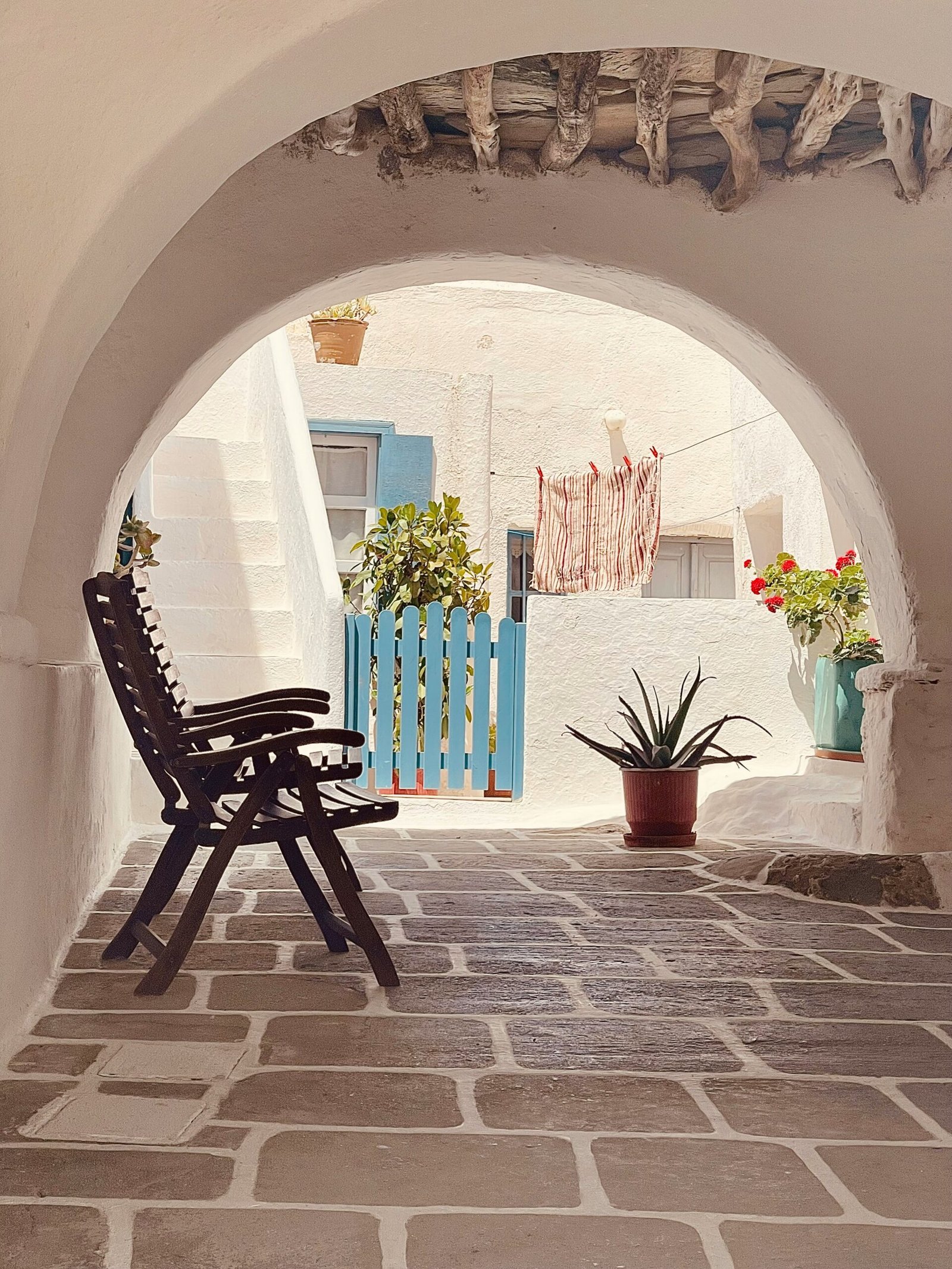

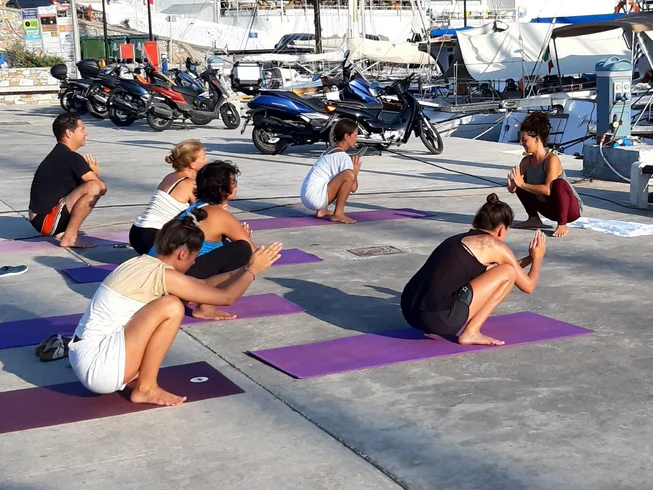
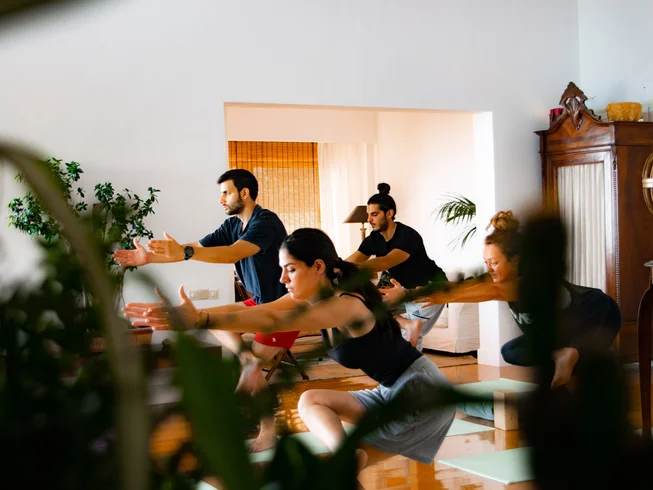
August programming is honest about what the month requires or it is not effective programming. The structure that works: practice at 6:30am before the sun has full height. A substantial breakfast. The hottest hours from noon to 5pm dedicated to the sea, the shade, or the pool. Late afternoon practice from 5:30pm as the temperature begins to drop. Evening sessions extending to 7:30-8pm because the August light and warmth make early evenings the best outdoor time of the day.
On the Pelion and in the Sporades — where altitude or forest provides natural temperature management — the outdoor schedule runs more freely without the strict midday break. Morning practice in the Pelion at 7am in chestnut forest air that is genuinely cool is the August retreat morning that the exposed Cycladic islands cannot offer.
The August 15th celebration, when the retreat week overlaps with it, is the August programming event with the most specifically Greek cultural character. The best retreat centres acknowledge the day explicitly: attending the evening vespers at the local church, the outdoor panigýri afterward, and the communal meal at the retreat that incorporates the traditional August 15th foods — the lamb, the local wine, the fig sweets — is doing August Greece correctly.
Your email address will not be published. Required fields are marked *