
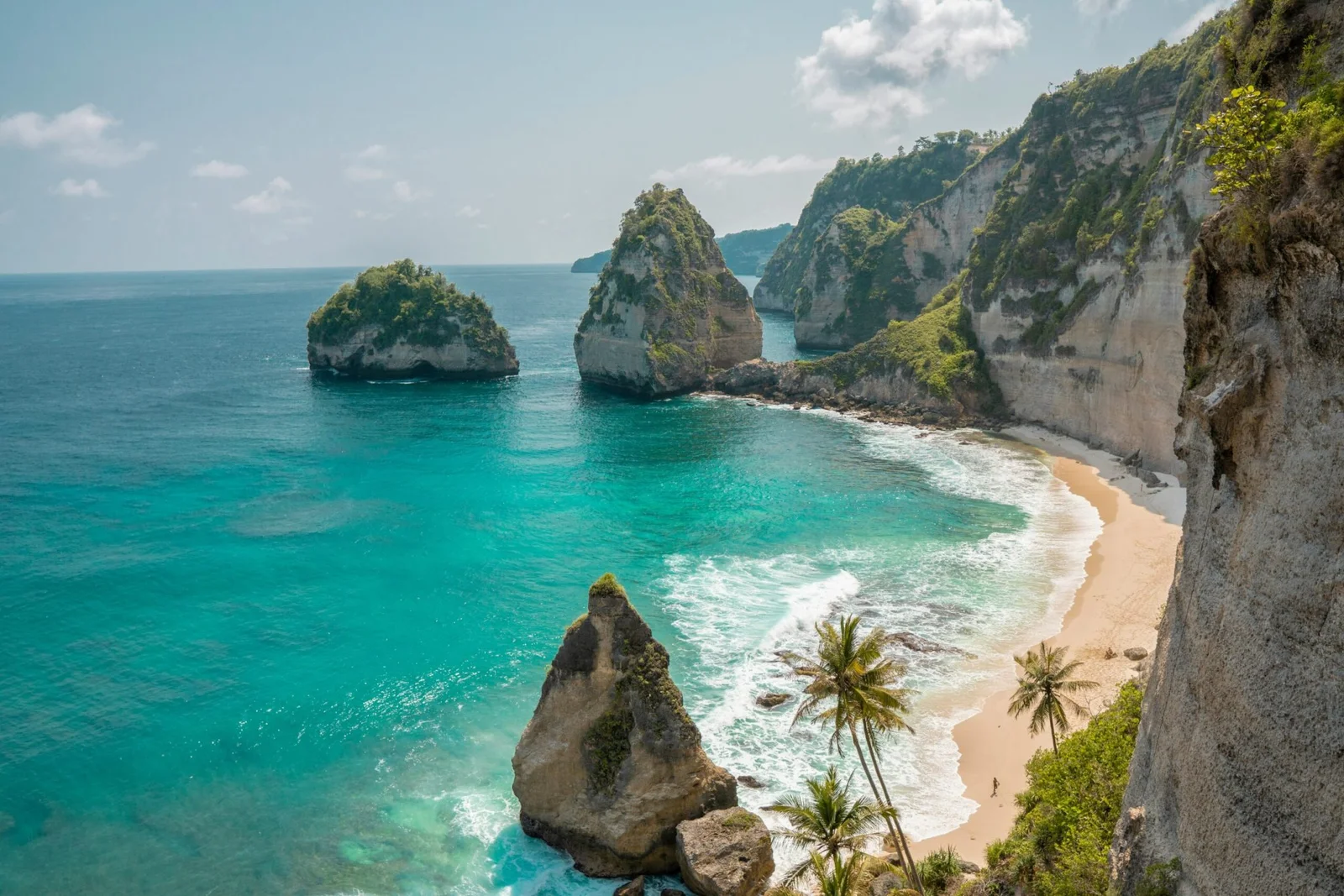
September in Bali is when the island exhales. The European school holidays end in the first week of September and the visitor volume drops sharply — the retreat centres that were fully booked through August suddenly have availability, the prices adjust toward the shoulder season, and the Ubud community returns to its year-round character.
The dry season continues through September. The Mola mola is still diving at Nusa Penida. And the practitioners who know Bali specifically choose September for this combination of peak season conditions and off-peak atmosphere.


September is the month the experienced Bali retreat guest organises their year around. The conditions are equivalent to July — dry, clear, the Mola mola present, the retreat programmes fully operational — but the prices are 20-30% below July, the retreat centres have availability, and the island has the quality of a destination returning to itself after the summer’s intensity. The rice planting cycle begins in the lower terraces as the first transitional rains of the coming wet season approach, and the Balinese cultural calendar’s Odalan season is active.
Browse our full yoga retreats in Bali guide for the complete picture of what the island offers year-round. For the global context of September retreat travel, our yoga retreats in September guide covers every destination worth considering this month.




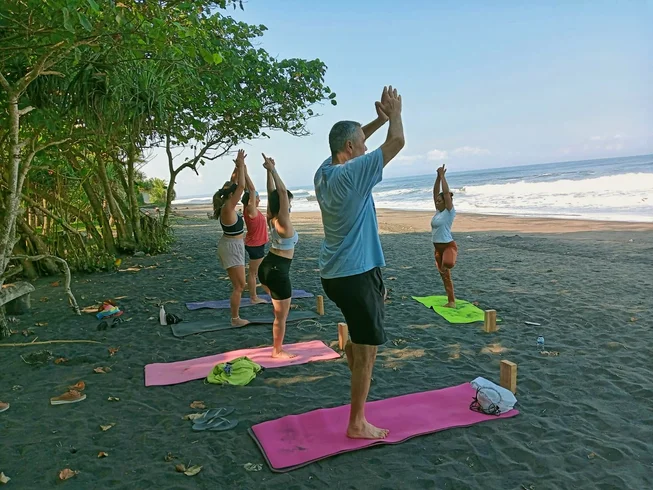
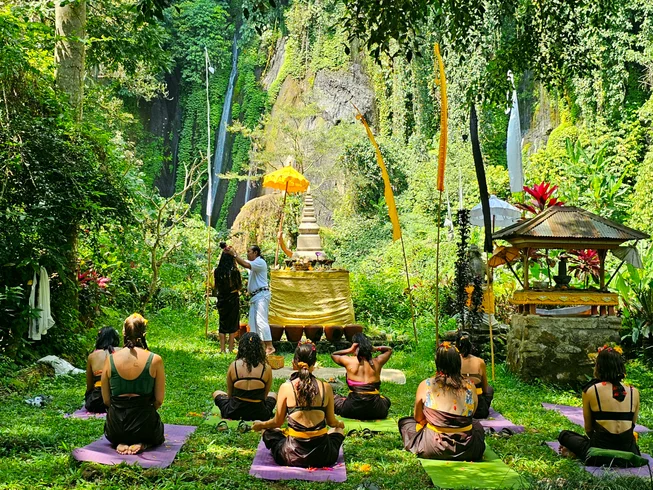
Ubud in September has the quality that long-term residents describe as the month they wait for — the August visitors have gone home, the studios have space in their morning Ashtanga and Vinyasa slots, and the teachers who spent July and August running back-to-back workshops are in September available for the individual student attention that the peak season cannot provide. The Yoga Barn’s community class pricing and the Radiantly Alive monthly membership are in September the most cost-effective of the year, and the retreat centres have the availability that requires 4-month advance booking in July.
The September Ubud market — the produce market at the Ubud main square and the Pasar Ubud artisan market — is in September at the transition between the dry season produce and the first arrivals of the coming wet season: the rice harvest completing in the lower terraces, the new planting visible in the higher fields, and the market transitioning from the dry season abundance to the wet season variety.
Amed in September is at its most rewarding for the dive-focused retreat — the visibility at its annual peak (25-35 metres at the best sites), the post-August calm of the dive site access allowing the most intimate encounters with the reef communities, and the USS Liberty wreck at Tulamben most accessible without the July-August day-trip boat density. The September Liberty wreck dive in the early morning (6:30am) — before the day-trip boats from Kuta arrive at 10am — produces the encounter with the bumphead parrotfish school (a group of 30-50 large parrotfish that uses the wreck as a regular cleaning and resting station) at the site’s most intimate.
The Jemeluk Bay at Amed — the most photographically specific of the Amed bays, with the traditional Balinese fishing outrigger (jukung) boats on the black sand and the reef visible from the shoreline — is in September at the still morning conditions that allow the drift dive along the Jemeluk wall (the coral-covered limestone wall descending from 5 metres to 40 metres) in the September current that the dry season trade winds produce.
The Tegalalang rice terraces north of Ubud — the UNESCO-listed subak irrigation terraces most photographed from the cliff-side cafés above — are in September in the rice planting cycle that makes the landscape most varied: some terraces at harvest (the golden stalks ready for cutting), some recently harvested (the stubble and the water buffalo visible working the flooded soil), and some newly planted (the vivid green of the seedlings in the September water). The subak irrigation system — the traditional Balinese cooperative water management that UNESCO recognised as a Cultural Landscape in 2012 — is in September most actively managed as the planting cycle requires the most precise coordination of the water channels between the temple, the farmer cooperatives, and the individual landholders.
Lombok’s Gili Islands — the three small islands (Gili Trawangan, Gili Meno, Gili Air) off the northwest coast of Lombok, accessible by fast boat from Padangbai or Sanur (1.5-2 hours) — are in September at the dry season peak with significantly less visitor volume than the August maximum. The sea turtle encounters at the Gili snorkelling sites (specifically the Bounty Wreck at Gili Meno and the turtle sanctuary at Gili Trawangan’s north coast) are in September at the most reliable of the year — the turtles feeding in the sea grass beds adjacent to the coral gardens accessible from the beach.
The Gili excursion from a Bali retreat base is a specific day extension rather than a retreat destination in itself — the fast boat combination makes the round trip feasible as a full-day excursion from the east Bali Amed or Padangbai base.
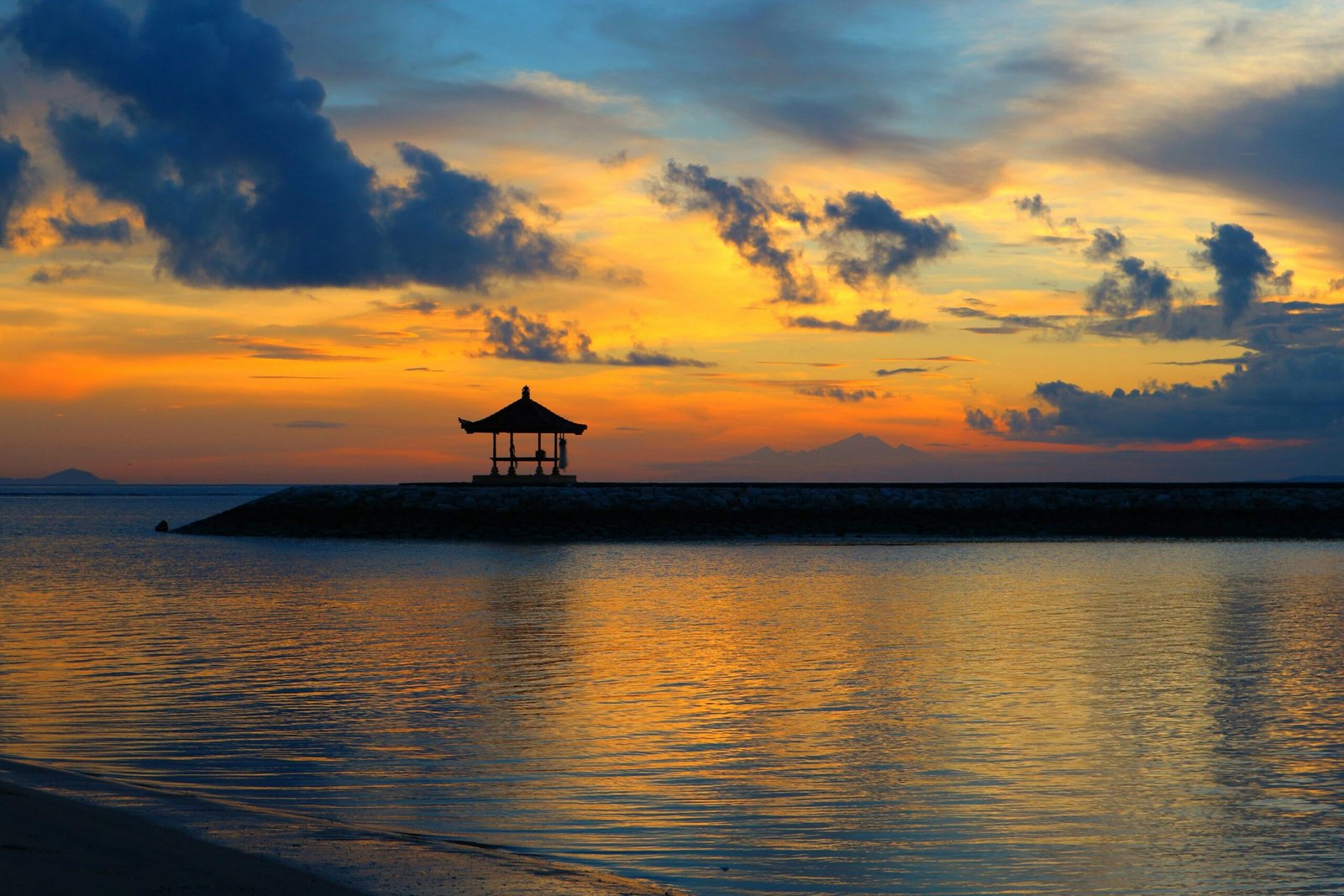
If Galungan fell in August, Kuningan (the last day of the Galungan 10-day period, when the ancestral spirits return) falls 10 days later — potentially in September. The Kuningan morning in Bali has the yellow rice offerings (nasi kuning) at the family shrines, the final penjor pole still standing before being taken down after midday, and the specific contemplative energy of the festival’s closing day that the Galungan Day opening does not have.
Saraswati Day may fall in September depending on the 210-day Pawukon cycle. See January guide for description.
The rice harvest festival at the village banjar level — the communal celebration when the harvest is completed at the subak terrace group — occurs throughout September as the harvest cycles complete across the different altitudes of the Balinese terrace system. The harvest feast, the offerings to Dewi Sri (the rice goddess whose presence in the grain the Balinese agricultural tradition acknowledges), and the communal celebration at the banjar hall are visible at the village level without advance notice — the retreat centre can advise which nearby terrace group is completing its harvest during the retreat week.
Tempeh (fermented soybean cake, spelled tempe in Indonesian) — the most specifically Indonesian of the fermented foods, a tradition developed in Java and Bali as a method of fermenting whole soybeans with the Rhizopus oligosporus mould into a protein-dense, nutty-flavoured cake — is in September at the Balinese market in its most available form: the tempe manis (sweet tempeh fried with palm sugar and soy), the tempe goreng (simply fried to crispiness), and the tempeh in sate form (the tempeh on the skewer, glazed with the sweet soy and grilled). The September Ubud market has the freshest tempeh of the transition season — the soybean supply at the dry season harvest stage.
The nasi merah (red rice) specific to the Balinese highland varieties — the Balinese black rice (ketan hitam, actually a deep purple) and the beras merah (the red-bran rice of the traditional Balinese highland cultivation) — are in September at the harvest stage in the Kintamani and Bangli highland fields. The red rice porridge (bubur ketan hitam — the black glutinous rice porridge with the coconut milk poured over) is in September at the traditional Balinese breakfast stalls at the most freshly harvested and most flavourful stage of the annual cycle.

The Mola mola season continues through September at Crystal Bay and Blue Corner on Nusa Penida — the cold upwelling still present, the thermocline visible, and the fish still using the cleaning stations. September is statistically less reliable than July-August for sightings (the upwelling weakening as the trade winds ease toward October) but still within the Mola mola season window. The September diver accepts a slightly lower probability in exchange for the post-peak sea conditions and the significantly reduced dive boat density at the Crystal Bay site.
The Tegalalang rice harvest walk in September — specifically in the first three weeks when the lower-altitude terraces are at the harvested or harvesting stage — is the most direct participation available in the Balinese agricultural cycle. The subak irrigation channels at the harvest water level, the bundled rice stalks on the terrace paths, and the occasional water buffalo turning the harvested soil in the flooded field are the September Tegalalang experiences that the green June growth and the golden dry season do not simultaneously produce.
The Gili Islands day excursion from the east Bali base — the fast boat from Padangbai to Gili Meno (the quietest of the three Gili islands), the turtle snorkelling at the Bounty Wreck, and the return by late afternoon — is the September east Bali day extension that the July pressure on the Gili fast boat system makes less pleasant. In September, the Padangbai-Gili boat is operating at post-peak capacity and the Gili Meno itself is at its most intimate — the population of the three Gili islands living in September without the August tourist overload.
September maintains the dry season conditions through most of the month, with the first signs of the seasonal transition appearing in the final week as the trade winds begin to ease. In south Bali, temperatures are 25 to 30°C — comparable to July and August. Ubud sits at 21 to 27°C. The southeast trade winds continue to provide the cooling breeze that characterises the Balinese dry season, though their strength begins to diminish toward the end of the month.
Dive visibility at Amed and Tulamben reaches its annual peak in September — the accumulated effect of months of dry season clarity producing the best underwater conditions of the year at the east coast sites. The Mola mola season at Nusa Penida continues through September, though the cold upwelling weakens as the trade winds ease and sightings become slightly less reliable than in July and August. The surf remains consistent on the south coast breaks. Occasional cloud begins to appear in the last week, signalling the approach of the seasonal transition.
Your email address will not be published. Required fields are marked *