
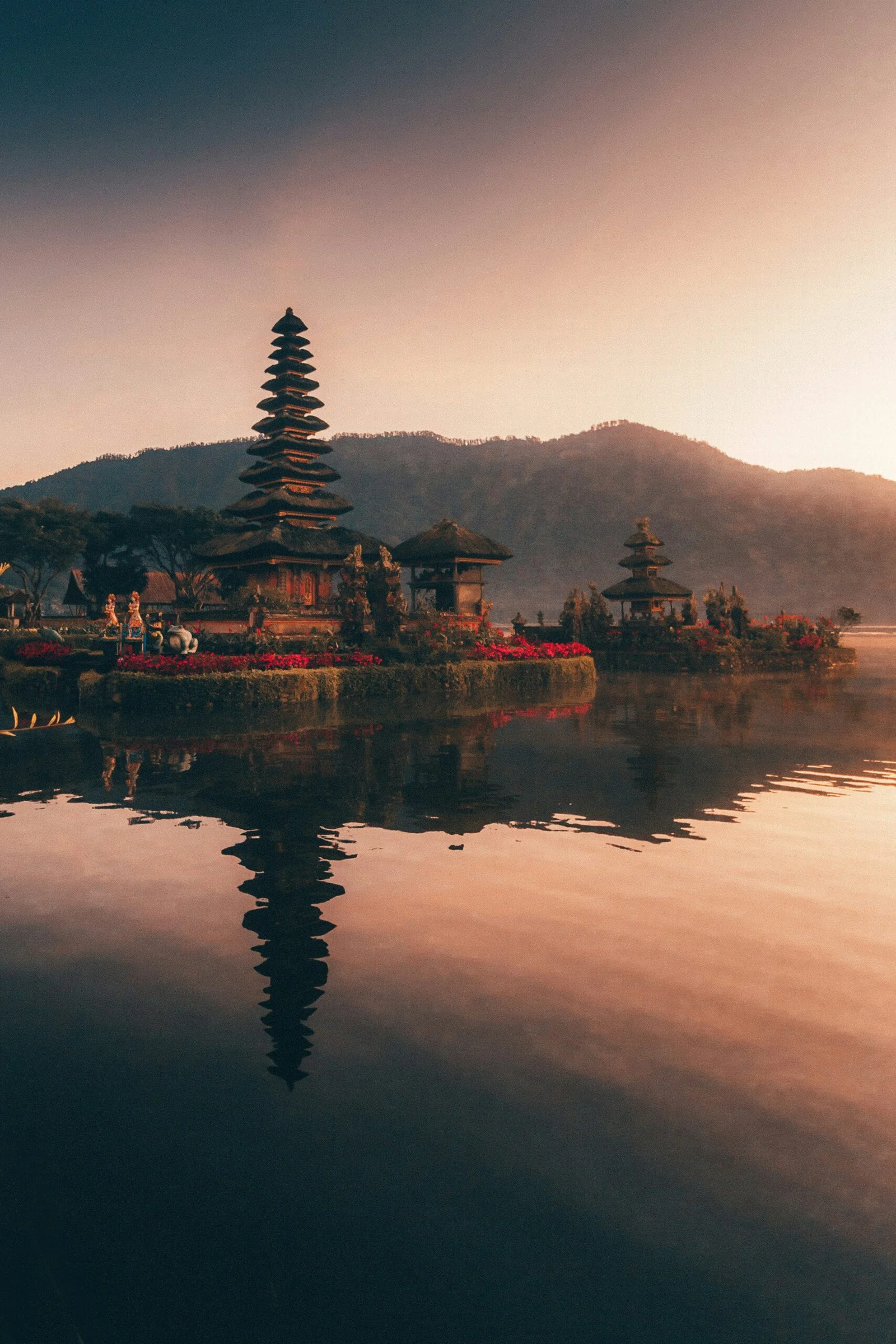
October in Bali is the transition month — the dry season easing, the first occasional afternoon showers returning, and the island at its most affordable of the entire year. The tourist volume is at the shoulder season low. The retreat centres have maximum availability.
And if Galungan falls in October, the penjor bamboo poles line every road in one of the two annual occurrences of the festival. A yoga retreat in Bali in October is the island at its quietest and its best value — with the wet season approaching but not yet established.


October is the month the Bali retreat market has not yet discovered at the volume the experience deserves. The dry season conditions hold for most of the month — particularly the first three weeks — before the transitional showers arrive in late October to begin the approach toward the November-March wet season. The prices are at their annual lowest. The retreat centres are at their most available. And the cultural calendar, with the possible Galungan and the Odalan cycle at full activity, is at its most specifically Balinese.
Browse our full yoga retreats in Bali guide for the complete picture of what the island offers year-round. For the global context of October retreat travel, our yoga retreats in October guide covers every destination worth considering this month.
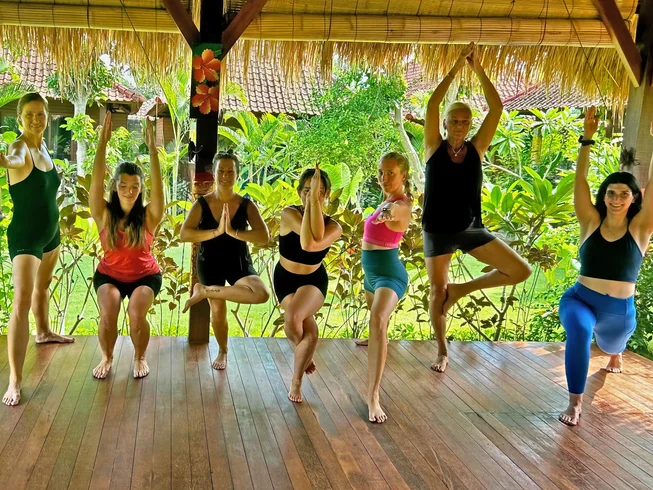
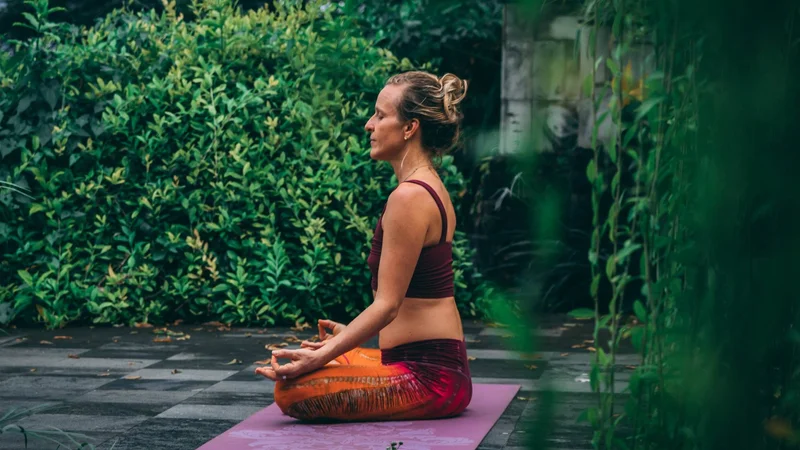
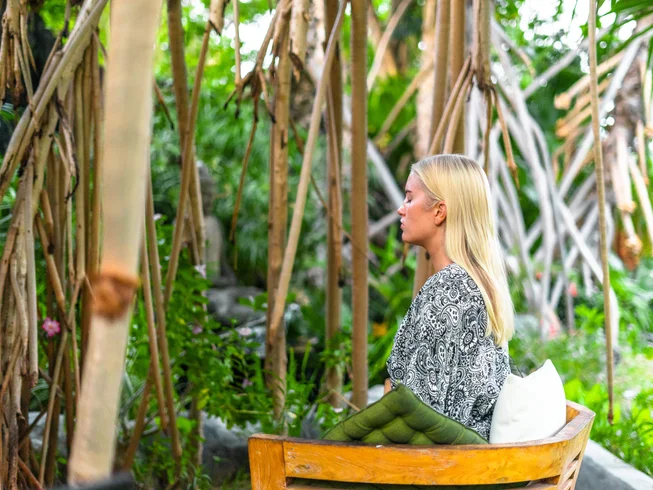

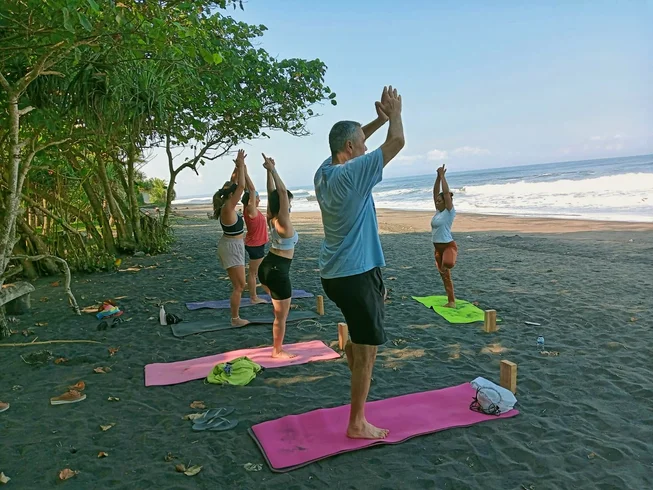
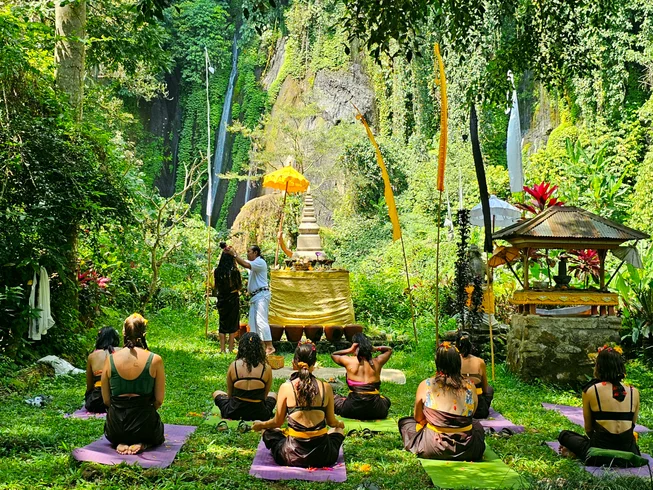
Ubud in October has its most specifically cultural of the annual festivals alongside the retreat season — the Ubud Writers and Readers Festival (typically the last week of October) brings the most internationally significant gathering of writers, thinkers, and cultural practitioners to Ubud, transforming the venues around the central Ubud streets into a week-long literary and cultural programme. For retreat guests in Ubud in October, the Writers Festival provides the most specifically intellectual cultural context available — the panels, the book launches, and the evening conversations accessible without retreat programme disruption for the one or two events that align with the participant’s interests.
The October Ubud outside the Writers Festival week is at the most intimate of any month since May — the studios with space, the teachers with time, and the community at the locally-rooted version of itself that only the shoulder season produces.
Sangeh Monkey Forest — the sacred forest in the Tabanan regency, 20 kilometres north of Denpasar, where several hundred long-tailed macaques (Macaca fascicularis) live in the nutmeg trees of a protected forest around the Pura Bukit Sari temple — is in October at the dry-to-wet season transition that makes the forest most vivid. The Sangeh forest in October — the macaques at the late dry season activity before the rain returns, the nutmeg trees at the October fruiting stage that the macaques specifically exploit — is the most naturally productive of any month for the wildlife encounter at the site.
Keramas Beach on the south coast of Gianyar regency — the black volcanic sand beach that hosts the Hurley Pro Keramas World Surf League event (if it falls in October) — is in October at the transition swell that the southeast trades’ easing produces: the surf conditions variable but occasionally producing the overhead reef break that makes Keramas one of the most powerful of the Balinese surf sites. The black sand beach, the rice fields reaching to the cliff above the break, and the Hindu temple on the black sand headland produce the most dramatically cultural surf landscape in Bali.
Tirta Empul — the sacred water temple at Tampaksiring, 15 kilometres north of Ubud, where the holy spring (believed to have been created by the god Indra) feeds the purification pools used by the Balinese Hindu community for the ritual bathing that cleanses bad karma — is in October at the transition season that makes the purification ritual most meaningful for retreat guests. The October Tirta Empul visit — participating in the melukat (ritual purification) in the holy spring pools alongside the Balinese community — is the retreat activity that most directly engages with the Hindu practice that underlies the Balinese spiritual culture that the international yoga community is drawn to.
The melukat at Tirta Empul involves moving through the 13 fountainheads of the sacred spring in sequence, each with its specific prayer and offering, the cold spring water flowing over the body in the progression that the ritual requires. For retreat guests who want the most direct engagement with the Balinese spiritual practice, the Tirta Empul melukat with the guidance of the retreat centre’s local contact (who can explain the protocol and the appropriate offerings) is the October retreat activity with the most cultural depth.
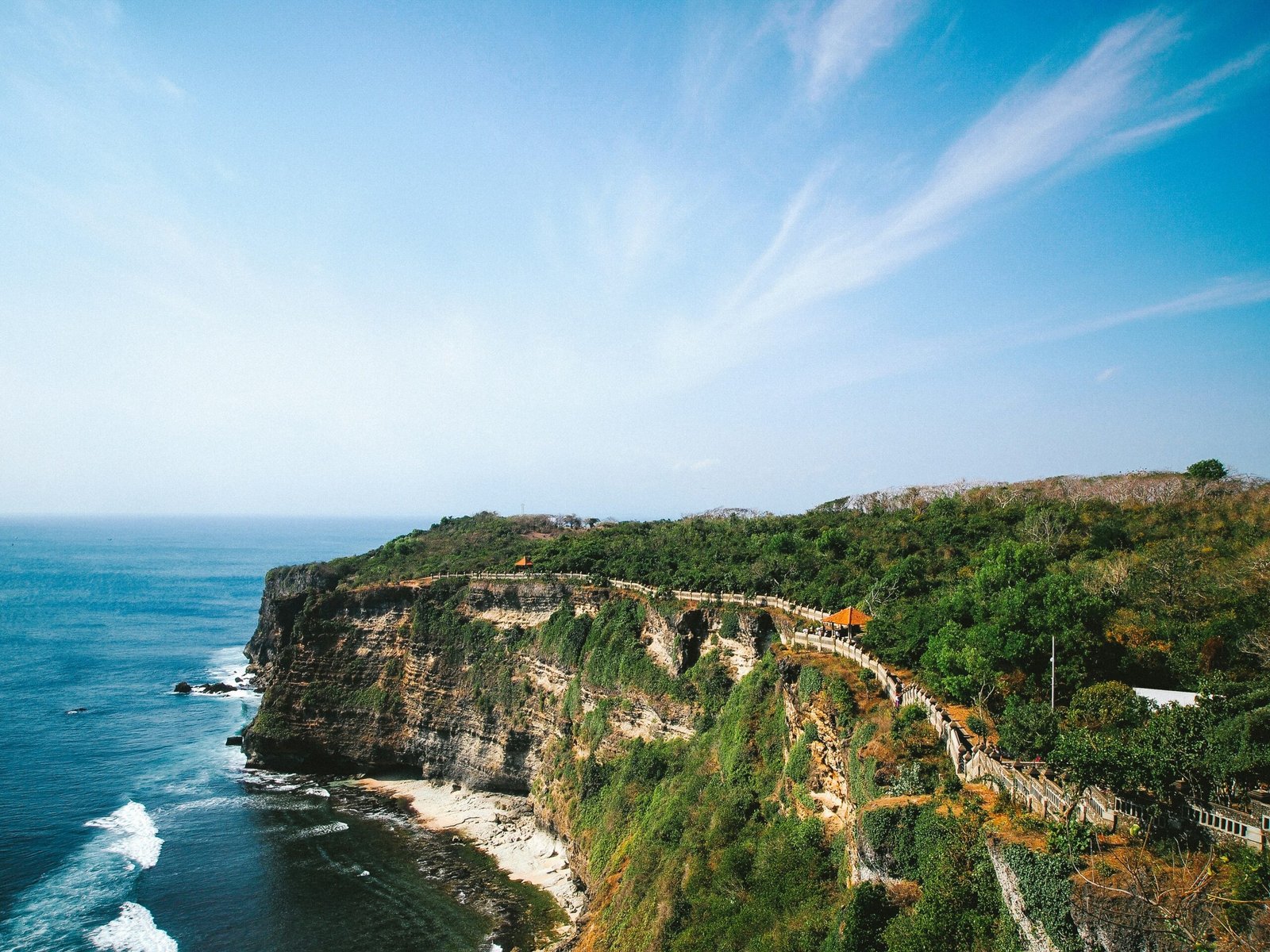
If Galungan falls in October (the 210-day Pawukon cycle places it in October approximately every 18 months), the island is at its most culturally specific: the penjor poles at every gate, the family temples decorated, the Legong and Barong performances at the village halls, and the ancestral spirits welcomed home for the 10-day festival period. See April guide for the full Galungan description. October Galungan with the shoulder-season tourist volume is the most intimate version of the festival available — the cultural experience without the August photographer crowd at every ceremony.
The Ubud Writers and Readers Festival — the most important literary event in Southeast Asia, founded in 2003 in response to the 2002 Bali bombings as an act of cultural recovery — brings international authors, poets, thinkers, and cultural practitioners to Ubud for five days of panels, readings, and conversations. The festival uses the Ubud venues — the ARMA Museum, the Puri Lukisan, and the outdoor stages at the rice paddy edge — as its performance spaces. For retreat guests in Ubud in October, the Writers Festival provides the most internationally significant cultural context of any event in the Bali calendar.
Saraswati Day may fall in October depending on the 210-day Pawukon cycle. See January guide for description.
The first October rains in the last week of the month begin to change the market produce — the dry season starfruit and salak giving way to the first wet season arrivals: the young jackfruit in its pre-rain growth stage, the banana blossom at the dry-to-wet transition (the most tender and least astringent of the year), and the papaya from the October garden planting visible at the household levels above the road. The retreat kitchen in October is at the most transitional produce calendar of the year — the dry season stock supplemented by the first wet season arrivals.
Jukut ares — the Balinese soup made from the inner trunk of the banana plant, cooked with the Balinese spice paste and the pork or chicken ribs in a long-simmered broth — is the most specifically Balinese of the harvest-season soups and one that appears specifically at the ceremonial tables of the Odalan period. The banana trunk at the October transition stage, when the dry season has produced the most fibrous and most flavourful version of the ingredient, produces the jukut ares at its October best at the traditional warungs of Ubud.
The kopi luwak (civet coffee — the coffee beans that have passed through the digestive system of the Asian palm civet and are then collected, cleaned, and roasted) is available at the highland coffee farms of Kintamani and the north Bali plantation areas. October is the harvest transition for some of the Balinese robusta and arabica plantations, and the farm visit to a certified ethical producer (the distinction between cage-farming and wild-collection civets is critical for the ethical version) produces the October coffee farm context that the tourist coffee shop version cannot approach. The Kintamani coffee plantation tour in October, with the October harvest beginning and the farm processing visible alongside the civet enclosure of the ethical producers, is the October agricultural excursion for the coffee-curious retreat guest.

The Tirta Empul melukat — described above — is the October retreat activity with the most direct engagement with the Balinese spiritual practice. The ritual is available year-round but October, with the shoulder-season visitor volume at the temple reducing the queue management that the July peak requires, is the most intimate version. Arrive by 7am for the smallest morning crowds at the bathing pools.
The Ubud Writers Festival evening event — the keynote conversations and the literary performances that the festival programmes for its evening sessions at the Puri Lukisan outdoor stage and the ARMA Museum pavilion — are the October Ubud cultural activity with the most intellectual depth. The festival tickets are available for individual events (not only the full festival pass) and the evening sessions are the most accessible for retreat guests whose morning programme runs through the day.
The Keramas black sand beach at sunrise in October — arriving before 6am when the surf is at its morning glass conditions and the Keramas village is beginning its day — is the October east Bali coastal activity that uses the volcanic black sand landscape most specifically. Whether the surf is overhead or knee-high on any given October day, the morning light on the black sand, the rice fields above the break, and the occasional surfer in the water at the empty morning line-up is the October Bali coastal moment that the beach resort areas of Seminyak cannot produce.
October is a transitional month. The first three weeks maintain largely dry conditions — clear mornings, low humidity, and temperatures in south Bali at 26 to 31°C. Ubud runs at 22 to 28°C. The southeast trade winds are weakening, and the afternoons in the final week begin to produce the occasional shower that signals the approaching wet season. By the last days of October, the daily rain pattern of the wet season is beginning to reassert itself, though not yet with the January consistency.
The diving at Amed remains good through October, with the Liberty wreck still at excellent visibility. The Mola mola season at Nusa Penida typically ends in October as the cold upwelling weakens — early in the month sightings are still possible, but by the last two weeks the season is effectively over. The ocean remains calm enough for reliable boat transfers. The highland areas — Kintamani and Munduk — begin to see more cloud and the occasional shower from mid-month.
Your email address will not be published. Required fields are marked *