

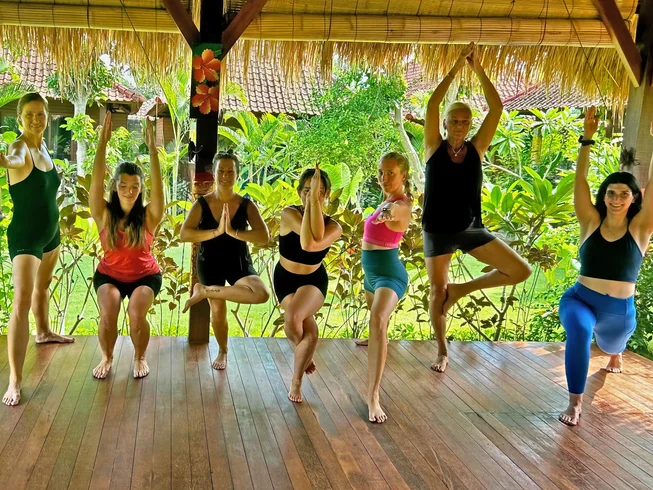
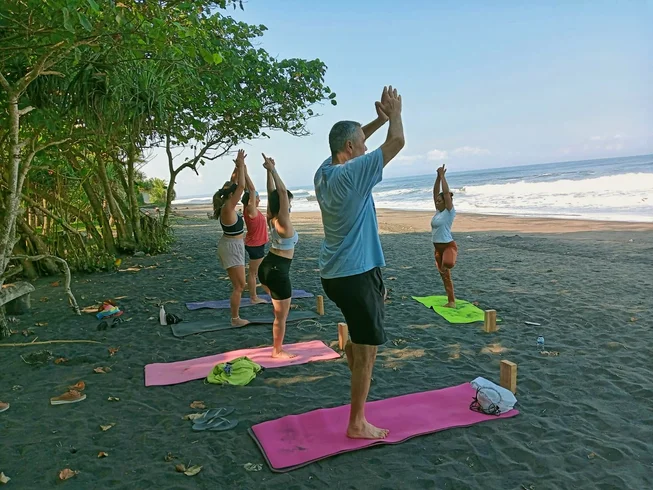
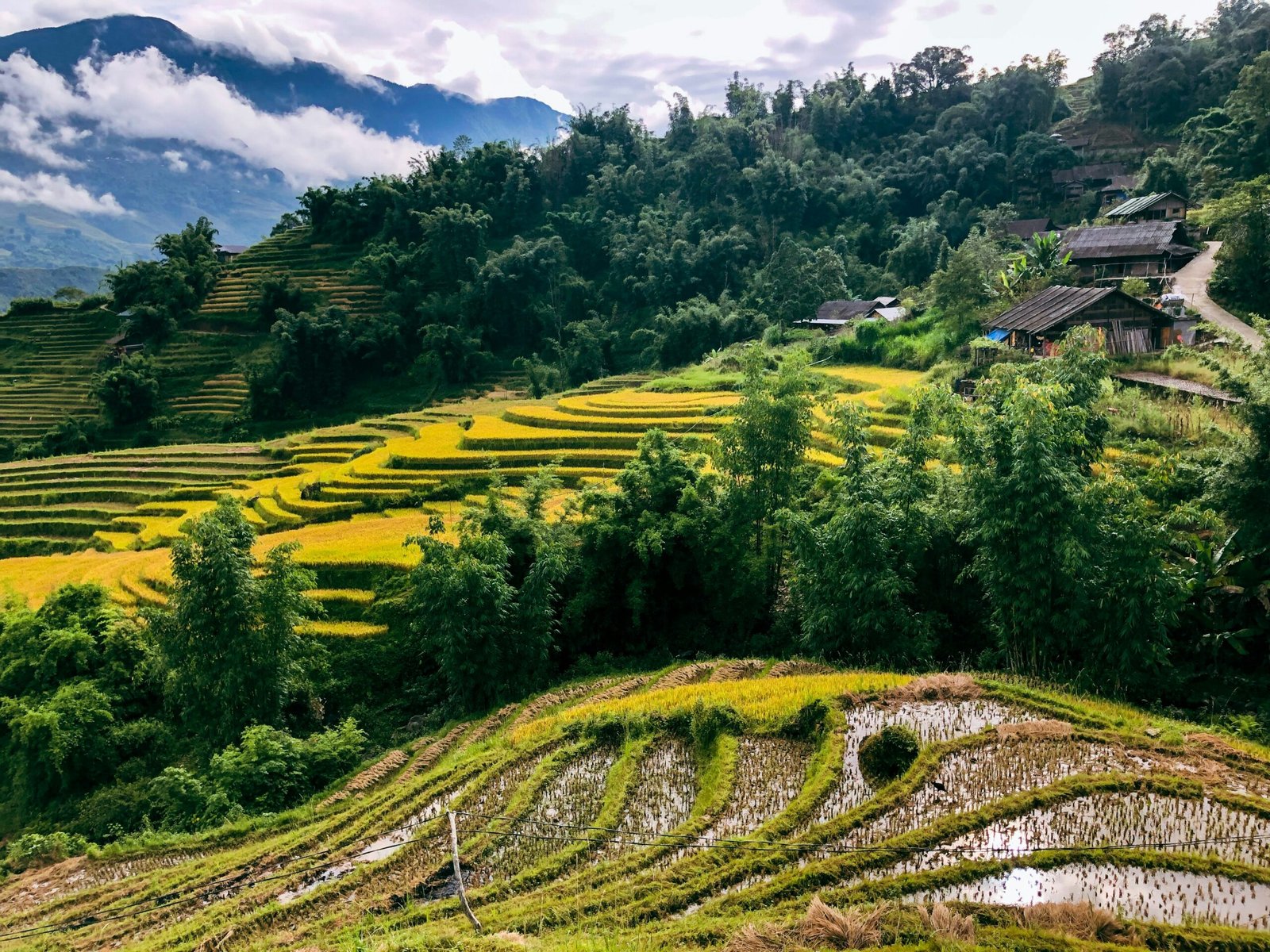
May in Bali is the last good-value month before the June-August peak makes everything harder to book and more expensive. The dry season is fully established — the morning sessions consistently clear, the outdoor programme fully operational, and the landscape in the specific golden-green of the post-wet-season transition.
The tourist volume is building but has not yet reached the July compression. A yoga retreat in Bali in May gets near-peak conditions at pre-peak prices.


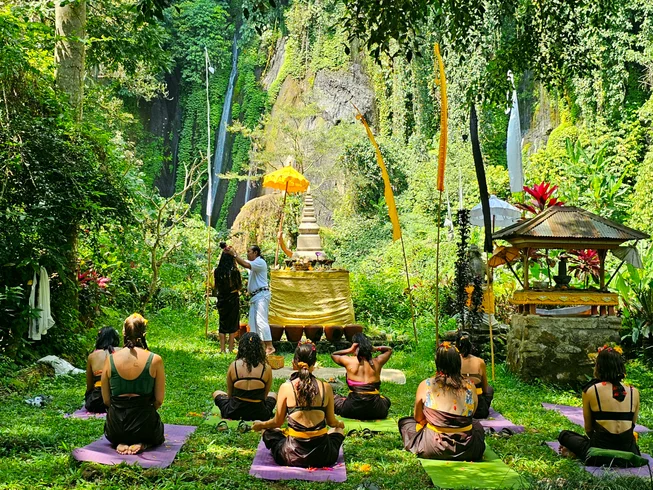
May is the month experienced Bali retreat guests specifically choose — the dry season conditions fully established, the retreat infrastructure at full capacity, the cultural calendar in its Odalan rhythm, and the prices at the last pre-high-season window before June and July elevate them. The surf is consistent at the south coast breaks. The rice harvest is visible in the lower-altitude terraces. And the highlands of Kintamani and the north are at their clearest of the year as the wet season moisture dissipates.
Browse our full yoga retreats in Bali guide for the complete picture of what the island offers year-round. For the global context of May retreat travel, our yoga retreats in May guide covers every destination worth considering this month.


Kintamani — the highland caldera area at 1,500 metres altitude in the Bangli regency, with the Gunung Batur active volcano and the Danau Batur crater lake — is in May at the clearest conditions of the year. The wet season moisture that clouds the caldera view from November through March has dissipated, and the May morning view from the caldera rim — the Batur volcano above the blue lake, the rice terraces of the inner caldera visible below, and the Gunung Agung and Gunung Abang visible on the eastern horizon — is the most specifically dramatic panorama available in Bali.
The Gunung Batur sunrise trek — departing the base at 3:30am with the local guide, reaching the summit at 1,717 metres as the sun rises over the caldera edge — is in May at its clearest conditions, the sunrise view extending to the Java volcanoes on the western horizon on the clearest mornings. The Batur trek in May, with the path dry and the summit temperature at 10-12°C before the day warms, is the most comfortable version of the trek available in the year. The Toya Devasya hot spring at the base of the volcano, using the geothermal water heated by the Batur volcanic system, is the May post-trek recovery activity — the hot pool at the lake edge after the 3:30am-8am summit trek.
Sanur — the traditional Balinese fishing village turned beach resort on the southeast coast, the calmest and most family-oriented of the south Bali beach areas — is in May at its dry season best. The Sanur beach in May has the specific quality of the least-developed of the south coast areas: the fishing outriggers on the beach between the boutique hotels, the Inna Grand Bali Beach art deco hotel (the oldest large hotel in Bali, built in the Sukarno era) visible at the north end, and the beachside path — the most pleasant seaside walking route in south Bali — accessible without the July tourist density.
Sanur is the departure point for the fast boats to Nusa Lembongan, Nusa Ceningan, and Nusa Penida, and in May the boat connections run at their full schedule without the high-season waiting management that July produces. The Tandjung Sari and the smaller boutique retreat operations of the Sanur beachside are in May at their spring season programming.
The villages surrounding Ubud — Mas (the woodcarving village), Peliatan (the Legong dance and gamelan training village), and Pengosekan (the painting collective community) — are in May at their dry season artistic production. The Mas woodcarving workshops in May are visible from the road — the craftsmen working in the open-fronted workshops on the Jalan Raya Mas, the fresh-cut sandalwood and hibiscus wood producing the scent that the Mas village lane has been associated with for generations. The Peliatan gamelan practice that the village banjar conducts in preparation for the Odalan season is in May audible from the road in the evening, the bronze keys of the gamelan carrying across the rice paddy to the neighbouring retreat villas.
Bedugul — the highland lake district at 1,200-1,400 metres in the Buleleng regency, with the Pura Ulun Danu Bratan water temple on the lake and the Kebun Raya Bali (Bali Botanical Garden) above the town — is in May at the highland dry season, the lake calm and the temple visible in the most photographed version of the Balinese water temple reflection. The Kebun Raya Bali — 157 hectares of highland botanical collection, the most extensive in Southeast Asia — is in May at its dry season plant diversity: the orchid collection at full display, the fern garden in the highland mist, and the cactus garden incongruously productive in the Balinese highland microclimate.
Waisak — the Buddhist commemoration of the birth, enlightenment, and death of the Buddha, observed on the May full moon — is a national public holiday in Indonesia. While Bali is primarily Hindu, the Brahma Arama Vihara Buddhist monastery above Lovina and the Chinese Buddhist temples of the south Bali Chinese community observe the day with the specific Buddhist ceremonies. For retreat guests, the Waisak full moon evening at the Brahma Arama Vihara — the monks in saffron, the candlelight in the monastery garden, and the full moon over the Bali Sea — is the most specifically contemplative of the May cultural experiences.
Saraswati Day — the celebration of the goddess of knowledge — may fall in May depending on the 210-day Pawukon cycle. See January guide for the full description.
If the next Galungan falls in late May (the festival cycles approximately every 6 months), the preparation activities — the penjor bamboo being cut and dried, the jaja ceremonial rice cakes being prepared in the family compounds, and the temple cleaning underway — are visible in the Ubud villages from the week before Galungan.
Sate lilit — the Balinese satay specific to the island (as opposed to the Indonesian mainstay sate ayam that appears on every menu), made from minced fish, prawn, or chicken mixed with the base genep spice paste, grated coconut, and coconut milk, then wrapped around a lemongrass stalk and grilled — is in May at the Ubud traditional warungs at its most available. The fish version (sate lilit ikan) uses the catch from the Balinese fishing villages — the May market supply at the Gianyar fish market providing the freshest possible starting ingredient.
The Kintamani arabica coffee — grown at 1,500 metres on the volcanic slopes of the Batur caldera, the most internationally recognised of the Balinese coffee varieties — is in May at the dry season harvest stage from some of the higher-altitude plots. The coffee warungs around the Penelokan caldera rim in May serve the kopi tubruk (the direct-brew Balinese coffee) from the local beans at the price and the view that no Ubud café can replicate — the caldera visible below the coffee table.
Rujak — the Balinese spicy fruit salad of unripe tropical fruits (mango, starfruit, pineapple, papaya, and the belimbing (star fruit)) dressed with the palm sugar, chilli, tamarind, and trassi (fermented shrimp paste) sauce — is in May at the dry season transition produce, the fruits in the specific unripe-to-ripe stage that the rujak tradition uses at its best. The rujak from the cart vendor at the Ubud market square in May morning — the vendor grinding the sauce on the stone mortar, the specific combination of sweet-sour-spicy-pungent that the rujak tradition requires — is the most specifically Balinese of the May street food experiences.

The Gunung Batur sunrise trek from Toya Bungkah or Kintamani in May — departing at 3:30am, reaching the summit as the sun rises, and returning by 8am for the retreat morning programme — is in May at the most comfortable conditions of the year. The May path is dry, the summit temperature cool (10-12°C) before the day warms, and the caldera view from the summit extending to the Java volcanoes on the clearest mornings. The post-trek soak at the Toya Devasya hot spring completes the experience.
The Kebun Raya Bali morning walk at Bedugul — arriving at opening (8am) and walking the orchid garden, the fern canyon, and the highland forest collection before the midday heat makes the uphill paths less comfortable — is the May highland retreat activity that no south Bali destination replicates. The orchid collection in the highland humidity of May is at its dry season display — the plants recovered from the wet season excess and producing their most elaborate flowering.
The Mas village woodcarving workshop — a half-day with one of the family studios of the Mas woodcarving tradition, learning the tools and the technique of the Balinese relief carving that the Mas craftsmen have practised for generations — is in May at its most accessible. The village in May is operating for its own artistic production rather than for tourist demonstration, and the workshop in May has the quality of a genuine skill transfer rather than a performed experience.
May is the dry season fully established. In south Bali — Seminyak, Canggu, Kuta, and the Bukit Peninsula — the sky is clear from sunrise to sunset, temperatures reach 27 to 32°C, and there is no meaningful rain. Ubud sits at 24 to 29°C with cool, clear evenings. The southeast trade winds are now consistent, providing a cooling effect on the south coast that prevents the heat from feeling oppressive.
In the highlands, Kintamani at 1,500 metres experiences temperatures of 15 to 22°C — the coolest days of the mountain year — and the views from the caldera rim across to Gunung Agung and the Java volcanoes are at their annual clarity. Bedugul and the lake district are at 18 to 24°C. The sea conditions around the island are at their dry season best, with visibility at the dive sites improving noticeably from the wet season levels.
Your email address will not be published. Required fields are marked *