
June in Bali is the opening of high season — the international visitors arriving in volume, the retreat centres filling toward their July peak capacity, and the island at its driest, clearest, and most socially animated. The Bali Arts Festival (Pesta Kesenian Bali) runs through June and July — the most important showcase of Balinese performing arts, held at the Taman Wedhi Budaya Arts Centre in Denpasar.
And the diving conditions in the Komodo waters and the outer islands are in June at their annual best as the dry southeast trade winds create the upwellings that produce the richest marine life of the Balinese year.


June is when the Bali retreat calendar reaches its most international expression — the global yoga community arriving for the June-August peak, the teacher training programmes at full capacity, and the island operating in the mode that its international reputation is built on. For those who want this version of Bali — the most socially animated, the most programme-varied, and the most internationally connected — June is when it begins. For those who prefer the quieter community of January-May, June is the last month before the peak, with pre-July prices still in effect for the first weeks.
Browse our full yoga retreats in Bali guide for the complete picture of what the island offers year-round. For the global context of June retreat travel, our yoga retreats in June guide covers every destination worth considering this month.
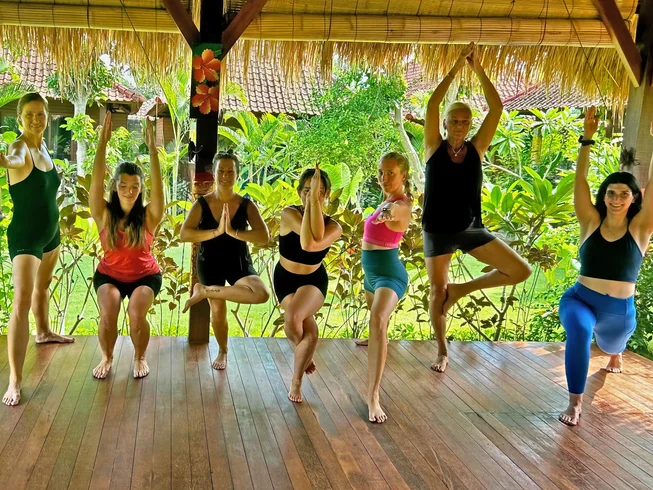




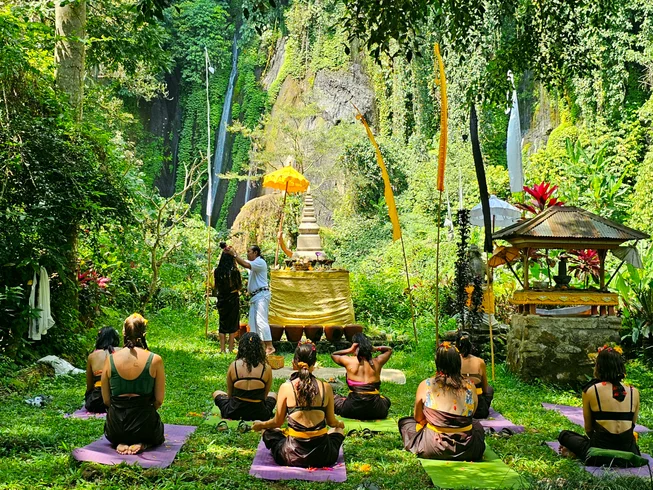
Ubud in June is at the beginning of its most internationally concentrated retreat season — the June arrivals establishing the community that July and August will expand. The Yoga Barn, Radiantly Alive, and Taksu are in June running their full class schedules, the 6am and 8am Ashtanga slots filling within minutes of opening. The teacher training programmes (the 200-hour and 300-hour Yoga Alliance certifications that Ubud has become a globally recognised centre for) are in June at their June cohort — the 28-day intensive retreat formats that the dry season specifically supports.
The Ubud food culture in June is at its most internationally varied — the café competition that the long-stay community drives produces the most innovative plant-based kitchen in Southeast Asia. The Locavore (if available by current reservation) and the Hujan Locale represent the fine dining dimension; the Warung Ibu Oka and the Paon Bali cooking school represent the traditional Balinese. The June Ubud retreat guest can access both ends of this spectrum within a 10-minute walk.
Nusa Penida in June is at the peak of its mola mola (ocean sunfish) season. The cold upwelling current that the dry southeast trade winds produce along the southern coast of Penida brings the Mola mola — the world’s largest bony fish, reaching 3 metres length and 2,300 kilograms — to the cleaning stations at Crystal Bay and Toyapakeh from June through October. The Mola mola visit to the cleaning station involves the fish rising from the cold deep water to the warm surface layer where the cleaner fish remove parasites — creating the encounter at 15-30 metres depth that the dive community from around the world comes specifically for.
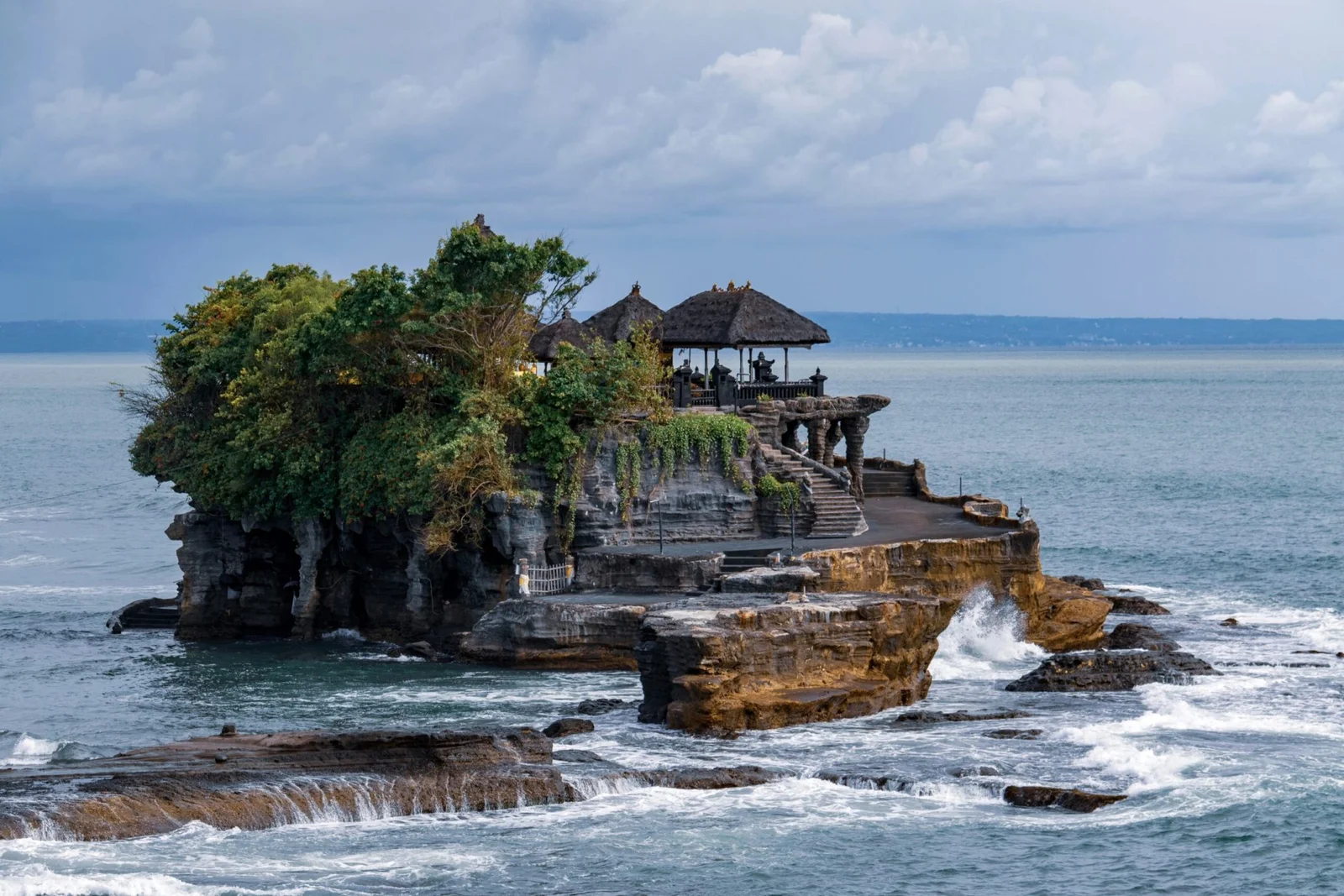
Crystal Bay on the northwest coast of Nusa Penida — the bay with the white sand beach, the Hindu temple on the rocky headland, and the dive site immediately in front — is in June at its Mola mola season beginning. The dive at Crystal Bay requires the 5am departure from the Nusa Penida or Sanur dock to reach the site before the current changes at approximately 8am — the Mola mola sightings most reliable in the early morning cold water at the site.
Amed in June has the specific quality that makes it the most rewarding of the east Bali dive destinations in high season: the diving is at its dry season best (visibility at 20-30 metres, the thermocline producing the richest marine life of the year at the deep sites) while the tourist volume remains well below the Nusa Penida and Tulamben equivalent. The USS Liberty wreck at Tulamben in June is at its visibility peak — the coral-encrusted hull at full dry season clarity, the specific fish communities (the bumphead parrotfish school that uses the wreck as a cleaning station, the white-tip reef sharks resting on the sandy bottom) most visible in the June morning dives before the day-trip boats from Kuta arrive by 10am.
The Japanese wreck at Amed — the smaller WWII wreck at 12 metres accessible by snorkel as well as dive — is in June at the visibility that makes it specifically rewarding for the snorkeller who wants the wreck experience without the dive qualification.
Pemuteran — the small coastal village on the northwest coast of Bali, at the base of the Bali Barat National Park — is in June at the dry season calm that makes the BioRock coral restoration project most accessible. The BioRock project — using low-voltage electrical current to accelerate coral growth on the steel structures placed on the seabed — is the most advanced reef restoration project in Southeast Asia and in June visible at its dry season clarity: the coral structures at 3-10 metres depth teeming with the reef fish that the restored coral attracts. The snorkelling and diving at the Pemuteran BioRock sites in June, with 15-20 metre visibility and the northwest coast calm, is the June Bali marine experience most worth the 3-hour drive from Ubud.
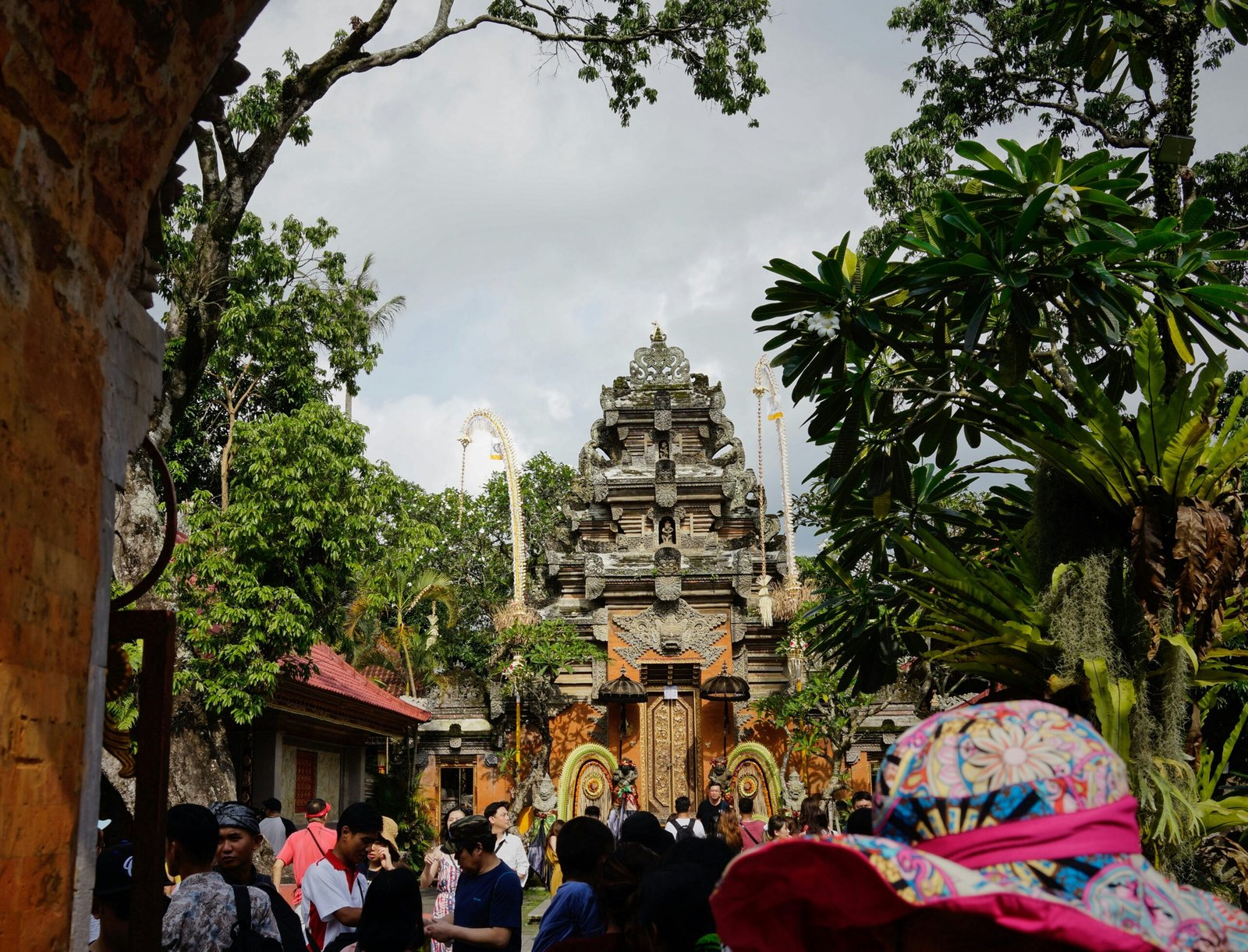
The Pesta Kesenian Bali (Bali Arts Festival) — the month-long showcase of Balinese performing arts, held annually at the Taman Wedhi Budaya Arts Centre in Denpasar — runs from the second week of June through the second week of July. The festival presents the full range of Balinese artistic traditions: the Gong Kebyar gamelan competition (the most prestigious of the Balinese gamelan forms, with the regencies competing against each other with compositions lasting 1-2 hours), the Legong, Barong, and Topeng dance performances, the kecak and the sanghyang trance dance, and the visual art exhibitions in the arts centre galleries. For retreat guests based in south Bali or willing to make the day excursion from Ubud (45 minutes), the Bali Arts Festival evening performances are the most comprehensive presentation of the Balinese artistic tradition available in any single event.
June 21st — the International Day of Yoga, established by the United Nations — is observed by the Ubud and Canggu yoga communities with the outdoor mass yoga sessions, the community practice events, and the studio special programming that the date produces. For retreat guests in Bali on June 21st, the outdoor practice at the Tegalalang rice terrace or the Campuhan ridge that the Ubud studio community organises is the most specifically Balinese version of the global event.
If Galungan falls in June (check the current Pawukon calendar), see April guide for the full description of the penjor, the ceremonies, and the cultural significance.
Babi guling — the Balinese spit-roasted suckling pig, traditionally prepared for ceremonies but available year-round at the specialised babi guling restaurants — is in June the most specifically Balinese non-vegetarian food experience available. The preparation involves the whole pig stuffed with the complete Balinese spice paste (base genep) and then spit-roasted over a wood fire for 3-4 hours, the skin rendered to a specific crackle and the meat perfumed with the aromatics from the inside. The Warung Ibu Oka at the Ubud market and the Pak Malen in Seminyak are the most consistently cited traditional sources. The babi guling plate includes the roasted meat, the crackling, the lawar, and the sate lilit — the most complete single-plate expression of the Balinese cuisine available.
The pipa fría equivalent of Bali — the kelapa muda (young coconut) drunk directly through the straw from the freshly opened shell — is in June at the dry season vendor operation, the coconut carts at the beach access roads and the Ubud market square providing the most abundant and most affordable version. The young coconut water at the Uluwatu cliff access in June, in the dry season heat of the Bukit Peninsula, is the most specifically placed refreshment of the retreat day.
The June Balinese market in the transition toward high season has the pandan leaf (screwpine leaf, used to give the bright green colour and the specific fragrance to the rice cakes, the rice, and the es dawet drink) in its dry season abundance. The banana blossom — the purple flower of the banana plant, used as a vegetarian meat substitute in the lawar putih and the banana blossom curry — is in June at the dry season form: firmer and more specific in flavour than the wet season version.


The Bali Arts Festival evening performance at the Taman Wedhi Budaya in Denpasar — the Gong Kebyar competition or the Legong programme that the daily schedule presents — is the June Bali cultural evening that the retreat organised outing most specifically rewards. The arts centre in June evenings has the most concentrated presentation of the Balinese performing arts tradition available in any single venue at any time of year. The drive from Ubud is 45 minutes; the performance runs from approximately 7pm to 10pm.
The 5am departure from the Nusa Penida pier for the Crystal Bay Mola mola dive — the early morning timing specifically to catch the cold upwelling current at its most Mola-productive before the surface water warms — is the June Bali diving experience with the most specifically sought quarry of the year. The Mola mola at Crystal Bay in June: the dive at 20-30 metres, the thermocline visible as the cold water layer below, and the disc-shaped fish emerging from the cold current toward the cleaning station. Not guaranteed — but June is the beginning of the best statistical window for sightings.
Pura Lempuyang Luhur — the most sacred of the Sad Kahyangan (the six directional temples of Bali), at 1,175 metres on the Lempuyang mountain in east Bali — is in June accessible for the sunrise visit that the Instagrammable gate (the candi bentar split gate with Mount Agung visible through the gap on clear mornings) has made one of the most photographed views in Southeast Asia. In June, the arriving at the temple entrance by 5:30am (before the queues for the gate photograph that the Instagram culture has created) produces the genuine sunrise experience rather than the managed tourist version.
June is fully in the dry season and marks the beginning of the high season conditions the international retreat market plans around. In south Bali, temperatures sit at 26 to 31°C — paradoxically slightly cooler than May as the southeast trade winds strengthen through the month, creating the consistent breeze that the Bukit Peninsula and the south coast are particularly known for. Ubud runs at 22 to 28°C with cool, clear evenings that often drop to 19 or 20°C.
The sea conditions are excellent across the island. The cold upwelling current driven by the southeast trade winds begins in earnest along the south coast of Nusa Penida, bringing the Mola mola to the cleaning stations at Crystal Bay for the first time of the season. Dive visibility at Amed and Tulamben is improving toward its dry season peak. There is no rain to speak of anywhere in Bali in June.
Your email address will not be published. Required fields are marked *