
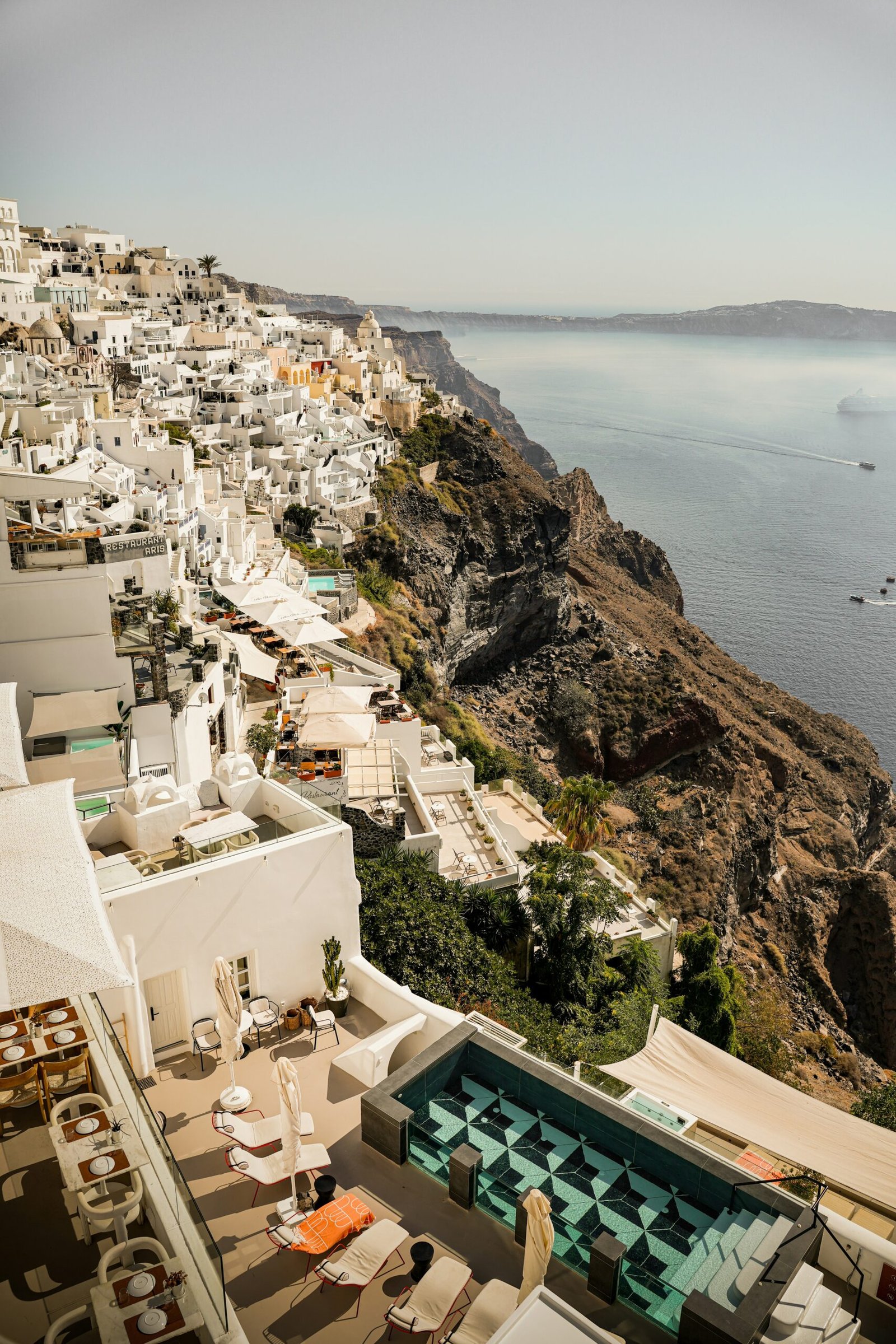
July in Greece requires a decision before you book. The Cyclades in July are extraordinary — the light, the sea temperature, the particular energy of the Aegean in full summer — but the most famous islands are also at maximum visitor density. The Meltemi wind that defines the Aegean in summer is at its July intensity.
And the interior of the country bakes in heat that makes midday outdoor practice genuinely inadvisable. But the Ionian islands stay cooler, the Dodecanese has space, and the northern Aegean islands that the main tourist circuit ignores are in July some of the most rewarding retreat destinations in Greece.


July rewards a deliberate destination choice more than any other month. The wrong island in July is a week of heat management and crowd navigation. The right one is warm sea, genuine outdoor practice conditions, and a Greek summer in its most alive form. Our browse all yoga retreats in Greece page covers every destination and format.
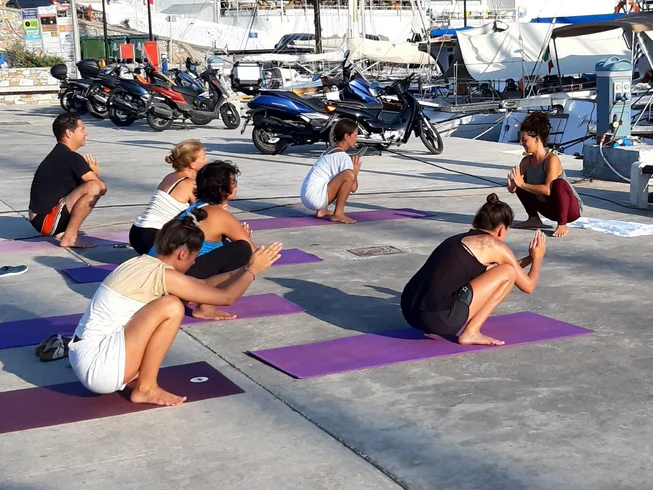
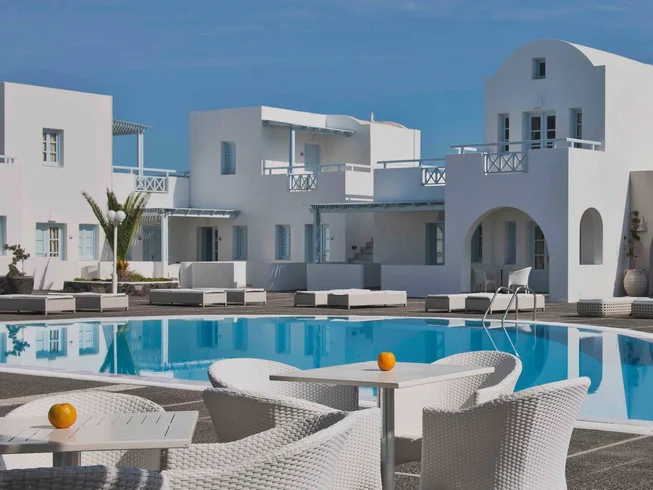
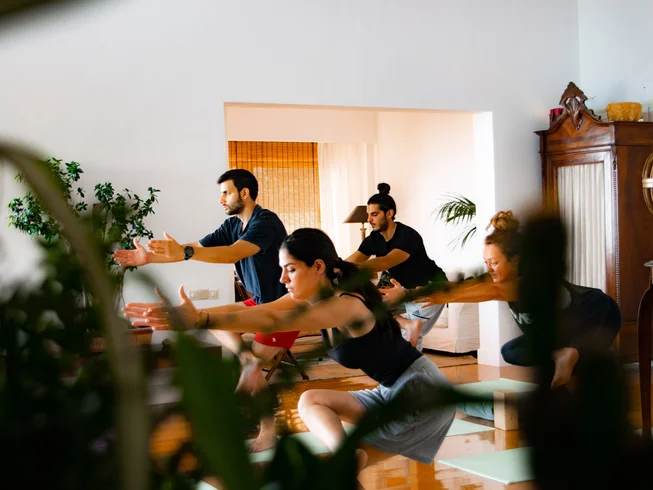
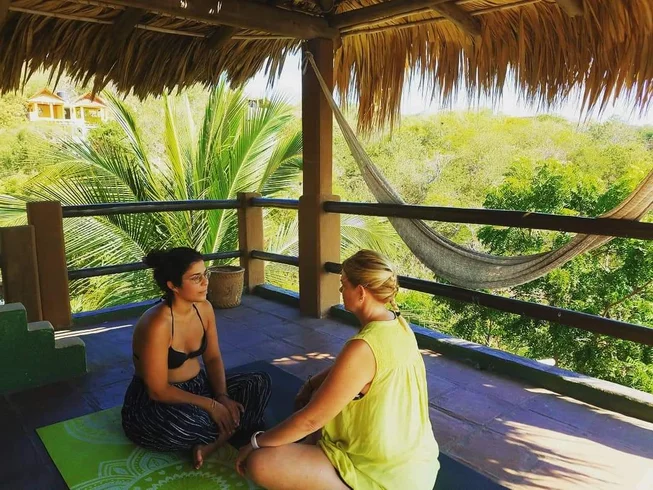
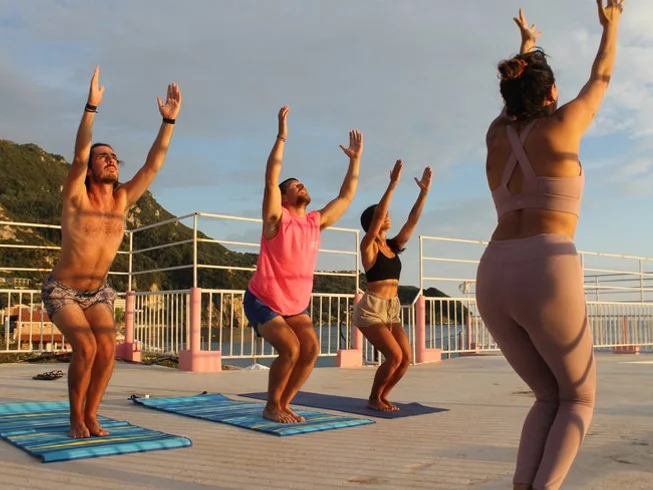
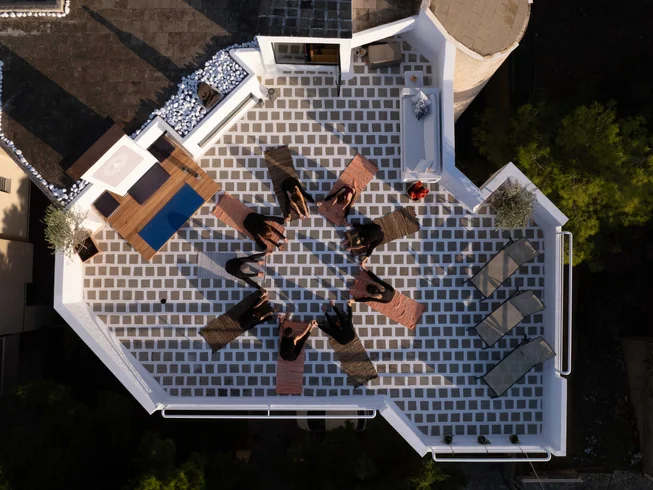
The Ionian islands in July stay cooler than the Aegean by 3-5°C, protected from the Meltemi wind that dominates the Cyclades and the Dodecanese in summer. Kefalonia and Lefkada specifically have the combination of warm sea (24-25°C), mountain air from the interior, and a coastline varied enough that the July tourist pressure is absorbed without overwhelming the landscape.
Kefalonia in July has the west coast beaches — Myrtos, Petani, Antisamos — at their most photogenic: the limestone cliffs above turquoise water producing the kind of visual drama that makes this the most distinctive coastline in the Ionian. Myrtos beach specifically, accessible by a steep road from the plateau above, is considered by many to be the finest beach in Greece — white pebbles, turquoise water, sheer white cliffs on three sides. In July it is busy; arriving at 8am before the day-trippers produces a completely different experience.
Retreat programmes on Kefalonia in July use the morning cool hours (practice at 6:30am before the sun builds) and the late afternoon sessions (from 6pm as the temperature drops) as the outdoor practice windows. The middle of the day is for the sea, the shade, and the specific pleasure of lying on the Kefalonian pebbles in the afternoon knowing the evening session is coming.
Lesvos (Mytilene) in July is one of those Greek islands that the main tourist circuit consistently overlooks and that rewards those who find it with a depth of character that the more famous destinations have traded away. The third largest Greek island, Lesvos has an olive oil culture of extraordinary quality (the island produces some of the finest olive oil in Greece from its 11 million olive trees), a capital city of neoclassical architecture and working port culture, and the Kalloni salt flats and wetlands that are one of Europe’s significant birdwatching sites.
The ouzo culture of Lesvos is the most specific in Greece — the island produces the majority of Greek ouzo and drinks it in a specifically Lesbian way: slowly, with mezze, at tables that face the harbour and stay occupied from early evening through late night. A retreat on Lesvos in July that incorporates an ouzo evening at a traditional ouzeri in Mytilene — the small plates arriving continuously, the conversation unhurried, the harbour lights on the water — is experiencing the island’s most characteristic social form.
The Petrified Forest of Lesvos — a UNESCO Global Geopark of fossilised trees up to 20 million years old, extending across the western part of the island — is one of those specifically geological landscapes that produces the kind of temporal perspective that long-format retreat practice is also trying to generate. Standing inside a forest that was growing when the Mediterranean basin was still forming is a specific kind of presence practice.
Folegandros in July is the Cyclades without the crowds. The small island — population 650, no cars on the main square of Chora, no direct flight connection — has the classic Cycladic whitewashed architecture, the caldera-adjacent cliffs above the sea, and a quality of human scale that Santorini and Mykonos have permanently lost. The Meltemi blows here too in July, but the island is compact enough that retreat centres can position themselves on the sheltered southern coast where the wind has less impact on outdoor practice.
Sifnos in July has the most sophisticated food culture of the small Cycladic islands — the island’s tradition of ceramic cooking pots (the chickpea stew cooked overnight in the local ceramic vessels, revithia sifnaiika, is one of the great simple dishes of Greek cuisine) and its history as a source of chefs for the wealthy Athenian households of the nineteenth century have produced a food culture that is out of proportion to the island’s size. Retreat programmes on Sifnos that incorporate the food culture alongside the practice are doing the island justice.
Halkidiki in July is the part of Greece that Athenians and northern Europeans who know the country specifically choose when they want a summer that is warm, accessible, and not overwhelmed by international tourism. The three-fingered peninsula east of Thessaloniki has pine forests running down to the sea, beaches of fine white sand, and a coastal culture that is specifically Greek rather than internationally curated.
The third finger of Halkidiki — Mount Athos — is the most extraordinary landscape in Greece and the most inaccessible: the autonomous monastic republic has been inhabited by Orthodox monks since the ninth century and is closed to women entirely, accessible to men only with a special permit issued in limited numbers. But the boat excursion along the western coast of the Athos peninsula, viewing the Byzantine monasteries from the sea — their towers and domes rising directly from the water in some cases — is available from the port of Ouranoupoli and is one of those specifically Greek experiences that has no equivalent elsewhere in Europe.
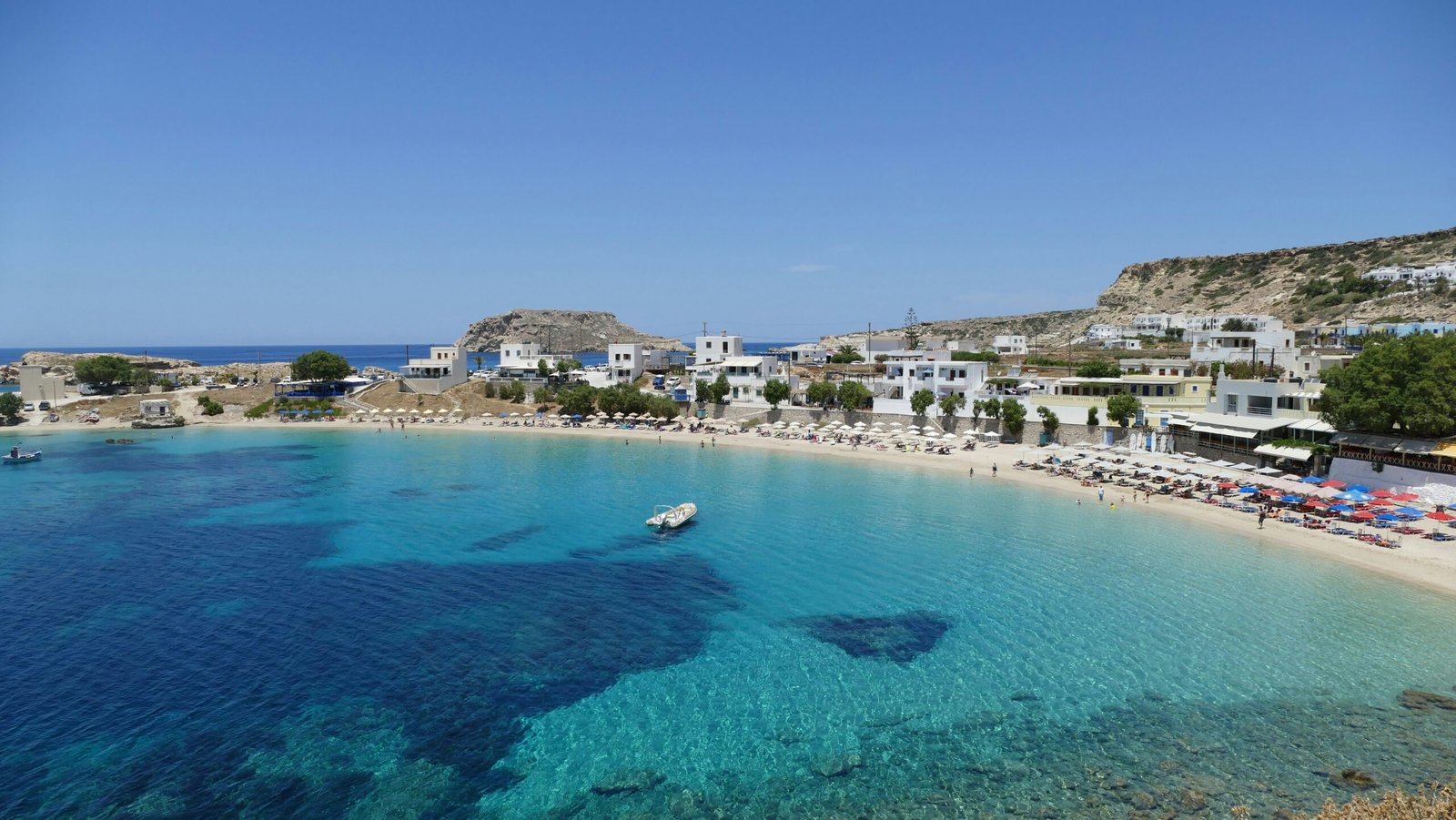
Sifnos chickpea stew — chickpeas slow-cooked overnight in the traditional ceramic pot with onion, olive oil, lemon, and rosemary — is one of those specifically Greek dishes that requires the right context to appreciate fully. On Sifnos on a Sunday morning, when the ceramic pots have been cooking in the village baker’s oven since Saturday evening and are served at the taverna tables for the traditional Sunday lunch, revithia is not simply food but a demonstration of how patience, good ingredients, and an intelligent technique produce something that no amount of effort can replicate in an hour.
July seafood at the harbour tavernas of the smaller islands — Folegandros, Sifnos, Lesvos — is at its most direct form: the fish caught that morning by the same fisherman who is now sitting two tables away, grilled over charcoal with olive oil and lemon, and eaten at a table that faces the sea. The sea bream (tsipoura) and sea bass (lavraki) from the Aegean in July are at their summer size and flavour. Eating them in this context, at a table close enough to the water that the smell of the sea is part of the meal, is the version that all other versions of the same fish are approximating.
Loukoumades — fried dough balls drenched in honey and cinnamon, sometimes with sesame seeds — are the Greek summer street food that appears at every island festival and port-side stall in July. Hot from the oil, eaten with a wooden skewer at a festival table or a port counter at midnight: they are the July food experience that requires no restaurant and no reservation. Studies on honey’s antimicrobial and antioxidant properties have documented what Greek tradition has always understood — that raw, minimally processed honey from the wild thyme of the Greek islands is a genuinely nutritious ingredient rather than simply a sweetener.
The first figs (syka) appear at Greek markets in late July — the early-season green and purple varieties from the Peloponnese and Crete, eaten fresh and slightly warm from the tree. The fig season runs through October but the July varieties, smaller and more concentrated in flavour than the August and September fruits, have a freshness that the later season does not replicate. At a retreat kitchen in July that sources locally, fresh figs with Greek yogurt and dark honey at breakfast is the meal that summer produces automatically.
July is the peak month of the Greek village festival calendar. Almost every island and mainland village holds its annual panigýri in July or August — the name-day celebration of the patron saint, marked with outdoor music, dancing, communal eating, and the particular energy of a Greek community gathering for its own pleasure rather than for visitors. On the smaller islands, the panigýri is the social event of the year. Ask your retreat host what is happening locally in July — a panigýri within walking distance of the retreat base is always worth attending and always free.
The Athens Epidaurus Festival runs through July with performances at the Odeon of Herodes Atticus and the ancient theatre of Epidaurus. July performances at Epidaurus — ancient drama under the stars in a 2,400-year-old theatre with acoustics that carry a whisper to the back row — are among the most specific cultural experiences Greece offers. Tickets sell out weeks in advance for the most popular productions; book early if this is a priority.
The Meltemi wind — the strong northerly that dominates the Aegean from July through mid-September — is worth understanding as a retreat participant rather than simply managing as a logistical difficulty. The wind reaches 30-40 knots in the open Cyclades in July, drops temperatures 3-5°C below what they would otherwise be, clears the air to extraordinary visibility, and creates outdoor practice conditions that are both challenging and instructive. Maintaining tree pose in a 35-knot wind teaches something about the relationship between rootedness and flexibility that still air cannot provide. Retreat centres that acknowledge the Meltemi as part of the July experience rather than apologising for it produce better retreat weeks.

July programming adapts to the heat and the wind or it is not good programming. The structure that works: practice at 6:30am before the sun has full height and the Meltemi has built to its afternoon strength. A substantial breakfast. The hottest hours from noon to 5pm in the sea, in the shade, or at the hammam. Late afternoon practice from 5:30pm as the temperature begins to moderate. Evening sessions extending to 7:30pm because the July light and warmth make early evenings the best time of the day.
On the Ionian islands, this heat management is less necessary — the absence of the Meltemi and the slightly cooler temperatures allow a more flexible outdoor schedule. Retreat programmes on Kefalonia and Lefkada in July run morning practice at 7am and evening sessions at 6:30pm without the midday interruption that the Aegean’s July heat requires.
The panigýri evening — when the village festival falls during a retreat week — is the July programming event that the schedule cannot produce but the season delivers. The communal table at the village square, the live music, the dancing that continues into the small hours: these are not a distraction from the retreat but an expression of the communal and embodied celebration that yoga is also trying to access through different means.
Your email address will not be published. Required fields are marked *