
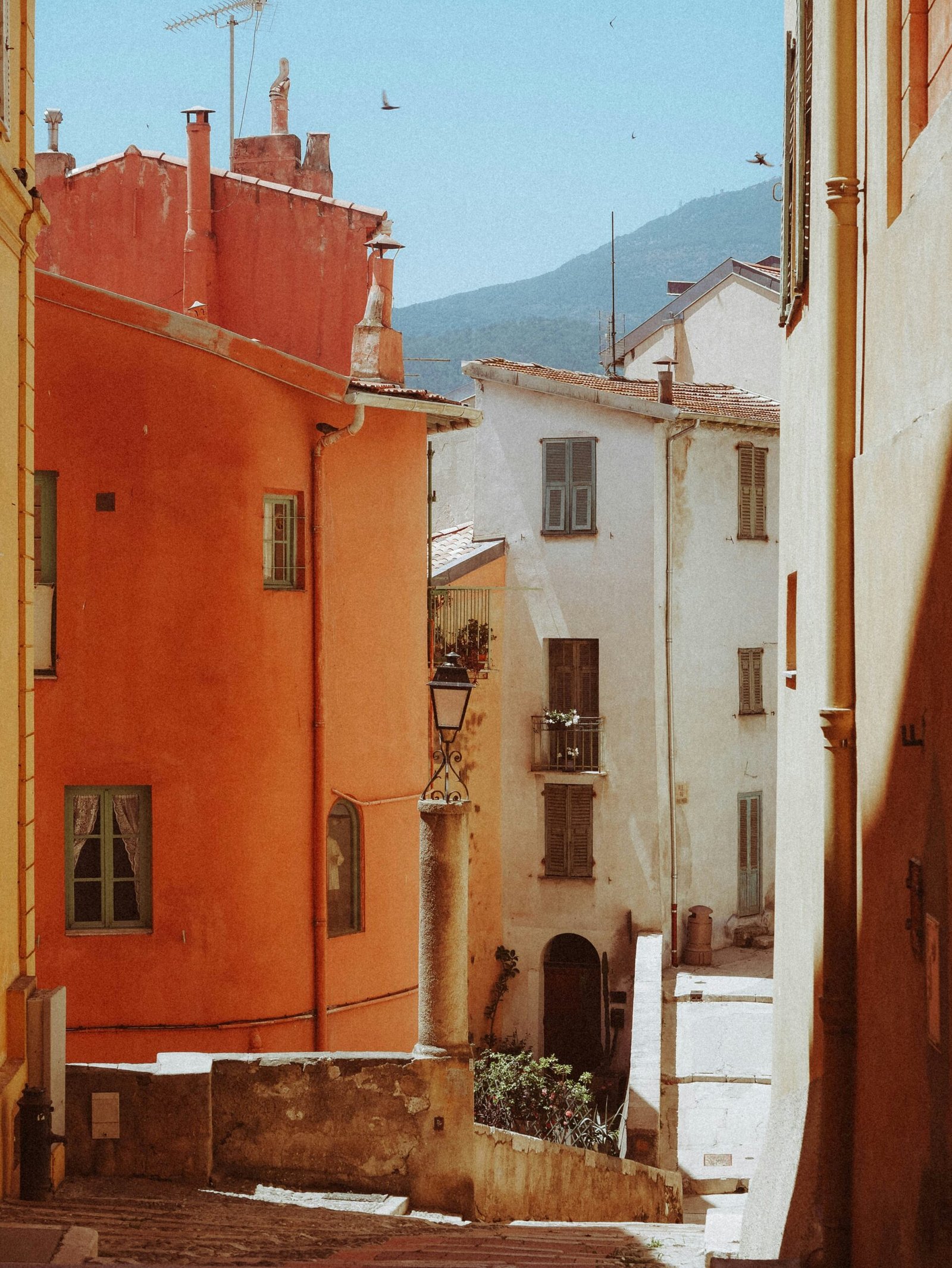
June in France is the last good-value month before the July peak. The lavender fields of Provence are beginning to bloom — the early varieties by mid-June, the full spectacle by early July. The Atlantic coast surf season is opening at Biarritz. The Loire Valley has its longest days.
And the retreat infrastructure across the country is at full spring capacity before the July and August domestic tourism fills it to maximum. A yoga retreat in France in June gets the best conditions of the French summer at pre-peak prices.


June is the month French retreat travel makes the most economic and practical sense. The conditions are equivalent to July — warm, dry on the Mediterranean and Atlantic coasts, with the longest days of the year providing the most outdoor practice time — but the prices are typically 15-20% below July, the retreat centres have availability, and the destinations that are genuinely overwhelming in August are in June still themselves. The lavender, the surf, the canal culture of the Midi, and the long June evenings in the Dordogne are all June-specific in their most accessible forms.
Browse our full yoga retreats in France guide for the complete picture of what the country offers year-round. For the global context of June retreat travel, our yoga retreats in June guide covers every destination worth considering this month.


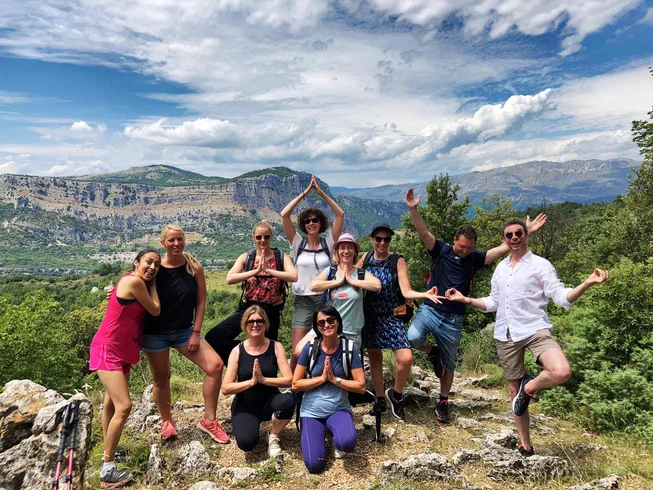

Provence in June is at the beginning of its lavender season — the early lavender varieties (the fine lavender, Lavandula angustifolia) beginning to bloom in the lower altitudes of the Luberon and the Alpilles from mid-June, and the lavandin (the hybrid variety that produces the commercial lavender oil) beginning its bloom in the higher Drôme Provençale fields around the same time. The Plateau de Valensole — the most photographed lavender landscape in France, with the rows of blue-purple extending to the limestone horizon — is in June at its opening condition: the first colour visible, the commercial photography not yet begun, and the July tourism that transforms the plateau into a car park not yet arrived.
The Gorges du Verdon in June has the spring snowmelt volume still present in the river, the turquoise of the water at its most vivid before the summer sun changes the mineral content, and the canyon walls at their most accessible for the morning walk along the Sentier Martel (the 14-kilometre trail through the canyon interior that is the most spectacular of the Verdon’s access routes) without the July heat that makes the afternoon sections genuinely dangerous.
Biarritz — the Basque surf resort on the French Atlantic coast, the town where surfing arrived in continental Europe in the late 1950s and where the European surf industry has been based since — is in June at the opening of its summer surf season. The Grand Plage and the Côte des Basques breaks are in June receiving the first Atlantic summer swells alongside the spring groundswells that the June transition between swell directions produces — variable but often producing the most interesting surf conditions of the year.
The Biarritz yoga and wellness culture has developed significantly in the past decade — the surf-and-yoga retreat format that the Basque city specifically enables is in June at its most complete: the morning yoga on the terrace above the Grand Plage, the afternoon surf on the Côte des Basques, and the Basque cuisine evening at the pintxos bars of the old port. The Basque Country food culture — the pintxos (the Basque version of tapas, specific to the region in their elaborateness), the Bayonne ham from the curing houses visible from the A64 autoroute, and the Irouléguy wine from the only Basque Country appellation — is in June at the spring production that the summer tourist season elevates in price.
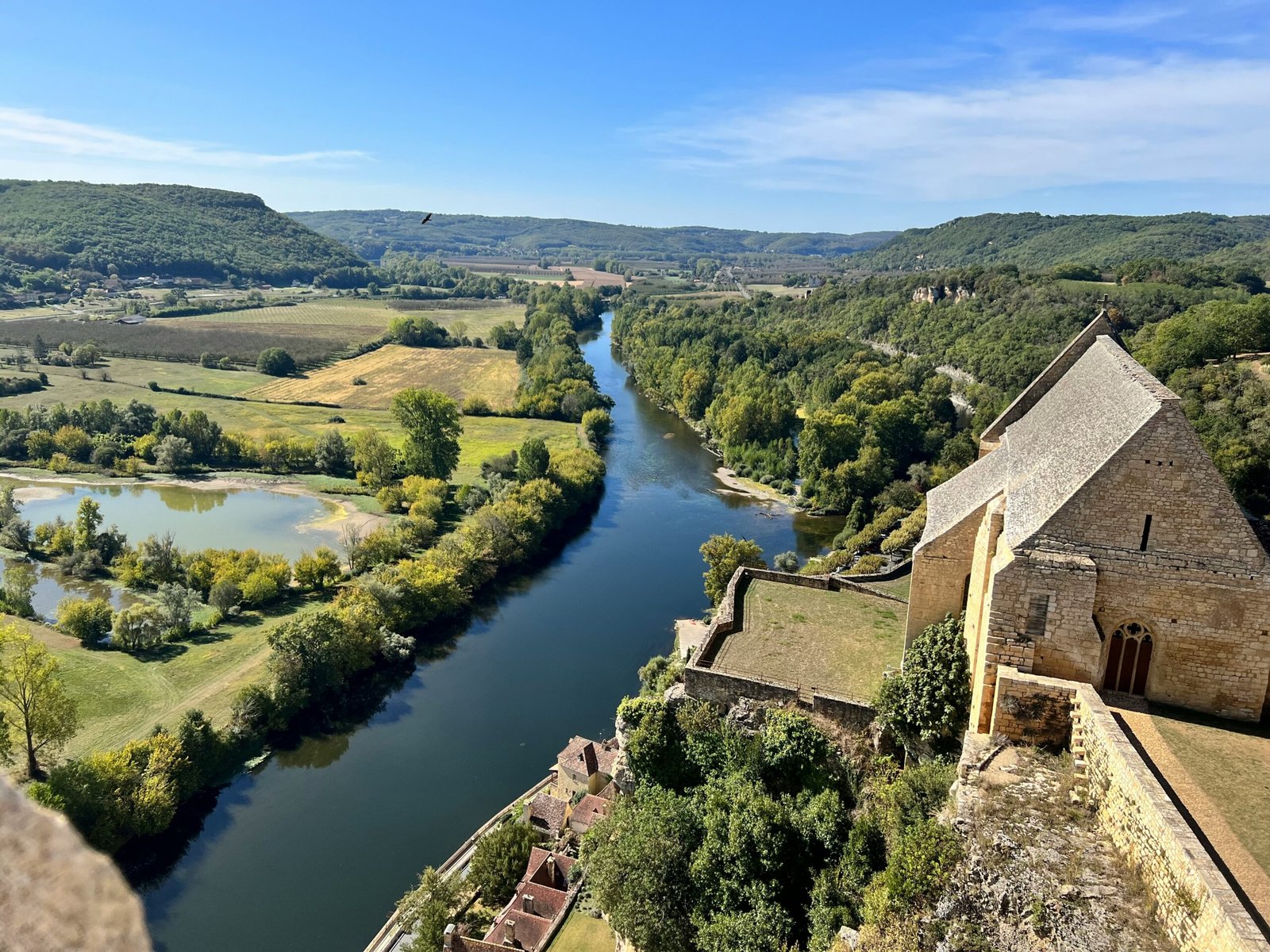
The Dordogne in June is the Périgord Noir river valley at its most specifically beautiful — the limestone cliffs above the river at their green June foliage, the medieval villages of Beynac, Castelnaud, La Roque-Gageac, and Domme visible from the river without the July and August tourist boat compression, and the summer solstice producing the longest evenings of the year in the valley with the candlelight from the terrace restaurants above the river visible from the kayak on the water below.
The kayak on the Dordogne river in June — launching from Vitrac and paddling the 24-kilometre reach past the châteaux of Beynac and Castelnaud to Domme and back — is the June Dordogne retreat activity at its most complete: the limestone castle above on the left bank, the medieval fortified village on the right, the river at its spring volume, and the June evening light on the valley producing the landscape that the troubadour tradition of this valley was written for.
The Jura — the limestone plateau and mountain region between Burgundy and Switzerland, the most undervisited of the French food-and-landscape regions — is in June at the opening of its summer season. The Comté cheese — the most consumed cheese in France by volume, produced from the milk of the Montbéliarde cows of the Jura fruitières (the traditional cheese cooperatives where the milk from each farm village is combined) — is in June at the affinage stage of its 6-month minimum ageing, and the fruitière visits near Pontarlier and Poligny are in June most educational.
The Jura lakes — Lac de Chalain, Lac de Clairvaux, and the Lac de Vouglans reservoir — are in June at the beginning of their swimming season, the water clearing from the spring snowmelt to the summer clarity. The Reculées (the blind valleys carved into the Jura limestone by the glacial meltwater, each ending in a massive limestone cirque wall) — the Reculée de Baume-les-Messieurs with the Cascade des Tufs waterfall and the Abbaye de Baume visible from the cirque floor — are in June at the spring waterfall volume that the July drought reduces.
La Fête de la Musique — the national music day on the summer solstice, June 21st, when amateur and professional musicians perform free concerts in streets, courtyards, parks, and public spaces across France — is the most specifically French of the June cultural events and the one most accessible to retreat guests regardless of location. In Paris, the Fête de la Musique produces music in every neighbourhood simultaneously from 6pm through midnight; in the smaller towns and villages, it produces the neighbourhood concert at the town square that the retreat community can join without planning.
The Fête du Vélo — the national cycling celebration on the first weekend of June — produces community cycling events in parks and on closed streets across France, and is the most appropriate of the June cultural events for the retreat guest whose programme incorporates cycling.
The summer solstice — the longest day of the year — coincides with the Fête de la Musique, and the French tradition of celebrating the solstice evening with music in the street produces the most concentrated single evening of the French cultural year. In Brittany, the solstice is marked with the Feux de la Saint-Jean (the midsummer bonfires at the hilltops) that the Celtic tradition of the region maintains.
The first lavender honey of the season — produced from the early June lavender flowering in the Luberon and the Drôme Provençale beehives — appears at the Provençal producers from late June. The lavender honey (the most specifically Provençal of the French honeys, with the floral intensity of the fine lavender at its most concentrated) is at its freshest in the late-June jars before the July harvest mass-produces the more commercially standardised version.
The French strawberry season is ending in June (the gariguette from the Lot-et-Garonne finishing its season in early June) while the raspberry season begins — the first French raspberries from the Rhône Valley and the Drôme appearing at the June markets with the specific fragrance that the July and August volume production reduces. The June raspberry at the Provençal or Burgundian market stall — the small, intensely fragrant variety from the artisan grower — is the most specifically French of the June soft fruits.
The Comté at its 6-12 month affinage stage — the cave-aged wheel from the Jura fruitière, with the summer milk of the Montbéliarde cows producing the most fruity and most complex of the year’s Comté — is in June at the market stalls of Pontarlier and Arbois. The Morbier (the Jura cheese with the line of ash through the middle, the traditional marker between the morning and evening milk additions to the wheel) and the Bleu de Gex (the Jura blue cheese from the high-altitude Haut-Jura pastures) are the June Jura cheese table at its most regionally specific.
The Dordogne river kayak from Vitrac to Domme — described above — is in June at its most complete: the river at spring volume, the château of Beynac above on the left bank, the castle of Castelnaud visible on the right, and the June evening light on the valley as the return downstream section approaches the Vitrac embarkation at dusk. The kayak rental from the Dordogne river centres is available without advance booking in June; in July and August the same section requires booking days in advance.
The Fête de la Musique on June 21st — joining the village or town concert in the public square, attending the improvised performances in the neighbourhood streets, and participating in the collective music celebration that the French tradition produces with more democratic enthusiasm than any other national cultural event — is the June France retreat evening that requires no planning beyond being present at the nearest town square at 6pm on June 21st.
The Sentier Martel through the Gorges du Verdon — the 14-kilometre trail along the canyon floor, with the turquoise river visible below the trail and the 700-metre walls above — is in June at the most comfortable condition of the season: the spring temperature at the canyon floor at 18-22°C, the river at its spring volume, and the trail accessible without the July and August heat that makes the afternoon sections genuinely dangerous. The Sentier Martel in June requires an early start (7am from the Chalet de la Maline trailhead) and the 6-hour return journey produces the most dramatic canyon walking available in France.
Your email address will not be published. Required fields are marked *