
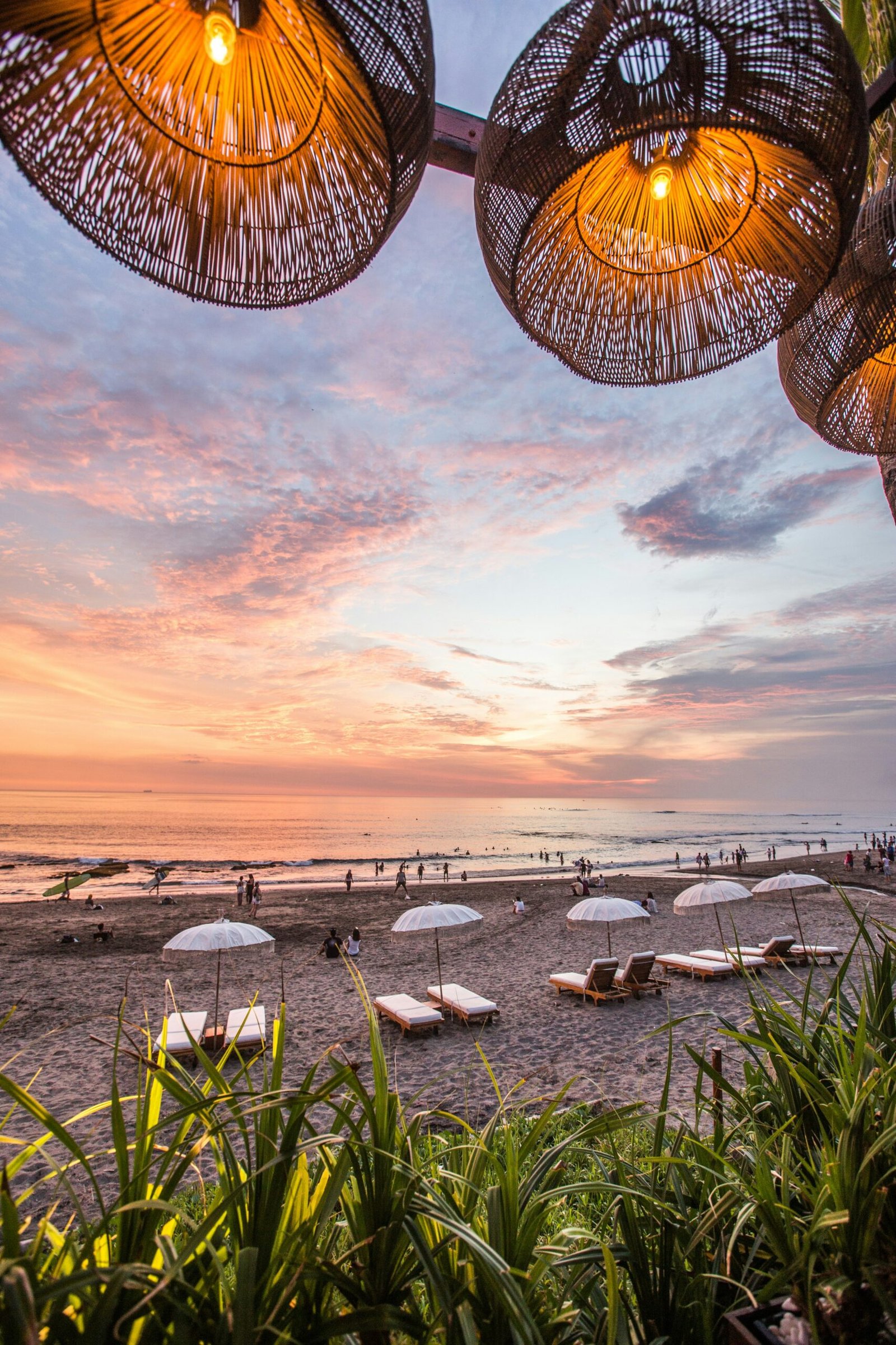
March in Bali is the month of Nyepi — the Balinese Day of Silence — one of the most extraordinary cultural experiences available anywhere in the world. For 24 hours, the entire island shuts down: no lights, no vehicles, no noise, no movement.
The Ogoh-Ogoh parade the night before fills the streets with the most spectacular public spectacle of the Balinese year. And the seasonal transition from wet to dry is beginning — the rains easing in the second half of the month, the mornings lengthening, and the retreat programmes adapting toward their spring outdoor format.


March is the most culturally specific month in the Balinese calendar — the Saka New Year, the Ogoh-Ogoh parade, and the Day of Silence producing a week of extraordinary cultural intensity before the island returns to its normal rhythm. For retreat guests who choose March specifically for Nyepi, the experience of 24 hours of enforced collective stillness — the most radical version of the digital detox that any retreat programme can offer — is the most specifically Balinese and the most directly resonant with the retreat’s own intention. For those who arrive without knowing about Nyepi, it is the most surprising and most memorable of unplanned experiences.
Browse our full yoga retreats in Bali guide for the complete picture of what the island offers year-round. For the global context of March retreat travel, our yoga retreats in March guide covers every destination worth considering this month.
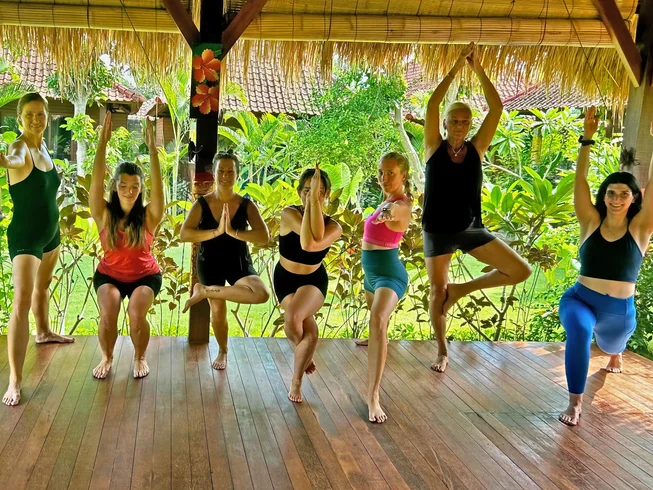

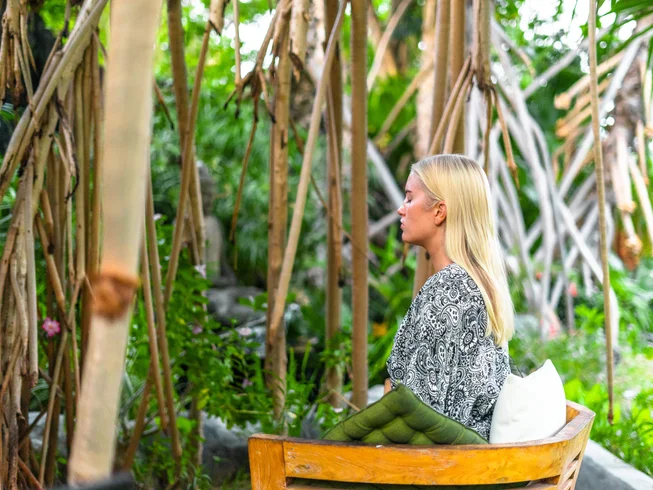

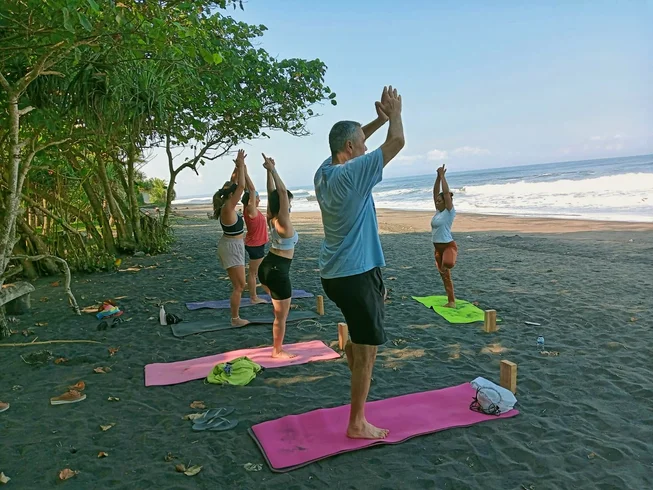
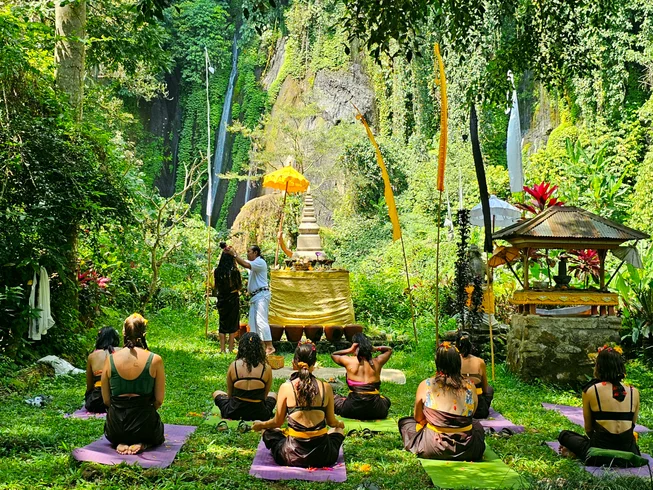
Ubud in March is the most culturally concentrated of any month — the Ogoh-Ogoh parade through the Ubud streets and the central Ubud crossroads on the eve of Nyepi, the 24 hours of island-wide silence on Nyepi Day itself, and the post-Nyepi resumption of the Balinese daily rhythm producing a week of extraordinary cultural density. The Ubud retreat that programmes around Nyepi — evening practice before the Ogoh-Ogoh parade, the night parade as the communal cultural event, and the 24-hour silence as the deepest retreat day of the programme — is using March correctly.
The post-Nyepi Ubud in the second half of March is at the beginning of the seasonal transition — the afternoon rains easing, the mornings extending their clear windows, and the rice terraces at the mid-growth stage of the planting that began in January. The Ubud Writers and Readers Festival does not fall in March, but the transition month produces the specific community energy of a place preparing for its high season while still in the contemplative phase of the wet season.
Petulu — the small village 2 kilometres north of Ubud — is in March at the white heron roost that makes it one of the most specific wildlife spectacles in Bali. Thousands of Javan pond herons and cattle egrets return to the trees above the village road every evening at sunset — the white birds filling the air above the village from 5:30pm as the roost assembles, the noise audible from the rice fields below. The spectacle has been occurring since 1965 and is treated by the Balinese as a spiritual phenomenon — the birds as the reincarnated spirits of those who died in the 1965 political violence. For retreat guests based in Ubud, the Petulu evening walk is the 30-minute excursion from the retreat centre that requires only the timing and the willingness to walk.
Nusa Penida — the large island southeast of Bali, accessible by fast boat from Sanur (30 minutes) or Padangbai (45 minutes) — is in March at the transition between its own wet season and the dry season approach. The island is significantly less developed than the Bali mainland and has the most dramatically geological of the Balinese island landscapes: the Kelingking Beach limestone cliff (the T-Rex shaped promontory that is the most photographed viewpoint in Bali), the Angel’s Billabong natural infinity pool, and the Broken Beach natural arch are all accessible without the July and August tourist saturation that has made some of these sites genuinely difficult.
The manta ray diving at Manta Point on the southwestern tip of Nusa Penida is in March at the peak of the manta season — the oceanic manta rays (Manta birostris, the largest ray species, reaching 7 metres wingspan) feeding at the cleaning stations off the southern Penida coast from approximately October through April, with March one of the most reliable months. The dive from the Nusa Penida boat at Manta Point, with the mantas circling the cleaning station and the current carrying the boat along the reef, is the March Bali diving experience that no mainland dive site replicates.
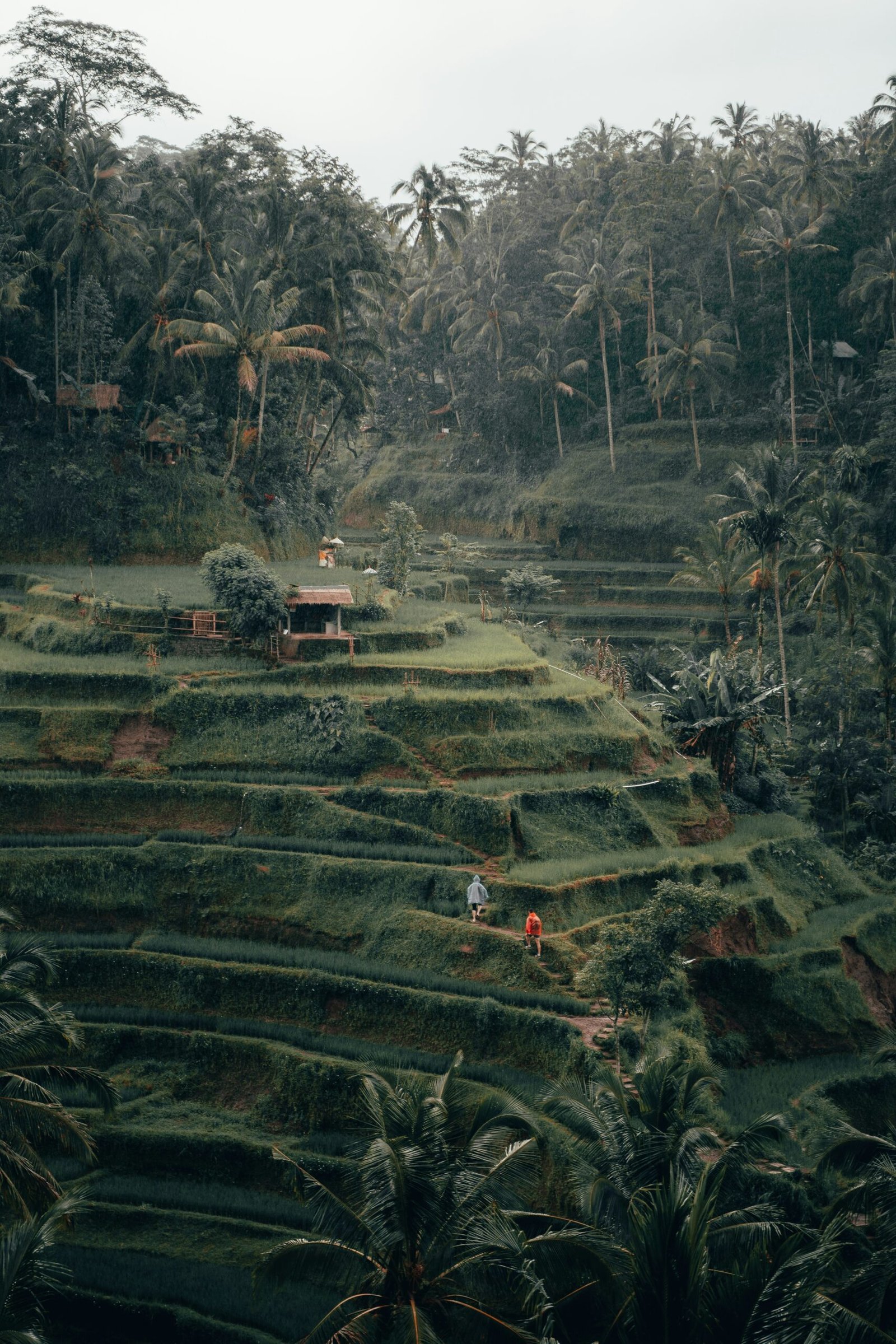
Tabanan regency — the western Bali agricultural district, with the Jatiluwih UNESCO rice terraces, the Tanah Lot sea temple, and the Batukaru forest temple at 1,000 metres in the rainforest — is in March at the transition season with the most productive rice terrace landscape of any Balinese regency. The Jatiluwih terraces in late March, as the wet season eases and the rice plants move toward their harvest stage, are at the specific visual condition that the planted and flooded January phase and the harvested July phase both replace — the growing rice at full green and the terrace water level dropping as the plants take up the moisture.
The Pura Luhur Batukaru — one of Bali’s six directional temples, at 1,000 metres in the rainforest above Tabanan — is in March surrounded by the most intensely forested version of its setting: the cloud forest of the Batukaru slopes at its wet season maximum, the temple moat full, and the forest sounds providing the specific acoustic context that the retreat guest who arrives at the temple before 9am encounters without competition.
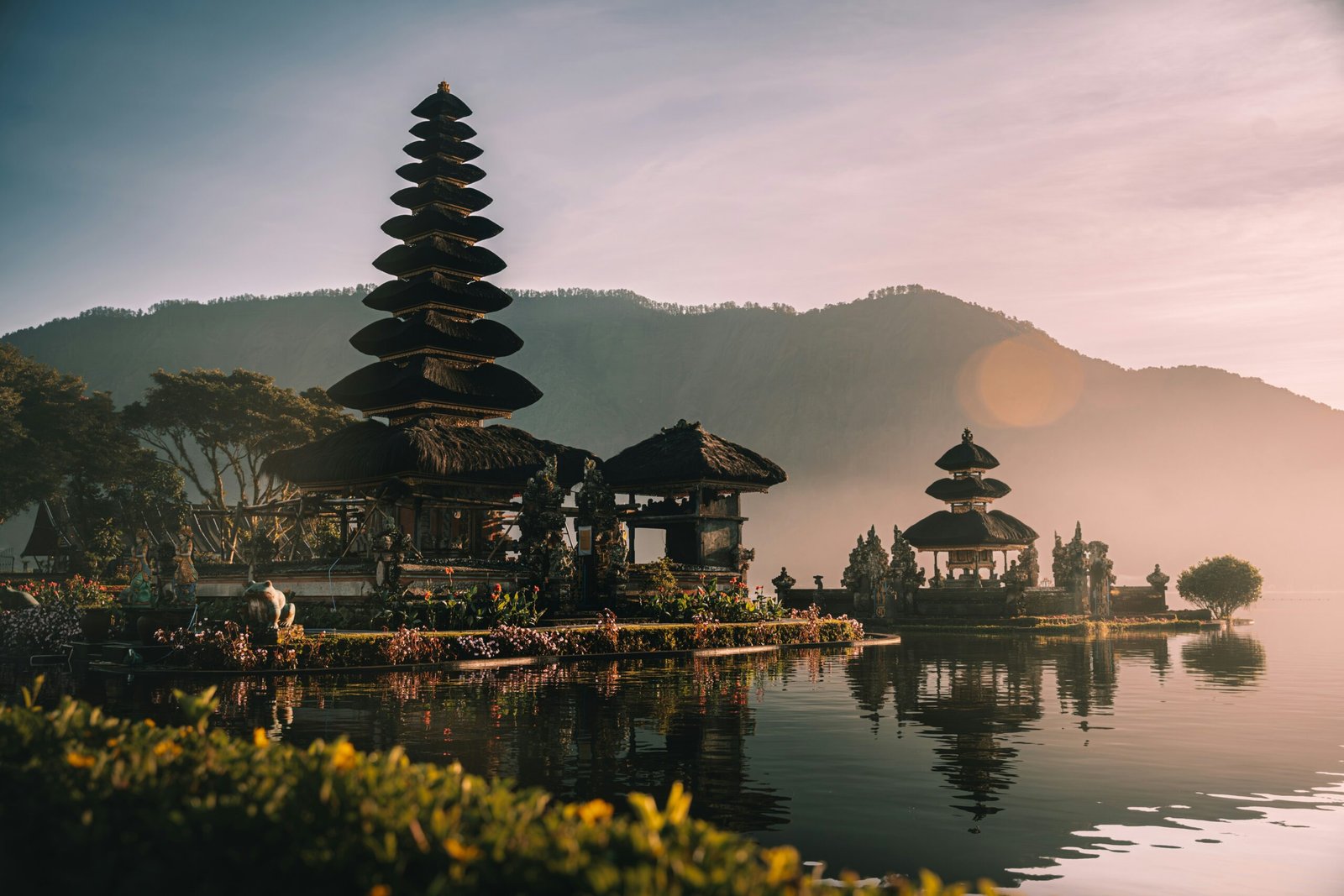
Nyepi — the Saka New Year, the most important holiday in the Balinese Hindu calendar — is a 24-hour period of complete island-wide silence falling on the new moon of the ninth month of the Saka calendar, typically in March (the exact date shifts annually). The rules of Nyepi are enforced by the Pecalang (the traditional Balinese community security guards in traditional dress): no lights (including phone screens facing outward), no vehicles (the airport closes for 24 hours — the only airport closure for a cultural event in the world), no noise, and no activity outside the home or hotel compound. International visitors are expected to observe the same rules within their accommodation.
The Ogoh-Ogoh parade on the evening before Nyepi (Pengerupukan, the eve of the Saka New Year) is the most spectacular public event in the Balinese cultural calendar. Each of the village banjars brings its Ogoh-Ogoh — the enormous demon figures constructed over the preceding months — to the main road, and the parade through the streets (accompanied by the gamelan percussion and the community in traditional dress) proceeds toward the cremation ground where the figures are burned. The Ubud crossroads on Pengerupukan evening, with the Ogoh-Ogoh converging from multiple directions and the crowd of thousands lining the streets, is the most concentrated visual experience available in Bali at any time of year.
For retreat guests, Nyepi Day itself — the 24-hour enforced stillness — is the most radical version of the digital detox that any retreat format can provide. The retreat that programmes the Nyepi silence deliberately (early morning practice before dawn, extended meditation through the day, evening reflection as the 24 hours ends) is using the Day of Silence as the most culturally aligned of all retreat activities.
Melasti — the purification ceremony held three days before Nyepi — involves the processions of temple communities carrying their sacred objects (pratima — the temple effigies) to the sea or the river for purification. The Melasti processions in Ubud go to the Petanu and Wos rivers; the coastal communities go to the beach. The white-dressed processions, the gamelan orchestras, and the temple umbrellas are visible throughout the Ubud area in the three days preceding Nyepi.
On Nyepi Day itself, the Balinese tradition is to fast or eat minimally — the day of silence extending to the kitchen. The retreat kitchen typically prepares a simple, light menu for Nyepi Day: the bubur (rice porridge) in the morning, fresh fruit from the garden, and a simple evening meal. The deliberate simplicity of the Nyepi kitchen is part of the ceremony — eating lightly during the 24 hours of silence produces the physical dimension of the collective spiritual practice.
The evening before Nyepi — the Pengerupukan parade night — is the specific celebration feast, the last meal before the Day of Silence. The Balinese family tradition of preparing the elaborate ceremonial food (the lawar, the betutu, and the nasi campur) for the eve of Nyepi is the most concentrated domestic food preparation of the Balinese year. The retreat kitchen that prepares the Pengerupukan dinner as a communal feast before the parade is using the cultural moment correctly.
The salak (snake fruit) from the Sibetan orchards in east Bali is in late March beginning its transition from the wet season abundance to the dry season form — the fruit slightly less astringent and slightly more sweet as the rains ease. The green coconut (pipa) from the coastal plantations is year-round but in March at the specific electrolyte composition that the transition season produces — the young coconut water more balanced in sweetness and mineral content than the deep wet season version.
The Ogoh-Ogoh parade on Pengerupukan evening — arriving at the Ubud central crossroads by 6pm, finding a position along the parade route, and watching the banjar groups bring their figures through the streets from multiple directions — is the March Bali cultural event that requires only presence and no booking. The figures arrive from sunset through approximately 9pm, the last ones proceeding to the cremation ground for burning. The experience of watching the parade from the roadside — the gamelan, the crowd in traditional dress, the enormous demon figures moving past at close range — is the most specifically extraordinary of any public event in Bali.
The manta ray dive at Manta Point, Nusa Penida — the oceanic mantas at their March feeding season peak, the dive from the boat in the Nusa Penida current with the mantas visible at 5-15 metres depth at the cleaning station — is the March Bali diving experience that has no mainland equivalent. The dive requires Open Water certification minimum, a reasonable comfort with current, and the fast boat transfer from Sanur or Padangbai to the Nusa Penida dive operator. The March window is one of the most reliably productive for manta encounters.
The Petulu heron roost — the 2-kilometre walk north from Ubud along the rice paddy path to the village where the white heron colony returns every evening at sunset — is the March Ubud evening activity that requires no booking and produces the most concentrated wildlife spectacle available within walking distance of the Ubud retreat centres. Arrive at Petulu by 5:15pm to see the first birds returning; the full roost assembles by 6pm.
Your email address will not be published. Required fields are marked *