
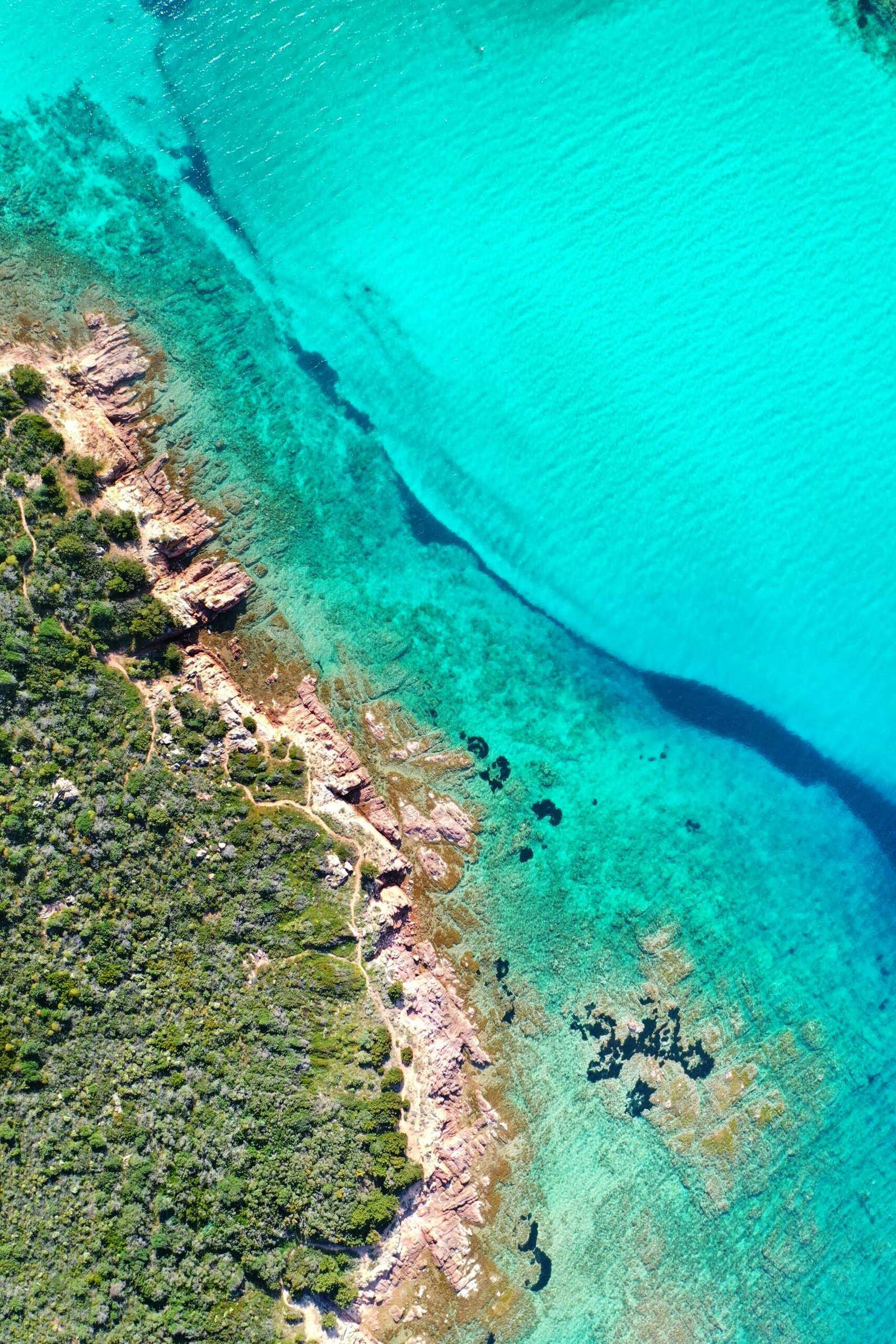
There is a moment in early September when Italy exhales. The schools have reopened, the ferragosto families have returned to their cities, and the coastal roads that were gridlocked through August are suddenly navigable again. The sea is still warm — in Sicily and Puglia it will remain so well into October — but the beaches belong to whoever wants them rather than whoever arrived earliest.
The light has shifted to something that landscape photographers and painters recognise immediately: lower, warmer, more directional than August’s hard overhead brightness, falling across the hills and vineyards at an angle that makes every surface more itself. Yoga retreats in Italy in September operate inside this particular quality of the season, and those who have experienced it once tend to return to it deliberately rather than treating it as a fallback when other months are full.


September is the month that resolves August’s contradictions. The heat that made dynamic practice in the afternoon genuinely difficult through July and August has receded to something manageable — 26 to 29 degrees in the centre, 28 to 32 in the south in the first two weeks, cooling perceptibly toward the end of the month everywhere. The result is a climate in which outdoor practice is viable throughout the morning rather than only in the pre-dawn hour, which changes the structure of a retreat day considerably: sessions can start at seven rather than five-thirty, breakfast can be taken at leisure rather than grabbed before the heat arrives, and the midday period can be used for activities rather than mandatory rest.
The visitor numbers tell an equally important story. Italy’s international tourist season peaks in August and drops sharply from the first of September as the European school year begins. The countryside retreats of Tuscany and Umbria, the coastal properties of Sardinia and Puglia, and the hilltowns that were contested by coach parties through the summer become accessible again in a matter of days. Retreat centres that were running at maximum capacity with waiting lists in August frequently have places available in September, and the prices reflect the shift: rates across most of the market drop 15 to 25 percent from the August peak, while the conditions — weather, sea temperature, landscape quality — are in most respects superior. September is the month that the most experienced Italian retreat-goers reserve a year in advance precisely because it delivers summer’s benefits without summer’s costs.
The mornings in September have a quality that August never quite achieves. The nights are beginning to cool — not dramatically, but enough that the accumulated heat of summer has been partially discharged by dawn, and the early morning air carries a freshness that has been absent since May. Practice at seven in the morning in a Tuscan garden in mid-September, in air that is cool enough to require a light layer for the first ten minutes and warm enough to remove it by the first sun salutation, is a different experience from any hour of any day in July or August. The body, which has been managing heat for three months, responds to this marginal relief with something close to gratitude.
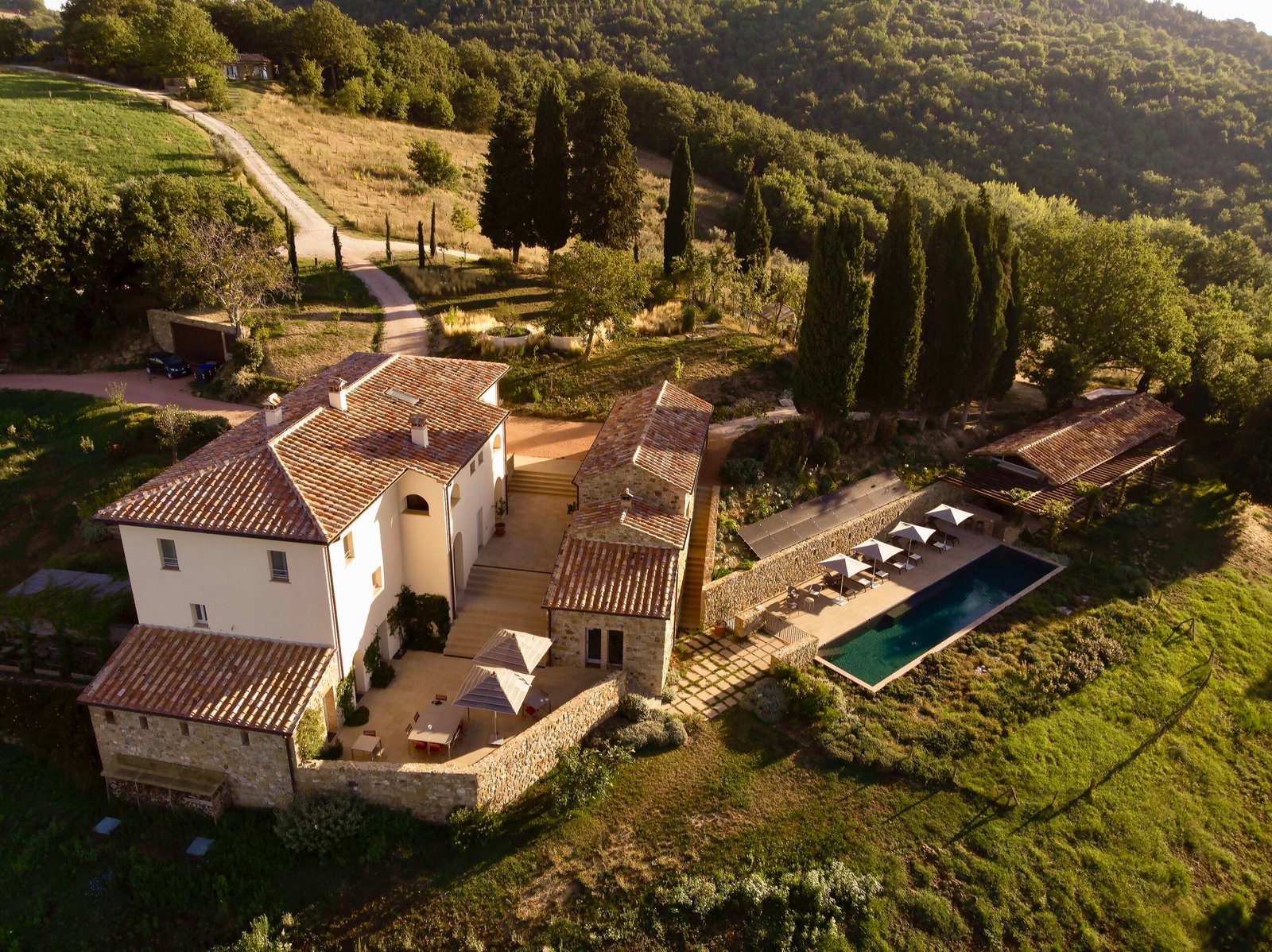
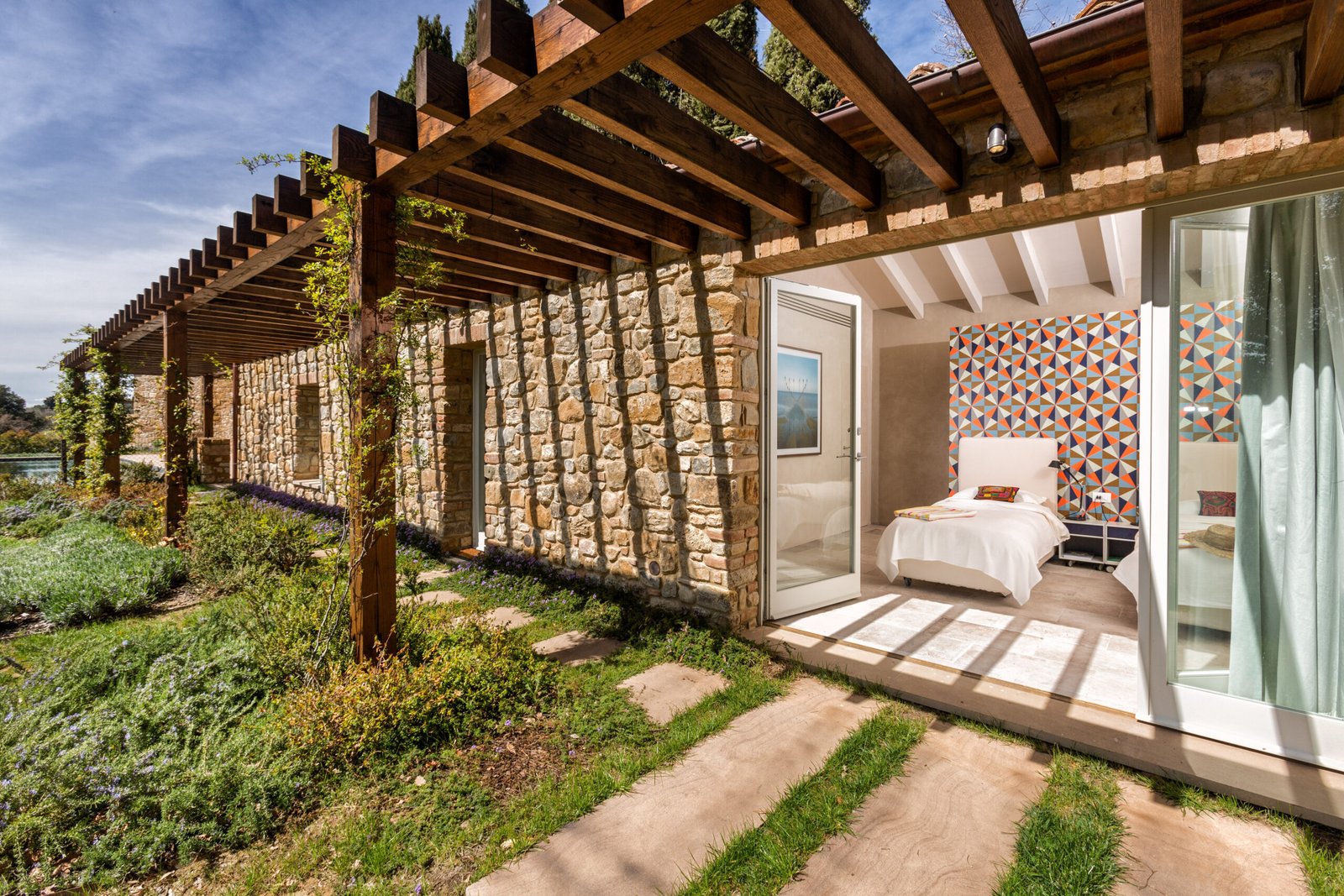
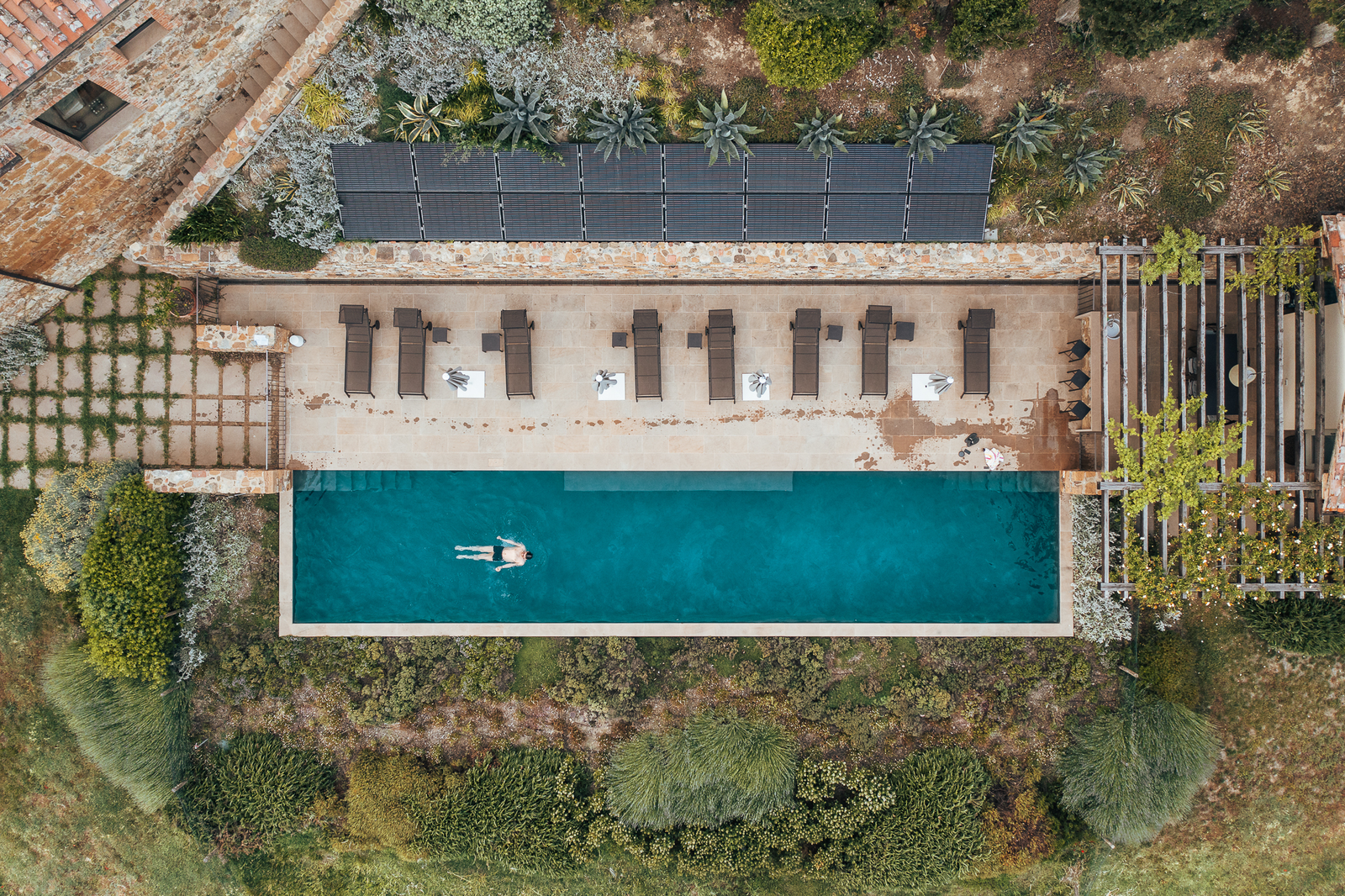
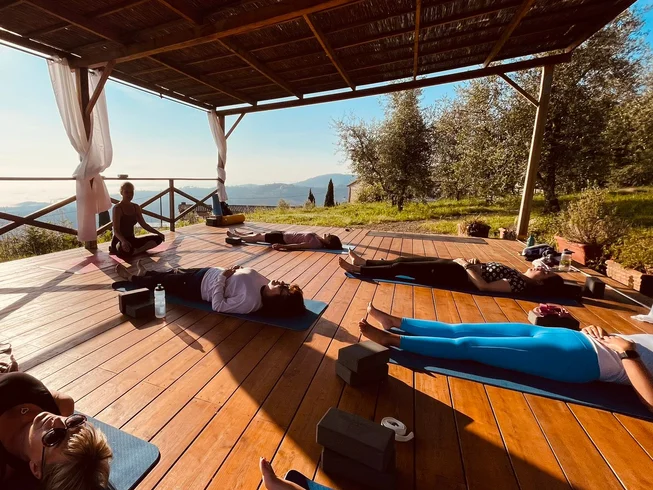
Tuscany in September is the definitive answer to the question of when the region is at its best. The argument for spring — the green hills, the flowers, the cool mornings — is strong, but September has its own case that spring cannot make: the vineyards. The vendemmia, the grape harvest, runs through September in the Chianti Classico zone, the Brunello territory around Montalcino, and the Nobile di Montepulciano area, and the effect on the landscape is total. The vines, which have been green and productive through the summer, shift through yellow and amber as the harvest proceeds; the farmhouses and cooperatives fill with activity; the smell of fermenting must rises from the cantinas in the evenings. A retreat positioned within a working wine estate or adjacent to one captures this as an atmospheric backdrop to practice — the sounds of the harvest, the sensory richness of the cellars on an afternoon visit, the proprietor’s harvest dinner served to retreat guests as an extension of the week’s food culture. The depth of what’s available in the region across all seasons is gathered at yoga retreats in Tuscany, where September is consistently among the first months to fill.
The Langhe and Monferrato hills of Piedmont, which the retreat circuit has been slow to discover relative to their quality, are in September among the most rewarding destinations in Italy. The Barolo and Barbaresco vineyards south of Alba begin their harvest in late September, and the combination of the vine-covered hills, the white truffle season opening in earnest from mid-month, and the food culture of a region that has been producing some of Italy’s most serious cuisine for two centuries creates a context for retreat that has no equivalent elsewhere. The white truffle of Alba — Tuber magnatum pico — begins appearing at the Saturday market in Alba from late September, and the quality of an afternoon spent among the truffle hunters and the cheese producers of the Langhe, then returning to evening practice, then sitting down to a dinner that incorporates the season’s first shavings of the fungus over fresh tajarin pasta, is one of the more complete sensory and contemplative experiences the Italian retreat calendar offers.
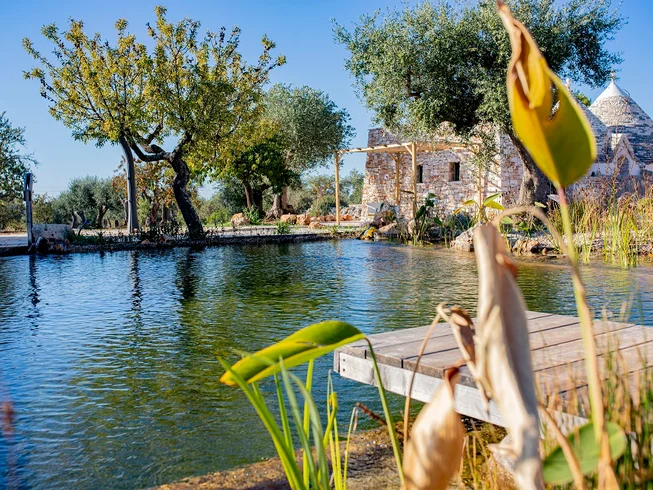
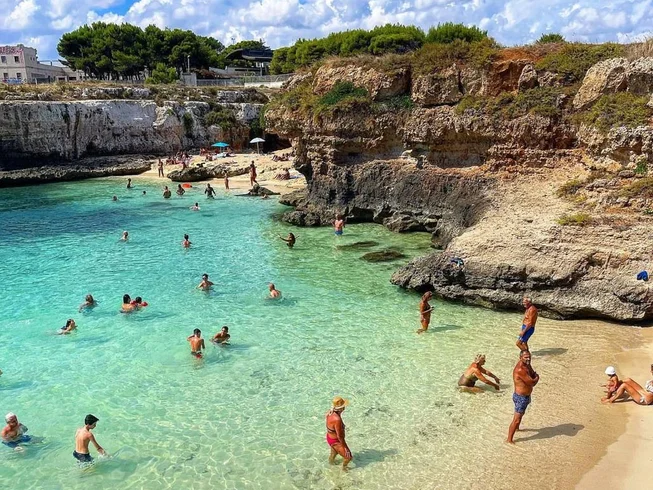
Puglia in September shifts register entirely from its August self. The masserie that were managing heat and full capacity through the summer reopen their gardens and terraces to a more measured pace, the Salento coast retains water temperatures of 25 to 26 degrees while the beach infrastructure thins out, and the Valle d’Itria in the early morning — cool enough now to walk the dry-stone wall paths through the olive groves without the August heat — offers a landscape that is still visually rich but less demanding on the body. The October harvest of the Apulian olives, one of the most significant in Europe, is a month away, but the groves are already showing the particular silver-green of approaching maturity, and retreat programmes that incorporate morning walks through working estates are using the land at a moment of quietly building anticipation.
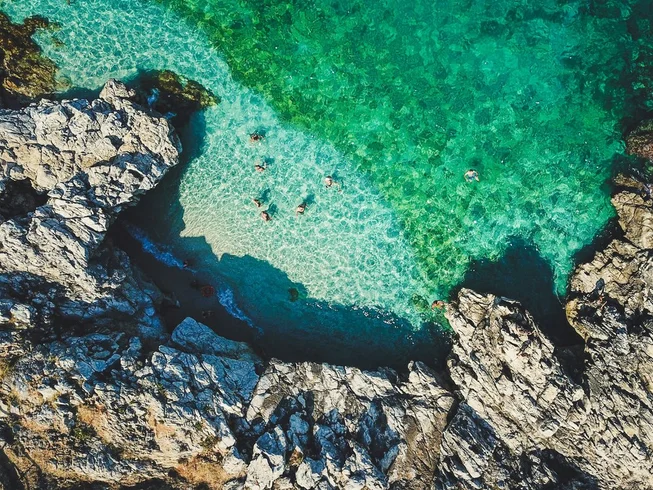
Sicily in September is the month of the fichi d’india — the prickly pear cactus, which lines the roadsides and dry-stone walls of the island in its thousands and produces its fruit in September in colours that run from pale yellow through deep red. The flavour is intensely sweet, slightly gritty, faintly floral, and entirely unlike anything available outside this geographic and temporal window. The sea around the island remains warm enough for comfortable swimming through the entire month and well into October — the Strait of Sicily retains summer heat longer than any other Italian coastal water — and the combination of post-tourist-season accessibility with sea temperatures that August only marginally exceeds makes September the single best month for a coastal retreat in Sicily. The range of options on the island, several of which run their most carefully considered programmes specifically in September, is at yoga retreats in Sicily.
Liguria in September is one of the most consistently underrated retreat destinations in Italy. The Cinque Terre and the Ligurian Riviera di Levante are busy in August but return to something approaching their own rhythm in September, and the combination of clifftop terrace gardens, coastal walking paths, and a sea that is at 24 to 25 degrees creates conditions for a retreat week that feels like summer without the summer infrastructure. The pesto made from the final basil harvest of the season, the anchovies from Monterosso at their autumn fatness, and the farinata that the Ligurian bakeries produce every morning regardless of season are all available in September at their best.
The grape harvest is the agricultural event that most shapes the character of September in wine-producing Italy, and its influence on retreat life in the regions where it occurs is pervasive without being intrusive. In Tuscany, the vendemmia typically runs from the first week of September in the warmer Maremma zone through to mid-October in the higher Chianti Classico vineyards, with the bulk of the Sangiovese harvest concentrated in the third and fourth weeks of September. Retreat centres on or near working estates participate in this rhythm whether or not they formally incorporate it into their programmes: the workers arrive at dawn, the tractor with the harvest bins passes in the early morning, the smell of must fills the evening air, and the particular quality of collective agricultural purpose that the harvest brings to a landscape is available to anyone who is paying attention.
Several Tuscan and Umbrian retreat operators have developed September programmes that explicitly engage with the vendemmia — morning practice followed by an afternoon in the vineyard alongside the pickers, or a guided tasting session in the cantina with the winemaker explaining what the year’s harvest has produced. These are not wine tourism experiences with yoga attached; they are programmes that treat the harvest as a seasonal encounter with intentional physical work, with the relationship between land and human effort, and with the particular form of attention that agricultural activity demands. The overlap with yoga philosophy — with karma yoga, with the practice of presence in manual work, with the body used as instrument rather than object — is genuine rather than borrowed, and the best September retreat programmes in Italy handle it accordingly.
In Piedmont, the harvest of Nebbiolo for Barolo and Barbaresco begins in late September, making it one of the last major red wine harvests in Italy. The later harvest date is a consequence of the grape’s need for a long growing season, and the concentrated intensity of the Langhe in the final days of September — fog beginning to form in the valley floors in the early morning, the last warmth of summer in the afternoon, the vines turning to rust and gold — creates a sensory environment for retreat that is entirely specific to this week of this month in this corner of northern Italy.
The first Sunday of September brings the Regata Storica to Venice — the historical regatta on the Grand Canal, in which gondoliers in period costume precede competitive races between traditional Venetian boats, with the canal lined from end to end by spectators on the fondamente and watching from windows and balconies above. It is one of the most visually concentrated events in Italy, the entire baroque architecture of the canal serving as the backdrop for a tradition that has run since the thirteenth century. Retreat centres in the Euganean Hills, the Treviso Marca, or the Venetian mainland are within easy reach of Venice for the day.
On September 19th, Naples observes the Festa di San Gennaro — the feast of the city’s patron saint — with the ceremony of the liquefaction of the saint’s blood, a relic kept in the cathedral since the late medieval period. Whether the liquefaction is miracle, chemistry, or something in between is a debate that has occupied scientists and theologians for centuries, but the civic significance of the event is not in dispute: the entire city holds its attention toward the cathedral for the minutes in which the outcome is uncertain, and the collective release when the liquefaction occurs — the shouts from the cathedral, the bells, the procession into the streets — is one of the most genuinely communal experiences available anywhere in Italy. Retreat programmes based in Campania, or within reach of Naples by train, encounter this as a piece of living culture rather than a heritage display.
September restores to practice the quality of full engagement that August’s heat makes selectively available only at the edges of the day. The body, which has spent three months calibrating its energy output against ambient temperature, finds in September’s slightly cooler mornings a responsiveness that feels newly available: not the stiffness of winter that requires patient warming, and not the passive openness of summer heat that does the work before the practitioner has engaged, but a middle quality in which effort and response are in accurate proportion. Teachers working in Italy in September regularly describe their September students as the most technically receptive of the year — present in the way that the spring’s early outdoor sessions produced, but with the accumulated physical openness that three months of summer have added.
The porcini mushroom season begins in earnest in September in the mountain areas of Tuscany, Umbria, and the Apennines — the Casentino forests above Arezzo, the slopes of the Sibillini, the beech woods of the Garfagnana in northern Tuscany — and retreat programmes positioned within reach of these areas incorporate morning foraging walks that combine botanical education with a quality of forest attention that has its own practice dimension. Moving slowly through a beech forest in the early morning mist of September, looking for the caps of porcini among the leaf litter, requires a sustained and patient attentiveness that is not different in kind from meditation, and that many practitioners find more immediately accessible in that forest context than in a formal seated practice. The porcini that are found and brought back to the retreat kitchen arrive at lunch as risotto or pasta, connecting the morning’s physical attention directly to the afternoon’s nourishment in a loop that the September retreat makes possible and that no other month in the year quite replicates.
The light in September deserves particular attention as an element of practice. The sun is lower in the sky than in summer, which means that the golden hour — the period before sunset when the light is most warm and directional — arrives earlier in the afternoon and lasts longer relative to the total daylight. Evening practice in a west-facing garden or on a terrace oriented toward the horizon in September catches this light in a way that summer’s overhead sun never produces: the body casting long shadows across the mat, the stone walls glowing amber, the landscape beyond becoming increasingly painterly as the sun descends. This is not a detail peripheral to the practice but a component of it — the visual environment that Italian retreat culture in September provides has a beauty that practitioners return to seek deliberately.
The seasonal food in September spans the transition between summer and autumn more completely than any other month’s table. The tomatoes are at their concentrated best — San Marzano, Piennolo, and the datterini that have been accumulating sugar through the August heat are all in peak condition in the first two weeks of September. The first porcini from the mountains begin appearing in markets from early in the month. Figs continue from August into September, joined by the early varieties of table grape — the Uva Italia and the Moscato da tavola of Puglia, large-berried and honey-sweet — and the first chestnuts fall from the trees in the Apennine and Alpine foothills from mid-month. The transition is not abrupt but gradual, and the September table holds summer and autumn in suspension simultaneously: tomatoes and porcini at the same meal, fresh figs with the season’s first walnuts, the last zucchine alongside the first winter squash. A retreat kitchen in September that sources with attention to this simultaneous availability is serving food that is more specifically seasonal than any other month of the year.
August, which precedes September, is the month of maximum summer intensity — the peak heat, the Perseids, the Ferragosto pause, the minor island retreats at operational height. Those who read about August yoga retreats in Italy will find a month that offers things September genuinely cannot: the warmest sea of the year, the meteor shower at its peak, the particular cultural experience of Ferragosto. September’s case is different: it offers most of what August has — warm sea, long light, full retreat calendar — while adding the vendemmia, the porcini season, the restored quiet, and a climate that allows outdoor practice at any hour rather than only at the margins of the day.
October, which follows, takes the autumn turn more decisively — temperatures drop more sharply, the sea becomes less central to the retreat experience, and the agricultural calendar shifts from harvest to post-harvest. October yoga retreats in Italy have their own distinct character, leaning into the richness of autumn foliage, the olive harvest, and the truffle season at its height. September catches the moment before that shift: still summer at its edges, already autumn at its centre, and more specifically and unreplicably itself than either of the months that frame it. For the full picture of the Italian retreat year and how September relates to every other month, the overview at yoga retreats in Italy puts it in context.
September is logistically easier than August in almost every respect. Flights are cheaper from the first of the month, car hire inventory is abundant, trains run without holiday-schedule complications, and the road network returns to its normal flow once the August migration has dispersed. The main booking caveat is that September is increasingly understood as the best month for an Italian retreat, which means that the finest properties are filling earlier than they used to. Six months remains a reliable lead time for most established centres; for specific properties in Tuscany’s wine estates, the Langhe, or the most desirable coastal Sardinia locations, eight to ten months is safer. September weeks in Puglia and Sicily, which were easier to book late even three years ago, now approach the advance planning requirements of June and May.
The Regata Storica in Venice on the first Sunday of September and the Festa di San Gennaro in Naples on the 19th are both worth factoring into the retreat calendar if the dates are flexible. Neither requires advance tickets — the regatta is watched from the public fondamente, and the San Gennaro ceremony in the cathedral is open to anyone who arrives early enough — but both create elevated demand for accommodation in their respective cities on the relevant weekend. Retreat centres well outside these cities are unaffected.
Packing for September is marginally more complex than August but still straightforward. The temperature range across a September day — from a cool early morning that may require a light layer to a midday that remains genuinely warm — is wider than in July or August, and that range widens further as the month progresses. In early September, the packing list is almost identical to August’s; by late September in the north and centre, evenings require a proper mid-layer and mornings benefit from one too. A merino base layer, a cotton or linen mid-layer for the afternoon, and a light fleece or wool sweater for evenings in the Langhe or the Umbrian hills from mid-month covers the range. Swimsuit remains essential through most of the month, particularly in the south and on the islands. Trail shoes replace sandals as the primary outdoor footwear for any programme incorporating mountain or forest walks.
1. Is the sea still warm enough to swim in Italy in September?
Yes, comfortably so across most coastal regions through the entire month. Sicily and Puglia maintain sea temperatures of 25 to 26 degrees through September and into early October — warmer than many northern European sea temperatures ever achieve. Sardinia’s western coast, the Ligurian riviera, and the Tyrrhenian coast of Campania all stay above 23 degrees through mid-September. The Adriatic cools slightly faster than the Tyrrhenian but is still well above 20 degrees for the first three weeks. September swimming in Italy requires no thermal adjustment; the sea is genuinely warm, and the beaches are a fraction of their August density.
2. What is the vendemmia, and how does it affect a retreat experience in Tuscany or Umbria?
The vendemmia is the grape harvest, and in central Italy it runs through most of September. Its effect on retreat life in wine-producing areas is primarily atmospheric: the landscape changes as the harvest proceeds, the agricultural activity of the surrounding estate creates a purposeful backdrop to the retreat’s own rhythms, and the smell of fermenting must in the evenings is a sensory marker of the season unlike anything else in the year. Retreats on working wine estates sometimes incorporate an afternoon in the vineyard or a tasting session with the winemaker; those nearby encounter it as a contextual element that enriches the week without demanding attention. The vendemmia dinner — the meal the estate serves to harvest workers and guests at the end of a picking day — is one of the most convivial tables in the Italian culinary calendar, and retreat participants who are invited to it are encountering something genuine rather than staged.
3. How does September practice differ from August in terms of schedule and style?
The most significant difference is the return of the full practice day. In August, serious outdoor practice is confined to pre-dawn and evening hours in the south; September restores a morning session starting at seven or seven-thirty as a viable and comfortable option across all regions. The midday rest that August imposes physiologically becomes optional in September rather than mandatory, which gives the retreat day more flexibility and allows programmes to incorporate afternoon activities — vineyard visits, forest walks, coastal excursions — without competing with heat management. The style range broadens accordingly: dynamic practice returns to the full morning slot, yin and restorative in the evening, and the particular quality of September engagement — more present than summer’s distraction, more open than winter’s caution — makes it among the most technically productive months for serious practitioners.
4. Which regions offer the best September retreat experience for practitioners who want both practice and cultural depth?
The Langhe in Piedmont is the answer that most practitioners have not yet considered. The combination of the Barolo and Barbaresco harvest, the white truffle season opening from mid-September, and a food and wine culture of extraordinary depth and specificity creates a context for retreat that has no equivalent elsewhere in Italy in this month. Tuscany’s Chianti Classico zone is the more established answer — the vendemmia, the hilltowns, the food culture, the retreat infrastructure — and it delivers reliably. For those who want sea alongside cultural depth, the southeastern corner of Sicily around Ragusa and Noto combines Baroque architecture, warm September sea, prickly pear season, and a retreat infrastructure that has developed substantially over the last decade.
5. Is September really significantly less crowded than August, or is that reputation exaggerated?
The difference is real and sharp, particularly from the first week of September onward. The European school year begins in late August or very early September across most countries, and the effect on Italian tourist numbers is immediate and dramatic. Coastal beaches that were standing-room-only in the third week of August are navigable by the first week of September. The hilltowns of Tuscany and Umbria return to a pace where you can stop in the piazza without negotiating foot traffic. The retreat centres themselves typically drop from maximum summer capacity to 60 to 70 percent by the second week of September. The exception is Venice, which draws a different tourism demographic — international visitors without school-age children — and remains busy through September; the Lido, Murano, and the quieter Venetian islands are less affected than the city centre.
6. How far in advance should I book a September retreat in Italy?
Six to eight months is the reliable window for most established centres, with the most sought-after Tuscan and Umbrian properties in the vendemmia window — roughly September 15 to October 5 — filling fastest. The Langhe in Piedmont is slightly less competitive and four to six months may still find good availability, though this is changing as the region gains recognition. Sicily and Puglia in September are increasingly in demand; five to six months is safe for most programmes, but specific properties in the Ragusa-Noto area and the Salento coast with established reputations book on August timelines. The general principle holds: September is no longer the quiet shoulder-season alternative it was five years ago, and treating it as if it were will result in limited choices.
Your email address will not be published. Required fields are marked *