
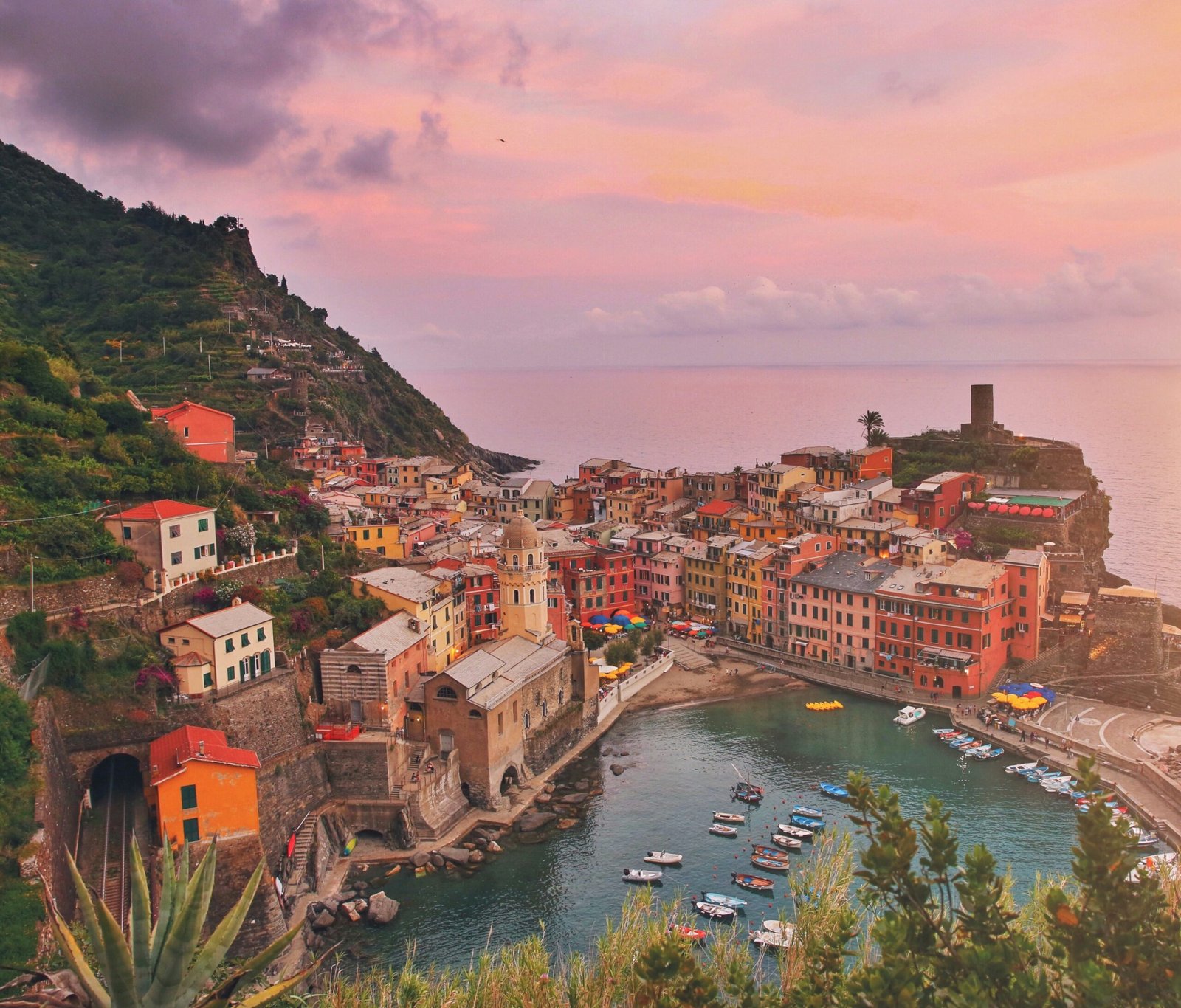
October arrives in Italy with a particular quality of completeness. The tourist season is over, the summer infrastructure has closed or slowed, and the agricultural calendar — which has been building since the spring planting — reaches its second great moment of harvest. The olive groves of Tuscany, Umbria, and Puglia are being picked. The white truffle of the Langhe and the Crete Senesi is at the height of its season.
The Dolomite forests have turned to a palette that photographers plan trips specifically to encounter. And the retreat centres of central and southern Italy, freed from the logistical demands of peak season, are running their most considered programs of the year to a smaller and more committed audience. Yoga retreats in Italy in October suit a specific kind of practitioner — one who finds the abundance of the harvest more nourishing than the abundance of summer, and the quiet of autumn more conducive to practice than the sociability of July.


October’s climate is, across most of Italy, the most purely comfortable of the year for outdoor practice. The heat that made July and August a scheduling exercise has entirely gone; the cold that January and February impose on morning sessions has not yet arrived. In Tuscany and Umbria, October days regularly reach 18 to 22 degrees in the afternoon, with mornings cool and clear — the kind of still, bright autumn air that settles after a night of rain and carries a quality of presence that neither summer nor spring quite produces. In the south, Puglia and Sicily maintain temperatures in the low to mid-twenties through most of the month, and the sea, while cooling from its September warmth, remains swimmable until mid-October in the deeper southern waters.
The visitor numbers in October are the lowest of any month with reliably pleasant weather. September already sees a significant drop from August, but October drops further, and the quality of access this creates — to hilltowns, to rural properties, to the restaurants and cultural sites that summer crowds make difficult — is qualitatively different from any other warm month. A meal in a Tuscan trattoria in October is a meal for locals and a handful of knowing visitors, with the owner’s attention and the kitchen’s best effort directed at a room that is not managing forty covers simultaneously. The same trattoria in July is a different experience, and not a better one.
Prices in October reflect this reduced demand. Retreat rates are typically 25 to 35 percent below the July and August peak, and in some regions — the Italian Lakes, Liguria, the Adriatic coast — the drop is steeper as coastal infrastructure begins to close for winter. The combination of lower rates and superior conditions, which September begins and October completes, is the underlying logic that experienced retreat-goers use to explain why they plan their Italian trips around the autumn rather than the summer.
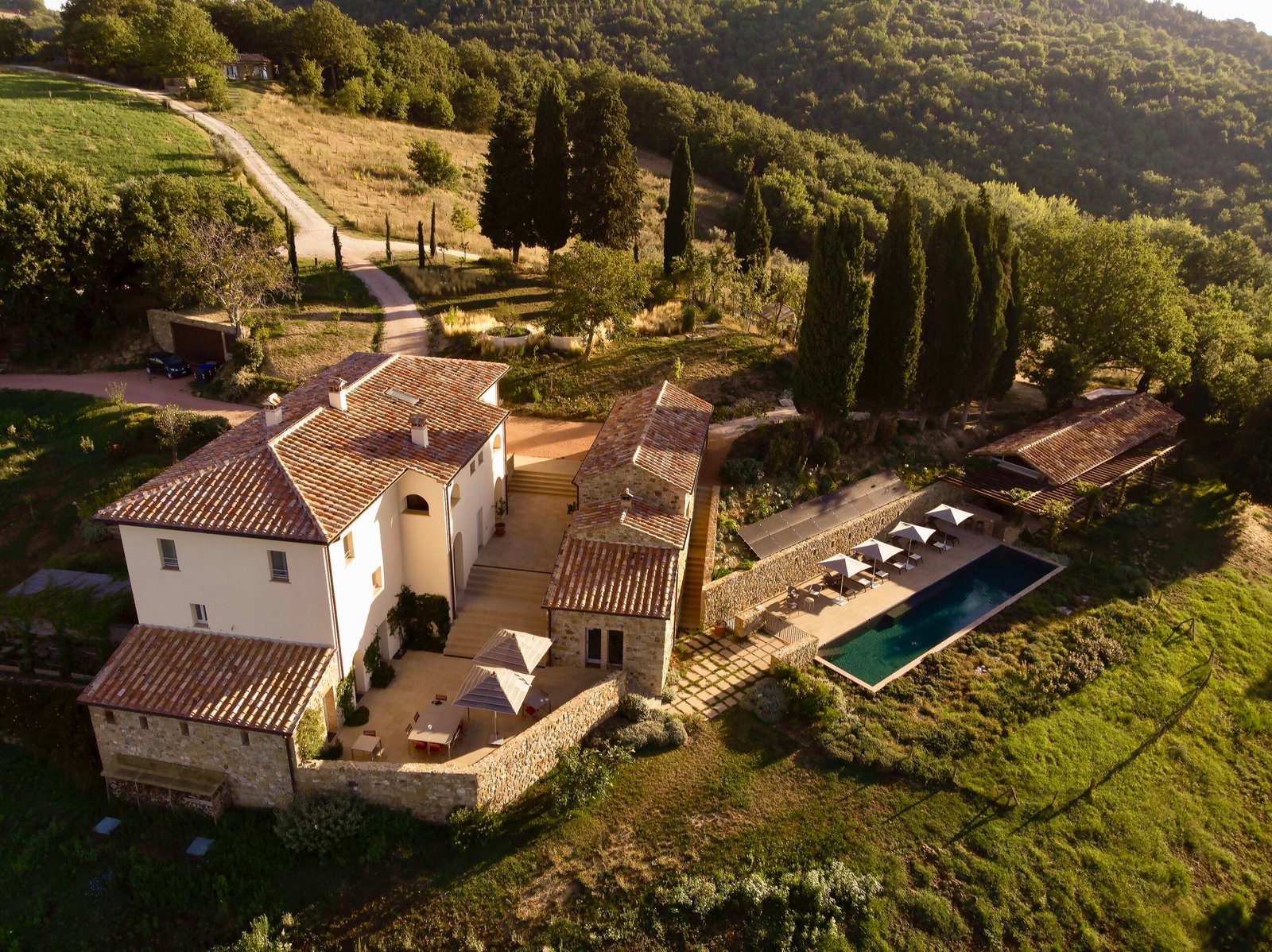
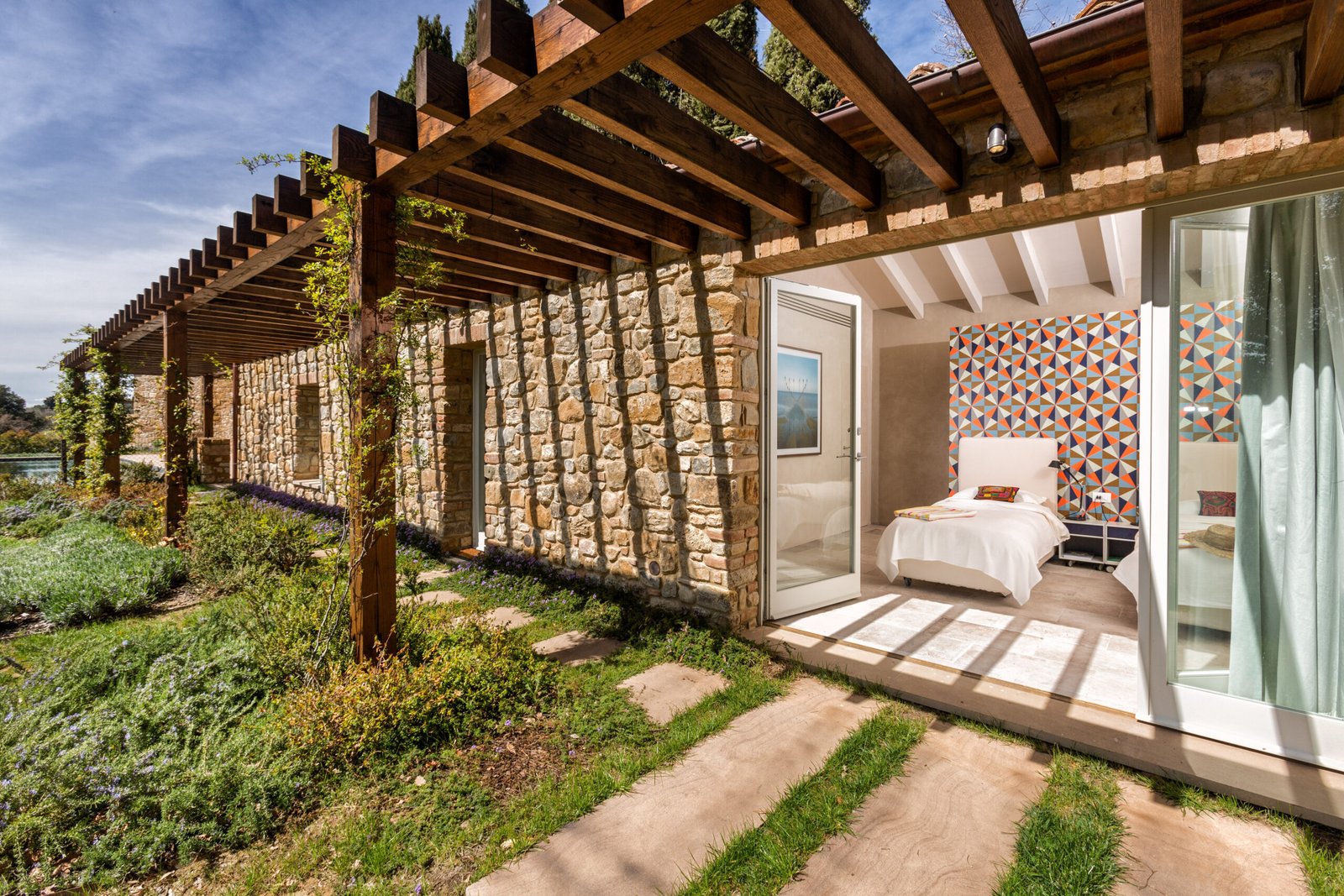
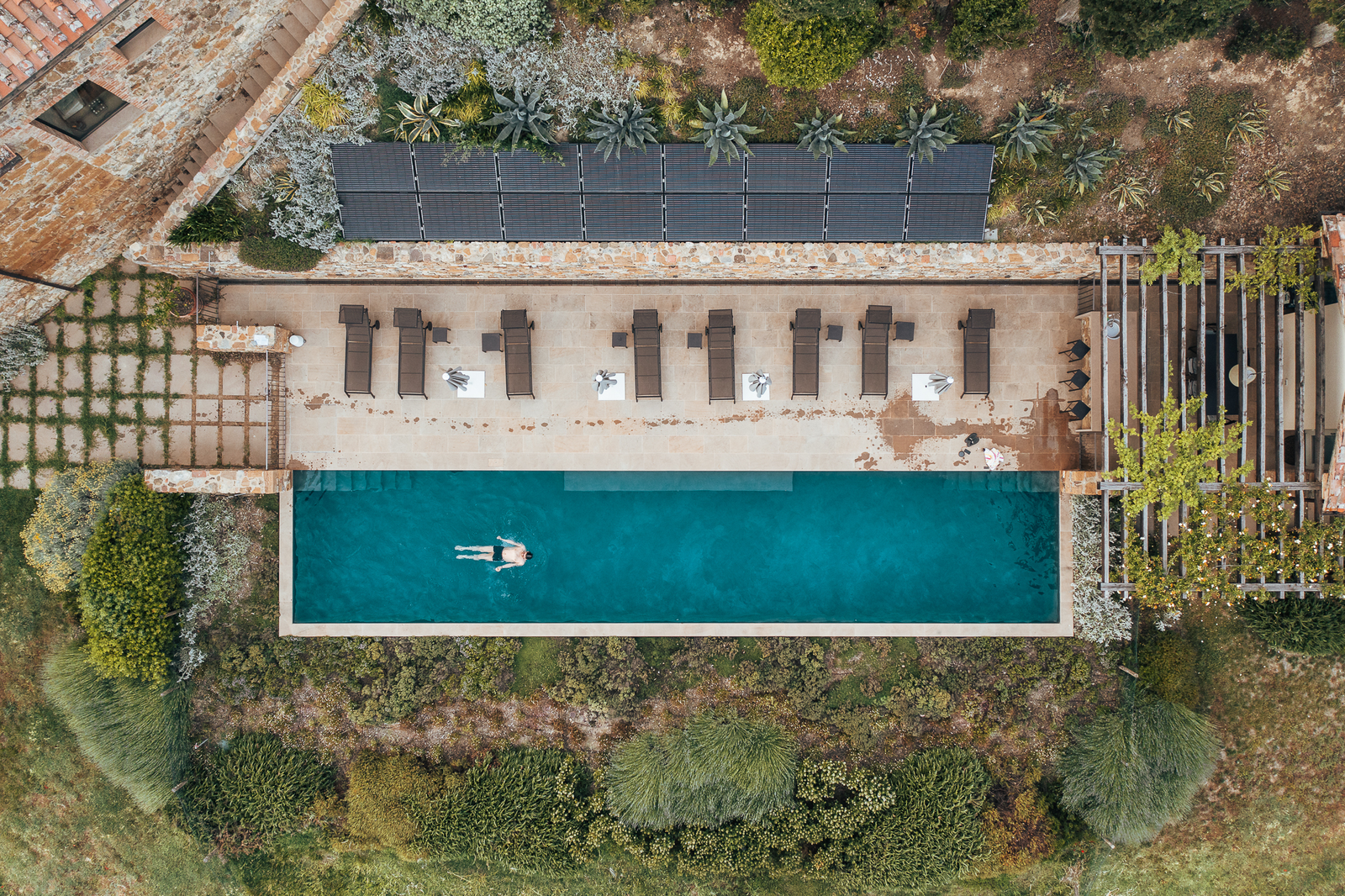
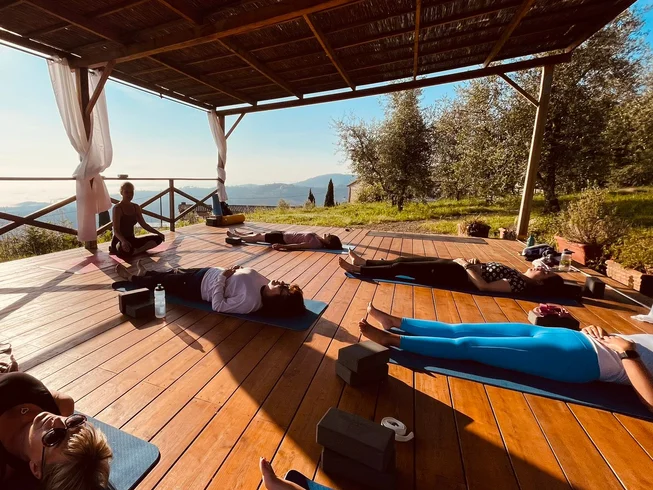
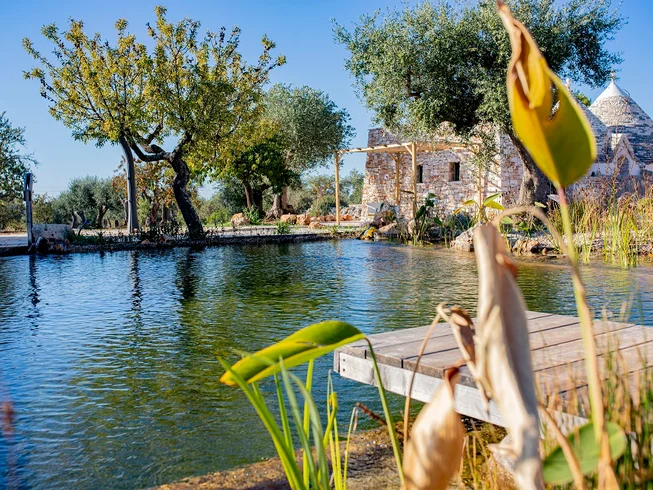
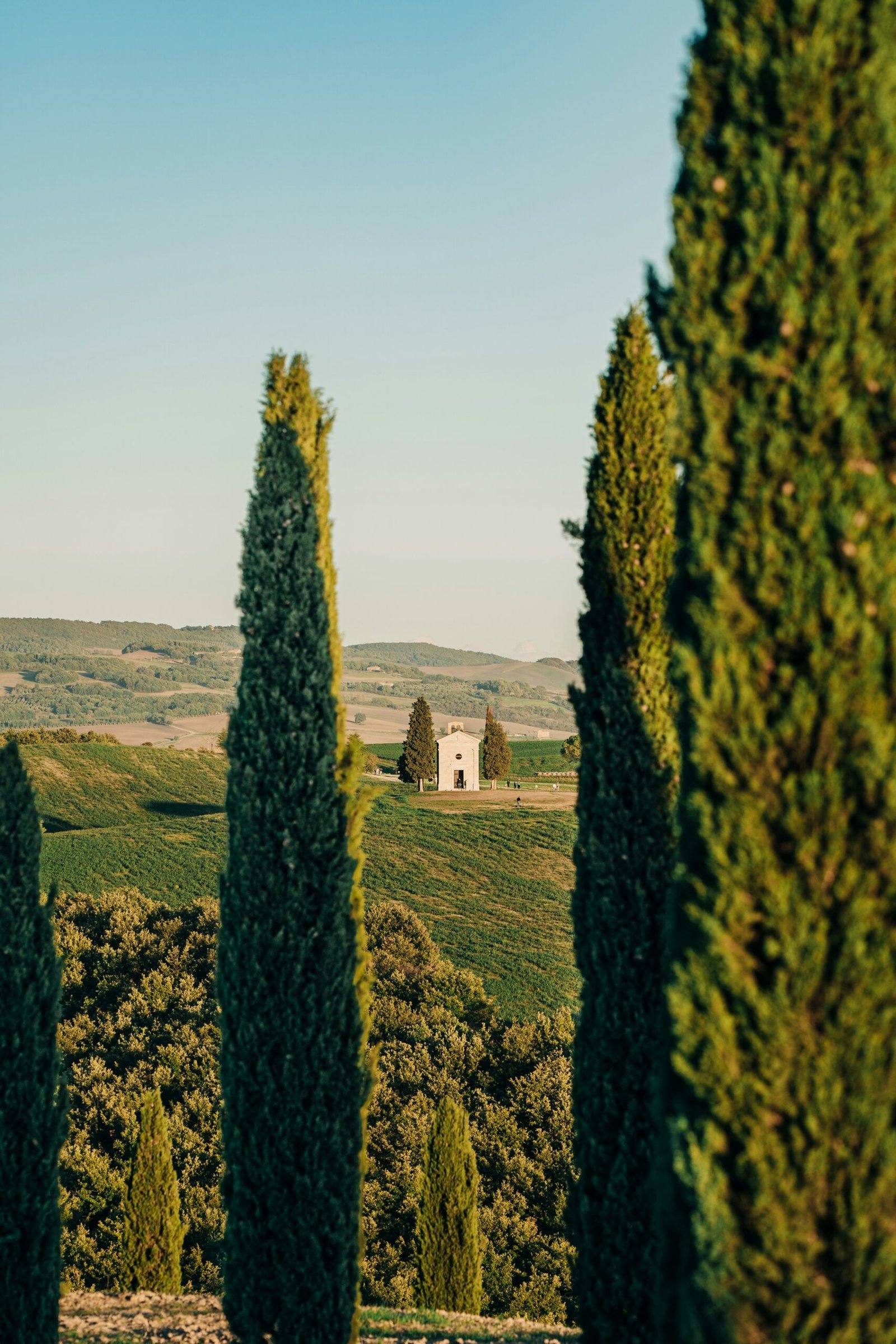
Tuscany in October is defined by the olive harvest, which runs from mid-October through November across the region and transforms the landscape and the food culture simultaneously. The olives, which have been green and growing through the summer, begin to turn from green to violet to near-black as they ripen, and the harvest involves the entire extended community of a working estate: nets spread beneath the trees, the olives combed from the branches by hand or with electric rakes, the crates carried to the frantoio for pressing within hours of picking. The olio nuovo — the first pressing of the new harvest — is a product of violent green intensity: bitter, peppery, almost aggressive in its freshness, so different from the mature oil of twelve months earlier that they seem like different substances. Retreat centres on working olive estates in the Chianti, the Maremma, and the Lucchesia hills build October programs around this harvest, and the experience of practising on a terrace with the smell of fresh oil coming from the press below, then eating that evening’s meal dressed in oil that was pressed that afternoon, is one of the most concentrated expressions of Italian food culture available to anyone outside the country’s agricultural communities. The full range of Tuscan retreat options, many of which reach their annual peak in October, is at yoga retreats in Tuscany.
Umbria in October runs a parallel calendar to Tuscany’s, with the olive harvest and the white truffle season operating simultaneously through the month. The truffles of Norcia and the Valnerina — the black truffle, Tuber melanosporum, which has its autumn peak in October and November — are embedded in the Umbrian food culture in a way that goes well beyond the luxury product the international market has made of them: shaved over scrambled eggs for breakfast, worked into a paste for pasta, used in ways that treat the ingredient as a staple rather than a garnish. Retreat programmes in Umbria in October that incorporate a morning with a trained truffle dog and its handler — the lagotto romagnolo moving through the oak forest while the handler reads the ground — are offering a quality of sensory and ecological attention that sits entirely naturally alongside formal practice. The retreat infrastructure of the region, well-developed for contemplative and nature-based programming, is visible at yoga retreats in Umbria.
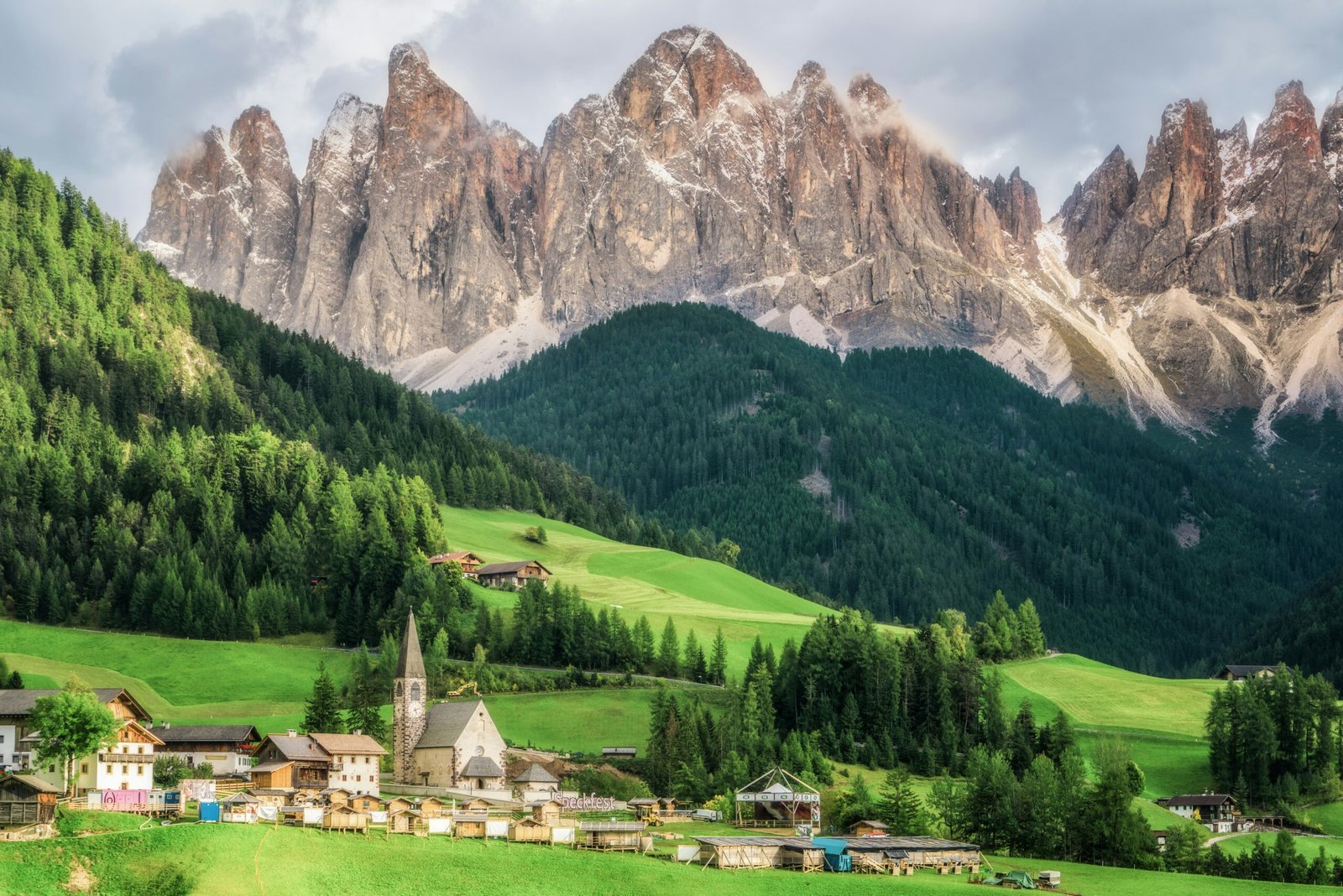
The Dolomites in October are at their most dramatically coloured. The larch forests, which are the only deciduous conifers native to the Alps, turn a vivid yellow-gold in October that contrasts with the white limestone rock faces above and the dark green of the remaining pines below in a combination that the summer months — when everything is uniformly green — cannot produce. The high paths are quieter than in July and August, the mountain huts are closing one by one through the month, and the quality of solitude available on an October Dolomite trail at altitude is something that summer’s popularity makes impossible. Retreat centres in South Tyrol and the Trentino that stay open through October run programs specifically designed around the autumn mountain environment — longer morning sessions before the day becomes cold, afternoon hikes through the larch forests, sauna and thermal elements in the evening as the temperature drops.
Basilicata — the region that Matera, the ancient cave city, has made increasingly visible over the past decade — is in October one of the most rewarding retreat destinations in Italy for those who have not yet encountered it. The Sassi of Matera, the cave dwellings carved into the ravine walls that constitute one of the oldest continuously inhabited urban settlements in the world, are best experienced in October when the heat that fills the ravine in summer has dissipated and the low autumn light illuminates the stone in a way that the overhead summer sun obscures. Several retreat operators have established programs in restored cave dwellings and in farmhouses in the surrounding Murgia plateau, using the extraordinary landscape and the complete absence of tourist infrastructure as the context for practice. The food culture of Basilicata — cruschi peppers dried and fried in olive oil, the handmade pasta shapes of cavatelli and lagane, the Aglianico del Vulture wine from the volcanic slopes of Mount Vulture — is as specific and as deeply rooted as any in Italy and entirely unrepresented in the retreat circuit’s usual itinerary.
Sicily in October has finally exhaled from summer. The archaeological sites of Agrigento, Selinunte, and Segesta — which in August require visits at dawn to avoid the heat — are in October accessible at any hour and without crowds, the stone of the temples warm in the afternoon sun and the surrounding countryside returning to a green that the summer burned away. Several retreat centres in the interior, around the Erei highlands and the Nebrodi mountains, run October programs that use the island’s post-tourist-season quietude as a deliberate element of the programme design, positioning October as the month when Sicily is most fully itself.
The mood shifts toward introspection. Summer’s external, active energy gives way to something more inward. This atmospheric shift actually enhances certain types of wellness practices: meditation, yoga, contemplative movement, creative work.
The olive harvest is October’s most specific and most rewarding agricultural event, and its relationship to retreat life in the olive-producing regions is as direct as the vendemmia’s relationship to September in the wine country. The harvest in Tuscany typically begins in the second week of October for the earliest varieties — Frantoio and Leccino, which ripen before the frosts — and extends into November for the later Moraiolo. In Umbria, the harvest runs similarly, with the Trevi area around Spoleto producing some of the most intensely flavoured oils in central Italy from olives picked at first colour rather than full ripeness, maximising the polyphenol content that gives new oil its bitterness and peppery finish.
The frantoio — the olive press — is the physical and social centre of the harvest period, and a retreat that incorporates a visit to one during the pressing is offering something that no food tour or cooking class can replicate. The smell of fresh-pressed oil is overwhelming in the best possible sense: green, grassy, almost herbaceous, filling the press room and the surrounding air. The mill owner scoops a ladle of newly pressed oil onto a slice of unsalted Tuscan bread — the bruschetta all’olio that is eaten across the region in October as a daily confirmation that the harvest has come in well — and the taste of oil produced within the hour from olives picked that morning from the trees visible through the window is one of the more straightforwardly revelatory food experiences available anywhere in Europe. A retreat kitchen with access to this oil in October is cooking with an ingredient that money alone, outside this time and place, cannot buy.
The white truffle of Alba — Tuber magnatum pico — has its peak season from October through December, and the Fiera del Tartufo Bianco di Alba, which runs every weekend through October and November in the Langhe town, is the most significant truffle market in the world. The fair itself is less interesting than what surrounds it: the Saturday morning market where the trifolau — the traditional truffle hunters — bring their finds wrapped in cloth in small baskets, the negotiations conducted in low voices, the smell that fills the market square with a concentration that makes the truffle’s reputation immediately comprehensible to anyone who has previously found it elusive.
A retreat based in the Langhe in October encounters this as part of the landscape rather than as a destination event. The truffle hunters are working the oak and hazel woods around Barolo and La Morra from before dawn; the restaurants of Alba are serving the first shavings of the season over tajarin pasta or fried egg from the third week of October; and the combination of the harvest culture, the wine culture — the Barolo and Barbaresco are now in the cellar from the late September harvest, and the winemakers have a particular quality of post-harvest focus — and the autumn light over the vine-covered hills creates a context for retreat that Piedmont in October offers alone among Italian regions.
October practice has a quality that the yoga tradition describes as sattva — balanced, clear, neither too hot nor too cold, neither too active nor too dull. The body in October is warm enough from the accumulated heat of summer to maintain openness without significant preparation, but the cooler mornings impose a gentle discipline that the practice benefits from: the first five minutes require attention rather than none, which means the practitioner arrives at the session rather than finding the session already in progress. This quality of meeting the practice rather than being carried by external conditions — the heat that summer provides freely, the cold that winter imposes — is one that many experienced teachers consider the most productive state for serious work.
The shortening days in October create a morning practice window that has a different character from summer’s pre-dawn hour. Sunrise in central Italy in early October falls around seven-fifteen and moves to nearly seven-fifty by the end of the month, which means that a seven o’clock session begins in the last minutes of darkness and reaches its midpoint as full light arrives. This transition — from the interior quality of practice in darkness to the outward quality of practice in full daylight, within a single session — is specific to the autumn months and produces a natural arc that the best October retreat programs build into their morning schedule deliberately rather than treating as incidental.
The food in October is among the most specifically Italian of the year, built around ingredients that are available nowhere else and at no other time. The olio nuovo from the first pressing is on the table from mid-month, still green and aggressive, used on everything — drizzled on soup, poured over grilled vegetables, mixed into the bruschetta that becomes the daily bread of the harvest period. Chestnuts, which begin appearing in the markets of the Apennines and the Alpine foothills from the first week of October, are roasted, pureed, worked into pasta and cake and the slow-cooked preparations that Italian mountain cooking has developed over centuries. The first borlotti beans of the autumn, dried and soaked and cooked long with sage and garlic and the new olive oil, produce a dish of such elemental satisfaction that the summer’s more colourful table seems, in retrospect, merely decorative. And the white truffle, wherever proximity allows — Alba, Acqualagna in the Marche, San Miniato in Tuscany — arrives as the month’s most extravagant note, shaved with a mandoline over dishes that exist to receive it and nowhere else.
September, which precedes October, is the month of transition — the vendemmia, the warm sea, the return of silence after August. Those planning a retreat and choosing between the two months will find the detailed case for September at September yoga retreats in Italy; the essential difference is that September still belongs to summer at its edges — the sea is warm, the days are long, the harvest is in its first phase — while October has completed the turn into autumn. Neither is better; they suit different intentions.
November, which follows, takes the autumn further into its inward phase: the olive harvest winds down, the truffle season continues but the landscape closes in, and the first rains of winter arrive with increasing frequency. November yoga retreats in Italy have a character that is closer to January than to October — the contemplative register of deep autumn rather than autumn’s generous middle period. October catches the balance point between those two registers, and for practitioners who want the richness of the agricultural season without the withdrawal of deep winter, it is the right month. The full Italian retreat calendar and how October fits within it is at yoga retreats in Italy.
October is logistically straightforward. Flights are inexpensive, trains are uncrowded, car hire is readily available at shoulder-season rates, and the road network is clear of the summer traffic that made the Amalfi Coast road and the Ligurian coastal routes slow in August. The main planning consideration is that some coastal retreat centres and smaller rural properties close between October and March; confirm the specific dates with the centre before booking travel. Mountain properties in the Dolomites and the Alpine valleys typically remain open through October but may close in the last week for preparation before the ski season; the exact dates vary by centre and by year.
The Fiera del Tartufo Bianco di Alba runs every weekend through October and November; the specific programme and dates for each year are published in September. If timing a retreat in the Langhe around the fair, the weekends with the largest events attract visitors to the town itself, while weekdays maintain the quietude of the countryside. The national holiday of Ognissanti on November 1st falls close enough to October to affect any retreat that runs into the month boundary; some businesses and transport services operate on a reduced schedule on November 1st and occasionally on the preceding day.
Packing for October requires accepting that the temperature range across the day is the widest of any comfortable month. A morning practice session at seven in central Italy in mid-October may begin in 10-degree air; the afternoon could reach 20. Merino base layers for morning sessions, a fleece or wool mid-layer for evenings and early mornings, and a proper waterproof outer shell for the rain that arrives with increasing frequency through the month cover the range adequately. Trail shoes with grip are worth including for olive grove visits, forest truffle walks, and the wet paths that October rain leaves in the Umbrian and Tuscan hills. A swimsuit remains useful for thermal baths, which come into their own in October’s cooler air, and for the south and islands where the sea is still swimmable in the first half of the month.
1. What is the weather like for outdoor yoga practice in October across Italy?
In central Italy — Tuscany, Umbria, Lazio — October days reach 16 to 22 degrees, making outdoor morning practice comfortable in a light layer and afternoon sessions warm enough for lighter clothing. The mornings are cool and occasionally misty in the valleys, which clears by mid-morning on most days. In the south — Puglia, Basilicata, Sicily — temperatures stay in the low to mid-twenties through most of the month, and outdoor practice is unrestricted at any morning hour. The Dolomites and alpine areas are significantly cooler, with morning temperatures potentially dropping to 5 to 8 degrees at altitude; retreat centres there plan for indoor morning sessions with outdoor afternoon activities when conditions allow. Rain is possible throughout Italy in October; the central regions receive it as short, sharp autumn showers rather than sustained rainfall.
2. What exactly is the olio nuovo, and why is it specific to October?
Olio nuovo is the first pressing of the new olive harvest — fresh extra virgin oil pressed within hours of the olives being picked, before it has had any time to settle, filter, or oxidise. Its flavour is intense and specific: bitter, peppery, almost aggressive, with a grassy quality that the mature oil of twelve months earlier has entirely lost. It is available only from mid-October through November in the areas producing it, and only fresh — the qualities that make it distinctive dissipate over weeks. A retreat kitchen with access to olio nuovo from a nearby estate is serving it at a moment and in a form that cannot be bought in any supermarket at any other time of year. The experience of tasting it on a slice of bread with nothing else, at a press where it was made that day, is one of those genuinely unreplicable food experiences that October in olive-growing Italy makes available without effort.
3. Is white truffle season really at its peak in October, and is it accessible from a retreat?
The white truffle season runs from October through December, with October generally considered the peak for aroma intensity — the truffle has had the summer to develop but has not yet been affected by the harder winter frosts that can alter its character. In the Langhe, the Crete Senesi in Tuscany, and around Acqualagna in the Marche, the truffle is sufficiently present in the local economy that a retreat participant with a free afternoon can encounter it at a market, in a restaurant, or on a guided hunt without it requiring a special expedition. Several retreat centres in these areas have relationships with local trifolau and include a guided truffle hunt — typically two to three hours in the early morning with a trained dog — as a component of their October programme. The cost is not trivial, but it is substantially lower than what the same experience costs as a standalone tourist product in summer.
4. Why is Basilicata worth considering for an October retreat when most people have never heard of it as a retreat destination?
Basilicata is one of the least visited regions in Italy despite containing Matera — a UNESCO World Heritage site and one of the oldest continuously inhabited settlements in the world — and the Pollino National Park, the largest protected area in Italy. In October, Matera’s Sassi district is at its most navigable: the heat that fills the ravine in summer has gone, the crowds that UNESCO status attracts in July and August have dispersed, and the low autumn light illuminates the cave dwellings in a way that the overhead summer sun cannot. The Murgia plateau surrounding the city is golden in October, and the quiet of a landscape that receives very few visitors at any time of year and almost none in autumn creates conditions for practice and reflection that the more famous destinations of Tuscany and Umbria, even in their quietest moments, cannot quite replicate.
5. How does October practice differ from the restorative, inward-focused practice of the winter months?
October sits at the transition between autumn’s active engagement with the external world — the harvest, the landscape at its most colourful, the food culture at its most specific — and the winter’s turn toward interior work. The practice in October reflects this: it is not yet the deeply restorative, slow, fire-warmed practice of January and February, but neither is it the dynamic, outdoors-oriented practice of May and June. The body retains summer’s openness while beginning to return to the more deliberate engagement that the cooler months require. Teachers often describe October as the best month for consolidating what the year’s practice has built — the gains in flexibility and strength that spring and summer produced are still present, and the slightly cooler mornings and shorter days invite a quality of attentiveness that makes technical refinement more accessible than at any other point in the year.
6. How far in advance should I book an October retreat in Italy?
Three to five months is sufficient for most established centres, which is meaningfully less pressure than May, June, or September. The exception is the Langhe in Piedmont during the Fiera del Tartufo weekends in October, where accommodation and retreat places in the immediate vicinity of Alba are booked earlier by returning visitors. In Tuscany, retreat centres on working olive estates that run harvest-specific programmes fill faster than those without that agricultural connection, since the olio nuovo experience is a specific draw that generates strong repeat booking. Basilicata and Sicily in October can generally be booked two to three months in advance without losing good options. Flights to Italian airports in October are inexpensive and available on short notice across most European routes.
Your email address will not be published. Required fields are marked *