
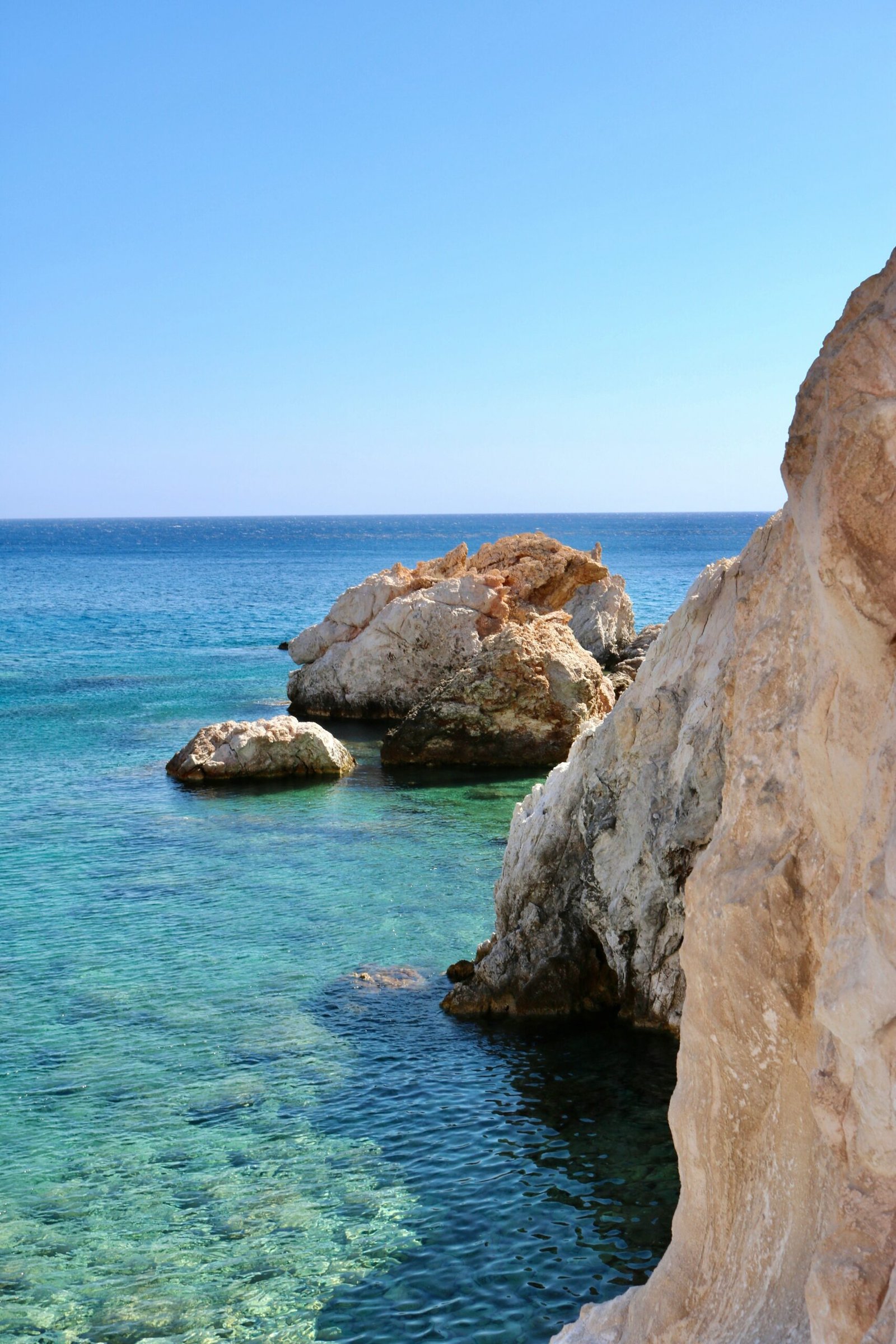
June is when the Greek summer properly begins. The sea crosses 22°C on the southern coasts, the days are at their longest, and the country has an energy that the spring months were building toward.
It is also the last month before the August compression arrives — the Cyclades are animated but not yet overwhelmed, the Ionian islands are at their warmest without the peak season crowds, and the retreat centres are running full programmes with enough availability that planning a few weeks out is still possible.


June is the first month where the sea is genuinely warm across all regions and outdoor practice is comfortable at any hour without a warm layer. The days reach their maximum length at the solstice on June 20-21 — sunset at around 9pm across the Aegean — which means the retreat day can breathe in ways that winter cannot produce. Our yoga retreats in Greece covers every destination and format.
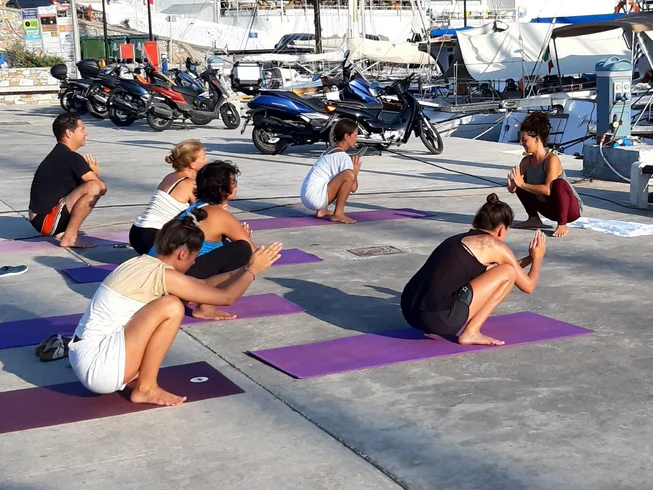
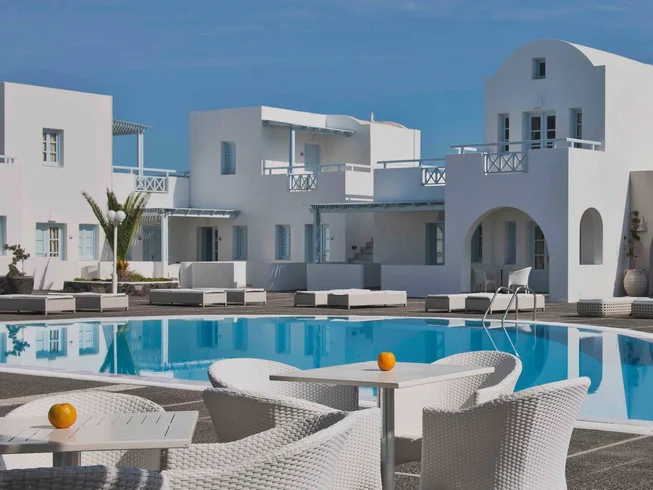
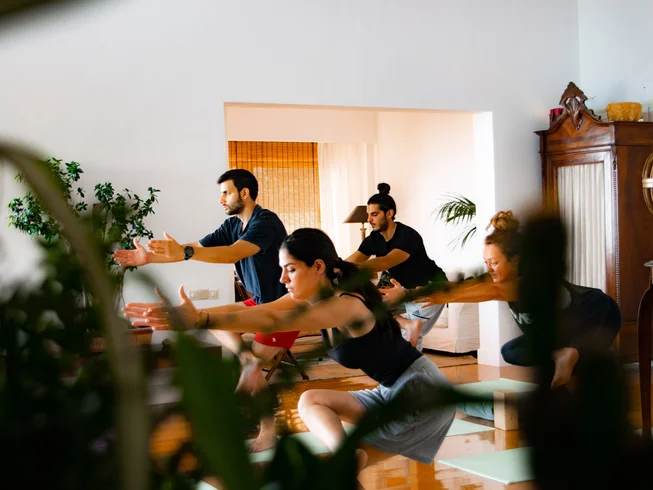
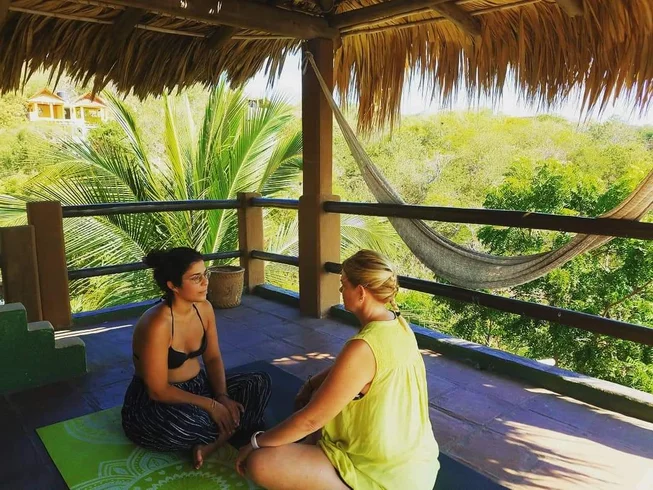
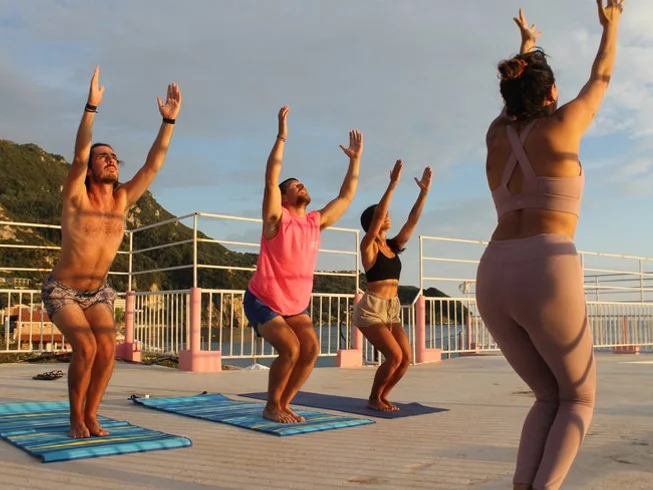
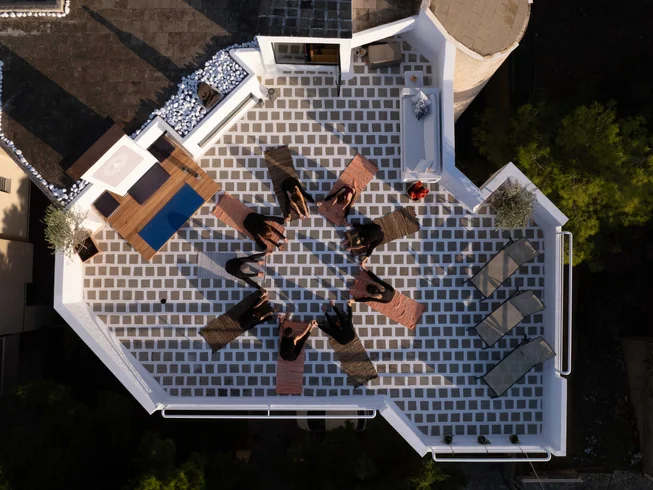
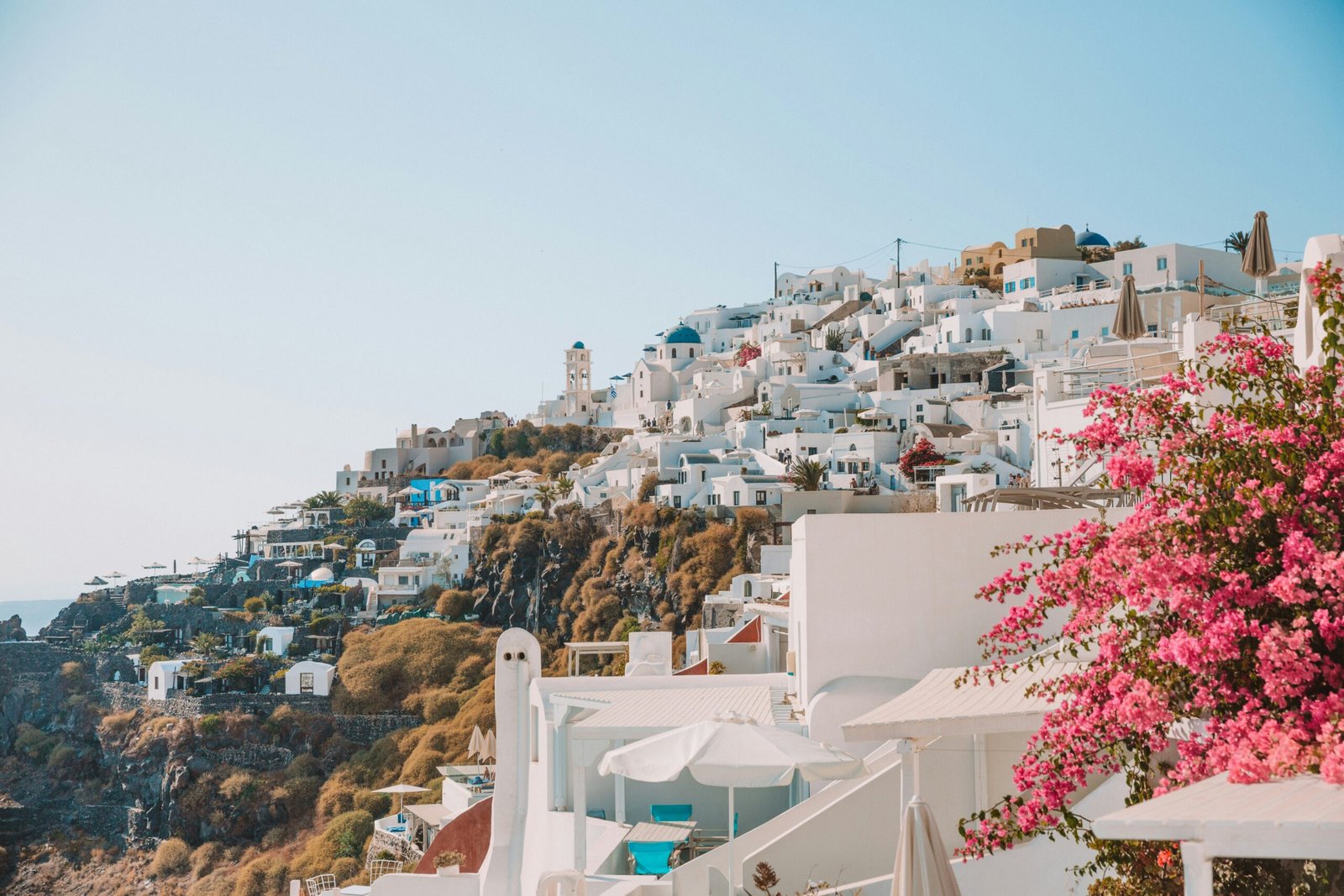
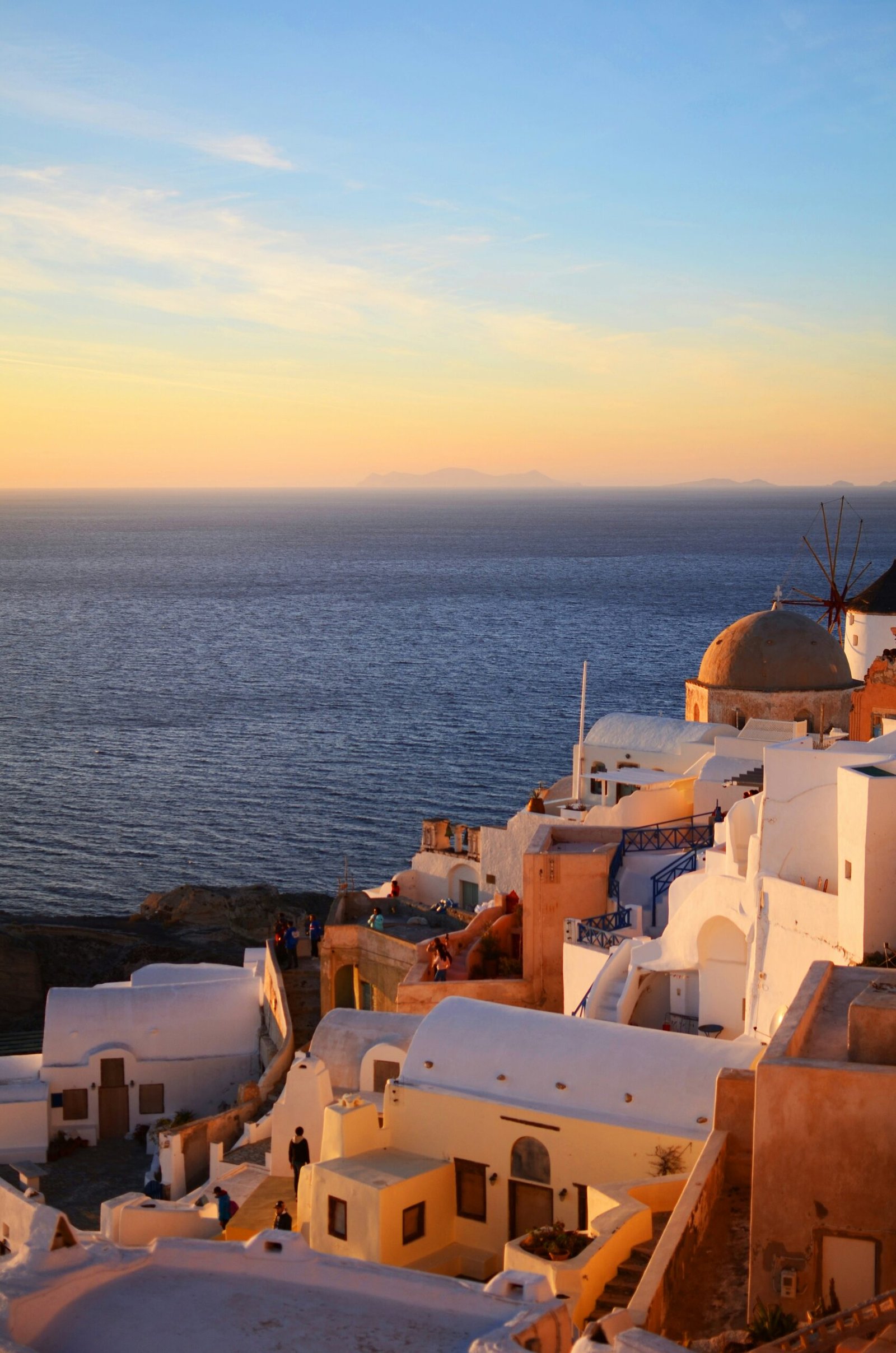
Santorini in June is the island in its summer mode but not yet at its August peak. The caldera views, the volcanic cliffs, and the cave houses are fully accessible — the summer infrastructure operational, the beaches open, and the sea at 21-22°C genuinely warm for extended swimming. June is also the month of the solstice, and watching the summer solstice sunrise from the caldera rim — the sun rising over the Anatolian coast visible on clear mornings — is one of those specifically astronomical-geographical experiences that the island’s position makes possible.
The retreat scene on Santorini in June runs its most active programmes of the year: morning practice timed to the early sunrise (around 5:45am at the solstice), sunset sessions on caldera-facing terraces, and the specific quality of June light on the volcanic landscape that produces the most intense version of the famous Santorini photographic aesthetic. For the full Santorini retreat picture, our yoga retreats in Santorini guide covers the island in detail.
The Dodecanese islands in June — the southeastern Greek island chain near the Turkish coast — are at their most rewarding. Rhodes and Kos specifically have the combination of warm sea (22-23°C), reliable sunshine, and cultural richness that the more famous Cycladic islands sometimes sacrifice for visual drama.
Rhodes in June has the medieval old town fully operational without the August cruise ship density. The Grand Master’s Palace, the Street of the Knights, and the Byzantine walls of the old town — a UNESCO World Heritage site — are in June accessible in a way that peak summer makes genuinely difficult. The retreat centres operating in the quieter western and southern parts of the island, away from the resort areas, offer morning practice with views over the sea toward Anatolia and afternoon excursions to the valley of the butterflies (Petaloudes) where thousands of Jersey tiger moths congregate in the humid gorge from June through August.
Kos in June is the island before the package tourism arrives in force — the archaeological sites of the Asklepion (the sanctuary of Asclepius, god of medicine, where Hippocrates taught), the ancient agora, and the tree under which Hippocrates is said to have taught medicine are in June accessible in relative quiet. The connection between the Asklepion and wellness practice is not purely historical: the sanctuary was specifically a place of healing retreat, where patients came to rest, practice, and recover in a structured environment — a model that the yoga retreat format is, in essence, continuing.
The Pelion peninsula in June is one of those specifically Greek destinations that the island-focused tourist circuit almost entirely misses. The mountainous finger of land jutting into the Aegean east of Volos — the mythological home of the centaurs and the setting for Jason’s departure with the Argonauts — has a lush, forested character completely unlike the Cyclades: chestnut and oak forests on the mountain slopes, apple orchards in the valley villages, and a coastline of small pebble beaches on the eastern side where the Aegean is clear and cold even in June.
The villages of upper Pelion — Makrinitsa, Vizitsa, Tsangarada — have traditional stone-built architecture, cobbled paths between the houses, and a pace of life that the peninsula’s relative inaccessibility has preserved. Retreat programmes in the Pelion in June combine yoga with forest walks, visits to the stone-built churches and the fountain squares of the old villages, and the eastern coast beaches that are accessible by path from the road above. The combination of mountain and sea within a single retreat base is specific to this peninsula and not available on the Cycladic islands.
Zakynthos in June has the sea at 22-23°C on the sheltered east coast and the famous Navagio (Shipwreck) beach accessible by boat from the north coast harbours before the July crowds make the excursion feel like a queuing exercise. The Blue Caves of the northern coast — sea caves where the light through the water surface produces a cobalt blue that photographs cannot accurately convey — are in June at their most atmospheric.
Ithaca — the small island identified as Odysseus’s home, connected by ferry to Kefalonia — is in June one of the most rewarding and least-visited destinations in the Ionian. The island has no airport, no mass tourism infrastructure, and a population of 3,000 that produces a quality of genuine remoteness that the larger Ionian islands can no longer offer. A small number of retreat programmes operate on Ithaca in June, specifically for those who want the Ionian experience without any concession to the tourist economy.
Red mullet (barbounia) is at its June best — the small fish caught in the Aegean and Ionian by small-boat fishermen, fried whole in olive oil with a squeeze of lemon, and eaten at port tavernas that have been serving the same dish for decades. The flavour of fresh barbounia has a sweetness and a sea-freshness that the same fish frozen and transported cannot replicate. At a taverna in a Cycladic or Ionian harbour in June where the catch came in that morning, ordering barbounia is the correct decision.
Fresh octopus hung on lines in the sun to dry before grilling — one of the visual signatures of the Greek port — is in June at its June-season preparation: caught in the spring, dried through May and June, and grilled over charcoal at the port tavernas. The combination of the drying process and the charcoal grilling produces a tenderness and a smokiness that the boiled version served at tourist restaurants does not approach.
June cherries from the Peloponnese orchards and the Pelion mountain villages are at their peak — the dark Bing-type varieties from the warmer valley orchards alongside the smaller, more tart varieties from the cooler mountain elevations. Apricots (verikoka) from the Argolid and the Larissa plain appear at markets from mid-June: intensely aromatic when ripe, used in the traditional Greek spoon sweet (verikoko gliko) that is offered at traditional households and some retreat centres as a welcome gesture.
The mezze culture of June in Greece is at its most complete: the evenings warm enough for outdoor dining, the ingredients at their summer freshness, and the rhythm of a long communal table with small dishes arriving continuously producing the specific social pleasure that Greek eating is built around. Tzatziki made from June cucumbers and good Greek yogurt has a freshness and a texture that the winter version, made with greenhouse cucumbers and stored yogurt, cannot replicate. A meta-analysis on the Mediterranean diet and inflammatory markers has consistently identified the Mediterranean dietary pattern — olive oil, vegetables, legumes, moderate fish — as associated with reduced inflammatory markers and improved cardiovascular outcomes, which is the scientific underpinning of what Greek retreat kitchens are producing intuitively.
The first watermelons appear at Greek markets in late June — the Argolid varieties from the coastal plain, grown in sandy soil for flavour. Cold watermelon at the end of a June outdoor yoga session, cut at the retreat kitchen and eaten on the terrace, is one of those specifically seasonal pleasures that requires no elaboration.
The longest day of the year falls on June 20th or 21st. Several retreat centres in Greece — particularly on the Cyclades and in the Peloponnese — build specific solstice programming around this date: sunrise practice at the earliest dawn of the year, intention-setting ceremonies, and the particular quality of the year’s maximum light over the Aegean. At Santorini, Mykonos, and Cape Sounion, the solstice sunrise is a specifically geographical event: the sun rising over the Turkish coast or the Attica headland in conditions that the island’s position makes dramatic.
The Athens Epidaurus Festival — one of Europe’s oldest and most respected arts festivals — runs from June through August with performances at the ancient theatres of the Odeon of Herodes Atticus below the Acropolis and the theatre of Epidaurus in the Peloponnese. Ancient drama performed in the original settings, opera, dance, and international productions. For retreat guests based near Athens or the Peloponnese, an Epidaurus performance — arriving at the ancient theatre at dusk, watching the performance as the stars appear above the limestone seats — is one of those Greek cultural experiences that the retreat context makes more absorbing than attending as a standard tourist.
Local panigýria — the village festivals held on saint’s name days — reach their summer frequency in June. Almost every village in Greece has a patron saint whose name day produces a local celebration: outdoor music, dancing, communal eating, and the particular energy of a rural Greek community gathering for its own pleasure. Ask your retreat host what is happening locally — a panigýri within reach of the retreat base is always worth attending.
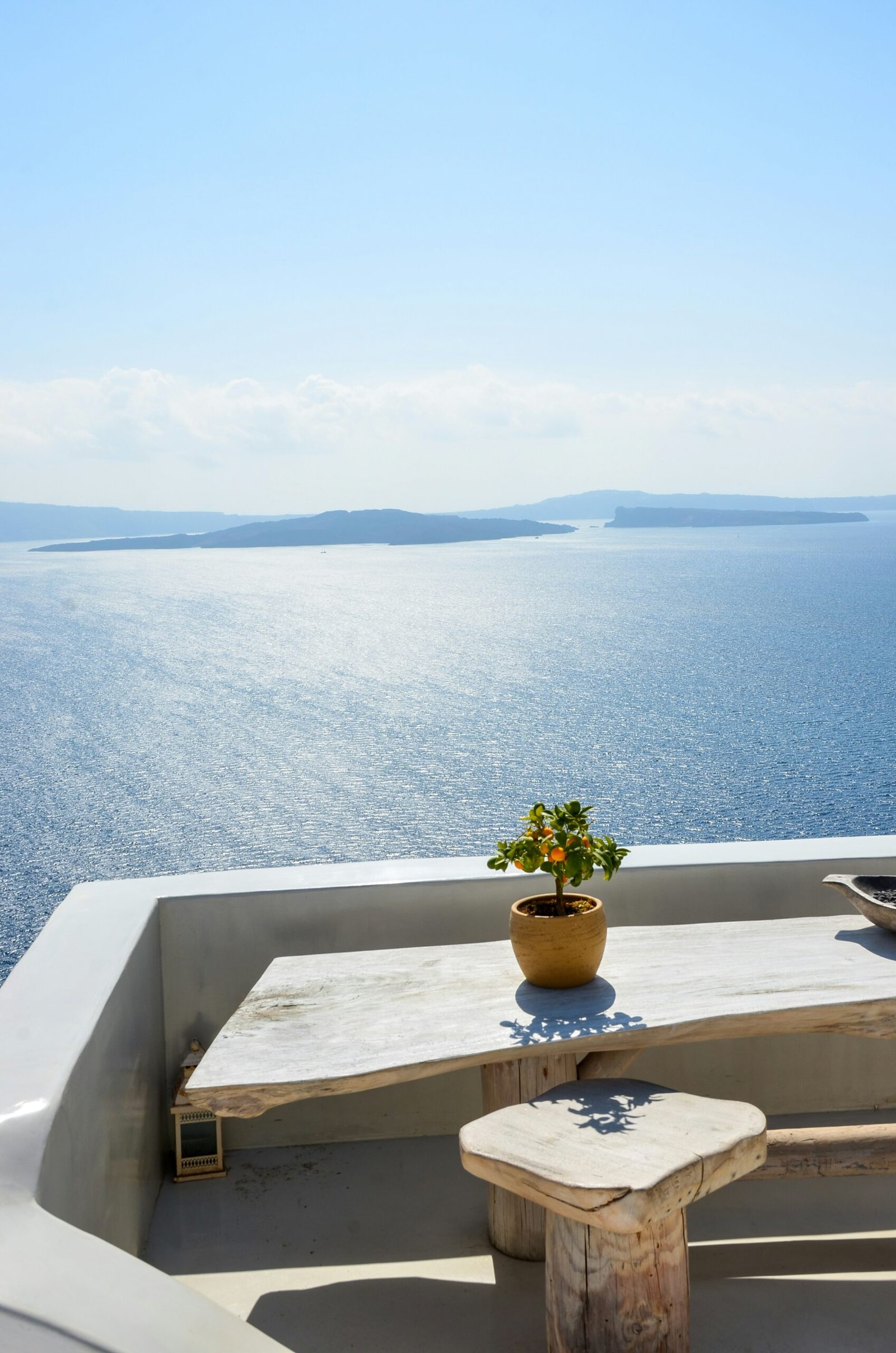
June programming is summer mode with spring prices. The days are at their longest — the solstice producing sunset at around 9pm — which means the retreat day can extend naturally in ways that winter cannot produce. Morning practice at 7am in full daylight. Evening sessions at 7pm in the warm June air that is still light enough for outdoor practice.
The solstice practice, for retreat centres that mark it, typically involves the earliest and latest practice of the year simultaneously: the longest dawn for the morning session, the longest dusk for the evening. On Santorini on the solstice, with the caldera visible from the yoga platform and the sky staying light until 9:30pm, the practice acquires a quality of elemental simplicity that scheduled programming rarely achieves.
The Epidaurus excursion — for retreats based in the Peloponnese or accessible from Athens — is the June programming event with the most specifically Greek cultural character. Arriving at the ancient theatre at dusk, watching the acoustic precision of the 2,400-year-old space perform its function with a contemporary production, and sitting in the same limestone seats where the ancient Greeks experienced catharsis: this is the kind of experience that the retreat context, with its accumulated presence and attention, makes genuinely absorbing rather than merely educational.
Is June a good month for a yoga retreat in Greece? Yes, particularly for those who want genuinely warm sea temperatures, long evenings, and the full spring-summer outdoor programme. The conditions are excellent across all regions, the retreat centres are fully operational, and the cultural events of June — the Epidaurus Festival, the solstice — add dimensions that other months cannot offer. The main trade-off compared to May is higher prices and slightly more visitors.
Is the Pelion peninsula worth choosing over a Cycladic island in June? For those who have already done the Cyclades, yes. The Pelion offers forested mountains, traditional architecture, and a Aegean coastline with small pebble beaches that is genuinely different from the volcanic drama of Santorini or the white-cube aesthetic of the Cyclades. It is less obviously beautiful and more specifically rewarding.
Is the Asklepion on Kos worth visiting from a yoga retreat? Yes, specifically. The Asklepion was an ancient healing sanctuary where patients came to rest, practice, and recover in a structured environment overseen by physicians trained in the Hippocratic tradition. The parallel with the yoga retreat format is direct rather than metaphorical: both are structured retreats from ordinary life oriented toward physical and psychological restoration. Visiting the site from a retreat base on Kos or Rhodes adds a historical depth to the retreat week that the practice alone cannot provide.
What comes after June if I want to extend into July? July brings full summer heat across the Aegean, the Meltemi wind at its strongest, and the islands at maximum summer capacity. See our yoga retreats in Greece in July guide for where to go and what to expect.
Your email address will not be published. Required fields are marked *