
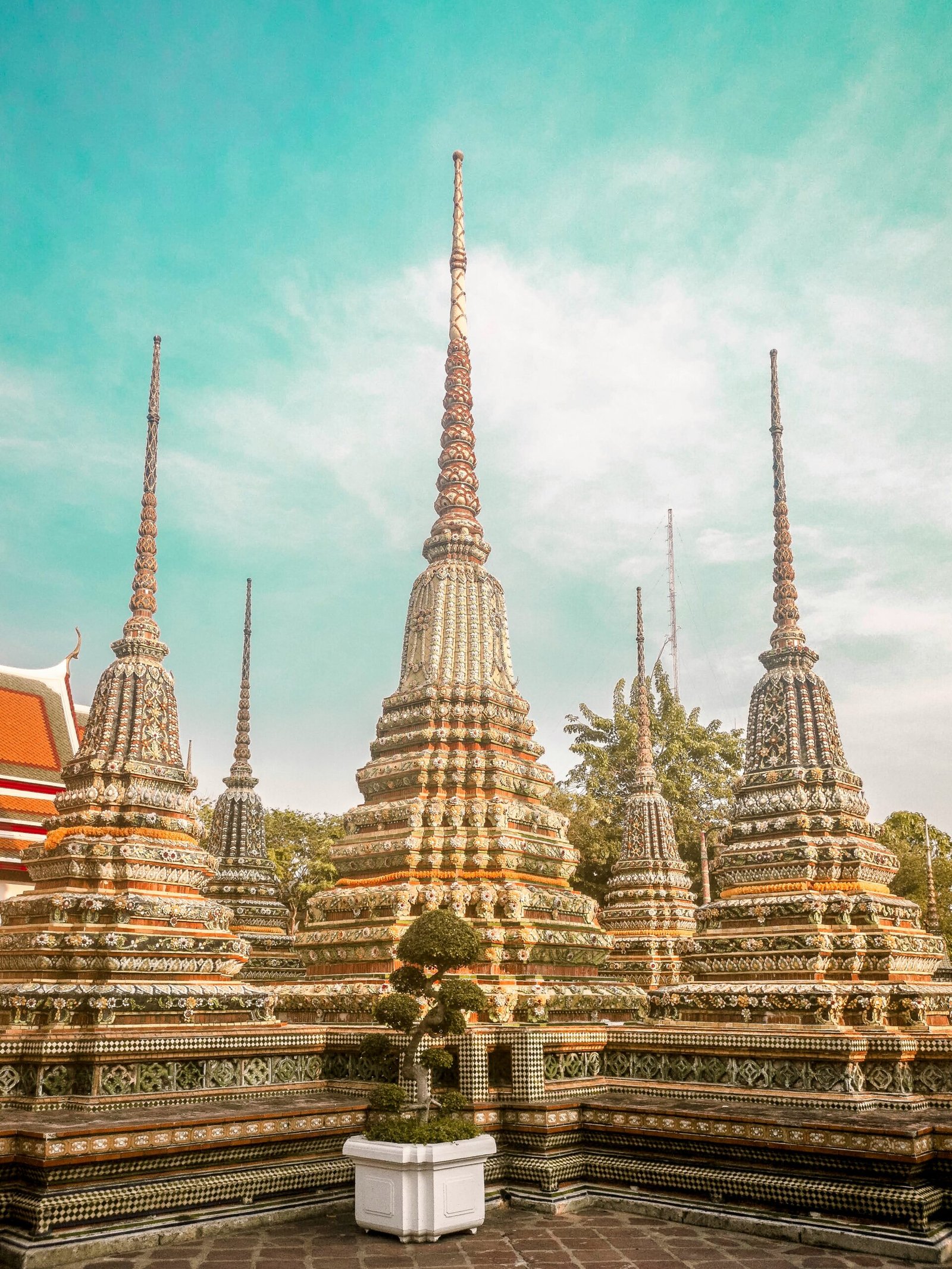
May is the month Thailand divides most dramatically. The southwest monsoon arrives on the Andaman coast in May — Phuket, Krabi, and Koh Lanta receiving the first serious rains of the season. The Gulf coast enters its own transition. And Chiang Mai — finally clear of the burning season smoke that dominated March and April — is in May producing some of the cleaner air of its year. A yoga retreat in Thailand in May works if you know exactly where you are going and why.


May is the turning point of the Thai retreat calendar. The dry season that ran from November through April is ending — the southwest monsoon arriving on the Andaman coast first, moving northeast through May and June. The Gulf coast follows its own weather pattern and stays in a transitional state through May. The north, finally free of the burning season, has its cleanest air of the post-winter months.
Browse our full yoga retreats in Thailand guide for the complete picture of what the country offers year-round. For the global context of May retreat travel, our yoga retreats in May guide covers every destination worth considering this month.

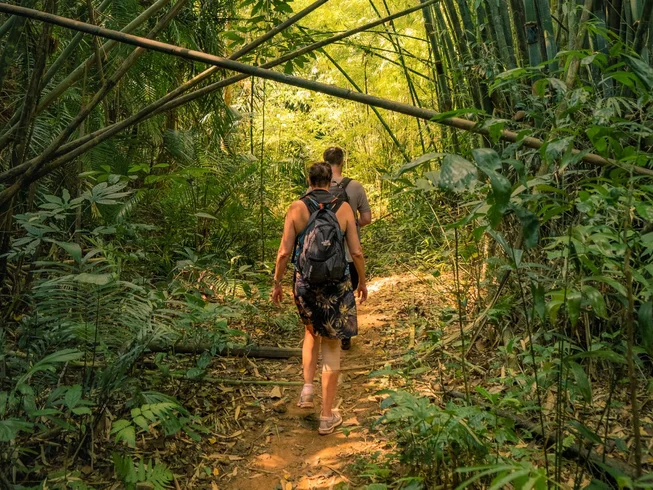
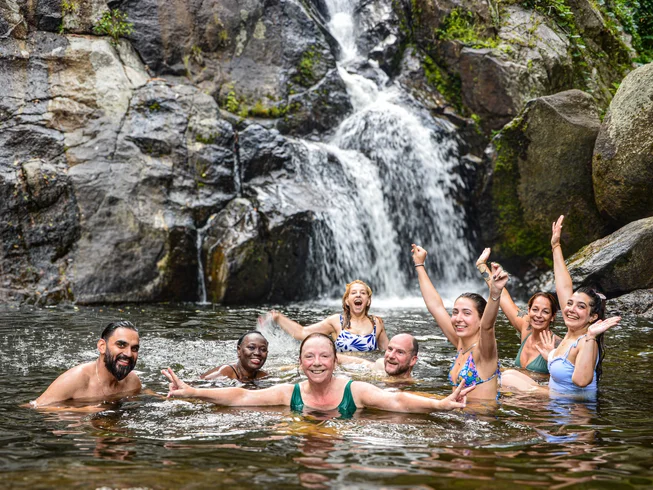

Pai — the small town in the Mae Hong Son valley three hours northwest of Chiang Mai through 762 curves of mountain road — is in May undergoing the most dramatic seasonal transformation of any Thai retreat destination. The brown, smoke-affected landscape of March and April is in May turning green almost overnight as the first rains arrive. The waterfalls that dried up in March — Mo Paeng falls west of town, Pam Bok waterfall on the Nam Lang river — are in May running again for the first time since the previous wet season, and the valley floor is being flooded and planted with rice seedlings by the farming families who define the agricultural rhythm of the Mae Hong Son highlands.
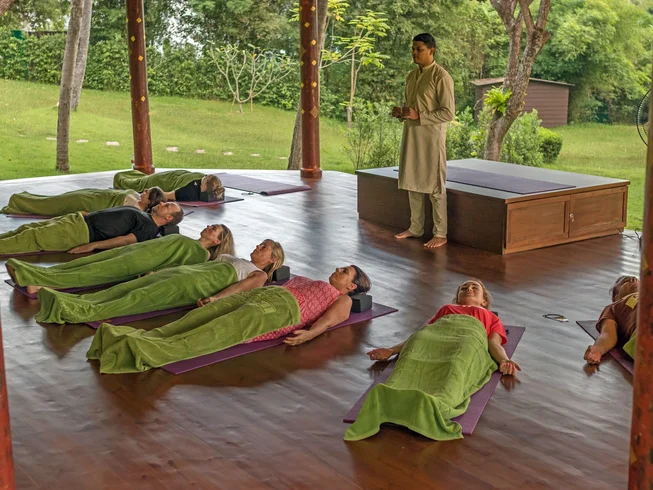
The Pai retreat scene in May has the specific character of the off-season: the January crowds gone, the teachers who live in Pai year-round present in their most locally-rooted form, and the prices significantly below the cool season peak. The bamboo bungalow studios on the river banks and the hillside retreat centres above the valley are in May running their smallest and most personal programmes. The morning practice with the sound of the river running again after months of near-silence, and the afternoon rain showers that structure the day naturally — indoor sessions as the rain falls, outdoor walking as it clears — produce a retreat rhythm that the dry season, for all its clarity, cannot replicate.
Khao Sok National Park in Surat Thani province — one of the oldest rainforests in the world, with the Cheow Lan Lake at its centre surrounded by limestone karst towers rising from the water — is in May beginning its green season transformation and is one of the most specifically compelling retreat environments in Thailand at this time of year. The park, which covers 739 square kilometres of ancient rainforest, is in May receiving its first wet season rains, the forest responding with the intense biological activity that the dry season suppressed.
The floating raft houses on Cheow Lan Lake — the accommodation built on bamboo platforms moored against the limestone cliffs — are in May accessible and operational, with the lake water level rising as the rains accumulate. The guided jungle treks through the Khao Sok forest in May have the specific quality of the wet season beginning: the leeches present (worth knowing about before committing to the trek), the birds and wildlife more active than in the dry season, and the forest floor smelling of the wet soil and the decomposing leaf matter that the rain releases.
Retreat centres that use Khao Sok as a base offer a format that is unlike anything else in the Thai wellness calendar: the morning yoga on the raft house platform above the lake, the afternoon wildlife observation kayak through the limestone formations, and the evening acoustic silence of a national park with no road noise and no resort infrastructure within the park boundaries.
Koh Kood — the fourth-largest island in Thailand, near the Cambodian border in the Gulf, two to three hours by ferry from Trat — is in May at the transition between dry and wet season with conditions that are still generally good. The island has no airport, limited tourist infrastructure compared to Koh Samui or Koh Phangan, and a permanent population of approximately 2,500 people who make their living from fishing and coconut farming rather than from tourism. The Khlong Chao waterfall — a three-tiered waterfall accessible by longtail boat and short walk from the main beach area — is in May beginning to fill with the first rains, and the bioluminescent plankton in the bay at Ao Phrao is in May visible on clear nights.
The retreat centres that operate on Koh Kood are small — typically 6-12 participants — and specifically oriented toward those who chose the island for its remoteness rather than for its infrastructure. May on Koh Kood has the sea still warm (28-29°C), occasional afternoon showers, and the island operating for its own community as much as for the small number of visitors present. The quality of quiet here in May is genuinely different from anything available on the more developed Gulf islands.
Sukhothai — the ancient capital of the first Thai kingdom, in the lower north of the country, four to five hours from Chiang Mai — is in May at the transitional moment between dry and wet season in a landscape of rice paddies, lotus ponds, and the ruins of the 13th-century city that the Sukhothai Historical Park preserves. The retreat centres and guesthouses around the historical park use the ruins as the daily excursion context: the morning yoga at the retreat, the afternoon bicycle circuit through the park past the Wat Mahathat temple complex (the largest in the historical city, with its lotus-bud chedis and the Buddha images half-submerged in the reflection ponds).
Sukhothai in May has the specific quality of a destination that exists entirely for its own cultural logic rather than for international tourism. The Loy Krathong festival — of which Sukhothai’s version is considered the most historically authentic in Thailand — is an October-November event, but the town in May has the preparation energy of a community that takes its cultural heritage seriously year-round. The rice paddies around the historical park are in May being planted — the flooded fields with the ancient ruins rising above them producing the specific visual quality that makes Sukhothai in the wet season specifically worth visiting.
Northern Thailand—Absolutely Not
Chiang Mai hits 35-38°C with zero ocean access for relief. The burning season has technically ended, but air quality still recovers from months of smoke. There’s no compelling reason to be in northern Thailand during May unless you’re specifically there to test your heat tolerance limits. Even locals who love their home region will tell you: come back in November.
Visakha Bucha — the most important day in the Buddhist calendar, commemorating simultaneously the birth, enlightenment, and parinirvana of the Buddha — falls on the full moon of the sixth lunar month, typically in May. It is a national public holiday and one of the three most sacred days of the Buddhist year. The candle-lit Wien Thian processions at temples across the country are in May attended by the largest crowds of the three major Buddhist holidays. At Wat Phra That Doi Suthep above Chiang Mai — now cleared of the burning season smoke — the May Visakha Bucha procession up the mountain takes on a specific quality: the forest green from the first rains, the evening air clean, and the candlelight on the wet leaves of the roadside trees producing an atmosphere that the January version of the same ceremony does not have.
The Royal Ploughing Ceremony (Phraraek Na Khwan) — an ancient Brahmin ritual marking the beginning of the rice planting season — takes place at the Sanam Luang ceremonial ground in Bangkok in the first week of May. Sacred oxen select from eight bowls of grain and liquid to predict the coming year’s agricultural fortune — a prediction that generates genuine newspaper coverage and public attention in Thailand. For retreat guests in Bangkok in early May, it is one of those specifically Thai ceremonial moments worth attending.
The arrival of the first May rains in Chiang Mai and in the northern valleys is treated as a cultural moment by the long-term resident community — the relief after the burning season and the heat of April producing a collective response that visitors who have not experienced the previous months cannot fully appreciate but can observe. The retreat centres that have been through the burning season mark the first rain in their own ways; at Pai, the waterfall excursions that were impossible in March become the immediate priority.
The mango season that peaked in April is in May beginning its final weeks — the best of the ripe fruit still available in the first two weeks before the rains change the ripening conditions. The khao niao mamuang (mango sticky rice) is in early May at its seasonal peak. By late May, the green mango som tam takes over as the dominant mango preparation as the new season’s unripe fruit comes onto the market to replace the ripe specimens.
Mangosteen — the thick-skinned purple fruit with white sweet-sour flesh that the Thais call the queen of fruits — begins its season in May in the southern orchards. Available from May through August, the mangosteen appears first at the Koh Samui and Surat Thani markets before spreading to the rest of the country. Eaten fresh, the segments reveal a flavour that is simultaneously sweet, sour, and floral — unlike any other tropical fruit. The xanthones in mangosteen — the polyphenol compounds concentrated in the purple pericarp — have been the subject of research for their antioxidant properties, though the fruit eaten whole rather than as a supplement delivers these compounds alongside the fibre and the other nutritional context that the supplement cannot replicate.
The tom yum and tom kha soups of the Thai kitchen take on specific significance when the May rains arrive — the warm, sour, fragrant broths with lemongrass, galangal, kaffir lime leaves, and chilli specifically appealing when the evenings cool and the rain creates the appetite for warmth. At the Khao Sok raft house kitchens and the Pai riverside restaurants, the May soup culture responds to the rain directly: the pots simmering with the fresh herbs from the wet season gardens, the soup arriving at the table as the rain begins outside.
The holy basil (krapao) that the May rains bring to its most fragrant form, the Vietnamese coriander (phak phai) that grows prolifically in the wet season, and the wild ginger shoots that appear at the northern markets in May are the May ingredients that distinguish the wet season kitchen from the dry. At a Pai retreat kitchen sourcing from the local morning market in May, the herb basket contains species that were not available in January.
The Khao Sok jungle at night in May — with the wet season beginning and the wildlife responding to the rain — is specifically worth the guided night safari that the raft house operators organise. The gaur (Indian bison), the barking deer, the fishing cat, and the oriental pied hornbill that the Khao Sok forest supports are more active in the wet season than the dry, and the May night safari — with the rain-wet forest floor and the sounds of the nocturnal animals — is a specifically May Khao Sok experience.
The rice planting season begins in May in the northern valleys and the central plains, and the retreat centres in Pai and around Sukhothai incorporate rice planting observation — and in some cases participation — into their May programme. The paddies being flooded, the seedlings transplanted knee-deep in water, and the specific smell of wet paddy soil in May is one of those specifically Thai agricultural experiences that the cool season retreat calendar misses entirely.
The waterfalls of the Pai area — Mo Paeng, Pam Bok, and the Pai Canyon viewpoint with the first green appearing on the dry-season rock — are in May accessible again after months of near-dryness. The retreat centres that incorporate a waterfall excursion into the May programme are using the specific seasonal recovery of the landscape as part of the retreat experience — the waterfall that was a trickle in April running with force in May after the first rains, the surrounding vegetation green where it was brown two weeks before.
Your email address will not be published. Required fields are marked *