
November in Bali is the wet season returning — the afternoon rains establishing their daily pattern, the rice terraces beginning to flood for the new planting cycle, and the island transitioning back to the green season character that January through March produces in its fullest form. The retreat infrastructure is fully operational.
The prices are still at their annual low before the December holiday surge. And the Balinese cultural calendar, with the Odalan season and the approach of the December ceremonies, is at its most continuously active.


November is the last quiet month before the December Christmas and New Year visitors change the island’s character. The wet season is establishing — the afternoon rains returning daily by mid-November, the mornings still clear in the first weeks, and the landscape beginning the transition from the dry season golden-green to the wet season vivid green that makes January Bali so visually specific. For retreat guests who want the low-season community, the low-season prices, and the beginning of the most beautiful season for the landscape, November is the ideal window.
Browse our full yoga retreats in Bali guide for the complete picture of what the island offers year-round. For the global context of November retreat travel, our yoga retreats in November guide covers every destination worth considering this month.
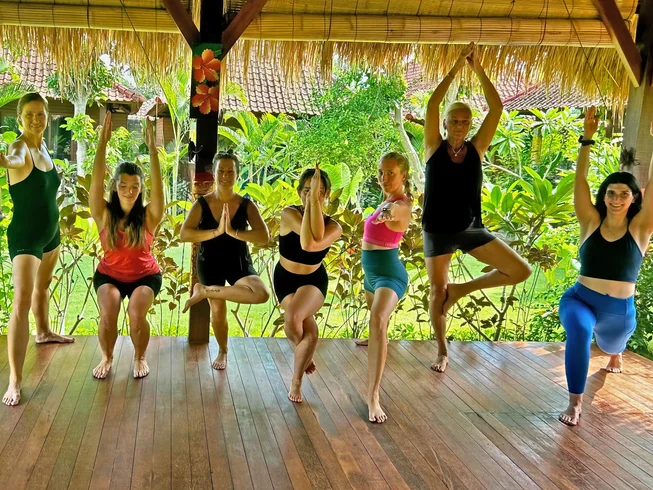
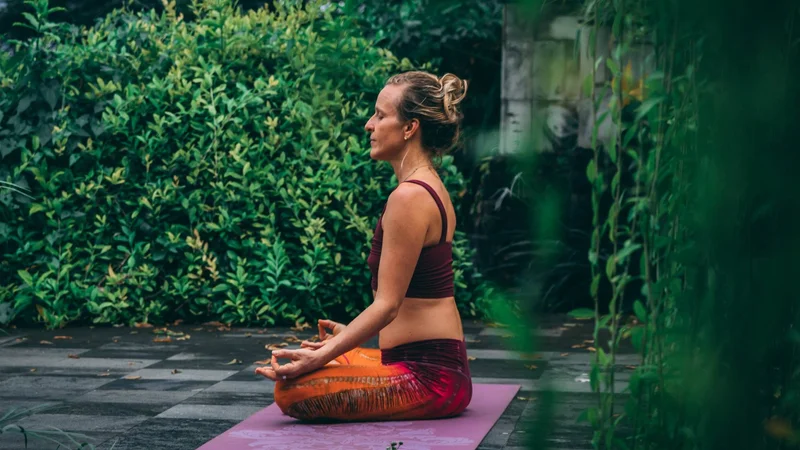
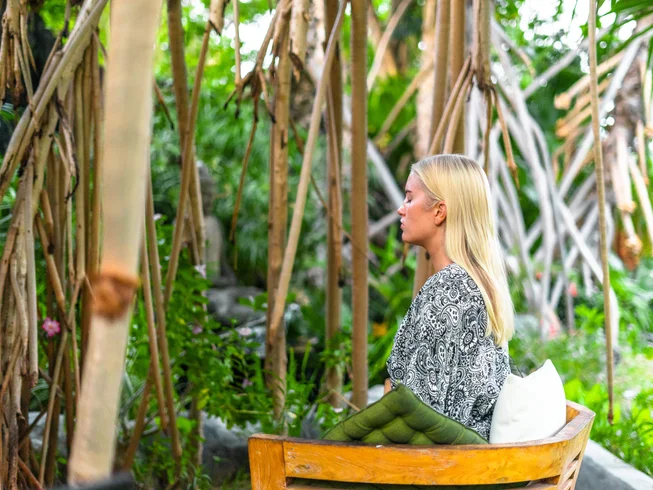

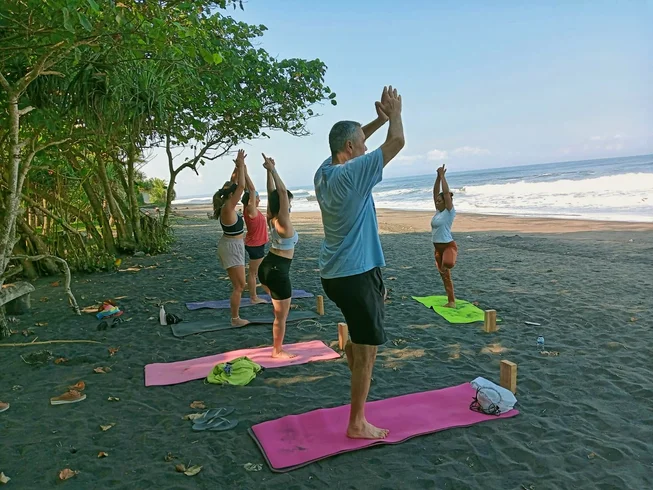
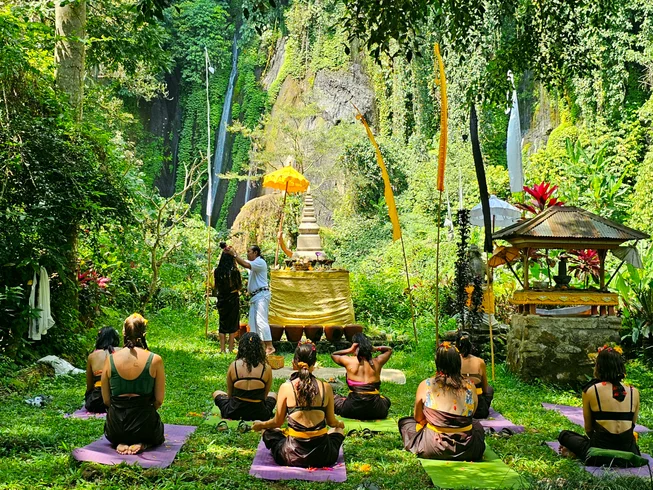
Ubud in November is at its most intimate of the post-peak season — the October shoulder has passed and the December Christmas influx has not yet begun. The retreat centres that were still managing post-July shoulder bookings through October are in November at their most available and most focused. The teacher training programmes that run November cohorts are at their smallest and most individually attended groups of the year.
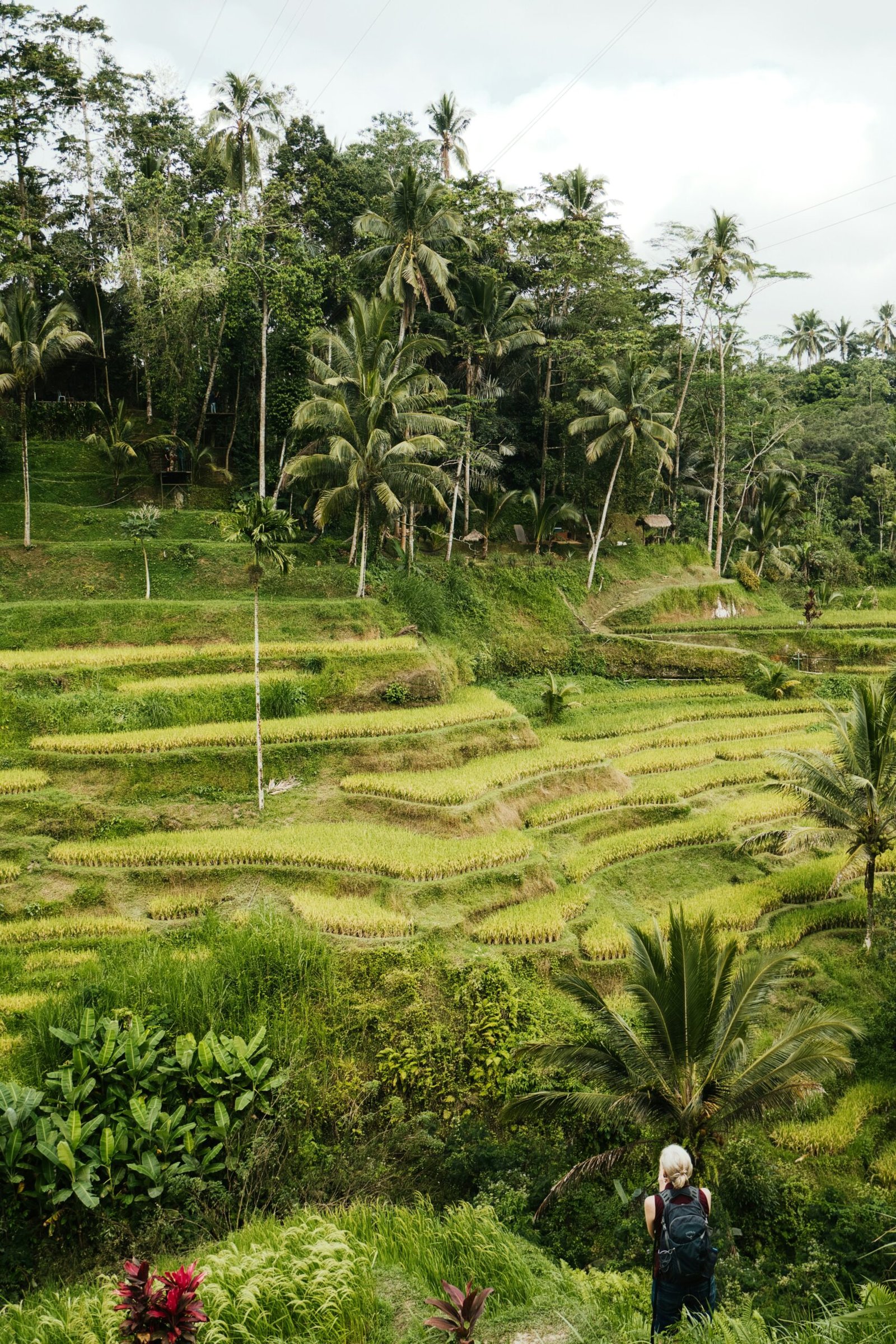
The Ubud rice terraces in November are in the transition — the first fields being flooded for the new planting cycle, the planting preparation visible in the flooded terrace sections while the late harvest continues in the higher-altitude fields. The Tegalalang and Pejeng terrace systems in November morning have the specific visual quality of the agricultural cycle visible simultaneously in multiple stages: the golden harvest stalks, the flooded newly prepared sections, and the first seedling green of the earliest transplanted plots.
Nusa Penida in November — the Mola mola season having ended in October — is at the beginning of the manta ray season’s build toward its February-April peak. The Manta Point site on the southwestern Penida coast sees the first reef manta rays (Mobula alfredi — a smaller species than the oceanic manta, resident in the Penida waters year-round) at their November feeding activity, the mantas circling the cleaning station in the waters above the coral reef at 5-15 metres depth.
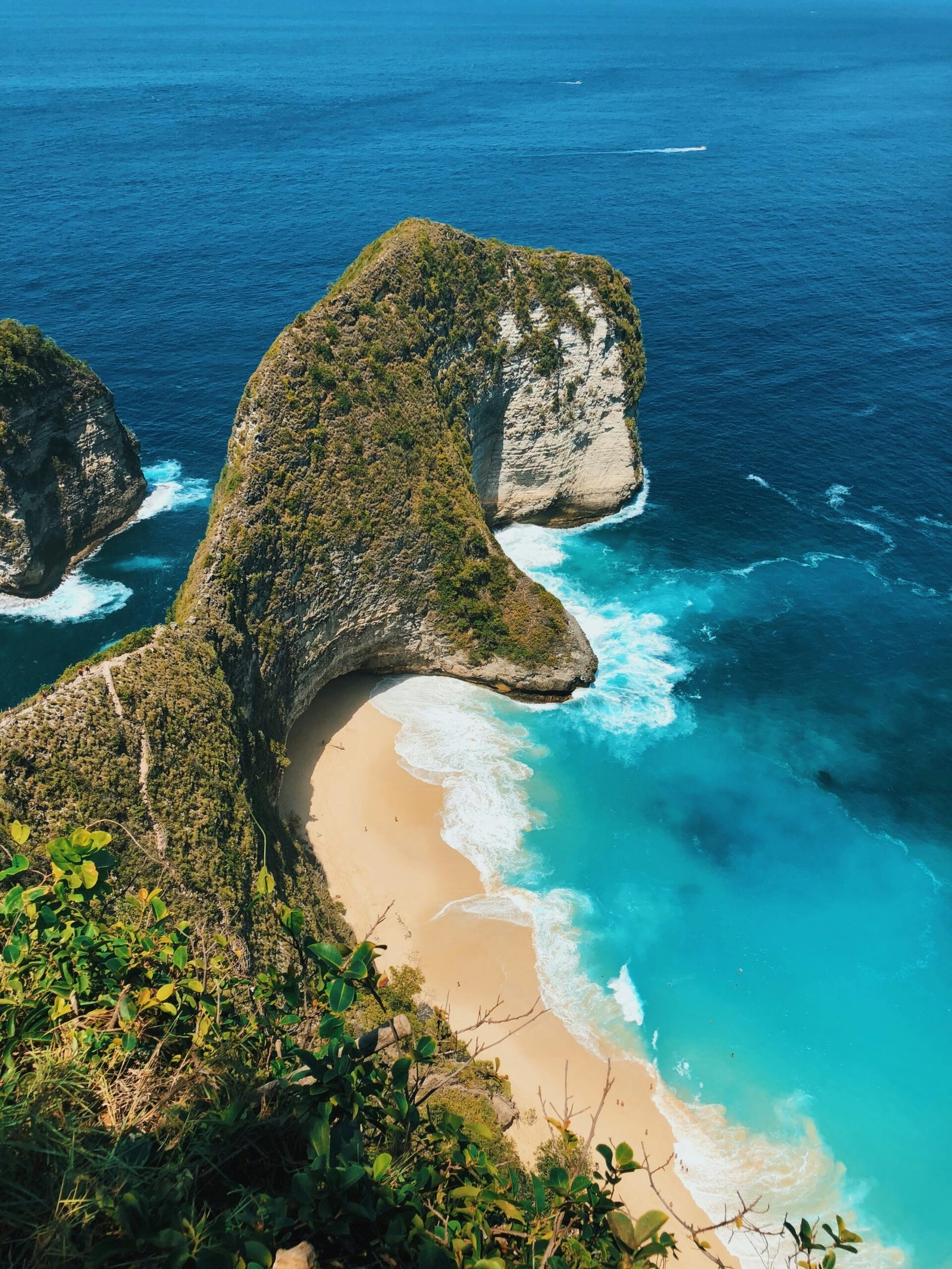
The Nusa Penida cliffs — Kelingking, Angel’s Billabong, Broken Beach — are in November at the last accessible window before the December wet season swells make the cliff paths more challenging. The November morning visit to Kelingking — arriving before 8am before the Instagram photography queue forms — is the most specific version of the T-Rex cliff viewpoint available, the limestone peninsula visible without the crowd management that the July and August version requires.
Jimbaran in November is at the transition season — the dry season sunsets continuing into early November before the wet season cloud begins to change the western sky. The Jimbaran seafood beach warung in November evening has the post-October pricing (the annual low) and the pre-December availability — the seafood table on the black sand accessible without the July reservation requirement and at the most affordable of the year’s pricing. The November sunset at Jimbaran, with the occasional wet season cloud formation producing the most dramatically coloured sky of the transition season, is specifically worth experiencing before the December visitor surge changes the beach’s character.
Candidasa — the small beach resort town on the east Bali coast in the Karangasem regency, between Amlapura and Padangbai — is in November at its most specific of any month: a genuine Balinese coastal town with a small international tourism overlay, the beach eroded by the removal of the protective reef for limestone mining decades ago (the most sobering environmental lesson in Bali), and the diving and snorkelling at the Tepekong and Mimpang rocky outcrops offshore among the most dramatic in Bali for the current and the deep-water marine encounters.
The Pura Candidasa sea temple at the beach edge — the temple whose Balinese community is the most directly engaged with the ocean and its vagaries — is in November at the transitional ceremony season, the Odalan approaching and the preparations visible.

Pura Besakih — the Mother Temple of Bali, the largest and most sacred temple complex on the island, on the southwest slope of Gunung Agung at 1,000 metres — has its Odalan on the Pawukon calendar at specific points in the year. When the Besakih Odalan falls in November (check the current year Pawukon calendar), the ceremony at the most sacred temple complex in Bali produces the most elaborately attended of any temple ceremony available for respectful observation. The Besakih complex on Odalan day — the processions from the subsidiary temples to the main sanctuary, the gamelan orchestras from each temple unit, and the community in traditional dress — is the most concentrated expression of the Balinese Hindu ceremonial tradition available.
If Galungan falls in November (the 210-day cycle may place it in November in certain years), the festival coincides with the wet season return — the penjor poles in the November rain, the ceremonies conducted in the wet season light. Check the current Pawukon calendar.
The Ngulapin and Ngawit ceremonies that mark the beginning of the new rice planting cycle — the offerings to Dewi Sri at the water temple and the subak field boundary — are in November visible at the Balinese subak temples as the rice planting begins in the flooded terraces. The Pura Tirta Empul water temple (whose sacred spring feeds the Ubud subak irrigation system) has its ceremonies as the planting season begins.
Pepes ikan — the Balinese preparation of fish (typically the ikan mas freshwater carp from the Balinese highland rice field fish farming, or the kakap sea bass from the coastal fishing) mixed with the base genep spice paste, wrapped tightly in banana leaf, and grilled over charcoal until the banana leaf blackens and the fish inside steams in its own aromatics — is in November at the transition season when the fish farming ponds of the Balinese highland are at the harvest stage before the planting cycle begins. The pepes ikan at a traditional warung in November Ubud, using the highland carp from the Kintamani area fish farms, is the most specifically Balinese fish preparation available.
The jaja Bali (Balinese ceremonial rice cakes) appear at the Ubud market and the temple ceremonies more frequently in November as the Odalan season intensifies before the December period. The jaja laklak (the small coconut flour pancakes with the palm sugar filling, grilled on the clay pan), the jaja batun bedil (the rice balls in the pandan-flavoured palm sugar soup), and the jaja lupis (the steamed glutinous rice triangles in the coconut milk and palm sugar dressing) are the November market specialities that the dry season fruit abundance partially replaces in July.
Tuak — the mildly fermented palm sap of the lontar palm (Borassus flabellifer) or the coconut palm, produced by the traditional Balinese palm wine makers of the north and east Bali communities — is in November at the transition season production. The fresh tuak (low-alcohol, sweet, slightly fizzy) consumed at the taphouse within hours of tapping is the most specifically Balinese of the fermented drinks and the one most unavailable to the tourist market that accesses Bali through the south coast resort strip. The retreat in Amed or Candidasa in November can access the local tuak culture at the beach-side warung where the fishermen drink the afternoon’s production.

The Pura Besakih morning visit — arriving at the Mother Temple complex by 7am, before the day-trip tours from Kuta arrive by 10am, and walking the 23 subsidiary temples and the main Pura Penataran Agung sanctuary with the overnight mist on the Agung slopes above — is in November at the transition season quality that the dry season clarity and the wet season mist combine to produce on the clearest November mornings. The Besakih complex in November morning quiet, with the volcanic landscape above and the south Bali coast visible far below, is the most specifically sacred of any temple visit available on the island.
The Tepekong island dive from Candidasa — the 20-minute boat ride to the rocky offshore islands of Tepekong and Mimpang, where the current between the islands produces the most drift diving and the deepest marine life encounters in east Bali — is in November at the transition season current that makes the Tepekong sites both exciting and requiring experience. The hammerhead sharks that the Tepekong thermocline occasionally produces (one of the only sites in Bali where hammerhead sightings have been reliably reported), the reef sharks resting on the ledges, and the strong current that the site is known for require the Advanced Open Water certification and the comfort with current diving.
The traditional Balinese painting class at one of the Ubud studio cooperatives — learning the wayang figure style (the stylised figures from the Hindu epic tradition that have been the basis of Balinese painting since the 15th century) using the natural pigments and the traditional composition structure — is in November at the most accessible of any month. The painting workshops in October-November have the smallest groups of the year and the most teacher availability, and the specific instruction in the Pita Maha tradition (the artistic movement that Ubud artists Walter Spies and Rudolf Bonnet developed in the 1930s) provides the cultural context that the tourist painting experience rarely includes.
November marks the return of the wet season. The first two weeks often have pleasant mornings and only occasional afternoon cloud, making them one of the most underappreciated windows in the Bali calendar. By mid-November, the daily afternoon rain is re-establishing itself across the island, and by the end of the month the pattern is comparable to what January will bring.
Temperatures across the island remain warm — south Bali at 26 to 31°C, Ubud at 22 to 28°C — but the humidity is rising steadily as the wet season establishes.
The east Bali coast around Amed and Candidasa is drier than the south and centre through most of November, remaining accessible for diving with reasonable visibility. The north coast also receives less rain than Ubud and the south. The surf on the south coast becomes more variable as the swell direction shifts with the changing trade wind pattern.
Your email address will not be published. Required fields are marked *