
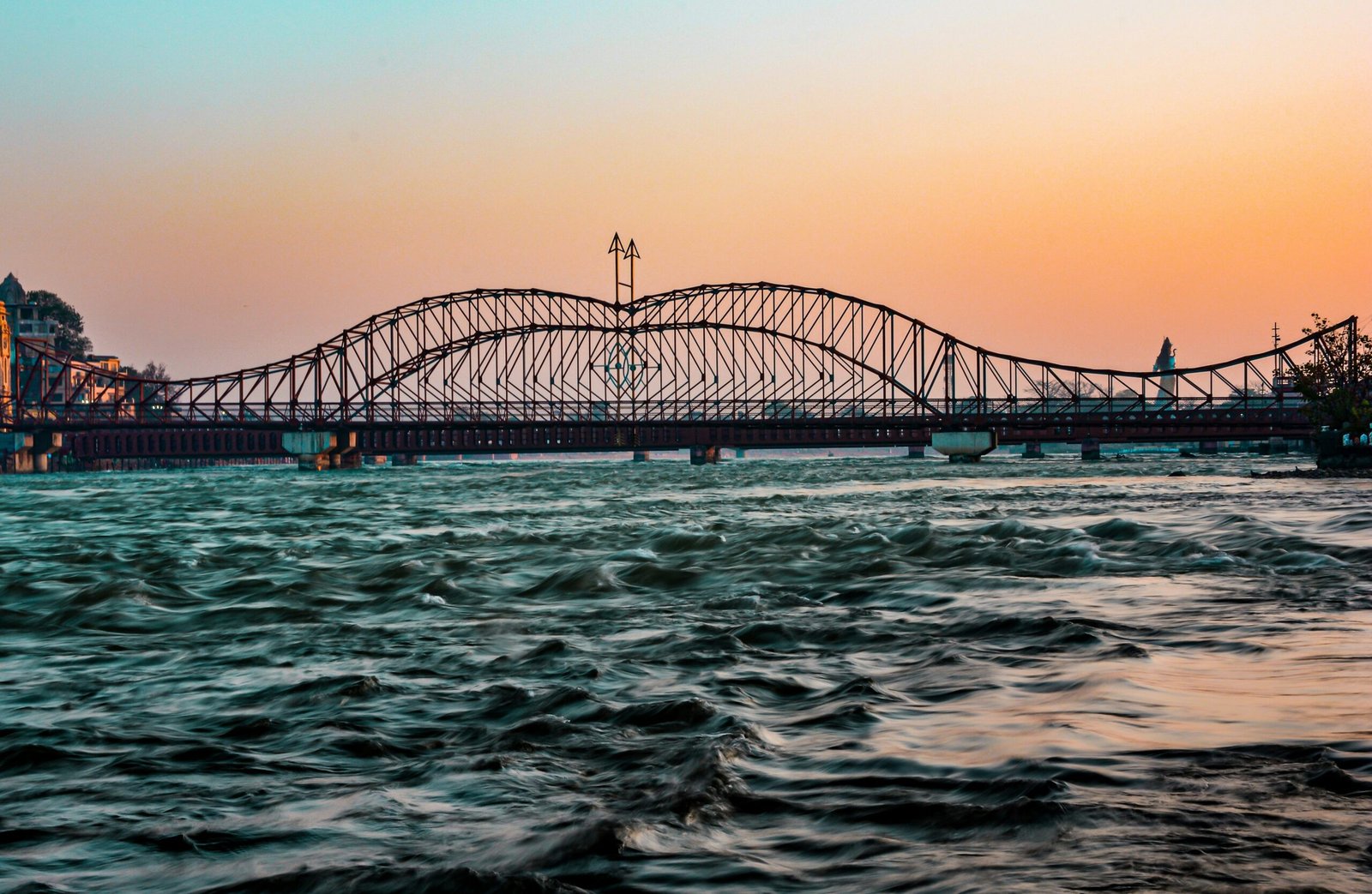
July in India is the monsoon at its maximum — the most dramatic, most vivid, and most specifically Indian of the months for those who engage with the rain rather than retreat from it. The Kerala backwaters are at their most intensely green. The Western Ghats waterfalls are at full flood.
And the Ladakh plateau — still in its rain shadow dry window — is at the peak of its summer festival and trekking season with the Hemis Festival and the open high passes. A yoga retreat in India in July is for those who have moved past the expectation of uninterrupted sunshine.


July is the heart of the Indian monsoon — the southwest flow at maximum strength, the Sahyadri (Western Ghats) range receiving the highest rainfall in Asia outside the Meghalaya plateau, and the Gangetic plain in the full monsoon that the agricultural cycle depends on.
The retreat landscape is divided as clearly as in June: the rain-shadow north (Ladakh, Spiti, upper Himachal) at its peak accessibility, and the monsoon south and coast at its most specifically Indian and its most dramatically alive. The July retreat in India, chosen with geographic awareness, is among the most specifically extraordinary available anywhere in the world.
Browse our full yoga retreats in India guide for the complete picture of what the country offers year-round. For the global context of July retreat travel, our yoga retreats in July guide covers every destination worth considering this month.
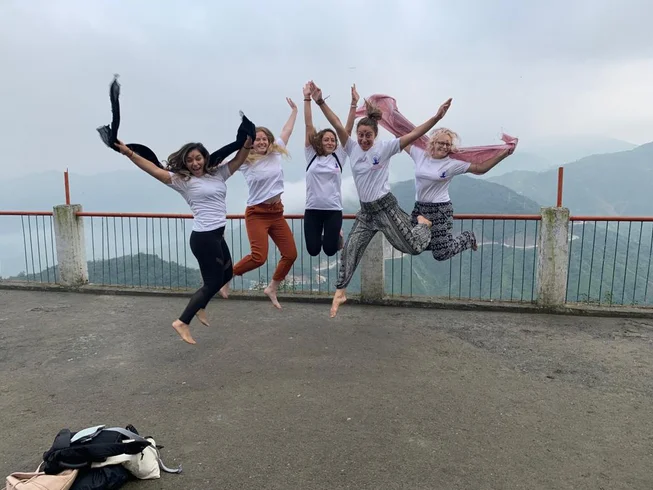
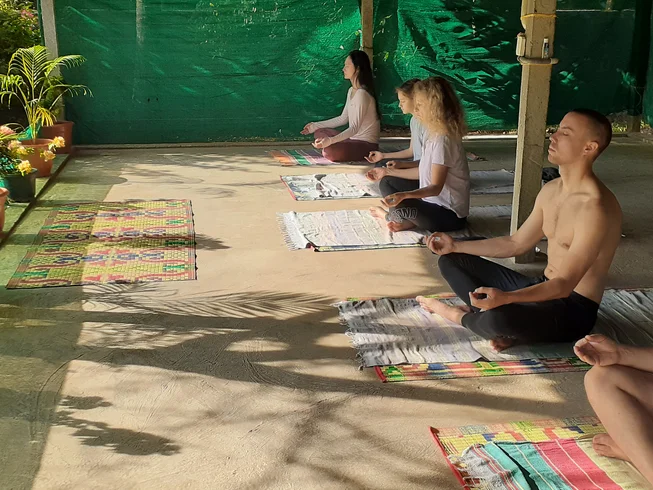
Ladakh in July is at the absolute peak of its summer season — the Hemis Festival (check current year — typically late June or early July) the most spectacular cultural event of the Ladakhi calendar, the Markha Valley and the Zanskar Valley treks at their optimal conditions, and the Nubra Valley accessible via the Khardung La. The Hemis Monastery Cham dance — the masked Tantric Buddhist dance performed over two days in the monastery courtyard, with the monks in the elaborate deity costumes and the Ladakhi community assembled from the surrounding villages — is the most visually extraordinary of the Himalayan Buddhist festivals accessible from Leh.
Pangong Tso in July is at its wildflower-bordered stage — the short Ladakhi summer producing the meadow flowers along the lake shore between the snowmelt and the early August drying. The Nubra Valley north of the Khardung La has the double-humped Bactrian camels at the Hunder sand dunes (the only cold desert sand dunes in India) against the backdrop of the Karakoram Range.
Sikkim — the small Himalayan state bordered by Nepal, Tibet, and Bhutan — is in July in the monsoon, but the East Sikkim valleys and the Rumtek Monastery (the seat of the Kagyu lineage of Tibetan Buddhism in exile) are accessible in the rain. The Nathu La pass (the 4,310-metre mountain pass on the India-China border, accessible with permits from Gangtok) is in July open to the Indian side, and the Tsomgo Lake (the glacial lake 37 kilometres from Gangtok, at 3,753 metres) is in July at the monsoon water level — the lake full and the surrounding meadows in the monsoon green.
Pelling in West Sikkim — the viewpoint town with the Kangchenjunga visible on clear mornings — is in July producing the occasional clear morning between the monsoon cloud that makes the sunrise view over the massif the most dramatic of any available from the Indian side. The Pemayangtse Monastery above Pelling is in July at its monastic programme, accessible for the respectful visitor on the daily schedule.
Kerala in July is the backwater landscape at its most vivid — the canal system full to the bank edges, the rice paddy at the July transplanting stage (the fields flooded and the seedlings being transplanted by hand in the monsoon rain), and the coconut palms above the water channels at the most intensely green of the year. The Alleppey backwater houseboat in July is specifically different from the January version — the rain on the boat roof, the canal banks invisible through the rain curtain in the heaviest showers, and the clearing to the specific monsoon green that follows each downpour produce the Kerala that the tourist season never shows.
The Kuttanad region — the below-sea-level rice cultivation area of Kerala, the only below-sea-level agriculture in Asia — is in July at the transplanting season that the traditional Kerala agricultural calendar centres around. The July Kuttanad landscape, with the flooded polders and the transplanting activity visible from the houseboat and the canal road, is the most specifically Kerala of the monsoon agricultural experiences.
Mumbai in July is in the monsoon at its most dramatically urban — the Western Ghats escarpment receiving over 2,500mm of rainfall in July alone, the city managing its monsoon with the specific resilience that 14 million people develop over generations. The yoga and meditation culture of Mumbai — the most developed urban yoga community in India, with the concentration of Iyengar, Ashtanga, and contemporary yoga studios in Bandra, Andheri, and the Lower Parel cultural district — is in July at its resident-community operation, the tourist infrastructure having reduced and the serious practitioner community at its most available.
The Iyengar Yoga tradition is most directly accessible in Mumbai — the RIMYI (Ramamani Iyengar Memorial Yoga Institute) in Pune (3 hours from Mumbai) is the source institution of the Iyengar system globally, and the July retreat combining the Mumbai studio programme with a Pune RIMYI day visit produces the most specifically Iyengar of any India retreat format.
The Hemis Festival — described above — is the most visually extraordinary of all the accessible Himalayan Buddhist festivals. The two-day Cham dance at the Hemis Monastery courtyard, the display of the enormous silk thangka on the monastery facade, and the Ladakhi community in traditional dress produces an experience that requires both the season and the location.
Guru Purnima — the full moon of the Ashadha month (June-July), the day dedicated to the teacher-student (guru-shishya) relationship in the Indian spiritual tradition — is observed at the yoga ashrams and meditation centres across India with the specific gratitude ceremony toward the teacher. The Rishikesh Guru Purnima — the morning puja at the Parmarth Niketan and the evening satsang at the ashrams with the Ganges at monsoon volume below — is the most specifically yogic of the Indian July cultural events.
Teej — the festival of the swing, observed by the women of Rajasthan and north India on the third day of the bright fortnight of the Shravan month — celebrates the arrival of the monsoon with the decorated swings in the trees, the traditional songs, and the ghewar (the disc-shaped honey-and-saffron sweet specific to Rajasthan) at every household. The Teej procession in Jaipur — the idol of the goddess Teej carried through the city streets in the elaborately decorated palanquin, accompanied by the folk musicians and the women in their green Teej saris — is the most specifically Rajasthani of the monsoon cultural events.
The Ladakhi apricot — the small, intensely flavoured wild apricot of the Ladakh valley orchards, ripening in July — is the most specifically seasonal of the Ladakhi foods and the one that the high-altitude dry summer produces in the most concentrated form. The Ladakhi apricot in July, eaten fresh from the tree or dried on the rooftop in the July sun, has the specific sugar concentration that the thin air and the intense Ladakhi UV produce — sweeter and more aromatic than the commercial apricot from the plains. The apricot oil pressed from the Ladakhi apricot kernel is the most locally distinctive of the Ladakhi food products and the traditional cooking medium of the region.
The ghewar — the large, disc-shaped, lattice-structured sweet of Rajasthan, made from the wheat flour batter poured into the hot clarified butter and shaped by the pour, then soaked in sugar syrup and topped with rabri (the reduced milk cream) and saffron — is available in the Rajasthani sweet shops specifically from the Teej and Raksha Bandhan period (July-August). The ghewar is the most specifically monsoon sweet of North India, available only during the Sawan (Shravan) month and produced in its most elaborate form in the Jaipur and Jodhpur confectionery tradition.
Onam — the most important festival in the Kerala calendar — falls in August-September, but the July preparations (the pookkalam (flower carpet) practice, the boat race preparations on the Pampa river, and the Onam sadya practice cooking at the community level) are visible in the Kerala villages. The July Kerala retreat kitchen beginning its Onam preparation — the banana chips, the parippu (the moong daal curry of the sadya), and the olan — is the most directly anticipatory of the Kerala food culture.
The Hemis Cham dance — the two-day masked monastic dance at the Hemis courtyard, with the monks in the elaborate deity costumes performing the Tantric Buddhist choreography and the Ladakhi families assembled from the surrounding villages — is the July Ladakh activity requiring advance planning (accommodation in Leh fills for the Hemis period) and the 45-kilometre road journey from Leh to the monastery. The Cham dance is performed in the monastery inner courtyard accessible to visitors, and the combination of the Tantric Buddhist visual imagery, the cymbal and drum percussion, and the high-altitude summer landscape produces the most culturally extraordinary of any Indian July activity.
The Indus River white water rafting from Phey village to Nimoo — the Grade 3-4 rapids section of the Indus accessible from Leh (45 minutes by road to the put-in) — is in July at its snowmelt maximum volume, the most powerful of the year and the most technically demanding of the three Ladakh rafting sections. The Indus at July flood, with the Zanskar River confluence visible from the raft and the Ladakhi mountains above the gorge, is the most specifically extraordinary of the Himalayan white water experiences accessible without the expedition logistics that the Zanskar River rafting requires.
The RIMYI (Ramamani Iyengar Memorial Yoga Institute) day visit from Mumbai — the 3-hour train from Mumbai to Pune, the morning practice at the institute’s practice hall where B.K.S. Iyengar taught for decades, and the return to Mumbai by evening — is the July Mumbai retreat supplement that no other Indian city can provide. The RIMYI in July runs its regular class programme and visitor schedule; access to the institute’s library and the museum of Iyengar’s life and teaching materials is available on the visitor programme.
Ladakh remains dry and warm — 18-28°C in the Leh valley, the plateau at its summer warmth and the pre-summer wildflowers visible on the valley floor. The Hemis Festival and the trekking season are both at their peak.
Kerala is in the full southwest monsoon — 25-29°C, 85-90% humidity, and heavy daily rain. The backwater landscape is at its most vivid. Outdoor activities are possible between the rain periods; the Ayurveda treatment season is at its traditional peak.
Sikkim and Darjeeling are in heavy monsoon — 18-26°C, frequent rain, and the Himalayan views largely obscured by cloud. The trekking routes are less reliable but the monastery culture is accessible.
Mumbai is in peak monsoon — 26-30°C, heavy rain, and the specific urban resilience of the city that manages 600mm of rain in July alone.
Your email address will not be published. Required fields are marked *