
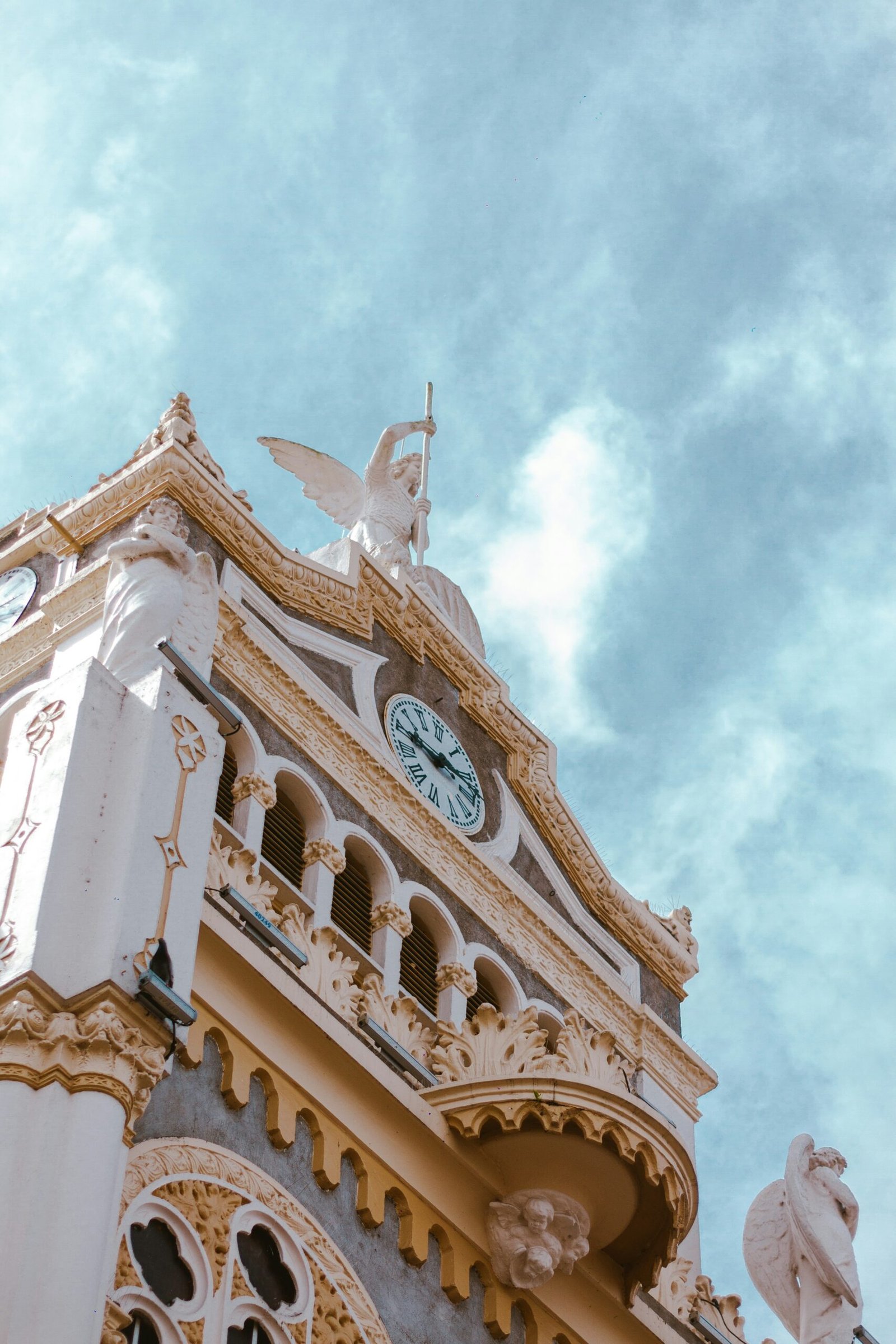
April in Costa Rica is the transitional month — the dry season ending on the Pacific coast, the first rains arriving by mid-month, and the landscape beginning its transformation from the dry season brown to the green that the rainy season produces. The retreat infrastructure remains fully operational. The wildlife calendar has the first hatchling sea turtles from the leatherback nesting season. And Semana Santa — if it falls in April rather than March — brings the domestic tourism peak that retreat planning needs to account for.


April is when Costa Rica’s Pacific coast transitions from dry to wet — the first showers arriving in the afternoons of mid-to-late April, the landscape responding quickly to the moisture, and the retreat programme adapting from the all-day outdoor schedule of the dry season to the morning-outdoor, afternoon-indoor rhythm that the green season enables. The early April window — before the rains establish their pattern — has the dry season conditions alongside the noticeably lower tourist volume that follows the Semana Santa exodus.
Browse our full yoga retreats in Costa Rica guide for the complete picture of what the country offers year-round. For the global context of April retreat travel, our yoga retreats in April guide covers every destination worth considering this month.

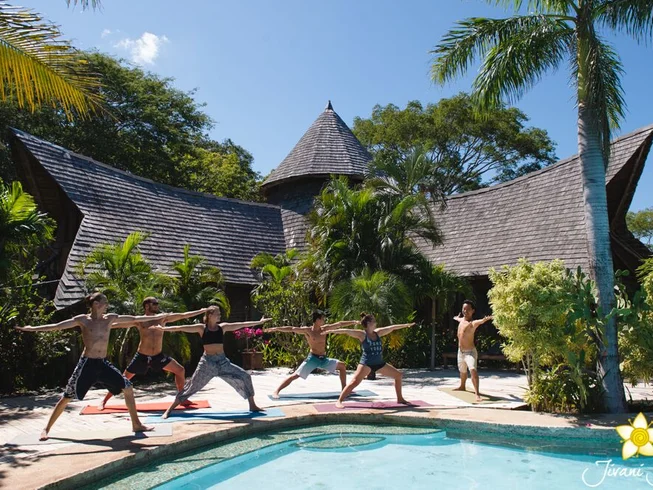
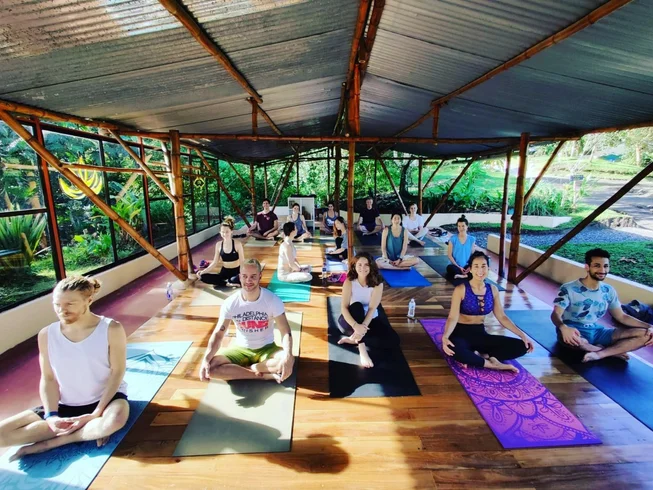


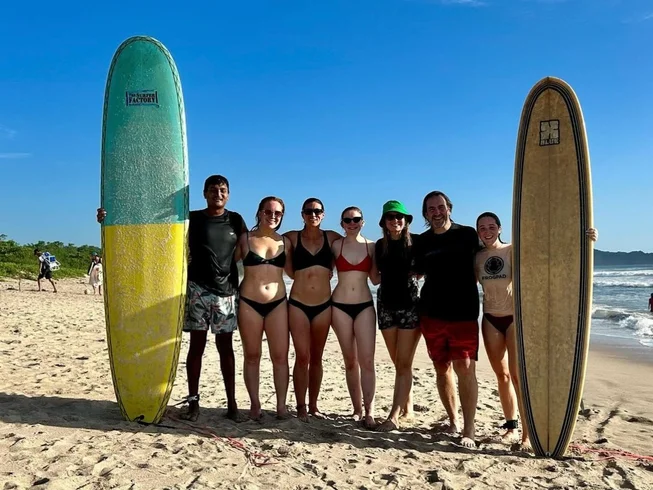
The Nicoya Peninsula in the two weeks after Semana Santa — typically the second and third weeks of April — has the specific quality of a destination that has just emptied after its most crowded period. The domestic tourism that fills the beaches during Holy Week disperses almost overnight, and the retreat centres of Nosara, Santa Teresa, and Tamarindo return to the focused atmosphere that the dry season retreat community produces. The first April rains are beginning — the afternoons occasionally cloudy, the evenings cool — but the morning conditions are still dry season in character.
The April surf on the Nicoya is in transition — the dry season northwest swell is diminishing and the first southwest groundswells of the season are beginning. For surfing retreat guests, April produces the most varied surf conditions of the year: some days dry season quality, some days the first signs of the green season swell. The intermediate breaks at Playa Guiones and Playa Santa Teresa are in April less predictable than in January but more interesting in the range of conditions they produce.
Tortuguero — the national park on the Caribbean coast, accessible only by boat or small plane, with the most important green sea turtle nesting beach in the Western hemisphere — is in April in the weeks before its main season begins. The green sea turtle nesting at Tortuguero runs from July through October, but the leatherback sea turtles nest at Tortuguero from March through July — and April is within the leatherback nesting window on the Caribbean side.
The Tortuguero canals — the network of natural and man-made waterways through the lowland rainforest that gives the area its name (tortuga = turtle, tuguero = place of) — are in April at the pre-main-season quiet: the tour boats fewer, the canal system accessible with more intimate encounters with the river otters, the caimans, and the green kingfishers that the main season crowds sometimes disturb. The boat tour through the canal system at dawn — departing the lodge dock before 6am in the flat-bottomed canoe, paddling through the primary forest channels before the tour boat traffic begins — is the April Tortuguero experience at its most specific and its most rewarding.
Rincón de la Vieja — the active geothermal volcano in Guanacaste, with the mud pools, fumaroles, and hot springs of the volcanic flank accessible within the national park — is in April beginning its transition from the extreme dry season conditions of March to the first green of April. The Las Pailas trail through the geothermal area — the 3-kilometre circuit past the boiling mud pools, the gas vents, and the small volcanic crater lake — is in April at its most dramatic: the steam from the mud pools visible against the clear sky, the boiling mud at its most active after the accumulated dry season heat.
The adventure tourism infrastructure around Rincón de la Vieja — the zip lines, the horseback rides to the hidden waterfall on the volcanic flanks, and the tubing on the Río Blanco below the volcano — is in April transitioning from the dry season peak to the green season rhythm. For retreat guests combining yoga practice with adventure activities, the Rincón de la Vieja area in April produces the most varied combination of the two formats available on the Pacific side of the country.
Sarapiquí — the lowland rainforest region north of San José, where the La Selva Biological Station (the most studied piece of tropical rainforest in the Americas, with over 60 years of continuous ecological research) is located — is in April at its wet season beginning, the rains arriving earlier than on the Pacific coast and the forest at its green season intensity. The La Selva station runs public guided tours through the primary forest reserve, and the scientific programme that has been running since 1954 produces the most thoroughly documented wildlife sightings of any protected area in Costa Rica.
The poison dart frogs of the Sarapiquí lowlands — the Strawberry poison-dart frog (Oophaga pumilio) in its brilliant red-and-blue form, and the Green-and-black poison frog (Dendrobates auratus) at the leaf litter level — are in April at the activity level of the wet season’s beginning: the males calling from the forest floor, the females inspecting the territories, and the bright colours (aposematic warning coloration for predators) at their most vivid in the April forest light. A retreat that uses a Sarapiquí lodge as the base for the La Selva guided tours produces a specifically scientific and specifically Costa Rican natural experience that the beach destinations cannot approach.
If Semana Santa falls in April rather than March (check current year dates), the same domestic tourism surge applies — the coastal towns filling from Holy Thursday through Easter Sunday, the retreat centres providing the container that makes the period manageable. The Easter Sunday processions in the smaller Costa Rican highland towns — the San Isidro de Heredia, the Heredia centre, and the villages of the Central Valley — are the most specifically Costa Rican versions of the Catholic Easter tradition, the processions through the colonial town centres with the brass bands and the paso figures carried on the shoulders of the cofradía members.
Juan Santamaría Day — the Costa Rican national holiday commemorating the hero of the Battle of Rivas in 1856, when the young drummer boy Juan Santamaría set fire to the building where William Walker’s filibuster forces had taken refuge, dying in the act — is April 11th. The day is a national holiday in Costa Rica, marked by parades and civic ceremonies in Alajuela (Santamaría’s hometown), and is the most specifically Costa Rican of the civic holidays. For retreat guests in Costa Rica on April 11th, the Alajuela parade is the most locally rooted version of the celebration.
The first April rains on the Pacific lowlands produce the first new season vegetables within days — the chayote (the light green pear-shaped squash used in the Costa Rican kitchen in soups, salads, and the picadillo de chayote that is one of the most common side dishes in the national cuisine), the fresh corn from the first wet season planting, and the ayote (the butternut squash-like pumpkin used in the arroz con leche style sweet preparations). The April transition from dry season root vegetables to green season squash and corn is visible at the market stalls within the first week of the rains.
Tamales de elote (fresh corn tamales) — the sweet corn masa tamale made from the green corn of the new season harvest, distinctly different from the rice and pork tamales of the Christmas tradition — begin appearing at the coastal sodas and the highland markets in April as the first corn comes in. The tamal de elote is specifically a green season preparation — the fresh corn that the dry season cannot provide reappearing at the market stalls as the April rains trigger the first plantings. The sweet, soft texture of the fresh corn masa in the tamal de elote is the most specifically seasonal Costa Rican food transition of the year.
The dawn paddle through the Tortuguero canals — departing the lodge dock before 6am in the flat-bottomed canoe with the naturalist guide, moving through the primary forest channels in the pre-dawn quiet — is the April Tortuguero activity that the main season July crowds make significantly less intimate. In April, the canal system has the pre-season quality of a place that is about to become very busy and is currently very quiet — the wildlife present, the forest sounds unobscured by tour boat motors, and the caimans on the bank visible from the canoe at the distance that the main season boat traffic maintains them from.
The Las Pailas volcanic trail at Rincón de la Vieja in April — the geothermal circuit past the boiling mud pools and the fumaroles — is at its most specific in the transitional season conditions: the mud pools most active as the dry season heat accumulates in the volcanic flank, and the steam from the vents visible against the April sky in the transition between dry and wet. The trail is 3 kilometres and accessible without a guide, running through the geothermal area of the park’s western flank.
The La Selva Biological Station guided tour at Sarapiquí — the 3-hour morning walk through the primary forest reserve with one of the station’s naturalist guides — is the April natural science activity that no other location in Costa Rica approaches in depth. The guides at La Selva are among the most knowledgeable naturalists in the country, and the scientific study programme that the station maintains means that the ecology of the forest they are walking through is understood at a level of detail unavailable in any other protected area in Central America. The April visit produces the wet season beginning wildlife: the frogs most active in the new season rains, the streams running, and the canopy bird diversity at its April transition.
Your email address will not be published. Required fields are marked *