The regions of Portugal — a quick overview
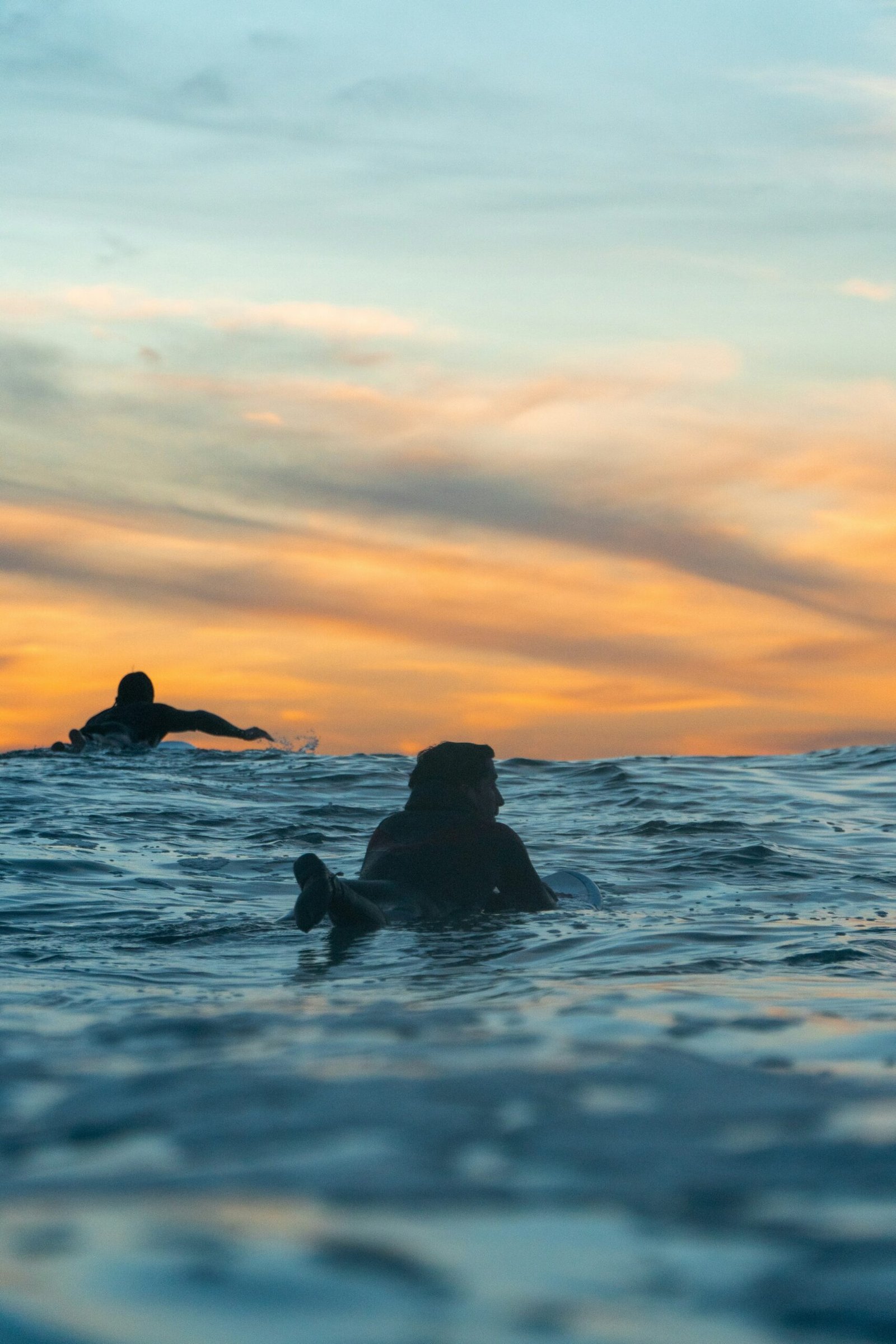
Portugal’s coastline runs for over 1,800 kilometres. Not all of it is equal for a surf and yoga retreat, and the region you choose shapes far more than the scenery — it shapes the energy of the group, the style of teaching, the food, and the rhythm of your days.
There are four distinct areas worth knowing before you book.
Ericeira and the Lisbon Coast is where surf culture in Portugal was born. It’s the most internationally connected region, with the widest range of retreat formats and the most active community of surfers, creatives, and wellness practitioners. The energy here is social and dynamic. Our Ericeira yoga retreats guide covers the town’s programmes in detail.
The Alentejo Coast is the country’s wild card — a protected stretch of coastline south of Lisbon that feels almost untouched. Retreats here are smaller, quieter, and more intentional. It’s the region for people who want depth over variety.
The Algarve is Portugal’s sunniest and most accessible region. It offers the most consistent beginner-friendly conditions, the warmest water, and the broadest range of accommodation — from budget surf camps to luxury wellness villas. It’s where most first-timers end up, and often where they come back to.
The North — Porto and the Green Coast is the least known internationally but arguably the most authentic. Cold water, green hills, smaller crowds, and a community-driven retreat culture that prioritises craft over comfort. It suits travellers who want an experience that hasn’t been packaged for export yet.
Each region is covered in detail below. If you already know your pace — slow or social, wild or comfortable — use that as your starting point.
Ericeira and the Lisbon Coast — Where surf culture was born
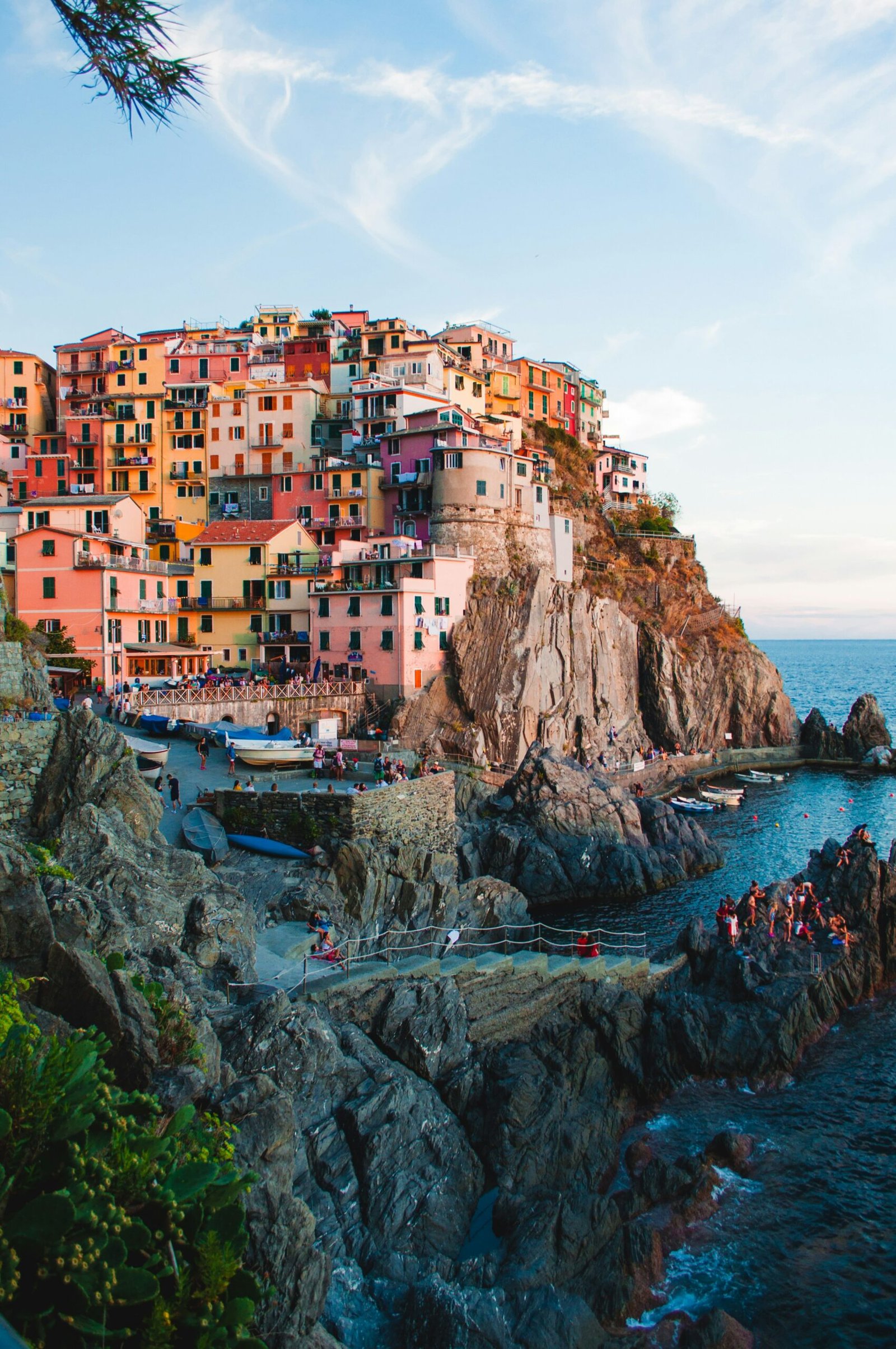
Ericeira sits 45 minutes north of Lisbon on a clifftop above the Atlantic, and it looks exactly like what it is: a fishing village that the ocean never quite let go of. The whitewashed houses, the blue-tiled churches, the narrow streets that end abruptly at the cliff edge — all of it exists in permanent conversation with the sea below.
In 2011, Ericeira became Europe’s first — and still only — World Surfing Reserve, a designation that protects not just the waves but the entire coastal ecosystem and the cultural relationship between the community and the ocean. The reserve covers seven world-class breaks within a six-kilometre stretch: Ribeira d’Ilhas, where the WSL has held competition; Coxos, one of the most powerful right-hand reef breaks in Europe; Pedra Branca, Cave, Reef, São Lourenço, and Crazy Left — a range that covers every level from first-timer to professional.
This concentration of quality surf within walking distance of each other is what makes Ericeira the epicentre of surf and yoga retreat culture in Portugal. Retreat operators don’t need to drive guests an hour to find appropriate conditions — there are beginner-friendly beach breaks and expert-level reefs within minutes of each other, which means programs can genuinely cater to mixed-level groups without compromising anyone’s experience.
The yoga culture here grew alongside the surf scene rather than separately from it. By the mid-2010s, a generation of teachers had relocated from Lisbon — drawn by cheaper rent, outdoor space, and a community that understood physical practice as a way of life rather than a lifestyle accessory. Today, Ericeira has a denser concentration of yoga teachers, somatic practitioners, and movement educators per capita than almost anywhere else in Portugal. Morning classes on cliff-edge terraces, evening yin sessions in converted fishermen’s warehouses, breathwork circles on the beach at low tide — the infrastructure is mature and the quality is consistently high.
The retreats themselves tend to be boutique in scale: eight to sixteen guests, owner-operated eco-houses or restored quintas, vegetarian or plant-based menus built around local produce. The atmosphere is social but not chaotic. You’ll find yourself sharing dinner with photographers, digital nomads, yoga teachers on sabbatical, and surfers who’ve been coming here for twenty years — a mix that makes conversation easy and genuine.
Ericeira is also the most accessible region in this guide. Lisbon airport is 45 minutes away, the village has its own cafés, restaurants, and nightlife, and the infrastructure for international visitors is well developed without feeling touristy. It’s the right choice if you want surf culture in its most concentrated form, a strong yoga community, ocean proximity, and the option of a glass of natural wine after savasana.
Alentejo — The slow coast
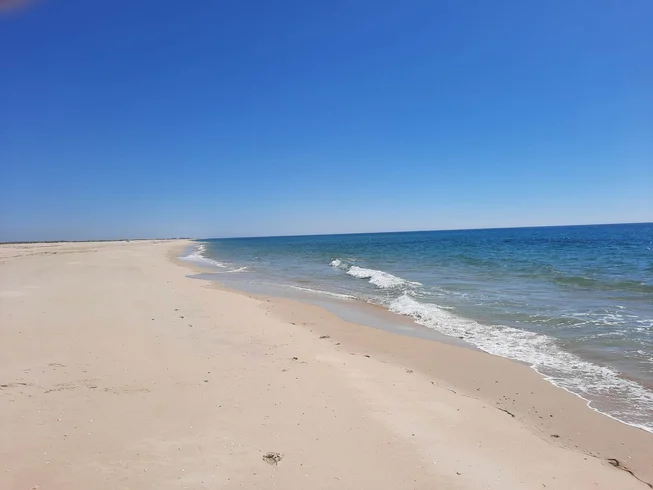
The Alentejo coast doesn’t announce itself. There are no signs, no resort developments, no concession stands on the beach. You turn off the main road, follow a dirt track through cork oak and cistus scrub for several kilometres, and then the dunes open up and there it is — one of the last truly wild stretches of Atlantic coastline in Western Europe.
This is the Costa Vicentina, part of the Parque Natural do Sudoeste Alentejano e Costa Vicentina, one of the most strictly protected nature reserves on the continent. Development is heavily restricted by law, which is precisely why it looks the way it does: untouched, vast, and almost aggressively quiet. Villages like Zambujeira do Mar, Odeceixe, Vila Nova de Milfontes, and Almograve are small enough that a single street holds the café, the grocery, and the surf rental. After 9pm, the loudest sound is the wind.
Retreats in this region are built around that silence. They tend to be smaller than their Ericeira counterparts — six to twelve guests is common — and the programming reflects the landscape: fewer sessions, more space between them. Morning yoga here often means a wooden deck facing open dunes with no other structure in sight. Surf lessons are guided by local instructors who grew up reading these specific waves, on these specific tides, in these specific wind conditions. The teaching is unhurried and precise.
The waves along the Costa Vicentina are powerful and beach-breaking, driven by long Atlantic swells that travel uninterrupted from deep ocean. They are not ideal for absolute beginners — the shore break can be heavy and the rips require awareness — but for intermediate surfers looking to make real progress, this coastline offers something rare: consistent, honest surf with almost no crowds. On a weekday morning in October, you can have a kilometre of beach entirely to yourself.
The food culture in this region is simpler and more local than anywhere else covered in this guide. Retreat menus lean heavily on what’s grown or caught nearby — cataplana de peixe, açorda alentejana, local olive oil, bread from village bakeries. Plant-based options are available but the cooking is not performatively wellness-oriented. It’s just food, made well, from things that were here yesterday.
What the Alentejo offers that no other region in Portugal can quite replicate is a particular quality of inner quiet. The absence of stimulation is not a lack — it’s the point. Many guests report that the first two days feel uncomfortably slow, and that by day four they can’t remember why they were ever in a hurry. If your nervous system needs genuine decompression rather than simply a change of scenery, this is the region that delivers it.
Located 45 minutes from Lisbon, Ericeira is Europe’s only World Surfing Reserve — a stretch of coastline with seven world-class breaks including Ribeira d’Ilhas, Coxos, and Pedra Branca, covering all levels from beginner to expert.
Surf and yoga retreats here tend to be boutique: small eco-houses on the cliffs, vegetarian meals, vinyasa at sunrise, restorative yoga after sunset. The local community is creative and mixed — meditation teachers, photographers, and digital nomads living alongside lifelong surfers.
Ericeira is ideal if you want ocean proximity, genuine surf culture, and a social atmosphere without the chaos of a tourist resort.
The Algarve — Sun, comfort, and consistent waves
The Algarve is where most people imagine Portugal when they close their eyes. Limestone cliffs in shades of ochre and rust dropping into turquoise water. Long sandy beaches that face south into reliable Atlantic sunshine. Villages with outdoor restaurants, fresh seafood, and the particular ease of a place that has been welcoming visitors for decades and learned how to do it well.
For a surf and yoga retreat in Portugal, the Algarve offers something the other regions don’t: the full spectrum of comfort levels under consistent sun. You can book a budget surf camp in a converted farmhouse outside Lagos, a mid-range boutique retreat above the cliffs of Sagres, or a premium wellness villa near Carrapateira with a private pool, daily massage, and a private chef. The infrastructure is simply more developed here than anywhere else on the Portuguese coast, and the range of retreat formats reflects that.
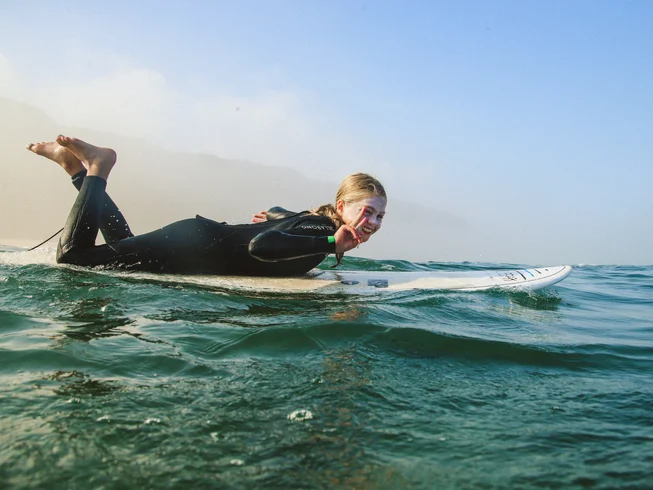
The surf conditions in the Algarve are the most forgiving in this guide. The southern exposure shields much of the coastline from the full force of North Atlantic swells, producing waves that are generally cleaner, more predictable, and more manageable than those further north. Spots like Meia Praia near Lagos, Luz, and Burgau offer long, rolling waves well suited to beginners working on their pop-up and their positioning. Further west, as the coast rounds the corner toward Sagres and begins facing southwest, the swell power increases — Tonel and Beliche are serious waves that challenge intermediate and advanced surfers. The Algarve, in other words, has range.
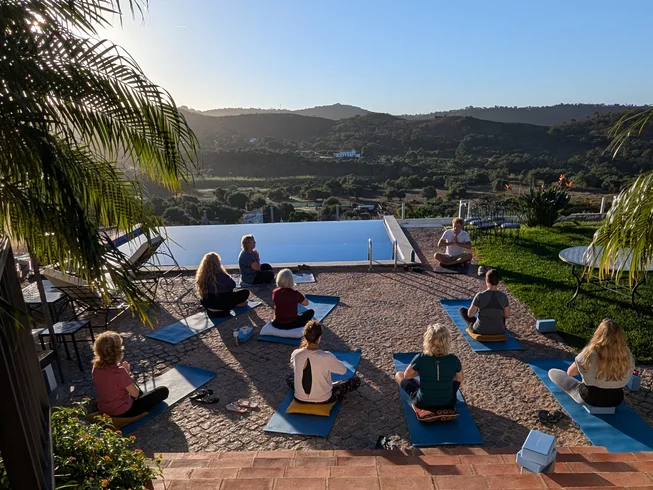
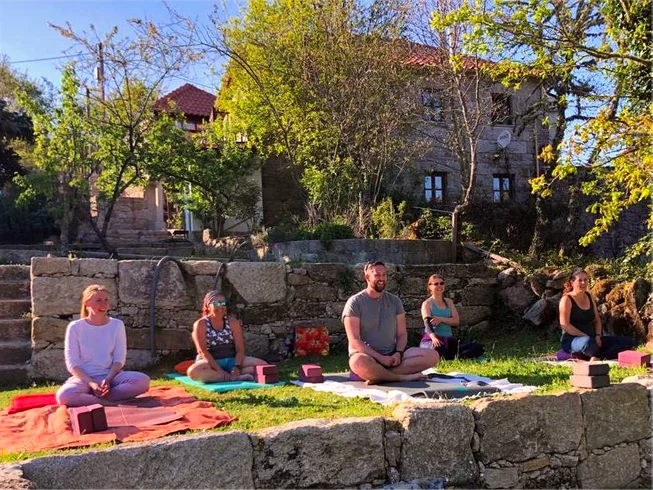
The yoga scene here has grown substantially over the past decade, driven partly by the year-round appeal of the climate and partly by the increasing number of international teachers who have relocated to the western Algarve. Around Luz, Lagos, and especially the area between Sagres and Aljezur, there is now a well-established community of practitioners and a corresponding density of high-quality retreat programs. Classes frequently take place outdoors — on terraces, in gardens, on clifftop platforms with unobstructed Atlantic views — which at this latitude means outdoor practice is viable for nine or ten months of the year.
The Algarve is the natural choice for first-time retreat guests, for those travelling with a partner or friend who is less physically adventurous, and for anyone who wants the combination of genuine surf and yoga programming with the option of a great dinner in a village restaurant afterward. It is also the most family-friendly region in this guide — several retreats offer mixed programs that accommodate different ages and ability levels within the same group.
One honest note: the western Algarve around Sagres and Carrapateira is very different from the eastern Algarve around Faro and Tavira. The surf and yoga retreat world lives almost entirely in the western half, where the coastline is wilder, the towns are smaller, and the Atlantic is genuinely present. If you’re booking a retreat here, pay attention to exact location — proximity to the beach and the nature reserve makes a significant difference to the quality of the experience.
The North — Porto and the Green Coast — Authenticity over aesthetics
North of Lisbon, past the pine forests of Peniche and the dunes of São Martinho do Porto, the Portuguese coast begins to change. The hills get greener, the water gets colder, the towns get quieter, and the international retreat circuit thins out almost entirely. By the time you reach Porto — and particularly the coastline between Espinho and Viana do Castelo that locals call the Costa Verde — you’re in a Portugal that hasn’t been packaged for export yet.
This is both the appeal and the caveat of the northern region.
The surf here is real and serious. The Costa Verde faces the full force of North Atlantic swells with nothing to moderate them, producing powerful, fast-breaking waves that reward experience and punish complacency. Spots like Espinho, Esmoriz, Furadouro, and the legendary Canhão da Nazaré — just south of the formal northern region but in the same swell window — attract dedicated surfers from across Europe precisely because the waves are honest. For beginners, the northern coast is challenging and requires careful spot selection with experienced local guidance. For intermediate to advanced surfers, it offers some of the most exhilarating conditions in Portugal, with far fewer people in the water than Ericeira or the Algarve.
The yoga and wellness retreat scene here is community-driven and largely under the radar. Retreats tend to be run by small collectives of teachers and practitioners rather than established operators, which means the programming is often more experimental and more deeply intentional than anywhere else. You’ll find cold-water immersion workshops, somatic movement practices, traditional pranayama intensives, and breath-training programs influenced by the freediving community that has established itself along this coast. The approach is rigorous in a way that suits practitioners who want to go deeper rather than wider.
The landscape itself is unlike anything else in Portugal. Green hills covered in vines and eucalyptus roll down to a coastline of long sandy beaches and occasional granite headlands. The light is softer and more diffuse than in the south — on overcast mornings, which are common here between October and April, the sea takes on a pewter quality that is genuinely beautiful in a way that bright Mediterranean sun never quite is. The region receives more rainfall than the south, which keeps it verdant and also keeps the visitor numbers lower year-round.
Porto — one hour from most retreat locations in this region — provides a cultural counterpoint that no other retreat region in Portugal can offer. The city is one of the great urban experiences in Southern Europe: dense, walkable, historically layered, with world-class food, wine (obviously), and a contemporary arts scene that punches well above its size. Many retreat programs in the north include a day in Porto as part of their itinerary, which adds a dimension that purely coastal programs can’t match.
The north is the right choice for experienced surfers who want uncrowded, serious waves; for yoga practitioners who want depth and experimentation over comfort; and for travellers who are drawn to authenticity and are willing to trade sunshine and easy infrastructure for an experience that feels genuinely discovered rather than curated.