
Spain doesn’t just offer beautiful places to visit. It offers a different way of moving through time. Here’s why the country has become one of Europe’s most compelling destinations for wellness travel.


Spain is one of those places that changes people before they’ve done anything deliberate. Before the yoga, before the breathwork, before the retreat programme begins. Something about the quality of the light, the pace of the streets, the way a meal stretches into an evening — it starts working on the nervous system the moment you arrive. Understanding why that happens is worth the effort.

The siesta is routinely mocked by Northern Europeans and misunderstood by most visitors. It’s not laziness. It’s a structural acknowledgement that the human body doesn’t function optimally under continuous demand, and that the early afternoon — when body temperature peaks, alertness dips, and digestion is working hard — is a physiologically poor time to be at a desk.
The Spanish tradition of building rest into the middle of the day, followed by a second wind of social activity in the evening, maps more accurately onto human chronobiology than the nine-to-five schedule that most of the developed world has adopted. The result, at a cultural level, is a population that tends to eat later, sleep later, socialise more, and treat the evening meal as the central social event of the day rather than something to get through before collapsing in front of a screen.
For visitors arriving from Northern European or North American schedules, the contrast is jarring at first and then deeply appealing. The city doesn’t empty at 6pm. The restaurants don’t fill until 9. The plaza is full of people talking at 11pm on a Tuesday. This isn’t disorder — it’s a different organisation of time, one in which human connection and sensory pleasure have been given structural priority over productivity.

Browse yoga retreats in Spain — or if you want to understand which region fits your intentions, our guide to yoga retreats in Spain by mindset covers the main options.
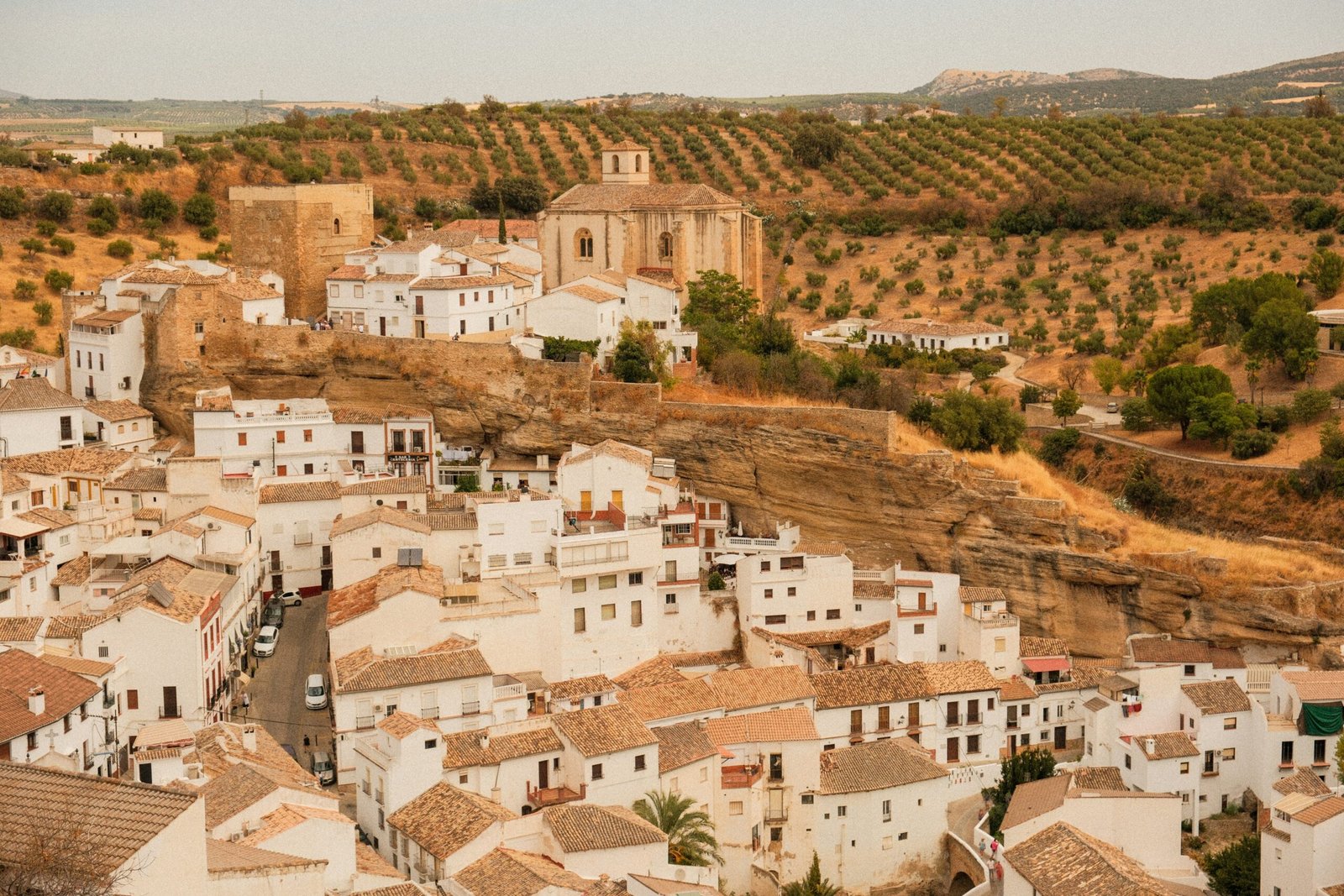
People who spend time in Spain consistently remark on the light. Not just that there’s more of it — though Spain averages 2,500 to 3,000 hours of sunshine per year, significantly more than most of Europe — but that it has a particular quality. In Andalusia, the light in late afternoon turns everything amber and warm. In the Balearics, the sea reflects it until the sky looks painted. In the interior, the clarity of the air gives distant mountains a presence that feels almost architectural.
This isn’t just aesthetic. Sunlight regulates serotonin production, suppresses melatonin during the day, and sets the circadian rhythm that governs sleep quality, mood, and metabolic function. People who live in low-light environments for extended periods tend to experience disrupted sleep, lower mood, and reduced energy. Exposure to genuine, abundant natural light — the kind that Spain offers for much of the year — corrects this at the source.
Morning light exposure in particular, within the first hour of waking, is one of the most evidence-backed interventions for improving sleep quality and daytime alertness. In Spain, stepping outside at 8am in April means walking into proper sunlight. In London or Berlin, it often means walking into grey.


Spanish food culture is, at its best, a slow food culture — not in the branded sense, but in the lived sense. The market, the seasonal ingredient, the long preparation, the meal eaten in company over an extended period. These aren’t just culinary preferences. They’re a set of practices that support digestion, social connection, sensory pleasure, and a relationship with food that is the opposite of anxious.
The ingredients themselves are well suited to what nutritional science now understands about longevity and metabolic health. Spanish cuisine, particularly in the south, shares the core elements of the broader Mediterranean pattern: olive oil, legumes, seasonal vegetables, seafood, good bread, and wine used in moderation as part of a meal rather than as a coping mechanism.
But the manner of eating matters as much as the content. Tapas culture, for all its tourist associations, embodies a genuinely intelligent approach to eating: small quantities, variety, shared plates, conversation between bites. It’s the opposite of eating a meal alone in front of a screen, and the difference in how the body and nervous system respond to the two experiences is measurable.
Spain’s geographic diversity is one of its most underappreciated qualities. Within a few hours of each other, you can find the flat, silent expanse of the Castilian meseta, the dramatic limestone peaks of the Tramuntana, the volcanic rawness of the Canary Islands, the Atlantic wildness of the Costa de la Luz, and the orange-scented plazas of Andalusian cities.
Each of these landscapes produces different effects on the nervous system. The research on natural environments and stress reduction is consistent: exposure to varied natural settings, particularly those involving water, open sky, and reduced human noise, activates the parasympathetic nervous system and restores attentional capacity. Spain offers most of these in abundance, accessible without long-haul travel or significant expense.
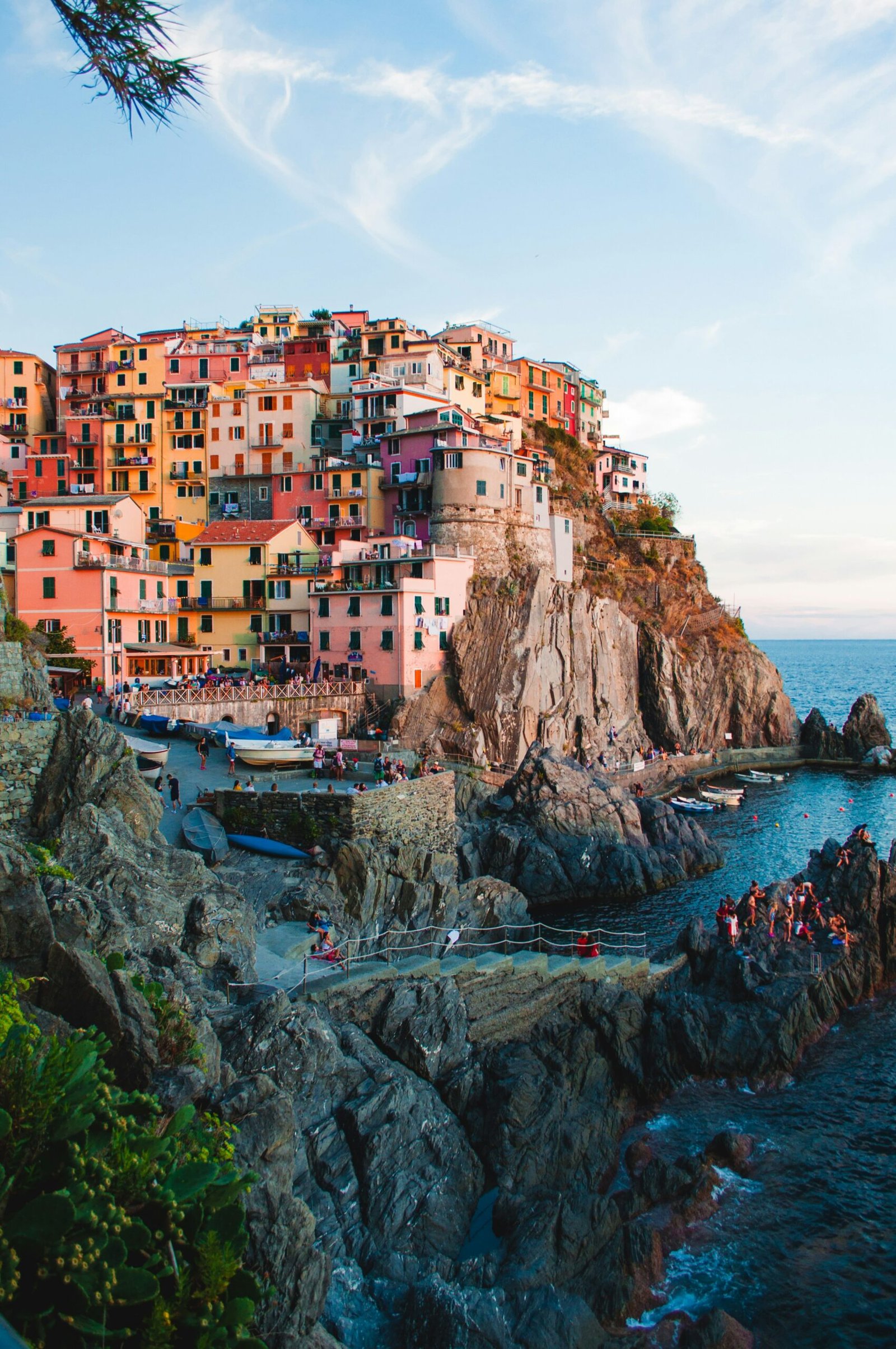
The coast in particular — whether the Mediterranean warmth of the Costa Blanca or the Atlantic intensity of Tarifa — produces a specific combination of sensory inputs that people find reliably calming: the rhythm of waves, negative ions from sea air, open horizons that give the visual system a rest from the close-range focus that screens and offices demand.
The growth of wellness travel in Spain over the last decade isn’t accidental. It reflects a convergence of factors that make the country genuinely well-suited to the kind of experiences people are increasingly looking for: not louder, busier, more stimulating holidays, but ones that leave them feeling restored rather than depleted.
The retreat infrastructure has developed to match this demand. From purpose-built wellness centres in Ibiza to small rural fincas in Andalusia, from surf and yoga camps on the Atlantic coast to mountain retreats in Mallorca’s Tramuntana — the range of what’s available is now broad enough to serve very different temperaments and intentions.
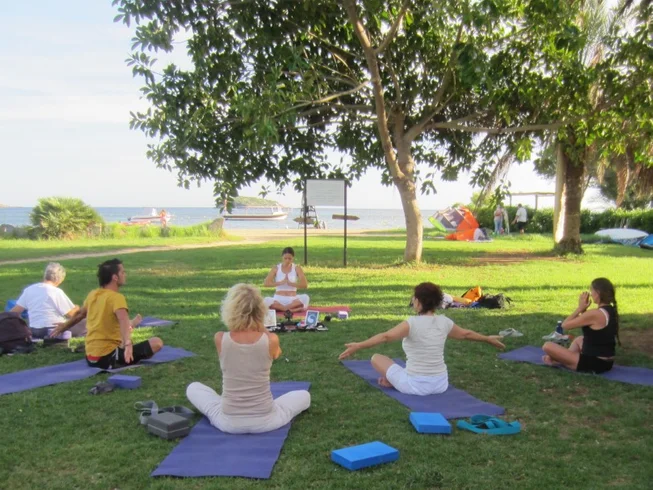
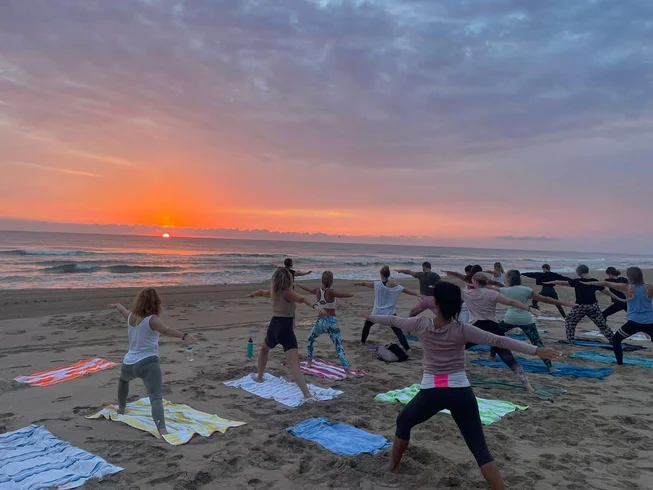
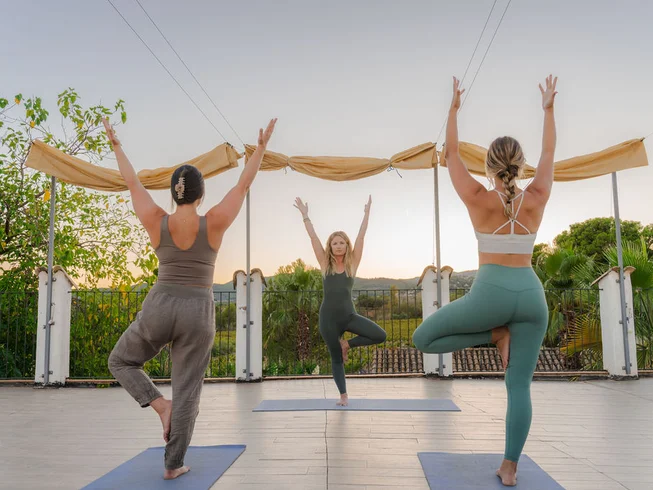
What the best retreats in Spain do is use the country’s existing assets deliberately: placing yoga practice in the early morning light, building meals around local seasonal produce, scheduling afternoons with enough unstructured time that the nervous system can actually do what it came to do. The retreat doesn’t create the conditions for restoration from scratch. It frames what’s already there.
Spain’s size means the answer depends on where you’re going, but a few general principles hold.
Spring, from April to June, is the strongest overall choice for the mainland and the Balearics. Temperatures are warm without being brutal, the country is fully operational, and the particular quality of spring light in Andalusia and the islands is something people return for specifically.
Autumn from September to November is excellent and underused. The heat drops to comfortable levels, the summer crowds are gone, and the sea remains warm enough to swim in October. Retreat prices often reflect the lower demand. This is arguably the best time of year for the interior regions.
Summer works well for coastal and island retreats provided the programme is scheduled intelligently — early morning and late afternoon practice, with afternoons free or quiet. The midday heat inland is serious and not to be underestimated.
The Canary Islands sit outside this seasonal logic entirely. Year-round warmth makes them a reliable choice for winter retreats when the rest of the country is cool and quiet, and their volcanic landscape offers a more elemental experience than the mainland.
Your email address will not be published. Required fields are marked *