
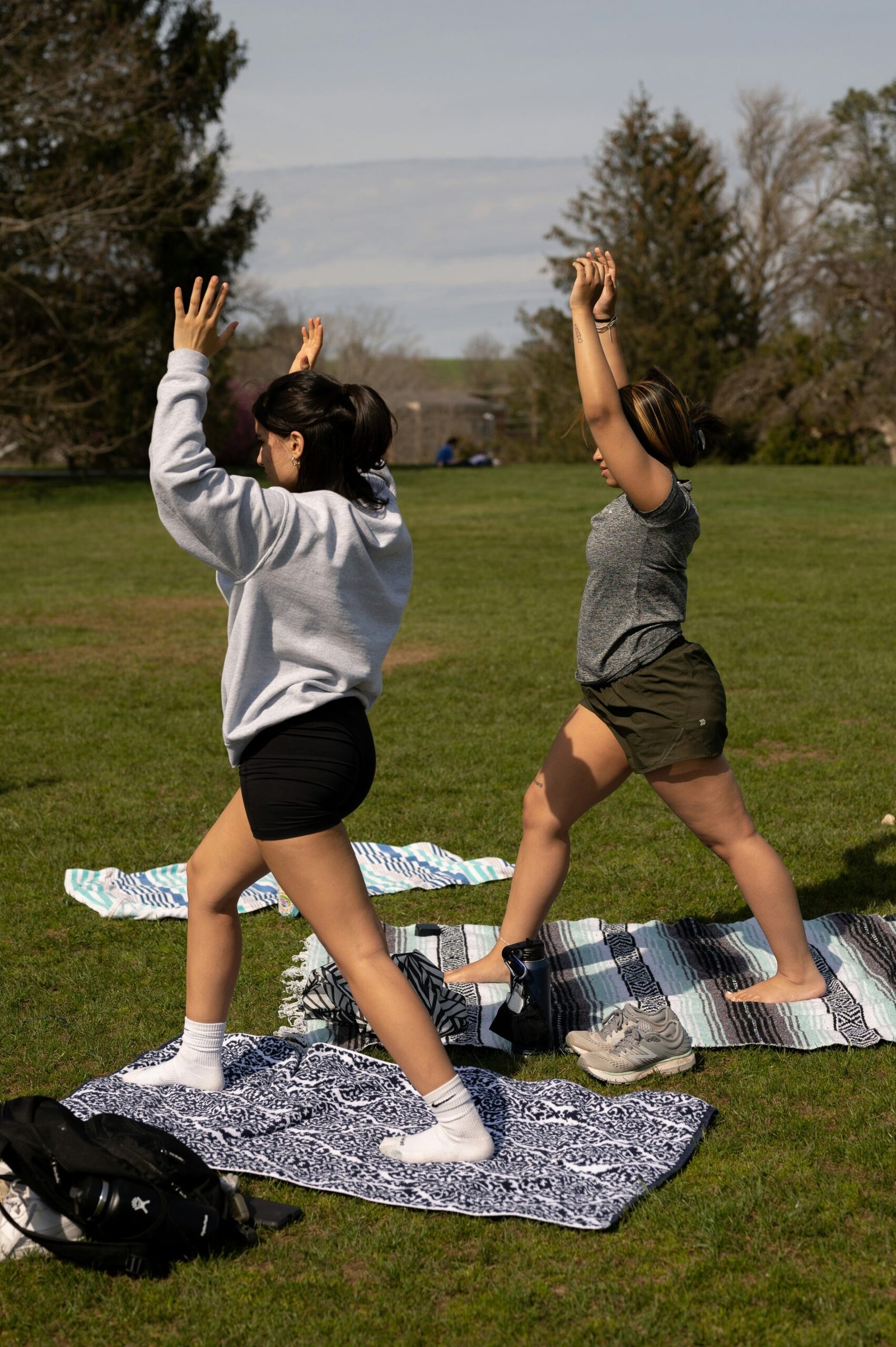
Most people treat stress as a mental problem with mental solutions — think your way through it, talk your way out of it, push past it. But the body doesn’t work that way. Tension accumulates physically, in muscles, in posture, in the nervous system, and it doesn’t leave just because the stressful situation does. Somatic movement is one of the few approaches that addresses this directly.


The word somatic comes from the Greek soma, meaning body. Somatic movement is any practice that prioritises internal physical experience over external performance — how something feels rather than how it looks, what the body is communicating rather than what it’s achieving.
Unlike conventional exercise, which typically measures success by output (distance covered, weight lifted, calories burned), somatic practices ask a different question: what is the body holding, and what does it need to release?
Practices that fall under this umbrella include somatic yoga, Body-Mind Centering, Feldenkrais, Continuum Movement, and trauma-informed movement modalities. More familiar practices like slow yoga, qigong, tai chi, and certain forms of dance also operate on somatic principles when practiced with sufficient attention to internal sensation.
What they share is an orientation toward the nervous system rather than the muscles — working with the body’s regulatory capacity rather than pushing against its limits.
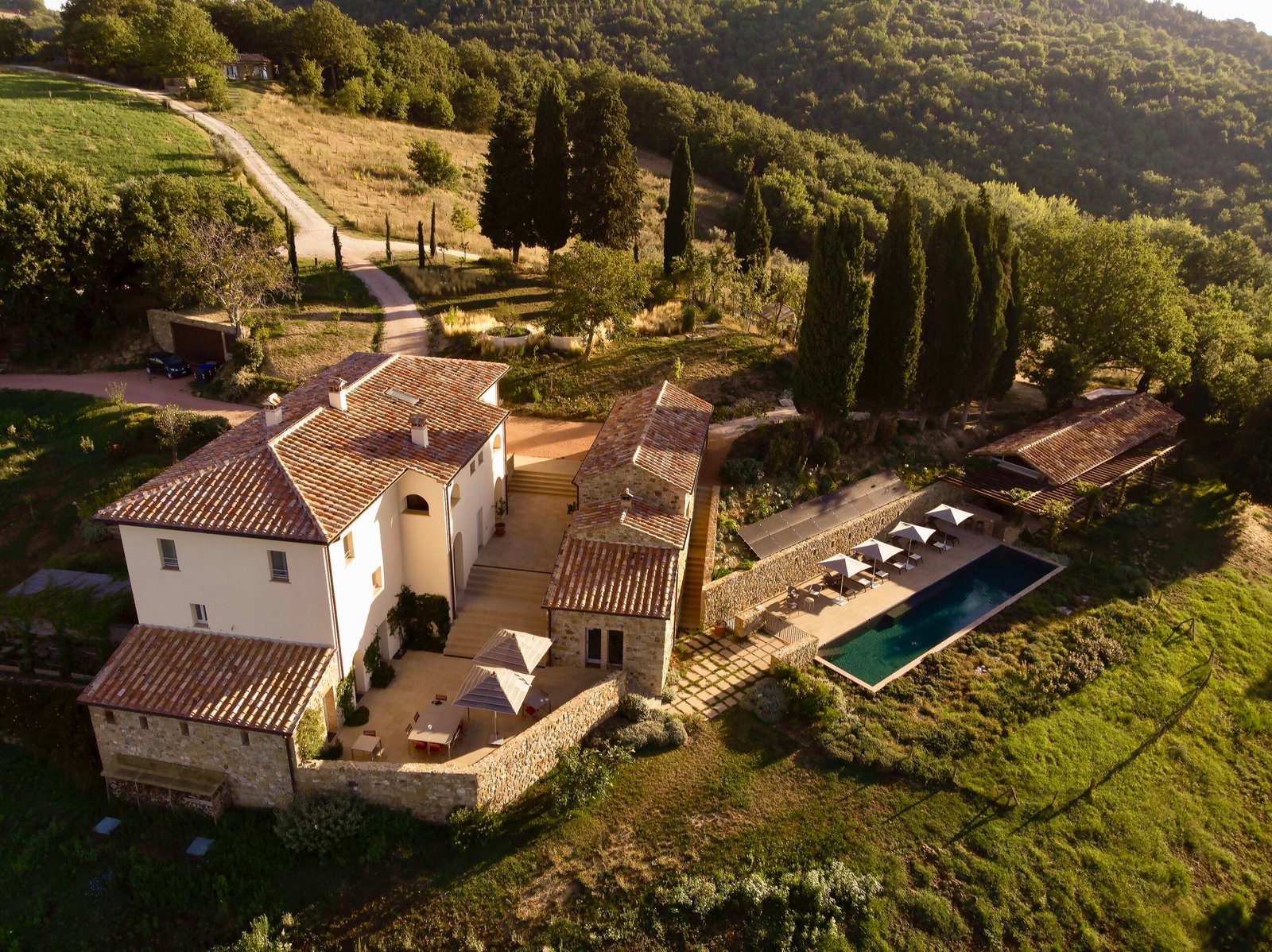


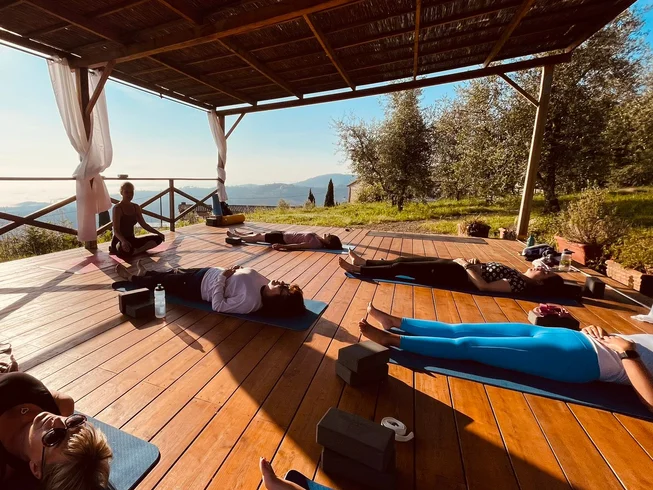

The idea that the body holds onto emotional and psychological stress isn’t metaphorical. It’s physiological.
When the nervous system perceives a threat, it initiates a cascade of responses: muscles tighten, breath becomes shallow, the digestive system downregulates, and the body mobilises for action. This is the fight-or-flight response, and it’s extraordinarily well designed for short-term survival.
The problem is that modern stressors rarely resolve the way acute physical threats do. A predator either catches you or it doesn’t. A difficult boss, a fractured relationship, financial uncertainty, a global pandemic — these threats are chronic, ambiguous, and never fully resolved. The nervous system stays activated. The muscles stay braced. The breath stays shallow. And over time, this becomes the body’s default state.
Psychiatrist Bessel van der Kolk, whose book The Body Keeps the Score brought this understanding to a wide audience, argues that trauma and chronic stress reorganise the brain and body in ways that cognitive approaches alone cannot reach. You can understand intellectually that a situation is over; the body may not have received the message.
This is where somatic movement becomes relevant. Not as a replacement for therapy or medical care, but as a way of completing the physiological cycle that stress initiates and ordinary life so rarely allows to finish.

Movement doesn’t require intensity; it requires presence.
A single deep stretch, held with awareness, can release more tension than an hour of rushed exercise.
A structured retreat creates the conditions for this kind of work more reliably than a daily practice at home. Our yoga retreats in Portugal include somatic and movement-based practices as part of their programmes. If you are not sure whether a retreat is the right step, these signs are a useful reference.
The mechanism is centred on the autonomic nervous system, specifically the vagus nerve — the longest nerve in the body, running from the brainstem through the heart, lungs, and digestive organs.
The vagus nerve is the primary channel through which the body shifts between states of activation and rest. Rhythmic, slow, breath-coordinated movement stimulates vagal tone — essentially improving the nervous system’s capacity to regulate itself. This is why slow yoga, qigong, and mindful walking feel calming in a way that a hard run often doesn’t, even though the run may be enjoyable. The nervous system isn’t just tired; it’s genuinely shifting states.
Somatic practices also work through what’s called interoception — the body’s perception of its own internal state. Most people with high stress levels have poor interoceptive awareness; they’ve learned to override physical signals in order to keep functioning. Somatic movement reverses this, gradually restoring the ability to notice sensation without immediately trying to change it.
The result, over time, is a nervous system that’s less easily triggered, more capable of returning to baseline, and more available for the kind of presence that makes life actually feel liveable.


Somatic movement can feel strange at first, especially for people accustomed to exercise as performance. Moving slowly and with attention, without a target, without progression, without measurable output — it can feel unproductive in a way that makes high achievers uncomfortable.
That discomfort is worth sitting with. It’s often a sign that the nervous system is encountering something it doesn’t have a script for.
Emotional release during somatic practice is not uncommon. A long exhale in a hip-opening posture, a sustained stretch in the shoulders, a slow movement of the spine — these can unlock sensations or emotions that have been stored in the tissue. This can be surprising, and occasionally intense. It’s generally a sign that the practice is working, not that something is wrong.
The key is not forcing anything. Somatic movement isn’t about pushing the body toward release; it’s about creating conditions in which release can happen naturally, at the body’s own pace.
The context in which somatic movement happens matters considerably. At home, with a familiar environment full of habitual cues and ambient noise, the nervous system rarely fully downregulates. The conditions for deep somatic work are hard to create alone.
A retreat setting changes this. A natural environment, reduced sensory stimulation, no professional obligations, unhurried time — these factors combine to move the nervous system into a state of safety that most people rarely access in daily life. From that state, somatic practices go considerably deeper than they can in a one-hour class sandwiched between a commute and a work call.
Many people report that the emotional and physical releases they experience on retreat are unlike anything they’ve encountered in years of regular practice at home. This isn’t because the retreat is more intense — it’s because the conditions are finally right.
Somatic awareness isn’t a practice confined to a mat or a retreat. It can be woven into ordinary movement throughout the day.
Notice what happens in your body when you receive a difficult email. Feel your feet on the floor before a challenging conversation. Pause before standing up from your desk and take one slow breath. Roll your shoulders after each hour of screen time. Walk without headphones occasionally, letting your body set the pace rather than following a beat.
These aren’t stress management techniques in the conventional sense. They’re moments of listening. And the cumulative effect of listening regularly is a body that feels, over time, less like something you’re dragging through the day and more like somewhere you actually live.
Your email address will not be published. Required fields are marked *