

Most people who book a yoga retreat wait until they’re already running on empty. By that point, the decision is less a choice and more a necessity. But the signs that a retreat would serve you well tend to appear much earlier — and recognising them before you hit a wall makes the difference between going to recover and going to deepen something that’s already working.


The clearest signal that something needs to change isn’t exhaustion during the working day — it’s exhaustion that doesn’t lift during time off. When weekends leave you feeling roughly as depleted as they found you, when holidays require recovery, when sleep isn’t doing what sleep is supposed to do, the ordinary mechanisms of recovery have stopped working.
This happens when the nervous system has been in sustained activation for long enough that it can no longer downregulate on its own without a significant change in environment and input. Passive rest — television, scrolling, lying in bed — doesn’t address this. It reduces stimulation without producing the conditions the nervous system needs to actually shift states.
A retreat creates those conditions deliberately: a natural environment, removal of professional demands, slow physical movement, and enough consecutive time for the parasympathetic nervous system to genuinely activate. If your downtime stopped working some time ago, this is probably the most honest sign that the scale of intervention needs to change.



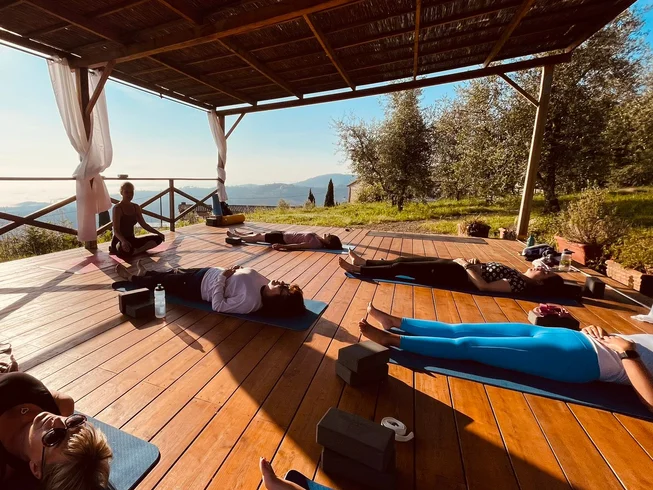


There’s a particular shift that happens in people who are ready for a retreat, even if they don’t name it that way. Distractions that used to work stop working. Scrolling feels hollow. The activities that were previously enjoyable require more effort to access and deliver less satisfaction than they did. Quiet moments — the morning before the phone comes on, a walk without headphones — start to feel like the best parts of the day.
This isn’t depression, though it can be confused with it. It’s a signal that the mode of engagement that ordinary life offers isn’t meeting what the person actually needs. Stimulation is available in abundance; depth isn’t.
A retreat provides depth by design. The reduction of external input, the repetition of simple practices, the unhurried time — these create conditions in which something beneath the surface has room to emerge. If you’ve been feeling that vague pull toward something more real, more present, more yours, that feeling is directionally accurate.

If you’ve forgotten what deep rest feels like, a retreat can help your body remember before your mind even catches up.
When you are ready to go, yoga retreats in Greece offer some of the most varied options in Europe — from the Peloponnese to the Cyclades. Yoga retreats in Morocco are worth considering for a more immersive environment at a lower price point.
Chronic stress doesn’t stay in the mind. It lives in the jaw, the shoulders, the gut, the quality of sleep, the frequency of illness. People who are physically holding a lot of unprocessed stress tend to know it, even when they’ve learned to function around it.
The body carries what the schedule doesn’t have room to address. Tension that doesn’t release between sessions of exercise. Digestion that doesn’t settle. Sleep that doesn’t satisfy. A restlessness in the body that isn’t relieved by stillness.
Yoga, practiced slowly and with attention, is one of the most effective ways of creating conditions in which the body can begin to release what it’s holding. Not because of the postures specifically, but because of the combination of slow, rhythmic movement, sustained breath awareness, and the deliberate removal of urgency. A retreat allows this work to happen over enough consecutive days that the body’s patterns actually begin to shift rather than just temporarily soften.
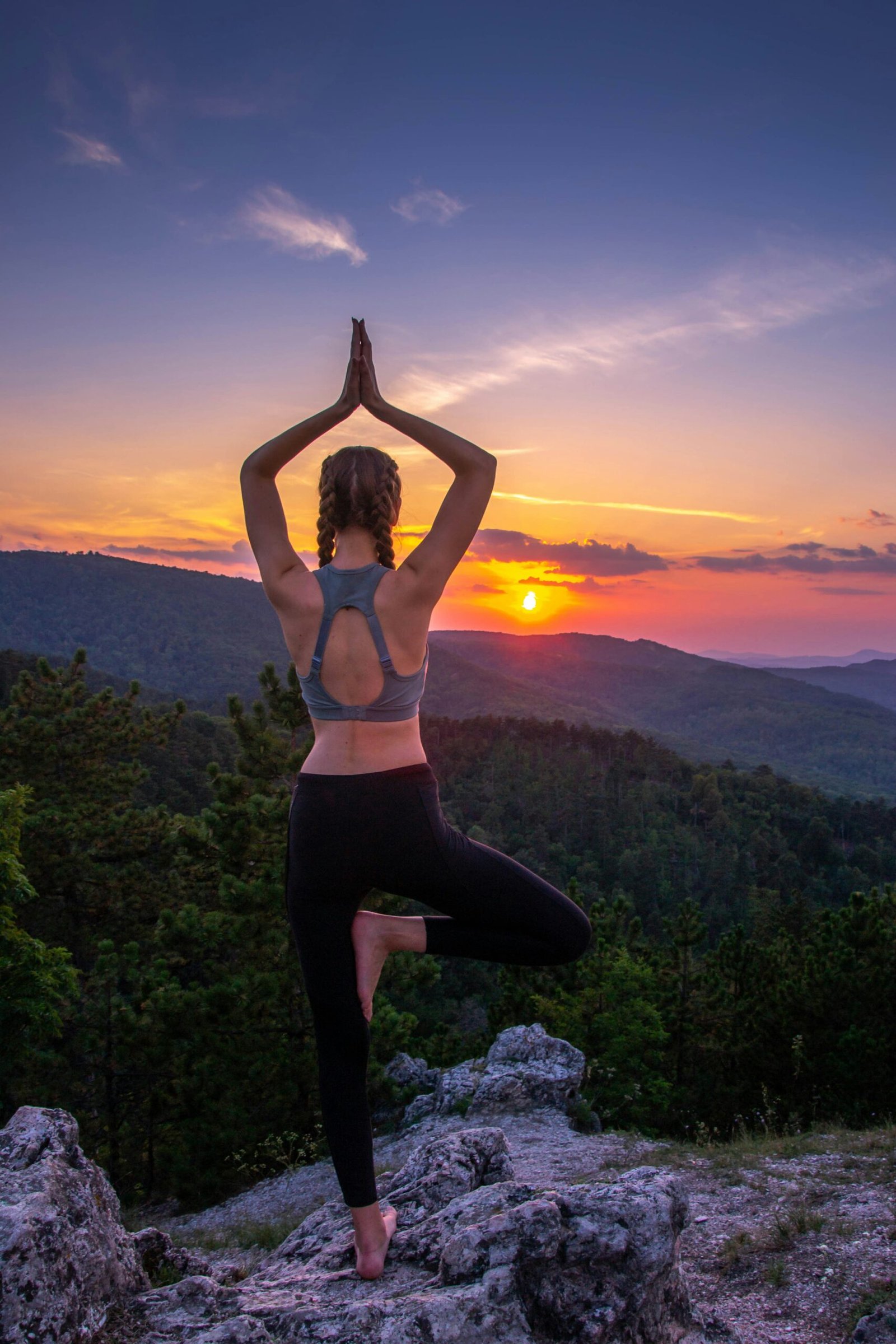

Retreats are particularly valuable at moments of transition: a career change, the end or beginning of a relationship, a significant loss, a decade birthday, a feeling of having arrived somewhere and not being sure you want to stay.
These moments tend to generate a lot of cognitive noise — options to evaluate, futures to imagine, identities to renegotiate. That noise rarely resolves itself under normal conditions, because normal conditions keep adding more input on top of it.
Stillness does something different. When the ordinary distractions are removed and the pace slows enough for thought to settle, what’s essential tends to separate from what’s noise. This isn’t mystical; it’s what happens when an overstimulated cognitive system is finally given the conditions to process rather than just accumulate.
Many people return from retreats not with answers, but with a much clearer sense of what the right questions are. That clarity, once found, tends to be durable in ways that decisions made under pressure rarely are.
This one is pragmatic. Most people who book retreats have been thinking about it for considerably longer than they’d like to admit. The thought appears, gets filed under “when things calm down,” and the things don’t calm down.
The reasoning that keeps the decision deferred is usually some version of: not the right time, too expensive, can’t take the time away, will do it when the project ends or the children are older or the schedule clears. None of these conditions tend to materialise on their own.
If you’ve been thinking about a retreat for a year or more, the practical objections are worth examining honestly. The cost of not going, in terms of sustained depletion and its effects on health, relationships, and performance, is real even if it’s harder to quantify than a flight and accommodation. The right time is rarely when everything else has settled — it’s when you decide to make it the thing that doesn’t get deferred again.
The question “is it time for a yoga retreat?” almost always answers itself, if you’re honest about what you’re noticing. Downtime that isn’t restoring you. A body that’s carrying more than it should. A craving for something slower and more real. A transition you haven’t had the space to properly navigate. A thought you’ve been postponing for longer than makes sense.
Any one of these is enough. All five together is a clear signal.
Going doesn’t have to mean running away from something. It can simply mean choosing, deliberately, to give yourself the conditions that ordinary life rarely provides on its own.
How do I know if I need a yoga retreat? The clearest signs are: rest that no longer restores you, a persistent craving for depth over distraction, physical tension that doesn’t release, a life transition you haven’t had space to process, and a thought about going that you’ve been postponing for more than a year. Any one of these is worth taking seriously.
Do I need yoga experience before going on a retreat? No. Most yoga retreats are designed to be accessible to all levels, and the better ones are explicit about this. What matters more than experience is whether the retreat’s pace and approach match where you are right now — not how many years you’ve been practising.
How long should a first yoga retreat be? Five to seven days is the strongest starting point. It’s long enough for the nervous system to genuinely shift and for the practice to develop real depth, without the commitment feeling daunting. Three-day retreats are possible but tend not to reach the same depth. Ten days or more is genuinely valuable but works best after some retreat experience.
What is the difference between a yoga retreat and a yoga holiday? A yoga holiday incorporates yoga sessions into a travel experience. A yoga retreat uses the entire structure — the environment, the schedule, the food, the pace — to support restoration and practice. A yoga holiday can be refreshing; a yoga retreat is designed to produce a more significant and lasting shift.
Is it better to go on a yoga retreat alone or with a friend? Both work, and each has real advantages. Going alone removes the social negotiation of managing someone else’s preferences and tends to produce a deeper individual experience. Going with a friend provides familiarity, which some people find reassuring on a first retreat. Small group retreat formats make solo attendance very comfortable — most people who arrive alone find it one of the most naturally social experiences they’ve had.
How do I know if a yoga retreat is high quality? Look for: transparent teacher backgrounds and training lineage; a daily schedule that includes genuine unstructured time; honest photography of the actual space; clear information about group size; and reviews that describe the experience specifically rather than in generic positive terms. Quality retreats answer pre-booking questions clearly and without pressure.
Your email address will not be published. Required fields are marked *