
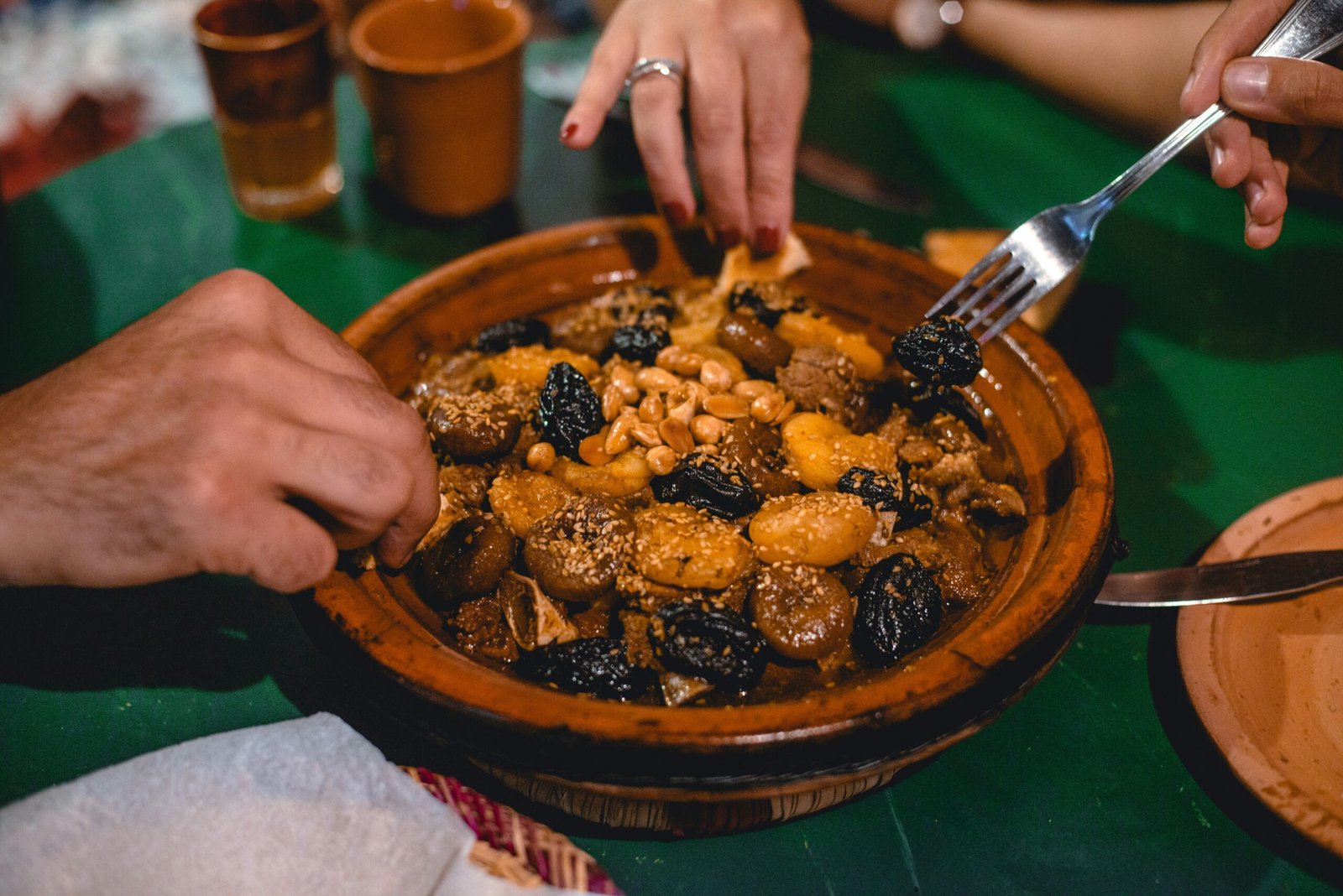
Moroccan food is a feast for the senses: tagines slow-cooked with saffron and cumin, couscous fluffy as clouds, mint tea poured from height. Now pair it with daily yoga. Learn to make preserved lemons, harvest argan oil, or shop in a souk — then stretch it all out on the mat. Feed your body twice.


Moroccan food is not fast food in any sense of the word. A proper tagine takes three hours minimum. Couscous is steamed twice, by hand, over a pot of simmering broth. Preserved lemons are made weeks in advance and left to cure in salt and their own juice. The patience required to cook Moroccan food well is, in itself, a practice in mindfulness.
This is why the combination of culinary experience and yoga works so naturally in Morocco. Both disciplines ask the same things: presence, attention, willingness to slow down, and respect for process over shortcuts. On a culinary yoga retreat here, you are not doing two separate things. You are doing one thing twice, in different languages.
Morocco is also genuinely one of the great food cultures on earth. The cuisine draws from Berber, Arab, Andalusian, and sub-Saharan African traditions, uses a spice palette of extraordinary complexity, and produces dishes that have been refined over centuries by cooks who understood the relationship between food and wellbeing long before wellness was a marketing category.
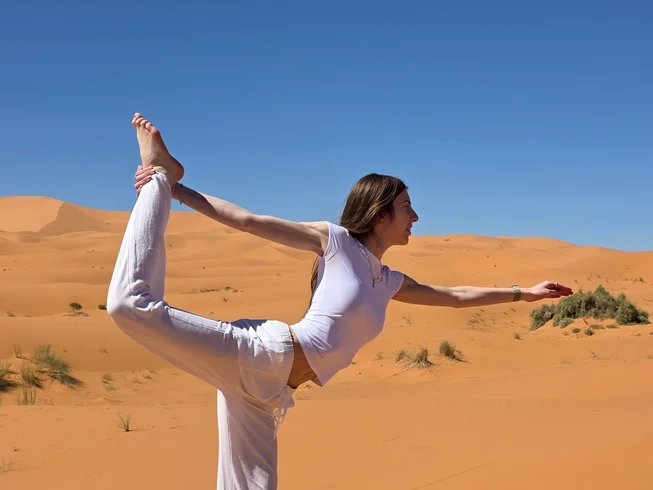
The connection between food and yoga in Morocco is not manufactured for the retreat market. It exists in the culture itself.
Moroccan cooking has always been understood as nourishment in the fullest sense. The spice combinations that define the cuisine are not purely about flavour: cumin aids digestion, cinnamon regulates blood sugar, turmeric is anti-inflammatory, ginger warms and settles the stomach, coriander supports the liver. Ras el hanout, the complex spice blend whose name means “head of the shop,” can contain twenty or more ingredients selected for both taste and medicinal effect. This understanding of food as medicine is precisely the philosophy that underlies yoga’s approach to the body.
The pace of Moroccan cooking also mirrors the pace yoga is trying to create. You cannot rush a tagine without ruining it. You cannot hurry the steaming of couscous. The kitchen on a culinary yoga retreat becomes a continuation of the mat: a space where attention is the primary ingredient and the result depends entirely on how present you are.
Practically, the food that comes out of a Moroccan kitchen supports an active yoga practice very well. The cuisine is naturally heavy on vegetables, legumes, and olive oil, moderate in meat, and almost entirely free of processed ingredients. Retreat kitchens that serve traditional Moroccan cooking are, without trying to be, producing food that sustains practice without weighing it down.
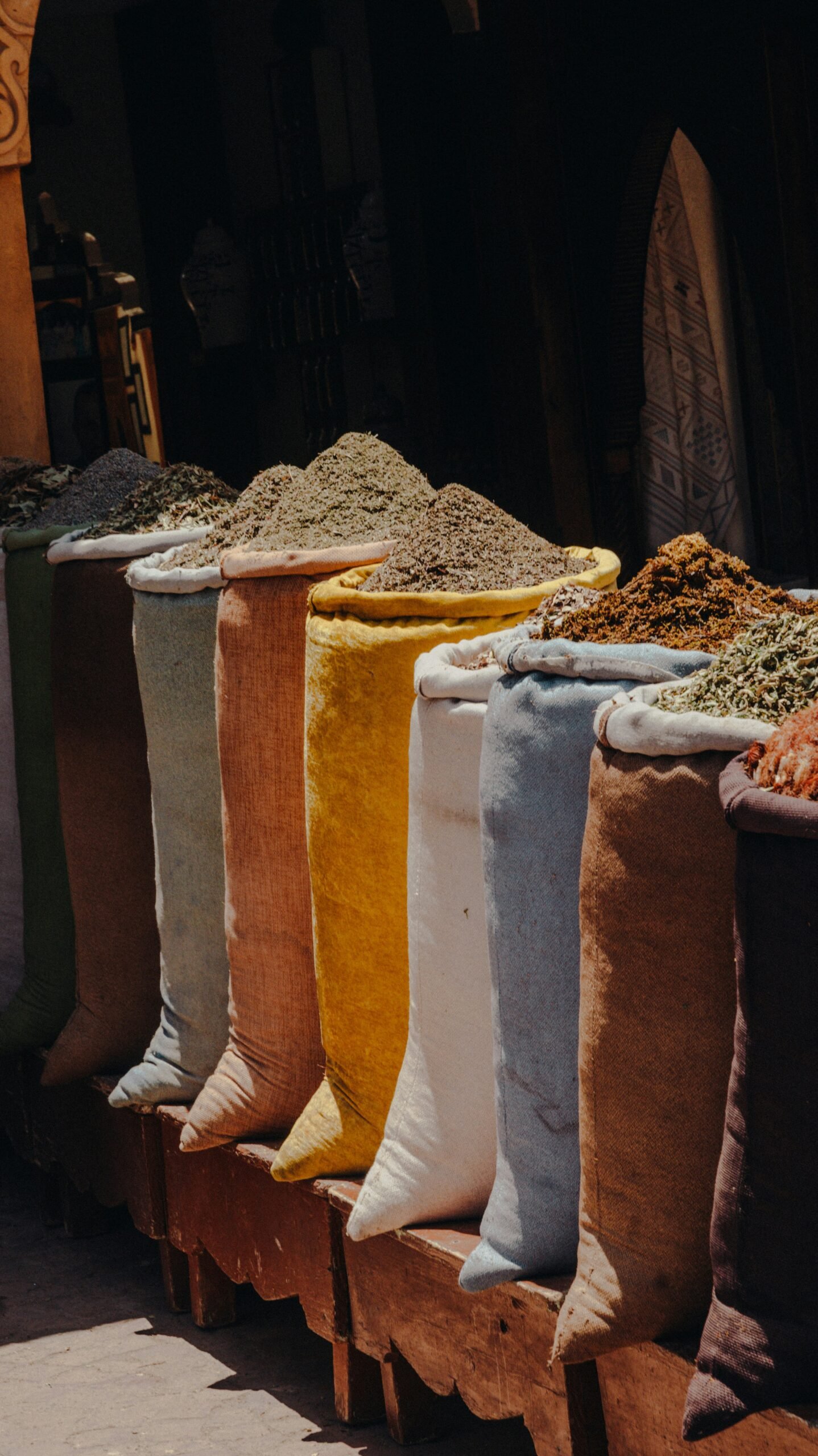
A culinary yoga retreat in Morocco typically includes two to four cooking sessions across a week, each focused on a specific set of dishes or techniques. Here is what those sessions usually cover.
Tagine is the foundation. The dish itself is simple in concept: ingredients slow-cooked in a conical clay pot that returns condensed steam back to the base, creating an almost self-basting effect. The complexity comes from the layering of spices, the quality of the preserved lemon and olives, and the patience to cook slowly enough for the flavours to merge. A retreat cooking class on tagine typically covers at least two versions: a meat tagine (lamb with prunes and almonds, or chicken with preserved lemon) and a vegetable version built around seasonal produce. What you take home is not just a recipe but an understanding of the logic behind it.
Couscous is the Friday dish in traditional Moroccan households, and its preparation is more demanding than most visitors expect. The semolina is steamed in a couscoussier over a pot of simmering broth, raked and aerated by hand between steamings, then returned for a second or third steaming until each grain is separate and light. The broth beneath becomes the sauce. A cooking class on couscous is as much about technique and patience as it is about ingredients.
Chermoula is a marinade and sauce used throughout Moroccan cooking, particularly with fish: coriander, parsley, garlic, cumin, paprika, lemon, and olive oil pounded or blended together. Learning to make chermoula properly, understanding the balance between the herbs and the acid and the fat, gives you a tool that works in dozens of applications beyond Morocco.
Preserved lemons are one of the most distinctively Moroccan ingredients and one of the simplest to make: lemons packed in salt and their own juice, left for at least three weeks to cure into something salty, soft, and intensely flavoured. Making them in a retreat class is partly practical (you can bring them home) and partly philosophical: the lesson that time is an ingredient.
Harira is the soup of Morocco, the dish that breaks the Ramadan fast and appears on every table year-round. Made with tomatoes, chickpeas, lentils, lamb, coriander, cinnamon, and ginger, thickened with flour and finished with a squeeze of lemon, it is one of those dishes that rewards understanding rather than just following a recipe. A harira cooking class typically includes a conversation about the balance of flavours and the role of each ingredient.
Bastilla is the most technically demanding dish in the Moroccan repertoire and the one that most surprises visitors: a large savoury pastry filled with spiced pigeon or chicken, almonds, and eggs, dusted with powdered sugar and cinnamon. The combination of sweet and savoury, the delicacy of the warqa pastry, and the complexity of the filling make it one of the great dishes of any cuisine. Not every retreat covers bastilla, but the best ones do.
Moroccan salads are not afterthoughts. Zaalouk (roasted aubergine with tomatoes and cumin), taktouka (roasted peppers and tomatoes with garlic), carrot salad with cumin and orange blossom water, beet salad with preserved lemon and herbs: these dishes, served as a mezze spread before the main course, demonstrate the range and intelligence of Moroccan vegetable cooking. A class focused on salads is often the most practically useful session for daily cooking at home.
Marrakech
Marrakech is the right city for culinary yoga retreats because it combines the best cooking school infrastructure in Morocco with the riad architecture that makes retreat life work. The medina’s spice market (Rahba Kedima) is an education in itself: the range of spices, dried herbs, and medicinal plants available, the particular smell of a spice market where everything is sold fresh and in bulk, and the conversations with vendors who know their products as medicine as well as flavour. Most Marrakech culinary retreats include a guided souk visit to source ingredients before the cooking class, which transforms the class from instruction into connection.
La Maison Arabe runs one of the longest-established cooking schools in the city, with classes held in a traditional riad kitchen and covering the full range of Moroccan technique. Peacock Pavilions, on the city’s edge among olive trees, hosts yoga retreats that integrate farm-to-table cooking with daily practice. The combination of serious culinary instruction and thoughtful yoga programming in Marrakech is more developed than anywhere else in Morocco.
Essaouira
The Atlantic coast town brings its own dimension to culinary yoga retreats: the emphasis here shifts toward seafood, argan oil, and the particular freshness of a coastal Moroccan kitchen. Fish landed at the Essaouira harbour in the morning appears on the afternoon cooking class table. The argan women’s cooperatives in the surrounding countryside are a standard excursion, allowing retreaters to understand the production of one of Morocco’s most distinctive culinary ingredients at its source.
Lalla Mira, a women-run eco-hotel, offers vegetarian cooking workshops alongside yoga sessions. Yogaloft Essaouira runs weekly food and yoga immersions with local chefs. The town’s relaxed pace, creative community, and excellent raw ingredients make it a natural setting for this kind of programme. For more on what Essaouira offers more broadly, our yoga retreats in Essaouira guide covers the town in full.
The Atlas Mountains
Mountain culinary retreats have their own character: the ingredients are those of subsistence farming and pastoral life, the cooking techniques involve wood fires and clay pots, and the women who teach are Berber cooks who learned in the same kitchens where their grandmothers worked. The dishes are simpler than those of Marrakech but more directly connected to their landscape. Mountain honey from local hives, walnuts from valley orchards, trout from cold rivers, amlou made with locally pressed argan oil: the cooking here is an expression of a specific place in a way that city cooking rarely achieves.
Kasbah du Toubkal near Imlil incorporates ethical and community-rooted culinary experiences into its retreats. The opportunity to cook with local Berber women, understanding techniques and ingredients specific to High Atlas valleys, is one of the more meaningful culinary experiences available in Morocco.
Agadir and Taghazout
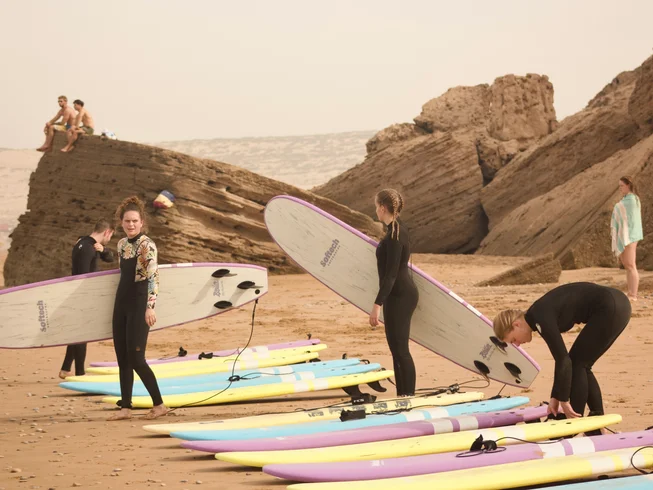
The surf coast brings a lighter, more energetic version of culinary yoga: fresh fish from Agadir’s harbour, avocado and local produce from the Souss plain, cooking orientated around food that fuels physical activity without slowing it down. Retreats at Paradis Plage and similar eco-resorts on this coast incorporate cooking workshops using market produce alongside the surfing and yoga that define the area’s identity.
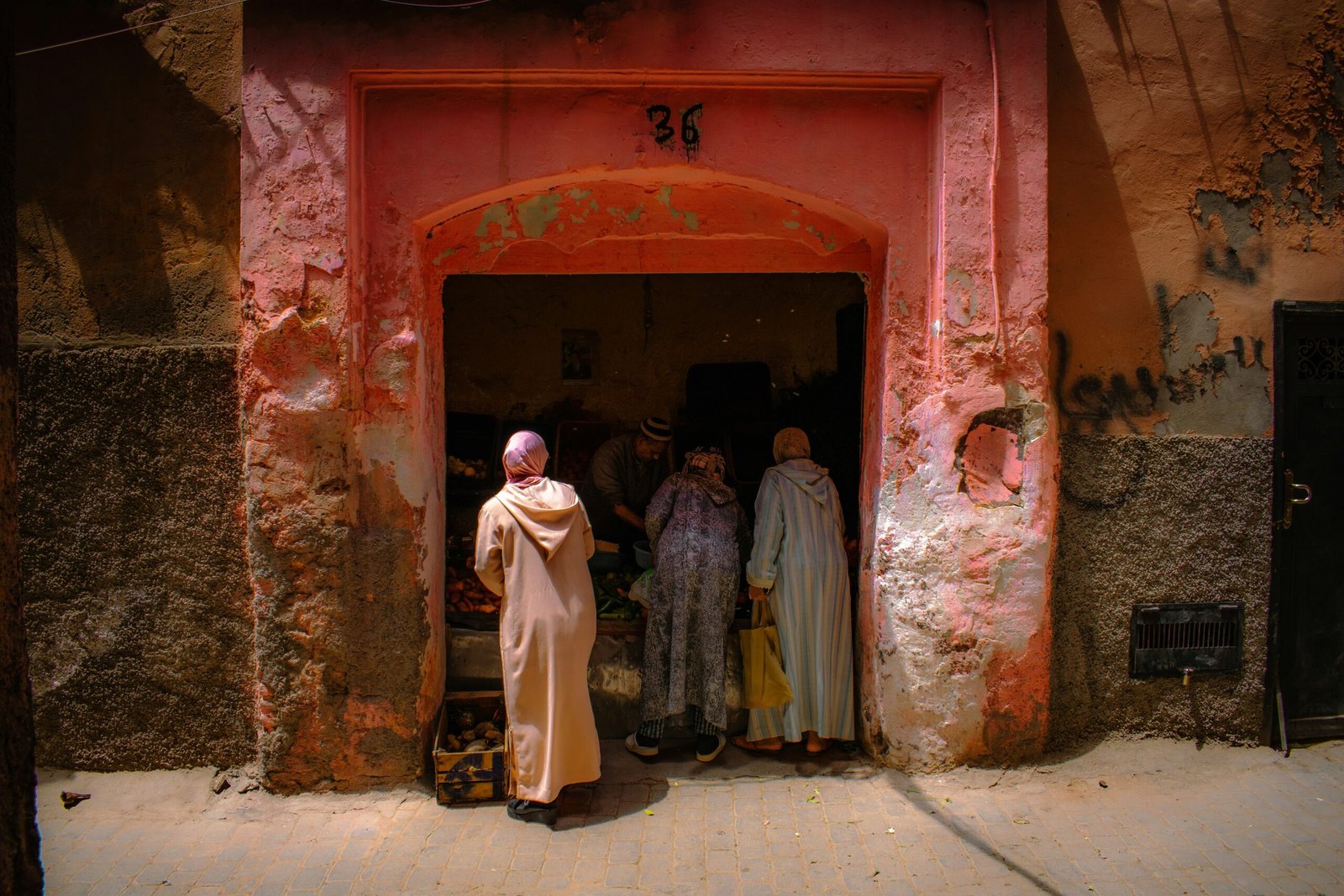
Every serious culinary yoga retreat includes at least one guided market visit, and this is not optional tourism. The souk is where Moroccan food culture is most legible: the vegetables piled by farmers who drove in from the surrounding countryside before dawn, the spice vendors whose stalls contain ingredients that have passed through the same families for generations, the olive sellers with their thirty varieties, the butchers who know exactly where every animal came from.
Shopping in a Moroccan souk with a guide who understands both the produce and the cooking teaches things that no classroom can. You understand why preserved lemon is made at home rather than bought because you see the lemons fresh and understand the price difference. You learn to smell the difference between fresh and stale spices. You begin to understand the logic of seasonal eating because the seasonal produce is visibly, obviously, the best thing available.
Retreats that include souk visits typically go two to three times during a week, at different times of day and in different sections of the market, building a picture of Moroccan food culture that would take months of independent exploration to develop otherwise.
Days on a culinary yoga retreat follow a rhythm that alternates physical practice with kitchen work, rest, and exploration.
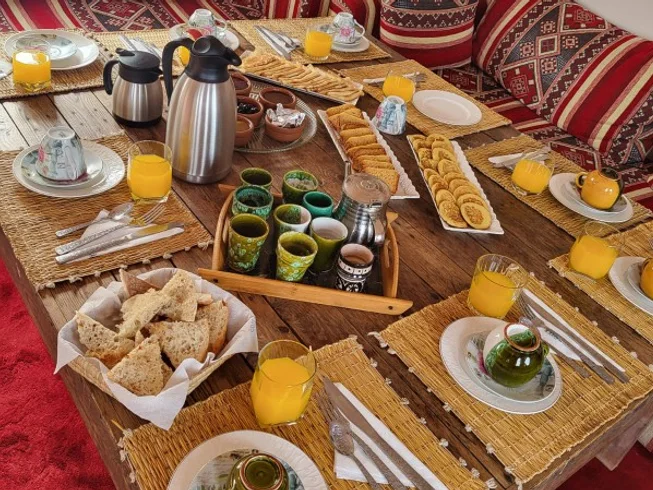
Morning yoga usually runs from 7 to 8:30am: a dynamic practice, often Vinyasa or Hatha, designed to awaken the body before the physical engagement of a cooking session. Breakfast follows: fresh fruit, Moroccan pancakes, eggs, argan oil with honey, mint tea.
The late morning is typically the main cooking session: two to three hours in the kitchen, working on the day’s dishes under the guidance of a local cook or chef. The session covers technique, ingredient knowledge, and context. Lunch is what you cooked, eaten communally.
The afternoon is for rest, hammam, or optional excursions: souk visits, argan cooperative tours, medina exploration. The body needs recovery time after a morning of both physical practice and focused kitchen work.
Evening yoga is slower and more restorative: Yin, Restorative, or a gentle Hatha focused on releasing what the day accumulated. Dinner follows: the other dishes from the cooking session, or a prepared meal from the retreat kitchen.
March and April are ideal: the spring ingredients are at their peak, the rose harvest in the Dades Valley coincides with the best weeks for mountain retreats, and the weather across Morocco makes outdoor cooking and eating easy. For what Morocco offers specifically in March, our yoga retreats in Morocco in March guide covers the season in detail.
September and October offer similar quality: harvest energy, seasonal produce at its most varied, and the country settling into a more reflective pace after summer. Olive harvest in October adds a specific culinary dimension that retreats in the Atlas foothills can incorporate directly.
November to February is the season when indoor cooking feels most natural. Warming tagines, rich harira, slow-cooked dishes that fill a cold riad with fragrance: winter is when Moroccan cooking is at its most comforting and most fully appreciated.
June to August is summer: fresh ingredients are abundant, but the heat makes morning cooking sessions demanding. Retreats in Essaouira and on the Atlantic coast are more comfortable than those in Marrakech or the interior.
Do I need any cooking experience to join a culinary yoga retreat? None at all. Culinary yoga retreats are designed for curious eaters rather than trained cooks. The sessions are participatory and hands-on, but they assume no prior knowledge of Moroccan cuisine or professional kitchen skills. The emphasis is on understanding and enjoyment rather than technical proficiency. Many participants who describe themselves as non-cooks discover a genuine enthusiasm for the kitchen during a week in Morocco.
Is Moroccan food suitable for vegetarians and vegans? Very much so. Moroccan cuisine has a deep tradition of vegetable and legume cooking that predates the current fashion for plant-based eating by centuries. Vegetable tagines, lentil soups, couscous with seven vegetables, Moroccan salads, and the full breakfast spread are all naturally vegetarian. Vegan participants should clarify their requirements with the retreat centre when booking, as some dishes use butter or eggs, but alternatives are almost always available.
Can I bring recipes and techniques home and actually use them? Yes, and this is one of the more practically useful outcomes of a culinary yoga retreat in Morocco. The core techniques, particularly tagine, chermoula, preserved lemons, and Moroccan salads, translate directly to home cooking with ingredients available in any good European or American supermarket or food market. Retreats typically provide written recipes, and several of the ingredients you will want to use (preserved lemons, ras el hanout, argan oil) are increasingly available outside Morocco or easily ordered online.
How does the culinary dimension affect the yoga practice? In two ways. First, the food itself: eating fresh, seasonal, whole food cooked with care supports practice in the most direct physical sense. Second, the kitchen work itself develops the same quality of attention that yoga is training. Participants frequently report that the cooking sessions produce a meditative state similar to practice, and that understanding this connection changes how they approach both disciplines afterward.
Which city offers the best culinary yoga retreat experience? Marrakech has the most developed infrastructure and the widest range of retreat options. Essaouira offers the best seafood and argan oil dimension, plus a more relaxed atmosphere. The Atlas Mountains offer the most direct connection to ingredient sources and Berber cooking traditions. The right choice depends on what you want from the culinary dimension: technical instruction and variety (Marrakech), fresh coastal produce and creative community (Essaouira), or traditional techniques and mountain ingredients (Atlas).
Your email address will not be published. Required fields are marked *