
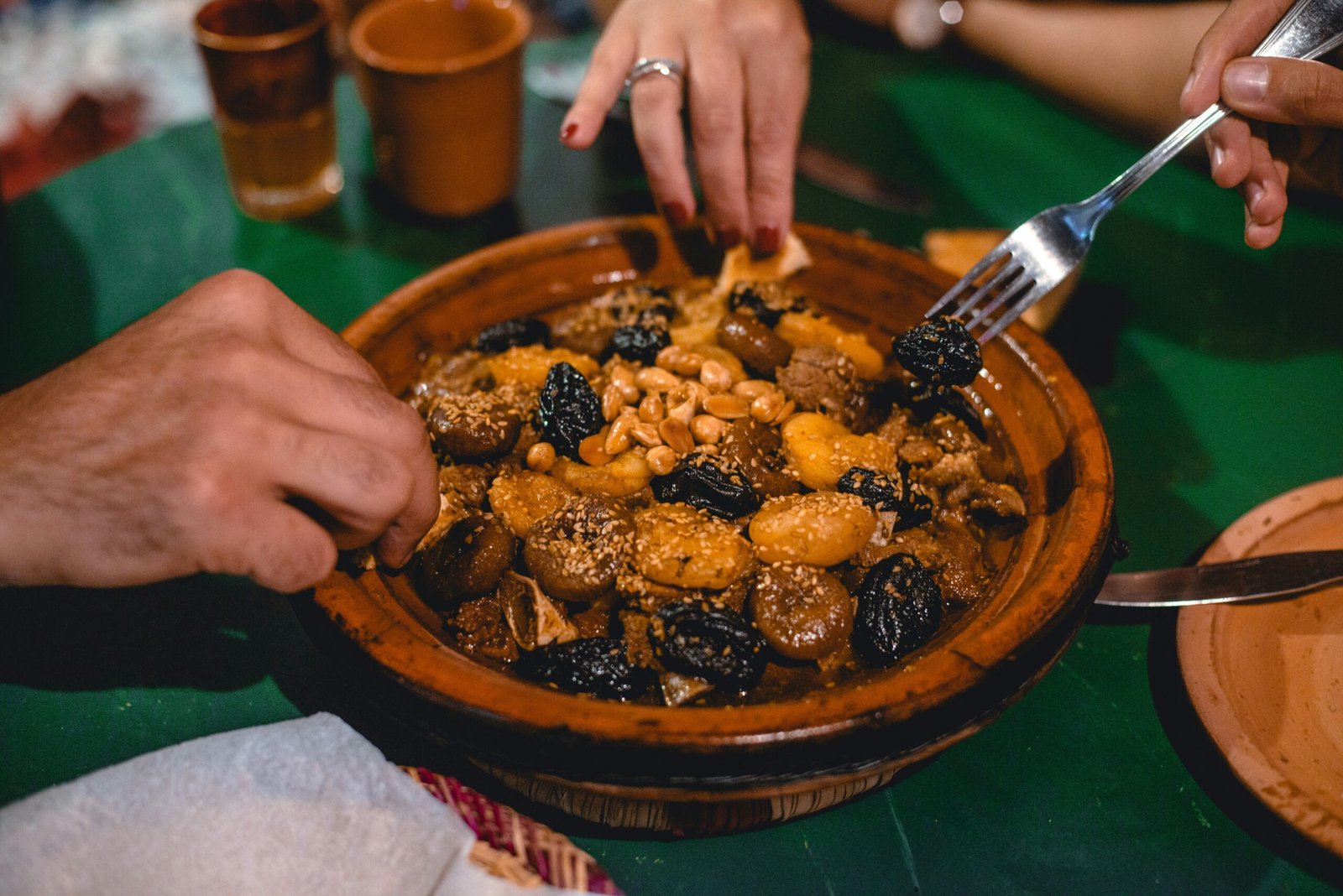
Die marokkanische Küche ist ein Fest für die Sinne: langsam geschmorte Tajines mit Safran und Kreuzkümmel, fluffiger Couscous, Minztee, der aus großer Höhe eingeschenkt wird. Kombinieren Sie das nun mit täglichem Yoga. Lernen Sie, eingelegte Zitronen herzustellen, Arganöl zu gewinnen oder auf einem Souk einzukaufen – und dehnen Sie all das anschließend auf der Matte. Gönnen Sie Ihrem Körper doppelte Stärkung.


Marokkanisches Essen ist in keiner Weise Fast Food. Eine richtige Tajine braucht mindestens drei Stunden. Couscous wird zweimal von Hand über einem Topf mit siedender Brühe gedämpft. Eingelegte Zitronen werden Wochen im Voraus zubereitet und ziehen in Salz und ihrem eigenen Saft. Die Geduld, die für die Zubereitung guter marokkanischer Gerichte erforderlich ist, ist an sich schon eine Übung in Achtsamkeit.
Deshalb funktioniert die Kombination aus kulinarischen Erlebnissen und Yoga in Marokko so natürlich. Beide Disziplinen fordern dasselbe: Präsenz, Achtsamkeit, die Bereitschaft zum Innehalten und Respekt vor dem Prozess statt vor Abkürzungen. Auf einem kulinarischen Yoga-Retreat hier praktiziert man nicht zwei getrennte Dinge. Man praktiziert ein und dasselbe zweimal, nur in verschiedenen Sprachen.
Marokko zählt zweifellos zu den großartigsten Esskulturen der Welt. Die Küche vereint berberische, arabische, andalusische und subsaharische Traditionen, verwendet eine außergewöhnlich komplexe Gewürzpalette und kreiert Gerichte, die über Jahrhunderte von Köchen verfeinert wurden, die den Zusammenhang zwischen Ernährung und Wohlbefinden lange vor dem Aufkommen des Wellness-Trends verstanden.



Die Verbindung zwischen Essen und Yoga in Marokko ist nicht künstlich für den Retreat-Markt geschaffen. Sie ist tief in der Kultur verwurzelt.
Die marokkanische Küche wurde schon immer als Nahrung im umfassendsten Sinne verstanden. Die Gewürzmischungen, die diese Küche prägen, dienen nicht nur dem Geschmack: Kreuzkümmel fördert die Verdauung, Zimt reguliert den Blutzucker, Kurkuma wirkt entzündungshemmend, Ingwer wärmt und beruhigt den Magen, Koriander unterstützt die Leber. Ras el Hanout, die komplexe Gewürzmischung, deren Name “Chef des Ladens” bedeutet, kann zwanzig oder mehr Zutaten enthalten, die sowohl wegen ihres Geschmacks als auch ihrer gesundheitsfördernden Wirkung ausgewählt werden. Dieses Verständnis von Nahrung als Medizin ist genau die Philosophie, die dem Yoga-Ansatz zum Körper zugrunde liegt.
Das Tempo der marokkanischen Küche spiegelt das Tempo wider, das Yoga anstrebt. Man kann eine Tajine nicht überstürzen, ohne sie zu verderben. Man kann das Dämpfen von Couscous nicht beschleunigen. Die Küche auf einem kulinarischen Yoga-Retreat wird zur Fortsetzung der Matte: ein Ort, an dem Achtsamkeit die wichtigste Zutat ist und das Ergebnis ganz davon abhängt, wie präsent man ist.
Praktisch gesehen unterstützt die marokkanische Küche eine aktive Yogapraxis hervorragend. Sie ist von Natur aus reich an Gemüse, Hülsenfrüchten und Olivenöl, enthält mäßig viel Fleisch und verzichtet fast vollständig auf verarbeitete Zutaten. Retreat-Küchen, die traditionelle marokkanische Gerichte servieren, bereiten ganz selbstverständlich Speisen zu, die die Praxis unterstützen, ohne sie zu belasten.
Ein kulinarisches Yoga-Retreat in Marokko umfasst typischerweise zwei bis vier Kochkurse pro Woche, die sich jeweils auf bestimmte Gerichte oder Kochtechniken konzentrieren. Im Folgenden finden Sie eine Übersicht über die Inhalte dieser Kurse.
Tajine Das ist die Grundlage. Das Gericht selbst ist vom Konzept her einfach: Zutaten werden langsam in einem konischen Tontopf gegart, dessen kondensierter Dampf zum Boden zurückströmt und so einen fast selbstbegießenden Effekt erzeugt. Die Komplexität entsteht durch die Schichtung der Gewürze, die Qualität der eingelegten Zitrone und der Oliven sowie die Geduld, langsam genug zu garen, damit sich die Aromen verbinden können. Ein Kochkurs für Tajine umfasst typischerweise mindestens zwei Varianten: eine Fleisch-Tajine (Lamm mit Pflaumen und Mandeln oder Hähnchen mit eingelegter Zitrone) und eine vegetarische Variante mit saisonalen Produkten. Was Sie mit nach Hause nehmen, ist nicht nur ein Rezept, sondern auch das Verständnis für die Logik dahinter.
Couscous Couscous ist das Freitagsgericht in traditionellen marokkanischen Haushalten, und seine Zubereitung ist aufwendiger, als die meisten Besucher erwarten. Der Grieß wird in einem Couscous-Dämpfer über einem Topf mit siedender Brühe gedämpft, zwischen den Dämpfvorgängen von Hand aufgelockert und belüftet und dann ein zweites oder drittes Mal gedämpft, bis jedes Korn locker und geschmeidig ist. Die Brühe darunter wird zur Sauce. Ein Couscous-Kochkurs erfordert ebenso viel Technik und Geduld wie die richtigen Zutaten.
Chermoula Chermoula ist eine Marinade und Sauce, die in der marokkanischen Küche, insbesondere zu Fisch, weit verbreitet ist: Koriander, Petersilie, Knoblauch, Kreuzkümmel, Paprika, Zitrone und Olivenöl werden zerstoßen oder püriert. Wer lernt, Chermoula richtig zuzubereiten und das richtige Verhältnis von Kräutern, Säure und Fett zu verstehen, hat ein vielseitiges Gewürz, das sich auch außerhalb Marokkos in zahlreichen Gerichten verwenden lässt.
Eingelegte Zitronen Sie gehören zu den typischsten marokkanischen Zutaten und sind zudem kinderleicht zuzubereiten: Zitronen werden in Salz und ihrem eigenen Saft eingelegt und mindestens drei Wochen lang reifen gelassen, bis sie salzig, weich und hocharomatisch sind. Die Zubereitung in einem Kochkurs ist teils praktisch (man kann sie mit nach Hause nehmen), teils philosophisch: Man lernt, dass Zeit eine wichtige Zutat ist.
Harira Harira ist die marokkanische Nationalsuppe, das Gericht, mit dem das Fasten im Ramadan gebrochen wird und das ganze Jahr über auf jedem Tisch zu finden ist. Sie wird aus Tomaten, Kichererbsen, Linsen, Lammfleisch, Koriander, Zimt und Ingwer zubereitet, mit Mehl angedickt und mit einem Spritzer Zitrone verfeinert. Harira gehört zu jenen Gerichten, bei denen es mehr darauf ankommt, sie zu verstehen, als einfach nur ein Rezept zu befolgen. In einem Harira-Kochkurs wird üblicherweise über die Ausgewogenheit der Aromen und die Funktion jeder einzelnen Zutat gesprochen.
Bastilla Die Warqa ist das technisch anspruchsvollste Gericht der marokkanischen Küche und überrascht Besucher am meisten: ein großes, herzhaftes Gebäck, gefüllt mit gewürzter Taube oder Huhn, Mandeln und Eiern, bestreut mit Puderzucker und Zimt. Die Kombination aus Süße und Würze, die Zartheit des Warqa-Teigs und die Komplexität der Füllung machen sie zu einem der großartigsten Gerichte überhaupt. Nicht jedes Resort bietet Bastilla an, aber die besten schon.
Marokkanische Salate Sie sind keine Nebensache. Zaalouk (gebratene Aubergine mit Tomaten und Kreuzkümmel), Taktouka (gebratene Paprika und Tomaten mit Knoblauch), Karottensalat mit Kreuzkümmel und Orangenblütenwasser, Rote-Bete-Salat mit eingelegter Zitrone und Kräutern: Diese Gerichte, die als Mezze vor dem Hauptgang serviert werden, demonstrieren die Vielfalt und Raffinesse der marokkanischen Gemüseküche. Ein Kurs, der sich auf Salate konzentriert, ist oft die praktischste Maßnahme für die tägliche Küche zu Hause.
Marrakesch
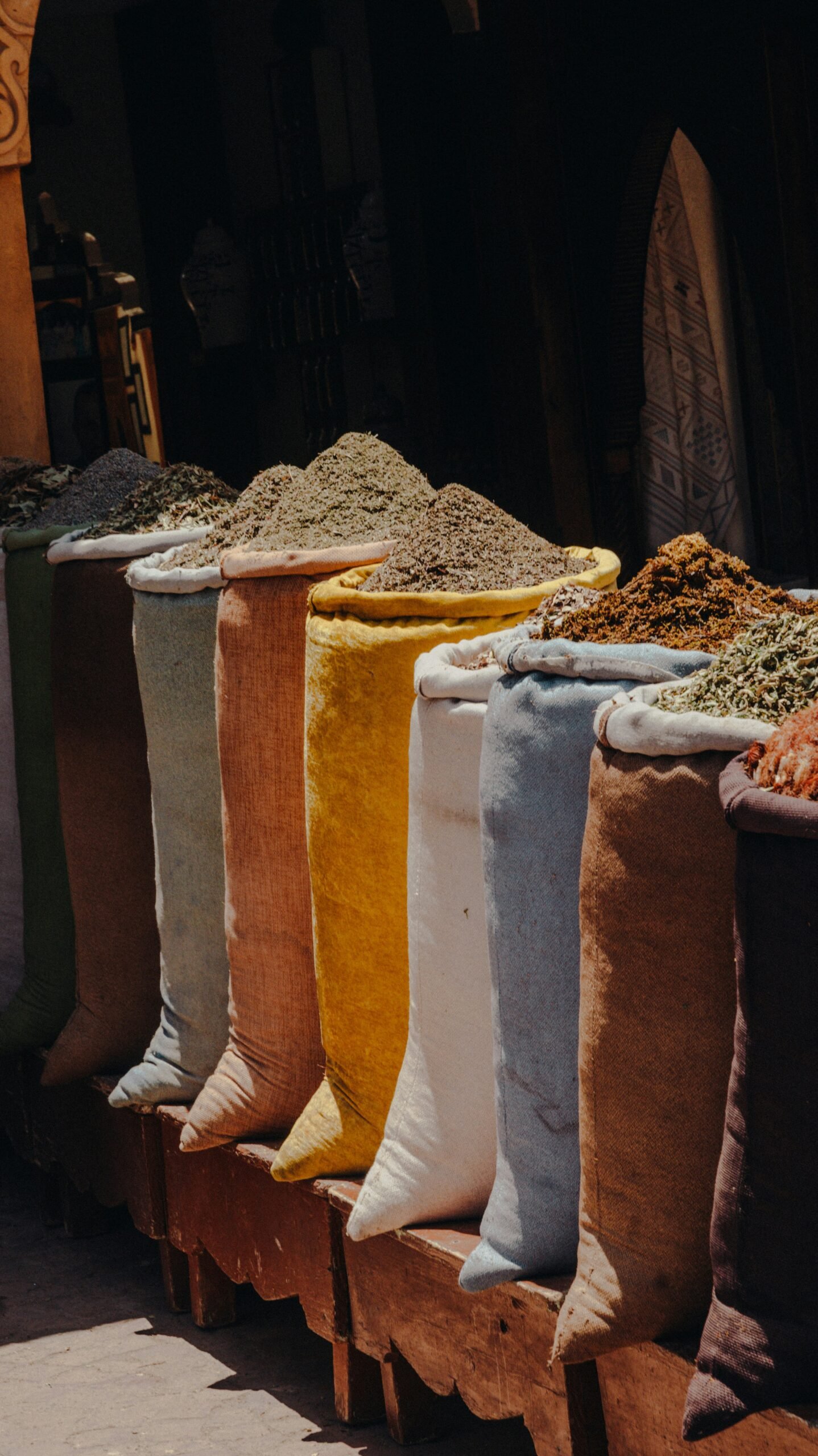
Marrakesch ist die ideale Stadt für kulinarische Yoga-Retreats, denn sie vereint die beste Kochschulinfrastruktur Marokkos mit der traditionellen Architektur der Riads, die ein Retreat-Erlebnis perfekt ermöglicht. Der Gewürzmarkt der Medina (Rahba Kedima) ist eine Erfahrung für sich: die Vielfalt an Gewürzen, getrockneten Kräutern und Heilpflanzen, der besondere Duft eines Gewürzmarktes, wo alles frisch und lose verkauft wird, und die Gespräche mit den Händlern, die ihre Produkte sowohl als Heilmittel als auch als Geschmacksträger kennen. Die meisten kulinarischen Retreats in Marrakesch beinhalten einen geführten Souk-Besuch, um vor dem Kochkurs die Zutaten auszuwählen. Dadurch wird der Kurs von einer reinen Wissensvermittlung zu einem Erlebnis der Begegnung.
La Maison Arabe betreibt eine der traditionsreichsten Kochschulen der Stadt. Die Kurse finden in der Küche eines traditionellen Riads statt und decken die gesamte Bandbreite marokkanischer Kochtechniken ab. Die Peacock Pavilions, am Stadtrand inmitten von Olivenbäumen gelegen, bieten Yoga-Retreats an, die regionale Küche mit täglicher Yoga-Praxis verbinden. Die Kombination aus fundierter Kochausbildung und durchdachtem Yoga-Programm ist in Marrakesch so ausgeprägt wie nirgendwo sonst in Marokko.
Essaouira
Die Küstenstadt am Atlantik verleiht den kulinarischen Yoga-Retreats eine ganz besondere Note: Hier liegt der Fokus auf Meeresfrüchten, Arganöl und der unverwechselbaren Frische der marokkanischen Küstenküche. Der morgens im Hafen von Essaouira angelandete Fisch landet nachmittags auf dem Tisch des Kochkurses. Ausflüge zu den Argan-Kooperativen der Frauen in der Umgebung sind fester Bestandteil des Programms und ermöglichen den Teilnehmern, die Herstellung einer der charakteristischsten Zutaten Marokkos direkt vor Ort kennenzulernen.
Das von Frauen geführte Öko-Hotel Lalla Mira bietet vegetarische Kochkurse in Kombination mit Yoga-Einheiten an. Yogaloft Essaouira veranstaltet wöchentliche Koch- und Yoga-Workshops mit lokalen Köchen. Die entspannte Atmosphäre, die kreative Szene und die hervorragenden Zutaten machen Essaouira zum idealen Ort für solche Programme. Mehr über das vielfältige Angebot Essaouiras erfahren Sie in unserem Yoga-Retreats in Essaouira Der Reiseführer deckt die Stadt vollständig ab.
Das Atlasgebirge
Kulinarische Rückzugsorte in den Bergen haben ihren ganz eigenen Charakter: Die Zutaten stammen aus der Subsistenzwirtschaft und der Hirtenkultur, die Kochtechniken umfassen offenes Feuer und Tontöpfe, und die Köchinnen sind Berberinnen, die in denselben Küchen gelernt haben, in denen schon ihre Großmütter arbeiteten. Die Gerichte sind einfacher als die von Marrakesch, aber enger mit ihrer Landschaft verbunden. Berghonig aus lokalen Bienenstöcken, Walnüsse aus den Obstgärten des Tals, Forellen aus kalten Flüssen, Amlou mit lokal gepresstem Arganöl: Die Küche hier ist Ausdruck eines ganz besonderen Ortes, wie es die Stadtküche selten schafft.
Die Kasbah du Toubkal bei Imlil integriert ethisch und gemeinschaftlich geprägte kulinarische Erlebnisse in ihre Retreats. Die Möglichkeit, gemeinsam mit einheimischen Berberfrauen zu kochen und dabei die für die Täler des Hohen Atlas typischen Techniken und Zutaten kennenzulernen, zählt zu den bereicherndsten kulinarischen Erlebnissen in Marokko.
Agadir und Taghazout
Die Surfküste bietet eine leichtere, dynamischere Form des kulinarischen Yoga: Frischer Fisch aus dem Hafen von Agadir, Avocados und regionale Produkte aus der Souss-Ebene – eine Küche, die sich auf Lebensmittel konzentriert, die körperliche Aktivität fördern, ohne sie einzuschränken. Retreats im Paradis Plage und ähnlichen Öko-Resorts an dieser Küste verbinden Kochkurse mit marktfrischen Produkten mit Surfen und Yoga, die die Identität der Region prägen.
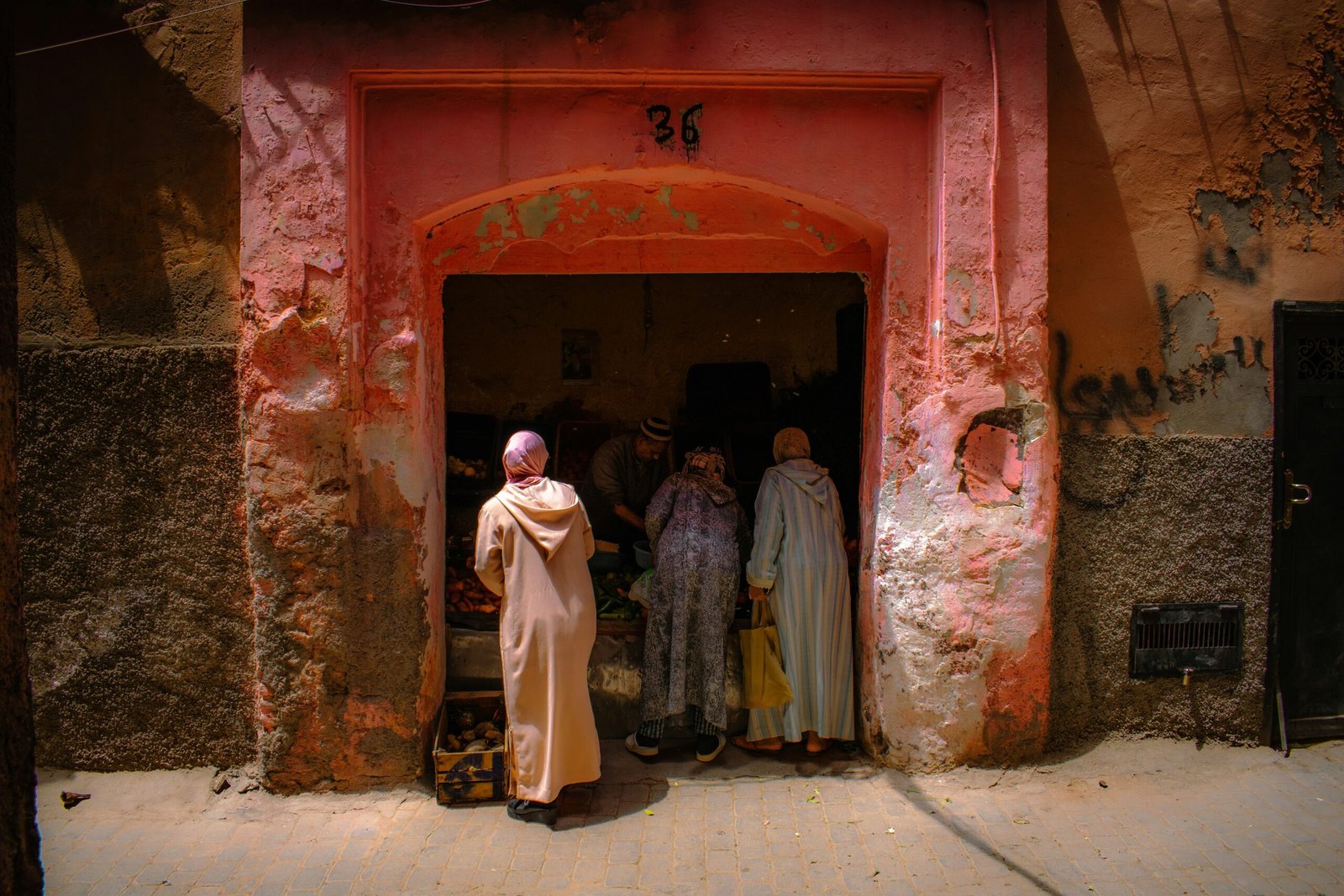
Jedes ernsthafte kulinarische Yoga-Retreat beinhaltet mindestens einen geführten Marktbesuch – das ist keine optionale Touristenattraktion. Im Souk lässt sich die marokkanische Esskultur am besten nachvollziehen: das Gemüse, das Bauern vor Tagesanbruch aus der Umgebung herbeigeschafft haben, die Gewürzhändler, deren Stände Zutaten anbieten, die seit Generationen in denselben Familien weitergegeben werden, die Olivenverkäufer mit ihren dreißig verschiedenen Sorten, die Metzger, die genau wissen, woher jedes einzelne Tier stammt.
Einkaufen in einem marokkanischen Souk mit einem ortskundigen Führer, der sowohl die Produkte als auch die Kochkunst versteht, lehrt Dinge, die kein Klassenzimmer vermitteln kann. Man versteht, warum eingelegte Zitronen selbst gemacht und nicht gekauft werden, weil man die Zitronen frisch sieht und den Preisunterschied erkennt. Man lernt, den Unterschied zwischen frischen und abgestandenen Gewürzen zu riechen. Man beginnt, die Logik des saisonalen Essens zu begreifen, weil die saisonalen Produkte sichtbar und offensichtlich die besten sind, die es gibt.
Bei Retreats, die Souk-Besuche beinhalten, finden diese typischerweise zwei- bis dreimal pro Woche statt, zu verschiedenen Tageszeiten und in verschiedenen Bereichen des Marktes. Dadurch entsteht ein Bild der marokkanischen Esskultur, für das man sonst Monate der eigenständigen Erkundung bräuchte.
Die Tage auf einem kulinarischen Yoga-Retreat folgen einem Rhythmus, der körperliche Übungen mit Küchenarbeit, Ruhe und Erkundung abwechselt.
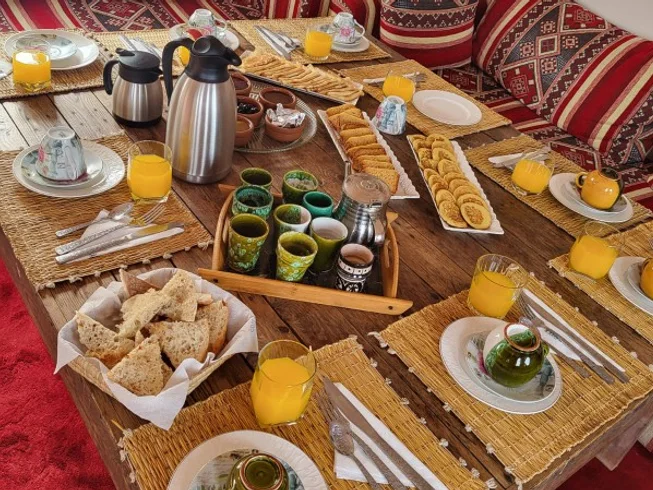
Morgendliches Yoga findet üblicherweise von 7 bis 8:30 Uhr statt: eine dynamische Praxis, oft Vinyasa oder Hatha, die den Körper vor der körperlichen Anstrengung beim Kochen aktivieren soll. Anschließend gibt es Frühstück: frisches Obst, marokkanische Pfannkuchen, Eier, Arganöl mit Honig und Minztee.
Der späte Vormittag ist üblicherweise der Hauptteil des Kochens: Zwei bis drei Stunden verbringt man in der Küche, wo man unter Anleitung eines einheimischen Kochs oder Küchenchefs die Gerichte des Tages zubereitet. Dabei werden Techniken, Zutatenkunde und deren Kontext vermittelt. Zum Mittagessen isst man gemeinsam das selbst Gekochte.
Der Nachmittag steht zur Erholung bereit, für einen Besuch im Hammam oder optionale Ausflüge: Souk-Besuche, Führungen durch Argan-Kooperativen, Erkundung der Medina. Der Körper braucht Zeit zur Regeneration nach einem Vormittag voller körperlicher Übungen und konzentrierter Küchenarbeit.
Das abendliche Yoga ist ruhiger und regenerierend: Yin, Restorative oder sanftes Hatha, das darauf abzielt, die Anspannung des Tages loszulassen. Anschließend gibt es Abendessen: entweder die restlichen Gerichte vom gemeinsamen Kochen oder eine zubereitete Mahlzeit aus der Retreat-Küche.
März und April sind ideal: Die Frühlingszutaten sind auf ihrem Höhepunkt, die Rosenernte im Dadès-Tal fällt mit den besten Wochen für Bergurlaube zusammen, und das Wetter in ganz Marokko lädt zum Kochen und Essen im Freien ein. Was Marokko im März konkret zu bieten hat, erfahren Sie in unserem Yoga-Retreats in Marokko im März Der Leitfaden behandelt die Saison im Detail.
September und Oktober Sie bieten ähnliche Qualitäten: Energie der Ernte, saisonales Obst und Gemüse in seiner größten Vielfalt und das Land, das nach dem Sommer in einen besinnlicheren Rhythmus zurückfindet. Die Olivenernte im Oktober verleiht dem Ganzen eine besondere kulinarische Dimension, die sich ideal in die Refugien am Fuße des Atlasgebirges integrieren lässt.
November bis Februar Der Winter ist die Jahreszeit, in der sich Kochen in den eigenen vier Wänden am natürlichsten anfühlt. Wärmende Tajines, reichhaltige Harira, langsam geschmorte Gerichte, die einen kalten Riad mit Duft erfüllen: Im Winter ist die marokkanische Küche am wohltuendsten und wird am meisten geschätzt.
Juni bis August Im Sommer gibt es zwar reichlich frische Zutaten, doch die Hitze macht das Kochen am Morgen anstrengend. Unterkünfte in Essaouira und an der Atlantikküste sind komfortabler als solche in Marrakesch oder im Landesinneren.
Benötige ich Kocherfahrung, um an einem kulinarischen Yoga-Retreat teilzunehmen? Gar nicht. Kulinarische Yoga-Retreats richten sich an neugierige Genießer, nicht an ausgebildete Köche. Die Kurse sind interaktiv und praxisorientiert, setzen aber keinerlei Vorkenntnisse der marokkanischen Küche oder professionelle Küchenkenntnisse voraus. Im Vordergrund stehen Verständnis und Genuss, nicht technische Fertigkeiten. Viele Teilnehmer, die sich selbst als Nicht-Köche bezeichnen, entdecken während einer Woche in Marokko eine echte Leidenschaft fürs Kochen.
Ist marokkanisches Essen für Vegetarier und Veganer geeignet? Absolut. Die marokkanische Küche blickt auf eine lange Tradition der Zubereitung von Gemüse und Hülsenfrüchten zurück, die dem heutigen Trend zur pflanzlichen Ernährung um Jahrhunderte vorausging. Gemüse-Tajines, Linsensuppen, Couscous mit sieben Gemüsesorten, marokkanische Salate und das reichhaltige Frühstücksbuffet sind von Natur aus vegetarisch. Vegane Teilnehmer sollten ihre Bedürfnisse bei der Buchung mit dem Retreat-Zentrum abklären, da einige Gerichte Butter oder Eier enthalten. Alternativen sind jedoch fast immer verfügbar.
Kann ich Rezepte und Techniken mit nach Hause nehmen und sie auch tatsächlich anwenden? Ja, und das ist einer der praktischsten Vorteile eines kulinarischen Yoga-Retreats in Marokko. Die Kerntechniken, insbesondere Tajine, Chermoula, eingelegte Zitronen und marokkanische Salate, lassen sich problemlos in die heimische Küche übertragen, mit Zutaten, die in jedem gut sortierten europäischen oder amerikanischen Supermarkt oder Lebensmittelgeschäft erhältlich sind. Retreats stellen in der Regel schriftliche Rezepte zur Verfügung, und viele der benötigten Zutaten (eingelegte Zitronen, Ras el Hanout, Arganöl) sind zunehmend auch außerhalb Marokkos erhältlich oder können einfach online bestellt werden.
Wie beeinflusst die kulinarische Dimension die Yoga-Praxis? In zweierlei Hinsicht. Erstens durch die Nahrung selbst: Der Verzehr von frischen, saisonalen und vollwertigen Lebensmitteln, die sorgfältig zubereitet werden, unterstützt die Praxis im unmittelbarsten körperlichen Sinne. Zweitens fördert die Küchenarbeit selbst dieselbe Konzentrationsfähigkeit, die im Yoga geschult wird. Teilnehmer berichten häufig, dass die Kochkurse einen meditativen Zustand hervorrufen, der dem Yoga-Training ähnelt, und dass das Verständnis dieses Zusammenhangs ihre Herangehensweise an beide Disziplinen im Nachhinein verändert.
Welche Stadt bietet das beste kulinarische Yoga-Retreat-Erlebnis? Marrakesch verfügt über die am besten ausgebaute Infrastruktur und die größte Auswahl an Rückzugsmöglichkeiten. Essaouira bietet die besten Meeresfrüchte und Arganöle sowie eine entspanntere Atmosphäre. Das Atlasgebirge ermöglicht den direktesten Zugang zu den Zutaten und den traditionellen Berberküchen. Die richtige Wahl hängt davon ab, was Sie kulinarisch suchen: technische Anleitung und Vielfalt (Marrakesch), frische Küstenprodukte und eine kreative Gemeinschaft (Essaouira) oder traditionelle Techniken und Zutaten aus den Bergen (Atlas).
Ihre E-Mail-Adresse wird nicht veröffentlicht. Erforderliche Felder sind mit * markiert