
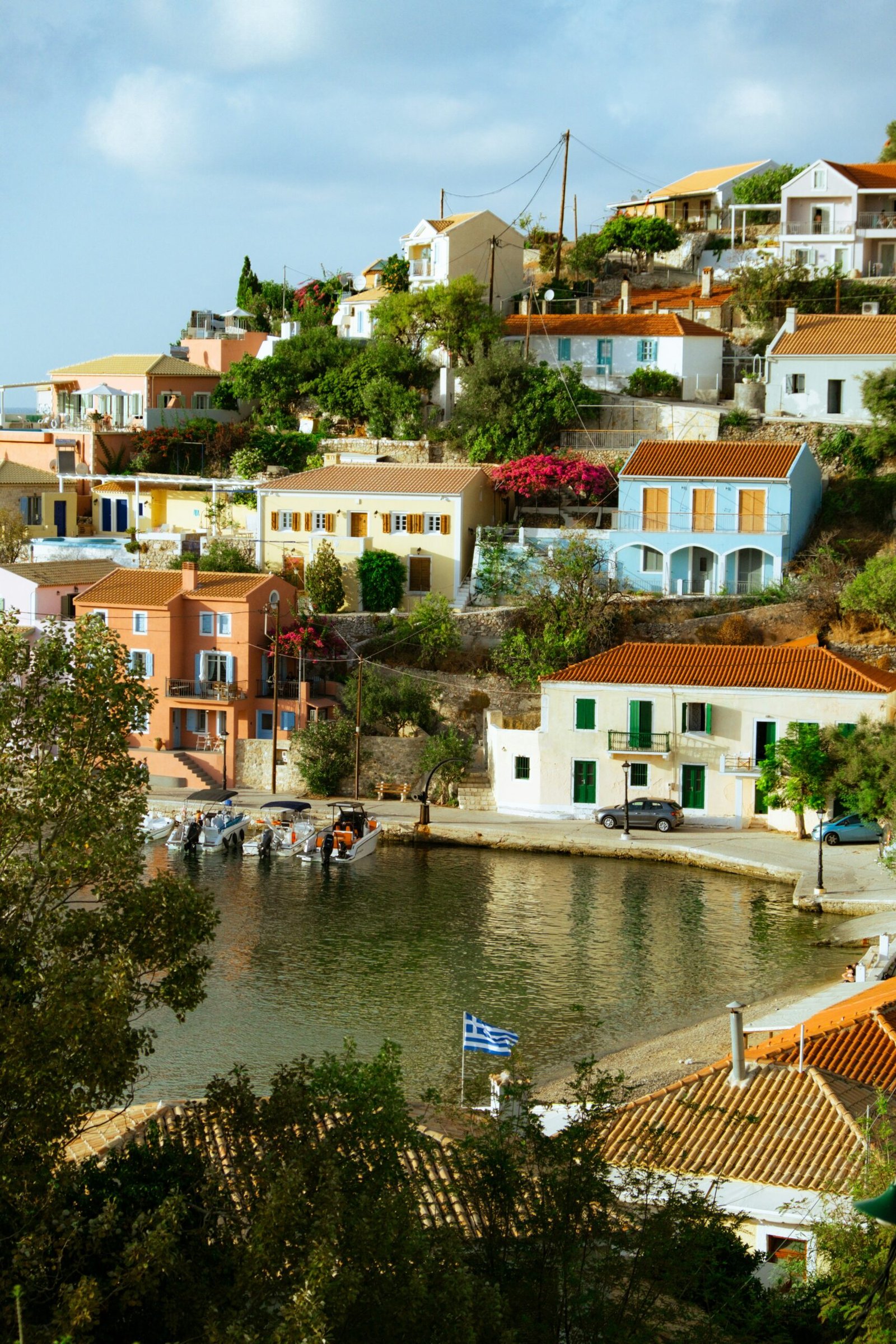
December in Greece is two months in one. The first three weeks are the continuation of November’s quiet — low prices, small retreat groups, mild weather in the south, and a Greece operating entirely for itself.
Then Christmas week arrives and the country does its festive thing: the Orthodox celebrations, the kalanda sung at doorsteps, the Christmas and New Year tables that are among the most food-centred in the European calendar. Both versions are worth knowing before you book.


Early December (roughly December 1-20) shares November’s advantages — the olive harvest finishing, the retreat infrastructure fully operational at its most affordable — with incrementally better weather across the south as the Mediterranean winter settles into its mild, clear rhythm.
Christmas week is a different experience: the domestic travel that fills the islands in August redirects to family gatherings and urban celebrations, and the specifically Greek Orthodox Christmas and New Year traditions produce a festive energy that the retreat context makes more absorbing than encountering as a standard tourist. Our Greece retreat options by month covers every year-round destination.
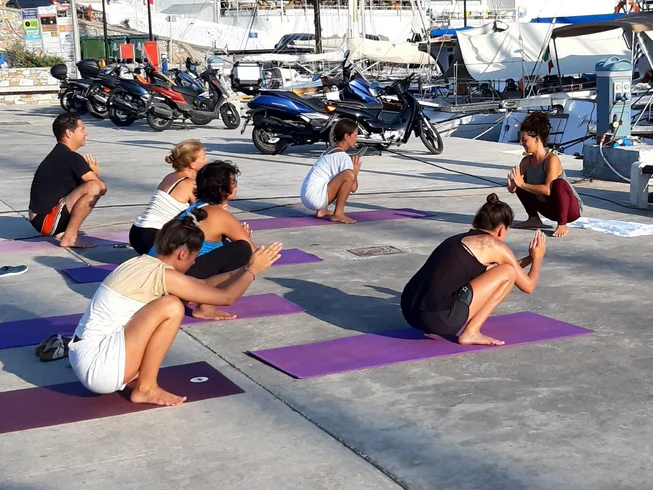
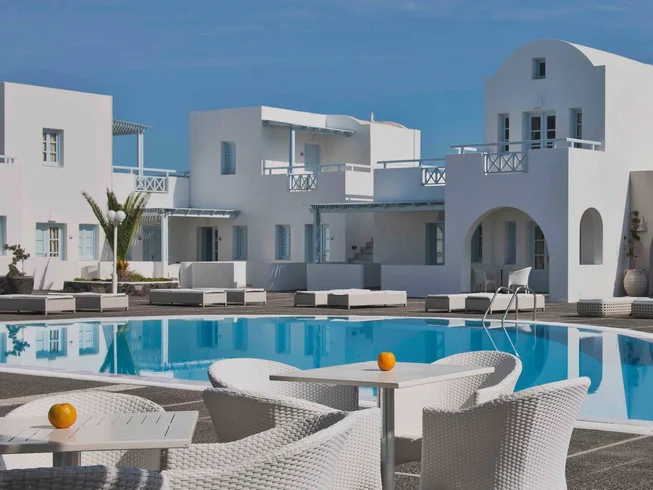
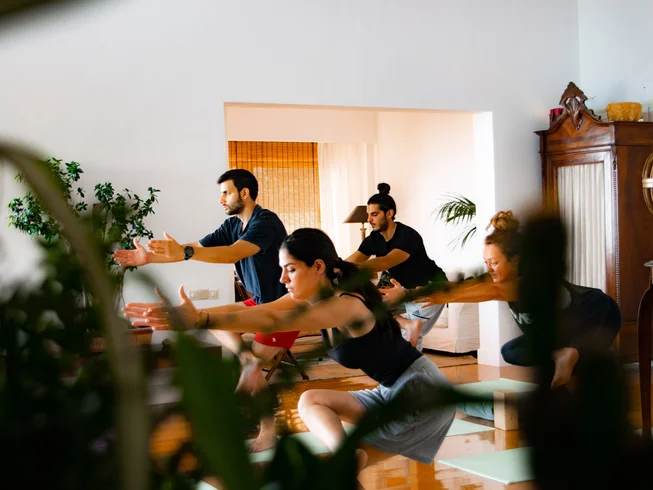
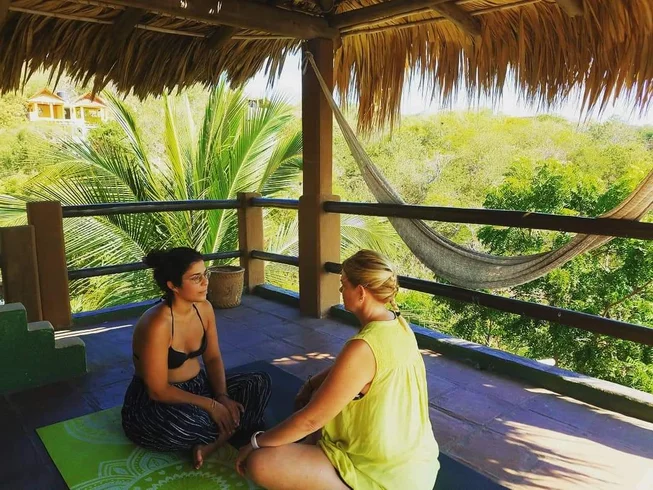
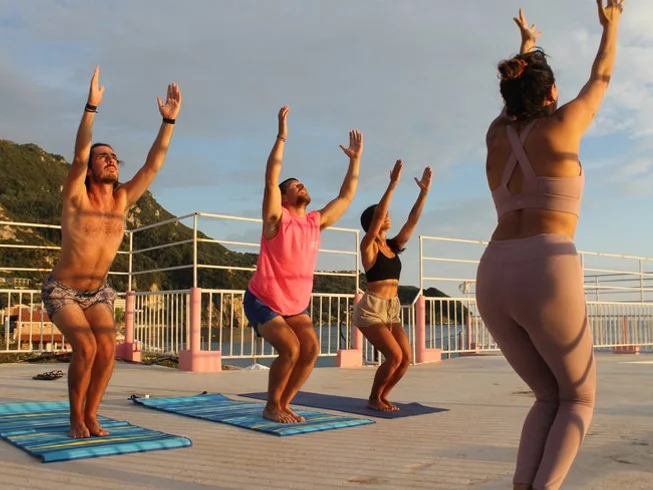
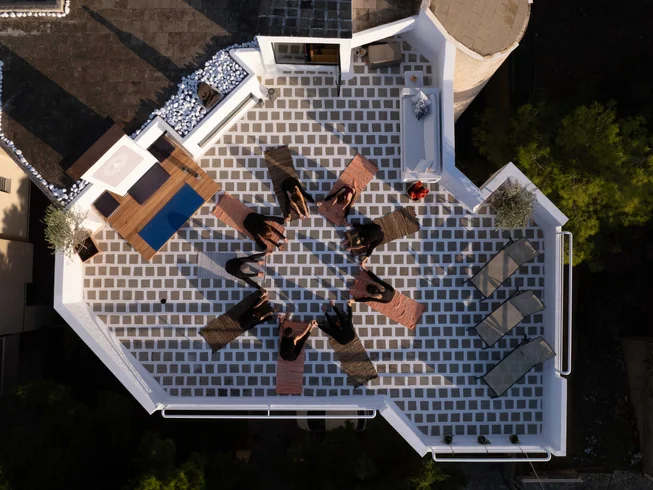
Crete in December is the most dependable retreat destination in Greece in winter and the one most worth choosing if warmth and reliability are the priority. Average daily highs of 14-18°C on the south coast, the olive harvest finishing its run with the last of the mountain grove oil being pressed, and the retreat centres that stay open through December doing so because the format specifically works in this month — small groups, focused programming, and the particular authenticity of an island operating entirely for itself.
Christmas in Crete has a character that is specifically Cretan rather than generically Greek: the kalanda (carol singers) visiting homes and businesses on Christmas Eve, the Cretan table on Christmas Day with the traditional lamb or pork dishes specific to the island, and the quality of a community celebrating something it genuinely observes rather than performing for visitors. Retreat centres in the Chania and Rethymno areas that organise a Christmas Eve kalanda experience for their guests — following the singers through the village, the cold evening air, the candles and the traditional instruments — are offering something that the scheduled programme cannot produce.
For the full Crete picture, our yoga retreats in Crete guide covers the island across all seasons.
Athens in December has a quality that summer visitors never see: the city decorated for Christmas, the chestnut sellers on every corner, and the particular warmth of a southern European city that has decided to celebrate the season without the cold that makes the same impulse in northern Europe feel desperate.
The Syntagma Square Christmas tree — the largest in Greece, decorated annually in late November — is the centrepiece of the Athens Christmas landscape. The surrounding streets of the Kolonaki and Monastiraki neighbourhoods fill with the specific domestic festive energy of a city that takes its Christmas shopping and its Christmas table seriously. The Varvakios Central Market in December, selling the fish, the seafood, and the fresh produce for the Christmas and New Year tables, is one of those specifically urban Greek experiences that the summer farmer’s market aesthetic cannot replicate: the covered hall full of the year-end catch, the vendors calling prices, and the Athenian families buying for the most important meals of the year.
The Athens Riviera in December is the year-round advantage over the islands: the coastal retreat centres between Glyfada and Cape Sounion operate without interruption, the sea temperature drops to 15-16°C (cold but bracing for the committed), and the city is accessible by coastal road or metro for cultural excursions that December specifically rewards.
The Peloponnese in December is the region at its most inward. The olive harvest is finishing, the archaeological sites are empty, and the mountain villages of the interior — the Arcadian highlands, the Taygetos above the Mani, the Argolid hill towns — have the quality of communities gathered around their own warmth for the winter season.
Christmas Eve (Paramoni Christougennon) in a Peloponnese village is one of the most specifically Greek winter experiences available on a retreat. The children going from door to door singing the kalanda with small triangles and drums. The family tables set for the largest meal of the season. The church service in the village church that has been standing since the Byzantine period. And the quality of a community doing something it has been doing for centuries, in exactly the same way, in exactly the same place. Retreat centres in the Peloponnese that stay open through Christmas and create a version of the Christmas Eve tradition for their guests — the kalanda, the shared table, the village church — are offering something genuinely specific to this country and this season.
Rhodes in December continues its winter advantage: the warmest accessible Greek island at 14-18°C, the medieval old town without the cruise ship arrivals that make it difficult from May through October, and the south coast of the island — Lindos, Lardos, Pefkos — in its most austere and most beautiful December form. The whitewashed cubic architecture of Lindos above the two bays, the Acropolis visible on the hill, and the winter sea below: all of this without the summer queue at the site entrance or the tour group commentary.
The Knights’ Street (Ippoton) in the Rhodes old town — the most intact medieval street in Europe, lined with the inns of the Knights Hospitaller in a state of preservation that architectural historians still study — is in December a medieval street that you can walk without a guided tour blocking the view. The Grand Master’s Palace at the top, decorated for Christmas in the Greek Orthodox tradition, is in December a specific combination of medieval grandeur and contemporary festivity that the summer cannot produce.
The Greek Christmas table has dishes that appear specifically in December and nowhere else in the year.
Christopsomo — the Christmas bread, a large, enriched loaf decorated with walnuts and dried fruit and scored with the cross — is baked in Greek households on Christmas Eve and eaten on Christmas Day. Each region has its own version: the Cretan christopsomo is heavier and more enriched with honey than the mainland versions, the Peloponnese versions incorporate local aromatics.
Melomakarona — the Christmas cookie of Greece, made from olive oil, orange juice, cinnamon, and cloves, soaked in honey after baking and topped with crushed walnuts — are available at every bakery from early December and eaten in large quantities through the holiday period. They are one of those specifically seasonal foods that requires the December context — the cold air, the festive table, the olive oil and honey flavour that is specifically Greek — to taste as they should.
Kourabiedes — the almond shortbreads rolled in icing sugar that are the other Greek Christmas cookie — appear alongside the melomakarona at the Christmas table. Made with butter and roasted almonds, they are the richer and more indulgent of the two Christmas cookies and the one that Greek families make in largest quantities for giving to neighbours and friends.
Vasilopita — the New Year’s cake of Greece — is prepared from late December for cutting at midnight on New Year’s Eve. A brioche-style cake or a more cake-like version depending on the region, with a coin hidden inside: the person who finds the coin receives good luck for the coming year. At retreat centres that stay open through New Year’s Eve, the vasilopita cutting at midnight is the specifically Greek version of the New Year celebration that the countdown and champagne version is supplementing rather than replacing.
December olive oil from the tail end of the harvest — the mountain groves picked last, the oil slightly less intensely green than the November pressing but still dramatically fresher than commercial bottled versions — arrives at farm gates and markets through December. Combined with the winter citrus beginning (the first Cretan mandarins appear in December), the dried figs from the October harvest, and the chestnuts that street vendors are still roasting through the month, December in Crete and the Peloponnese has a food culture that is specifically autumnal-transitioning-to-winter.
The kalanda — the Greek Christmas carols sung by children going from door to door with small drums and triangles on Christmas Eve — is one of the most specifically Greek Christmas traditions. Unlike the northern European carol-singing tradition, the Greek kalanda are accompanied by small percussion instruments and are rewarded with money rather than sweets, and the singing continues through the evening in a specifically communal way that reflects the village tradition rather than the suburban doorstep version. In the villages of Crete and the Peloponnese, the kalanda on Christmas Eve is a community event rather than a children’s activity — everyone participates in some form.
New Year’s Eve in Greece involves the vasilopita ceremony and, in some island traditions, the “first foot” custom (podariko) where the first person to enter a house in the new year brings specific luck depending on their characteristics. In the urban celebrations — Athens, Thessaloniki, and the main island ports — midnight is marked with fireworks over the harbour and the specific collective pleasure of a Mediterranean city celebrating in its own streets. Retreat centres that stay open through New Year’s Eve typically organise a communal midnight celebration combining the vasilopita ceremony with whatever the local tradition provides.
The period between Christmas and Epiphany (January 6th, when the blessing of the waters takes place) is known in Greek tradition as the Dodekaimero — the twelve days. In folk tradition, this period is associated with the kalikantzaroi, mischievous spirits that emerge from underground during the twelve days and can only be driven away by the blessing of the waters on Epiphany. The tradition is fading in the cities but persists in the rural villages of Crete and the Peloponnese as the kind of living folklore that the retreat context makes specifically interesting to encounter.
Early December programming is the winter model at its most refined. In Crete, the morning practice is possible outdoors on the south-facing terraces from mid-morning when the temperature reaches 16-18°C. In Athens and the Peloponnese, the indoor studio is the primary practice space, with outdoor sessions available on the warmest afternoons. The hammam, which in September was a pleasant option, is in December a genuinely necessary element of the daily rhythm.
The Christmas dimension for retreats that operate through the festive period is best approached as an integration rather than a complication. The melomakarona at breakfast from December 1st. The kalanda evening on December 24th in the village. The Christmas Day table with the regional dishes that the retreat’s location produces. The vasilopita at midnight on December 31st. These are not activities appended to a yoga programme — they are the rhythm of December in Greece, and the retreat centres that work with this rhythm produce weeks that feel specifically of a place and a time.
The group dynamic in December retreats is the most varied of the winter. Early December attracts the same self-selected, intentional participants as November. Christmas week brings a different mix: people who specifically wanted to spend Christmas in Greece rather than at home, people treating themselves to the retreat as a year-end gift, and the specific quality of festive collective energy that the Orthodox celebrations produce in communities that take them seriously.
Your email address will not be published. Required fields are marked *