
February has two things January lacks: the almond blossom in Sicily and Carnival in Venice. Combined with the Dolomites still at full alpine winter operation and the thermal springs of Tuscany at their most atmospheric, February makes a specific case for itself as a wellness retreat month. It rewards those who look at it carefully rather than past it.


February is the final full month of the alpine winter wellness season before the spring hiking programme begins to shift things outdoors. The hay bath, the outdoor thermal pool, the Aufguss sauna ceremony — all fully operational, all at the temperature differential that makes them most effective. The Carnival period adds a specifically South Tyrolean dimension: the traditional masks and processions through the village streets, the bonfires on Shrove Tuesday. A morning in the thermal circuit followed by a Carnival evening in the valley is using February in the Dolomites correctly.
Our wellness retreats in the Dolomites guide covers the full range of properties. For what February offers across Italy more broadly, our wellness retreats in Italy in February covers Venice, Sicily, and Tuscany alongside the Dolomites. Browse the full wellness retreat collection for every destination.
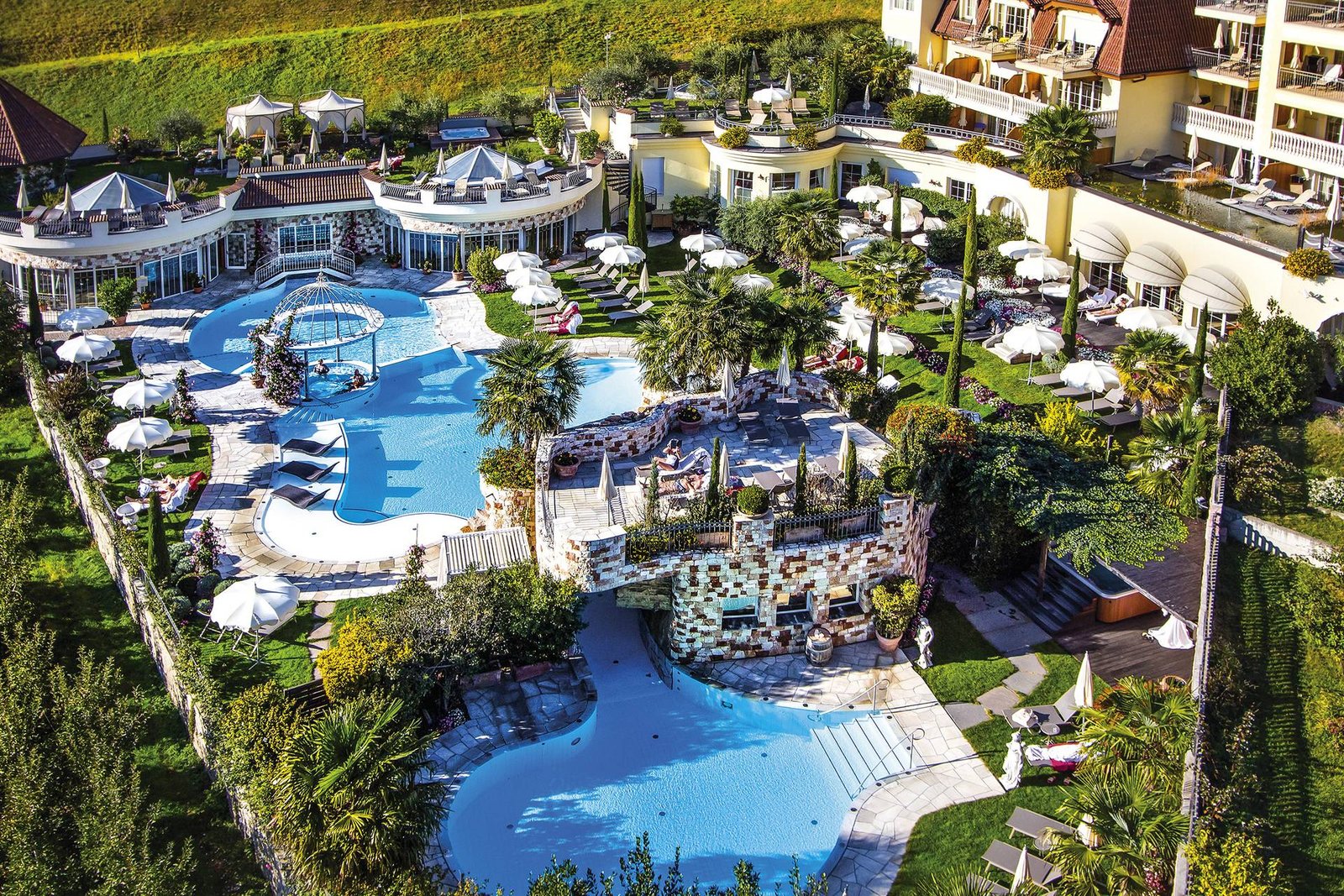
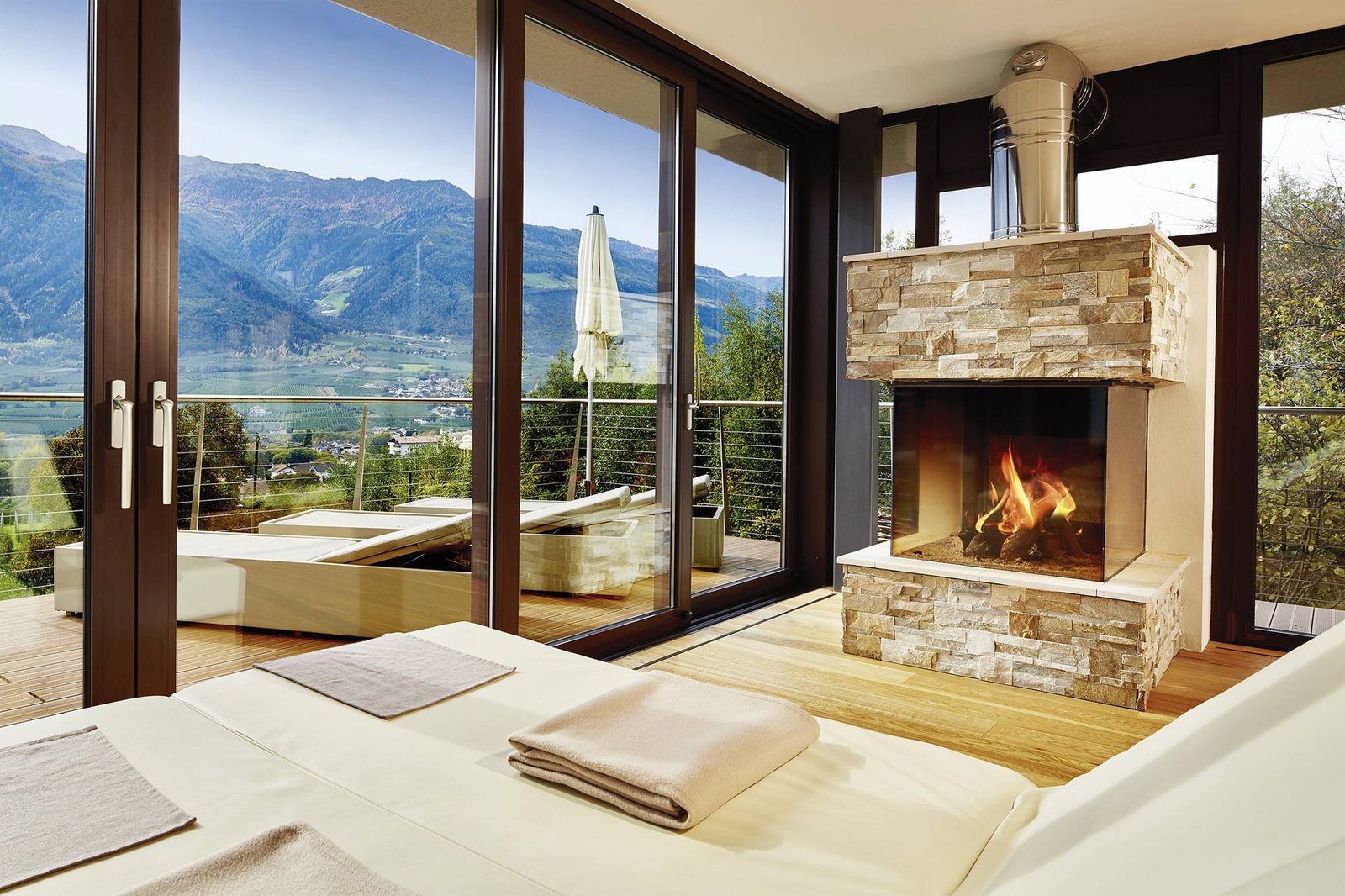
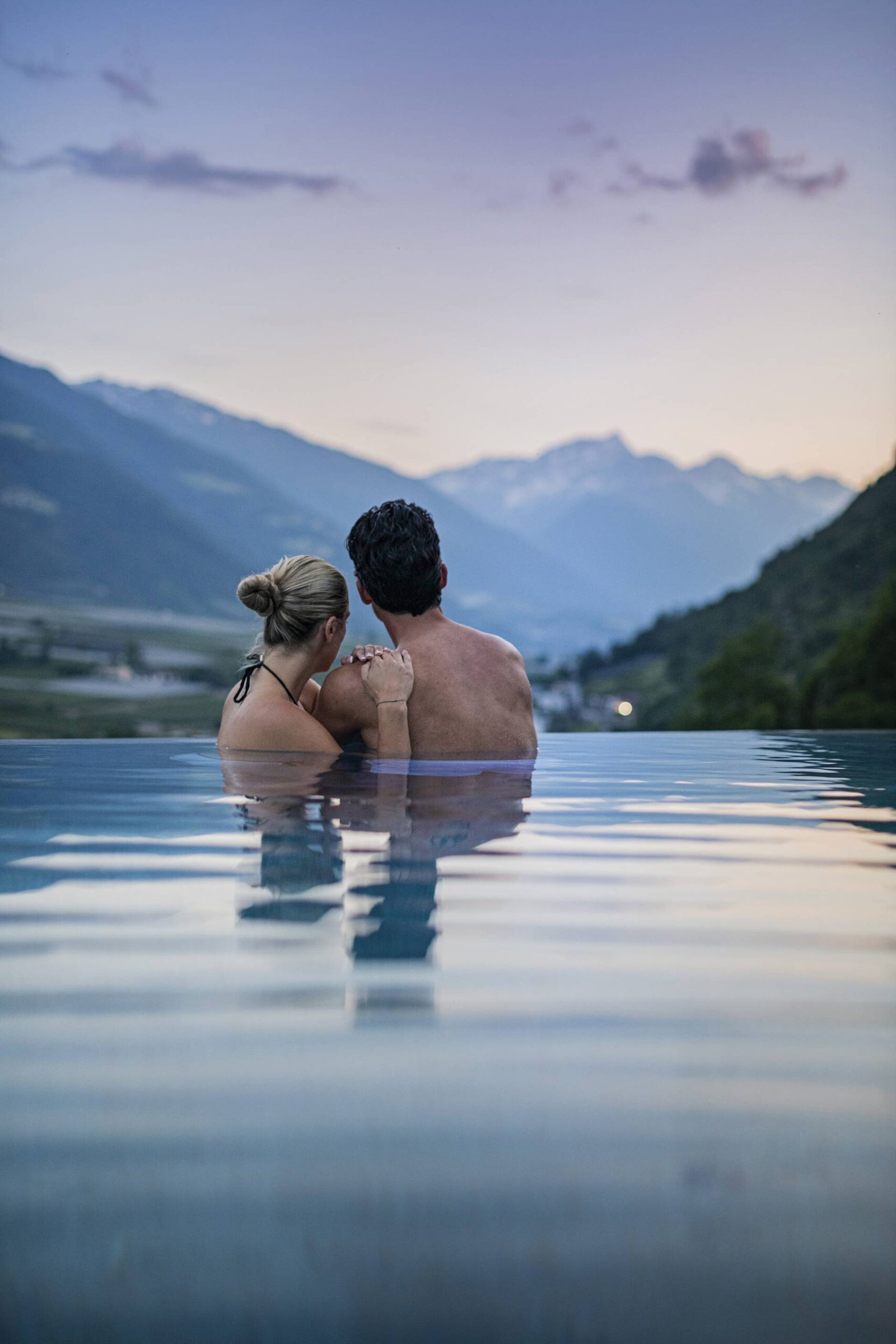
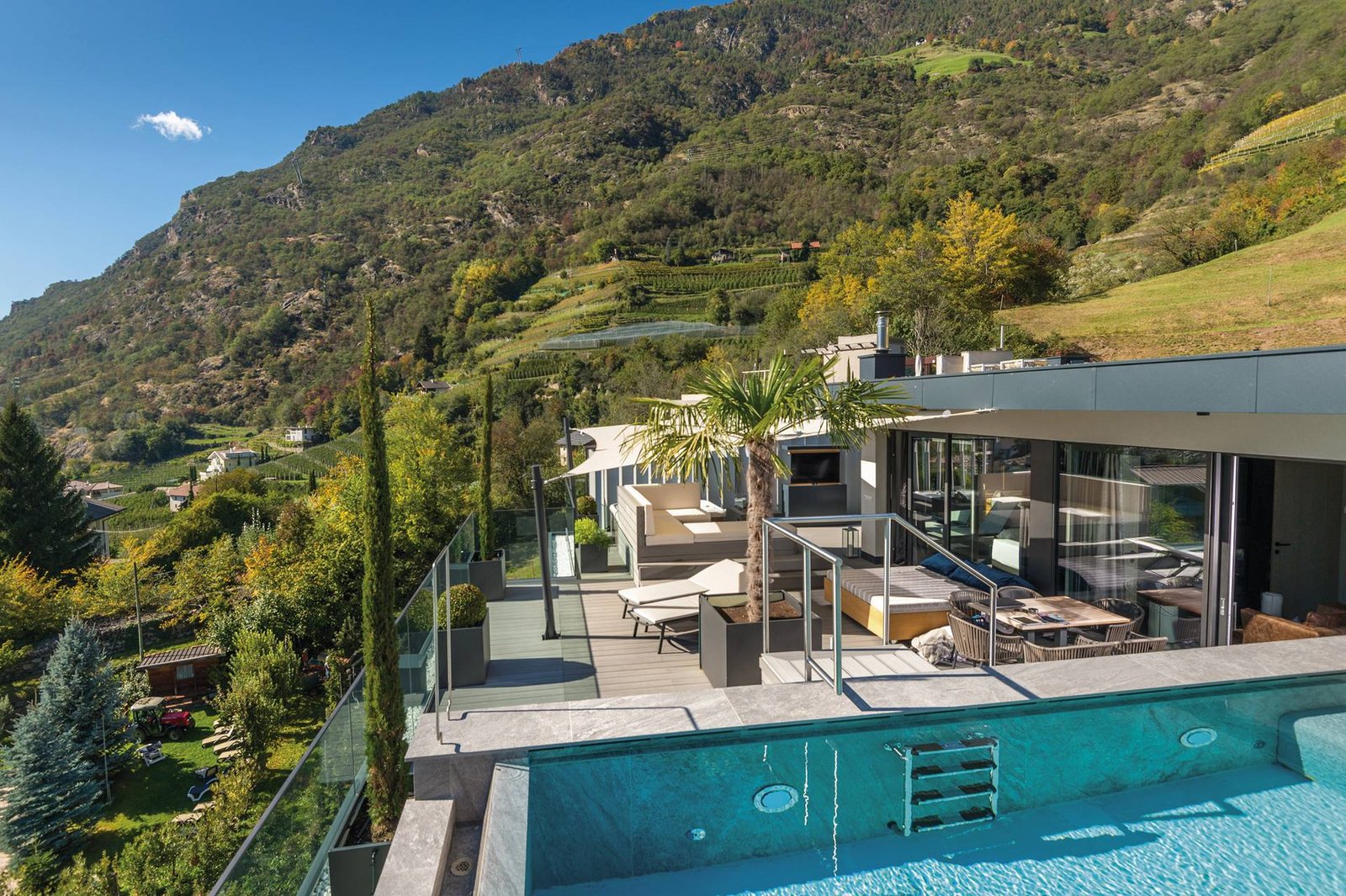
February is the alpine thermal wellness season at its winter peak. The contrast bathing programme — outdoor pools, Finnish and bio saunas, salt steam rooms, cold plunges — runs at maximum frequency, and the specific South Tyrolean treatments that distinguish this region from generic luxury spa destinations are all in full operation. The hay bath requires booking at the time of retreat reservation, not on arrival. The Aufguss ceremonies, in which an instructor pours herb-infused water over hot stones while waving towels to circulate the steam, run multiple times daily and are worth attending more than once in a week — the instructor and the infusion change each session.
The snow base in February is at its seasonal maximum, built up since December. The snowshoe trails through the Val Gardena and the Val Badia are in February at their most complete, the larch forests snow-covered to their full depth, and the Alpe di Siusi — the largest high-altitude meadow in Europe, accessible by cable car from Ortisei — a white plateau above the valley. The combination of the morning spa circuit and the afternoon mountain landscape is the February Dolomites offering that no other European wellness destination can replicate.
The South Tyrolean Carnival (Fasching) is smaller and more locally rooted than the Venetian version but worth knowing about from a Dolomites retreat base. The valley villages hold their own celebrations through February, and the bonfires that mark Shrove Tuesday — a pre-Christian tradition of burning winter effigies at the hilltops — are a specifically alpine February event.
Venice Carnival — ten days before Ash Wednesday, date varies annually — is the most visually extraordinary festival in Italy and the one most compatible with a wellness retreat because it requires only presence and attention rather than participation. The masks, the historical costumes, the processions on the Grand Canal, the parties in the palazzo courtyards: the city in Carnival does something it has been doing since the twelfth century, and the retreat context — with its accumulated stillness and sensory attention — makes the experience more absorbing than it would be otherwise.
The Euganean Hills thermal spa towns of Abano Terme and Montegrotto Terme sit 45 minutes southwest of Venice by road, and the combination of Carnival evenings in the city with mornings at the thermal spa is the specifically February Italian wellness week that no other month can produce. The Euganean fango therapy — volcanic mud matured in the thermal water for months before application, applied at 37-39°C for 15-20 minutes — is among the most clinically documented thermal treatments in Europe. Research on fango balneotherapy has specifically documented its anti-inflammatory effects for osteoarthritis and musculoskeletal conditions, distinguishing it from the generic mud wrap available at any hotel spa.
The Euganean Hills themselves — a cluster of volcanic hills rising from the Po plain, covered in vineyards and olive groves and threaded with walking paths — are in February producing the first signs of spring: the almond trees flowering in the sheltered valleys, the thermal steam visible from the hillsides above the spa towns. A morning fango treatment, an afternoon walk in the hills, and an evening Carnival in Venice is the February programme that the Veneto specifically makes possible.
Sicily in February does something that no other Italian region offers in this month: the almond orchards of the Agrigento hinterland, the hills above Sciacca, and the slopes around Caltabellotta flower in the first three weeks — white blossom on bare branches above the Greek temples of the Valley of the Temples. The Sagra del Mandorlo in Fiore in Agrigento in early February celebrates the harvest with folk music, food markets, and international dance groups alongside Sicilian traditions. Visiting the Valley of the Temples during blossom peak — the trees in flower within the archaeological park itself — is one of those specifically seasonal landscape experiences that no photograph adequately conveys.
The Terme di Sciacca on the southwestern coast are less internationally known than Tuscany’s thermal destinations but with waters of comparable mineral quality. The town itself has Arab-Norman architecture and a fish market worth visiting in February for the winter catch. Temperatures of 14-18°C on the southern coast make outdoor morning practice viable, and the specific North African quality of the February light in Sicily — lower in angle than summer, warmer in tone — produces a landscape that painters have been coming here for specifically.
The Sicilian wellness culture in February also includes the sweet almond products that the harvest season produces: the almond paste (pasta di mandorle), the amaro di mandorle, and the almond milk that Sicilian cafés have been making fresh since before espresso existed. At a retreat kitchen sourcing locally in February, fresh almond milk at breakfast is the seasonal ingredient that the industrially produced version cannot replicate.
Thailand’s Gulf coast — Koh Samui, Koh Phangan, the Samui Archipelago — is in February in the heart of its dry season, with clear skies, temperatures of 28-30°C, and the sea at 27-28°C. The wellness infrastructure here covers a wider range than most European spa destinations: traditional Thai massage in the northern style (Nuad Boran, emphasising energy lines and assisted stretching), Ayurvedic programmes brought by the Indian diaspora, detox retreats, raw food protocols, and the full range of contemporary functional medicine formats — all available at prices significantly below European equivalents.
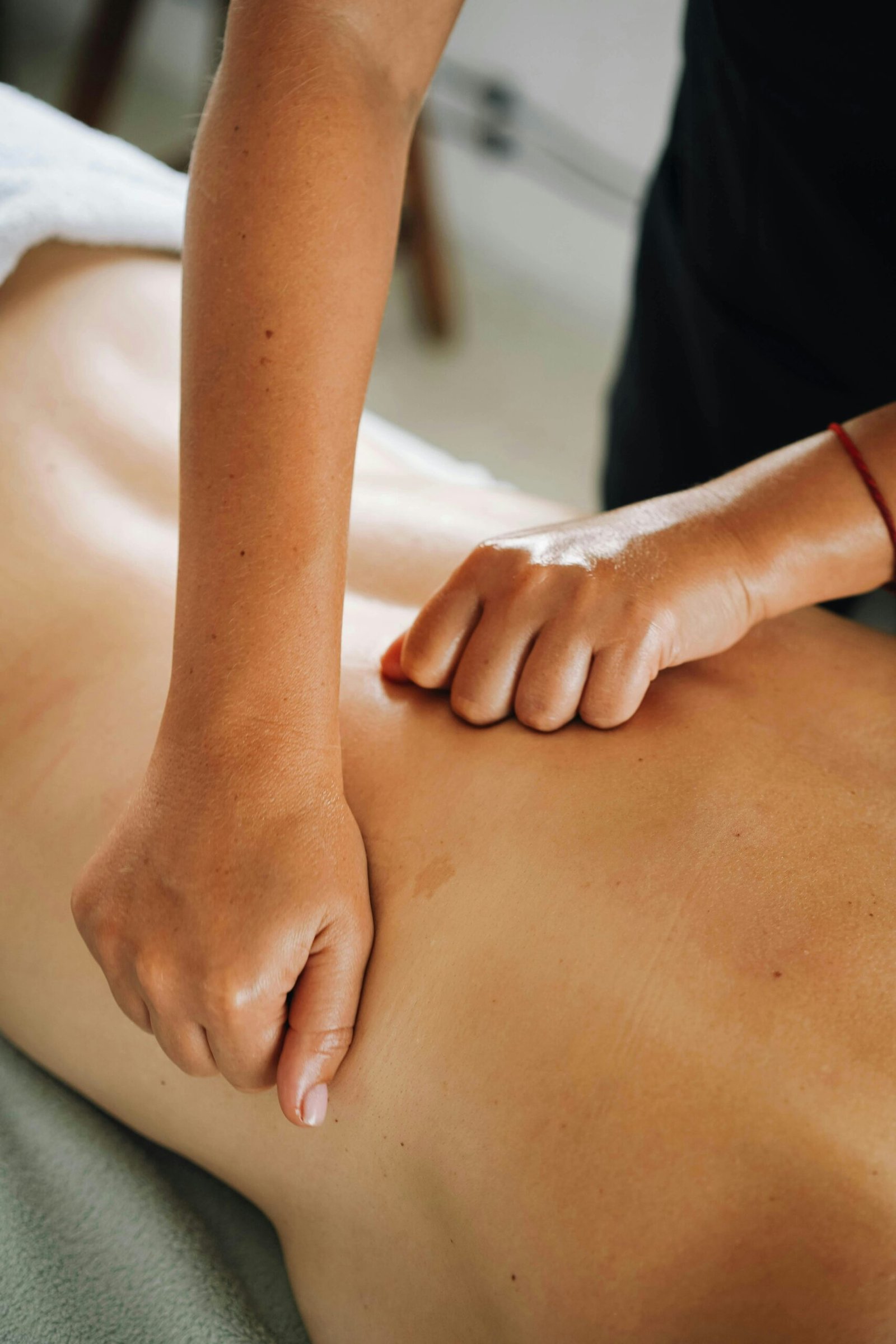
The traditional Thai massage tradition is worth seeking from its more serious practitioners rather than the tourist-oriented hotel spa versions. The northern style, which works systematically along the body’s ten major sen (energy lines) with a combination of thumb pressure, palm pressure, and assisted stretching, requires a trained and experienced practitioner to be genuinely therapeutic rather than merely pleasant. A February retreat that includes proper traditional massage instruction alongside the treatment — so that participants leave with the ability to do self-massage and some basic partner work — is giving something that continues beyond the retreat week.
Koh Phangan in February has its specific character: the Full Moon Party that defines the island’s international reputation occupies one night a month and barely touches the retreat community, which lives in the north and northwest of the island around Srithanu. The retreat centres here — some of the most established in Southeast Asia — are in February running their full programmes with the best availability of the high season.
Iceland in February operates with roughly six hours of daylight and temperatures of -2 to 4°C in Reykjavik. The aurora borealis is visible on clear nights from mid-evening, and the geothermal landscape — the hot springs, the volcanic vents, the thermal rivers — is in February at its most atmospheric: the darkness making the steam above the pools visible from a distance, the contrast between the cold air and the warm water more dramatic than in any other month.
The Blue Lagoon is the internationally known option — worth visiting once, overpriced for repeat visits. The Reykjadalur hot spring river in the hills south of Reykjavik, accessible by a 45-minute hike that is specifically good in winter when the trail is snow-covered and the steam from the river visible from the ridge above, is the February Iceland thermal experience worth the effort. The Mývatn Nature Baths in the north — geothermal pools set in the volcanic landscape of the Lake Mývatn area, with the pseudo-craters and lava formations of the surrounding Dimmuborgir visible across the water — are in February operating for Icelandic domestic visitors rather than international tourists, which changes the character of the visit significantly.
The wellness format that February Iceland specifically supports is the one built around the contrast between cold and warmth, darkness and light, isolation and community — a format that requires the season rather than fighting it. Retreat centres operating in converted farmhouses and coastal properties in the south and west of the country use the February conditions deliberately: the geothermal pool in the dark, the aurora visible above, and the warmth of the turf-roofed communal space afterward.
February is the month when the post-holiday recovery of January, if done properly, has begun to consolidate — and when the body, no longer in emergency repair mode, is ready for a slightly more active form of restoration. The depleted liver of January has had six weeks to recover. The gut microbiome, destabilised by December’s excess, has begun to restabilise. The nervous system is not fully recovered — the seasonal light deficit is still significant in northern latitudes, melatonin production is still suppressed, and the vitamin D stores built up over summer are at their annual low — but the system is no longer in triage.
The wellness retreat in February catches this intermediate state and can do something productive with it. The thermal treatments that were most appropriate in January as passive recovery now combine well with slightly more active practices: morning yoga before the thermal circuit, walks in the winter landscape, cooking workshops using the seasonal ingredients. The body is ready to participate rather than simply receive, and the best February wellness programmes reflect this by building a slightly more varied and slightly more demanding schedule than January’s.
The light sensitivity of February is worth addressing directly. Research on phototherapy and seasonal mood has documented the effectiveness of bright light exposure — specifically in the blue spectrum, at intensities above 2,500 lux — for seasonal affective disorder and the milder seasonal mood changes that most people experience in February without necessarily identifying as a clinical condition. The practical implication for a wellness retreat in February: prioritise outdoor time in the middle of the day, when natural light intensity is highest, and avoid the temptation to use the spa facilities exclusively at the expense of the outdoor programme.
The Carnival period — running from the Thursday before Ash Wednesday through Mardi Gras — appears in some form across most of the destinations that make for good February wellness travel: Venice, the South Tyrolean villages, Viareggio on the Tuscan coast, and the older pre-Christian seasonal traditions of the Scandinavian and Celtic worlds that Carnival absorbed without fully replacing.
The tradition of collective celebration, of stepping outside ordinary social rules, and of physical pleasure before the restraint of Lent is older than Christianity and more physiologically interesting than it might initially seem. Laughter, dancing, and the specific kind of social connection that comes from shared festivity all produce measurable effects: cortisol reduction, oxytocin release, and the cardiovascular benefits of sustained laughter that research has documented as comparable in some respects to moderate aerobic exercise. The wellness retreat that incorporates one Carnival evening — not as an indulgence to be compensated for but as a legitimate part of the programme — is acknowledging something that the Mediterranean wellness tradition has always understood and that the more ascetic northern spa culture sometimes forgets.
February eating builds on January’s recovery foundation while beginning the very gradual shift toward spring. The warm, slow-cooked dishes that January required remain appropriate in the first half of the month — the root vegetable soups, the bean stews, the broths — but can begin to incorporate the bitter early-spring greens that appear in the warmer parts of the country from mid-February: radicchio in the Veneto, wild chicory in Puglia, the first dandelion greens in the Tuscan fields.
The seasonal foods of February are worth seeking specifically for their nutritional properties at this point in the year. Radicchio and other bitter greens support liver function through their choleretic compounds — a practical benefit given that the liver is still in recovery mode from the winter excess. Citrus is at its February peak across Sicily and Calabria, and the blood orange specifically — the Sicilian varieties at their deepest red and their highest anthocyanin content in February — provides antioxidant compounds at the precise point in the winter when the immune system needs them most.
The almond products of Sicily in February — the fresh almond milk, the almond paste, the raw almonds from the first February harvest — are worth incorporating into the retreat table for their specific nutritional profile: monounsaturated fats, vitamin E, magnesium, and the prebiotic fibre that gut microbiome recovery specifically benefits from.
Your email address will not be published. Required fields are marked *