
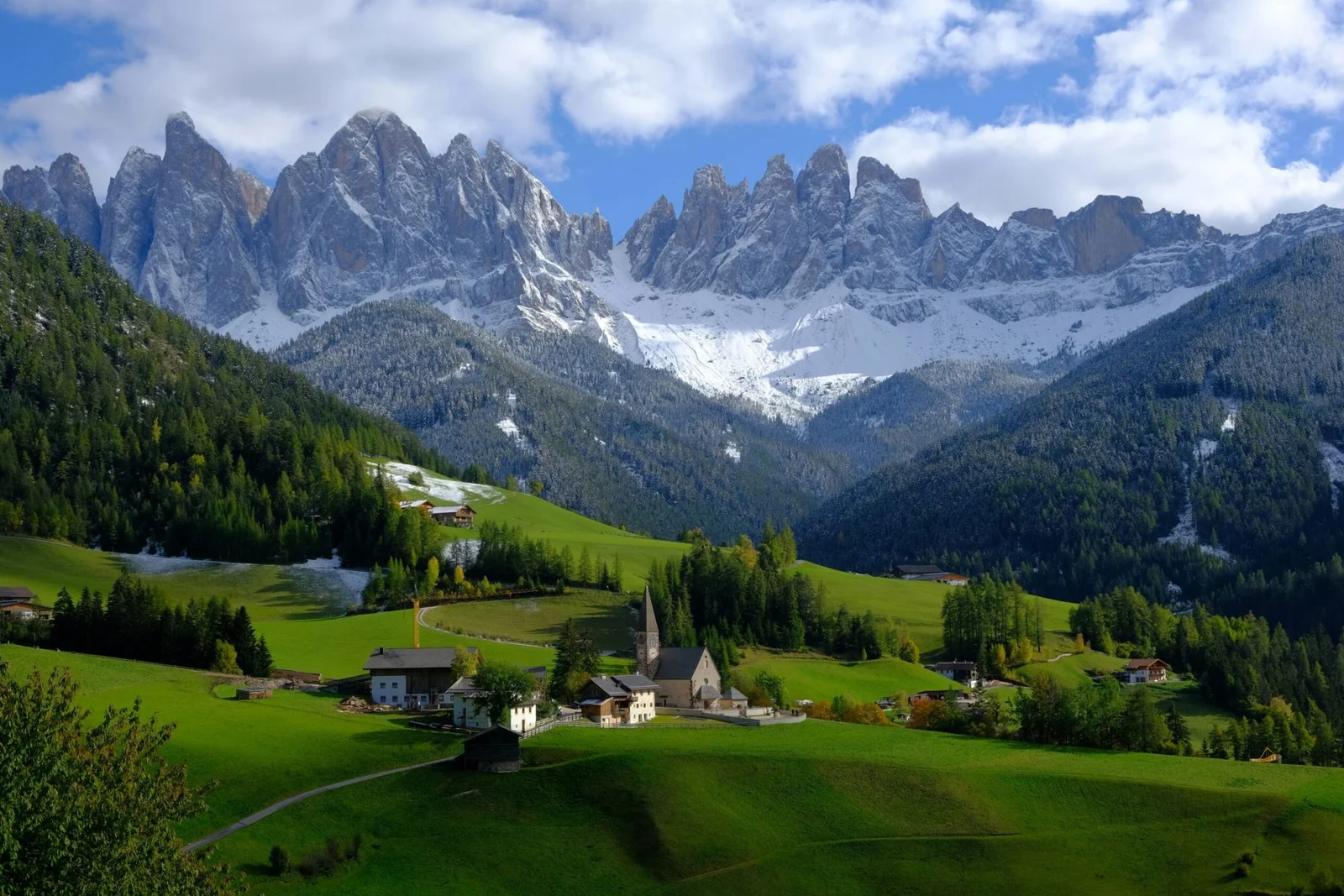
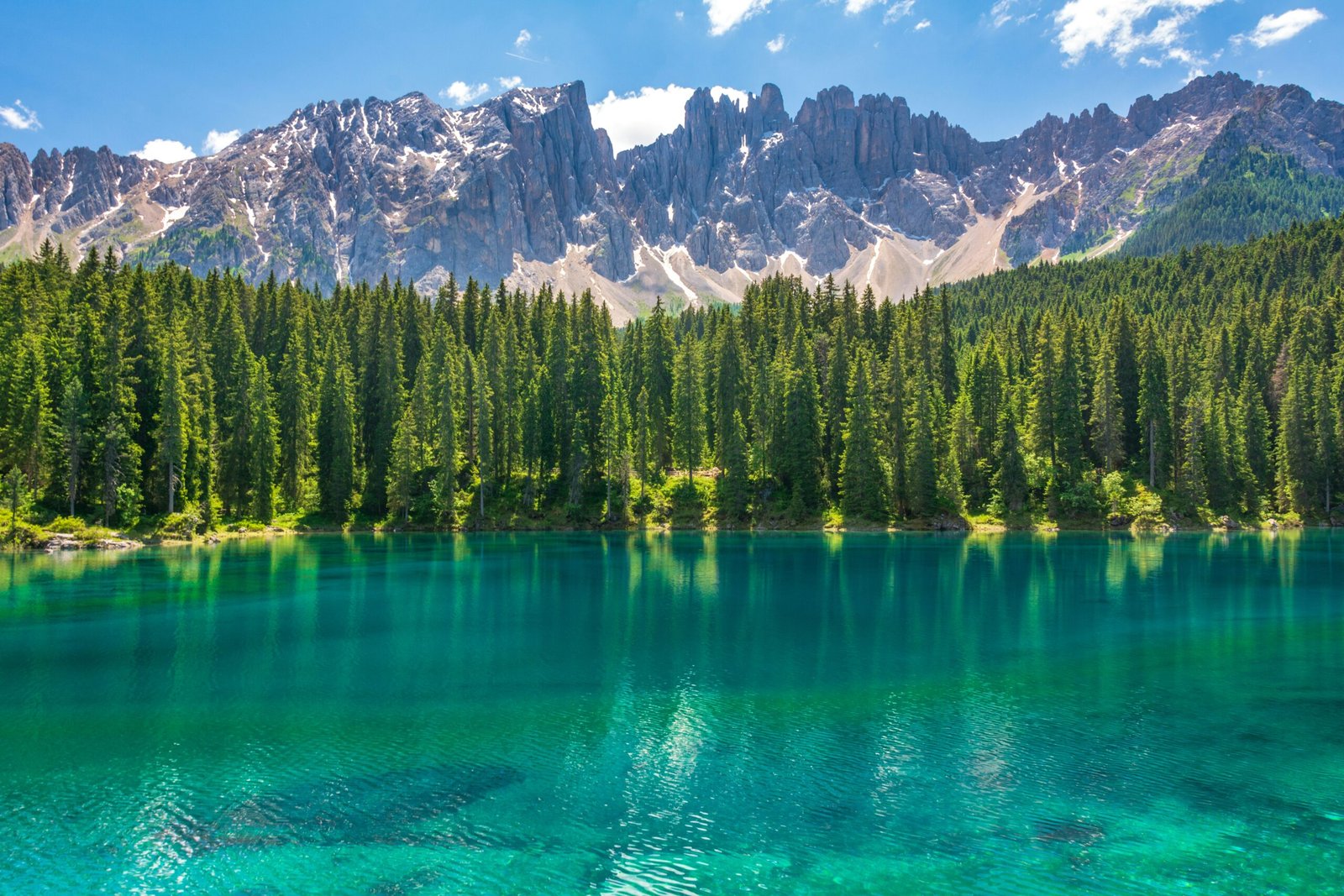
The Dolomites, in northern Italy, are unlike anywhere else in the country. A landscape of pale limestone peaks, dark pine forests, and high-altitude meadows that the UNESCO designation captures in bureaucratic terms but cannot adequately convey. Where the southern regions offer warmth and sensuality, the Dolomites provide quiet strength: clean air, open space, and a sense of order that invites the mind to slow down.
This is also one of the most sophisticated wellness environments in Europe. The spa culture of South Tyrol — the hay baths, the sauna rituals, the contrast thermal circuits, the centuries-old tradition of using the alpine landscape as a therapeutic resource — has been developing for longer and more seriously than the marketing language that surrounds it suggests. The wellness retreat in the Dolomites is not a concept imported from elsewhere and applied to a beautiful landscape. It is a tradition that grew from this landscape specifically, and the programmes that take it seriously produce an experience that the mountain itself makes possible.


The Dolomites are large enough and varied enough that the retreat experience differs significantly depending on where within them you go. The Alpe di Siusi has a different character from Cortina d’Ampezzo. The Val Badia operates at a different pace from the Val Gardena. Understanding the distinctions helps match the destination to the intention.
The Val Gardena and the Alpe di Siusi are the heart of the South Tyrolean wellness culture and the most developed retreat area in the Dolomites. The Alpe di Siusi — the largest high-altitude meadow in Europe, sitting at 1,800-2,000 metres above the Val Gardena — is accessible by cable car from Ortisei and produces the most complete outdoor wellness landscape in the region: the meadows large enough that a morning walk of three hours covers a fraction of the plateau, the wildflowers in June and July at their most varied, and the panorama of the Sassolungo and Sciliar peaks providing the visual backdrop that the Dolomite aesthetic is built around.
Ortisei (St. Ulrich), the main village of the Val Gardena, is the base for the most developed concentration of wellness hotels in the Dolomites. The spa facilities here — the outdoor heated pools with mountain views, the panoramic saunas, the Aufguss sauna ritual programmes — are the most consistently high-quality in the region. The Aufguss (the sauna ritual specific to South Tyrol and the Germanic spa tradition, in which an instructor pours water over hot stones while waving towels to circulate the heat, typically lasting 10-15 minutes and ending with a cold plunge or a snow rub) is available in multiple daily sessions at the larger wellness hotels and is the treatment that most specifically defines the South Tyrolean spa culture.
The hay bath (Heubad) — the treatment most specific to this region — uses dried alpine herbs collected from the meadows in the July harvest, packed around the body in a linen sheet, and generating therapeutic heat through the fermentation process. The temperature reaches 40°C and the session lasts 20 minutes before a cool shower and a rest period. The aromatic compounds of the dried herbs — arnica, gentian, yarrow, alpine thyme — are absorbed through the skin during the session, and the treatment is specifically of this landscape in a way that no other alpine wellness tradition can replicate.
Merano (Meran), at the southern edge of the Dolomites in the Vinschgau valley, is the most architecturally elegant of the South Tyrolean wellness towns and the one with the most developed thermal infrastructure. The Terme Merano — the large thermal complex in the centre of the town, with indoor and outdoor pools at 32-36°C, sauna world, and the historic thermal baths built in the Belle Époque era when Merano was one of the most fashionable health resorts in Europe — is the reference thermal facility for the region.
The town itself has a quality that the higher mountain resorts do not: the Tappeiner promenade above the town through the terraced gardens and the vineyards, the Art Nouveau thermal architecture, the gardens of Trauttmansdorff (the castle where Empress Elisabeth of Austria came for her health cures in 1870-1871, now a botanical garden of 80 thematic sections), and the specific microclimate of the Merano basin — protected from the Alpine cold by the surrounding mountains, with a Mediterranean influence that allows palm trees and citrus alongside the vines.
The Merano Wine Festival in November, when the Vinschgau and Alto Adige wine producers present their vintages in the Kurhaus — the historic casino and concert hall at the heart of the thermal district — adds a food-and-wine dimension to the autumn wellness calendar that the higher mountain resorts do not offer.
Cortina d’Ampezzo is the most internationally famous Dolomite resort and the most elegant. The town hosted the 1956 Winter Olympics and will co-host the 2026 Winter Olympics — the infrastructure of a luxury Alpine resort is present, and the combination of boutiques, restaurants, and the dramatic Dolomite rock towers visible from the main corso makes it the most visually dramatic of the retreat bases.
The wellness offering in Cortina is concentrated in the luxury hotels rather than in standalone spa facilities — the Cristallo, the Grand Hotel Savoia, and the smaller boutique properties each have their own spa facilities of varying quality. The outdoor environment — the Cinque Torri rock formations 30 minutes above the town, the Lago di Misurina 14 kilometres to the east, and the Tre Cime di Lavaredo 25 kilometres further — provides the landscape dimension that the spa supplements.
Cortina in winter (December through March) is at the ski resort end of the spectrum: the wellness retreat here is a combination of skiing or snowshoeing with the hotel spa, and the après-ski culture of the town is more active than at the quieter Val Gardena. For those who want the wellness retreat to be entirely inward and contemplative, Cortina requires choosing a property that creates enough separation from the resort energy.
The Val Badia — the valley of the Ladin-speaking community, running from Badia south to Corvara — is the most culturally specific of the Dolomite retreat areas. The Ladin people, whose language is a Romance language descended from ancient Rhaeto-Roman, have maintained a specific cultural identity across the German-Italian political border that defines the character of the valley’s food, architecture, and pace.
The Ladin food culture is the most distinctive in the Dolomites: the sciatt (buckwheat fritters filled with local cheese, fried in lard), the casunziei ampezzani (half-moon pasta filled with beets and poppy seeds, a dish so specific to this valley that it has no precise equivalent elsewhere), and the Grappe Trentine (the grappa produced from the pomace of the local vineyards) are ingredients and preparations that appear at the authentic restaurants and retreat kitchens of the Val Badia and nowhere else.
The Sellaronda — the ski and hiking circuit that connects the four Dolomite valleys of Val Gardena, Val Badia, Arabba, and Canazei around the Sella massif — is accessible from the Val Badia base and provides the most complete alpine landscape circuit in the region, traversing four valleys and four distinct cultural and geological zones in a single day.
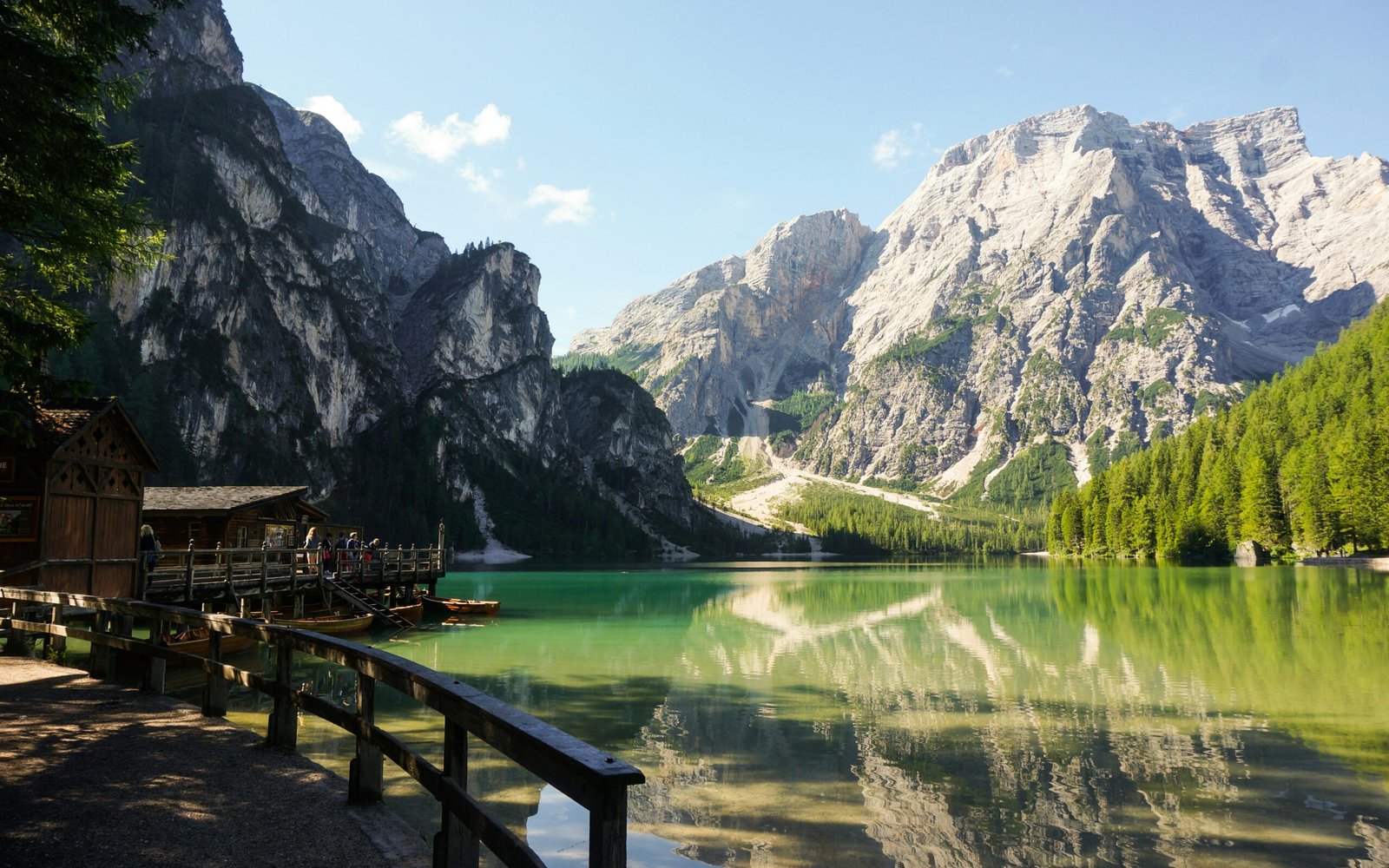
The Alta Pusteria (Hochpustertal) — the wide valley running east from Dobbiaco (Toblach) toward the Austrian border — is the least-developed and most landscape-focused of the Dolomite retreat areas. The Tre Cime di Lavaredo (the three vertical dolomite towers, the most photographed geological formation in Italy) are accessible from the south by the Alta Pusteria road, and the Lago di Braies (Pragser Wildsee) — the emerald lake at the head of the Braies valley, surrounded by pine forest and the Dolomite peaks — is one of the most specific natural landscapes in the region.
Wellness retreats in the Alta Pusteria tend to be smaller and less resort-oriented than those in the Val Gardena or Cortina. The properties here are typically family-run hotels that have developed spa facilities alongside their traditional mountain hospitality, and the pace is specifically different from the main resort towns: quieter, more physically oriented toward hiking and the landscape, and less focused on the social dimension of the alpine resort culture.
The South Tyrolean sauna circuit is the daily ritual of the serious Dolomite wellness guest. A typical circuit at a quality wellness hotel: the Finnish sauna (80-90°C, 10-12 minutes) followed by the cold plunge (12-15°C), a rest period in the relaxation room or on the outdoor terrace, the bio sauna (50-60°C, more humid, longer session), the salt steam bath (40-45°C, high humidity, infused with Himalayan or Alpine salt), and the infrared cabin (the gentlest of the sauna formats, at 40-50°C with radiant heat penetrating more deeply into the muscle tissue). The Aufguss ceremony, offered 3-5 times daily, adds the social and ceremonial dimension.
The research on regular sauna use documents associations with reduced cardiovascular risk, improved autonomic nervous system function, and reduced all-cause mortality — effects most clearly documented in the Finnish and Scandinavian traditions that the South Tyrolean sauna culture shares its physiological basis with.
The Heubad (hay bath) is the most specifically Dolomitic treatment available. The dried alpine herbs from the July meadow harvest — collected at the peak of their aromatic compound concentration, dried and stored — are warmed and packed around the body in a linen sheet. The fermentation of the damp hay generates heat (reaching 40°C), the aromatic compounds are released and absorbed through the skin, and the 20-minute session produces a quality of deep muscular relaxation that the sauna does not replicate. The treatment requires booking well in advance at the properties that offer it — the hay is available only from the summer harvest, and the authentic version uses locally sourced herbs from the resort’s own meadows rather than commercially processed material.
The Dolomite hiking network — thousands of kilometres of marked trails across the entire region — is the outdoor wellness activity that the landscape makes most completely available. The trails range from the gentle meadow walks of the Alpe di Siusi (accessible to guests without alpine experience) to the serious alpine routes of the Tre Cime circuit and the Sellaronda. The most wellness-oriented approach is the guided botanical walk — the local guides who identify the alpine herbs (arnica on the meadow edges, gentian on the rocky slopes, edelweiss on the high limestone faces) connect the hiking directly to the spa culture that uses these plants.
Altitude training at 2,000+ metres produces measurable physiological responses: the reduced oxygen concentration stimulates the production of erythropoietin, which increases red blood cell production and oxygen transport efficiency. Athletes use altitude training specifically for this effect, and the more general wellness benefit — improved aerobic capacity, better sleep quality, and the specific clarity of thought that high-altitude air produces — is available to retreat guests who spend a week at Dolomite elevation.
Kneipp hydrotherapy — the water therapy system developed by Sebastian Kneipp in the nineteenth century using alternating warm and cold water applications to stimulate circulation and the immune response — is available at most South Tyrolean wellness hotels in its authentic form: the outdoor Kneipp foot bath path, where guests walk through alternating pools of warm and cold water, producing the vasodilation-vasoconstriction cycle that the therapy’s benefits are attributed to. The outdoor path, with the mountain landscape visible above the water, is the most specifically alpine version of a treatment that originated in the Bavarian Alpine foothills and has found its most developed Italian expression in the South Tyrolean spa culture.
Speck Alto Adige IGP — the lightly smoked, air-dried pork leg that is the most internationally known product of South Tyrol — is the cured meat that appears at every Dolomite breakfast table and at the evening aperitivo at every mountain refuge. The production method combines the salting and smoking of the Central European tradition with the air-drying of the Mediterranean tradition, producing a product with less fat than prosciutto crudo, a more complex smoky flavour, and the specifically South Tyrolean character that the IGP designation protects. At a retreat kitchen in the Val Gardena that sources from one of the small-scale local producers, the speck served at breakfast is a different product from the commercial export version.
Canederli (Knödel in German) — the bread dumplings of the South Tyrolean tradition, made from day-old bread, eggs, milk, and the specific additions that vary by preparation (speck canederli, cheese canederli, spinach canederli) — are the most characteristic dish of the Dolomite food culture. Served in broth or with butter and sage, they appear at every mountain refuge and retreat kitchen in the region and represent the specific carbohydrate-based mountain nutrition that sustained the communities at altitude before the concept of wellness tourism arrived. The retreat kitchen that serves canederli as a post-hike lunch at the mountain refuge is using the local food tradition correctly.
The wines of Alto Adige — produced on the south-facing slopes of the Adige and Isarco valleys below the Dolomites — are among the most aromatic white wines produced in Italy. The Gewürztraminer from Tramin (the variety is named after the town), the Pinot Grigio from the Colterenzio cooperative, the Kerner of the Isarco valley, and the Lagrein red from the Bolzano area are the wine varieties that appear at the retreat table and at the mountain refuges of the region. The Alto Adige wines have a specific minerality and aromatic concentration that reflects the Alpine terroir — the temperature differential between warm days and cool nights that the mountain climate produces, concentrating the aromatic compounds in the grape.
The pastry culture of South Tyrol combines the Austrian Konditorei tradition with the Italian pasticceria tradition, producing a specific hybrid that is most evident in the Apfelstrudel (apple strudel with the Alto Adige apple varieties — the Golden Delicious and the Braeburn grown at altitude in the Adige valley, with a flavour concentration that the lowland varieties lack), the Zelten (the Christmas fruit cake of the South Tyrolean tradition, made with dried figs, dates, nuts, and grappa), and the Krapfen (the fried dough balls filled with jam that appear at the mountain refuges at mid-morning). At a retreat kitchen that sources its pastry from the local bakery rather than producing generic versions, the afternoon pastry is specifically of this place.

By air: The most convenient airports are Bolzano (BZO) (small regional airport, closest to Val Gardena and Merano), Innsbruck, Austria (2 hours from most northern Dolomite valleys), Venice (VCE) (2.5-3 hours by road), and Verona (VRN) (2-2.5 hours). Most international visitors use Venice or Verona with a car rental or shuttle transfer.
By train: Direct rail connections from Milan, Verona, and Innsbruck reach Bolzano and Bressanone. From Bolzano, local buses connect to the main valley bases. The Brenner railway from Innsbruck to Bolzano passes through the Adige valley with views of the Dolomite foothills. For those arriving from northern Europe, the overnight train from Munich via Innsbruck to Bolzano is a practical and scenic option.
By car: The A22 Brenner motorway (Milan-Verona-Bolzano-Innsbruck) provides the main access road. From Bolzano, provincial roads connect to the individual valleys — the Val Gardena road, the Val Badia road via the Passo Gardena, and the Cortina access from the east via the SS51. Mountain roads are well maintained but require attention in winter conditions — snow chains or winter tyres are legally required from November through April.
Local transport: Most retreat centres arrange transfers from Bolzano or the nearest train station. Within the Dolomites, the Dolomiti Bus network connects the main towns, and the Sellaronda Skiexpress connects the four valleys in winter. A car gives the most flexibility for accessing the more remote valleys and the mountain pass roads.
December through March is the full winter wellness season — the outdoor pools with snow on the peaks above, the hay bath and sauna programme at full operation, and the Christmas markets of the South Tyrolean tradition from late November through December 24th. Ski season runs mid-December through early April depending on altitude and conditions.
June through September is the summer outdoor wellness season — the hiking programme fully open, the Alpe di Siusi wildflowers at their June-July peak, and the temperatures in the valleys at 20-26°C. The spa facilities are fully operational in summer alongside the outdoor programme.
May and October are the shoulder months — some ski lifts and higher altitude facilities may be closed for maintenance, prices are lower, and the valleys have a specific transitional beauty. Check individual facility opening dates before booking.
For the full picture of what each month offers across the Italian wellness calendar, our wellness retreats in Italy guide covers every season.
1. What is the best season for a wellness retreat in the Dolomites?
Winter (December–March) for snow activities and cozy alpine spas — sauna hopping after skiing or snowshoeing is a ritual. Summer (June–September) for hiking, wildflowers, and cool mountain air (15–25°C / 59–77°F) — no heat stress. Spring (April–May) and autumn (October–November) are low seasons: some facilities close for 2–4 weeks between seasons, prices drop, but you may find limited restaurant and lift options. Always check closing dates.
2. Are the Dolomites good for thermal baths and natural springs?
Not really — unlike Tuscany or Ischia, the Dolomites are not known for natural thermal springs. Most wellness facilities use heated fresh water, not mineral-rich thermal water. However, South Tyrol (Alto Adige) has a few exceptions (e.g., Terme Merano — but that’s at the foothills, not high mountains). What the Dolomites excel at is sauna culture: Finnish saunas, bio saunas, infrared cabins, steam baths, salt grottos, and Kneipp foot baths, all with spectacular mountain views.
3. What is the typical price range for a wellness retreat in the Dolomites?
Mid-range: €200–350 per person per night (half-board, basic spa access). Luxury: €400–700+ per night (gourmet meals, infinity pools, multiple sauna types, guided activities). Low season (early December, late March, October–November): prices drop 20–40%. High season (Christmas–New Year, February, July–August): peak prices, book months in advance. Many hotels require half-board (breakfast + dinner) — you cannot book room only. Weekly packages often include guided hikes or ski passes.
4. Can I do outdoor wellness activities year-round in the Dolomites?
Yes, but activities change by season. Winter: skiing, snowshoeing, cross-country skiing, tobogganing, followed by sauna sessions. Summer: hiking (thousands of kilometers of trails), via ferrata (protected climbing routes), mountain biking, trail running, swimming in alpine lakes (cold!). Spring and autumn: lower elevations are good for walking, but high passes may still be snow-covered or muddy. Always check trail conditions. Most retreats offer guided group activities daily.
5. What types of sauna and spa experiences are unique to the Dolomites?
The “sauna ritual” or “Aufguss” is a Dolomites specialty. An instructor pours water over hot stones, waves towels to circulate heat, and adds essential oils (pine, alpine herbs). Sessions are timed (10–15 minutes) and often end with a cold plunge or snow rub. Other unique features: panoramic glass saunas facing mountains, outdoor heated pools (34–36°C / 93–97°F) usable even in snow, hay baths (lying in warm, fermented hay), alpine herb steam baths, Kneipp hydrotherapy (cold water walking paths), and “silent rooms” with mountain-facing loungers.
6. Is the Dolomites suitable for a detox or weight loss retreat?
Yes — many wellness hotels offer detox weeks (typically 5–7 nights) with medical supervision, personalized meal plans (low-calorie, high-protein Alpine cuisine), daily guided activities (hiking, yoga, functional training), and spa access. These programs are usually in spring (April–May) and autumn (October–November) — low season when prices are lower and hotels have more availability. Expect to pay €1,000–2,000 for a week-long detox program including meals, activities, and basic spa. Medical check-ups are often extra.
7. What can I eat at a wellness retreat in the Dolomites?
South Tyrolean alpine cuisine with a healthy twist: speck (cured ham), barley soups (gerstensuppe), dumplings (knödel) made with spinach or ricotta, polenta with mushrooms or venison, fresh mountain cheeses (Alpkäse, Graukäse), rye breads, apples (South Tyrol is famous for apples), berries (lingonberries, blueberries), pine honey, and herbal teas (mountain pine, chamomile, peppermint). Many retreats offer “light” versions — steamed vegetables, lean proteins, whole grains, and salad buffets. Vegetarian and vegan options are increasingly common but always ask ahead, especially in small family-run hotels.
Your email address will not be published. Required fields are marked *