
December in Spain is two different months. The first three weeks are quiet, affordable, and specifically good — the Canary Islands warm and available, Andalusia mild and uncrowded, the retreat centres running their most intimate programmes of the year. Then Christmas week arrives and the country fills up. Know which version you are booking.


Early December (roughly December 1-20) is the continuation of November’s advantages with slightly better weather across the south. Late December (Christmas week through New Year) is Spain doing its festive thing at full volume — the Navidad decorations, the Lotería de Navidad on December 22nd, the Nochebuena family dinners on December 24th, and the Nochevieja celebrations on December 31st. Both have their appeal. The retreat you book in early December is a different week from the one you book for Christmas. Our full Spain yoga retreats guide covers every region.
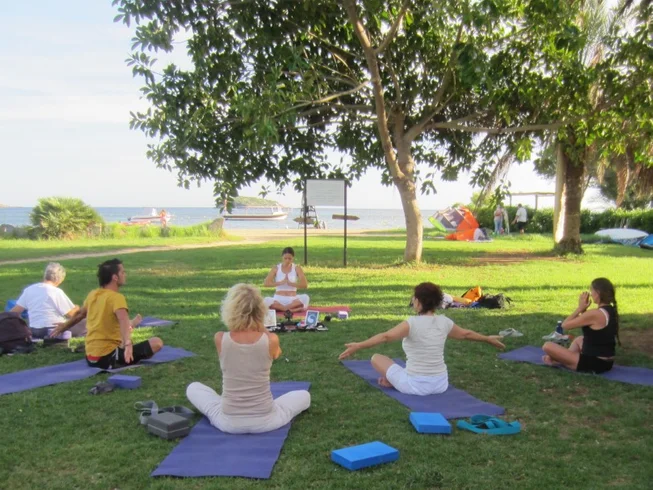
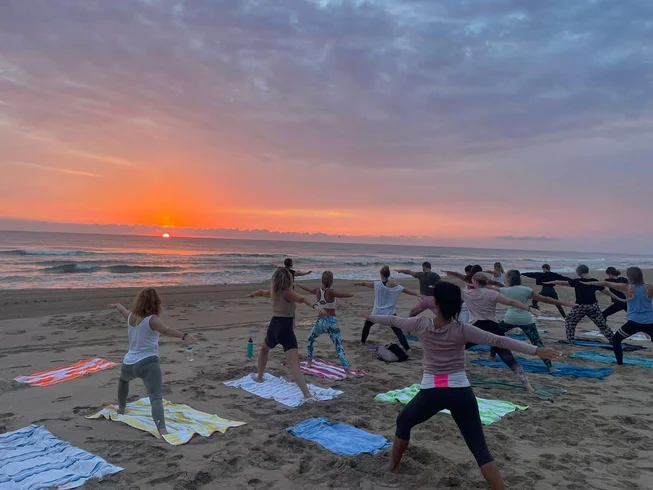
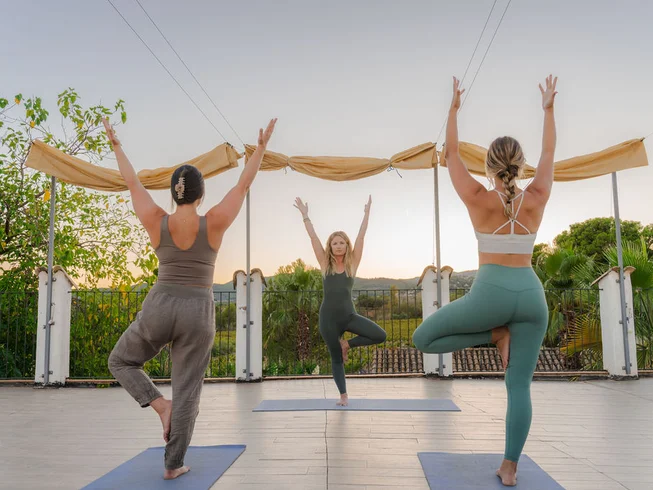
The Canary Islands in December are the most reliable warm-weather retreat option in Europe at this time of year — warmer than the Algarve, warmer than the Costa del Sol, and specifically good for those who need sun alongside practice in winter. Tenerife and Gran Canaria carry the most visitors in December; Fuerteventura and Lanzarote offer the same climate with less December tourism pressure.
Fuerteventura in December is specifically good for surf. The winter Atlantic swells that power the island’s world-class wind and surf conditions are at full December intensity, and the beaches of the north — Corralejo, El Cotillo, Majanicho — produce waves that the surf-and-yoga retreats running here in winter are specifically designed around. The trade winds that make Fuerteventura one of Europe’s top kitesurfing destinations keep the temperature at 21-23°C even in December, and outdoor morning practice on the volcanic dunes above Corralejo beach is one of those specifically winter Canary Islands retreat experiences. Our surf yoga retreats in Spain guide covers the winter surf coast in detail.
Lanzarote in December has the volcanic landscape in its most dramatic winter light — the low December sun on the black lava fields and the white cubic architecture produces the visual contrast that Manrique designed the island around. The tourist density is lower than October and November, the retreat programmes are running their winter schedule, and the Timanfaya National Park and the César Manrique foundations are accessible without the spring and autumn crowds.
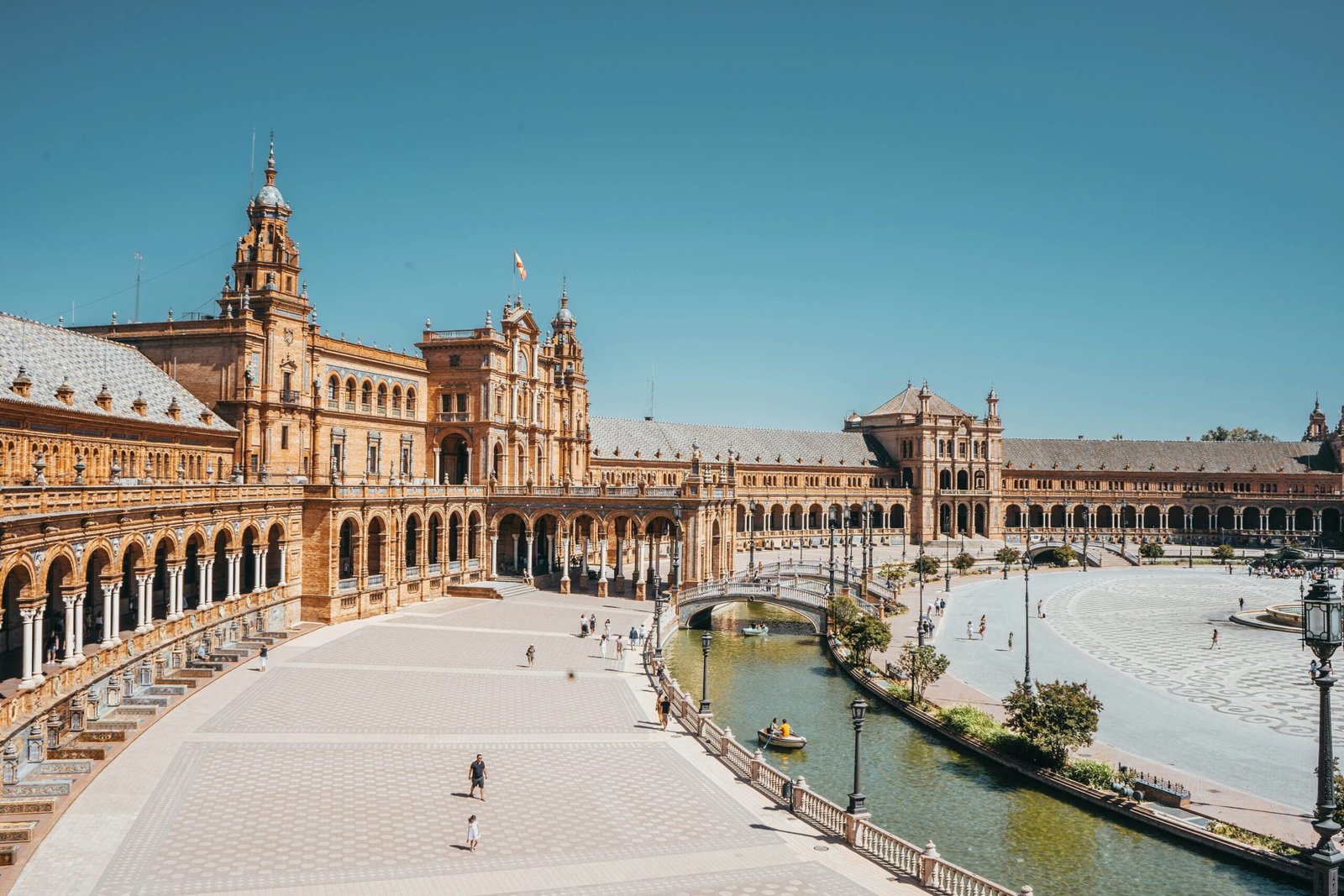
Sevilla in December is the city in its Christmas mode — genuinely festive in a specifically Spanish way that has nothing to do with northern European Christmas conventions. The Christmas decorations go up in late November along the Avenida de la Constitución, the outdoor Christmas market at the Plaza Nueva sells churros and roscos, and the Nochebuena (December 24th) family dinner culture means that the restaurants of the Barrio de Santa Cruz are serving their most elaborate menus of the year.
The Lotería de Navidad on December 22nd is the Spanish Christmas event that most international visitors miss: a national lottery drawing that has been running since 1812, broadcast live on national television, with children from the San Ildefonso school in Madrid singing the winning numbers in a specific half-chanting style that is immediately recognisable and specifically Spanish. Every bar, office, and household in Spain has tickets. The atmosphere on December 22nd in any Spanish city is one of collective attention and occasional collective joy.
The sherry coast — Jerez, El Puerto de Santa María, Sanlúcar de Barrameda — in December has the bodegas operational and the manzanilla at Sanlúcar at its most specific: the sea air of the Guadalquivir estuary that distinguishes sanlúcar manzanilla from other sherries is at its most present in the cool December air off the Atlantic.
Madrid in December is cold (4-10°C) and specifically beautiful in its winter festive mode. The Puerta del Sol Christmas market, the illuminations on the Gran Vía, and the Retiro park with its outdoor ice rink make the city a specific December experience. The Prado, Reina Sofía, and Thyssen museums are at their most accessible — the summer queue at the Prado disappears entirely in December.
Retreat programmes near Madrid in December tend toward the short-format and culturally oriented: long weekend programmes in the Sierra de Guadarrama that combine yoga with winter mountain walks and Madrid day trips, or urban retreat formats based in the city itself with museum visits and the Christmas market as programming elements. For a full week retreat, the Canary Islands or Andalusia make more logistical sense in December; for a long weekend with urban cultural depth, Madrid in December is worth considering.
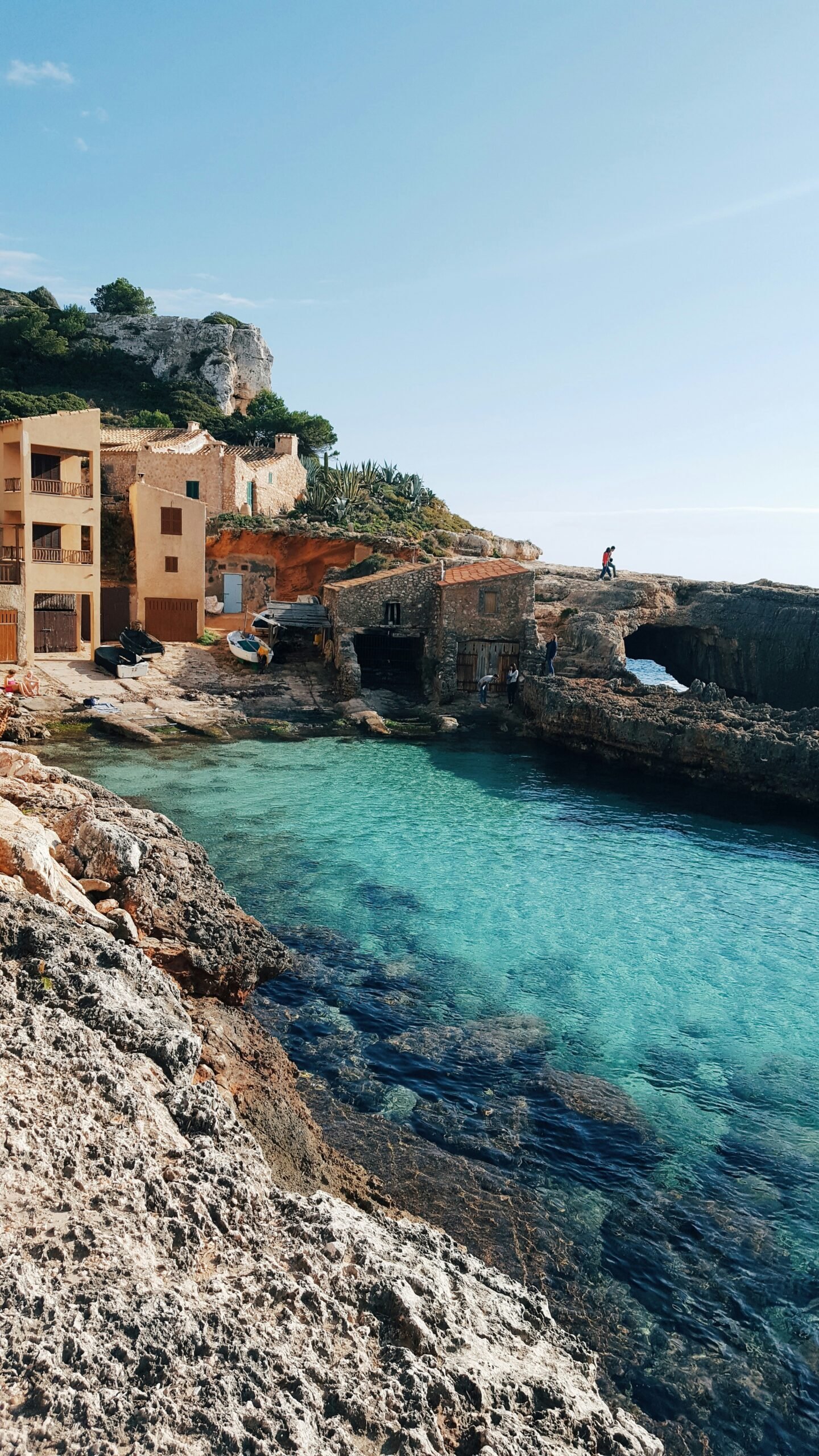
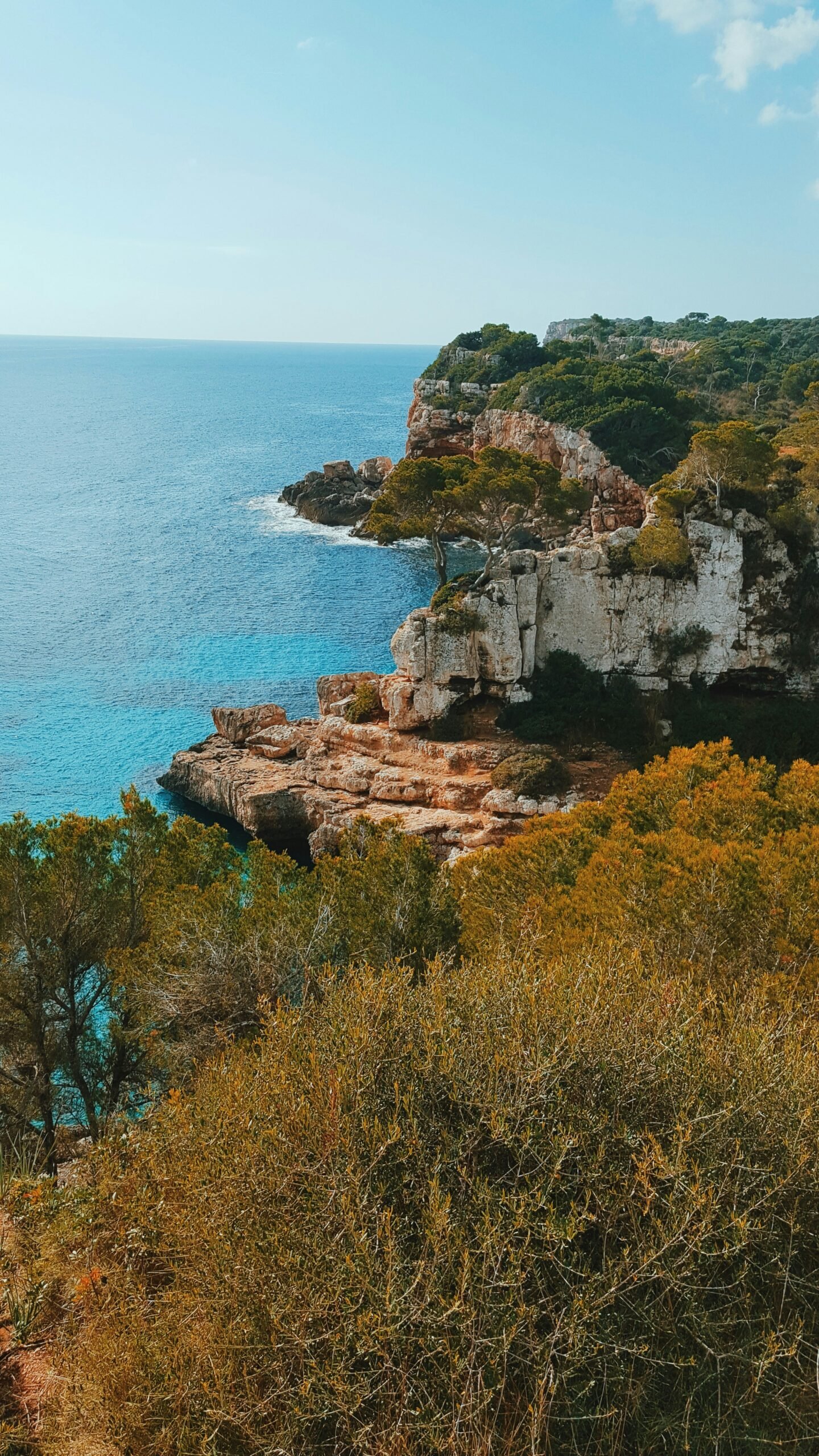
Mallorca in December is the island for those who want the Tramuntana without the summer, the medieval towns without the tourists, and the food culture without the resort pricing. Temperatures of 12-16°C — cool but manageable for outdoor practice with layers, the Serra de Tramuntana hiking trails open below 800 metres, and the island’s restaurant scene operating for local clientele rather than tourist demand.
Palma de Mallorca in December has its old city operating at the pace it maintained before the tourist economy transformed it. The Mercat de l’Olivar — the city’s main covered market — is selling seasonal produce, the cafés of the old quarter are full of Mallorquins rather than day-trippers, and the Cathedral of Santa María (Sagrada Família of Mallorca in terms of its Modernista interior redesign by Gaudí) is visitable without the summer density.
For the full Mallorca picture, our yoga retreats in Mallorca guide covers the island across all seasons.
Turrón — the almond confection of Valencia and Alicante — is the Spanish Christmas sweet and it appears in every shop from December 1st. The hard Alicante version (turrón duro, with whole almonds in honey and egg white) and the soft Jijona version (turrón blando, ground almonds and honey blended into a paste) are the classics. Mazapán from Toledo — ground almonds and sugar worked into figures and shapes, produced by the convents of Toledo since the Middle Ages — is the other Spanish Christmas confection worth seeking at source. The mazapán sold at Toledo convent shops in December, made by the nuns using their historical recipe, is a different product from the commercial supermarket version.
Besugo (sea bream) is the traditional Christmas Eve fish of Madrid — a city nowhere near the sea that developed a specific December tradition of baking whole sea bream with olive oil, garlic, lemon, and breadcrumbs for the Nochebuena dinner. The fish mongers of the Mercado de la Paz and the Mercado de San Miguel in Madrid in the days before December 24th are receiving deliveries of sea bream specifically for this tradition. It is worth knowing about if you are in Madrid for Christmas week.
Polvorones (crumbly almond and lard shortbreads) and mantecados (similar but with lard as the primary fat, producing a greasier and richer result) are the December shortbread culture of Andalusia — specifically produced in Estepa in Sevilla province, which has been making them for centuries. Arriving at a retreat in Andalusia in December and finding a tin of polvorones on the table alongside the mint tea is one of those specifically seasonal hospitality gestures worth appreciating.
December is matanza season across rural Castile, Navarra, and Extremadura — the traditional pig slaughter that produces the year’s supply of chorizo, morcilla, lomo, and salchichón. The fresh products of the December matanza — eaten the same week the pig was slaughtered, with nothing cured yet — are available at village butchers and rural restaurants in Navarra and Castile in December and nowhere else at any other time. The chistorra (thin Navarran sausage eaten fresh from the matanza) grilled over charcoal at a rural restaurant in December is one of those specifically seasonal, specifically regional food experiences that requires being in the right place.
The Spanish Christmas lottery is one of the world’s largest lottery draws — €2.4 billion distributed in prizes annually, with millions of Spaniards holding shares in tickets. The draw on December 22nd is broadcast live on national television and radio, the children of the San Ildefonso school singing the numbers in their distinctive style for four hours. In every bar and office across Spain, December 22nd is a collective event regardless of whether anyone wins. Being in Spain on December 22nd and watching the draw at a bar is a specifically Spanish experience worth having once.
Christmas Eve (Nochebuena) is the main Christmas celebration in Spain — a large family dinner on the evening of December 24th, the Misa del Gallo (Midnight Mass) for the religiously inclined, and the general festive energy of a country that takes its Christmas celebrations seriously. For retreat guests in Spain on December 24th, the experience varies by region: in the cities, restaurants are either closed for private family dinners or running their most elaborate menus of the year. The retreat centres that stay open through Christmas typically organise a communal Nochebuena dinner that reflects the regional tradition.
New Year’s Eve in Spain involves eating twelve grapes — one for each stroke of midnight, one for each month of the coming year — a tradition observed simultaneously across the country, broadcast live from the Puerta del Sol in Madrid. Finding the grapes in your mouth by the twelfth stroke is considered good luck; failing to keep up is considered hilarious. In the major cities, the midnight celebration is public and outdoor. In smaller towns and rural retreat centres, it is quieter and more personal.
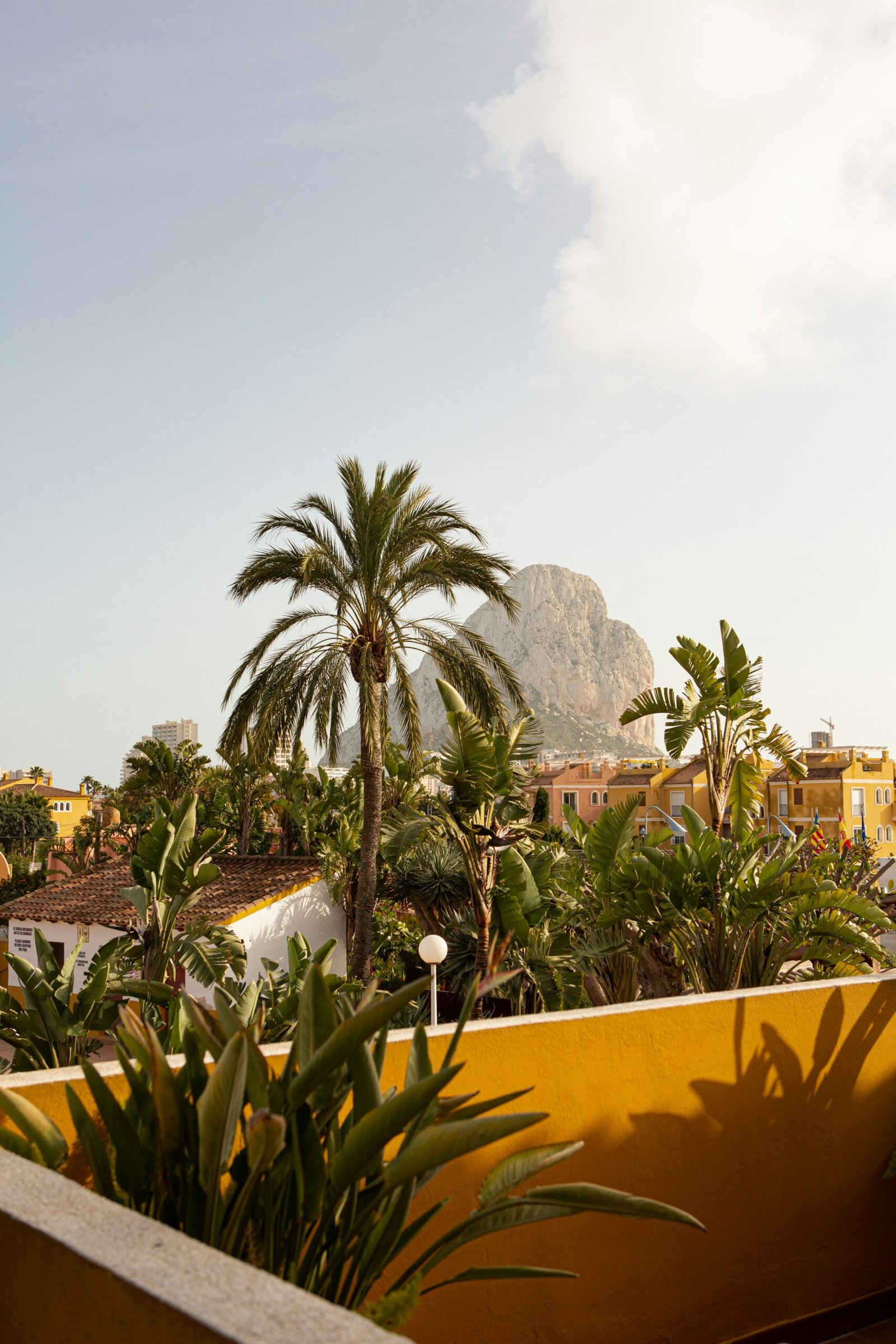
Early December programming is the winter model at its most refined. In the Canary Islands, the full outdoor schedule continues without modification — the island climate makes December programming indistinguishable from October in terms of outdoor availability. In Andalusia, the morning practice is outdoors in the December afternoon warmth (practice shifted to 10am rather than 7am to allow the temperature to climb), and the evenings are for indoor Yin sessions as the temperature drops to 10°C.
The Christmas programming for retreats that operate through the festive period acknowledges the season rather than working around it. The turrón at breakfast from December 1st. A Lotería ticket purchased communally for December 22nd. A communal Nochebuena dinner on December 24th with the regional dishes of wherever the retreat is based — the besugo in Madrid, the sea bass in Andalusia, the seafood in Galicia. The twelve grapes at midnight on December 31st.
These are not activities appended to a yoga programme. They are the rhythm of December in Spain, and the retreat centres that work with this rhythm rather than ignoring it produce weeks that feel specifically of a place and a time.
Is early December or Christmas week better for a retreat in Spain? Early December for quiet, affordability, and the November rhythm continuing — the retreat infrastructure fully operational, availability good, prices at their autumn low. Christmas week for the festive energy of Spain celebrating Navidad — the Lotería, the Nochebuena dinner, the twelve grapes at midnight. Both are valid choices with different characters.
Are the Canary Islands warm enough for outdoor yoga in December? Yes, without qualification. Fuerteventura and Lanzarote sit at 21-23°C in December — warmer than much of southern Europe in April. Outdoor practice at any hour, the surf at winter peak, and the volcanic landscape in its most dramatic December light.
Is Spain a good destination for Christmas week specifically? Yes, if you engage with what Christmas means in Spain rather than expecting a northern European version of it. The Lotería on December 22nd, the Nochebuena family dinner culture, the twelve grapes at midnight, and the Reyes Magos processions on January 5th make the Spanish Christmas and New Year calendar a specific and genuinely enjoyable cultural experience for those who approach it with curiosity.
Is Mallorca worth visiting in December? For those who want the island without the tourist economy, yes. December Mallorca has the hiking, the food culture, the medieval towns, and the local character of the island operating without the summer infrastructure. It is cold by Canary Islands standards but mild by northern European standards, and the Serra de Tramuntana in December light is specifically beautiful.
Your email address will not be published. Required fields are marked *