

July in Spain is genuinely hot. Sevilla regularly hits 42°C. Madrid bakes. The interior of the peninsula becomes a place to leave rather than arrive. But the Pyrenees are at their summer peak, Galicia has the Atlantic keeping it at 22°C, and the Canary Islands are doing what they always do — sitting at a comfortable 24°C regardless of what the rest of the country is experiencing. July rewards those who go to the right place.


The geography of a July Spain retreat is simple: go north, go high, or go to the Canaries. The Mediterranean coast south of Barcelona is at maximum tourist density. The Balearics are booked months in advance. The Andalusian interior is for the heat-adapted only. But the Pyrenees, the Cantabrian coast, the Canary Islands, and Galicia all offer summer retreats that work without heat management. Our full Spain yoga retreats guide covers every region.
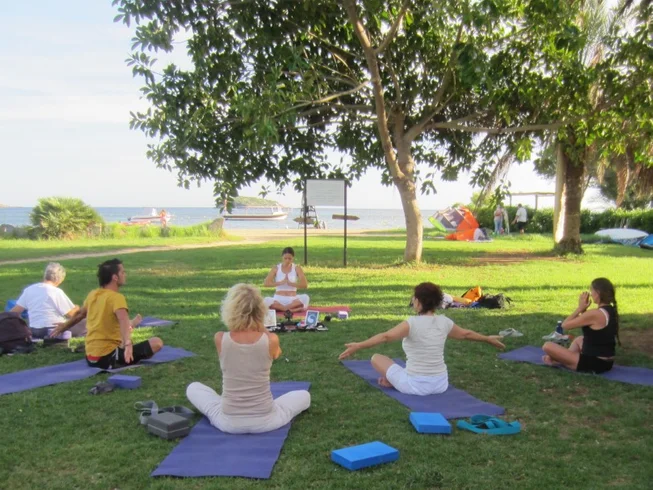
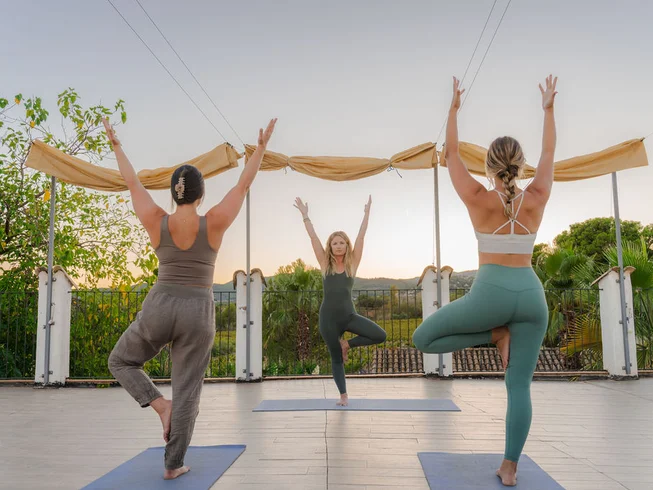
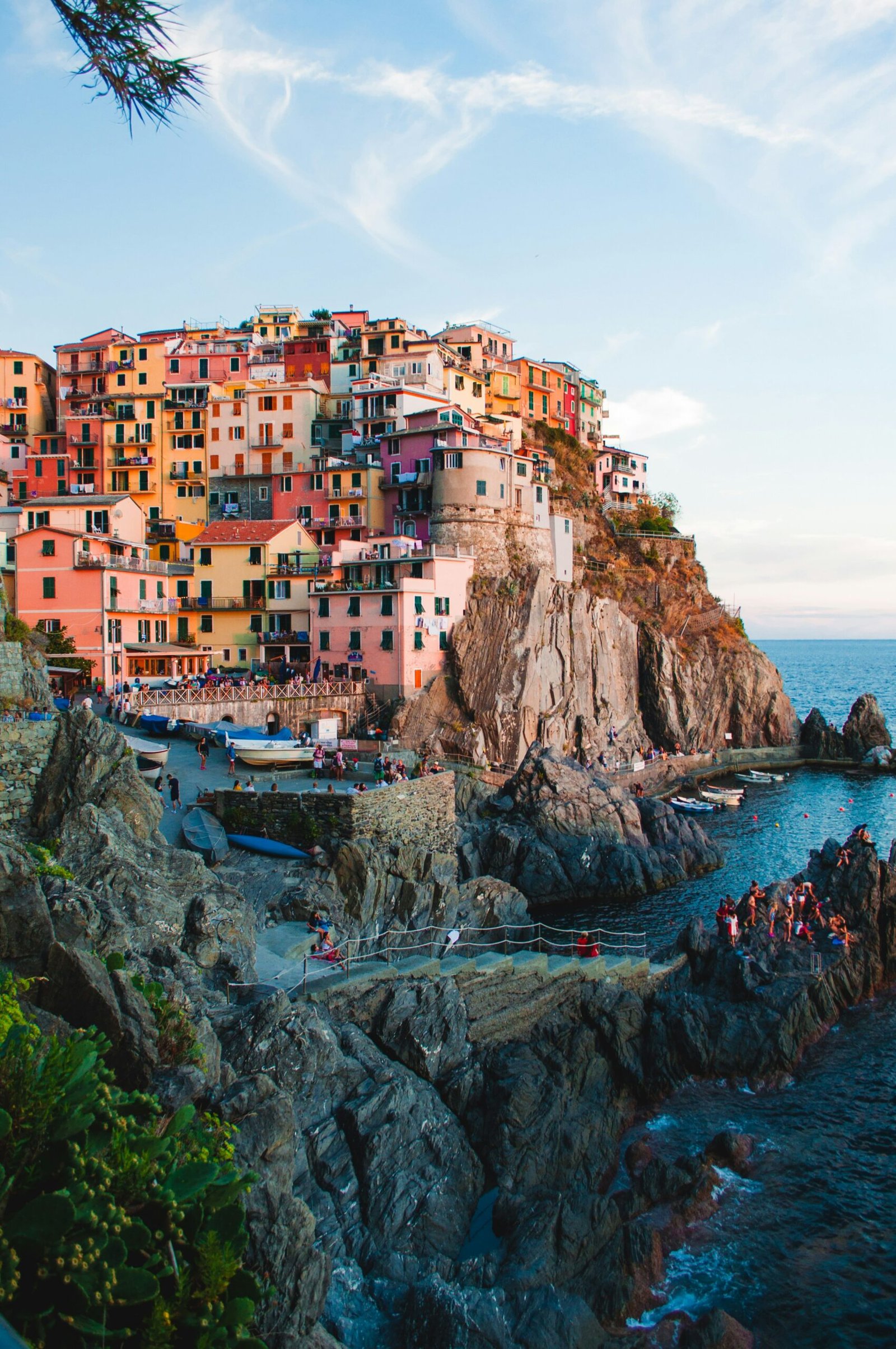
The Pyrenees in July are at their annual peak. Every trail is open, the high-altitude lakes are accessible, the wildflower meadows above the treeline are at maximum variety, and the temperatures — 22-26°C in the valleys, 15-18°C on the high trails — make outdoor practice and long hiking days possible without the heat management that the same hours require everywhere south of Zaragoza.
The Valle de Benasque in the Aragonese Pyrenees is the base for the Maladeta massif — the cluster of peaks that includes Aneto (3,404 metres, the highest point in the Pyrenees) and the Maladeta glacier (one of the last surviving glaciers in the Spanish Pyrenees, retreating but still present). Retreat programmes in the Benasque valley in July combine daily yoga with high-mountain walks to the cirques and lakes of the massif, the combination of altitude practice and physical demand producing a quality of focused exhaustion that lower-altitude retreats cannot replicate.
The Catalan Pyrenees — the Vall de Núria, the Cadí-Moixeró Natural Park, and the Cerdanya plateau — offer a different version: greener, less austere than the Aragonese high peaks, with the specific quality of a mountain plateau at 1,000-1,200 metres that is warm enough for outdoor practice but cool enough to sleep without air conditioning.
July in the Canary Islands is specific. The main tourist islands — Tenerife, Gran Canaria, Lanzarote — are busy with summer visitors. But La Palma and El Hierro, the two westernmost and least-visited islands, offer something different: La Palma with its laurel forest, the Caldera de Taburiente (a volcanic caldera 9 kilometres across and 770 metres deep, now a national park), and the darkest skies in Europe (the island has some of the world’s strictest light pollution regulations, specifically to protect its observatories); El Hierro with its diving, its geothermal pools, and its status as Spain’s first fully renewable energy island.
Retreat programmes on La Palma in July combine yoga with hiking the trails of the Caldera de Taburiente and stargazing sessions at the Roque de los Muchachos Observatory — one of the best astronomical locations in the world, with the Atlantic cloud layer below and the stars above in conditions that the mainland cannot approximate.
Asturias in July is the green Spain that the tourism industry underuses. The Cantabrian coast between the Basque Country and Galicia — the stretch between Llanes and Gijón — has dramatic cliffs, small surf beaches, and a coastal culture built around seafood and cider that is entirely unlike the Mediterranean south. Temperatures of 22-24°C in July, the sea at 19-20°C, and the Picos de Europa national park visible from the coast make Asturias the most varied coastal retreat environment in Spain in summer.
The Picos de Europa — three massive limestone massifs rising to 2,600 metres within 20 kilometres of the coast — are in July at their most accessible: all trails open, the high mountain refuges operational, and the combination of sea-level coastal practice in the morning and afternoon high-mountain hiking produces the kind of physical contrast that retreat guests who have done it describe as one of the more complete physical experiences available in Spain.
The cider culture of Asturias is specifically of this region — the natural cider (sidra natural) poured from height to aerate it, served in glasses that are not filled but splashed with a small amount to be drunk immediately (the escanciado), and accompanied by the Asturian cheese culture (Cabrales, Gamoneu) and the fresh seafood of the Cantabrian coast. A retreat in Asturias in July that incorporates an evening at a sidrería produces a cultural experience that no other Spanish region offers.
Lanzarote in July stays cooler than mainland Spain (26-28°C) thanks to the northeast trade winds, and the volcanic landscape that makes it visually distinctive is at its most dramatic in the summer light. The Timanfaya National Park, the César Manrique foundations, and the Jameos del Agua (a partially underground lagoon in a lava tube, designed by Manrique as an auditorium) are all accessible without the winter crowds.
The retreat scene on Lanzarote in July is small but intentional — the island does not encourage mass tourism in the way that Tenerife’s south coast does, and the yoga programmes that operate here reflect the design-conscious, landscape-respecting ethos that Manrique established. For more on the island’s retreat options, our yoga retreats in Andalusia guide covers the broader context of southern Spanish retreat culture.
July is gazpacho season at its peak. The tomatoes are at maximum ripeness, the Andalusian heat has produced the conditions that make cold soup the obvious choice, and every bar and restaurant from Málaga to Cádiz serves it as a first course or as a drink in a glass. The salmorejo from Córdoba — thicker, richer, served with jamón and egg on top — is the July lunch in the interior, eaten cold at room temperature where air conditioning keeps the dining room at 20°C while the street outside is at 38°C.
Pulpo a la gallega (Galician-style octopus) is at its July best — the octopus caught in the Atlantic waters off Galicia, boiled until tender, sliced onto a wooden board, dressed with olive oil, paprika, and coarse salt, and eaten with bread. It appears at the village festivals (romerías) that fill the Galician summer calendar in July and August, cooked in enormous copper cauldrons over wood fires, and eaten standing at wooden trestle tables. The combination of the dish and the festival setting is specifically Galician in summer.
Peaches from Calanda in the Bajo Aragón — grown in a specific microclimate of the Ebro valley using a traditional technique of bagging each fruit individually on the tree to produce uniform shape and size — are at their July peak. The Calanda peach is a Protected Designation of Origin product and is considered the finest in Spain: large, white-fleshed, intensely fragrant, and with a sweetness that the commercial peach varieties cannot approximate. Available at markets across Aragón and increasingly at good food shops in Madrid and Barcelona.
The espicha is the Asturian cider tapping ceremony — when a new barrel of natural cider (sidra natural) is opened, the espicha is the occasion to gather and drink the first pour. In July the sidrerías of Asturias are running at full summer capacity, the escanciado (the high-pour serving technique) visible through every open window, and the Cabrales and Gamoneu cheeses from the Picos de Europa accompanying the cider at every table. Not a dish but a food culture worth seeking out specifically in Asturias in July.
The Running of the Bulls — eight days of running, bullfighting, and continuous celebration in Pamplona from July 6th through 14th. The encierro (bull run) happens at 8am daily through the narrow streets of the old town. It is dangerous, deeply controversial, and one of the most internationally known Spanish festivals. For retreat guests based in the Basque Country or the Pyrenees, a day trip to Pamplona during San Fermín week to watch the encierro from the barriers (rather than participating) is a culturally specific experience worth considering with open eyes about what it involves.
The feast day of Saint James is the most important day of the year in Santiago de Compostela — the city celebrating its patron with a fireworks display on the night of July 24th (considered one of the best in Spain), a full programme of cultural events, and the particular energy of a pilgrimage city at its annual peak. For retreat guests finishing or beginning a Camino section in July, arriving in Santiago on or near July 25th adds a specific dimension.
One of Spain’s longest-running music festivals, held on the Valencia coast over four days in mid-July. International headliners, Spanish artists, beach access, and the general summer festival energy of the Mediterranean coast. For retreat guests combining a Valencia or Costa Blanca programme with a festival day, FIB is the July cultural event worth knowing about.


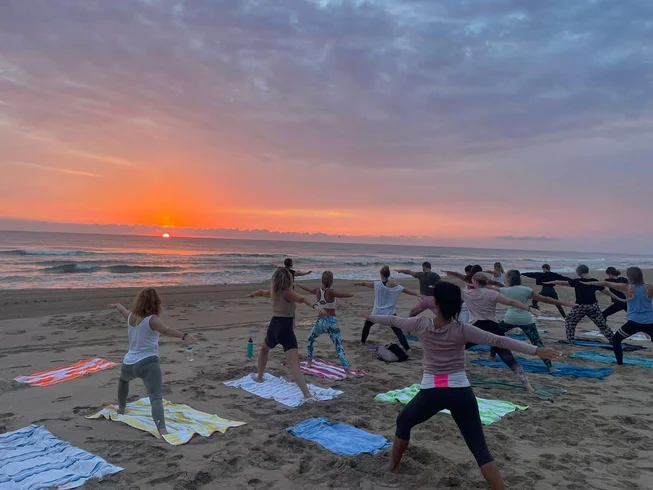
July programming in Spain splits completely by geography. In the Pyrenees and Asturias, the outdoor schedule runs without modification — morning practice at 7am with the mountain air still cool, long afternoon hikes, evening sessions as the temperature drops. The days are the longest of the year (sunset at 9:30-10pm), which means the retreat day can breathe in ways that December cannot.
In the Canary Islands, the trade winds that keep La Palma and El Hierro at 24-28°C make outdoor practice at any hour comfortable, and the July programming reflects this — no heat management, the full outdoor schedule, and the specific addition of the stargazing sessions that the islands’ exceptional skies make possible in summer.
In Andalusia, July programming is the most demanding to do well. The best centres structure it honestly: practice at 6:30am before sunrise has fully arrived, breakfast, the hottest hours from noon to 5pm in the pool or hammam, late afternoon practice at 6pm, and dinner at 10pm in the Spanish style that the climate has always required. The retreat guest who adapts to this rhythm rather than fighting it finds that the heat structures the day in a way that produces genuine rest in the middle of it.
Is Spain too hot for a yoga retreat in July? In the interior, yes for midday outdoor practice. In the Pyrenees, Asturias, Galicia, and the Canary Islands, no at all. The answer is geography. A Pyrenees retreat in July is cooler than a London June. An Asturias retreat is 22°C and green. Go to the right place and July is excellent.
Which mountains in Spain are best for a July retreat? The Pyrenees for the most dramatic high-mountain landscape and the best long-distance hiking. The Picos de Europa in Asturias for the most accessible combination of coast and mountain. The Sierra Nevada for the combination of altitude and proximity to Granada. All three are at their July peak in terms of access and conditions.
Is La Palma worth the extra flight for a retreat in July? Yes, if the volcanic landscape and stargazing matter to you. La Palma has the best dark skies in Europe, one of the world’s great volcanic calderas as a national park, and retreat programmes that use both. The flight from mainland Spain takes 2 hours. The island in July is specifically good — cool enough for outdoor practice, uncrowded, and visually extraordinary.
What comes after July if I want to extend into August? August is Spain at maximum capacity everywhere popular. The right destination choice matters even more than in July. See our yoga retreats in Spain in August guide for where to go.
Your email address will not be published. Required fields are marked *