
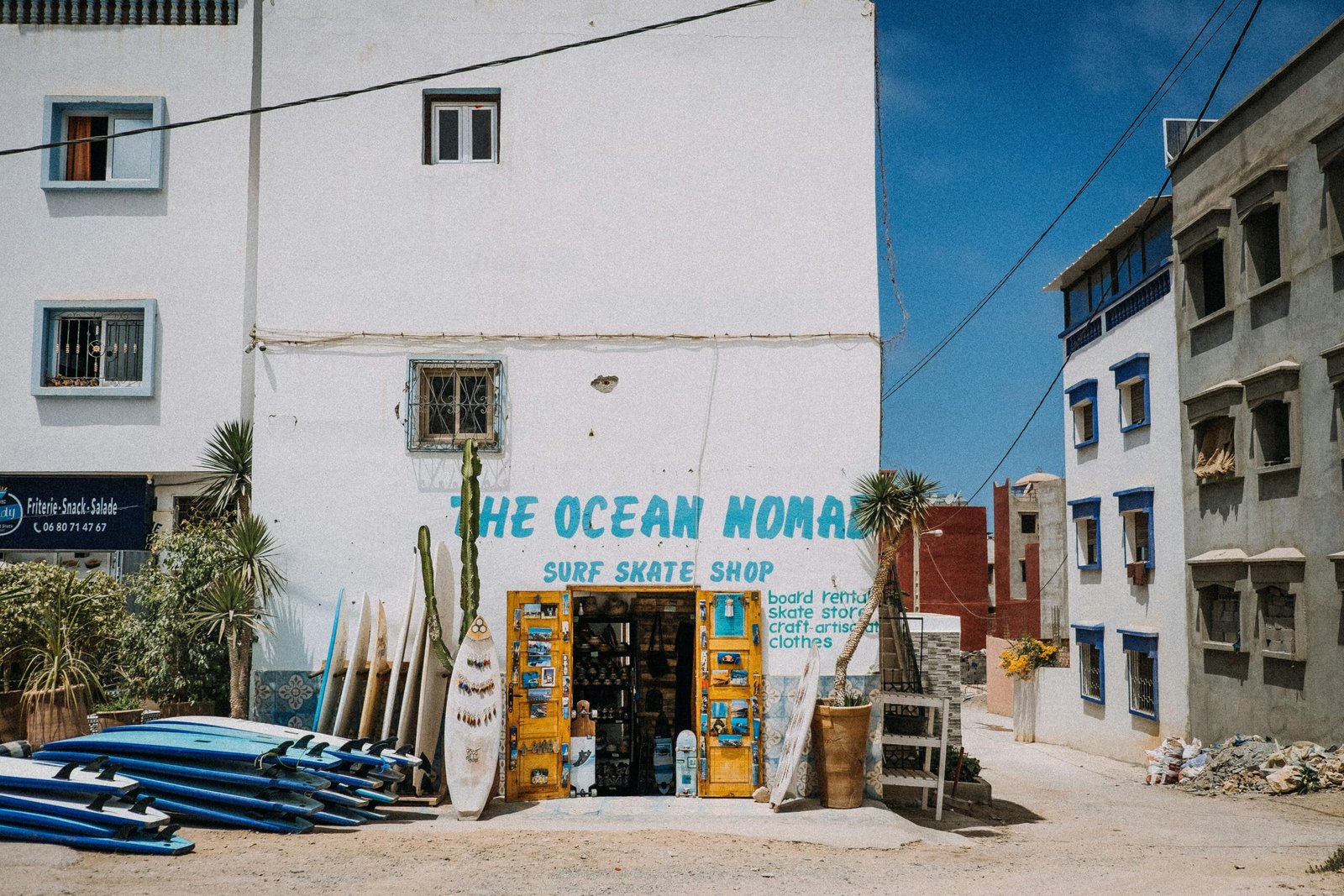
Morocco’s Atlantic coast is one long breath — a stretch of golden light, rolling waves, and easy rhythm that feels made for two things: surfing and slowing down.
From Agadir to Taghazout, from the wild beaches near Imsouane to the quieter bays of Essaouira, this coastline has become a sanctuary for travelers who want to balance the thrill of the ocean with the grounding calm of yoga.


Morocco’s Atlantic coast runs for over 1,800 kilometres — and along a significant stretch of it, from Agadir north through Taghazout, Tamraght, and Imsouane to the windswept ramparts of Essaouira, a particular culture has taken root. It is built around two activities that turn out to complement each other more naturally than almost anything else: surfing and yoga.
The connection is not accidental. Both require presence — you cannot surf distracted, and you cannot practice yoga while mentally elsewhere. Both develop body awareness, balance, and the ability to read subtle signals from your own nervous system. And both are best done in places with good light, warm air, and proximity to the ocean. Morocco has all of these in abundance.
The surf-and-yoga culture that has developed here over the last two decades is now genuinely world-class — not in the sense of luxury, though that exists, but in the sense of depth. The teachers are experienced, the surf coaches are qualified, the retreats are designed by people who understand both disciplines, and the Atlantic coast delivers consistent, varied waves that work for complete beginners and experienced surfers simultaneously.
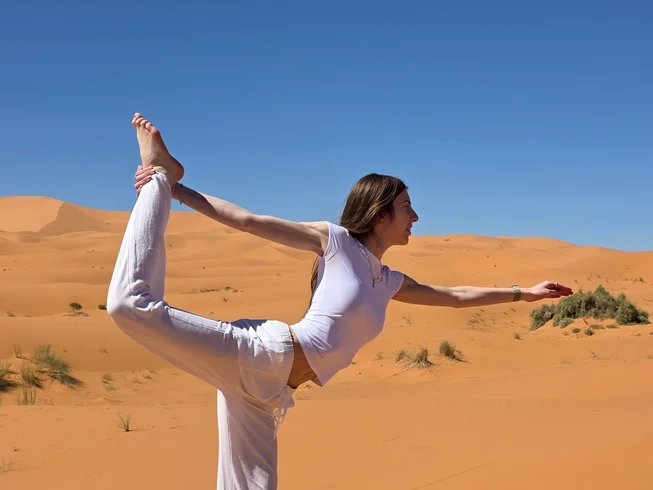
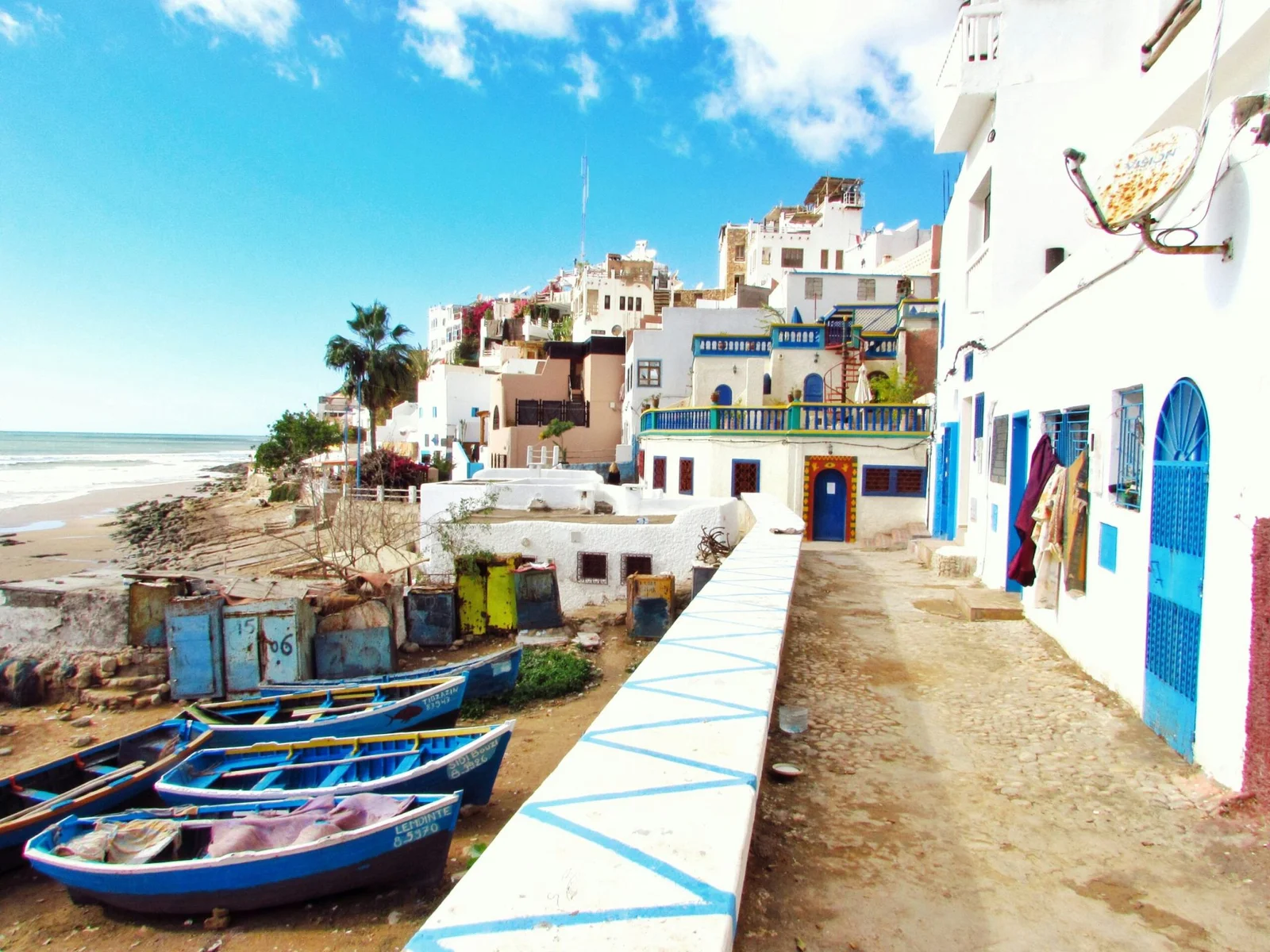
Fifteen kilometres north of Agadir, Taghazout is where Morocco’s surf-and-yoga scene was born and where it remains most concentrated. The village sits on a headland above a series of world-class breaks — Anchor Point (a long right-hander considered one of the finest point breaks in Africa), Hash Point, Panoramas, Killers, and Mysteries — that string along the coast for several kilometres north and south. Almost every building in the village is now connected to surfing or wellness in some way: surf schools, yoga shalas, equipment hire, healthy food cafes, retreat centres. The rooftop terraces overlooking the Atlantic are where morning yoga sessions happen as the sun rises over the coast, and the breaks below are where the same people paddle out an hour later. The vibe is international, relaxed, and genuinely community-oriented.
wo kilometres south of Taghazout, Tamraght offers access to the same surf breaks with a slightly more local character — less polished, more affordable, and increasingly popular with retreaters who want the surf-yoga combination without the Taghazout premium. Several female-led retreat centres have established themselves here, offering smaller groups, more personal attention, and programming that emphasises the mindfulness dimension of both disciplines. A good choice for solo travellers or those who find Taghazout’s social scene too busy.
Ninety kilometres north of Agadir, the small fishing village of Imsouane is famous for one thing: one of the longest right-hand point breaks in Africa. On a good day, a single wave here can be ridden for over 800 metres — a ride of two to three minutes that produces a state of flow that experienced surfers travel specifically to find. The village itself is tiny and unhurried, with almost no nightlife. The rhythm is early surf, slow breakfast, rest, yoga, sunset. Retreat programmes here tend to be week-long and genuinely immersive. Best for intermediate surfers who want to improve significantly rather than beginners who need beginner-specific instruction.
Two and a half hours north of Agadir, Essaouira is a different surf experience — the Alizé trade winds that blow almost every day make it one of the world’s great windsurfing and kitesurfing destinations rather than a traditional surfing spot. The waves are generally smaller and more suited to beginners. But the combination of surf (or wind sports) with the UNESCO-listed medina, the bohemian cultural atmosphere, and some of the best yoga spaces in Morocco makes it a compelling option. For those who want cultural richness alongside ocean practice, our yoga retreats in Essaouira guide covers the town in full detail.
For the complete Morocco retreat picture — desert, mountains, and coast — our Morocco yoga retreats guide covers every destination.
What wellness looks like here
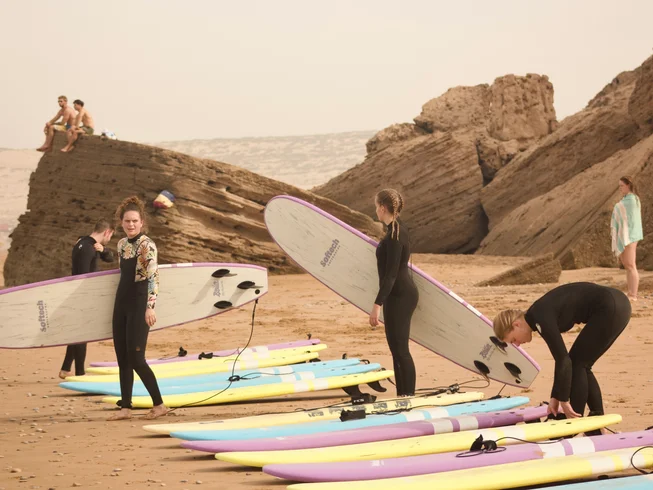
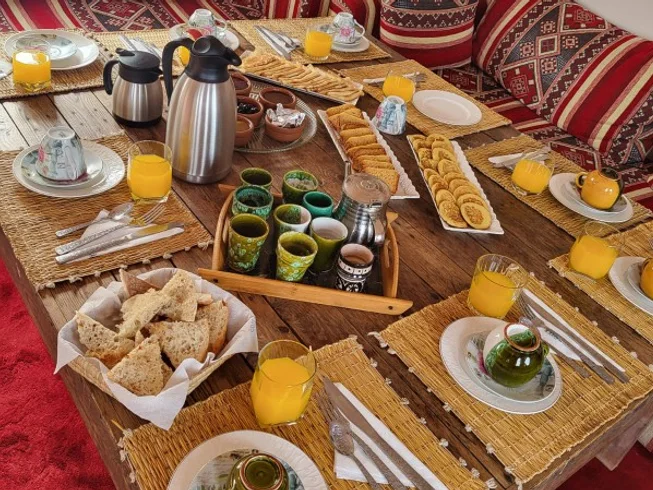
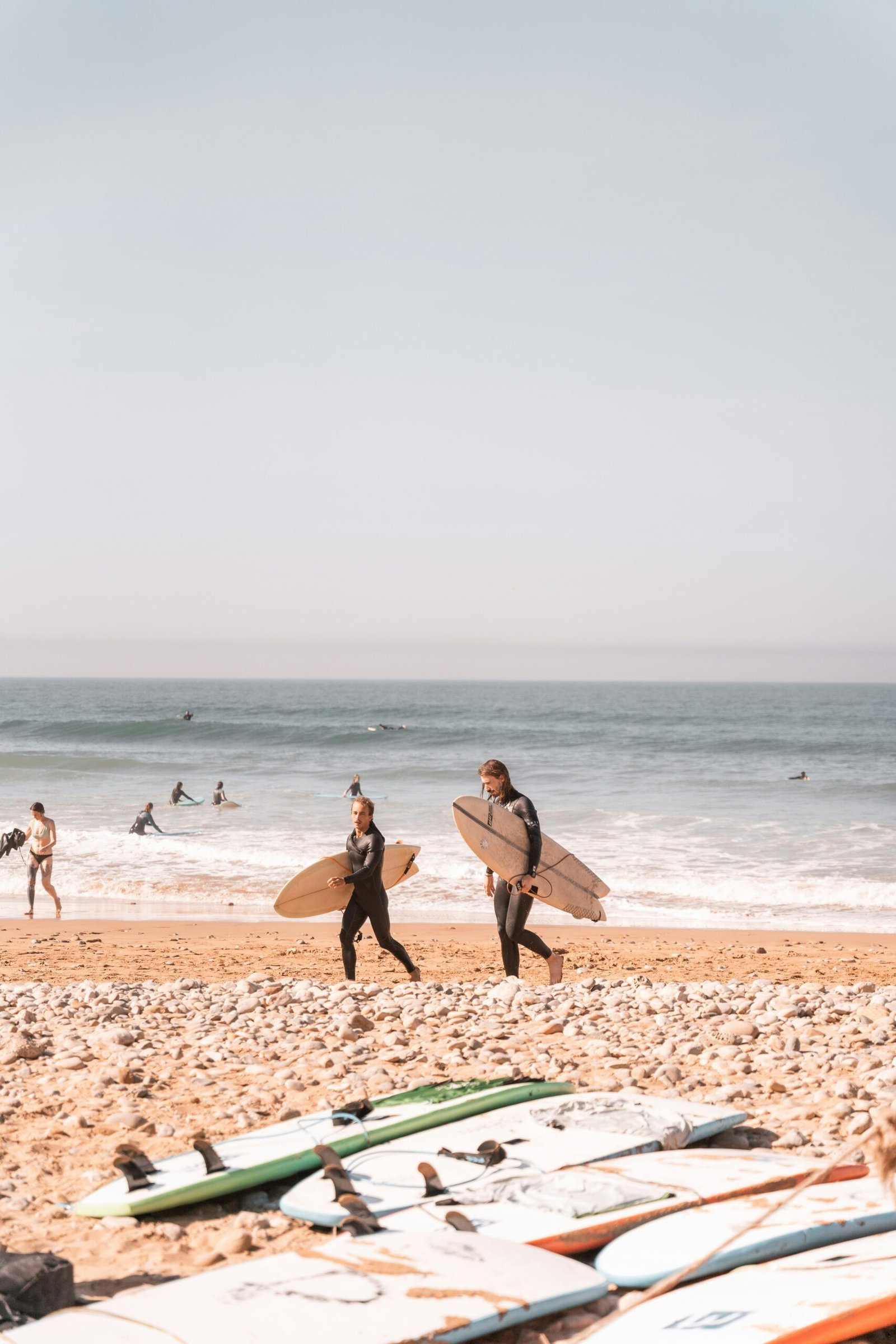
A typical surf–yoga retreat in Morocco is not a bootcamp. Mornings start early with gentle yoga to wake the body and mind, followed by a healthy breakfast of fruit, pancakes, and mint tea. Then comes surf — wetsuits on, boards loaded, and the drive to whichever beach has the best conditions that day.
Afternoons are about rest: hammocks, beach walks, or journaling. Sunset yoga closes the day, followed by communal dinners of tagines, roasted vegetables, or couscous eaten family-style. Some retreats add breathwork or mindfulness sessions, others host bonfires and live music nights under the stars.
There’s also a growing interest in female surf–yoga collectives — safe, empowering spaces for women to explore strength and softness at once. These communities, many run by Moroccan women, focus on confidence and connection rather than performance.
The combination is not a marketing invention — it emerges from genuine compatibility.
Yoga builds the physical attributes that surfing requires: core strength for paddling and popping up, hip flexibility for a deep surf stance, shoulder stability for the paddle, and balance that transfers directly to standing on a moving board. Practitioners who have done six months of consistent yoga report faster surf progression than those without, because the body awareness developed on the mat accelerates the learning curve in the water.
Surfing, in turn, teaches things that yoga sometimes cannot. The ocean does not care about your intentions — it demands complete presence. A wave that catches you thinking about something else will put you underwater. This enforced mindfulness, combined with the physical effort of paddling and the brief explosive commitment of catching a wave, produces a quality of mental clearing that practitioners describe as unlike anything available on the mat. The two practices balance each other: yoga grounds and centres, surfing enlivens and clears.
The typical surf-and-yoga retreat day — morning yoga, breakfast, surf session, lunch, rest, late afternoon yoga or yin, dinner — creates a rhythm that most people find deeply satisfying. The body is used fully and rested fully. The nervous system oscillates between activation (surfing) and recovery (yoga, rest). By the end of a week, most participants feel the difference not just physically but in the quality of their attention.
6:30am — Morning yoga Before the surf, before breakfast. Usually a dynamic practice — Vinyasa or Ashtanga — on a rooftop terrace or in an open-sided shala with the Atlantic visible below. The quality of light at this hour on the Moroccan coast is extraordinary: warm, low, and clear. The session typically runs 75–90 minutes and is designed to warm the body for the physical demands of surfing.
8:00am — Breakfast Fresh fruit, Moroccan pancakes (msemen or beghrir), eggs, argan oil with honey and amlou, yoghurt, fresh juice, and mint tea. Surf-and-yoga retreat kitchens tend to be genuinely good — the physical demands of the day require proper fuel, and most programmes take food seriously.
9:30am — Surf session Wetsuits on, boards loaded into the van, drive to whichever break has the best conditions that morning. Your surf coach checks the swell, wind, and tide — these variables determine which of the local breaks is working. Beginners typically go to a beach break with consistent, smaller waves; intermediates and advanced surfers are directed to more appropriate spots. Sessions run two to three hours.
1:00pm — Lunch and rest The hottest part of the day. A lighter meal, hammocks, reading, perhaps a brief sleep. Some retreats offer optional activities — massage, breathwork sessions, journaling prompts — during this window. The enforced rest is part of the programme design, not a gap in it.
4:30pm — Afternoon yoga Usually a slower, more restorative practice than the morning — Yin yoga, Restorative, or a gentle Hatha session focused on the areas that surfing works hardest: shoulders, hips, lower back. This session processes the physical effort of the morning and prepares the body for the next day.
7:00pm — Dinner Communal, unhurried, and central to the retreat experience. Most surf-and-yoga retreats eat family-style — dishes in the centre of the table, everyone serving each other. Conversations that started awkwardly at breakfast are fluid by day three. This communal dimension is one of the underrated aspects of the retreat format.
Surf-and-yoga retreat kitchens on the Moroccan Atlantic coast have developed their own cuisine — rooted in Moroccan tradition, adapted for people who are physically active and conscious about food.
Retreat kitchen staples include vegetable tagines with preserved lemon and olives, lentil soups with cumin and coriander, couscous with roasted root vegetables, fresh fish from the Agadir or Essaouira markets, smoothie bowls with local fruit, and Moroccan pancakes with argan oil and honey. Mint tea appears at every meal and most moments between them.
Fresh fish and seafood from the Atlantic is exceptional — the same boats that supply Agadir’s commercial fishing port also supply the better restaurants and retreat kitchens. Grilled sardines, sea bass tagine, chermoula-marinated fish are daily options along this coast.
Argan oil — produced from trees growing in the countryside between Agadir and Essaouira — appears in breakfast spreads as amlou, in salad dressings, and as a finishing oil on fish. It has a distinctive toasty, nutty flavour and is one of the coast’s most characterful local products.
For meals out, specific recommendations by village:
In Taghazout: Taghazout Kitchen serves reliable, filling meals popular with the surf community. Mega Loft is a cafe-gallery hybrid with vegetarian options and good coffee. Amouage has a rooftop terrace and serves some of the best breakfast in the village.
In Imsouane: Aftas Surf House has ocean-view tables and serves grilled fish, avocado, and the kind of simple food that tastes extraordinary after a morning surf.
In Essaouira: La Table by Madada offers refined Moroccan-Mediterranean cooking for an evening out. Vagues Bleues on the ramparts has the most dramatic setting. The port fish stalls remain the most honest and cheapest option for fresh grilled fish.
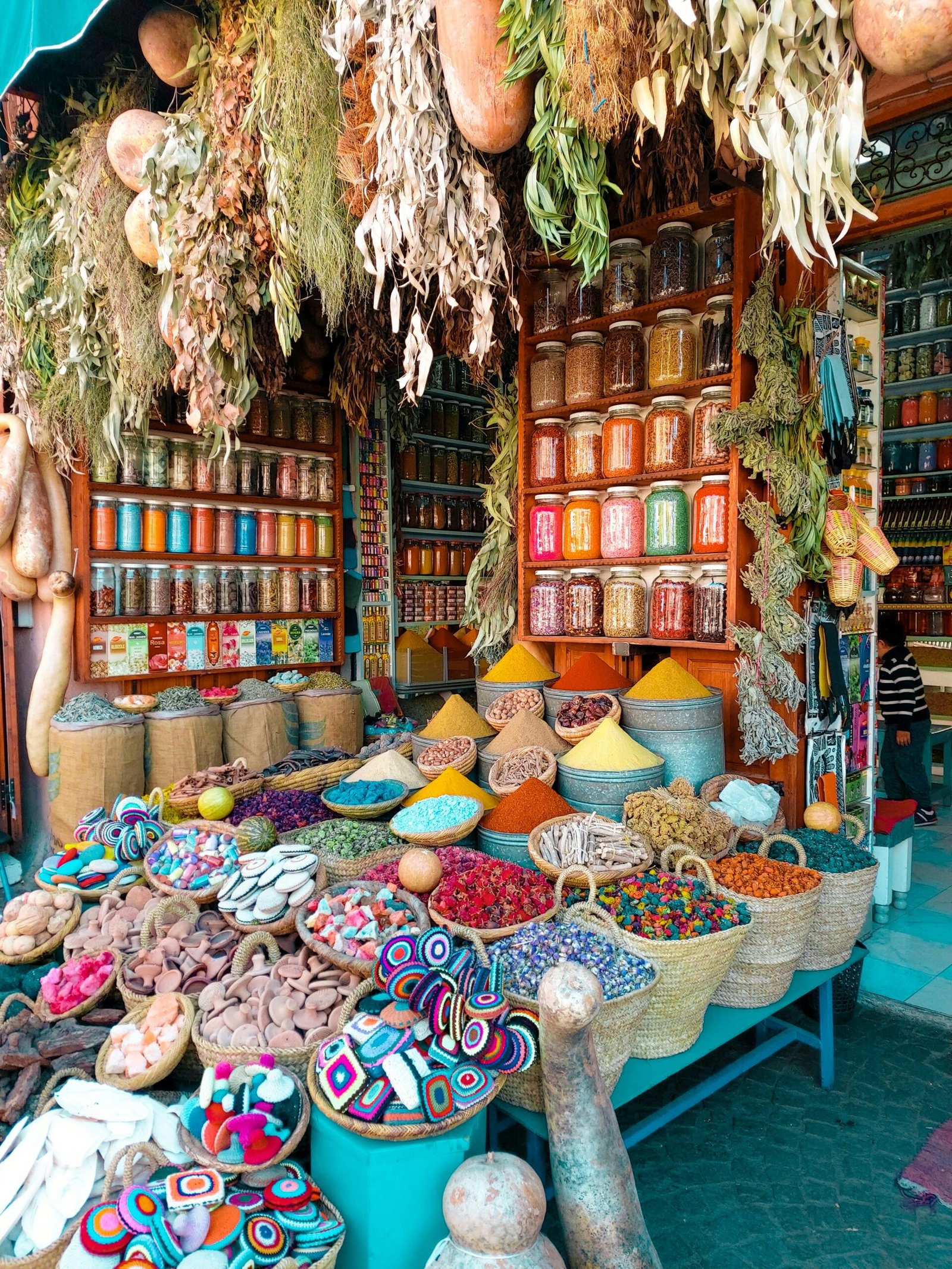
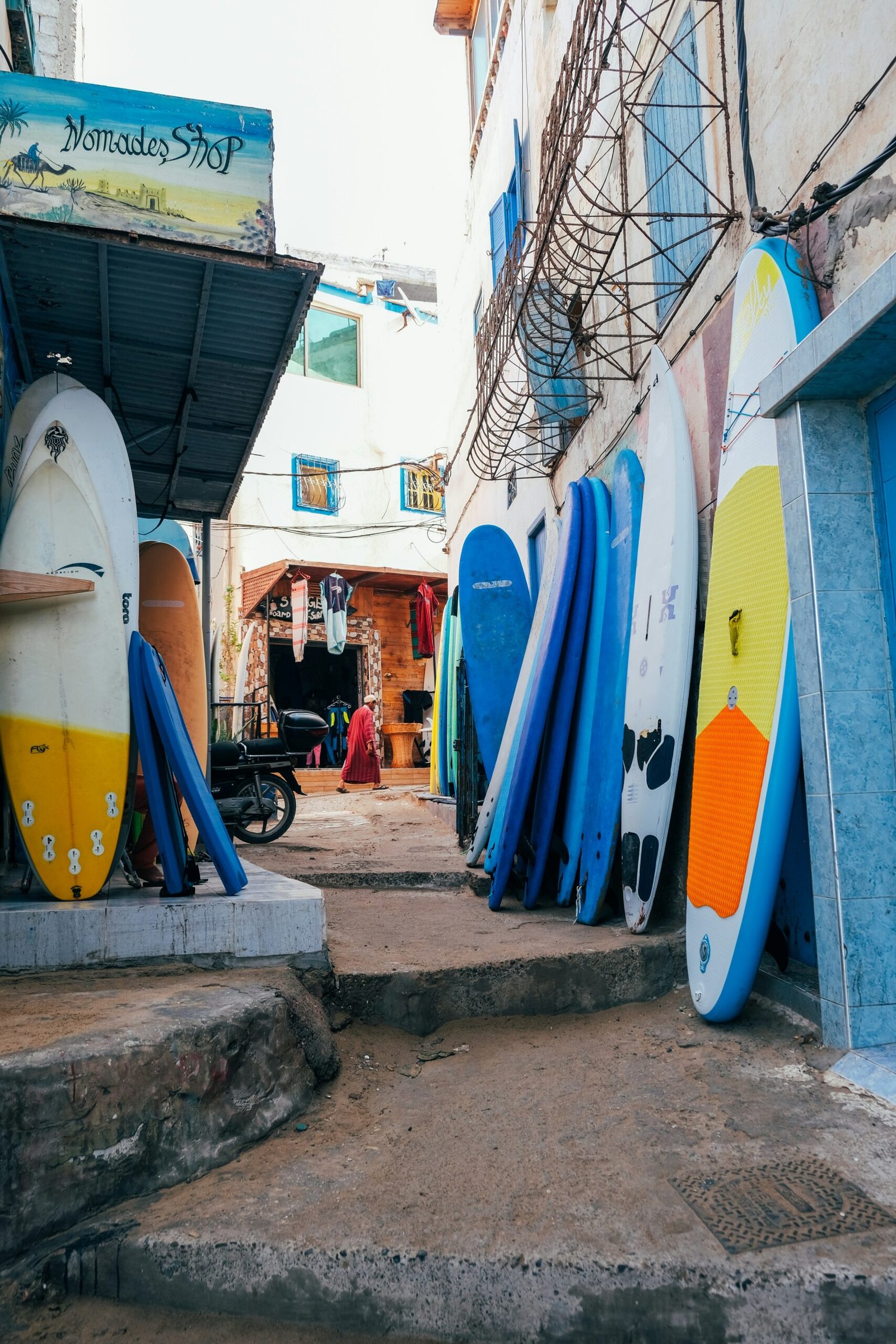
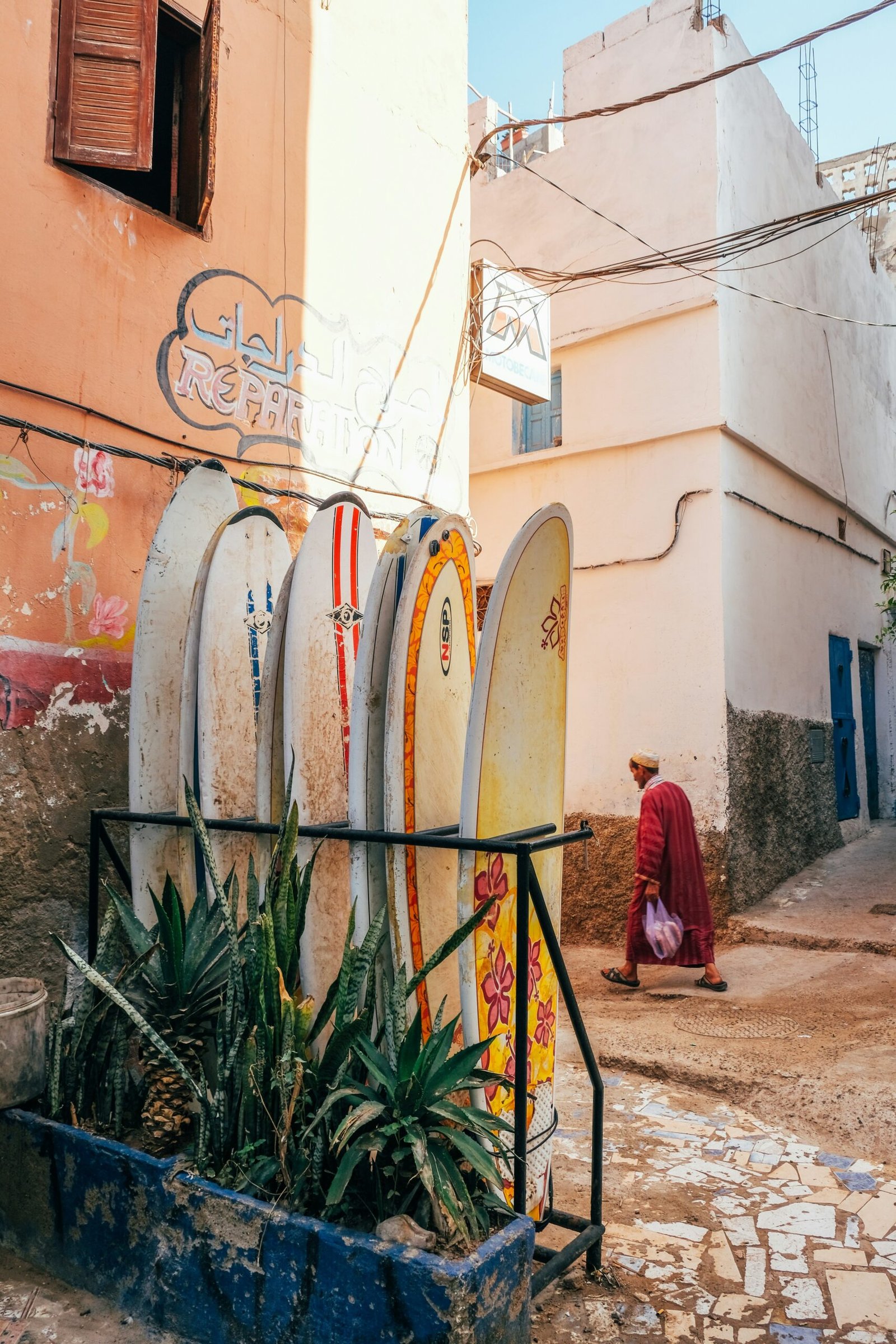
Surf houses are the most common format — buildings converted specifically for the surf-and-yoga market, with dorms and private rooms, communal spaces, rooftop terraces, and a board storage area at ground level. Standards vary widely. The better ones have good mattresses, reliable hot water, and properly equipped kitchens. Basic ones are genuinely basic. Price range: €30–80 per person per night including meals.
Boutique retreat centres are purpose-built or carefully renovated properties with private rooms, dedicated yoga studios, and more attention to the quality of both the wellness programme and the physical environment. Smaller groups, more personal attention, higher prices. Most of the established names in Taghazout and Tamraght fall into this category. Price range: €80–150 per person per night.
Luxury eco-resorts represent the upper end — Paradis Plage between Agadir and Taghazout is the most established example, a beachfront eco-resort with multiple yoga studios, a proper spa, infinity pool, and a programme of international visiting teachers. Price range: €150–300 per person per night.
What all formats share: proximity to the surf, a yoga space, communal meals, and the particular social atmosphere that forms when people spend a week sharing physical challenge and early mornings. The category of accommodation affects your comfort; it does not significantly affect the quality of the core experience.
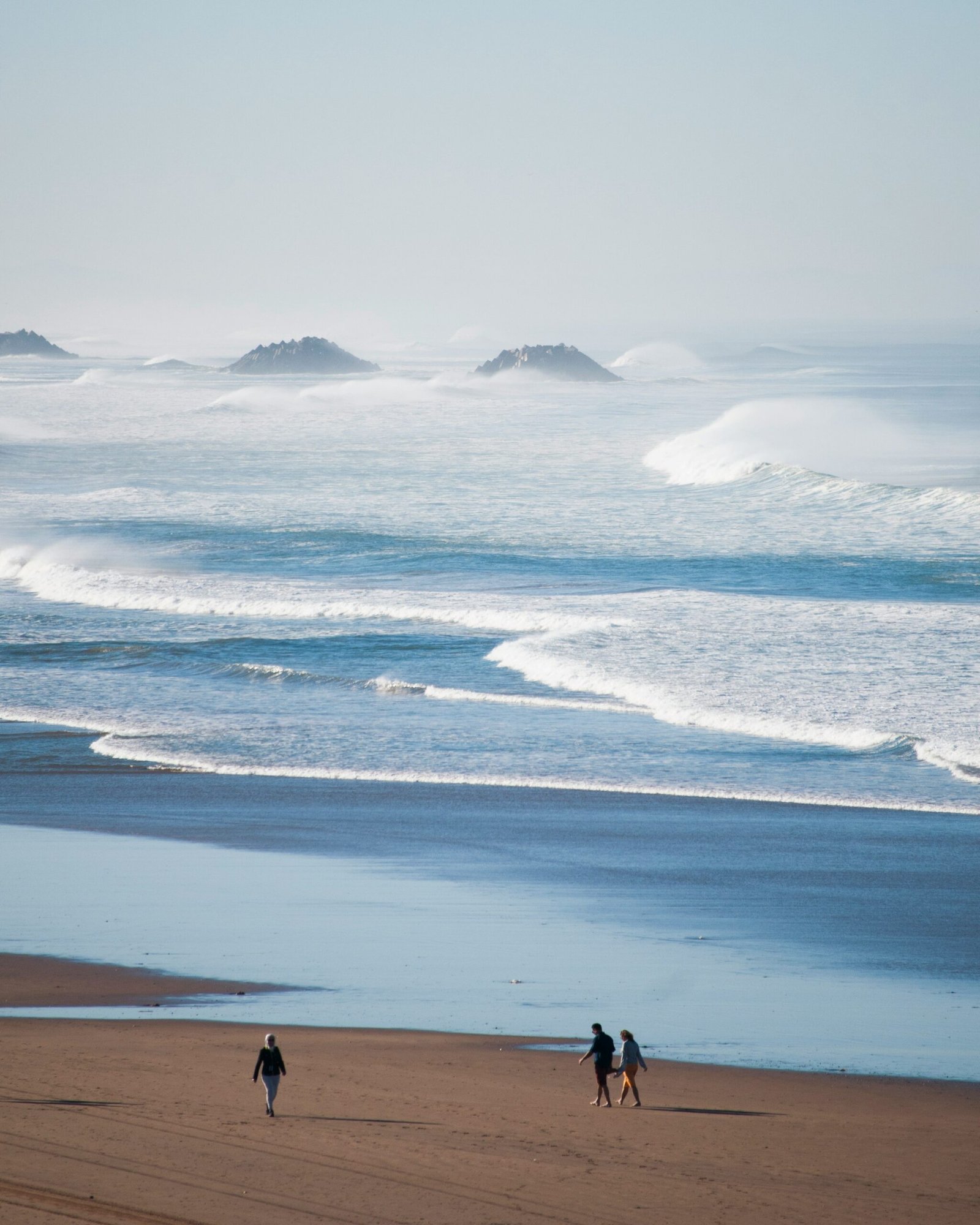
October to April is the main surf season — Atlantic storms generate consistent swells, waves are at their most powerful and varied, and temperatures are ideal for both surfing and yoga (20–25°C days, 15–18°C evenings). This is when the international community on the coast is most active and retreat programmes are running at full capacity.
February is the sweet spot for those who want strong surf and quieter retreats — after the Christmas-New Year peak but before the spring rush, with reliable swell and the coast at its most local. For what Morocco looks like at this time of year, see our yoga retreats in Morocco in February guide.
November to January brings the biggest waves — powerful Atlantic swells that advanced surfers travel specifically to find. Not ideal for complete beginners but excellent for those wanting to progress significantly.
May to September sees smaller surf in many areas, making it the best period for beginners who want to learn without being overwhelmed. Beach breaks remain consistent, water is warmest, and the coast is beautiful for non-surf activities.
By air: Agadir Al Massira Airport (AGA) is the primary entry point, with direct flights from London, Paris, Amsterdam, Brussels, and many other European cities on Ryanair, easyJet, Transavia, and Royal Air Maroc. Flight time from London is around 3.5 hours. Marrakech Menara Airport (RAK) is an alternative for those wanting to spend time in the city first — the drive from Marrakech to Taghazout takes around 2.5 hours.
Airport transfers: Most retreat centres arrange airport pickups from Agadir airport, typically included in the programme price or available at modest cost. Taghazout is 30–40 minutes from the airport; Imsouane is 90 minutes; Essaouira is 2.5 hours and most easily accessed via Marrakech.
Getting between villages: Grand taxis run between Agadir, Taghazout, and Tamraght. Imsouane is less well-served by public transport and usually requires a private taxi or car rental. Essaouira is accessible by CTM bus from Agadir (2 hours) or Marrakech (3 hours).
Do I need any surfing experience to join a retreat? No. The majority of surf-and-yoga retreats on the Morocco Atlantic coast are designed for complete beginners and provide structured instruction from day one. The beach breaks near Taghazout and Tamraght include consistently gentle waves suitable for first-timers, and qualified surf coaches are the standard rather than the exception. If you already surf, check the retreat description for whether the programme suits your level — some are beginner-specific, others mixed-level.
How does yoga help with surfing? More directly than most people expect. Core strength from yoga practice translates immediately to paddling power and stability on the board. Hip flexibility deepens the surf stance. Shoulder stability reduces the injury risk from paddling. Balance work on the mat accelerates standing on the board. And the body awareness developed through yoga means you respond to feedback from your own body faster — which is the fundamental skill that separates progressing surfers from those who plateau.
Is the Morocco Atlantic coast warm enough for surfing year-round? Yes, though a wetsuit is required. Water temperature ranges from around 17°C in winter to 22°C in summer — cold enough to require a 3–4mm wetsuit in the main surf season (October–April) but manageable year-round. Most retreat centres provide wetsuits as part of the programme. Air temperature is mild enough for comfortable outdoor yoga in all seasons.
Are these retreats suitable for solo women travellers? Yes — the surf-and-yoga culture on Morocco’s Atlantic coast is notably welcoming to solo women travellers, and several retreat centres are specifically women-led and women-focused. The retreat format creates community quickly, which means arriving alone does not mean feeling alone for long. Taghazout and Tamraght are small enough that personal security is rarely a concern; normal travel awareness applies.
How do I choose between Taghazout and Imsouane? Taghazout for variety, community, and beginner-to-intermediate surf across multiple breaks. Imsouane for the legendary long wave, genuine village quiet, and an experience more focused on a single extraordinary surf spot. Most people who go to Imsouane are specifically drawn by the wave; most who go to Taghazout want the full surf-yoga-community experience. Both are excellent — the choice depends on what you prioritise.
Your email address will not be published. Required fields are marked *