

June in Mexico is the beginning of the green season across the highlands and the Pacific coast, and the peak of the whale shark aggregation at Isla Mujeres. The rains that arrive in June transform the central Mexican landscape from the brown of the dry season to the intense green that the summer produces. The Yucatán coast is still managing its own weather pattern with less rain than the rest of the country. And the cultural calendar is building toward the July Guelaguetza in Oaxaca. A yoga retreat in Mexico in June rewards deliberate destination choice.


June is when Mexico’s two seasons become simultaneously visible. The highlands and the Pacific coast are entering the rainy season — the afternoon showers that green the landscape, cool the evening air, and structure the retreat day in ways that require honest programme design. The Yucatán coast has its own longer dry window. And the whale shark aggregation north of Isla Mujeres peaks from June through August, producing the largest concentration of the world’s biggest fish in a defined seasonal window.
Browse our full yoga retreats in Mexico guide for the complete picture of what the country offers year-round. For the global context of June retreat travel, our yoga retreats in June guide covers every destination worth considering this month.

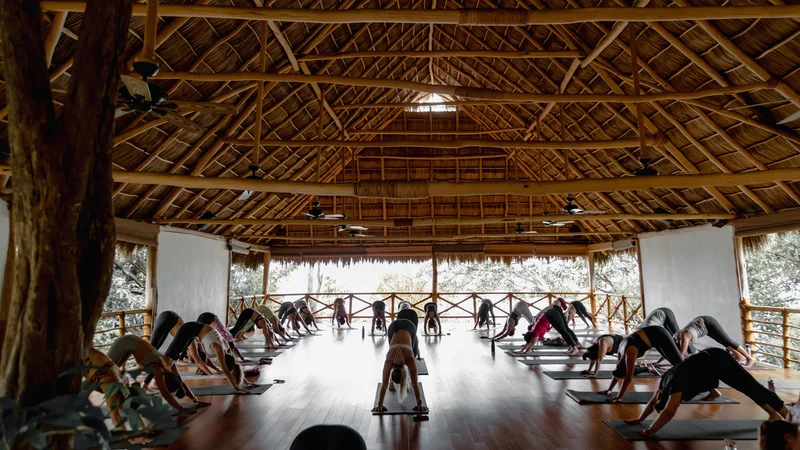

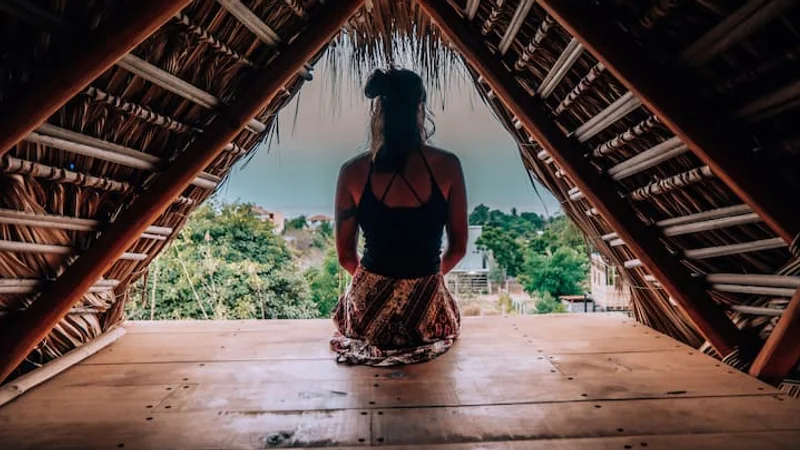
Isla Mujeres in June is at the beginning of the whale shark season’s peak — the aggregation that builds from February through May reaching its June intensity as the water temperature and the fish spawn conditions produce the highest concentrations of the season. The whale shark snorkelling tours from the island’s northern dock are in June running their most active schedule: multiple departures daily, the aggregation area reliably populated, and the encounters in the open Caribbean water producing the most consistent conditions of the season.
The island itself in June has the pre-summer character of a destination about to enter its own peak — the infrastructure fully operational, the prices below the July and August maximum, and the local community of fishermen and tour operators at their most concentrated before the tourist volume of high summer changes the island’s dynamic. The sunrise yoga sessions at the lighthouse point of the northern tip, with the open Caribbean visible in three directions, are the June Isla Mujeres practice moment that the retreat centres here specifically use.
Oaxaca in June is managing the first rains of the season alongside the building preparation for the July Guelaguetza. The afternoon showers — typically arriving between 3pm and 6pm and lasting one to three hours before clearing — structure the retreat day in Oaxaca’s favour: the morning practice, the market excursion, and the archaeological visits in the clear morning, the treatments and indoor sessions during the afternoon rain, and the cool clear evening for dinner at the outdoor market comedores.
The Guelaguetza rehearsals that began in May are in June at their most visible intensity — the dance groups from the eight Oaxacan regions rehearsing in the neighbourhoods, the costume workshops producing the regional dress that the July festival requires, and the specific energy of a city preparing its most important annual cultural statement. The Cerro del Fortín amphitheatre above the city — the venue of the Guelaguetza — is in June accessible for the morning run or walk that produces the best view of the Oaxacan valley and the mountains around it.
The mezcal harvest in the Oaxacan valleys — the agave espadin at its pre-harvest stage in some of the Miahuatlán and Sola de Vega producing areas — is in June visible at the roadside as the agave hearts are being cut and the piñas transported to the palenques. The June mezcal production is the beginning of the new cycle, and the retreat that visits the Matatlán corridor in June is seeing the production at its most active phase.
Puerto Vallarta in the green season — from June through October — is a completely different proposition from the dry season destination that January and February describe. The afternoon rains arrive daily, the humidity rises, and the jungle-covered hills above the city are in June at their most intensely green. The prices drop by 30-40% from peak season levels, the retreat infrastructure remains fully operational, and the Banderas Bay whale watching has ended for the season but the marine diversity of the bay shifts toward the summer species.
The La Cruz de Huanacaxtle marina and the Bucerias fishing village north of Puerto Vallarta — the less-developed northern Banderas Bay communities where the retreat centres that use the green season most intelligently are based — are in June producing the specific combination of the warm bay (28-29°C), the afternoon rain that cools the evening air to the point where outdoor dinner becomes pleasant, and the lush tropical landscape above the coastal road. The Huichol art markets of the Nayarit coast near San Blas — the Huichol (Wixáritari) yarn painting tradition that has developed into the most specific Mexican indigenous art form available commercially — are in June accessible without the dry season tourist traffic.
Mexico City in June is entering its temporada de lluvias (rainy season) — the afternoon thunderstorms that arrive from the mountains around the valley, often producing the most dramatically lit skies of the year as the cumulonimbus develop over the Popocatépetl and Iztaccíhuatl volcanoes to the southeast. The city in June has the specific quality of a metropolis that the summer rains make simultaneously more dramatic and more manageable — the smog that the winter temperature inversions produce is in June washed from the air by the afternoon rains, and the morning views of the volcanoes from Chapultepec and the rooftops of the Colonia Juárez have the clarity that the dry season lacks.
The Museo Nacional de Antropología — the greatest collection of pre-Columbian art and artefact in the world — is in June at its most accessible without the school group volume of the spring holidays. The Sala Mexica (the Aztec hall, with the Sun Stone/Aztec Calendar and the statue of Coatlicue among its centrepieces), the Sala Maya (with the Palenque tomb reconstruction and the Bonampak murals), and the Sala Oaxaca (with the Monte Albán grave goods) are all in June navigable at the reflective pace that the retreat context enables — an hour in a single room rather than the efficient coverage that the tour group format produces.
The Xochimilco chinampas — the ancient floating garden system south of Mexico City, the last functioning remnant of the Aztec agricultural tradition that once covered the entire Valley of Mexico lake system — are in June at their green season lushness, the canal waterways between the garden plots at their highest water level and the flowers on the chinampas at their June abundance.

The summer solstice at Mexican archaeological sites produces some of the most specifically astronomical events available in the retreat calendar. At Monte Albán near Oaxaca, the Building J — the arrow-shaped observatory structure that the Zapotec astronomers oriented to mark the rising of the star Capella at its heliacal rising, which coincided with the zenith sun passage at Monte Albán’s latitude — is on the solstice visible in the specific alignment that the builders intended. The June morning visit to Monte Albán around the solstice, with the awareness of the astronomical calendar that the Zapotec site is built around, is the retreat activity that connects the yoga practice of seasonal awareness to its most ancient and most precise cultural expression in the Mexican context.
At Teotihuacán near Mexico City, the solstice dawn draws thousands of white-clothed visitors to the Pyramid of the Sun for the sunrise ceremonies — an event that combines genuine astronomical timing with the specific new age spirituality that the site attracts. For retreat guests who want the solstice at Teotihuacán, arriving before dawn and ascending the pyramid before the crowds is the approach that produces the most specific rather than most crowded experience.
Corpus Christi — the Catholic feast celebrating the Eucharist, falling on the Thursday after Trinity Sunday (typically June) — is marked in some Mexican communities with the Danza de los Voladores (the Papantla Flyers ritual), in which five Totonac men climb a 30-metre pole and four of them descend in slow spiral flight, each making 13 revolutions around the pole as they descend — 52 total, representing the Mesoamerican calendar cycle. The Papantla town in Veracruz state and the El Tajín archaeological site nearby are the most culturally rooted venues for the Voladores; the performers at tourist sites in Mexico City and Oaxaca produce the same ritual but without the community context.
San Juan Bautista Day on June 24th is the feast of Saint John the Baptist — in Mexico, the day associated with the summer heat and the tradition of ritual bathing in rivers and springs at dawn. The water festivals associated with San Juan in the highland communities of Oaxaca and Chiapas have pre-Columbian roots in the rain-calling ceremonies of the agricultural calendar, the June 24th timing coinciding with the period when the first rains either arrive or are urgently needed depending on the year.
Elote — the fresh corn of the Mexican summer — begins appearing at the street stalls and markets in June from the first harvest of the warm lowland valleys. The elote con mayo, queso, chile, y limón (the corn cob covered in mayonnaise, cotija cheese, chilli powder, and lime — the street food preparation known internationally as Mexican street corn or esquites when served in a cup) is in June at its first-of-season freshness, the kernels sweet and milky from the June harvests of the Sinaloa and Nayarit coastal plains.
The esquites — the cup version with the corn kernels cut from the cob and dressed with the same mayo, cheese, chilli, and lime combination — is the June market stall and retreat kitchen ingredient that the dry season corn, which is dried and ground into masa, cannot replicate. The fresh corn season runs from June through October and the esquites at the Oaxaca and Mexico City markets in June is at its earliest and most specific.
Mamey sapote (Pouteria sapota) — the large oval fruit with the rough brown skin and the deep salmon-pink flesh, intensely sweet and with a texture halfway between an avocado and a sweet potato — reaches its summer peak in June and July from the Veracruz, Tabasco, and Chiapas producing areas. The mamey has a specific flavour combination of sweet potato, almond, and vanilla that makes it the most distinctively Mexican of the tropical fruits — the mamey licuado (blended with milk or water) is the June market drink that the fruit’s creaminess makes specifically good.
The first wild mushrooms of the rainy season begin appearing at the Oaxacan and highland Mexican markets in June. The xochicazahuatl (the cuitlacoche — the corn fungus that grows on the ears of corn during the rainy season, used in the Mexican kitchen as a filling for quesadillas and as a sauce) and the hongos de temporada (the wild seasonal mushrooms of the cloud forests and the pine-oak highlands) are June market arrivals. The cuitlacoche specifically — the corn truffle that grows when the rain hits the corn at the right stage — is a specifically green season ingredient with no dry season equivalent.


The whale shark snorkelling from Isla Mujeres in June is at the beginning of the peak aggregation — the largest number of whale sharks feeding simultaneously in the open Caribbean water north of the island. The June encounter is less managed than the August peak (when the tour operator protocols are at their most regulated) but the aggregation size is large enough to produce reliable sightings on every departure. The combination of the snorkelling in open blue water alongside animals of 8-12 metres requires the June preparation that the retreat context provides: the pranayama practice that makes open water breath management less stressful, the comfort with the ocean environment that the retreat’s daily sea time builds.
The Danza de los Voladores at El Tajín — the Totonac archaeological site in northern Veracruz where the ritual originates — is most authentic in the June Corpus Christi context. The El Tajín archaeological site itself (the Pyramid of the Niches, with its 365 individual niches representing the solar calendar days) is in June accessible without the dry season peak tourist volume, and the combination of the archaeological site and the Voladores ritual performed by the Totonac community who maintain both the site and the tradition provides the most culturally layered version of this experience.
The Xochimilco chinampas boat trip in Mexico City in June — renting a trajinera (the flat-bottomed decorated wooden boat) on the canals of the ancient floating garden system — is in June at its most lush. The chinampa gardens on either side of the canals are in June producing the first green season vegetables, the water level high from the first rains, and the axolotl (the critically endangered Mexican salamander that is endemic to the Xochimilco canal system) present in the deeper canal sections that the conservation projects maintain. The June Xochimilco visit without the weekend mariachi boat and the party atmosphere that Saturday afternoons produce — a Tuesday or Wednesday morning trip — is the most specifically agricultural and ecological version of the site.
Your email address will not be published. Required fields are marked *