

Burnout is often mistaken for a sign of dedication, but it is actually a signal that something needs to change. By learning to rest without guilt and honoring our need for recovery, we can restore balance, protect our well-being, and build a healthier relationship with work and productivity.


Burnout has become one of the most used words in conversations about work and wellbeing, and one of the least understood. It’s routinely conflated with stress, tiredness, and low motivation — conditions that a good night’s sleep or a long weekend can address. Burnout is something different, and recovering from it requires understanding what it actually is.



The World Health Organization classifies burnout as an occupational phenomenon resulting from chronic workplace stress that has not been successfully managed. Its three defining features are exhaustion, increased mental distance from one’s job, and reduced professional efficacy. It’s not sadness, not laziness, and not a personality failing. It’s a physiological and psychological state produced by sustained demand without adequate recovery.
Psychologist Christina Maslach, whose research forms the basis of most clinical understanding of burnout, identifies six mismatches between a person and their work environment as the primary drivers: workload, control, reward, community, fairness, and values. Burnout rarely results from working hard. It results from working hard in conditions where effort isn’t matched by recognition, autonomy, or meaning.
This distinction matters for recovery. If burnout were simply tiredness, rest would fix it. But someone who burns out in a job they find meaningless won’t recover by sleeping more. The conditions that produced the burnout have to change, and the physiological damage has to be addressed directly.
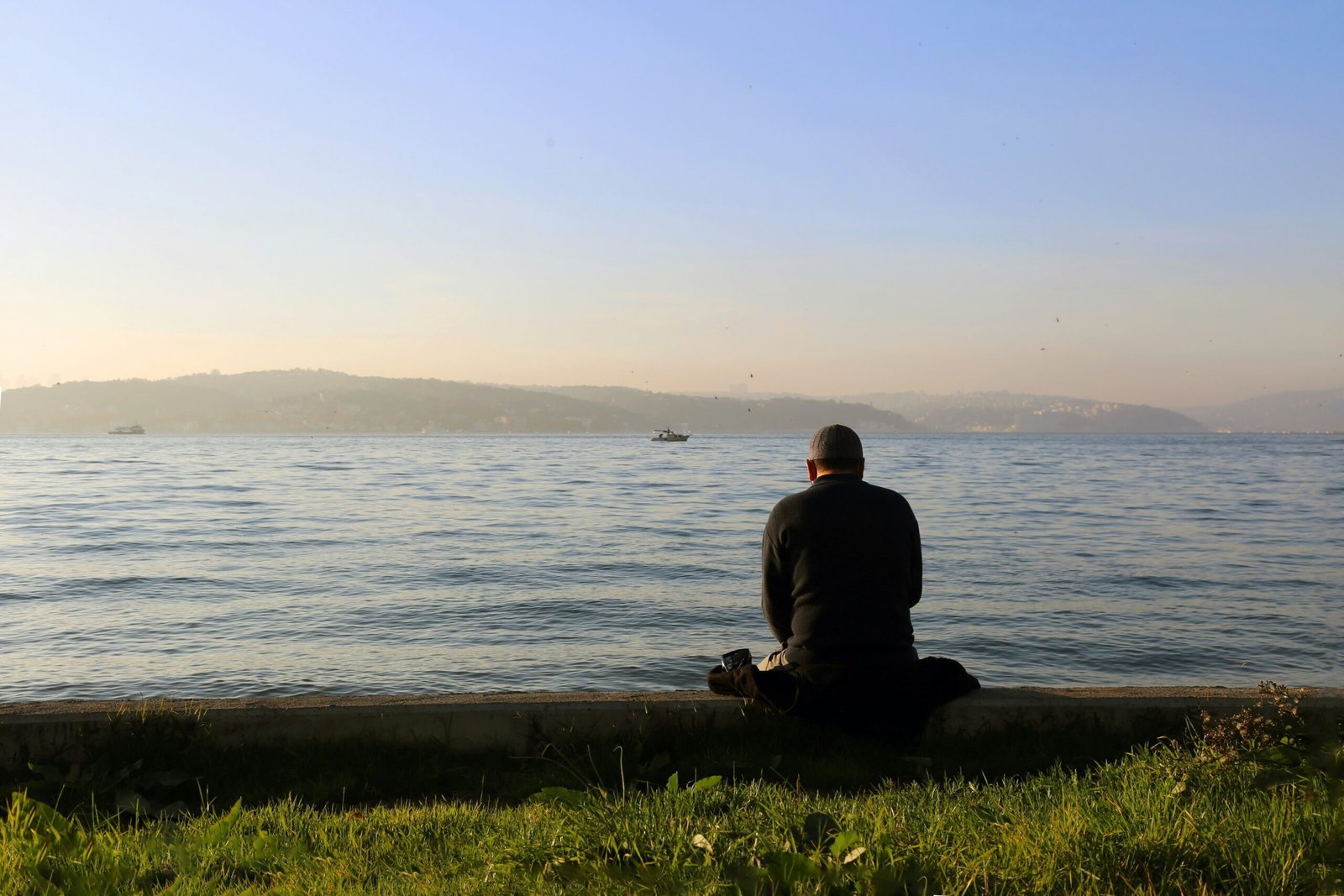
Rest is the body’s language for safety.
It’s when repair happens, hormones balance, creativity returns.
Yet most of us only rest when we collapse — instead of weaving pauses into our daily rhythm.
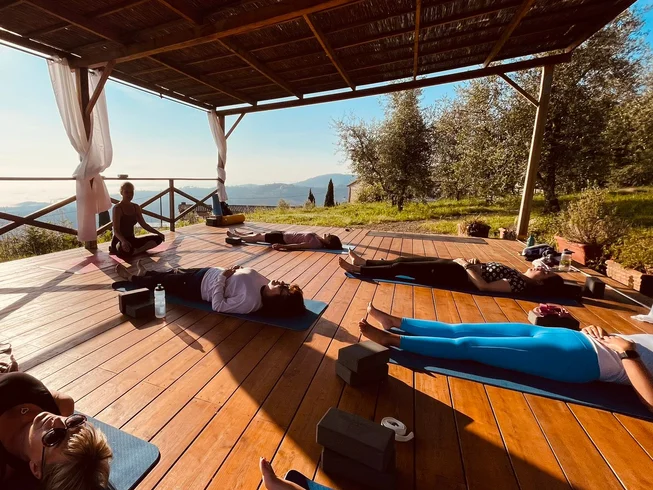
Yoga retreats in Portugal are specifically designed for this kind of nervous system recovery — small groups, slow pace, and the change of environment that willpower alone cannot produce. If cost is a concern, our guide to how much a yoga retreat actually costs covers the realistic range.
Burnout isn’t just a mental state. Its physical signature is well documented.
Chronic occupational stress maintains the hypothalamic-pituitary-adrenal axis in a state of sustained activation, producing persistently elevated cortisol. Over time, this disrupts sleep architecture, particularly the deep, slow-wave sleep where physical repair occurs. It suppresses immune function, increases systemic inflammation, impairs memory consolidation, and reduces the prefrontal cortex’s ability to regulate emotion and make complex decisions.
The result is a cluster of symptoms that people with burnout recognise immediately: difficulty concentrating, emotional blunting, physical exhaustion that sleep doesn’t resolve, increased susceptibility to illness, and a creeping inability to feel motivated by things that used to matter. These aren’t character flaws. They’re the predictable consequences of a nervous system that has been running in overdrive for too long.
Research has also found structural brain changes associated with burnout: reduced grey matter in the prefrontal cortex, changes in the amygdala’s reactivity, and altered functioning of the hippocampus. These changes are associated with reduced stress tolerance, impaired emotional regulation, and memory problems — and they’re reversible, but not quickly and not without adequate conditions for recovery.

The most common response to burnout is rest, and the most common experience of people who try to rest from burnout is that it doesn’t work — at least not immediately, and not in the forms of rest they attempt.
There are two reasons for this. First, the nervous system doesn’t downregulate automatically when external demands are removed. People in burnout often find that time off is filled with anxiety about not being productive, rumination about work problems, and an inability to actually be present in the rest they’re attempting. The pattern of hyperactivation that produced the burnout continues running internally even when the external trigger is removed.
Second, passive rest, watching television, scrolling, lying in bed, doesn’t restore what burnout depletes. Research on recovery from occupational stress distinguishes between activities that simply reduce activation and activities that actively restore psychological resources. The latter tend to involve experiences of mastery, control, and detachment from work, combined with genuine physical restoration of the nervous system.
This is why people return from two-week holidays feeling almost exactly as they did before they left. The holiday provided distraction. It didn’t provide recovery.
Burnout recovery research points to several conditions that appear consistently necessary.
Complete psychological detachment from work is the first. This means not checking email on holiday, not taking calls, not thinking about work problems. It sounds obvious; it’s vanishingly rare. Studies by Sabine Sonnentag and colleagues consistently find that the ability to psychologically detach from work during off-time is one of the strongest predictors of recovery and of resilience to future burnout.
Restoration of the nervous system’s capacity to regulate itself comes next. The practices that support this are the same ones that appear throughout research on stress and recovery: slow, rhythmic physical movement, time in natural environments, breathwork, and adequate sleep. None of these are exotic, but they need to be practiced consistently and in conditions where the nervous system actually feels safe enough to let go.
Addressing the conditions that produced the burnout is the third element, and the one most often skipped. Recovering physically and psychologically while returning to an unchanged work situation is a temporary fix. The workload, the relationships, the values alignment, whatever drove the exhaustion has to be examined and, where possible, changed.
Finally, time. Burnout doesn’t resolve in a week. Severe burnout can take six months to a year to fully recover from, even with good conditions. People who expect to feel restored after a short break and don’t tend to interpret this as a personal failure, which makes everything worse.
One of the most reliable features of burnout is the guilt that accompanies any attempt to rest. People who have built their identity around productivity and performance often find that rest feels not just uncomfortable but morally wrong — a form of laziness, selfishness, or weakness.
This guilt is worth examining directly, because it actively impedes recovery. The nervous system cannot downregulate under conditions of psychological threat, and for many high-achievers, not being productive constitutes a psychological threat.
The most useful reframe isn’t motivational. It’s factual: recovery is not the opposite of performance. It’s the physiological precondition for it. The evidence on this is unambiguous. Cognitive performance, decision-making quality, emotional regulation, and creative capacity all degrade under sustained stress and restore with adequate recovery. Athletes have known this for decades; most professional environments have been slow to apply it.
Resting when you’re burned out isn’t giving up. It’s doing the one thing that has a chance of making you functional again.
The environment in which recovery is attempted is not incidental. It’s one of the most significant variables.
Your ordinary environment is full of cues associated with work, responsibility, and the patterns of behaviour that produced the burnout. The desk, the notifications, the familiar route, the social expectations — all of these keep the nervous system primed in ways that make genuine downregulation difficult.
Changing environment disrupts these cues. A different physical space, particularly a natural one with reduced sensory stimulation, sends different signals to the nervous system and allows patterns of activation to interrupt more quickly than they do in familiar surroundings. This is part of why people who take genuine time away, not just a different working location but a genuinely different environment without professional obligations, often recover more in a week than they do in months of trying to rest at home.
For people in serious burnout, this isn’t an indulgence. It’s one of the most evidence-consistent decisions they can make.
Your email address will not be published. Required fields are marked *