
April in India is the month of transition — the north heating rapidly as the pre-monsoon temperatures build toward the May peak, and the south and the hill stations becoming the most logical retreat bases. The Kerala coast is still in its comfortable dry season. The Himalayan destinations are warming toward their summer accessibility. And Baisakhi on April 13th-14th marks the harvest in Punjab with the most energetically specific of the north Indian spring festivals. A yoga retreat in India in April requires knowing which part of the country to be in.


April divides India clearly: the Gangetic plain, Rajasthan, and the central plateau are heating rapidly toward the May-June pre-monsoon maximum, and the retreat guest who remains in these areas through April will find the outdoor programme increasingly compressed into the early morning hours. But the Kerala coast, the Karnataka highlands, the Himachal Pradesh hill stations, and the Uttarakhand valley retreats are in April still fully comfortable — and the reduced tourist pressure of the post-peak period produces the most affordable and most intimate retreat conditions of the southern season.
Browse our full yoga retreats in India guide for the complete picture of what the country offers year-round. For the global context of April retreat travel, our yoga retreats in April guide covers every destination worth considering this month.

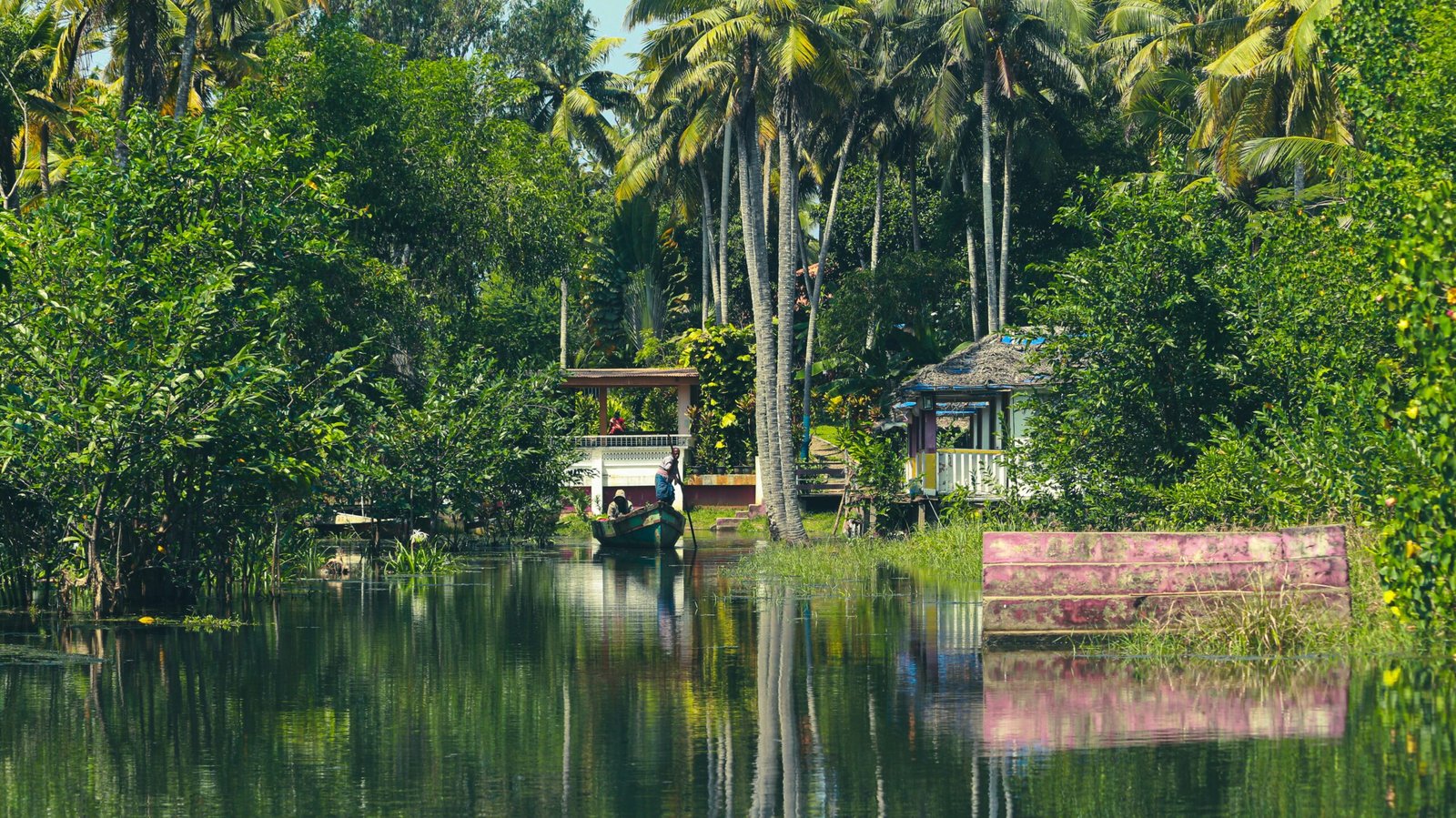
Kerala in April is at the final weeks of its dry season — the temperatures in Kovalam, Varkala, and the Alleppey backwaters at 28-34°C, still comfortable for the morning practice and the Ayurveda treatments before the May-June transition brings the southwest monsoon. The April Kerala retreat has the post-peak pricing (below January) and the pre-monsoon accessibility — the sea still calm, the backwater canals navigable, and the Ayurveda centres at their spring programme.
Wayanad — the highland district of northern Kerala at 700-2,100 metres, with the Banasura Sagar Dam, the Edakkal Caves (the prehistoric rock engravings), and the most specifically biodiversity-rich of the Kerala forest landscapes — is in April at the highland dry season that makes the trekking and the waterfall access most comfortable. The retreat centres of Wayanad use the plantation estate infrastructure (the tea and coffee estates of the highland cooperative farms) alongside the forest landscape in the same way that Coorg does in Karnataka.
Spiti Valley — the high-altitude cold desert in Himachal Pradesh at 3,800-4,500 metres, accessible from Manali via the Rohtang Pass (which opens in April-May depending on the snow conditions) or from Shimla via the Kinnaur valley (open year-round on the lower route) — is in April awakening from its winter isolation. The Key Monastery (Kibber Monastery, the largest monastery in Spiti, at 4,166 metres), the Tabo Monastery (with the 1,000-year-old murals described as the Ajanta of the Himalayas), and the Pin Valley National Park (the habitat of the snow leopard and the Himalayan ibex) are in April emerging from the winter stillness.
The Spiti April retreat is for the physically prepared and the logistically organised — the altitude requires acclimatisation, the road conditions in early April are still uncertain, and the retreat infrastructure in the remote valley is minimal by coastal India standards. But the high-altitude Buddhist monastery culture, the most dramatically arid of the Indian Himalayan landscapes, and the specific quality of a community that has maintained its practice in physical isolation for centuries produce an experience that the accessible destinations cannot approach.
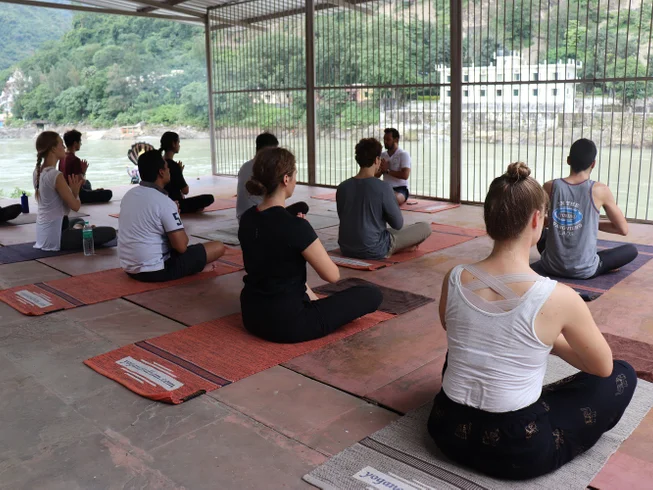
Rishikesh in April is at the post-festival season — the International Yoga Festival participants have gone, the winter ashram programmes are transitioning to their spring format, and the town has the specific quality of a spiritual community between its peak periods. The April Rishikesh is warmer than January-February (24-32°C) but still comfortable for the outdoor practice, and the Ganges in April is at its spring snowmelt volume — the river running fast and clear from the Himalayan winter melt, the water temperature warmer than the January glacier-cold.
Haridwar — 24 kilometres downstream from Rishikesh, the other great pilgrimage city of the Uttarakhand Ganges — is in April in the pre-Kumbh Mela quiet or the post-Ardh Kumbh recovery depending on the current year’s cycle. The Har Ki Pauri ghat aarti at Haridwar in April — the evening ceremony at the most sacred of the Ganges ghats, where the river is said to touch the feet of Lord Vishnu — is in April at its most intimate, without the festival-season crowd management that the Kumbh year produces.
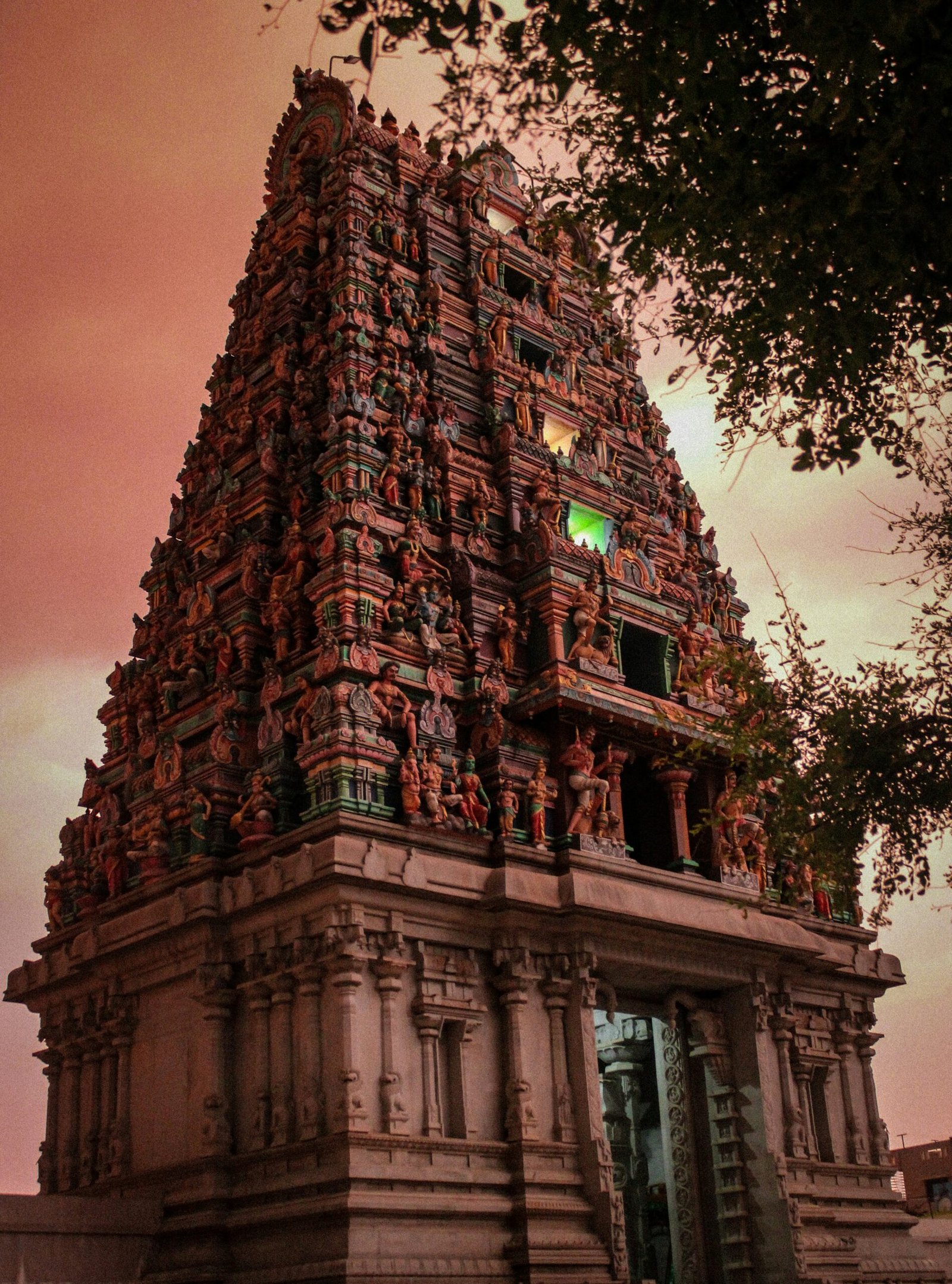
Tiruvannamalai — the Tamil Nadu temple town at the base of Arunachala (the sacred mountain considered by the Shaivite tradition to be a manifestation of Lord Shiva himself), where Ramana Maharshi spent his entire adult life from 1896 until his death in 1950 — is in April in the pre-monsoon season that makes the Arunachala circumambulation (the 14-kilometre girivalam walk around the mountain’s base) most accessible in the early morning cool. The Sri Ramanasramam (the ashram where Ramana Maharshi lived and taught, and where his samadhi and mother’s samadhi are the spiritual centres) is in April running its daily programme of the Veda parayana (Vedic chanting) and the ashram meditation for the visiting practitioners.
The Arunachala girivalam is performed barefoot on the path around the mountain’s base — the 14-kilometre circuit passing the Skanda Ashram (where Ramana first stayed), the Virupaksha Cave (his cave residence for 17 years), and the eight lingam shrines at the cardinal points around the mountain. The April girivalam in the early morning cool, with the Tiruvannamalai plain visible from the higher path sections, is one of the most specifically contemplative of all the Indian walking practices.
Baisakhi — the harvest festival of the Punjab, simultaneously the Sikh New Year (the anniversary of the founding of the Khalsa by Guru Gobind Singh in 1699) and the solar new year in the Hindu tradition of the north Indian states — is on April 13th-14th. The Baisakhi celebration at the Golden Temple in Amritsar, with the all-night kirtan (devotional singing), the langar (the free community meal served to all without distinction), and the Baisakhi procession through the streets, is the most specifically Sikh of the Indian festival celebrations. For retreat guests in the Punjab in mid-April, the Amritsar Golden Temple on Baisakhi morning — the golden exterior of the Harmandir Sahib reflected in the sarovar (the sacred pool), the Baisakhi crowd at the ghats for the ritual bath — is the most concentrated single spiritual experience available in north India in April.
Ram Navami — the birthday of Lord Rama, observed on the ninth day of the Chaitra month — falls in March or April depending on the lunar calendar. The Ayodhya celebrations (the birthplace of Lord Rama) and the Ram Navami processions at the major Rama temples across the country are the April Hindu festival calendar’s most widely observed event alongside Baisakhi.
Tamil New Year (Puthandu) — observed on April 14th in Tamil Nadu, with the new year dish (Pachadi) made from the six tastes (sweet, sour, bitter, pungent, salt, astringent) representing the balance of the coming year — is the South Indian new year alongside the Bengali Poila Boishakh and the Vishu of Kerala.
The mango season opens in Kerala and the southern states in April — the Alphonso (Hapus) from the coastal Maharashtra-Goa belt arriving at the April markets first, followed by the Neelam, Banganapalli, and Malgova varieties from the Tamil Nadu and Andhra orchards. The April Kerala retreat kitchen with the fresh mango from the local market — eaten ripe and unaccompanied, or in the mango pachadi (the Kerala sweet-sour-spicy mango relish with the coconut milk and the mustard tempering) — is accessing the most specifically seasonal of the Indian spring produce.
The Punjab lassi — the thick yogurt drink beaten with the lasi churner (the traditional wooden churner that the Punjab dairy tradition uses), sweetened with sugar or salted with black salt, and served in the tall clay tumbler — is in April at the Baisakhi season expression, the most abundant of the year. The langar (the Sikh community kitchen) food at the Golden Temple — the dal makhani, the chapati from the tandoor, and the kheer (the rice pudding) served to all visitors without charge at the Harmandir Sahib — is in April at its Baisakhi elaboration, the community kitchen at its most festive production.
The pongal (not the January harvest festival, but the rice-and-lentil dish that the name also refers to in everyday Tamil cooking) at the Tiruvannamalai ashram kitchens and the street restaurants of the temple town is in April the most specifically applicable of the South Indian sattvic dishes — the ven pongal (the savoury version with the ghee, pepper, and cashew tempering) at the ashram breakfast is the daily pre-practice meal of the Ramana Maharshi tradition.
The Golden Temple Baisakhi visit — arriving at the Harmandir Sahib complex in Amritsar on April 13th-14th, wading through the sarovar approach, entering the parikrama (the circumambulation walkway around the sacred pool), and sitting in the prayer hall with the live Gurbani kirtan (devotional music from the Sikh scriptures) performed continuously — is the most specifically spiritual of any April India activity. The langar kitchen at the Golden Temple complex serves 100,000 meals per day on normal days and significantly more on Baisakhi — the scale of the volunteer-operated community feeding being the most immediately extraordinary of any act of seva (selfless service) in India.
The Arunachala girivalam at dawn — beginning the 14-kilometre barefoot circumambulation of the mountain before 5am, arriving at the Virupaksha Cave section as the sun rises over the Tiruvannamalai plain, and completing the circuit before the April heat makes the return path uncomfortable — is the most specifically contemplative of all the Indian April outdoor activities. The girivalam is performed in silence or with the Om Namo Shivaya repetition that the Arunachala tradition maintains — the barefoot contact with the mountain path and the circumambulation of the sacred mountain in the pre-dawn dark is the practice that the Ramana tradition specifically endorses as the most direct form of engagement with Arunachala.
The Kerala backwater cooking boat — the day charter of a traditional kettuvallam on the Alleppey canal system, with the onboard cook preparing the Kerala fish curry, the prawn thoran, and the payasam from the market ingredients selected that morning — is in April at the post-peak pricing that January and February do not offer. The April backwater day is specifically the last comfortable window before the May-June monsoon changes the backwater experience entirely — the canal system calm, the rice paddy visible above the water level on both sides, and the April light on the coconut palms of the bank producing the most specifically Kerala of the retreat day activities.
Kerala (Kovalam, Varkala, Alleppey) is warming toward the pre-monsoon — 28-34°C in the day, the humidity rising as the southwest monsoon approaches. The Arabian Sea is still calm. The monsoon arrives in Thiruvananthapuram typically in late May or early June.
Rishikesh and the Uttarakhand foothills are at 24-32°C — warm and dry, the Ganges at snowmelt volume. The evenings are comfortable at 16-18°C.
Rajasthan is heating rapidly — 30-38°C in Jaipur, Jodhpur, and Jaisalmer. April is the last bearable month in the desert before the May pre-monsoon heat. Early morning and evening activities remain viable.
Tiruvannamalai and Tamil Nadu are at 28-36°C — the April pre-monsoon heat building toward May. Early morning girivalam essential before 7am.
Spiti is at 0-15°C depending on altitude — cold at the high passes, comfortable in the valley. Snow still possible at the higher monastery elevations.
Your email address will not be published. Required fields are marked *