

August in Mexico is the green season at full intensity — the rains have been falling for two months, the waterfalls are at their most powerful, and the highland forests are at their deepest green. The whale shark aggregation at Isla Mujeres is at its absolute peak.
The Pacific coast surf is producing its best summer swells. And the cultural calendar has the National Independence preparations building toward the September 15th celebrations. A yoga retreat in Mexico in August uses the season rather than managing it.


August is when the Mexican green season is fully established — the rains reliable and patterned, the landscape transformed, and the retreat infrastructure adapted to the summer rhythm. The afternoon rain that structures the day in June and July is in August the most consistent, the most dramatic in its thunderstorm form above the volcanic plateaus, and the most cooling after the midday heat. The destinations that use August well are those that have designed their programme around the rain rather than apologising for it.
Browse our full yoga retreats in Mexico guide for the complete picture of what the country offers year-round. For the global context of August retreat travel, our yoga retreats in August guide covers every destination worth considering this month.

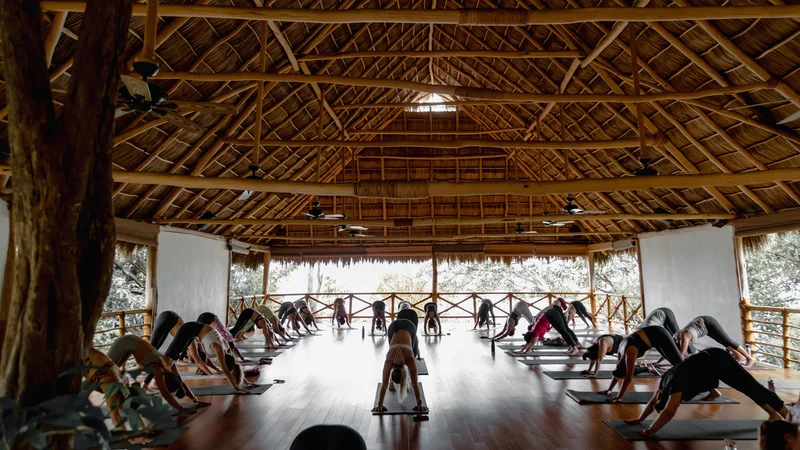
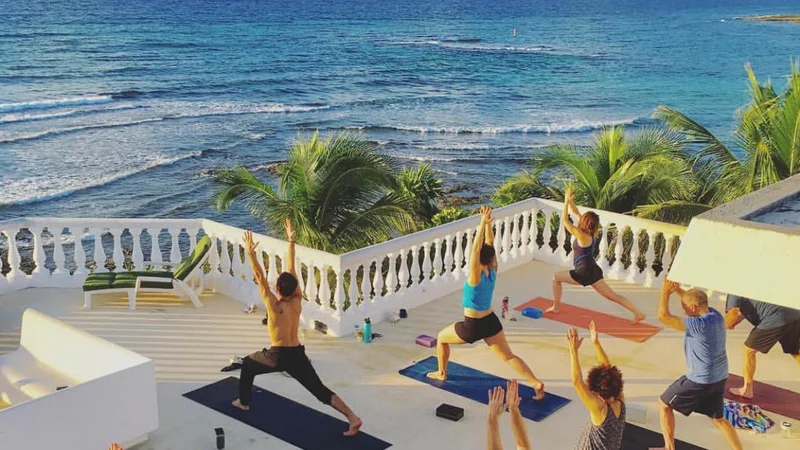
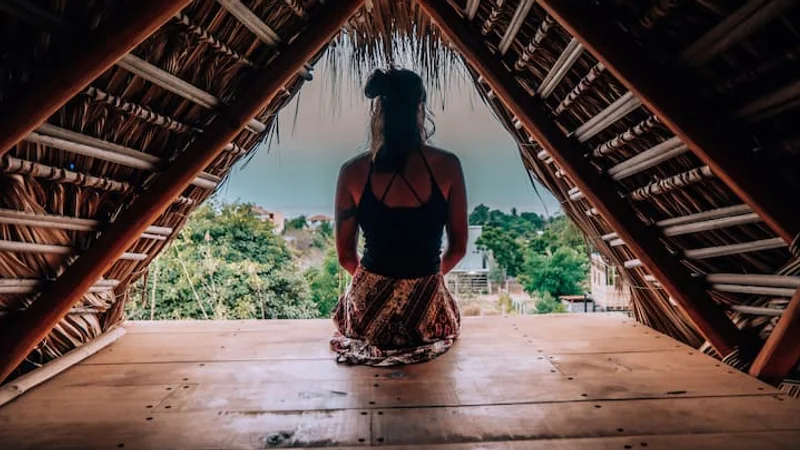
Holbox — the car-free island on the northern tip of the Yucatán, separated from the mainland by the shallow Yalahau Lagoon — is in August at the peak of its whale shark season. The whale sharks that aggregate in the Yum Balam biosphere reserve waters north of Holbox are in August at their highest concentration of the season, and the tours from the Holbox dock into the open Yucatán Channel produce the encounters with the largest aggregations available in Mexico in this month. The island’s specific character — no cars, unpaved streets, the pink flamingo colony in the lagoon visible from the beach, and the bioluminescent plankton in the water at night — makes Holbox specifically different from the Isla Mujeres whale shark experience, and August is when both are at their peak simultaneously.
The retreat centres on Holbox are small and specifically oriented toward those who chose the island’s remoteness deliberately. August on Holbox has the green season humidity — the air thick and warm — but the lagoon and the Gulf breezes moderate it in a way that the enclosed valleys of the highlands cannot. The hammock culture of Holbox, where the traditional sleeping furniture is available at every accommodation, is specifically appropriate in August — the airflow through a hammock in the Holbox night breeze is more comfortable than any air-conditioned room at the same latitude.
Veracruz state in August is the green season at its most dramatic — the Sierra de los Tuxtlas volcanic range in the south of the state at its most intensely forested, the rivers running at full volume, and the Cascada de Eyipantla (the 50-metre cascade that has been used as a filming location for multiple Mexican films) at its most powerful. The Tuxtlas jungle is one of the last remnants of the tropical rainforest that once covered the Gulf coastal plain, and in August it is producing the bird diversity and the amphibian activity that the dry season suppresses.
Xico — the small town in the central Veracruz highlands, accessible from Xalapa, that produces its own regional mole and has the Cascada de Texolo visible from the canyon overlook above the town — is in August at its green season best: the waterfall at maximum volume, the coffee gardens above the town in their full green season production, and the town’s annual Feria (the fiesta of Santa María Magdalena in late July through early August) producing the most specifically Veracruz highland festive culture of the year.
Puerto Escondido in August is at the peak of the Pacific south swell season — the swells generated in the Southern Ocean that travel north along the Pacific coast reaching the Zicatela beach in August at their maximum size. The Puerto Escondido Surf Festival (if it falls in August — the dates vary annually) brings the international surfing community to Zicatela for the biggest wave conditions of the year. For retreat guests who surf at the intermediate to advanced level, August Puerto Escondido at Zicatela is one of the most powerful beach breaks in the world at its seasonal maximum — specifically not for beginners, but specifically extraordinary for those who can use it.
The La Punta neighbourhood south of Zicatela, with its more manageable point break, is in August at the combination of the warm 27-28°C sea and the afternoon thunderstorms that produce the most dramatic skies of the Pacific year. The retreat programme that uses the morning for yoga and the pre-rain morning surf, and the afternoon thunderstorm as the signal for the indoor restorative session, is using August Puerto Escondido at its most honest and most rewarding.
Querétaro — the colonial capital of the state, three hours north of Mexico City, with the most intact colonial aqueduct in Mexico and the UNESCO-listed historic centre — is in August at its green season best: the temperatures of 22-26°C, the surrounding agricultural plateau producing the summer crops, and the Sierra Gorda biosphere reserve in the north of the state at its most accessible for the waterfall and cave circuits that the rainy season fills.
The Sierra Gorda — the most biologically diverse region in Mexico, where five different ecological zones converge in the mountain range north of Querétaro city — is in August producing the most dramatic waterfall flows of the year at the Chuvejé and Puerta del Cielo cascades, and the cave systems of the Sótano del Barro (the world’s largest natural shaft by volume) and the Sótano de las Golondrinas are in August accessible by the guided tours that the season makes most active.
The five Franciscan missions of the Sierra Gorda — the 18th-century baroque churches at Jalpan, Landa, Tilaco, Tancoyol, and Concá, collectively a UNESCO World Heritage Site — are in August accessible by the highland road that passes through the most dramatic green season landscape in this part of Mexico. The mission churches combine the Baroque architectural tradition with the indigenous Pame and Chichimec decorative vocabulary in a way that has no equivalent in Mexican religious art.

La Asunción de María — August 15th — is celebrated in many Mexican communities as a major religious festival, particularly in the states of Oaxaca, Guerrero, and Hidalgo where the indigenous communities have integrated the Assumption feast with their own pre-Columbian agricultural calendar. In the Mixtec communities of the Oaxacan highlands, the August 15th celebrations combine the Catholic feast with the blessing of the seeds for the second planting cycle of the rainy season.
The preparations for the September 15-16 Independence celebrations are visible throughout August — the streets being decorated with the green-white-red bunting, the markets producing the patriotic confectionery and the paper-mâché chiles en nogada representations, and the rehearsals for the Grito de Independencia (the midnight independence cry from the presidential balcony of every municipal palace in Mexico) visible at the town squares from mid-August onward.
The Chalma pilgrimage in Malinalco, State of Mexico — one of the most important Catholic pilgrimage sites in Mexico — receives its largest annual influx of pilgrims in August around the Assumption feast. The pilgrimage tradition involves walking from the distant towns to the Chalma sanctuary, some pilgrims completing journeys of several days on foot. For retreat guests based in the State of Mexico or Morelos, the Chalma pilgrimage route in August is the most specifically Mexican Catholic-indigenous devotional landscape visible in this month.
Chiles en Nogada — the most specifically Mexican of all dishes, prepared only in August and September from the seasonal coincidence of the poblano chile, the walnut, and the pomegranate that together produce the green, white, and red of the Mexican flag — is the quintessential August retreat kitchen ingredient. The dish: the large chile poblano roasted and peeled, filled with picadillo (the minced meat or vegetarian equivalent mixture with fruits, spices, and nuts), covered with the nogada (the walnut cream sauce made from fresh walnuts that are only available green in August and September), and decorated with pomegranate seeds and parsley in the flag colours.
The fresh walnut (nuez de Castilla, Juglans regia) that the nogada requires is available only in August and September — the green walnut picked before the shell hardens, the inner nut soft and milky, producing the specific creamy white sauce that dried walnuts cannot replicate. The chile en nogada season is August and September; attempting the dish outside this window requires dried walnuts and lacks the specific creamy texture and the mild flavour that the fresh nut produces. The retreat kitchen that serves chiles en nogada in August from the Puebla-region ingredients is providing the most calendar-specific of any Mexican dish.
The wild mushroom season in Mexico’s highland forests is in August at its peak — the hongos de lluvias (rain mushrooms) appearing at the Oaxacan, Michoacán, and Estado de Mexico markets in their full August variety. The hongo blanco (Tricholoma magnivelare, the Pacific golden chanterelle that grows in the pine forests above 2,500 metres), the huitlacoche (corn fungus, still in production from the July-August corn fields), and the clitocybe varieties from the oyamel fir forests above Toluca are all August market ingredients that the retreat kitchen in the highlands uses as the weekly centrepiece.
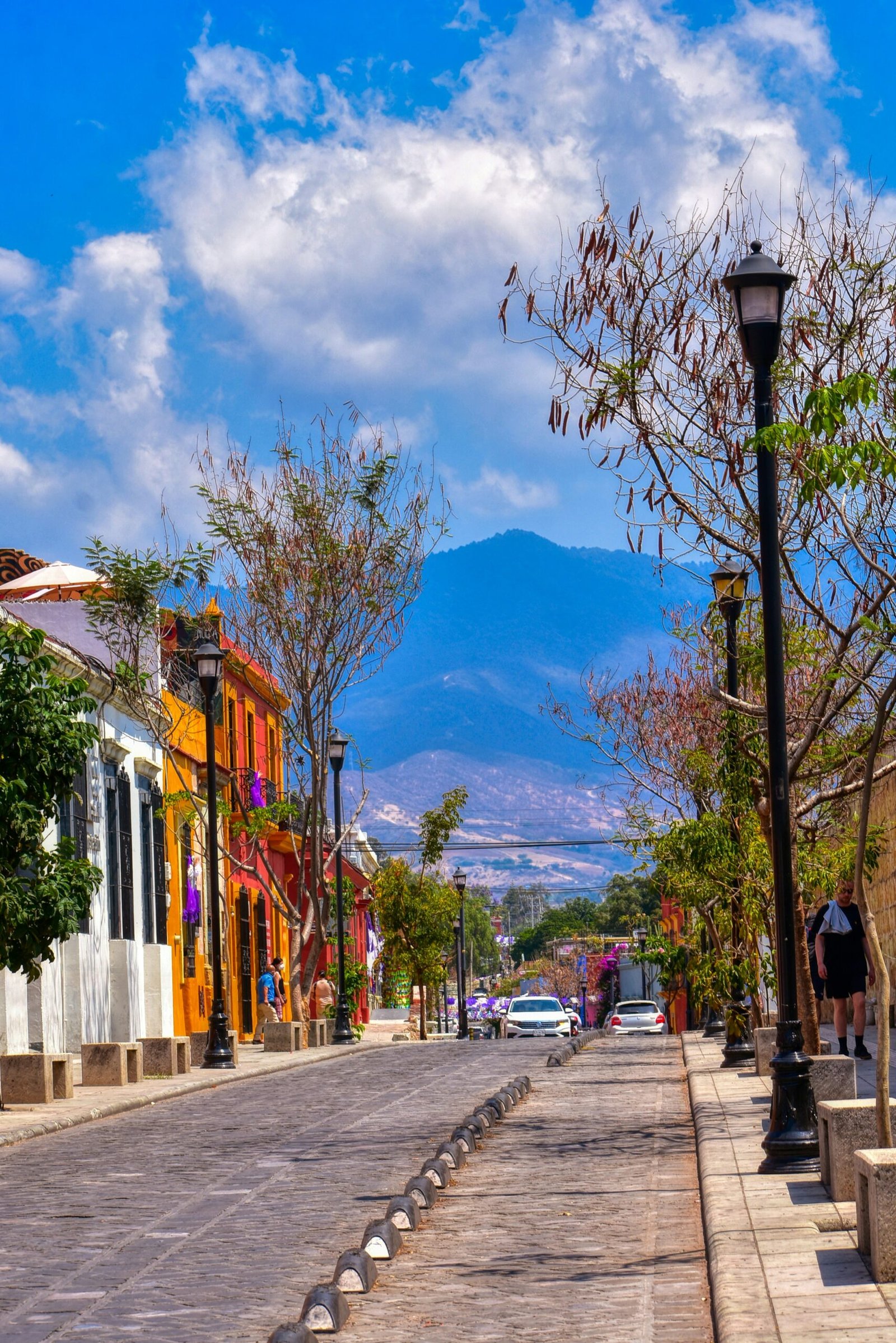
Tejate — the pre-Columbian drink of the Oaxacan Zapotec tradition, made from toasted maize, cacao, and the mamey sapote seed (which provides the specific fatty texture that no other ingredient replicates), ground on the metate stone and beaten by hand until the froth forms — is in August the most culturally specific August food experience available in Oaxaca. The tejate is served cold from the clay vessels at the market stalls, the white froth floating above the dark liquid, and the flavour combining the earthiness of the toasted corn with the bitterness of the cacao and the specific fatty note of the mamey seed. The tejateras (the women who make and sell tejate) at the Oaxacan market have been preparing the drink by the same method since before the Spanish arrived.
The August whale shark aggregation north of Holbox and Isla Mujeres is the largest wildlife aggregation of its kind in the world — hundreds of whale sharks feeding simultaneously on the surface, the aggregation visible from the boat before entering the water. The snorkelling encounter at the August peak involves being in open blue Caribbean water with multiple whale sharks visible simultaneously, the animals ranging from juvenile 5-6 metre individuals to the adult 10-12 metre females that the aggregation attracts. The tour operators from both islands manage the encounter with strict protocols (no touching, no chasing, minimum approach distance) that the volume requires — the August experience is the most managed of the season but also the most awe-producing.
A cooking class specifically focused on chiles en nogada in Puebla in August — visiting the Mercado El Alto for the fresh walnuts, the poblano chiles, and the pomegranates before returning to the kitchen for the full preparation — is the most seasonally specific cooking class available in Mexico at any time of year. The dish requires a full morning to prepare correctly: the chile roasting and peeling, the picadillo preparation with its specific combination of fresh and dried fruits, and the nogada beating until the cream forms. At a Puebla cooking school in August, the chiles en nogada class is the school’s most attended and most celebrated offering of the year.
The Sierra Gorda waterfall circuit from Querétaro city in August — the Chuvejé cascade at full rainy season volume, the Puerta del Cielo canyon accessible by the wet season trail, and the hummingbird diversity of the biosphere reserve at its August peak (over 30 species recorded in the reserve, the most of any protected area in Mexico) — is the August Querétaro retreat activity that uses the rainy season as an asset rather than an obstacle. The waterfalls in August at full volume are the biological argument for the rain.
Your email address will not be published. Required fields are marked *