
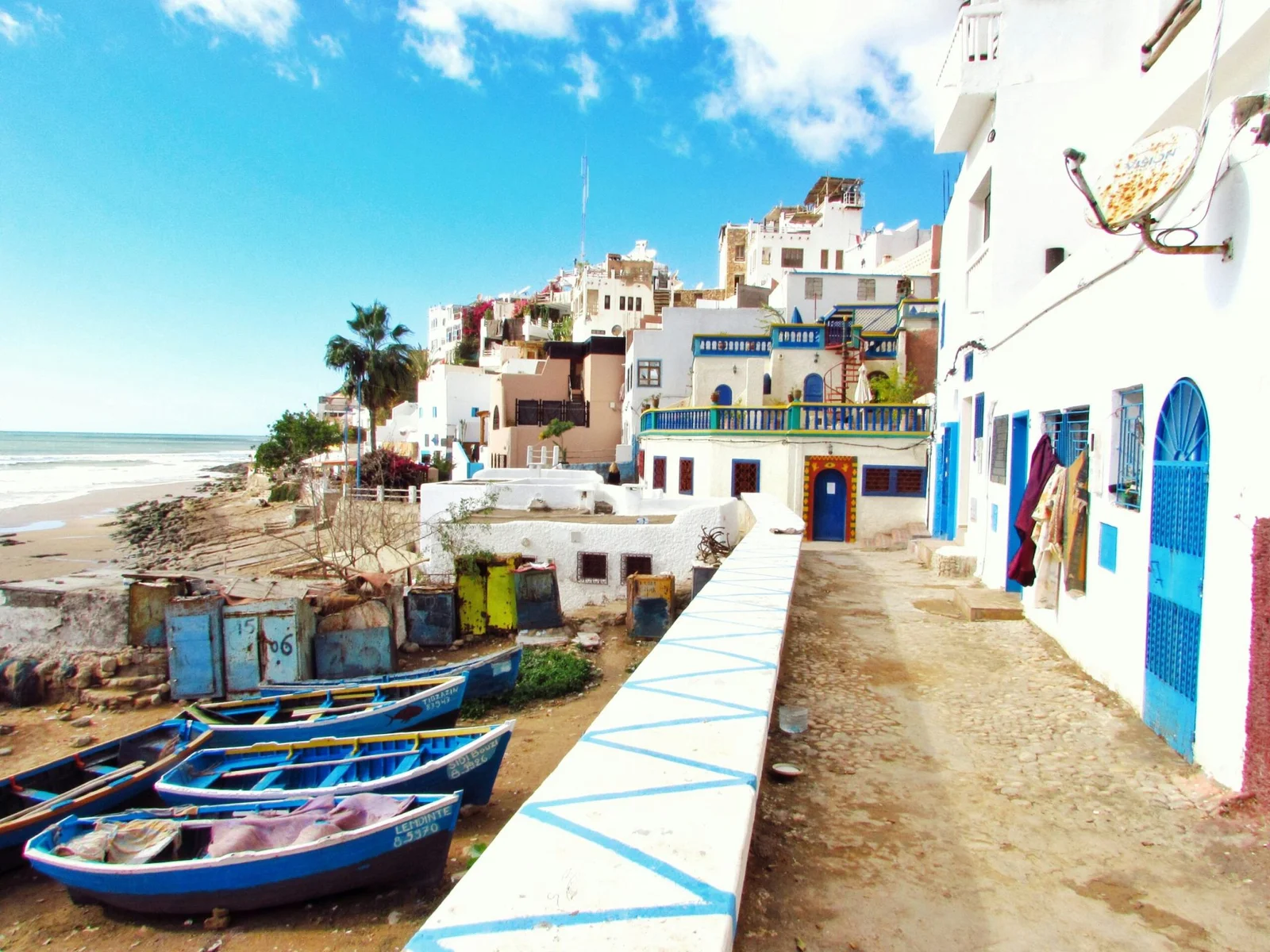
August is Morocco at its most intense: the hottest month, the busiest coast, the peak of summer energy, and, if the Islamic calendar aligns, Aïd al-Adha — the country’s most important celebration, turning every neighbourhood into a collective feast. Go to the right place and August is magnificent. Go to the wrong one and you’ll spend your retreat looking for shade.


August is the month when Morocco’s geographic split is most extreme. Marrakech regularly hits 42-46°C — some years higher. The Sahara is essentially closed for outdoor practice. But Essaouira sits at 21-23°C on the Atlantic breeze, the High Atlas above 2,000 metres rarely exceeds 28°C, and the northern coast and Rif offer genuine summer cool.
The choice you make about where to go in August matters more than in any other month. Our full Morocco retreat guide covers every region to help you make the right call.
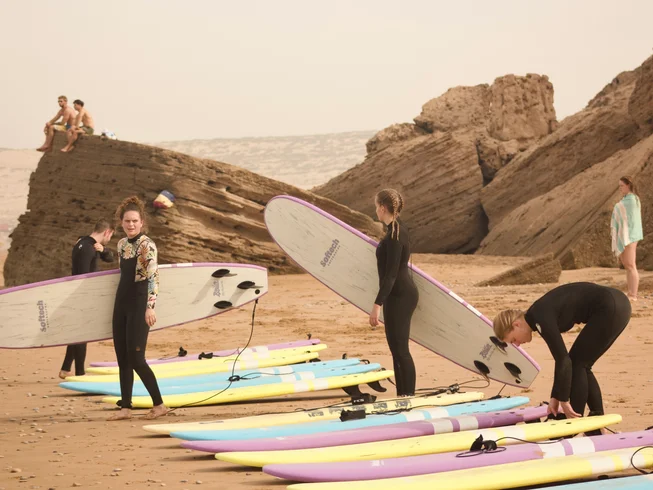
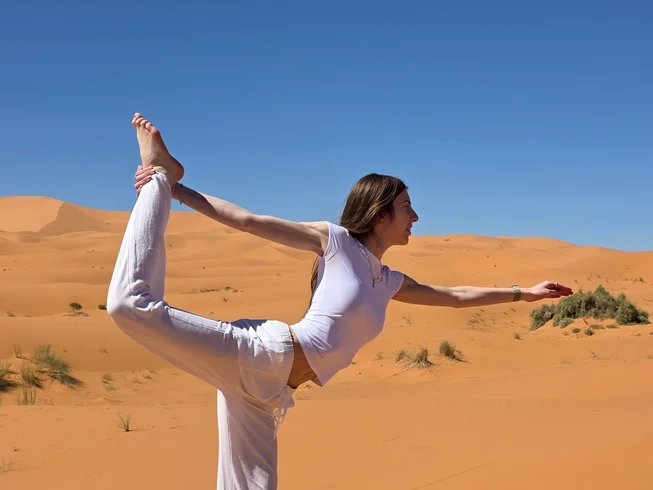
Essaouira in August is at its most alive — and still the coolest town in Morocco. The Alizé winds reach their annual peak intensity in August, which means kitesurfers from across the world converge on the beach south of the medina for what is considered one of the best kitesurfing conditions anywhere in Africa. The town is fuller than in winter but the beach is long enough to absorb the crowd, the medina lanes are too narrow for it to overwhelm, and the evening promenade along the Skala de la Ville ramparts — watching the Atlantic light fade behind the cannons — is one of Morocco’s finest free pleasures at any time of year.
For yoga retreat guests, August Essaouira means morning practice before the wind picks up (the Alizé typically builds from late morning), afternoons watching the kitesurfers from the clifftop or exploring the medina craft workshops, and evening yin on a rooftop terrace as the temperature drops to a comfortable 18°C. Our Essaouira retreat guide covers the town in full detail. The argan cooperative visits that are available year-round take on an extra dimension in August as the argan harvest approaches — the trees heavy with fruit, the cooperatives preparing for the pressing season.
August is the month the High Atlas fully opens. All trails, all passes, and all routes that were snow-covered or dangerously icy in winter are accessible in August. The Toubkal massif — the cluster of peaks around North Africa’s highest summit — is at its most crowded in August but also at its most accessible: guided ascents running daily from Imlil, the mountain huts at capacity, and the trails between villages busy with trekkers and local families using the mountain paths they have always used.
Above 3,000 metres, temperatures in August rarely exceed 20°C. The summer air at altitude has a clarity and thinness that produces a quality of morning practice unlike anywhere at sea level: the breath more visible, the effort more conscious, the views — the High Atlas ridgeline, the distant Saharan plain to the south — earned rather than given. Retreat centres based in Imlil and the Ourika Valley run their longest and most ambitious programmes in August, combining daily yoga with multi-day trekking circuits between mountain villages.
Asilah is one of Morocco’s most overlooked summer destinations and the best argument for going north rather than south in August. A small fortified Portuguese town on the Atlantic coast 45 kilometres south of Tangier, Asilah hosts the International Cultural Moussem in August — a month-long arts festival that transforms the medina walls into outdoor gallery space, with artists from across the world painting murals directly onto the whitewashed walls of the old town. The festival has been running since 1978 and the cumulative effect of forty-plus years of rotating murals makes Asilah’s medina one of the most visually extraordinary in Morocco.
Temperatures in Asilah in August are 25-28°C — the Atlantic breeze keeping it manageable even in the hottest weeks. The beach north of the town is one of Morocco’s finest: wide, clean, and uncrowded by the standards of the more popular southern resort beaches. Retreat infrastructure is limited but the handful of riad guesthouses operating there offer a genuine alternative to the Essaouira-Agadir axis that dominates August Morocco retreat planning.
Ouarzazate in August is hot — 36-40°C — but it is a dry heat rather than the humid suffocation of coastal summer elsewhere in the world, and in the evenings the temperature drops to a surprisingly comfortable 22-25°C. The kasbah town at the gateway to the Sahara has an austere, cinematic beauty (it has served as location for Gladiator, Game of Thrones, Lawrence of Arabia, and dozens of other productions) that the heat does not diminish. The Ksar Aït Benhaddou, the UNESCO-listed fortified village 30 kilometres northwest, glows in the August light in colours that the spring and winter sun cannot produce.
For yoga, Ouarzazate in August means pre-dawn practice before the heat, hammam in the afternoon, and the particular quality of an evening practice as the kasbah walls cool and the Draa Valley below the town takes on the deep orange tones of the setting sun. It is not comfortable in the way Essaouira is comfortable, but it is genuinely extraordinary in a way that few Morocco retreat locations in any month can claim.
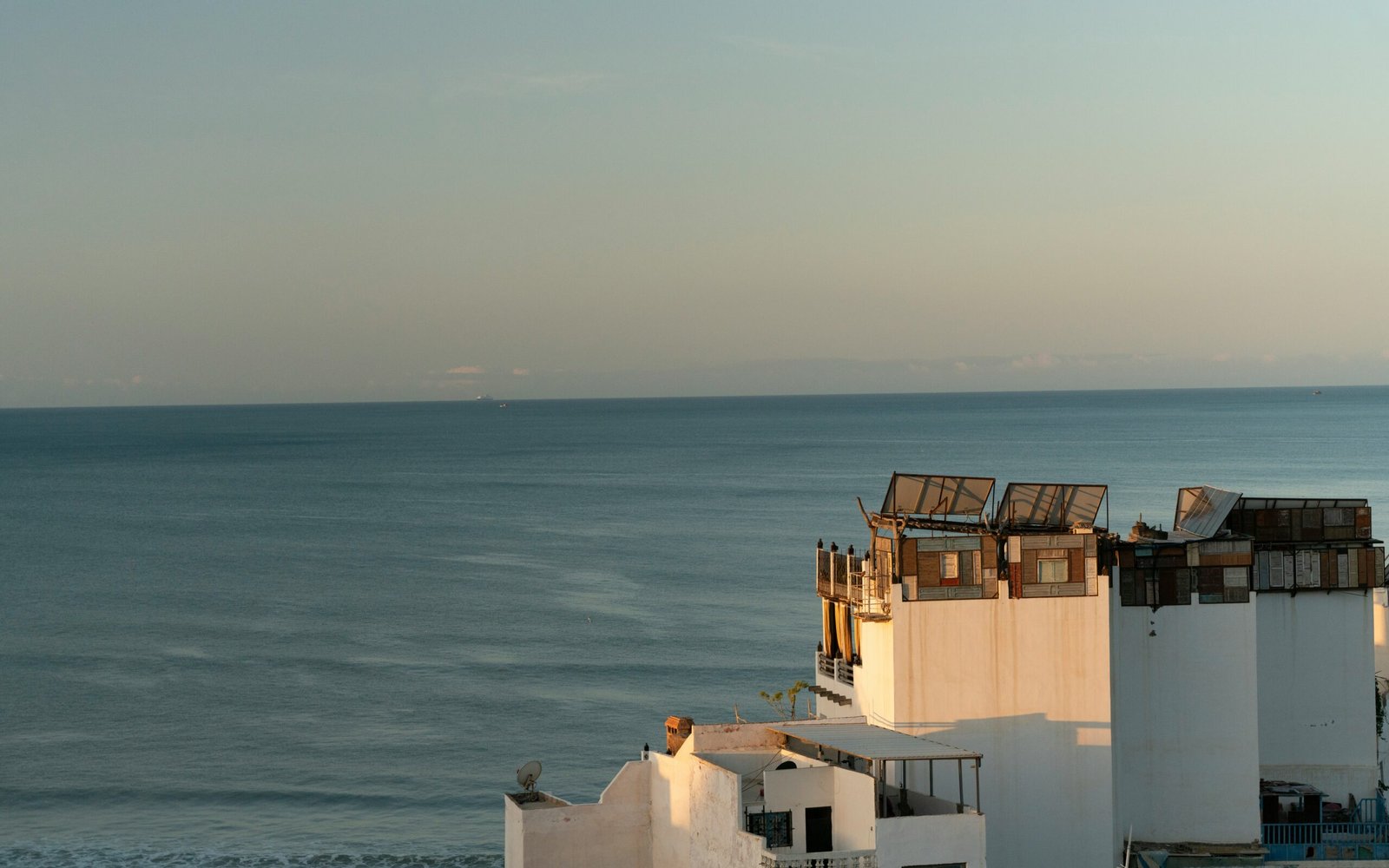
Some programs specifically work with the heat. Desert retreats for people seeking intensity. Programs incorporating traditional Moroccan summer survival wisdom—specific foods, hydration practices, the art of moving slowly and resting strategically. These aren’t for everyone, but they offer something unique.
Fresh figs are the August food and they are everywhere. Black figs from the Atlantic coastal farms, green figs from the inland orchards, and the dried figs from the Tafilalt oasis that are already being prepared for winter consumption — August is the peak of the Moroccan fig calendar. Eaten fresh with argan oil drizzled over, with a piece of fresh goat cheese from an Atlas dairy, or simply out of hand from a paper cone bought at the market, the Moroccan fig in August has a sweetness and depth that the imported varieties sold year-round in European shops cannot replicate.
The first table grapes from the Meknes and Beni Mellal vineyards appear in August. Morocco’s Meknes wine region, one of the most productive in Africa and producing increasingly serious wine as well as table grapes, begins its harvest in late August in the hottest years. The grape varieties grown — Muscat, Grenache, and traditional Moroccan varieties — produce table fruit with a richness that reflects the long, hot growing season.
Mechoui — whole slow-roasted lamb cooked in a pit in the ground — is the ceremonial dish of Aïd al-Adha and appears across Morocco during the festival in quantities that are genuinely staggering. Every household that can afford it slaughters a lamb; the smell of roasting meat fills every neighbourhood from early morning for three days. Eating mechoui during Aïd, ideally with a Moroccan family or at a traditional restaurant that serves it during the festival, is one of the most culturally specific food experiences Morocco offers. The meat, cooked for hours in a sealed clay pit over charcoal, has a tenderness and smokiness that the festival timing makes irreplaceable.
Watermelon continues from July at peak ripeness and peak sweetness. By August the fruit has been growing through the hottest weeks of the year and the flesh is darker, sweeter, and colder from the well water used for irrigation. The watermelon sellers in Marrakech in August, splitting fruit open to show the colour before you commit to a wedge, are doing the most honest retail transaction available in the medina.
August seafood on the Atlantic coast is at its summer peak. The octopus caught off Essaouira and Agadir is in full season: grilled on charcoal at the port stalls, served in tagines with preserved lemon, or dried in the sun on racks at the harbour in the traditional manner before being sold to restaurants. Fresh tuna appears from late August as the Atlantic tuna migration moves south — served grilled with chermoula at port restaurants, it is one of the more impressive things the Moroccan coast produces in summer.
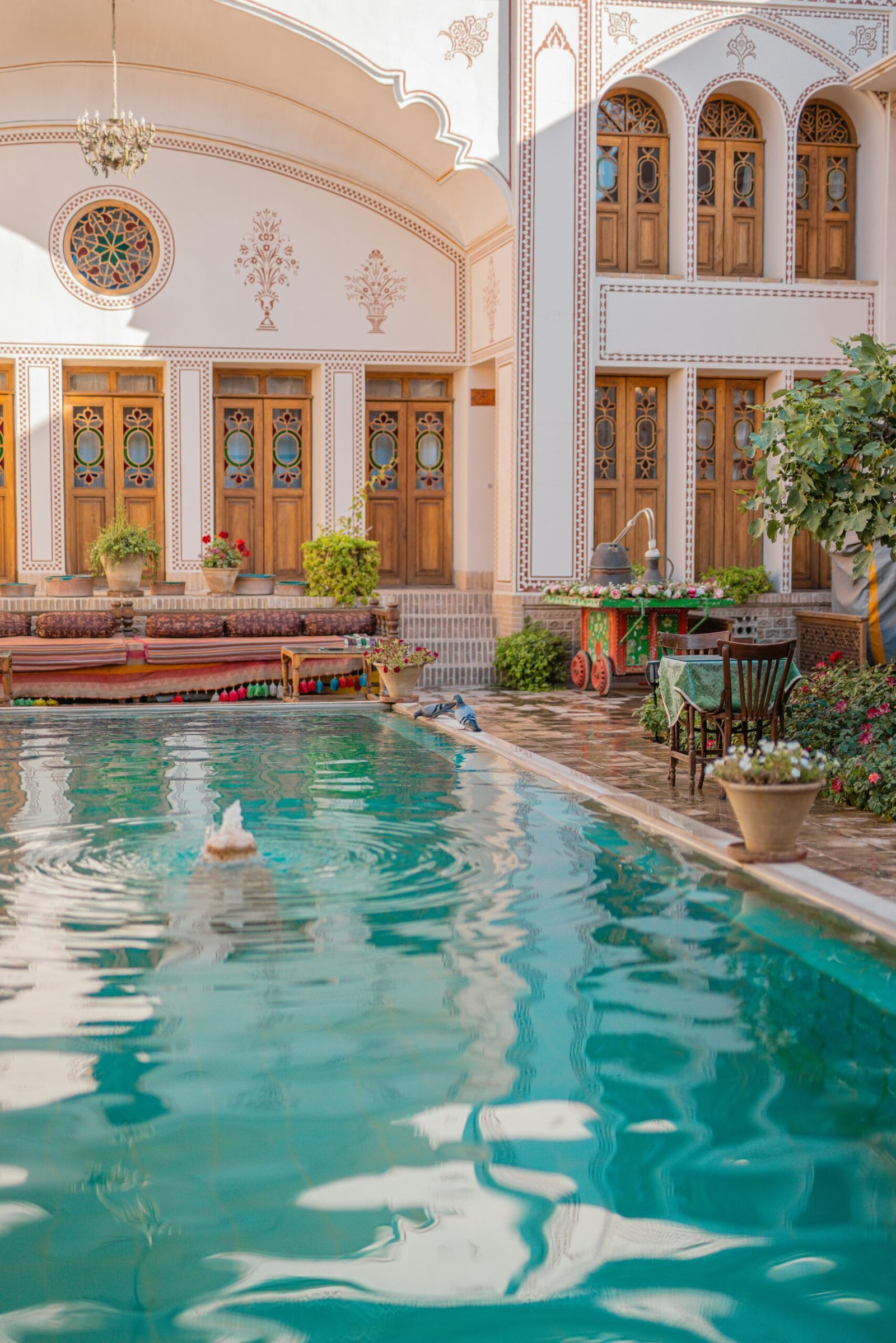
Check current-year dates — Aïd al-Adha shifts annually. The Festival of Sacrifice is Morocco’s most significant religious celebration: every family that can afford it slaughters a lamb, the meat is shared with family, neighbours, and the poor, and the country operates on a genuinely different rhythm for three days. Restaurants and shops close partially, transport becomes complicated as families travel to be together, and the atmosphere in every neighbourhood is simultaneously festive and solemn in a way that is unlike any other event in the Moroccan calendar. For retreat guests, Aïd al-Adha is best approached with curiosity and flexibility rather than a fixed itinerary.
Throughout August, Asilah. The annual festival that has been transforming the medina walls with contemporary murals since 1978. Gallery exhibitions, music performances, literary events, and the public mural painting that defines the festival’s visual identity all take place throughout the month. Accessible from Tangier (45 minutes) or from Casablanca (3 hours) for retreat guests based in northern Morocco.
The Imilchil Moussem — the famous annual gathering of the Aït Hadiddou Berber tribe in the High Atlas, where young people traditionally meet and choose partners — falls in September but its preparation begins in August, with the surrounding villages in the Plateau des Lacs area becoming gradually more active. Retreat centres in the High Atlas in August sometimes incorporate early excursions toward the plateau.
August forces retreat centres into their most creative scheduling — and reveals which ones actually understand the season. On the Atlantic coast, the outdoor programme runs freely but is shaped by the Alizé wind: morning practice before the wind builds, surf or kitesurfing or beach time through the middle of the day, afternoon yin or restorative as the wind peaks, evening sessions as it eases.
In the Atlas, the long summer days create a retreat rhythm unlike any other month: early departure at 5:30am for full-day mountain circuits, lunch at a mountain spring or under a walnut tree, afternoon practice at altitude as the temperature peaks and then drops, evening return to the retreat centre for dinner and the final session. The body at the end of an Atlas August day — physically used, altitude-clear, appetite honest — is in the state that yoga practice is trying to create artificially elsewhere.
For Marrakech-based retreats in August, the most honest and effective programmes acknowledge the heat as the primary material of the retreat rather than an obstacle to it. Practice at 6am in the riad courtyard while the city is still dark. Hammam at 11am when the heat peaks. The medina at dusk when the temperature drops from 42°C to 30°C and feels, by contrast, almost cool. Evening practice on the rooftop as the city cools, followed by dinner at 10pm in the Moroccan style. This is not the retreat brochure version of Morocco. It is the real one.
Your email address will not be published. Required fields are marked *