

The Dadès Valley and the Rose Route
The rose harvest is the April event and it has no equivalent in any other month. The Dadès Valley, particularly around the town of Kelaat M’Gouna (also called Roses City), grows the Damask rose commercially for the perfume and cosmetics industry. The flowers are picked at dawn before the heat opens them fully and diminishes the essential oil content — which means the harvest happens in the most extraordinary light, with families moving through the rose fields in the first hour after sunrise, the air so heavy with fragrance that it becomes physical.
The harvest window runs roughly from April 20 through the first week of May. The Rose Festival in Kelaat M’Gouna, held in early May (sometimes the last weekend of April), is a three-day celebration with music, processions, a locally elected rose queen, and stalls selling every rose product imaginable: rose water by the litre, rose oil in tiny amber vials, rose jam, rose-scented soap, dried petals by the kilo. It is a genuinely local event rather than a tourist production — the crowd is predominantly Moroccan families from the surrounding valleys who have been attending for decades.
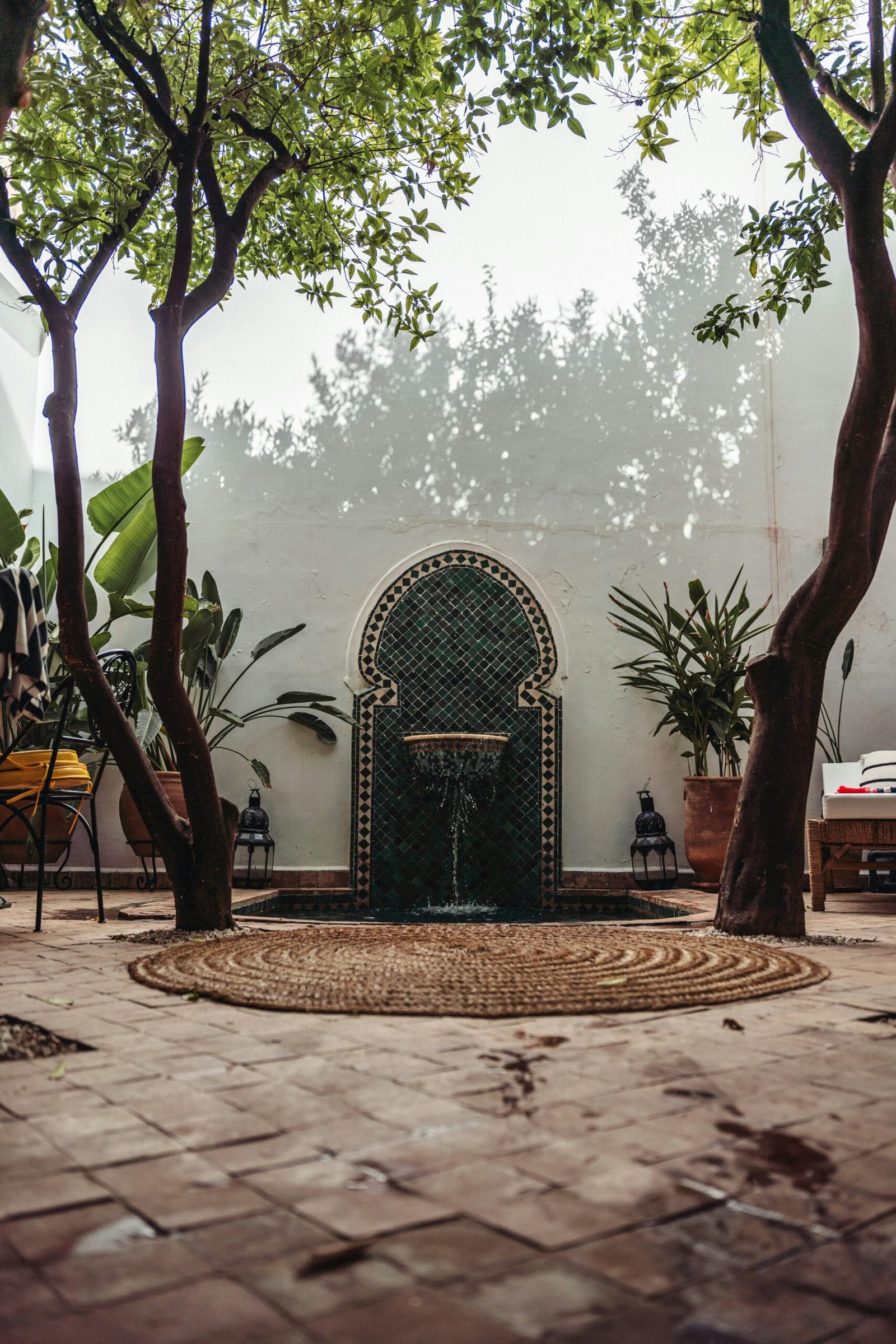
Getting to the Dadès Valley from Marrakech takes about four hours via the Tizi n’Tichka pass or slightly longer via the Draa Valley. Many retreat centres in the region arrange the trip as a two-night extension from Marrakech, or operate specifically in the valley for the harvest season. It is worth building a separate itinerary around rather than fitting into a day trip.
Marrakech
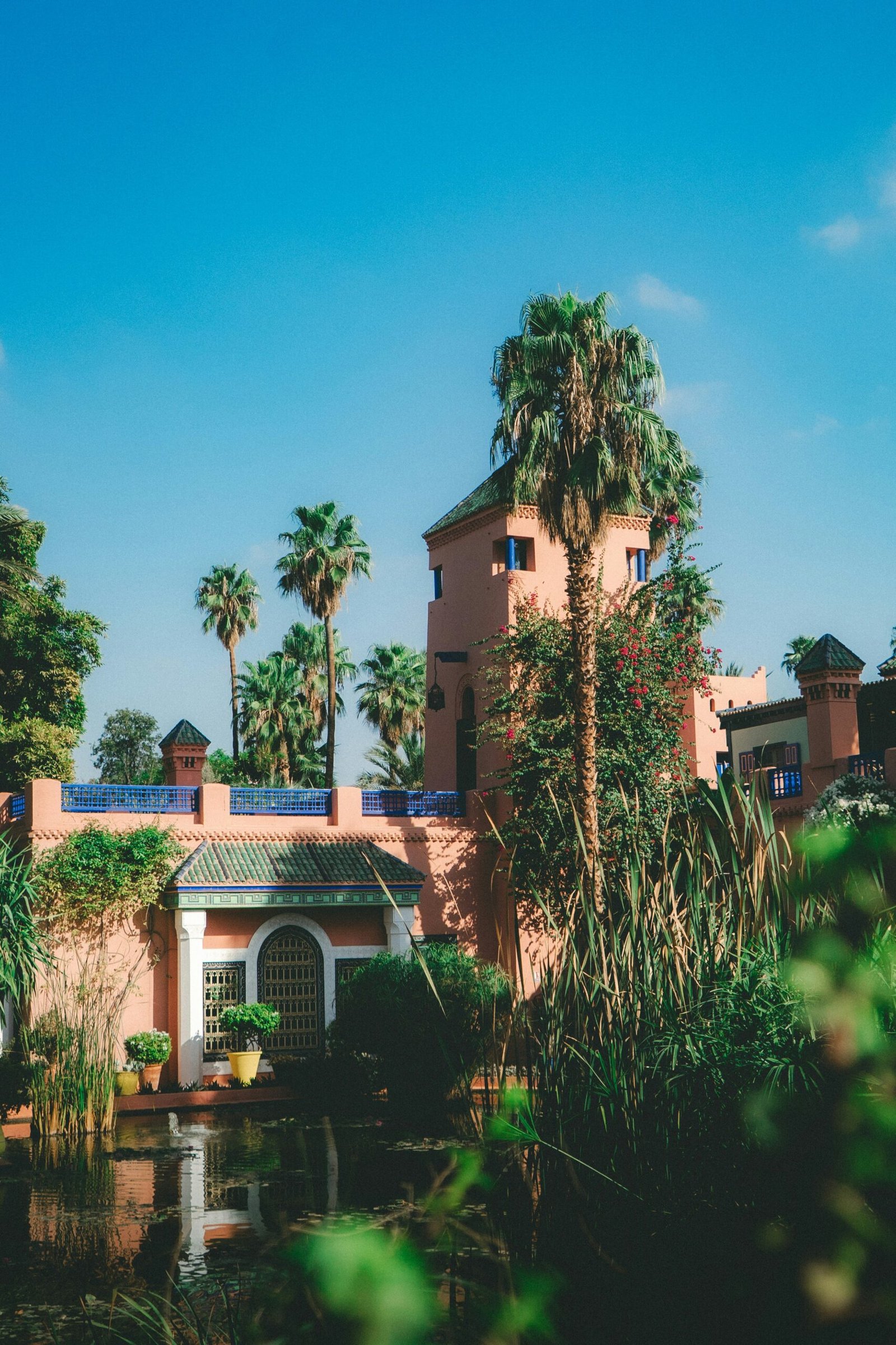
April Marrakech is the city at full spring capacity: warm, fragrant, busy, and beautiful simultaneously. The wisteria on medina walls is in full bloom in early April, the orange blossom season ending but the riad gardens still full of its residual fragrance. The Menara Gardens olive grove is green and the reservoir reflects the Atlas. Jardin Majorelle is at its most lush.
The visitor numbers in April are the highest of the year outside of Christmas week. This means the souks are busier, restaurants require advance booking, and retreat centres that were available in February and March are now fully committed. Book April Marrakech retreats two to three months in advance. The best riad-based programmes fill from both ends of the calendar — the experienced visitors who booked in January knowing April fills fast, and the last-minute arrivals who find only the less desirable slots remaining.
The Jemaa el-Fnaa square in April evenings has the energy the square is famous for: warm nights, every food stall operating, the acrobats, storytellers, and musicians all present simultaneously, and a crowd that is roughly half Moroccan and half international in proportions that feel balanced rather than tourist-dominated. Walking through the square at 9pm in April is the version of this experience that the Instagram photographs are actually taken in.
Easter week, which falls in April most years, brings the largest single influx of European visitors to Marrakech. The week before Easter is the busiest. The week after Easter is quieter and still warm. If you have flexibility, the week after Easter is the better choice: the same excellent conditions, noticeably fewer crowds, and slightly lower prices.
The Atlas Mountains
The Atlas in April is at its most accessible and most rewarding: all trails below 3,000 metres fully open, the snowmelt still running in the rivers (Toubkal Base Camp trail has the sound of running water from the snowmelt cascades), wildflowers in the lower valleys still present in the first two weeks of the month before they fade in the warming temperatures, and the mountain light in April — clearer than summer and warmer than winter — at its annual best.
Hiking from Imlil to the Azzaden Valley in April, with the high peaks still carrying snow above and green meadows below, is one of the more complete mountain landscapes available within an hour and a half of a major international airport. Retreat centres in the Ourika Valley and around Imlil are fully operational and often running their best programming of the year in April.
The Ourika Valley in April also has the Setti Fatma waterfalls at their most powerful: the seven waterfalls fed by snowmelt run at full volume in April and early May, and the 45-minute climb from the village to the upper falls through juniper scrub and past small pools is at its most worthwhile when the water is high.
The Sahara
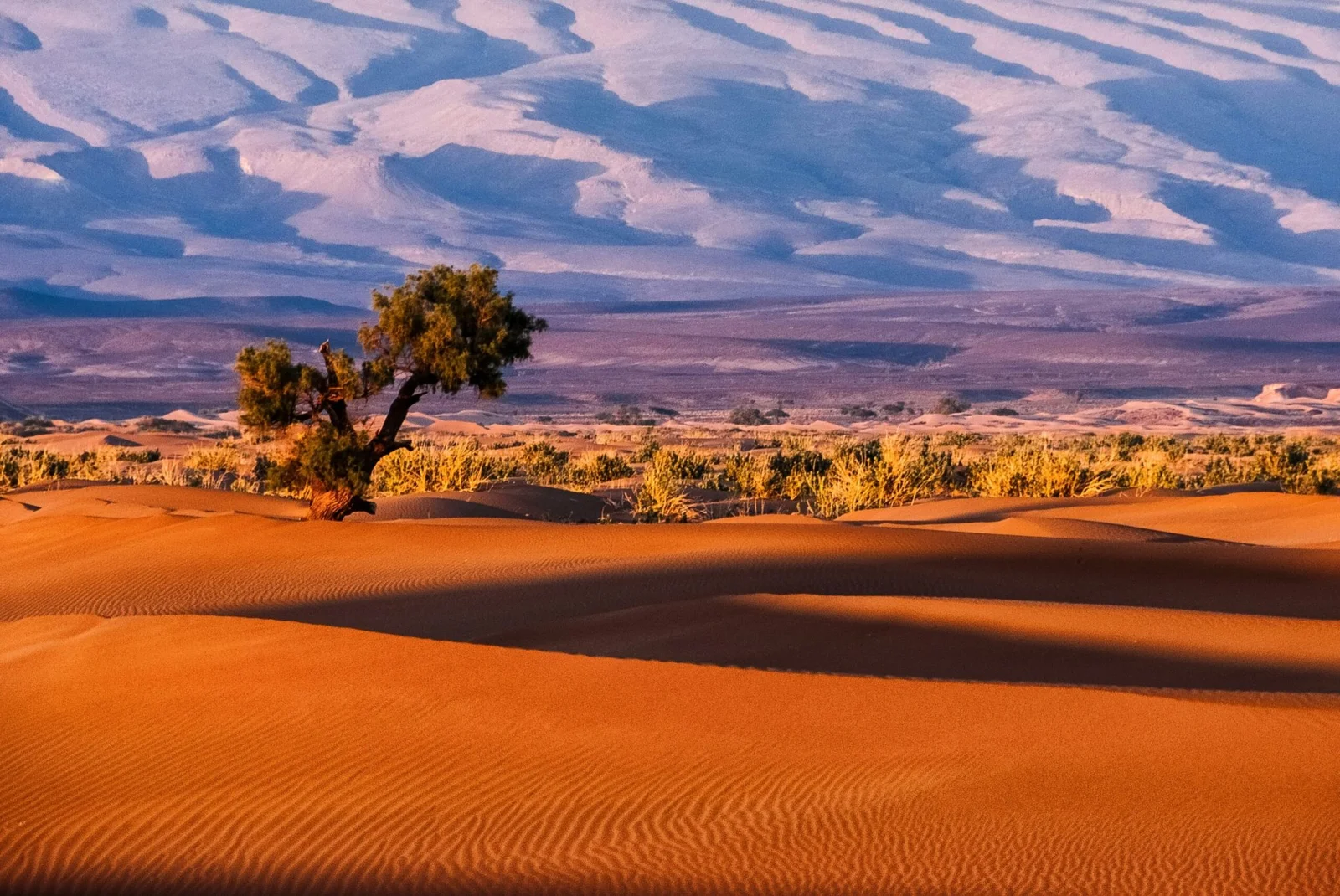
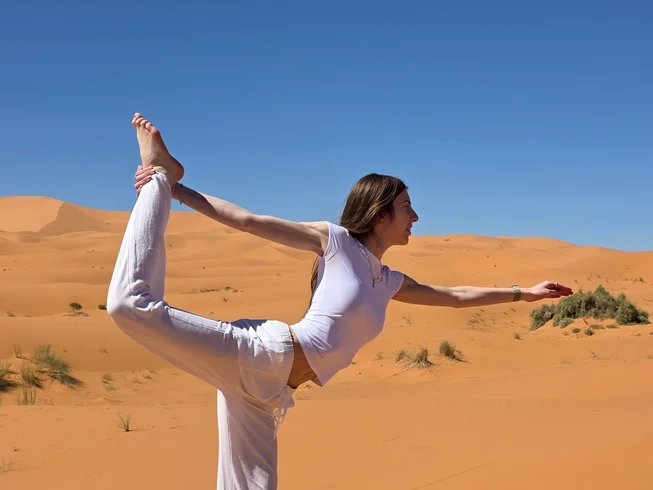
The Sahara in April is one of the two best months for desert retreats alongside October. Days reach 28-32°C, warm enough for morning practice on the dunes without layers, cool enough in the evenings for a fire and the full desert camp experience without heat management. The desert light in April has a specific golden quality that the overhead summer sun cannot produce: long morning shadows, warm colours on the dunes, and the particular drama of a sky that is simultaneously blue and vast.
Erg Chebbi in April is busy by Sahara standards — not overwhelmingly so, but busier than November and February. If the desert retreat experience matters more than the desert photography, October provides the same conditions with fewer other visitors. If the spring light and the rose harvest in the same trip are the goal, April is the month to combine both: Marrakech and Dadès Valley on the way south to Merzouga, a few nights in a desert camp, and the return through the Draa Valley palmeries in full spring green.
For everything the Sahara offers as a retreat environment, our yoga retreats in the Sahara guide covers both Erg Chebbi and Erg Chigaga with the detail the choice requires.
The Atlantic Coast
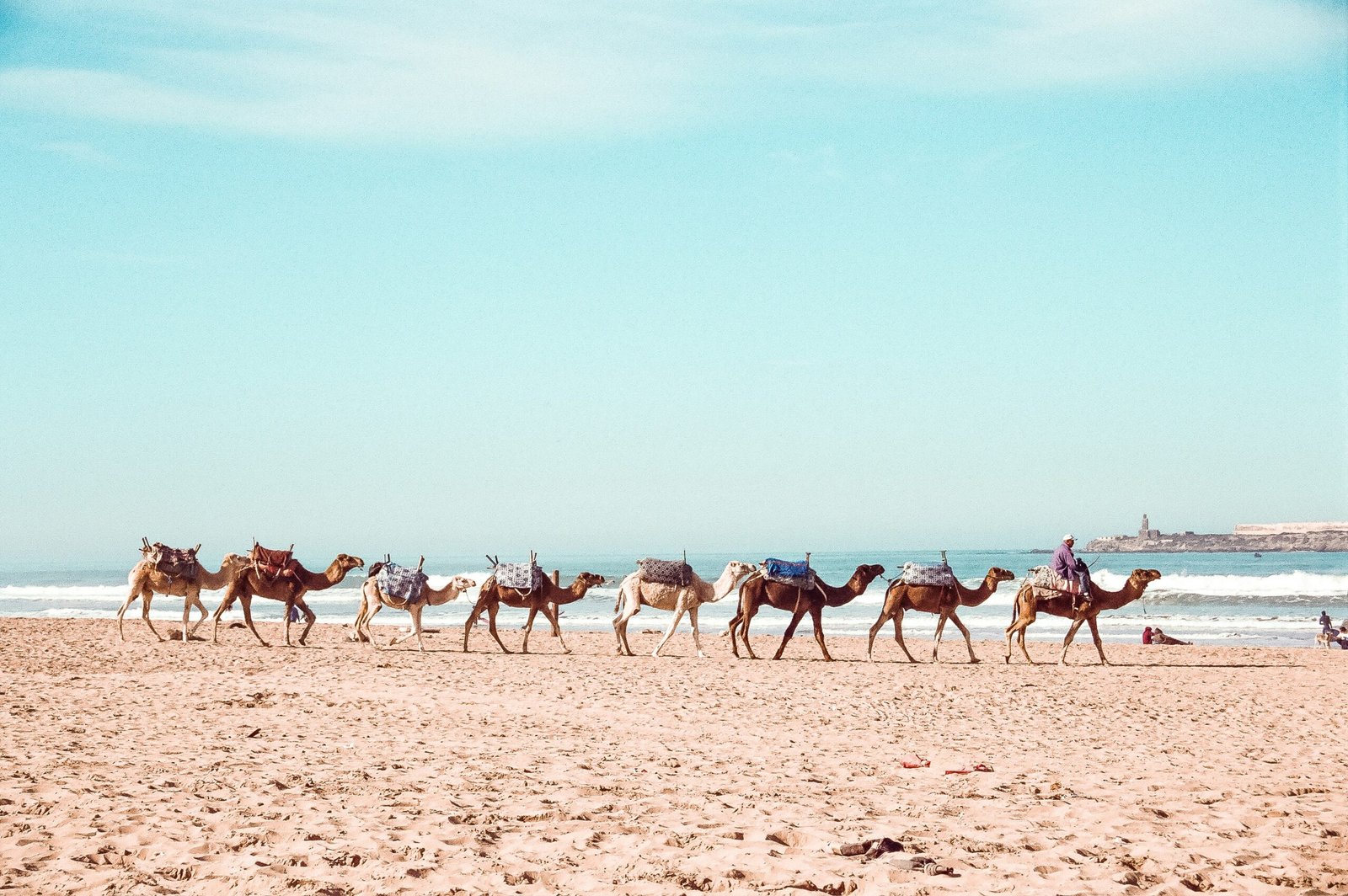
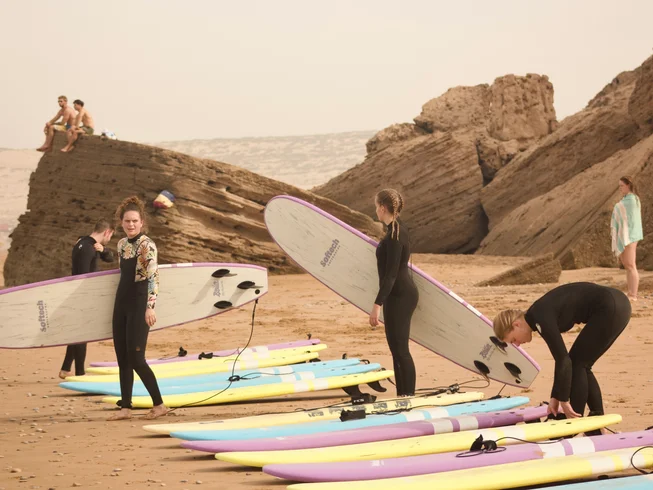
April on the Atlantic coast is the transition from serious surf season to beginner-friendly conditions. The big North Atlantic swells of November through March are easing, and April offers a mixed picture: some weeks still deliver swell large enough for experienced surfers, others are calmer and more suited to those learning. For a surf-and-yoga retreat, April is a reasonable entry point for beginners and a still-rewarding month for intermediates, though the peak surf window has largely passed.
The coast in April is warm and beautiful: Agadir at 22-26°C, Essaouira cooler at 18-22°C with the characteristic Alizé wind. The beach south of Agadir in April, with the Atlantic warm enough for short swims and the surf breaks running consistently, is one of the more pleasant environments in Morocco at this time of year. Retreat centres on the coast in April are full but not overwhelmed.