

The Atlas Mountains
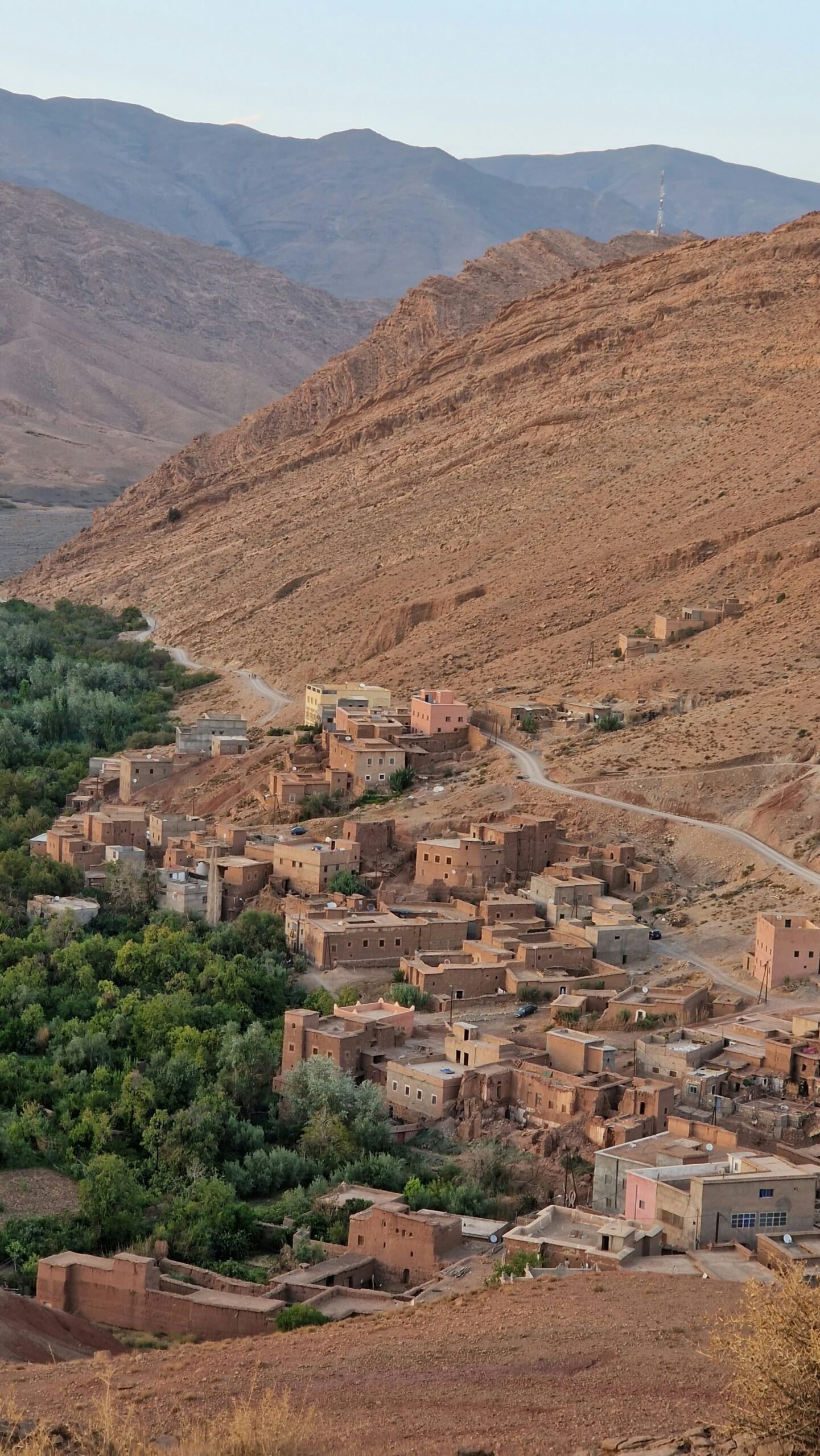
March is the Atlas at its most dramatic and the month most worth going specifically for the mountains. The wildflowers are the event: poppies, asphodels, wild irises, yellow broom, and dozens of species whose names require a botanist to identify appear across the landscape in the last two weeks of March and the first two of April. The Atlas foothills from the Ourika Valley to the Aït Benhaddou road south of Marrakech transform: bare brown hillsides from a distance, but on the ground a carpet of colour that stops people mid-hike. Retreat centres that include guided walks in their March programming are offering something genuinely worth the detour from any other destination.
The snow line retreats noticeably in March: trails that were blocked in February open progressively through the month. By the last week of March, the walk from Imlil to the Azzaden Valley, past Berber villages still surrounded by snow on the ridges above but with wildflowers in the lower meadows, is one of the most visually complete landscapes Morocco offers. The snowmelt fills the rivers and the sound of running water, absent in the dry winter months, returns to the valleys.
Easter sometimes falls in late March, and when it does it brings a moderate increase in visitors, particularly in the Ourika Valley which is close enough to Marrakech for day trips. If avoiding Easter crowds matters, check dates and aim for the first three weeks of the month.
For the full Atlas experience across all seasons, our Atlas Mountains retreat guide covers accommodation, hiking, and what to expect.
Marrakech
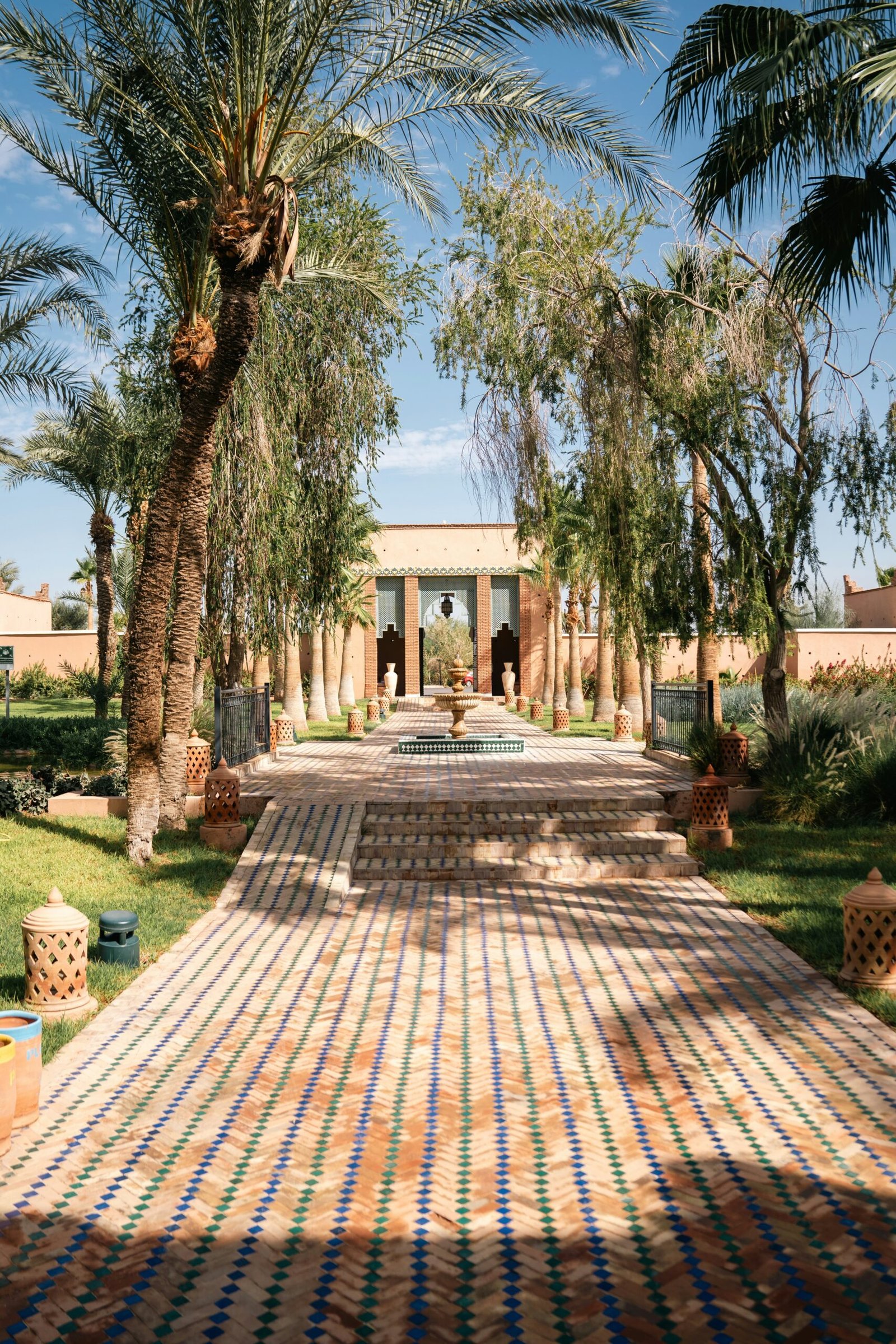
Marrakech in March is the city at its most beautiful. The gardens are in full spring production: Jardin Majorelle lush and crowded with colour, the Menara gardens green, and the private riad gardens filling with the fragrance of orange blossom that makes Marrakech in March smell unlike anywhere else. Orange blossom water, distilled from the blossoms of the city’s ubiquitous bitter orange trees, is collected in March and used throughout Moroccan cooking and cosmetics for the rest of the year. The smell of a Marrakech riad garden at dawn in March is worth the trip on its own terms.
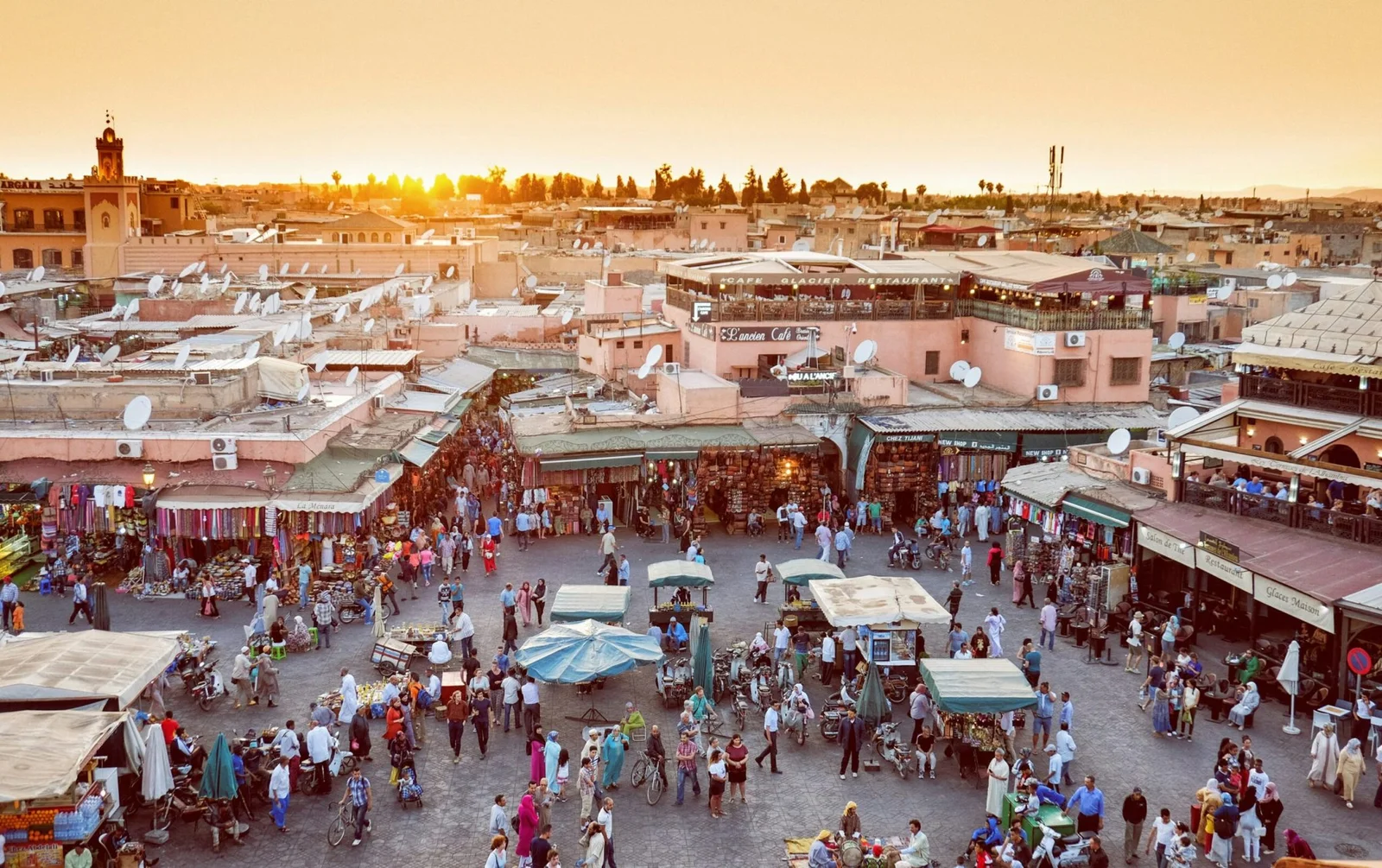
The medina in March is finding its seasonal balance: more visitors than February but still navigable, the souks animated rather than overwhelmed. The Jemaa el-Fnaa square in the evenings of late March has a warmth and energy that the winter months cannot produce: the food stalls fully operational, the musicians and storytellers performing for mixed crowds of locals and visitors, the air warm enough to sit outside without a jacket at 9pm.
Retreat programming in March can finally move fully outdoors. Rooftop yoga at 7am in March with the Atlas visible to the south and the city waking below is the quintessential Marrakech retreat experience, and it is not fully available until this month. The best retreat centres in the medina have rooftop terraces that face south or east specifically for morning practice, and March is when those terraces earn their place in the programme.
The Draa Valley and Pre-Saharan South
March is the best month for the Draa Valley, and it is one of Morocco’s most underrated retreats. The valley runs south from Ouarzazate through 200 kilometres of palm groves, kasbahs, and Berber villages to Zagora and the edge of the pre-Saharan hammada. In March the river is running from winter snowmelt, the palm groves are green, the wheat fields in the valley floor are almost ready to harvest, and the kasbahs above the valley — red earthen architecture against blue sky — are at their most photogenic in the spring light.
Retreat centres in the Draa Valley are fewer than in Marrakech or the coast but worth seeking out: kasbah guesthouses converted into retreat spaces with yoga terraces facing the valley, communal dinners under the palms, and excursions to the fossil sites and nomad villages of the surrounding hammada. The combination of the valley’s agricultural life in full spring mode with the desert beginning 100 kilometres south is a specifically Draa Valley thing that exists in March more completely than in any other month.
The Atlantic Coast
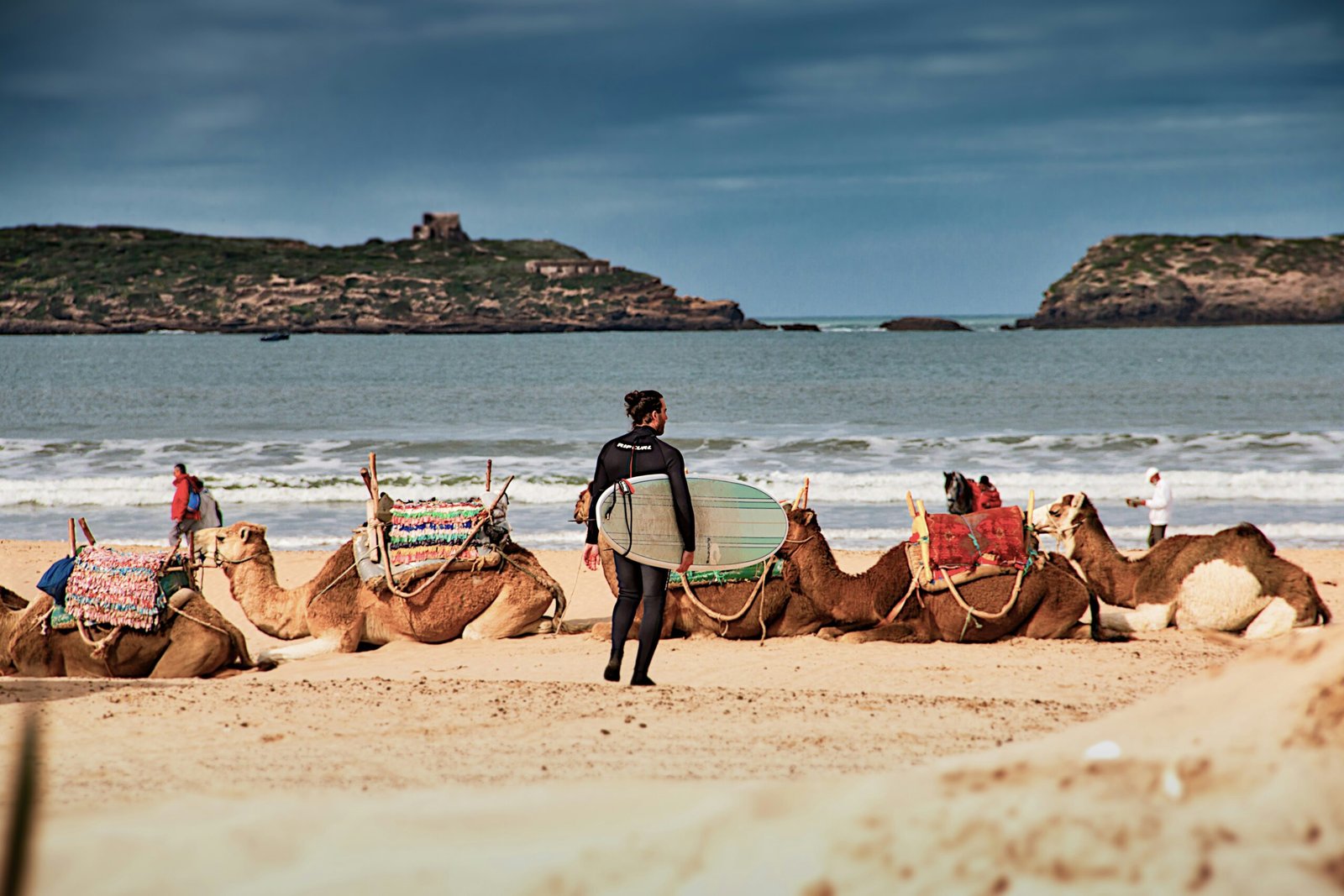
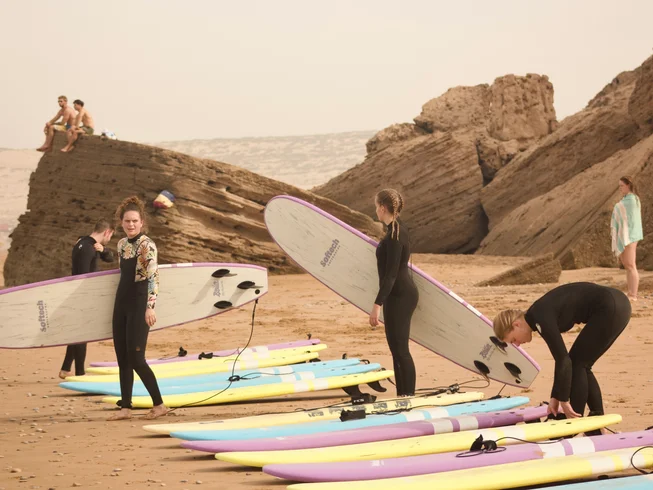
The coast in March is warm and increasingly popular, the surf beginning to moderate from its February peak into something more accessible. Taghazout in March has the best of both worlds: swells still large enough to interest experienced surfers but calmer on selected days for beginners, water warming from its February low, and the social scene on the coast entering its pre-peak energy. March is when the international surf-and-yoga community that winters on this coast begins to grow as the spring crowd arrives.
Essaouira in March is at its most romantically windswept: the blossom season that defined February is ending, the spring light is extraordinary, and the town is still quiet enough that the rhythm of daily life is accessible. The weekly fish market at the port, the argan cooperatives now moving from processing to selling, and the medina workshops full of craftspeople who have had a quiet winter and are preparing stock for the spring tourist season — March Essaouira has an industrious energy that summer does not.
The Sahara
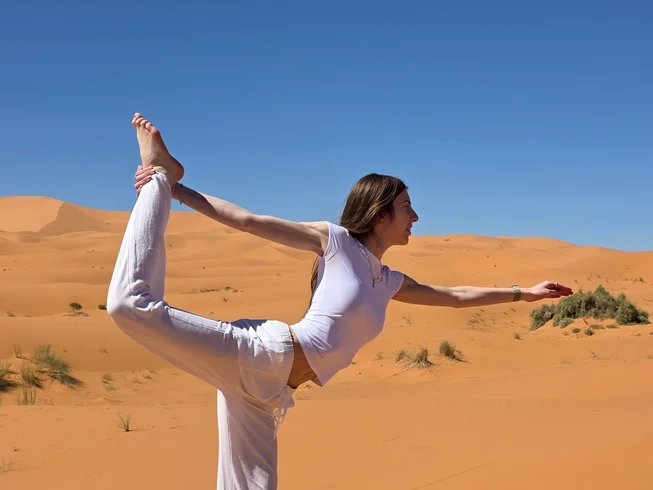
The Sahara enters its sweet spot in March. Days reach 25-30°C, warm enough for outdoor practice without the heat management that becomes necessary from May onward. Nights are still cool enough for a blanket and a fire, which means the full desert camp experience — practice at dawn, breakfast around the fire, excursion during the day, sunset over the dunes, fire and stars in the evening — functions perfectly without anyone suffering from heat or cold.
The spring light in the Sahara in March produces colours on the dunes that the overhead summer sun cannot: deep orange and gold in the morning, long dramatic shadows by late afternoon, and a quality of evening light that makes every photograph taken in the hour before sunset look extraordinary without effort. Desert retreat programmes fill faster in March than in most other months because the word has spread about the conditions. Book early.